

P0009 on 2007-2014 GMC Acadia: Stretched Timing Chain Causes and Fixes
P0009 on a 2007-2014 GMC Acadia almost always means the timing chains have stretched. This is a well-known issue with the 3.6L V6 engine, often linked to extended oil change intervals allowed by the original Oil Life Monitor (OLM) calibration. The definitive fix is a complete timing chain kit replacement, which is a labor-intensive job costing between $2,700 and $3,700 at a repair shop.
- P0009 on a 2007-2014 Acadia is almost certainly caused by stretched timing chains, a known issue with the 3.6L V6 engine.
- This is a serious issue that requires immediate attention to prevent catastrophic engine failure.
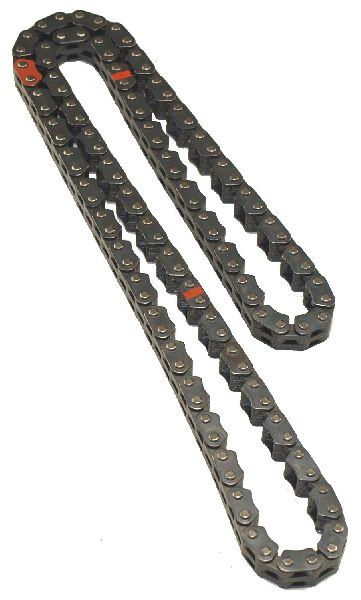
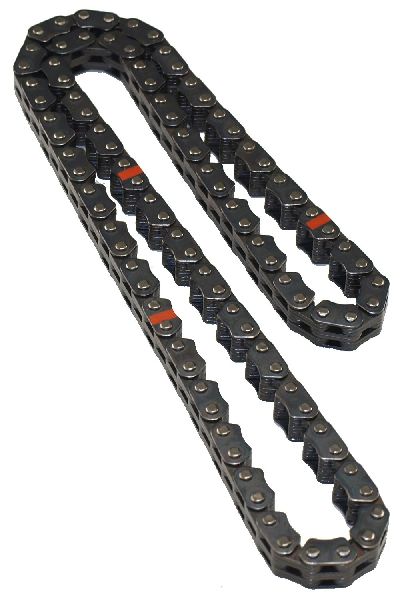
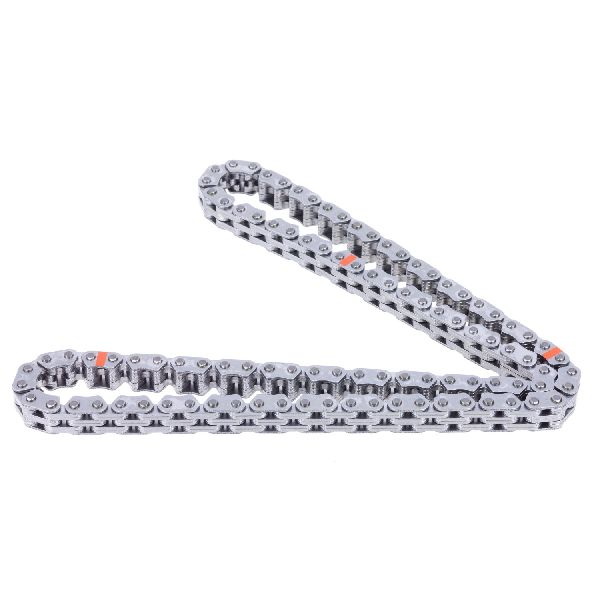
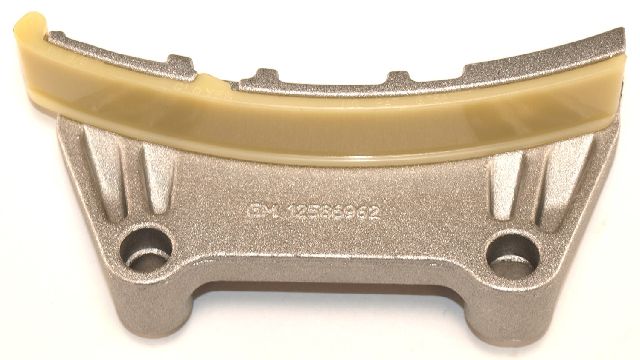
- The correct repair is to replace the complete timing chain kit, including all chains, tensioners, and guides.
- Due to the complexity and need for special tools, this repair is not recommended for DIYers and should be performed by a professional.
- Expect a significant repair bill, typically in the range of $2,700 to $3,700.
What's Unique About the 2007-2014 Gmc ACADIA

The first-generation GMC Acadia, along with its GM Lambda platform siblings (Buick Enclave, Chevrolet Traverse, Saturn Outlook), uses a 3.6L V6 engine (LY7 and LLT variants) that is notorious for premature timing chain wear. Early versions of this engine were especially prone to this issue due to a combination of factors, including the original oil life monitor (OLM) calibration that permitted excessively long oil change intervals, leading to oil degradation and accelerated chain wear. The problem was so widespread that GM issued multiple Technical Service Bulletins (TSBs) and a Special Coverage Adjustment (SCA #11340C) that extended the warranty on the timing chains to 10 years or 120,000 miles for certain model years.
Diagnostic Flowchart
Tap your situation to follow the diagnostic path that matches what you're seeing on this vehicle.
Symptoms You May Notice
- Check Engine Light is on.
- Reduced engine power and sluggish acceleration.
- Rough or unstable idle.
- Rattling or clattering noise from the engine, especially on cold startup.
- Increased fuel consumption.
- Difficulty starting the engine or extended cranking time.
- Finding small metal shavings in the engine oil during an oil change.
- Replacing only the camshaft or crankshaft position sensors. While these sensors report the problem, they are rarely the cause on this engine. The issue is almost always the mechanical timing components.
- Replacing only the VVT solenoids. This is a valid diagnostic step, but it often doesn't resolve the P0009 code if the chains are stretched.
- Replacing only one or two of the three timing chains. The proper repair is to replace all chains, guides, and tensioners at the same time.
Most Likely Causes

- Stretched Timing Chains 🔴 High Probability The primary cause is premature wear of the original timing chains. This was exacerbated by GM's original Oil Life Monitor (OLM) calibration, which allowed for oil change intervals that were too long, leading to oil breakdown and insufficient lubrication for the chains. GM later issued a recall to reprogram the OLM for more conservative oil change intervals.
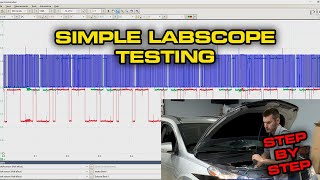
How to confirm: A mechanic will use a professional scan tool to view camshaft deviation angles; 🎬 Watch: How to use a labscope to test for timing issues. significant deviation confirms a timing correlation problem. Physical confirmation requires removing the timing cover to inspect the chains for slack, which is a labor-intensive step.
Typical fix: Replace all three timing chains (primary and two secondary), all tensioners, and all guides. This is done as a complete kit. Per TSB #12-06-01-009F, the sprockets and gears are not typically replaced unless they show visible damage.
Est. part cost: $400-$950 - Worn Timing Chain Tensioners and/or Guides 🟡 Medium Probability The hydraulic tensioners rely on clean oil at proper pressure. Degraded oil can cause them to fail or stick, allowing the chain to go slack. The plastic guides can also become brittle and break over time, contributing to the problem. These parts wear alongside the chains.
How to confirm: Visual inspection after removing the timing cover will show worn guide material or a fully extended/failed tensioner. This is usually done at the same time as the chain inspection.
Typical fix: These components are always replaced as part of a complete timing chain service. It is not recommended to replace only the tensioners or guides.
Est. part cost: $100-$200 (as part of a kit) - Low or Degraded Engine Oil ⚪ Low Probability The timing chain tensioners are hydraulic and require clean oil at the correct pressure to function. The original OLM software allowed for intervals up to 10,000 miles or more, which was found to be too long, causing oil to degrade and sludge to form. This accelerates wear on all timing components. Many owners now recommend 3,000-5,000 mile oil change intervals with a full synthetic Dexos-approved oil.
How to confirm: Check the oil level and condition. If the oil is very low, black, or sludgy, this is a likely contributor. An oil pressure test can also be performed.
Typical fix: An oil and filter change is the first step. However, if the code is already present, the mechanical damage (stretched chain) is almost certainly done and requires replacement. Changing the oil will not fix a stretched chain.
Est. part cost: $40-$80
Rare But Worth Checking
- Failing Camshaft or Crankshaft Position Sensor: While these sensors can fail, it's far less common than chain issues on this specific vehicle. The presence of a correlation code like P0009 usually means the sensors are working correctly but are reporting a mechanical problem. Replacing sensors alone is a common misdiagnosis and rarely fixes the issue. A sensor replacement is relatively inexpensive, costing around $181-$265 for a crankshaft sensor or $262-$387 for a camshaft sensor.
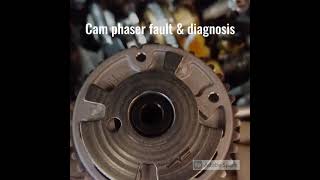
- Failing Camshaft Actuator Solenoid (VVT Solenoid): A stuck or clogged VVT solenoid can cause timing correlation issues. These are relatively easy to access and can be tested by swapping them between banks to see if the code follows. This is a valid diagnostic step before committing to a timing chain replacement. 🎬 Watch: How to diagnose a failing cam phaser or solenoid. A replacement typically costs between $408 and $574 at a shop.
- Shifted Crankshaft Reluctor Wheel: In some cases, the reluctor wheel on the crankshaft, which the CKP sensor reads, can shift slightly, causing a timing correlation code. TSB #PIP3423P mentions inspecting for this, which can be done with a borescope through the crankshaft position sensor hole. This is much rarer than chain stretch.
Diagnosis Steps
- Verify the code with an OBD-II scanner.
- Check engine oil level and condition. If low or dirty, perform an oil and filter change with the manufacturer-specified oil. Clear codes and see if they return.
- Using a capable scan tool, monitor the camshaft/crankshaft correlation data and camshaft deviation angles to confirm a timing discrepancy.
- Test the camshaft actuator (VVT) solenoids for proper operation. They can be removed, cleaned, and tested. They can also be swapped between banks to see if the code follows.
- If VVT solenoids are functioning, inspect the crankshaft reluctor wheel for movement using a borescope through the CKP sensor port, as outlined in TSB #PIP3423P.
- If the above steps do not resolve the issue, the next step is to remove the engine timing cover for a physical inspection of the timing chains, guides, and tensioners for wear and slack.
- If slack is confirmed, proceed with replacing the complete timing chain kit.
Parts You'll Likely Need

- Engine Timing Chain Kit
(OEM #12650230 (For 2007 LY7), 12651450 (For LLT))— This is the definitive fix for the stretched timing chains that cause code P0009. A complete kit ensures all worn components (chains, guides, tensioners) are replaced. Using the latest revised GM parts is critical.
Trusted brands: ACDelco (OEM), Cloyes, Melling
OEM price range: $550-$700
Aftermarket price range: $350-$500
Related Codes That Often Appear With This One
- P0008 — P0008 is the same timing correlation error, but for Bank 1. It's very common to see both P0008 and P0009 together, indicating a widespread timing chain problem affecting the entire engine.
- P0017 — P0017 is 'Crankshaft Position - Camshaft Position Correlation Bank 1 Exhaust Cam'. This is a more specific version of the timing error and often accompanies P0008/P0009.
- P0018 — P0018 is 'Crankshaft Position - Camshaft Position Correlation Bank 2 Intake Cam'. This is another specific timing error for Bank 2 that points directly to the same root cause.
- P0019 — P0019 is 'Crankshaft Position - Camshaft Position Correlation Bank 2 Exhaust Cam'. Like P0018, this code specifies a timing error on Bank 2 and is commonly seen with P0009.
Technical Service Bulletins (TSBs) & Recalls
- PIP3423P: Instructs technicians to inspect for loose timing chains or tensioners for DTCs P0008, P0009, P0016, P0017, P0018, or P0019. Also mentions checking for a shifted crankshaft reluctor.
- 12-06-01-009F: Announces availability of updated timing chain kits for repairing stretched timing chains that cause these same DTCs. Specifies that sprockets and gears should not be replaced unless visibly worn.
- 11340C: Special Coverage Adjustment extending the timing chain warranty to 10 years/120,000 miles for eligible vehicles due to premature wear.
Platform-Specific Known Issues
- GM issued TSB #12-06-01-009F announcing the availability of updated timing chain kits to address premature stretching that causes codes like P0009.
- GM also issued TSB #PIP3423P, which guides technicians to inspect for loose timing chains or a shifted crankshaft reluctor wheel when P0009 (and related codes) are present.
- GM initiated Special Coverage Adjustment (SCA) #11340C, extending the warranty for timing chain wear to 10 years or 120,000 miles for certain 2007-2009 models and mandating an ECM reprogram to adjust the Oil Life Monitor.
Mechanic-Grade Diagnostic Values
- Camshaft Position (CMP) Actuator Solenoid Resistance — expected: 7–12 Ω between the two terminals.. Failure: A reading of 0 Ω (short) or infinite/OL (open) indicates a failed solenoid.
- Camshaft Position Sensor (CMP) Supply Voltage — expected: Approximately 5 volts on the reference wire with the key on, engine off.. Failure: Significantly lower or no voltage may indicate a wiring or ECM issue.
- Cam/Crank Correlation Lab Scope Pattern — expected: A known-good pattern shows a specific, consistent alignment between the crankshaft position sensor's signal and the camshaft position sensor's signal.. Failure: A stretched timing chain will cause the camshaft sensor's signal to visibly shift to the right (retard) on the oscilloscope display relative to the crankshaft signal.
Scan Tool Commands That Help

- GDS2 / Tech2: CMP Actuator Solenoid ON/OFF Command — This bidirectional test is used to functionally check a VVT solenoid. By commanding it on and off, a technician can listen for a click and observe changes in engine operation or scan data to determine if the solenoid is physically stuck or responding correctly to ECM commands.
- GDS2 / Tech2: Crankshaft Position System Variation Learn — This service procedure is required after replacing the Engine Control Module (ECM), crankshaft position sensor, or performing major engine work. It allows the ECM to learn the minor variations in the crankshaft reluctor wheel to ensure accurate misfire detection and timing.
Wiring & Ground Locations
- G110 — Right front of the engine, mounted to the cylinder head.. This is a primary ground point for the Engine Control Module (ECM). A corroded or loose connection here can cause erratic sensor readings, including from the cam and crank sensors, potentially triggering false timing codes.
- G113 — Left side of the engine, at an engine-to-transmission stud.. This is another critical engine ground point. The ECM and its sensors rely on a stable ground plane, and this location is essential for it. A poor connection can lead to voltage differentials that disrupt sensor signals.
- Camshaft Position Sensors (Bank 2) — On the front cylinder head (closer to the radiator). There are two sensors: one for the intake camshaft and one for the exhaust camshaft.. Code P0009 specifically relates to Bank 2. Knowing the physical location of these sensors is required for inspection, testing, and replacement.
Real Owner Repair Stories
- YouTube video by 'GMC Acadia Timing Chain Replacement' (2012 GMC Acadia) — Running rough, Check Engine Light on with codes P0018 and P0019.
❌ Tried (didn't work) The owner immediately suspected the timing chain based on the codes.
✅ What actually fixed it A complete timing chain kit replacement. The original chain was found to be very loose. The cam phaser sprockets were also replaced because the loose chain had worn grooves into the teeth. The repair resolved the codes and rough running. - Carly community forum user 'guentersilver86' (2007 GMC Acadia, 69,000 km) — Sluggish engine performance, poor throttle response, increased fuel consumption, Check Engine Light on.
❌ Tried (didn't work) The owner was initially told the issue was a 'crankshaft to camshaft reference value' problem, implying a major timing job.
✅ What actually fixed it The final diagnosis was a faulty crankshaft position sensor. Replacing the sensor resolved the timing issues and all associated symptoms, representing a case where the problem was the sensor itself and not the timing chains.
"I Checked Everything" — The Actual Cause
- The diagnostic equivalent for P0009 is when all sensors and solenoids test correctly, yet the code persists. In this scenario, as outlined in GM's TSB #PIP3423P, the root cause can be a crankshaft reluctor wheel that has physically shifted on the crankshaft. This is not an electronic or common wear item and is often missed by technicians who stop diagnosing after confirming the sensors work. It requires a specific visual inspection with a borescope through the crankshaft position sensor port to identify.
When the Usual Fixes Don't Work
- While the overwhelming majority of P0009 codes on this platform are caused by stretched timing chains, it should not be the only assumption. There are documented cases where the root cause was a simple and inexpensive faulty crankshaft position sensor. In one such instance with a 2007 Acadia, replacing the sensor alone fixed the sluggish performance and cleared the timing correlation codes. This highlights the importance of performing full diagnostics, including sensor checks, before committing to a costly and labor-intensive timing chain replacement.
OEM Part Supersession History
Cloyes (various)→Melling (various)— Anecdotal evidence from professional mechanics suggests a decline in quality for some Cloyes timing kits manufactured in China, leading to premature failures. Melling is often cited as a more reliable aftermarket alternative for this specific repair.
Heads up: This is not a direct supersession but a shift in professional preference due to perceived quality issues. When choosing an aftermarket kit, verifying the country of origin and recent reviews is recommended.
Model Year Variations Within This Range
- 2007-2008: These earlier models primarily used the LY7 engine, which features port fuel injection and a 10.2:1 compression ratio.
- 2009-2014: These later models used the LLT engine, which features direct injection (DI), a higher 11.3:1 compression ratio, and different pistons to accommodate the DI system. The pistons are not interchangeable between LY7 and LLT engines.
- 2012+: Beginning with the 2012 model year, GM implemented design changes to the timing chain components to improve durability. While failures can still occur, they are considered less common on 2012 and newer models compared to the 2007-2011 range.
- 2007-2009: Vehicles in this range were subject to Special Coverage Adjustment #11340C. This program not only extended the timing chain warranty but also included a mandatory ECM reprogram to create more conservative oil change intervals via the Oil Life Monitor (OLM), acknowledging the original calibration was a root cause of premature wear.
Helpful Videos
Used OEM Parts in Stock
New Aftermarket Parts Available


The information in this article is provided for general reference and educational purposes only. Vehicle specifications, procedures, and part compatibility can vary by production date, trim level, and region. Always consult your vehicle's factory service manual and verify part numbers before purchasing or performing repairs. Safety-critical components such as airbags, seat belts, and braking systems should be installed by a qualified professional.
- Gmc ACADIA:
- 🎬 Helpful Videos
- 🛍️ Shop This Part
- What's Unique About the 2007-2014 Gmc ACADIA
- Diagnostic Flowchart
- Symptoms You May Notice
- Most Likely Causes
- Rare But Worth Checking
- Diagnosis Steps
- Parts You'll Likely Need
- Related Codes That Often Appear With This One
- Technical Service Bulletins (TSBs) & Recalls
- Platform-Specific Known Issues
- Mechanic-Grade Diagnostic Values
- Scan Tool Commands That Help
- Wiring & Ground Locations
- Real Owner Repair Stories
- "I Checked Everything" — The Actual Cause
- When the Usual Fixes Don't Work
- OEM Part Supersession History
- Model Year Variations Within This Range
- 🎟️ Get 5% Off