

P0009 on 2016-2017 Chevrolet Equinox 3.6L V6: Stretched Timing Chain Causes and Fixes
On a 2016-2017 Equinox with the 3.6L V6, code P0009 almost always means the timing chains have stretched. This is a serious, complex, and expensive repair costing $2,000-$4,000+ that requires replacing the chains, tensioners, and guides with an updated kit. The issue is a well-documented fault in the GM High Feature V6 engine family.
- P0009 on a 2016-2017 Equinox is specific to the 3.6L V6 and almost certainly indicates a stretched timing chain, not a sensor failure.
- This is a serious, complex, and expensive repair ($2,000-$4,000+) that should not be ignored.
- The root cause is a well-known design flaw in the GM 3.6L engine family, exacerbated by insufficient lubrication from extended oil change intervals.
- The correct repair involves replacing all three chains, all tensioners, and all guides with an updated, complete kit.
- After the repair, strict adherence to a 5,000-mile oil change schedule using full synthetic Dexos-approved oil is critical to prevent recurrence.
What's Unique About the 2016-2017 Chevrolet EQUINOX
The GM 3.6L V6 engine (RPO code LFX) used in this generation of Equinox is part of the 'High Feature' V6 family, which is well-known for premature timing chain stretching. The issue is so common that General Motors issued multiple Technical Service Bulletins and a special warranty coverage (11340C) for this exact problem across many different models. The failure is often attributed to the original chain design being susceptible to wear, a problem accelerated by extended oil change intervals that were initially encouraged by the vehicle's Oil Life Monitor (OLM) system. While sensor failures can cause other codes, P0009 on this specific vehicle is overwhelmingly a mechanical timing chain problem, not an electronic one.
Diagnostic Flowchart
Tap your situation to follow the diagnostic path that matches what you're seeing on this vehicle.
Symptoms You May Notice
- Check Engine Light is on
- Rough or unstable idle
- Engine hesitation or stumbling on acceleration
- Reduced engine power
- Rattling, clattering, or buzzing noise from the engine, especially on cold starts.
- Decreased fuel economy.
- Engine may be hard to start or stall at low speeds.
- Replacing the camshaft position sensors.
- Replacing the crankshaft position sensor.
- Replacing the VVT solenoids (camshaft actuators).
Most Likely Causes
- Stretched Timing Chains 🔴 High Probability The original equipment timing chains on the 3.6L V6 engine family (including the LFX) were susceptible to premature wear and stretching. This is a well-documented issue across many GM models using this engine, acknowledged by GM through TSBs like #12-06-01-009F.
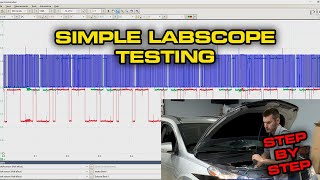
How to confirm: A mechanic can use a professional scan tool to view live camshaft deviation data. A consistent deviation of more than 4-5 degrees at idle is a strong indicator of a mechanical timing issue. A lab scope can also be used to compare cam and crank sensor waveforms against a known-good pattern for definitive electronic diagnosis. 🎬 See how to test timing chain health using a lab scope. Visual inspection for slack after removing the engine front cover is the ultimate confirmation.
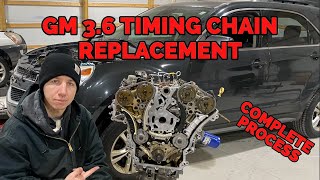
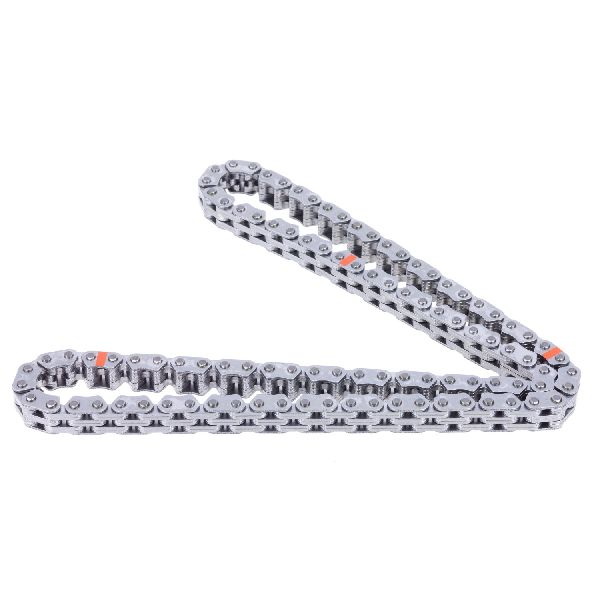
Typical fix: Replace all three timing chains (one primary, two secondary), all tensioners, and all guides with an updated kit. It is critical to replace all components as a set.
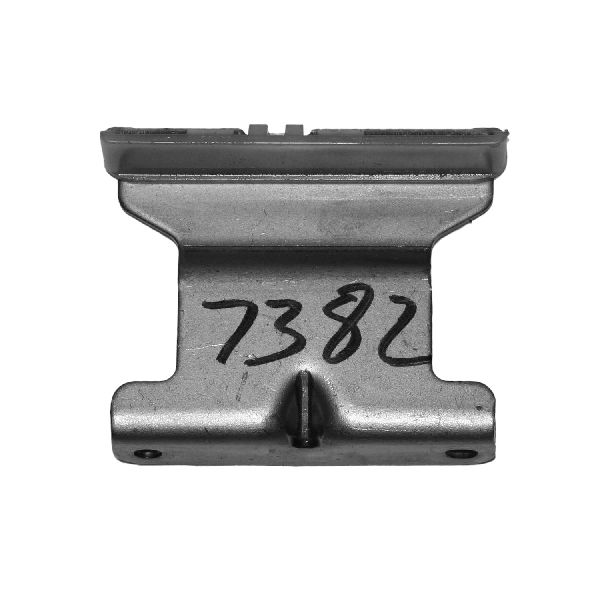
Est. part cost: $300-$800 - Failed Timing Chain Tensioners and/or Guides 🔴 High Probability The tensioners are hydraulic and rely on clean oil at the proper pressure. As they wear or get clogged with sludge from degraded oil, they lose their ability to keep the chains taut, accelerating chain wear. The plastic guides can also wear down or break. They are considered a wear item and are always replaced with the chains.
How to confirm: Usually diagnosed during the timing chain inspection. A rattling noise on startup that goes away after a few seconds is a key symptom of a tensioner failing to hold oil pressure.
Typical fix: Replace as part of a complete timing chain kit.
Est. part cost: $0 (Included in timing kit) - Low or Degraded Engine Oil 🟡 Medium Probability The timing chain tensioners are hydraulically operated by engine oil pressure. Low oil levels or oil that has broken down from extended change intervals (sometimes following the factory Oil Life Monitor) starves the tensioners of the pressure needed to keep the chains tight, leading to slack and rapid wear. GM later issued updates to the OLM software to recommend shorter intervals to mitigate this.
How to confirm: Check the oil level on the dipstick and review vehicle service records for oil change frequency. Oil changes should be performed every 5,000 miles with a full synthetic Dexos-approved oil to maximize chain life.
Typical fix: This is a contributing cause, not the root failure once P0009 is set. The immediate fix is a timing chain replacement, followed by a strict oil change regimen (e.g., every 5,000 miles) to prevent recurrence.
Est. part cost: $50-$100 for an oil change
Rare But Worth Checking
- Slipped Crankshaft Reluctor Wheel: Mentioned in multiple versions of GM TSB #PIP3423, this can cause the same codes as a stretched chain. The reluctor wheel, which the crankshaft sensor reads, can physically move on the crankshaft, creating a timing discrepancy that new chains cannot fix. This requires inspecting the reluctor wheel's position, often with a borescope through the crankshaft sensor hole, and comparing its position to a known-good crankshaft. If it has slipped, the crankshaft itself must be replaced.
Diagnosis Steps
- Verify the Check Engine Light is on and scan for codes. Confirm P0009 and note any other related codes like P0008, P0016-P0019.
- Check the engine oil level and condition. Low or dirty oil is a major contributing factor and indicates a potential lack of maintenance.
- Using a professional scan tool, access live engine data. Monitor the camshaft angle deviation PIDs for Bank 1 and Bank 2. A reading consistently greater than 4-5 degrees indicates a mechanical timing problem.
- If cam deviation is present, the issue is mechanical. Do not replace sensors. Proceed with timing chain inspection.
- If cam deviation is not present, investigate the rare possibility of a faulty sensor or wiring, but this is highly unlikely for this code on this engine.
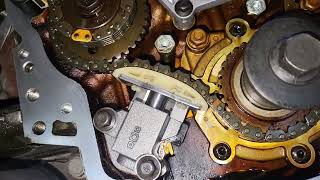
- The definitive diagnosis requires removing the engine front cover to physically inspect the timing chains for slack and the guides for wear or damage.
- As per TSB #PIP3423P, if the chains appear tight upon inspection, the crankshaft reluctor wheel must be inspected for any signs of movement or misalignment, which may require a borescope. 🎬 Watch this video to understand the crankshaft reluctor wheel fix.
Parts You'll Likely Need
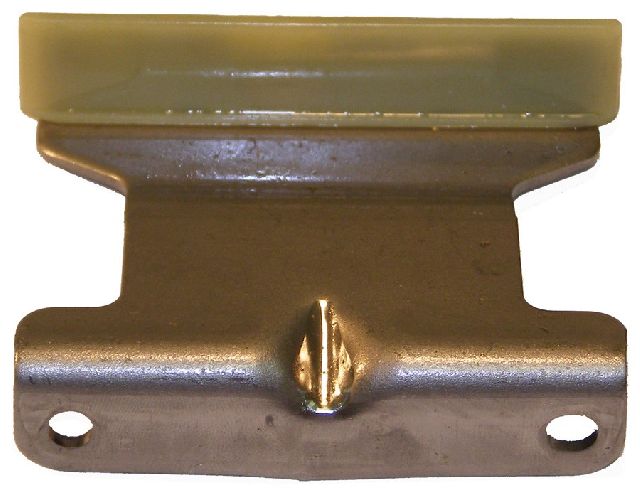
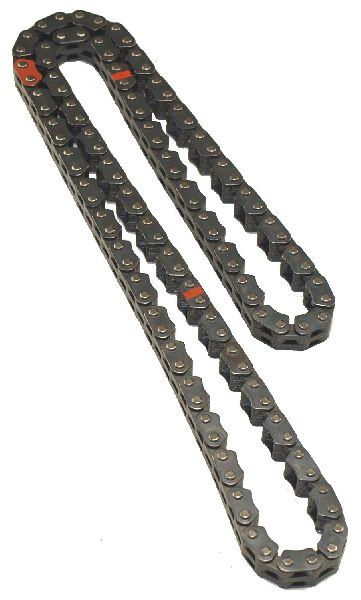
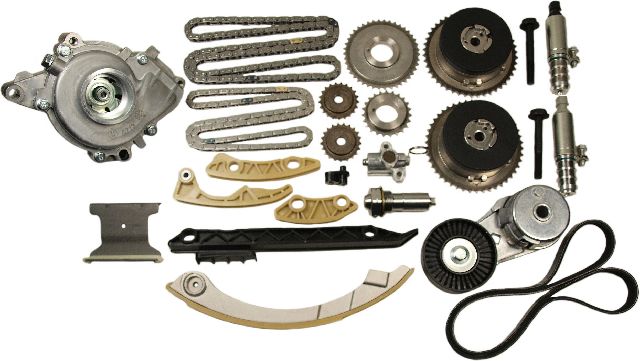
- Timing Chain Kit
(OEM #12700436 (ACDelco))— This is the definitive fix. A complete kit ensures all worn components (chains, tensioners, guides, and sometimes sprockets) are replaced with updated parts to prevent a repeat failure. Always use the latest superseded part number.
Trusted brands: ACDelco, Cloyes
OEM price range: $330-$700.
Aftermarket price range: $130-$500.
Related Codes That Often Appear With This One
- P0008 — P0008 is the equivalent timing correlation code for Bank 1 (the bank closer to the radiator). When both P0008 and P0009 appear, it strongly indicates a problem with the primary timing chain affecting both banks of the engine.
- P0016, P0017, P0018, P0019 — These are more specific cam/crank correlation codes for the intake and exhaust cams on both banks. Their presence further confirms a widespread mechanical timing issue and almost guarantees the timing chains have stretched.
Technical Service Bulletins (TSBs) & Recalls
- TSB #PIP3423P: Instructs technicians to inspect for loose timing chains, tensioners, or a slipped crankshaft reluctor wheel when codes P0008, P0009, P0016, P0017, P0018, or P0019 are set. This TSB has been updated many times (e.g., PIP3423K, PIP3423L).
- TSB #12-06-01-009F: Announces the availability of updated, comprehensive timing chain kits to address codes P0008, P0009, and P0016-P0019.
- Special Coverage #11340C: An expired program that extended the warranty on timing chains to 10 years/120,000 miles for certain 2007-2009 GM vehicles with the 3.6L V6 due to premature wear.
Platform-Specific Known Issues
- This platform is known for premature timing chain failure on the 3.6L V6 engine, a fact acknowledged by GM through TSBs and a special coverage program (11340C). This program extended the warranty for this specific issue to 10 years or 120,000 miles on certain earlier model years (primarily 2007-2009). While this program has expired for 2016-2017 models, its existence confirms the prevalence of the problem across the engine family.
Mechanic-Grade Diagnostic Values
- Camshaft/Crankshaft Correlation Deviation (Live Data) — expected: Less than 4-5 degrees at idle.. Failure: A consistent deviation greater than 9 degrees will set the code. Any consistent deviation over 4-5 degrees indicates a developing mechanical timing issue.
Wiring & Ground Locations
- G103 — Located at the left rear of the engine compartment on the cowl, often above the brake booster.. This is a primary ground location for the Engine Control Module (ECM) and Body Control Module (BCM). A poor or corroded ground here can cause erratic behavior from the ECM and incorrect readings from critical sensors like the camshaft and crankshaft position sensors, potentially complicating diagnosis.
- G101 — Typically located on the lower left side of the engine block, sometimes under the battery.. This is another primary ground for the Engine Control Module (ECM). A loose or corroded connection here can affect the ECM's reference voltage, leading to incorrect sensor readings and potentially false trouble codes.
Real Owner Repair Stories
- Go-Parts.com forum synthesis (GMC Terrain with 3.6L V6 (same engine family and platform)) — Check Engine Light with code P0009.
❌ Tried (didn't work) Initial diagnosis pointed towards timing chains, but the mechanic investigated further before performing the expensive job.
✅ What actually fixed it The crankshaft reluctor wheel had slipped 1.5 teeth. A mechanic was able to reposition the wheel without removing the crankshaft and applied a small tack weld to secure it, which resolved the code. The user strongly recommended inspecting the reluctor wheel before committing to a timing chain replacement.
OEM Part Supersession History
12651450, 12679117, 12693218→12700436— Updates to timing chain and component design to improve durability and wear resistance.
Heads up: The ACDelco kit 12700436 is specified for many LFX applications up to around 2016, but always verify fitment with the vehicle's VIN before ordering.
Model Year Variations Within This Range
- 2013-2017: The 3.6L LFX V6 engine, with 301 hp, was introduced to the Equinox lineup starting in the 2013 model year, replacing the previous 3.0L V6. The 2016-2017 models fall squarely in this LFX engine range, which is known for the timing chain issues. There were no major engine changes within the 2016-2017 model years themselves that would affect this diagnosis.
Helpful Videos
We Have This Part in Stock


The information in this article is provided for general reference and educational purposes only. Vehicle specifications, procedures, and part compatibility can vary by production date, trim level, and region. Always consult your vehicle's factory service manual and verify part numbers before purchasing or performing repairs. Safety-critical components such as airbags, seat belts, and braking systems should be installed by a qualified professional.
- Chevrolet EQUINOX:
- 🎬 Helpful Videos
- 🛍️ Shop This Part
- What's Unique About the 2016-2017 Chevrolet EQUINOX
- Diagnostic Flowchart
- Symptoms You May Notice
- Most Likely Causes
- Rare But Worth Checking
- Diagnosis Steps
- Parts You'll Likely Need
- Related Codes That Often Appear With This One
- Technical Service Bulletins (TSBs) & Recalls
- Platform-Specific Known Issues
- Mechanic-Grade Diagnostic Values
- Wiring & Ground Locations
- Real Owner Repair Stories
- OEM Part Supersession History
- Model Year Variations Within This Range
- 🎟️ Get 5% Off