

P0009 on 2005-2011 Cadillac STS: Causes and Fixes for Stretched Timing Chains
On a 2005-2011 Cadillac STS with the 3.6L V6 (LY7) engine, P0009 almost always means the timing chains have stretched. This is a common, well-documented issue requiring a major repair. A primary contributor was an overly optimistic Oil Life Monitor (OLM) calibration from the factory, leading to degraded oil and accelerated chain wear. Expect to pay a professional $2,500-$3,700 to replace the timing chains, guides, and tensioners with updated parts.
- P0009 on a 2005-2011 Cadillac STS with the 3.6L V6 almost certainly means you need a timing chain replacement.
- This is a serious issue; stop driving the vehicle immediately to avoid catastrophic engine failure.
- Do not waste money replacing camshaft or crankshaft sensors, as they are rarely the root cause.
- The repair is expensive ($2600+) and complex, requiring a professional mechanic with experience on these engines.
- Ensure the repair shop uses an updated, complete timing chain kit from a reputable brand like ACDelco or Cloyes.
What's Unique About the 2005-2011 Cadillac STS
This issue is extremely common on the early GM 3.6L 'High Feature' V6 engines (RPO code LY7) used in the STS and many other GM vehicles. The original timing chains were prone to premature stretching, a problem exacerbated by long oil change intervals recommended by the original factory Oil Life Monitor (OLM) calibration. Oil degradation leads to poor lubrication and faster wear on the chains and hydraulic tensioners. GM acknowledged this by issuing Technical Service Bulletins (TSBs) and releasing updated timing chain kits. GM also issued recalls to recalibrate the OLM for more frequent oil changes to prolong chain life on remaining vehicles. Therefore, a P0009 code on this specific vehicle is rarely a sensor issue and almost always points directly to this known mechanical timing chain problem.
Diagnostic Flowchart
Tap your situation to follow the diagnostic path that matches what you're seeing on this vehicle.
Symptoms You May Notice
- Check Engine Light is on
- Reduced engine power and poor acceleration
- Rough or unstable idle
- Rattling or scraping noise from the front of the engine, especially on cold startup, that may quiet down as the engine warms up.
- Decreased fuel economy
- Limp mode, especially under sharp acceleration
- Replacing only the camshaft position sensors
- Replacing only the crankshaft position sensor
- Replacing the VVT solenoids
Most Likely Causes
- Stretched Timing Chains 🔴 High Probability The original timing chains on the 3.6L V6 engine were susceptible to premature wear. This was made worse by extended oil change intervals suggested by the factory Oil Life Monitor, leading to oil breakdown and poor lubrication for the hydraulic tensioners and chains. GM later issued software updates to shorten the recommended interval.
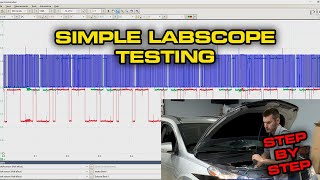
How to confirm: A mechanic can use a scan tool to view cam/crank correlation data. 🎬 Watch: How to test timing chain correlation with a labscope. A significant deviation (often more than 4-5 degrees) points to a timing issue. A physical inspection confirming chain slack by removing the timing cover is the definitive diagnosis.
Typical fix: Replace all three timing chains, all tensioners, and all guides with a new, updated kit. It is also common to replace the water pump and oil pump while the engine is disassembled.
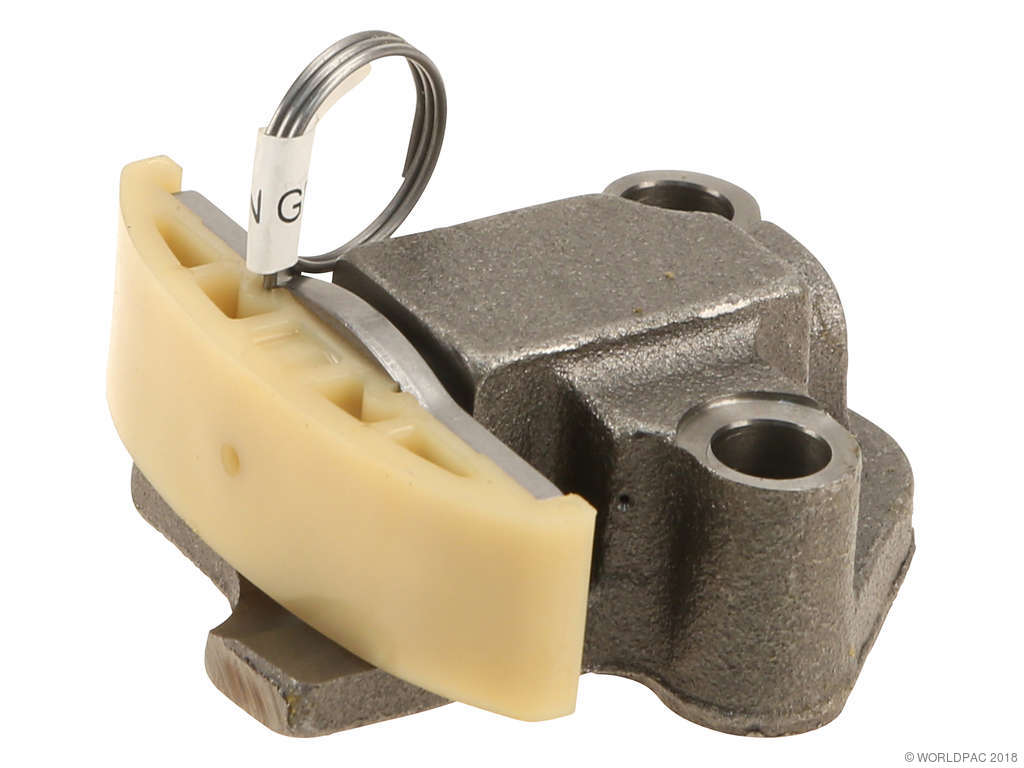
Est. part cost: $350-$750 - Worn Timing Chain Tensioners and Guides 🔴 High Probability The tensioners are hydraulic and lose their ability to keep the chains taut when oil is degraded or low. The plastic guides can become brittle and break over time, leading to chain noise and slack. These are considered wear items.
How to confirm: These are diagnosed and replaced during the timing chain service. A rattling noise is a key symptom. Broken pieces of plastic guides may be found in the oil pan during the repair.
Typical fix: Always replaced as part of a complete timing chain kit service. TSB 12-06-01-009F explicitly states to replace these components during the repair.
Est. part cost: $0 (Included in timing chain kit) - Low Oil Level or Degraded Oil 🟡 Medium Probability The timing chain tensioners are hydraulic and rely on clean oil at the proper pressure to function. The original Oil Life Monitor (OLM) allowed for excessively long oil change intervals, which GM later corrected via a software update because it was a primary contributor to chain stretch. Using non-Dexos certified oil can also accelerate wear.
How to confirm: Check the oil level and condition on the dipstick. Review vehicle service history for oil change frequency. Owners on forums like BobIsTheOilGuy.com strongly recommend 5,000-mile intervals with a quality Dexos synthetic 5W-30 oil to prevent recurrence.
Typical fix: Correct the oil level and use the manufacturer-specified oil type. However, if this has already caused the timing chains to stretch and set code P0009, they will still need to be replaced. An oil change alone will not fix a stretched chain.
Est. part cost: $50-$100
Rare But Worth Checking
- Slipped Crankshaft Reluctor Wheel: As mentioned in GM TSB PIP3423, the reluctor wheel on the crankshaft can sometimes move from its original position, causing the crankshaft position sensor to send incorrect data. This mimics a timing chain issue and can lead to misdiagnosis. A technician should consider this before committing to a chain replacement, though it is far less common than the chains themselves.
- Faulty Camshaft or Crankshaft Position Sensor: While a sensor can fail, it is very rarely the cause of P0009 on this engine. It is far more likely to be a mechanical timing problem. Do not replace sensors without first ruling out stretched chains. Forum users frequently ask if a sensor could be the cause, and the answer is almost always no.
Diagnosis Steps
- Verify the code with a professional OBD-II scanner.
- Check engine oil level and condition. Low or dirty oil can cause issues with hydraulic tensioners. Note the history of oil changes if available.
- Use a scan tool with live data capability to monitor the camshaft and crankshaft position sensor readings. Check for correlation deviation; a value consistently greater than 4-5 degrees is a strong indicator of a stretched chain.
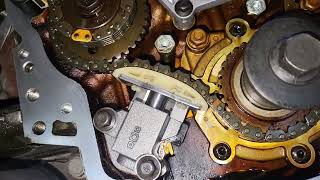
- Listen for any rattling or scraping noises from the front of the engine, which would indicate loose timing chains, especially on a cold start. 🎬 Watch: How to identify and fix engine clattering at startup.
- If data suggests a timing issue, proceed with a physical inspection. This involves removing the valve covers and/or timing cover to physically check for slack in the timing chains and the extension of the tensioners.
- Before committing to a timing chain replacement, a thorough technician may inspect the crankshaft reluctor wheel for slippage through the crankshaft position sensor hole, as noted in TSB PIP3423.
Parts You'll Likely Need
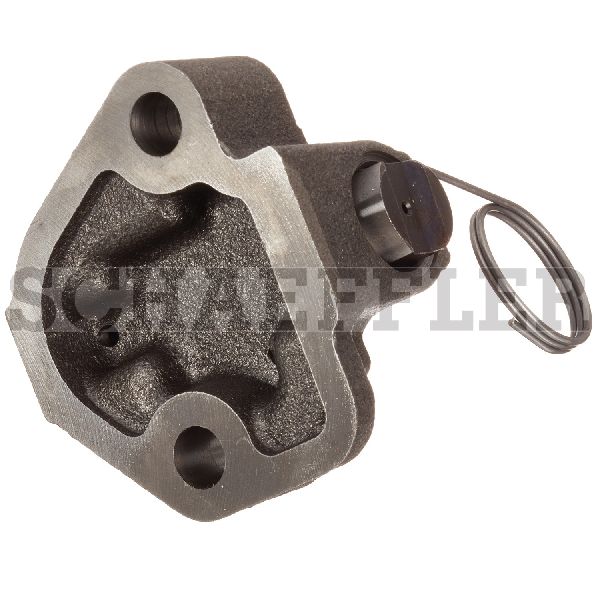
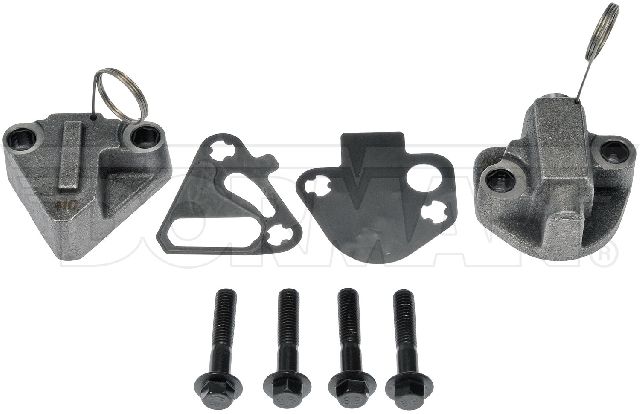
- Engine Timing Chain Kit
(OEM #12651450 (This part number has been superseded by newer versions like 12700436, but is the commonly referenced kit number).)— This is the definitive fix. A complete kit includes all three chains, all tensioners, guides, and sometimes sprockets, ensuring all wear components are replaced with updated designs. TSB 12-06-01-009F specifies using a complete kit.
Trusted brands: ACDelco (OEM), Cloyes, Melling
OEM price range: $500-$750
Aftermarket price range: $350-$600
Related Codes That Often Appear With This One
- P0008 — This code indicates a general engine position system performance issue, often set alongside the more specific bank-related codes. It is the most common companion code.
- P0017 — Crankshaft Position - Camshaft Position Correlation Bank 1 Sensor 'B'. This code points to a timing issue on Bank 1, and it's common to see timing codes for both banks when the primary chain is stretched.
- P0018 — Crankshaft Position - Camshaft Position Correlation Bank 2 Sensor 'A'. This is another Bank 2 timing correlation code, often appearing with P0009.
- P0019 — Crankshaft Position - Camshaft Position Correlation Bank 2 Sensor 'B'. This is the third potential timing correlation code for Bank 2, often seen with P0008 and P0017.
Technical Service Bulletins (TSBs) & Recalls
- PIP3423P: Instructs technicians to inspect for loose timing chains or tensioners when P0009 and related codes are present.
- 12-06-01-009F: Announces the availability of high feature V6 timing chain kits to repair stretched timing chains and lists dozens of affected GM vehicles with the 3.6L engine. It advises against replacing sprockets unless they are visibly worn.
Platform-Specific Known Issues
- The 3.6L LY7 V6 engine in the 2005-2011 STS is widely known for premature timing chain stretching. This was addressed by GM in TSBs #PIP3423P and #12-06-01-009F, which guide technicians on diagnosis and announce the availability of improved replacement parts.
- A major contributing factor was the original Oil Life Monitor (OLM) calibration, which allowed for excessively long oil change intervals, leading to oil degradation and accelerated wear. GM later issued a recall to recalibrate the OLM to recommend more frequent changes.
Mechanic-Grade Diagnostic Values
- Crankshaft Reluctor Wheel Position — expected: A measurement of 25mm to 26mm from the end of the machined surface of the crankshaft throw to the edge of the open space in the reluctor wheel.. Failure: A measurement outside of the 25-26mm range, or a visible offset either clockwise or counter-clockwise compared to a known good part, indicates the reluctor has slipped.
- Cam/Crank Correlation with Lab Scope — expected: When viewing crankshaft, bank 2 intake cam, and bank 2 exhaust cam signals on a lab scope, the pulses should align in a specific, known-good pattern at idle. The relationship is complex, but a known-good waveform shows the relative positions clearly.. Failure: A visible shift in the timing of any of the camshaft sensor pulses relative to the crankshaft sensor's sync pulse indicates a timing correlation error, confirming a stretched chain or other mechanical timing fault.
Scan Tool Commands That Help
- Tech2/GDS2: Crankshaft Position Variation Learn — This procedure is required after replacing the crankshaft position sensor or performing major engine work like a timing chain replacement. It allows the ECM to learn the minor variations in the new sensor or reluctor wheel to ensure accurate misfire detection and timing. Failure to perform this can sometimes lead to persistent, erroneous timing-related codes.
- Tech2/GDS2: Cam/Crank Correlation Data — This live data parameter is the first step in diagnosis. It shows the ECM's calculated deviation between the camshafts and crankshaft. A consistent deviation of more than 4-5 degrees is a strong indicator of a mechanical timing issue like a stretched chain.
Wiring & Ground Locations
- G103 (for 3.6L) — On the top right side of the engine, fastened to the ECM case.. This is a primary ground for the Engine Control Module (ECM). A loose or corroded G103 can cause erratic ECM behavior and potentially lead to false sensor readings or incorrect diagnostic codes.
- G104 — On the right front frame rail, near the bumper bracket.. This is another critical engine-related ground. On some GM platforms, this ground is specifically for the TAC (Throttle Actuator Control) module, but ensuring all major frame and engine grounds are clean and tight is essential when diagnosing electronic faults.
- ECM (Engine Control Module) — For the 3.6L engine, the ECM is located on the front of the engine, on the right (Bank 1) valve cover. For V8 models, it's on the left front frame rail below the headlamp assembly.. This is the computer that receives signals from the cam/crank sensors and sets code P0009. Knowing its location is critical for checking connections and grounds like G103.
- Bank 2 Camshaft Position Sensors — Bank 2 is the driver's side of the engine. The two camshaft position sensors are located on the front of the cylinder head, inserted into the timing cover.. These sensors provide the data for Bank 2 timing. While rarely the cause of P0009, their wiring and connectors must be inspected for damage or corrosion as part of a thorough diagnosis.
OEM Part Supersession History
12651450→12693218, 12700436— GM periodically updates the timing chain kits with improved components (chains, tensioners, guides) to increase durability and address the premature stretching issue.
Heads up: While multiple part numbers exist, they are generally sold as complete kits for specific engine RPO codes (LY7, LLT). It is critical to use a kit specified for your engine, as components like chains and guides can differ between the LY7 and the direct-injection LLT.
Model Year Variations Within This Range
- 2005-2008 (approx): These years primarily used the LY7 engine. This engine has port fuel injection and a 10.2:1 compression ratio. It is the version most notoriously affected by the timing chain stretching issue related to the original OLM calibration.
- 2008-2011 (approx): These years transitioned to the LLT engine, which features direct injection (DI). This engine has a higher compression ratio (11.3:1), different pistons with a depression for the injector spray, and under-piston oil squirters for cooling. While the timing chain architecture is similar and can still fail, the LLT and LY7 have different heads, pistons, and timing components that are not interchangeable. The timing chain issues are generally considered less frequent on the LLT compared to the early LY7.
Helpful Videos
We Have This Part in Stock




The information in this article is provided for general reference and educational purposes only. Vehicle specifications, procedures, and part compatibility can vary by production date, trim level, and region. Always consult your vehicle's factory service manual and verify part numbers before purchasing or performing repairs. Safety-critical components such as airbags, seat belts, and braking systems should be installed by a qualified professional.
- Cadillac STS:
- 🎬 Helpful Videos
- 🛍️ Shop This Part
- What's Unique About the 2005-2011 Cadillac STS
- Diagnostic Flowchart
- Symptoms You May Notice
- Most Likely Causes
- Rare But Worth Checking
- Diagnosis Steps
- Parts You'll Likely Need
- Related Codes That Often Appear With This One
- Technical Service Bulletins (TSBs) & Recalls
- Platform-Specific Known Issues
- Mechanic-Grade Diagnostic Values
- Scan Tool Commands That Help
- Wiring & Ground Locations
- OEM Part Supersession History
- Model Year Variations Within This Range
- 🎟️ Get 5% Off