

P0009 on 2010-2016 Cadillac SRX: Timing Chain and Engine Position Fixes
On a 2010-2016 Cadillac SRX, code P0009 almost always indicates stretched timing chains. This is a serious, common, and expensive repair that involves replacing the chains, tensioners, and guides with updated parts. The root cause is often linked to premature chain wear exacerbated by extended oil change intervals recommended by the original GM Oil Life Monitor calibration.
- P0009 on a 2010-2016 Cadillac SRX is a serious code that almost certainly points to stretched timing chains.
- Do not waste money replacing camshaft or crankshaft sensors; they are rarely the cause.
- This is not a DIY-friendly repair. It is complex, requires special tools, and is very labor-intensive.
- A major contributing factor was GM's original Oil Life Monitor system allowing overly long oil change intervals; stick to a 5,000-mile interval with full synthetic dexos oil as a preventative measure.
What's Unique About the 2010-2016 Cadillac SRX
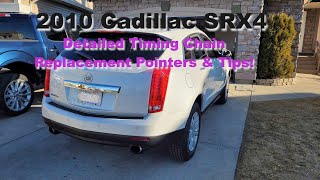
The GM High Feature V6 engines (3.0L and 3.6L) used in this generation of the SRX are notoriously prone to premature timing chain stretching. This isn't a random or rare event; it's a well-documented pattern that led GM to issue multiple Technical Service Bulletins (TSBs) and release updated timing chain kits. A contributing factor was GM's own Oil Life Monitor (OLM) system, which in its early calibration allowed for oil change intervals that were too long, leading to oil degradation that accelerated chain wear. 🎬 Watch: Why these GM V6 timing chains fail so often. While P0009 can mean a sensor issue on other cars, on this specific vehicle, it is overwhelmingly a mechanical timing chain problem.
Diagnostic Flowchart
Tap your situation to follow the diagnostic path that matches what you're seeing on this vehicle.
Symptoms You May Notice
- Check Engine Light illuminated
- Rough or uneven idle
- Reduced engine power and poor acceleration
- Rattling or whining noise from the engine, especially on cold startup
- Engine may hesitate or stall
- Decreased fuel efficiency
- Replacing the camshaft position sensors or crankshaft position sensor. This almost never fixes the P0009 code on this vehicle, as the issue is mechanical (the stretched chain), not electrical.
Most Likely Causes
- Stretched Timing Chains 🔴 High Probability The original timing chains on the GM High Feature V6 engines had a high rate of premature wear and stretching. This is the most common cause for P0009 on this platform. The stress from driving the high-pressure fuel pump on these direct-injection engines may have also contributed to the strain on the chains.
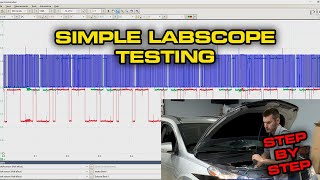
How to confirm: A technician can use a scan tool to view live data and see the camshaft/crankshaft correlation angles. Deviations beyond 2-3 degrees at idle strongly indicate 🎬 Watch: How to use a labscope to confirm timing issues. a timing issue. Physical inspection showing slack in the chains is the definitive confirmation, but requires significant labor.
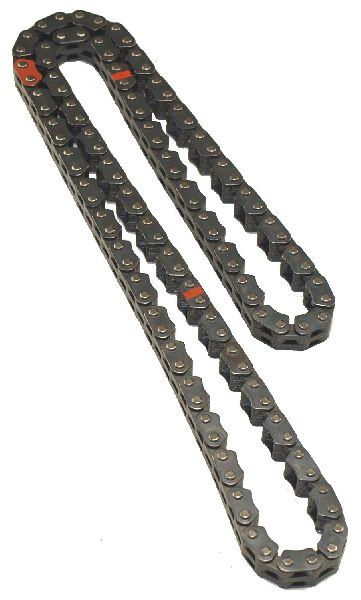
Typical fix: Replace all three timing chains, all tensioners, and all guides with an updated kit. It is critical to use the new, redesigned parts specified by GM.
Est. part cost: $250-$500 for a quality aftermarket kit, $400-$600 for an OEM kit. - Low or Degraded Engine Oil / Extended Oil Change Intervals 🔴 High Probability The timing chain tensioners are hydraulic and rely on clean oil at the correct pressure. Early versions of the GM Oil Life Monitor (OLM) algorithm allowed for intervals up to 12,000 miles, which was too long for these direct-injection engines. This led to rapid oil degradation, sludge, and accelerated wear on the chains and guides. GM later issued a recall to recalibrate the OLM for shorter intervals and released the dexos oil specification to combat this.
How to confirm: Check oil level and condition. Review service records. If the OLM was followed exclusively for oil changes, it's highly likely it contributed to the chain wear. Many experts now recommend ignoring the OLM and changing the oil every 5,000 miles with full synthetic dexos-approved oil.
Typical fix: Perform an oil and filter change with manufacturer-specified oil (ACDelco dexos1 Full Synthetic). This is a critical preventative measure but will not fix an already stretched chain.
Est. part cost: $50-$100 - Worn Timing Chain Tensioners and Guides 🔴 High Probability The tensioners and guides wear along with the chains. A failed tensioner can lose hydraulic pressure, allowing the chain to become slack and causing the timing to jump or rattle.
How to confirm: These are replaced as part of a complete timing chain service. A rattling noise on startup is a strong indicator of a failing tensioner.
Typical fix: Replace during the timing chain service. They are included in most comprehensive kits.
Est. part cost: $0 (Included in timing chain kit)
Rare But Worth Checking
- Faulty Camshaft or Crankshaft Position Sensor: This is a very rare cause on this vehicle. The fact that the PCM is setting a correlation code like P0009 (comparing signals from multiple sensors) usually means the sensors themselves are working, but the mechanical timing they are reading is incorrect. Do not replace sensors without first verifying the mechanical timing.
- Faulty VVT Solenoid (Actuator): A stuck or malfunctioning Variable Valve Timing (VVT) solenoid can cause a cam timing error, but it's less common than chain stretch for this specific code. It would typically set other codes as well.
- Shifted Crankshaft Reluctor Wheel: In some cases, the reluctor wheel on the crankshaft, which the crank sensor reads, can move slightly. This is a very rare and difficult-to-diagnose problem that mimics the symptoms of a stretched timing chain. GM Service Bulletin #PIP3423P mentions this possibility for codes P0008, P0009, and related timing codes.
Diagnosis Steps
- Confirm the P0009 code is present using an OBD-II scanner. Note any other timing-related codes like P0008 or P0017.
- Check the engine oil level and condition. If low or dirty, correct this first, clear the codes, and see if the code returns. This is unlikely to fix the issue but is a necessary first step.
- Using an advanced scan tool, monitor the camshaft and crankshaft position sensor data. Check the specific GM data PIDs for camshaft/crankshaft correlation. Deviations beyond +/- 4 degrees at idle indicate a mechanical timing problem.
- Listen for any rattling or whining noises from the front of the engine (where the timing chains are located), especially during a cold start.
- If scan data confirms a timing deviation, the only definitive fix is to replace the timing components. Physical inspection requires removing the engine front cover, at which point the replacement should be performed.
- If the chains are stretched, replace them along with the tensioners and guides using an updated OEM or equivalent quality kit.
Parts You'll Likely Need
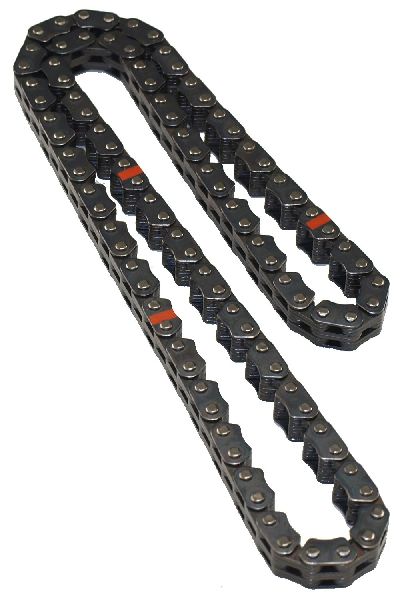
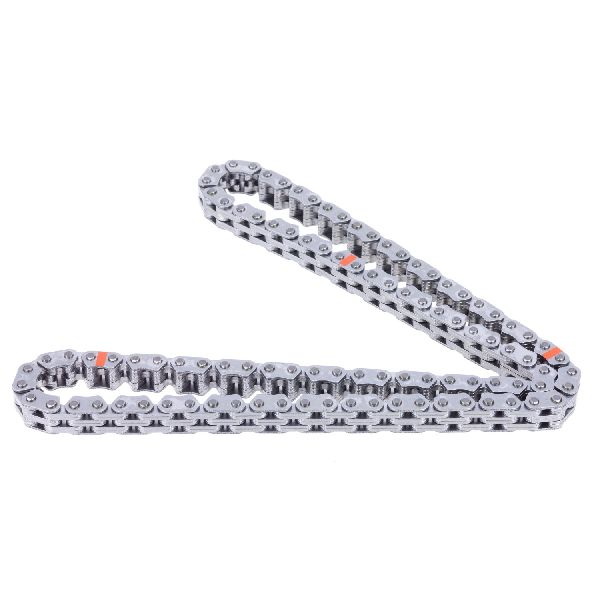
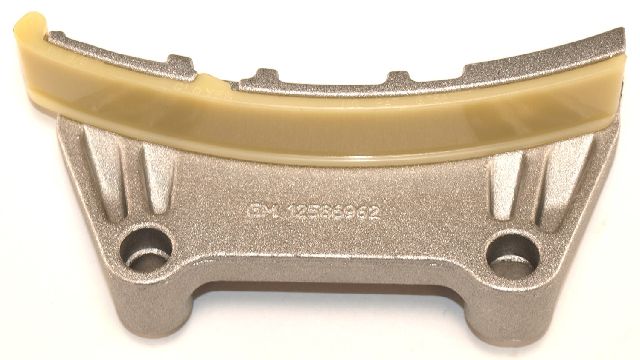
- Timing Chain Kit
(OEM #12651450 (For LFX/LF1 engines, superseded by newer kits), 12650230 (For earlier LY7 engines))— This is the definitive fix. A complete kit ensures all worn components (chains, guides, tensioners) are replaced with updated parts designed to last longer. TSB 12-06-01-009F details these kits.
Trusted brands: ACDelco (OEM), Melling
OEM price range: $400-$600
Aftermarket price range: $250-$450
Related Codes That Often Appear With This One
- P0008 — P0008 is a similar code for Engine Position System Performance on Bank 1. When chains stretch, it often affects both banks, so seeing P0008 and P0009 together is very common and a strong confirmation of the diagnosis.
- P0017 — P0017 (Crankshaft Position - Camshaft Position Correlation Bank 1 Sensor B) is another related timing correlation code. The presence of multiple timing codes (P0008, P0009, P0016, P0017, P0018, P0019) strongly points to a base timing chain issue.
Technical Service Bulletins (TSBs) & Recalls
- PIP3423P: Recommends inspecting for loose timing chains or tensioners for a group of timing-related DTCs including P0009.
- 12-06-01-009F: Announces updated timing chain kits for repairing stretched chains that cause codes like P0009. This TSB lists numerous affected vehicles and the specific part numbers for the repair kits.
- 10287C / 11083: These are related Field Actions/Recalls to reprogram the Engine Control Module (ECM) with an updated oil life monitor calibration to shorten the oil change interval and prevent premature wear.
Platform-Specific Known Issues
- Premature timing chain stretch is the single most significant known issue related to this code on the 2010-2016 SRX with the 3.0L and 3.6L V6 engines.
- GM issued TSB #12-06-01-009F, which announced the availability of updated timing chain kits specifically to address stretched chains causing DTCs like P0009.
- TSB #PIP3423P directs technicians to inspect for loose timing chains or tensioners when codes P0008, P0009, P0016, P0017, P0018, or P0019 are set.
- Owner Experience: A user on 'The Hull Truth' forum reported being quoted $4,500 by a dealer in late 2022 to replace the timing chains on their 2010 SRX with 110,000 miles. This highlights the high cost of the repair at a dealership.
- A key contributing factor was the original GM Oil Life Monitor calibration, which allowed excessively long oil change intervals, leading to oil breakdown and accelerated chain wear. GM later issued updates to shorten the interval.
Mechanic-Grade Diagnostic Values
- Camshaft Position Sensor Resistance — expected: 3.7-11.1 ohms between terminals #1 and #2.. Failure: A reading outside this range indicates a faulty sensor.
- Camshaft Position Sensor Reference Voltage — expected: Approximately 5V between terminal #1 and ground with the ignition on and sensor disconnected.. Failure: Significantly lower or no voltage suggests a wiring or ECM issue.
- Camshaft Position Sensor Signal (at idle) — expected: A 2.5V PWM signal at approximately 35Hz when viewed on a scan tool or oscilloscope.. Failure: An absent or erratic signal points to a sensor or wiring fault.
Scan Tool Commands That Help
- GDS2 (GM Global Diagnostic System 2): Camshaft Position Actuator Solenoid Control — This bidirectional test allows a technician to command the VVT solenoids on and off to verify their mechanical and electrical operation. While less common than chain stretch, a stuck solenoid can cause timing correlation codes. This test helps rule out the solenoids before committing to a timing chain replacement.
Wiring & Ground Locations
- G101 — At the left rear of the engine compartment, on the cowl above the brake booster.. This ground serves the Engine Control Module (ECM). A poor connection here can cause erratic ECM behavior and false sensor readings, potentially leading to incorrect diagnostic codes.
- G102 — Located at the left rear of the engine.. This is the ground point for the ignition coils. While not directly related to P0009, a poor ground here can cause misfires and other drivability issues that may occur alongside timing codes.
- Engine Block to Firewall Strap — A braided strap connecting the main engine block to the vehicle's firewall.. This is a primary ground path for the entire engine. GM vehicles are known for issues with these straps corroding or breaking, leading to a host of electrical problems, including loss of communication between modules and sensor failures.
- ECM Connectors (X1, X2, X3 on LFX) — The three main harness connectors at the Engine Control Module (ECM).. The signals from the camshaft and crankshaft sensors are transmitted to the ECM through these connectors. Corrosion or backed-out pins in these connectors can disrupt the signals and cause timing correlation codes. On the LFX engine, connector X1 often has a blue terminal assurance lock, X2 is black/black, and X3 is black/gray.
Real Owner Repair Stories
- DoItYourself.com Community Forums (2015 Cadillac SRX) — Car entered a limp mode, gas pedal became unresponsive for ~10 seconds. A scan revealed a history of numerous module communication loss codes.
❌ Tried (didn't work) Initial speculation was flood damage or a major wiring harness short.
✅ What actually fixed it Cleaning minor corrosion from the negative battery terminal. This restored proper power and ground to all modules, resolving the communication errors.
OEM Part Supersession History
12651450→12693218, which was then superseded by 12700436.— GM periodically updates parts to improve durability and address known failure modes. These kits for the High Feature V6 were updated to include more robust chains and tensioners to combat premature stretching.
Heads up: While the kits are generally backward compatible for the specified engines (LF1/LFX), it is critical to use the complete, latest-revision kit and not mix old and new components. Using an older part number may re-introduce the original wear problem.
Model Year Variations Within This Range
- 2010-2011 vs 2012-2016: The 2010-2011 SRX with the 3.0L V6 (LF1) engine has two camshaft position sensors. The 2012-2016 SRX with the 3.6L V6 (LFX) has four camshaft position sensors (one for the intake and one for the exhaust cam on each bank). This is important when diagnosing sensor-specific codes that may accompany P0009.
- 2010-2016: While both the 3.0L LF1 and 3.6L LFX engines are affected by timing chain stretch, the LFX was an evolution of the design. However, timing components remained largely the same through 2016 for these engine families, and both are covered under the same service bulletins for timing chain issues.
Helpful Videos
We Have This Part in Stock


The information in this article is provided for general reference and educational purposes only. Vehicle specifications, procedures, and part compatibility can vary by production date, trim level, and region. Always consult your vehicle's factory service manual and verify part numbers before purchasing or performing repairs. Safety-critical components such as airbags, seat belts, and braking systems should be installed by a qualified professional.
- Cadillac SRX:
- 🎬 Helpful Videos
- 🛍️ Shop This Part
- What's Unique About the 2010-2016 Cadillac SRX
- Diagnostic Flowchart
- Symptoms You May Notice
- Most Likely Causes
- Rare But Worth Checking
- Diagnosis Steps
- Parts You'll Likely Need
- Related Codes That Often Appear With This One
- Technical Service Bulletins (TSBs) & Recalls
- Platform-Specific Known Issues
- Mechanic-Grade Diagnostic Values
- Scan Tool Commands That Help
- Wiring & Ground Locations
- Real Owner Repair Stories
- OEM Part Supersession History
- Model Year Variations Within This Range
- 🎟️ Get 5% Off