

P0008 on 2010-2017 GMC Terrain V6: Stretched Timing Chain Causes and Fixes
On a 2010-2017 GMC Terrain with a V6 engine, code P0008 almost always means the timing chains have stretched. This is a serious and well-documented issue caused by a combination of the original chain design and oil maintenance practices. Expect a costly repair of $2,000-$4,500 to replace the chains, tensioners, and guides. Some earlier models were covered by a special warranty (11340B), but this has likely expired for most vehicles.
- P0008 on a V6 GMC Terrain is a serious code that almost certainly indicates stretched timing chains.
- The repair is complex and expensive, typically costing over $2,000.
- This problem is often caused or accelerated by not changing the engine oil frequently enough or allowing the oil level to run low.
- Do not waste money replacing camshaft or crankshaft sensors; they are reporting a real mechanical problem.
- After repair, switch to a 3,000-5,000 mile oil change interval using a full synthetic dexos-approved oil to prevent recurrence.
What's Unique About the 2010-2017 Gmc TERRAIN
The GMC Terrain, particularly models with the 3.0L (LF1, LFW) and 3.6L (LFX) V6 engines, is highly susceptible to premature timing chain stretch. This issue was so prevalent across GM's High Feature V6 engine family that the manufacturer issued multiple Technical Service Bulletins (TSBs) and a Special Coverage Adjustment (11340B/C) that extended the warranty for this specific repair to 10 years or 120,000 miles. The problem is linked to the design of the original timing chains, which were sensitive to wear. This wear is dramatically accelerated by extended oil change intervals recommended by the Oil Life Monitor and owners not keeping the oil level topped off, leading to inadequate lubrication and pressure for the hydraulic tensioners.
Diagnostic Flowchart
Tap your situation to follow the diagnostic path that matches what you're seeing on this vehicle.
Symptoms You May Notice
- Check Engine Light illuminated
- Rattling or clattering noise from the engine, especially on cold startup, that may last a few seconds
- Rough or unstable engine idle
- Noticeable loss of engine power and sluggish acceleration
- Reduced fuel economy
- Engine may be hard to start
- Replacing camshaft position sensors
- Replacing crankshaft position sensor
- Replacing VVT solenoids (oil control valves) without addressing the underlying chain issue
Most Likely Causes
- Stretched Timing Chains 🔴 High Probability The original timing chains used in many GM High Feature V6 engines (including the LLT, LF1, LFW, and early LFX) were susceptible to premature wear and stretching. This is the most common cause for P0008, affecting a wide range of GM vehicles with these engines.
How to confirm: A technician must measure the slack or deflection in the timing chains, which requires partial engine disassembly to access the timing cover. A professional scan tool can also monitor cam/crank correlation data to see the deviation, but physical inspection is definitive.
Typical fix: Replace all three timing chains (one primary, two secondary), along with all related tensioners, guides, and gaskets. Use an updated OEM or high-quality aftermarket kit. TSB #12-06-01-009 series details the availability of these kits.
Est. part cost: $300-$600 - Worn Timing Chain Tensioners/Guides 🔴 High Probability The tensioners are operated by oil pressure. When oil is low or dirty, they can't maintain proper tension, allowing the chain to slap against the plastic guides, causing noise and accelerated wear. The guides can become brittle and break.
How to confirm: Inspected for wear, damage, or lack of hydraulic pressure during the timing chain inspection. TSB #12-06-01-009 states guides should only be replaced if witness marks show wear into the base material.
Typical fix: Always replaced as part of a complete timing chain service. It is not recommended to replace only the tensioners or guides without replacing the stretched chains.
Est. part cost: $100-$200 - Low Engine Oil Level or Poor Oil Quality 🔴 High Probability The timing chain tensioners are hydraulic and rely on clean oil at the proper level to function. The direct injection design of these engines can lead to fuel dilution of the oil, reducing its viscosity and lubricating properties, especially with short-trip driving. Following the factory Oil Life Monitor often results in intervals that are too long, exacerbating wear.
How to confirm: Check the oil level on the dipstick and review service records. The oil will often be low, overdue for a change, or smell of gasoline.
Typical fix: This is a primary contributing factor, not the final fix. The damaged timing components must still be replaced. After repair, use a full synthetic oil meeting the GM dexos specification and adopt a strict 3,000-5,000 mile oil change interval, checking the level frequently.
Est. part cost: $50-$80 for an oil change
Rare But Worth Checking
- Slipped Crankshaft Reluctor Wheel: A GM Technical Service Bulletin (PIP3423N) notes that the crankshaft position sensor reluctor wheel can physically move on the crankshaft, causing incorrect timing signals even if the chains are good. This should be inspected if chain stretch is not evident, though it is much less common than chain failure.
Diagnosis Steps
- Verify engine oil level and condition. If low, dirty, or smells of fuel, note this as a primary contributing factor.
- Scan the ECM for all stored trouble codes. Note if P0009, P0016-P0019 are also present, as this strengthens the diagnosis of timing chain failure.
- Listen for a distinct rattling noise from the front of the engine during a cold start. The noise often dissipates after a few seconds as oil pressure builds.
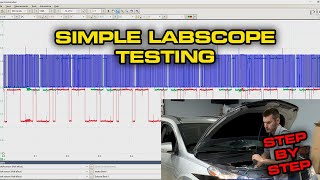
- Using a professional scan tool, monitor the camshaft/crankshaft correlation PIDs. A deviation beyond the specified threshold confirms a timing error. An oscilloscope can also be used to analyze the sensor patterns directly. 🎬 Watch: How to use a labscope to diagnose timing issues.
- If scan data is inconclusive, perform a physical inspection of the timing chains. This requires removing the engine's front/timing cover to visually check for slack and guide wear. This is the definitive diagnostic test.
- If chains appear to be within specification (highly unlikely), inspect the crankshaft reluctor wheel for any signs of movement on the crankshaft, as noted in TSB PIP3423N.
Parts You'll Likely Need
- Timing Chain Kit
(OEM #12651450 (This part number has been superseded by newer versions like 12700436; confirm with dealer))— This is the primary failure point. A complete kit ensures all worn components (chains, tensioners, guides, gaskets) are replaced with updated parts. TSB #12-06-01-009 series announced the availability of these kits.
Trusted brands: ACDelco (OEM), Cloyes, Melling
OEM price range: $400-$600
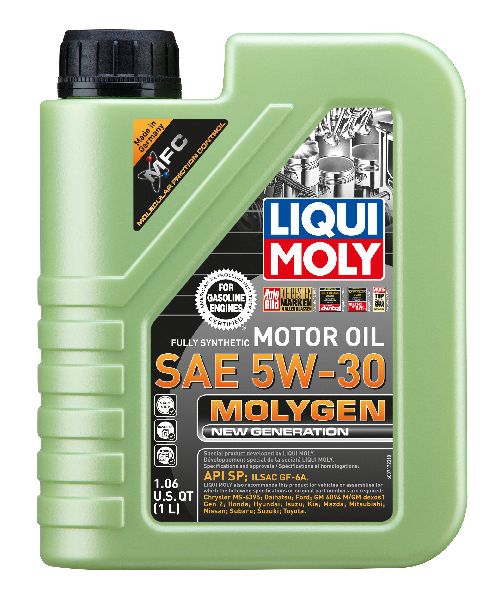
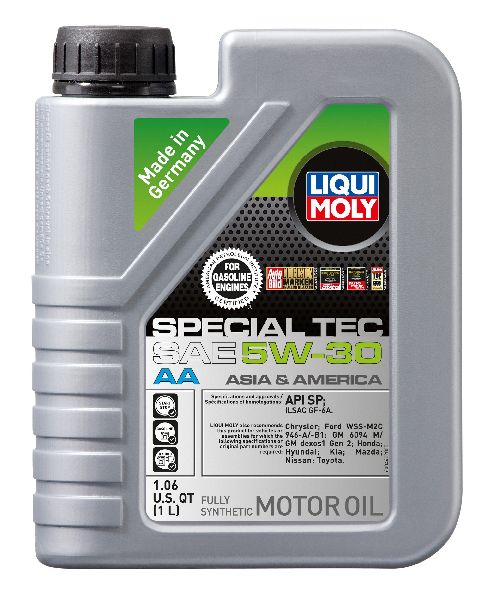
Aftermarket price range: $250-$450 - Engine Oil and Filter — Crucial for the longevity of the new timing components. Using the manufacturer-specified full synthetic oil (dexos-rated) and a quality filter is critical.
Trusted brands: ACDelco, Mobil 1, Pennzoil Platinum
OEM price range: $60-$90
Aftermarket price range: $40-$70 - RTV Sealant — Required to re-seal the timing cover to the engine block to prevent oil leaks.
Trusted brands: Permatex The Right Stuff, ACDelco RTV Engine Sealant
OEM price range: $20-$30
Aftermarket price range: $15-$25
Related Codes That Often Appear With This One
- P0009 — This is the identical error code but for Bank 2. It's very common to see P0008 and P0009 together, as the primary timing chain that stretches affects the timing correlation for both cylinder banks.
- P0016, P0017, P0018, P0019 — These are all crankshaft/camshaft position correlation codes for different camshafts and banks. Their presence alongside P0008 strongly confirms a systemic timing issue, almost certainly pointing to the timing chains.
Technical Service Bulletins (TSBs) & Recalls
- PIP3423P/N: Mentions P0008 and instructs technicians to inspect for loose timing chains or a moved crankshaft reluctor wheel.
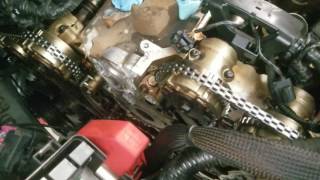
- 12-06-01-009 (A-G series): A series of bulletins announcing the availability of V6 timing chain kits to repair stretched chains causing codes like P0008, and providing updated service procedures. 🎬 Watch: A complete walkthrough of the timing chain replacement process.
- 11340B/C: Special Coverage Adjustment extending the warranty for timing chain replacement to 10 years/120,000 miles.
Platform-Specific Known Issues
- GM issued a special coverage program (11340B/C) extending the warranty on timing chains to 10 years or 120,000 miles for many vehicles with these engines, acknowledging the widespread nature of the problem. However, for a 2010-2017 Terrain, this coverage has likely expired due to age.
- The issue is heavily exacerbated by the original long oil change intervals recommended by the oil life monitoring system. Shorter intervals (3,000-5,000 miles) with full synthetic oil are key to preventing a repeat failure.
- The 3.0L (LF1/LFW) and 3.6L (LFX) engines are part of the 'High Feature' V6 family, and this timing chain issue is their most notorious and expensive common failure.
Mechanic-Grade Diagnostic Values
- Camshaft Position Sensor Resistance — expected: Approximately 1.2 kΩ. Failure: Significant deviation from 1.2 kΩ or an open/short circuit.
- ECM Ignition Voltage at X2 Connector — expected: Battery Voltage (approx. 12.6V with key on, engine off). Failure: Low or no voltage, indicating a wiring or fuse issue before the ECM.
- ECM Ground at X2 Connector — expected: Near 0V (good continuity to ground). Failure: Voltage present, indicating a poor ground connection (voltage drop).
Scan Tool Commands That Help
- GDS2 (GM Tech 2 successor): Crankshaft Position Reluctor Ring Learn — This procedure is required after any service involving the crankshaft, crankshaft sensor, or ECM. It synchronizes the sensor with the actual reluctor wheel position. Failure to perform this can cause timing-related codes even with mechanically sound components.
Wiring & Ground Locations
- G110 — Located on the right rear of the engine, mounted to the back of the cylinder head, sometimes on a bracket directly above the power steering pressure hose.. This is a critical shared ground point for the ECM (Engine Control Module) and TCM (Transmission Control Module). A loose or corroded G110 ground can cause erratic sensor readings and communication errors, potentially mimicking timing correlation faults.
- ECM Connector X2 (58-pin) — At the Engine Control Module (ECM).. This connector houses the primary power and ground circuits for the ECM. Specifically, Pins 1, 2, and 4 are grounds, while Pins 3, 5, and 6 are ignition voltage inputs. Verifying power and ground here is a key step in diagnosing if the ECM itself is faulty or just not receiving proper power.
- Camshaft Position Sensor Connectors (Bank 1) — Bank 1 (firewall side) has two sensors, one for intake and one for exhaust. On the 3.6L, they are often located behind a bracket holding the ECM or other electrical components.. Poor connections, oil contamination, or backed-out terminals at these specific connectors can cause an intermittent loss of the camshaft signal, directly leading to a P0008 code. GM issued a service bulletin (related to PI0090D) about inspecting these connectors for poor connections causing hesitation.
Real Owner Repair Stories
- Reddit user on r/MechanicAdvice (2011 Chevy Traverse (same platform/engine)) — Intermittent no crank/no start, multiple communication loss DTCs.
❌ Tried (didn't work) Initial diagnosis pointed towards multiple module failures.
✅ What actually fixed it The G110 ground bolt on the back of the cylinder head had been cross-threaded during a previous transmission replacement and was not tight. This caused an intermittent loss of ground for the ECM and other modules. Tightening the ground bolt resolved all issues.
OEM Part Supersession History
12651450→12693218, then 12700436— The original timing chains were prone to premature stretching. Subsequent part numbers represent revised designs for improved durability.
Heads up: While the kits may physically fit, using an older design chain on a newer engine is not recommended. Always use the latest superseded part number for this repair.
Model Year Variations Within This Range
- 2010-2012: These years used the 3.0L V6 (LF1/LFW) or the early 3.6L V6 (LLT in other platforms, LFX from 2012). The timing chain design in these engines was more susceptible to the stretching issue. The original timing chain from the problematic LLT engine was carried over for the 2012 LFX model year.
- 2013-2017: Starting with the 2013 model year, the 3.6L LFX engine received a redesigned, more durable timing chain. While failures are still possible, especially with poor oil maintenance, they are significantly less common than on pre-2013 models.
Helpful Videos

Used OEM Parts in Stock
New Aftermarket Parts Available



The information in this article is provided for general reference and educational purposes only. Vehicle specifications, procedures, and part compatibility can vary by production date, trim level, and region. Always consult your vehicle's factory service manual and verify part numbers before purchasing or performing repairs. Safety-critical components such as airbags, seat belts, and braking systems should be installed by a qualified professional.
- Gmc TERRAIN:
- 🎬 Helpful Videos
- 🛍️ Shop This Part
- What's Unique About the 2010-2017 Gmc TERRAIN
- Diagnostic Flowchart
- Symptoms You May Notice
- Most Likely Causes
- Rare But Worth Checking
- Diagnosis Steps
- Parts You'll Likely Need
- Related Codes That Often Appear With This One
- Technical Service Bulletins (TSBs) & Recalls
- Platform-Specific Known Issues
- Mechanic-Grade Diagnostic Values
- Scan Tool Commands That Help
- Wiring & Ground Locations
- Real Owner Repair Stories
- OEM Part Supersession History
- Model Year Variations Within This Range
- 🎟️ Get 5% Off