

P0008 on 2007-2014 GMC Acadia: The Notorious Stretched Timing Chain Issue, Causes, and Fixes
Code P0008 on a 2007-2014 GMC Acadia with the 3.6L V6 almost certainly indicates stretched timing chains. This is a widespread, well-documented problem caused by a combination of early chain design and aggressive oil life monitor settings. The repair is extensive and costly, typically $2,700-$3,700+, involving replacing all chains, tensioners, and guides. GM issued a special warranty extension (#11340C) for this, which has now expired for most vehicles, but confirms the prevalence of the issue.
- P0008 on a 2007-2014 GMC Acadia is a serious code that points directly to a stretched timing chain.
- Do not waste money replacing camshaft or crankshaft sensors; they are not the cause of the problem.
- This is a very expensive repair ($2,700+) due to the high labor involved in accessing the timing chains.
- The vehicle should be repaired as soon as possible to avoid the risk of the chain breaking and causing catastrophic engine failure.
- Using high-quality full synthetic oil and adhering to strict oil change intervals is critical for the longevity of the replacement timing chains.
What's Unique About the 2007-2014 Gmc ACADIA

The first-generation GMC Acadia, along with its GM Lambda platform siblings (Buick Enclave, Chevrolet Traverse, Saturn Outlook), uses a 3.6L V6 engine (primarily the LLT variant) that is notorious for premature timing chain failure. The issue was so prevalent, especially in 2007-2011 models, that it led to class-action lawsuits and GM issuing Special Coverage Adjustment #11340C. The root cause is widely attributed to two main factors: an early timing chain design that was susceptible to wear and an overly optimistic Oil Life Monitor (OLM) calibration that allowed for excessively long oil change intervals. The direct-injection LLT engine is harder on oil, and degraded oil fails to properly lubricate the chains and supply adequate pressure to the hydraulic tensioners, accelerating wear and stretch.
Diagnostic Flowchart

Tap your situation to follow the diagnostic path that matches what you're seeing on this vehicle.
Symptoms You May Notice
- Check Engine Light is on
- Rattling or buzzing noise from the engine, especially on a cold startup, lasting for a few seconds
- Reduced engine power and poor acceleration.
- Rough or unstable idle
- Decreased fuel economy.
- In some cases, the engine may stall unexpectedly at low speeds
- Replacing only the camshaft position sensors or crankshaft position sensor. These sensors are reporting the timing deviation; they are not the cause of it.
- Replacing only one timing chain or tensioner. The job is too labor-intensive to not replace all timing components at the same time with the updated parts.
- Ignoring the need to reprogram the ECM with the updated Oil Life Monitor calibration after the repair, as specified by GM.
- Mistaking a faulty VVT actuator (phaser) or solenoid for the root cause. While these can cause timing issues, on this platform, the primary chain stretch is the overwhelming cause of P0008.
Most Likely Causes

- Stretched Timing Chains 🔴 High Probability The original timing chains on the 3.6L V6 (one primary, two secondary) were prone to premature stretching. This is the most common cause for P0008 on this vehicle.
How to confirm: A technician can use an advanced scan tool to view camshaft deviation data in real-time. A more definitive, but labor-intensive, method is using a lab scope to graph the cam and crank sensor signals to check their correlation against a known-good pattern. Physical confirmation requires removing the engine's front timing cover to measure chain deflection.
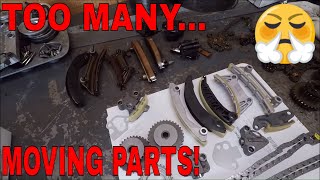
Typical fix: Replace all three timing chains, all tensioners, and all guides with an updated kit. It is critical to use the latest design parts specified by GM.
Est. part cost: $300-$600 - Failed Timing Chain Tensioners 🔴 High Probability Tensioners rely on clean oil and sufficient oil pressure to keep the chains tight. They can fail due to wear or become weak from oil sludge caused by extended drain intervals, allowing the chain to become slack.
How to confirm: Inspected for weakness, leakage, or damage during the timing chain replacement job. A failed tensioner is often a symptom of a larger oil maintenance issue.
Typical fix: Always replaced as part of a complete timing chain service. Never replace just a tensioner.
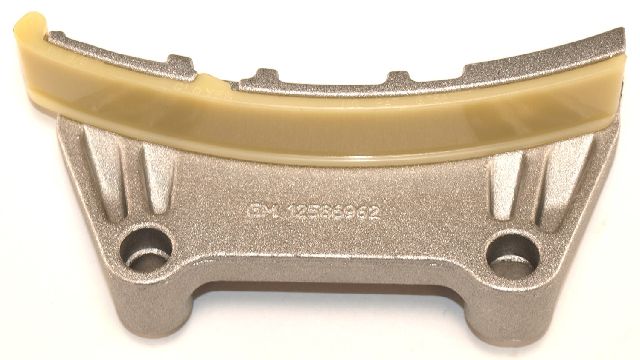
Est. part cost: Included in timing chain kits. - Worn or Broken Timing Chain Guides 🟡 Medium Probability The plastic/nylon guides can become brittle from heat cycles and age. They can wear down or break, contributing to chain slack and noise. Pieces can also break off and fall into the oil pan.
How to confirm: Visually inspected for wear, cracking, or missing pieces when the timing cover is removed.
Typical fix: Always replaced as part of a complete timing chain service.
Est. part cost: Included in timing chain kits. - Low or Degraded Engine Oil ⚪ Low Probability This is a major contributing factor, not a direct cause of an existing P0008. The original Oil Life Monitor calibration allowed for intervals that were too long for the direct-injected 3.6L engine, leading to oil breakdown. Degraded oil loses viscosity, causing accelerated wear on all timing components by reducing the effectiveness of the hydraulic tensioners.
How to confirm: Check the oil dipstick and service records. This is a contributing factor, not the root cause of an already-set code.
Typical fix: Perform an oil and filter change with a quality full synthetic Dexos-approved oil. This will not fix an already stretched chain but is critical for the longevity of the new parts.
Est. part cost: $50-$100
Rare But Worth Checking
- Crankshaft Reluctor Wheel Misalignment: In some GM vehicles, the reluctor wheel (which the crankshaft sensor reads) can shift slightly on the crankshaft, causing a timing correlation code even if the chain is good. This is less common than chain stretch but is a known possibility that can lead to misdiagnosis. GM issued a bulletin (PIP3423P) describing how to identify a slipped wheel, which may be possible with a borescope through the crank sensor hole.
- Faulty Camshaft/Crankshaft Sensor: It is very rare for a sensor itself to cause P0008 without other sensor-specific codes (e.g., circuit codes). The sensors are usually accurately reporting a real mechanical problem. Replacing them is a common misdiagnosis.
Diagnosis Steps
- Confirm the code P0008 and any other related codes with a quality OBD-II scanner.
- Check for eligibility under GM's Special Coverage Adjustment #11340C (10 years/120,000 miles). While likely expired for most, it's worth checking the vehicle's service history.
- Check the engine oil level and condition. If low or very dirty, note this as a contributing factor. An oil change will not fix the code.
- Listen for a distinct rattling or chain-slap noise from the passenger side of the engine, especially during the first 2-3 seconds after a cold start.
- Using an advanced scan tool, monitor the camshaft position deviation parameters. Persistent deviation beyond a few degrees at idle and under load confirms a timing error.
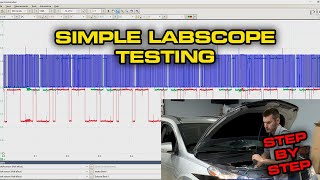
- For advanced diagnosis, use a multi-channel oscilloscope to compare the crankshaft sensor signal with the signals from the Bank 1 camshaft sensors. Compare the resulting waveform to a known-good pattern to definitively confirm a correlation error without disassembly. For a known-good 3.6L, the Bank 1 intake cam signal should cross the crank signal right in the middle of the missing tooth gap.
- If a timing error is confirmed, the only fix is to perform the labor-intensive task of removing the front timing cover to physically replace all chains, guides, and tensioners.
Parts You'll Likely Need

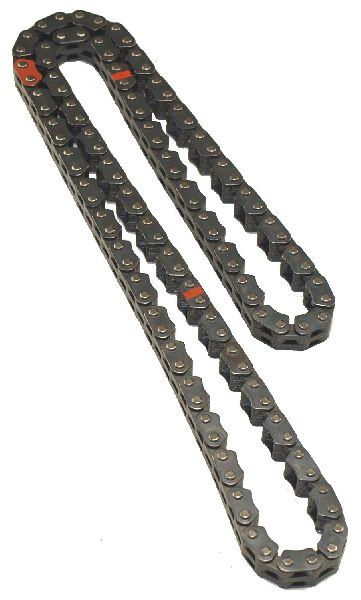
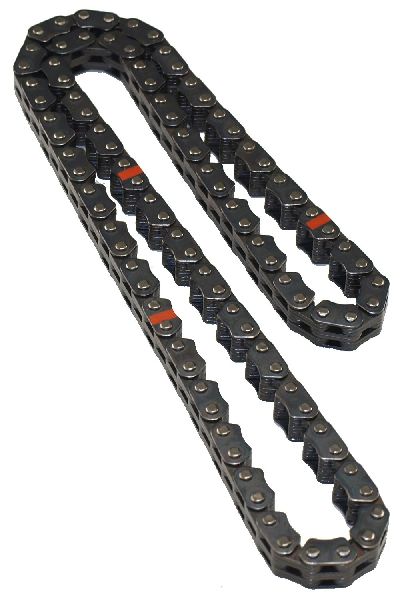
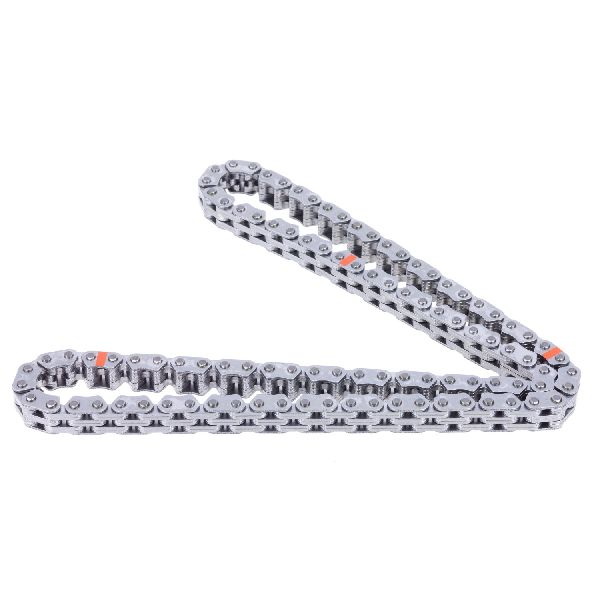
- Engine Timing Chain Kit
(OEM #12651450 (Superseded by 12693218 for some applications))— This is the comprehensive solution. The official GM kit contains the updated chains, tensioners, guides, seals, and gaskets needed to correct the root cause of code P0008. Ensure the kit is for the LLT engine.
Trusted brands: ACDelco (OEM), Cloyes
OEM price range: $400-$550
Aftermarket price range: $250-$450
Related Codes That Often Appear With This One
- P0017 — Crankshaft Position - Camshaft Position Correlation (Bank 1, Exhaust Cam). Often appears with P0008 as it relates to the same bank and underlying mechanical issue.
- P0009 — Engine Position System Performance (Bank 2). This indicates the timing issue is also affecting the other cylinder bank (front of the engine), strongly pointing to a stretched primary timing chain that serves both banks.
- P0016, P0018, P0019 — These are all additional camshaft/crankshaft correlation codes for different camshafts and banks. Seeing multiple codes like these together is a definitive sign of a base timing problem affecting the entire engine.
Technical Service Bulletins (TSBs) & Recalls
- 12-06-01-009F: This is the key TSB. It announces the availability of updated, comprehensive High Feature V6 timing chain kits specifically for repairing stretched timing chains that cause codes P0008, P0009, P0016, P0017, P0018, and/or P0019. It lists the correct part numbers for various model years.
- PIP3423P: This bulletin addresses cases where timing correlation DTCs are set, but the chains are found to be okay. It points to a slipped crankshaft reluctor wheel as a possible cause and provides measurement specifications to verify its position.
- 11340C: This is not a TSB but a Special Coverage Adjustment (SCA). It extended the warranty on the timing chains to 10 years/120,000 miles and included an ECM reprogram for the oil life monitor.
Platform-Specific Known Issues
- GM Special Coverage Adjustment #11340C: Due to the high failure rate, GM issued this special warranty, extending coverage for timing chain wear to 10 years or 120,000 miles from the vehicle's in-service date. The program covered the full replacement of the timing chains. It also mandated that dealers reprogram the Engine Control Module (ECM) with a more conservative Oil Life Monitor calibration to shorten oil change intervals. While this program has expired for most of these vehicles by now, its existence is the strongest evidence of the widespread nature of the defect.
- Owner Repair Story & Cost: A user on Reddit with a 2010 Traverse (platform mate) reported a P0008 code at 179,000 miles with sluggish performance. They were quoted '$2,500+' and questioned if the repair was worth it on a high-mileage vehicle, highlighting the difficult financial decision owners face once the special coverage has expired.
Mechanic-Grade Diagnostic Values
- Known-Good Oscilloscope Cam/Crank Correlation (Bank 1) — expected: The rising edge of the Bank 1 intake camshaft sensor signal should intersect the crankshaft position sensor signal directly within the 'missing tooth' gap of the crank reluctor wheel pattern.. Failure: If the intake cam signal crosses before or after the missing tooth gap, it indicates the camshaft is out of time relative to the crankshaft, confirming a stretched chain or other mechanical timing fault.
- Crankshaft Reluctor Wheel Position Measurement — expected: The distance from the end of the machined surface of the crankshaft throw to the edge of the open space in the reluctor should be 25 to 26 mm.. Failure: A measurement outside this range indicates the reluctor wheel has slipped on the crankshaft, which can cause P0008 even with good timing chains.
Scan Tool Commands That Help
- GDS2 / Tech2 or equivalent advanced scanner: Crankshaft Position Variation Relearn (CASE Relearn) — This procedure is mandatory after replacing the crankshaft position sensor, the ECM, or performing major engine repairs like a timing chain replacement. It synchronizes the ECM with the minor variations of the new or disturbed components. Failure to perform this can result in other drivability codes like P1336 or improper engine operation.
Wiring & Ground Locations
- G103 / G101 — On the 2010 Acadia, G103 is located on the left side of the engine compartment, on the inner fender panel. G101 is on the left frame rail. These serve as grounding points for the Engine Control Module (ECM) and its sensors.. A poor ground at G103 or related points can cause erratic signals from the camshaft and crankshaft position sensors, potentially leading to false codes or complicating diagnosis. While not a primary cause of P0008, checking that these grounds are clean and tight is a crucial step in any electrical diagnosis.
- Camshaft/Crankshaft Position Sensor Connectors — The crankshaft position sensor is on the right side of the engine block. The Bank 1 (firewall side) camshaft position sensors are on the front of the right cylinder head. The ECM itself is on the left side of the engine.. Knowing the physical location of the sensors and ECM is necessary for visual inspection of the wiring harness for chafing, melting, or corrosion, and for performing electrical tests like checking for 5V reference, ground, and signal at the sensor connectors.
Real Owner Repair Stories
- Reddit user u/jeffel374 on r/MechanicAdvice (2007 Suzuki XL7 (with the same GM 3.6L LY7 engine)) — Initially had a P0009 (Bank 2 timing correlation). After a shop replaced the timing chains, the car drove fine for six days, then set a P0008 (Bank 1 timing correlation).
❌ Tried (didn't work) The shop claimed it was a 'stuck camshaft actuator' and was unrelated to their work.
✅ What actually fixed it A GM tech in the comments stated that a failed actuator will not cause a P0008 code and that the timing was almost certainly set incorrectly during the complex, multi-stage timing procedure. The delayed code was unusual but ultimately pointed to a workmanship error during the timing chain replacement.
OEM Part Supersession History
12651450→12679117, then 12693218, then 12700436— Progressive updates to the timing chain kit components to improve durability and address the premature stretching issue.
Heads up: Always use the latest available part number when ordering a timing chain kit for this engine to ensure you get the most durable, updated components. The kits are generally backward compatible.
Model Year Variations Within This Range
- 2007-2008: These early models used the port-injected 3.6L V6 (RPO code LY7). While still prone to timing chain issues, the problem became even more pronounced with the introduction of the direct-injected engine.
- 2009-2014: These models use the direct-injected 3.6L V6 (RPO code LLT). This engine is harder on engine oil, which was a major contributing factor to accelerated timing chain wear, especially when combined with the original, overly optimistic oil life monitor (OLM) settings. The fix for P0008 on an LLT engine must include an ECM reflash to the updated OLM software.
Helpful Videos


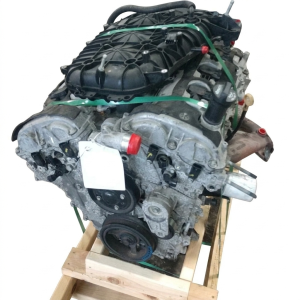
Used OEM Parts in Stock
New Aftermarket Parts Available


The information in this article is provided for general reference and educational purposes only. Vehicle specifications, procedures, and part compatibility can vary by production date, trim level, and region. Always consult your vehicle's factory service manual and verify part numbers before purchasing or performing repairs. Safety-critical components such as airbags, seat belts, and braking systems should be installed by a qualified professional.
- Gmc ACADIA:
- 🎬 Helpful Videos
- 🛍️ Shop This Part
- What's Unique About the 2007-2014 Gmc ACADIA
- Diagnostic Flowchart
- Symptoms You May Notice
- Most Likely Causes
- Rare But Worth Checking
- Diagnosis Steps
- Parts You'll Likely Need
- Related Codes That Often Appear With This One
- Technical Service Bulletins (TSBs) & Recalls
- Platform-Specific Known Issues
- Mechanic-Grade Diagnostic Values
- Scan Tool Commands That Help
- Wiring & Ground Locations
- Real Owner Repair Stories
- OEM Part Supersession History
- Model Year Variations Within This Range
- 🎟️ Get 5% Off