

P0008 on 2008-2012 Chevrolet Malibu: Stretched Timing Chain Causes and Fixes
On a 2008-2012 Malibu with the 3.6L V6 engine, P0008 almost certainly means the timing chains have stretched. This is a well-documented, common problem for this engine. The repair is complex and expensive, typically costing $1,800-$3,000+, and involves replacing all three timing chains, the tensioners, and guides with updated parts.
- P0008 on a 2008-2012 Malibu 3.6L V6 is a serious code that points directly to a stretched timing chain.
- Do not ignore this code; continued driving can lead to catastrophic engine failure.
- The correct repair is a complete replacement of all timing chains, guides, and tensioners with updated parts.
- This is not a DIY-friendly repair and is one of the most expensive common failures for this vehicle.
- Check for eligibility under GM's Special Coverage Adjustment #11340C, although most vehicles will have aged out of this program.
What's Unique About the 2008-2012 Chevrolet MALIBU
The 3.6L V6 (RPO code LY7) used in this generation of Malibu is infamous for premature timing chain failure. The original timing chains were susceptible to stretching over time. This issue was so widespread that General Motors issued several Technical Service Bulletins (TSBs) and provided a special extended warranty, Special Coverage Adjustment #11340C, for the timing chains on many vehicles with this engine, covering them for 10 years or 120,000 miles. The problem is often linked to the original chain design, a faulty oil life monitoring (OLM) system that allowed for excessively long oil change intervals, and the resulting degraded oil quality which accelerated wear on the chains and hydraulic tensioners.
Diagnostic Flowchart
Tap your situation to follow the diagnostic path that matches what you're seeing on this vehicle.
Symptoms You May Notice
- Check Engine Light is on
- Engine runs rough or has a fluctuating idle
- Reduced engine power and poor acceleration
- Lower than normal fuel economy
- Rattling or whining noise from the engine, especially on cold starts, that may last for a few seconds
- Engine stalling, particularly when coming to a stop
- Replacing the camshaft or crankshaft position sensors. While these sensors report the timing data, they are rarely the cause of the P0008 code on this engine. The problem is almost always the mechanical timing components themselves. Swapping sensors without addressing the mechanical fault will not resolve the issue.
Most Likely Causes
- Stretched Timing Chains 🔴 High Probability The original equipment (OE) timing chains on the 3.6L LY7 V6 engine were known to have a design flaw that led to premature stretching. This was exacerbated by long oil change intervals recommended by the original Oil Life Monitor calibration.
How to confirm: A technician can use a scan tool to monitor camshaft deviation angles; significant deviation confirms a timing issue. The definitive confirmation is a physical inspection for chain slack, which requires significant labor to remove the timing cover.
Typical fix: Replace all three timing chains, along with the tensioners and guides, using an updated-design kit. It is critical to use the new parts to prevent a recurrence.
Est. part cost: $250-$600 - Failed Timing Chain Tensioners 🔴 High Probability The tensioners, which keep the chains tight, can fail or wear out, leading to chain slack. They are hydraulically operated and sensitive to oil pressure and quality. They are always replaced as part of the timing chain service.
How to confirm: Diagnosed during physical inspection of the timing system. A rattling noise on startup is a strong indicator of a tensioner failing to hold pressure.
Typical fix: Replace all timing chain tensioners and related components as part of a complete timing chain kit.
Est. part cost: $50-$100 (if bought separately) - Low Engine Oil Level or Poor Oil Quality 🟡 Medium Probability The timing chain tensioners are hydraulically operated by engine oil pressure. Low or dirty oil, often resulting from following the original, overly optimistic Oil Life Monitor, can prevent them from functioning correctly, accelerating wear on the chains and guides. GM later issued an ECM reprogram under its special coverage to shorten the oil change interval.
How to confirm: Check the oil level on the dipstick and review vehicle maintenance records for oil change history. Adhering to a 3,000-5,000 mile oil change interval with full synthetic oil is recommended.
Typical fix: Perform an oil and filter change with a high-quality full synthetic oil matching GM's specifications. This is a critical maintenance step, but it will not fix an already stretched chain.
Est. part cost: $50-$100
Rare But Worth Checking
- Slipped Crankshaft Reluctor Wheel: GM TSBs PIP3423P and others note that the reluctor wheel, which the crankshaft position sensor reads, can move on the crankshaft. This will cause timing codes like P0008 even if the chains are physically intact. Diagnosis may require a borescope inserted through the crankshaft position sensor hole or oil pan removal to measure the wheel's position. The fix requires crankshaft replacement, a massive and costly repair.
Diagnosis Steps
- Confirm the presence of P0008 and any other codes with an OBD-II scanner.
- Check the engine oil level and condition. If low or dirty, correct it, clear the codes, and see if they return. This is unlikely to be a permanent fix but is a necessary first step.
- Listen for a rattling sound from the front of the engine (passenger side), which is characteristic of a loose timing chain, especially on a cold start.
- Using an advanced scan tool, monitor the camshaft position data (cam phase deviation) for Bank 1. Deviations greater than +/- 4 degrees at idle or when holding RPMs steady often indicate a stretched chain.
- If a timing issue is suspected, the next step is to gain access to the timing chains by removing the engine's front cover. This is a labor-intensive process that often requires lowering the engine subframe.
- Visually inspect the timing chains for excessive slack and check the condition of the guides and tensioners for wear or damage.
- If available, use a borescope through the crankshaft position sensor hole to inspect the reluctor wheel for movement, as described in TSB PIP3423. A measurement from the machined surface of the crank throw to the edge of the reluctor opening should be 25-26mm.
Parts You'll Likely Need
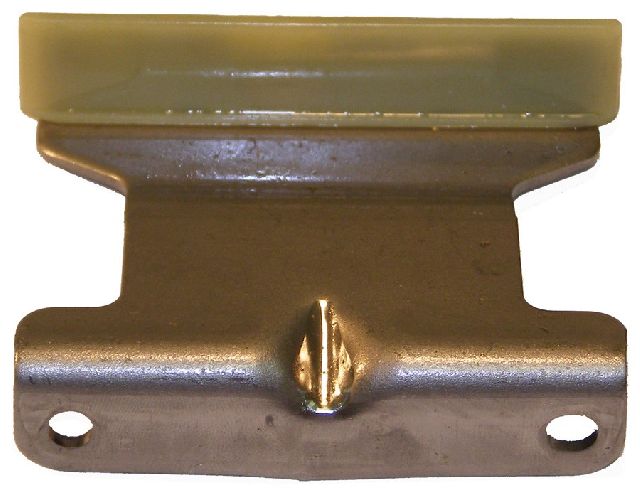
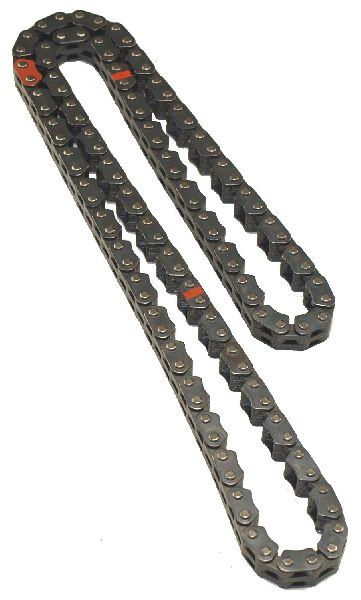
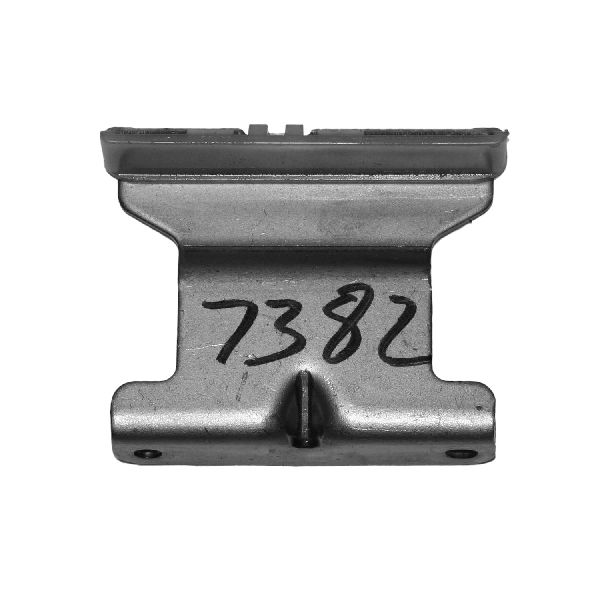
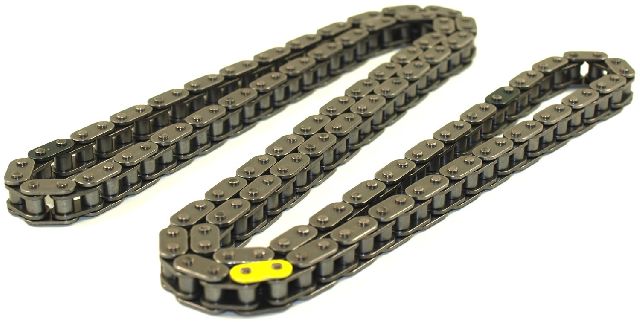
- Engine Timing Chain Kit
(OEM #12651450 (Superseded by 12693218, then 12700436))— This is the definitive fix. A complete kit includes the three required chains, tensioners, guides, and sometimes sprockets and seals. It is crucial to use an updated kit to prevent recurrence.
Trusted brands: ACDelco (OEM), Cloyes (Often the OEM supplier), Melling
OEM price range: $400-$650
Aftermarket price range: $300-$500
Related Codes That Often Appear With This One
- P0009 — This is the equivalent code for Bank 2 (the cylinder bank closer to the radiator). If both P0008 and P0009 are present, it strongly indicates the primary timing chain (which drives both banks) is stretched.
- P0016, P0017, P0018, P0019 — These are all crankshaft-camshaft position correlation codes for specific cams on both banks. They often appear with P0008 and point to the same underlying timing chain system failure.
Technical Service Bulletins (TSBs) & Recalls
- PIP3423P: Notes that P0008 can be caused by loose timing chains or tensioners, and also mentions the possibility of a slipped crankshaft reluctor wheel. This TSB has been updated many times (latest is PIP3423P) and covers a wide range of GM vehicles with the HFV6 engine family.
- 12-06-01-009F: Announces the availability of updated high feature V6 timing chain kits specifically for repairing stretched timing chains that cause codes like P0008. It advises against replacing non-worn components like sprockets and gears.
- 11340C: This is the Special Coverage Adjustment bulletin. It extended the warranty for timing chain wear to 10 years/120,000 miles and also included instructions to reprogram the ECM to shorten oil change intervals.
Platform-Specific Known Issues
- The 3.6L LY7 V6 engine has a well-documented history of premature timing chain stretch. GM acknowledged this by issuing TSB #12-06-01-009F, which announced the availability of updated timing chain kits to address the problem.
- Owner complaints and TSBs confirm that P0008 is a primary indicator of this timing chain issue. [⭐ TSB #PIP3423P, ODI #10630584]
- GM's Special Coverage Adjustment #11340C extended the warranty on this specific issue to 10 years/120,000 miles for many affected vehicles, though this coverage has now expired for most 2008-2012 models due to age.
- Many owners on forums like chevymalibuforum.com report quotes ranging from $2,000 to over $4,000 for this repair at dealerships or independent shops, confirming the high cost.
Mechanic-Grade Diagnostic Values
- Camshaft Position Actuator Solenoid (VVT Solenoid) Resistance — expected: 6.9 to 7.9 Ohms at 68°F (20°C). Some sources suggest a wider range of 5-15 Ohms is acceptable.. Failure: A reading outside the specified range, an open circuit (infinite resistance), or a short (near-zero resistance) indicates a faulty solenoid.
- Crankshaft Reluctor Wheel Position — expected: 25 to 26 mm, measured from the machined surface of the crankshaft throw to the edge of the open space in the reluctor wheel.. Failure: Any measurement outside this range indicates the wheel has slipped on the crankshaft, requiring crankshaft replacement.
- Engine Oil Pressure (General for GM V6) — expected: Approximately 25-35 PSI at a warm idle, and 40-65 PSI at cruising speed/higher RPMs.. Failure: Consistently low oil pressure (below 20-25 PSI at idle) can starve the hydraulic timing chain tensioners and phasers, accelerating wear and causing timing codes.
Scan Tool Commands That Help
- GDS2 (GM Techline): Camshaft Position Actuator Solenoid Test — This bidirectional command allows a technician to command the VVT solenoids on and off while the engine is running to verify they are mechanically functioning. By monitoring cam deviation PIDs during the test, you can confirm if a solenoid is stuck or responding slowly, helping to isolate a faulty solenoid from a larger mechanical timing issue.
- GDS2 (GM Techline): Crankshaft Position Variation Relearn — This procedure should be performed after replacing a crankshaft position sensor or the crankshaft itself. It allows the ECM to learn the minor variations in the new reluctor wheel to ensure accurate misfire detection, though it will not fix a P0008 code caused by a major timing discrepancy.
Wiring & Ground Locations
- ECM/TCM Ground — On the 3.6L engine, a primary ground for the Engine Control Module (ECM) and Transmission Control Module (TCM) is located on the front of the engine block, near the starter. Another forum source specifies it as the bottom bolt of the ECM tray that bolts to the head/block on the port side (driver's side).. A poor ground connection for the ECM can cause erratic sensor readings and incorrect calculations, potentially leading to false diagnostic trouble codes. Verifying this ground is clean and tight is a crucial electrical diagnostic step.
- G103 — Located at the left rear of the engine compartment on the cowl, above the brake booster.. This ground point serves multiple components, including the Body Control Module (BCM) and the Data Link Connector (DLC). A fault here can cause communication issues with scan tools or other modules that interact with the ECM.
- G105 — Located at the left front of the engine compartment, often behind the cooling fan relays.. While not directly tied to the timing system, this ground serves various front-of-engine components. In any case of chasing electrical gremlins, checking all major engine bay grounds is a good practice.
Real Owner Repair Stories
- Camaro5 Chevy Camaro Forum (2011 Camaro V6 (LLT Engine, similar to LY7) with 55,000 miles) — Check Engine Light with P0008 and P0009, sluggish performance, extreme power loss.
❌ Tried (didn't work) Replaced all timing chains with a Cloyes kit., Replaced all four VVT sprockets (cam phasers).
✅ What actually fixed it The crankshaft reluctor wheel had slipped by 1.5 teeth. A mechanic was able to carefully force the wheel back into its correct position without removing the crankshaft and then applied a small tack weld to prevent it from moving again. The owner confirmed this resolved all codes and restored engine power. - Reddit r/MechanicAdvice (2009 Pontiac G8 3.6L V6 (LY7 Engine) with 164,000 miles) — Intermittent P0008 code, primarily setting on cold mornings and clearing later in the day. Car struggles to accelerate when the code is active.
❌ Tried (didn't work) Owner initially suspected dirty cam sensors after finding them grimy during inspection.
✅ What actually fixed it The owner proceeded with a full timing chain replacement job. After the repair, they reported a "noticeable difference in torque and idle" and confirmed the fix resolved the issue.
OEM Part Supersession History
12651450→12693218, then 12700436— Updated timing chain kit from GM to address premature stretching. Later kits include improved design chains, tensioners, and guides.
Heads up: These kits are designed to be direct replacements for the original components. It is critical to use the latest available part number to ensure the most durable repair.12628347→12679099 (also listed as 12681018 in some sources)— Updated Camshaft Position Actuator Solenoid (VVT Solenoid). Revisions often improve reliability or internal filtering.
Heads up: This is the intake solenoid. While they may look similar, intake and exhaust solenoids often have different part numbers and are not interchangeable. Always verify the correct part for the specific position (Bank 1/2, Intake/Exhaust).
Model Year Variations Within This Range
- 2008-2012: The primary engine for the V6 option was the 3.6L LY7, a port-injected engine. In 2008, a 6-speed automatic transmission became available with this engine, which was an upgrade from the previous 4-speed. While the core timing chain issue persists across these years, GM did issue an ECM reprogram (as part of Special Coverage 11340C) to shorten the oil change interval calculated by the Oil Life Monitor, which would apply to later services on these vehicles rather than a specific model year change from the factory.
Helpful Videos
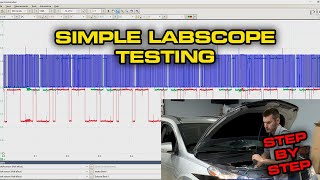
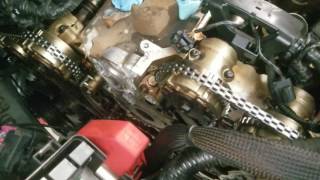
We Have This Part in Stock



The information in this article is provided for general reference and educational purposes only. Vehicle specifications, procedures, and part compatibility can vary by production date, trim level, and region. Always consult your vehicle's factory service manual and verify part numbers before purchasing or performing repairs. Safety-critical components such as airbags, seat belts, and braking systems should be installed by a qualified professional.
- Chevrolet MALIBU:
- 🎬 Helpful Videos
- 🛍️ Shop This Part
- What's Unique About the 2008-2012 Chevrolet MALIBU
- Diagnostic Flowchart
- Symptoms You May Notice
- Most Likely Causes
- Rare But Worth Checking
- Diagnosis Steps
- Parts You'll Likely Need
- Related Codes That Often Appear With This One
- Technical Service Bulletins (TSBs) & Recalls
- Platform-Specific Known Issues
- Mechanic-Grade Diagnostic Values
- Scan Tool Commands That Help
- Wiring & Ground Locations
- Real Owner Repair Stories
- OEM Part Supersession History
- Model Year Variations Within This Range
- 🎟️ Get 5% Off