

P0008 on 2008-2015 Chevrolet Equinox: Stretched Timing Chain Causes and Fixes
On a 2008-2015 Equinox with a V6 engine, P0008 almost always means the timing chains have stretched. This is a well-documented issue requiring a complex and expensive repair, often costing between $2,000 and $3,500 at a shop. The root cause is often linked to premature chain wear, exacerbated by long oil change intervals.
- P0008 on a V6 Equinox is a strong indicator of stretched timing chains, a known issue with this engine.
- Do not ignore this code. While the vehicle may still drive, a chain failure can destroy the engine.
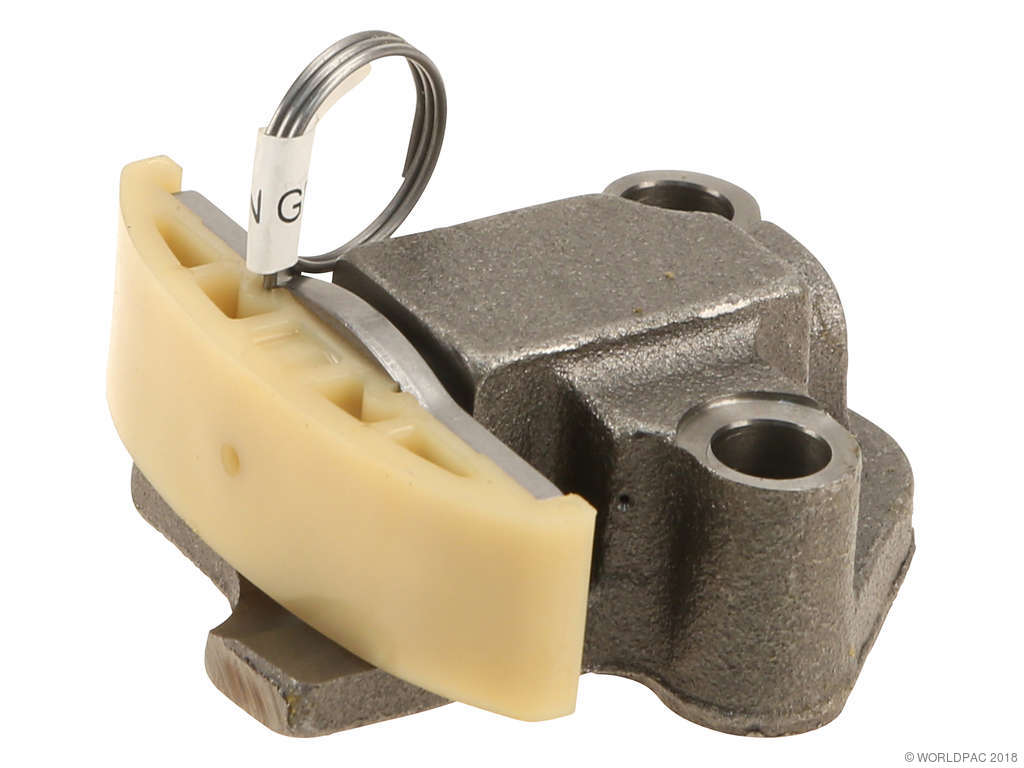
- The proper fix is to replace the chains, tensioners, and guides as a complete kit with updated parts.
- This is not a simple or cheap DIY project. Expect to pay a professional for 10+ hours of labor.
- Regular oil changes with high-quality, correct-viscosity oil are critical for the health of the timing system.
What's Unique About the 2008-2015 Chevrolet EQUINOX
The 2008-2015 Equinox, particularly models with the 3.0L and 3.6L V6 engines, is highly susceptible to premature timing chain stretch. This is a widely recognized issue, confirmed by manufacturer Technical Service Bulletins (TSBs) that address the problem directly. A leading theory for this widespread failure is a combination of the original-design timing chains being prone to wear and the GM Oil Life Monitor (OLM) system allowing for excessively long oil change intervals. Degraded or low oil cannot properly lubricate and cool the chains and hydraulic tensioners, accelerating wear and stretch. 🎬 Learn why these GM 3.0 and 3.6 engines fail. Unlike many vehicles where P0008 could have numerous causes, on this specific platform, the timing chains themselves are the overwhelming culprit, often failing much earlier than expected.
Diagnostic Flowchart
Tap your situation to follow the diagnostic path that matches what you're seeing on this vehicle.
Generation note: This range covers the end of the first generation (2008-2009) and the second generation (2010-2015). The 3.6L V6 (LY7) was available in the 2008-2009 'Sport' models. The second generation offered a 3.0L V6 (LF1) from 2010-2012 and a 3.6L V6 (LFX) from 2013-2015. The timing chain issue is prevalent across all these GM High Feature V6 engines.
Symptoms You May Notice
- Check Engine Light is on
- Rattling or buzzing noise from the engine, especially on cold starts, that may last for a few seconds
- Rough running or idling
- Reduced engine power and poor acceleration
- Worse than normal fuel economy
- The code may only appear during hard acceleration.
- Replacing only the camshaft or crankshaft position sensors. While these sensors report the timing, they are rarely the root cause of P0008 on this engine. The problem is the mechanical timing they are accurately reading.
- Replacing only one component, like a single tensioner or chain. The entire system (three chains, guides, tensioners) wears together and should be replaced as a complete kit to ensure a lasting repair.
- Performing the repair with cheap, non-OEM parts. Some aftermarket kits have been known to fail prematurely, leading to the code returning.
Most Likely Causes
- Stretched Timing Chains 🔴 High Probability The original timing chains on the GM High Feature V6 engines (LY7, LLT, LF1) were prone to premature wear and stretching. This is often attributed to the design of the chain links and the long oil change intervals suggested by the Oil Life Monitor, which can lead to oil degradation and loss of lubrication. GM later released updated parts to address this.
How to confirm: A mechanic can use an advanced scan tool to observe camshaft deviation angles (camshaft position vs. desired). 🎬 Watch: How to test timing chain stretch with a labscope. If the angles are off by several degrees, it confirms a timing issue. Physical confirmation requires engine disassembly to measure the timing chain's deflection, which will be visibly loose.
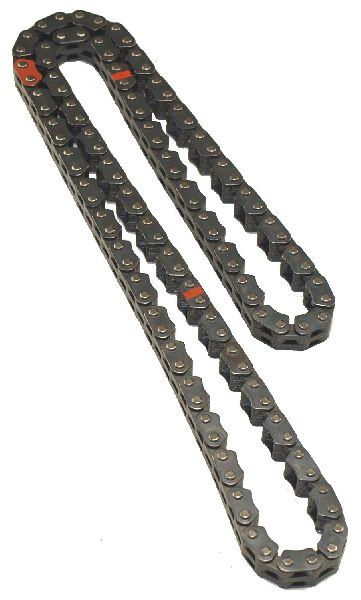
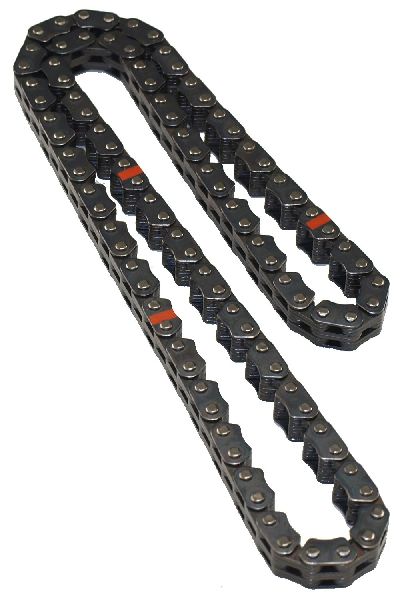
Typical fix: Replace all three timing chains (one primary, two secondary), all tensioners, and all guides with an updated kit. This is a major repair. 🎬 See this walkthrough of a V6 timing chain replacement.
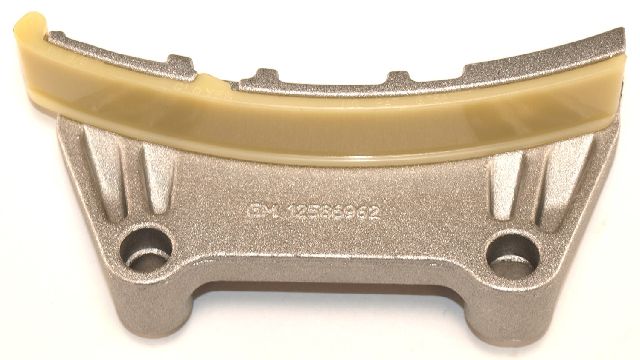
Est. part cost: $250-$600 - Worn Timing Chain Tensioners or Guides 🟡 Medium Probability The hydraulic tensioners rely on clean oil and proper pressure. If oil is dirty, sludged, or low, the tensioners can weaken or fail, allowing the chain to slap against the guides. The plastic guides can then wear out or break. This is often a consequence of, or contributor to, chain stretch.
How to confirm: A rattling noise is a strong indicator. Visual inspection during teardown is the only definitive way. TSB 12-06-01-009F provides visual examples of a worn guide versus one with normal wear.
Typical fix: Always replace tensioners and guides when replacing the timing chains. They are included in complete OEM and quality aftermarket kits.
Est. part cost: $100-$200 (if bought separately) - Low or Dirty Engine Oil ⚪ Low Probability The GM Oil Life Monitor (OLM) in this era could allow for very long change intervals (up to 10,000+ miles), which was later found to be too long to prevent oil breakdown and consumption. Low or degraded oil directly causes wear on the chains and tensioners.
How to confirm: Check the oil level on the dipstick and inspect its condition. If the oil level is low or the oil is very dark and appears sludgy, this is a likely contributing factor. Many owners with this issue report their vehicle consumes oil.
Typical fix: Perform an oil and filter change with a full synthetic oil meeting the GM dexos specification. If the code returns, the mechanical wear has already occurred and parts replacement is necessary.
Est. part cost: $40-$80
Rare But Worth Checking
- Failing Camshaft or Crankshaft Sensor: While possible, it's much less common than chain issues. These sensors can fail and send incorrect data, but they usually trigger their own specific codes (e.g., for sensor circuit faults). On this platform, P0008 strongly points to a mechanical timing issue, not a sensor failure.
- Failing VVT Solenoid (Oil Control Valve): A stuck or clogged VVT solenoid can affect cam phasing and potentially trigger this code. However, it's more likely to be accompanied by other VVT-specific codes (like P0011 or P0014) and is not the primary cause for P0008 on this engine.
Diagnosis Steps
- Verify the code with an OBD-II scanner. Note any other codes present, such as P0009, P0016, or P0017, as this strengthens the diagnosis.
- Check engine oil level and condition. Low or dirty oil is a primary contributor to this problem. Perform an oil change with full synthetic oil if necessary, clear the codes, and see if they return.
- Listen for engine noises. A distinct rattling or chain-slap sound from the front of the engine (passenger side) upon startup is a classic sign of a loose timing chain.
- Use an advanced scan tool to monitor camshaft position data PIDs. A skilled technician can analyze the requested vs. actual cam angles for Bank 1 (and Bank 2 if P0009 is present). A consistent deviation confirms a timing lag that sensors or solenoids cannot correct.
- If a scan tool is not available, some owners have attempted cleaning VVT solenoids and camshaft sensors as a last-ditch effort before committing to the chain replacement. This rarely solves the problem but can rule out minor contributing factors.
- If all signs point to a timing issue, the next step is engine disassembly to physically inspect the timing chains, guides, and tensioners for wear and slack. This is an advanced, labor-intensive step.
- Confirm the diagnosis of a stretched chain before ordering parts. One owner complaint noted a dealer quoted $2,000 for the repair after confirming a stretched chain.
Parts You'll Likely Need
- Engine Timing Chain Kit
(OEM #12651450 (This part number has been superseded by 12693218))— This is the definitive fix. A complete kit replaces all the wearable components (3 chains, 3 tensioners, guides, gaskets, seals) to restore proper engine timing. TSB 12-06-01-009F notes that sprockets and actuators should not be replaced unless they are visibly worn or damaged.
Trusted brands: ACDelco (OEM), Cloyes
OEM price range: $400-$600
Aftermarket price range: $250-$450
Related Codes That Often Appear With This One
- P0017 — Crankshaft Position - Camshaft Position Correlation Bank 1 Sensor B. This code is very common with P0008 as it also indicates a timing correlation fault on Bank 1.
- P0016 — Crankshaft Position - Camshaft Position Correlation Bank 1 Sensor A. Similar to P0017, this points to a timing misalignment on Bank 1.
- P0009 — Engine Position System Performance Bank 2. If this code is present with P0008, it means the timing is off on both banks of the engine, reinforcing the diagnosis of stretched primary and secondary timing chains.
- P0018, P0019 — These are the Bank 2 equivalents of P0016 and P0017. Seeing them alongside P0008 and P0009 confirms a timing issue affecting the entire engine.
Technical Service Bulletins (TSBs) & Recalls
- PIP3423P: Advises technicians to inspect for loose timing chains or tensioners when P0008 (and other related codes) are present.
- 12-06-01-009F: Announces new, updated timing chain kits for repairing stretched timing chains that set DTC P0008. It also provides guidance on when to replace guides and clarifies that sprockets are often replaced unnecessarily.
Platform-Specific Known Issues
- A Technical Service Bulletin (TSB #12-06-01-009F) was issued by GM, announcing the availability of updated timing chain kits specifically to repair stretched chains that cause codes like P0008.
- Another TSB (#PIP3423P) directly links P0008 with the need to inspect for loose timing chains or tensioners.
- Owner complaints frequently cite P0008 leading to a diagnosis of a stretched timing chain, with repair quotes ranging from $1,900 to over $3,000.
- One owner of a 2009 Equinox with the 3.6L V6 reported codes P0008, P0017, and P0018, which led to a timing chain diagnosis.
- A common theme in owner forums is the debate over whether GM should have issued a recall. Many owners report dealers being well aware of the problem and that GM issued a special coverage adjustment extending the warranty on this repair to 10 years or 120,000 miles for many affected vehicles.
Mechanic-Grade Diagnostic Values
- Camshaft Position Variance (Scan Tool PID) — expected: Less than 4 degrees of deviation from desired angle at idle and 2000 RPM.. Failure: A consistent deviation greater than 4-6 degrees indicates a stretched timing chain. The reading will be retarded (shifted to the right on a lab scope).
- Camshaft Position Actuator Solenoid Resistance — expected: Approximately 8-13 Ohms at 68°F (20°C).. Failure: A reading significantly outside this range indicates a faulty solenoid coil.
Scan Tool Commands That Help
- GDS2 (GM Tech2Win): Camshaft Position Actuator Control — This bidirectional test allows a technician to command each VVT solenoid (phaser) to a specific angle (e.g., 0 to 20 degrees) and observe the engine's response and the sensor's reported angle. This is used to verify that the solenoids and phasers are mechanically responding to commands, helping to rule them out as the cause before condemning the timing chains.
- GDS2 (GM Tech2Win): Crankshaft Position Variation Learn — This procedure must be performed after replacing a crankshaft position sensor or the ECM. It is not typically required for a timing chain replacement, but it's a critical reset procedure for related components.
Wiring & Ground Locations
- G112 — On the lower left front of the engine block for the 2.4L, or the left rear of the engine for the 3.6L V6.. This is a primary ground point for the Engine Control Module (ECM). A poor connection here can cause erratic behavior and incorrect readings from various engine sensors, including the cam and crank sensors, potentially leading to false codes. Verifying this ground is clean and tight is a crucial step in any electrical diagnosis.
- G109 — On the right front of the engine for the 3.6L V6.. This is another key engine ground point. Multiple grounds are used to ensure a stable reference for all sensors.
- ECM Connector X1/X2 — The main connectors on the Engine Control Module.. The camshaft and crankshaft position sensor signals are sent directly to the ECM through these connectors. TSB PI0090D specifically calls out inspecting terminals for poor connections at the camshaft position sensor connector, which can cause intermittent hesitation that might precede a hard code like P0008.
Real Owner Repair Stories
- Reddit user in r/MechanicAdvice (2009 Pontiac G8 with 3.6L V6 (LY7) at 164k miles) — Intermittent P0008 code that would appear on cold mornings and disappear after driving. Car struggled to accelerate when the light was on but ran fine otherwise. No noticeable chain rattle on cold starts.
❌ Tried (didn't work) Checking oil level (was full and clean)., Inspecting cam sensors (were grimy but cleaning them was not mentioned as the fix).
✅ What actually fixed it The owner proceeded with a full timing chain replacement job. After the repair, they reported a "noticeable difference in torque and idle" and the problem was resolved. They noted the slack was more visible on the guides than on the chains around the cams.
OEM Part Supersession History
12651450→12693218, which was then superseded by 12700436.— The original timing chains used a 9.5mm pitch and were prone to stretching. The updated kits feature chains with a stronger, quieter, inverted-tooth design (sometimes referred to as a 7.7mm pitch) to improve durability and reduce wear.
Heads up: Using an old stock kit with the original chain design will likely lead to a repeat failure. It is critical to purchase a kit confirmed to have the updated chain design, whether from GM or a reputable aftermarket supplier like Cloyes.
Model Year Variations Within This Range
- 2008-2012 (LY7, LF1, LLT engines): These earlier V6 engines are considered the most susceptible to the timing chain stretch issue due to the original chain design and more aggressive Oil Life Monitor (OLM) calibrations.
- 2013-2015 (LFX engine): The LFX engine, introduced in 2012/2013, featured several updates including a revised timing chain design and improved integrated cylinder heads. While not completely immune, the incidence of premature timing chain failure is lower on the LFX compared to its predecessors. The OLM software was also updated to recommend more frequent oil changes.
Helpful Videos
Used OEM Parts in Stock
New Aftermarket Parts Available


The information in this article is provided for general reference and educational purposes only. Vehicle specifications, procedures, and part compatibility can vary by production date, trim level, and region. Always consult your vehicle's factory service manual and verify part numbers before purchasing or performing repairs. Safety-critical components such as airbags, seat belts, and braking systems should be installed by a qualified professional.
- Chevrolet EQUINOX:
- 🎬 Helpful Videos
- 🛍️ Shop This Part
- What's Unique About the 2008-2015 Chevrolet EQUINOX
- Diagnostic Flowchart
- Symptoms You May Notice
- Most Likely Causes
- Rare But Worth Checking
- Diagnosis Steps
- Parts You'll Likely Need
- Related Codes That Often Appear With This One
- Technical Service Bulletins (TSBs) & Recalls
- Platform-Specific Known Issues
- Mechanic-Grade Diagnostic Values
- Scan Tool Commands That Help
- Wiring & Ground Locations
- Real Owner Repair Stories
- OEM Part Supersession History
- Model Year Variations Within This Range
- 🎟️ Get 5% Off