

P0008 on 2010-2016 Cadillac SRX: Stretched Timing Chain Causes and Fixes
Code P0008 on a 2010-2016 Cadillac SRX almost always means the timing chains have stretched. This is a common, well-documented issue on the 3.0L (LF1) and 3.6L (LFX) V6 engines. The primary cause is premature chain wear, often accelerated by extended oil change intervals. The repair is complex and expensive, involving replacing the chains, tensioners, and guides, typically costing between $2,100 and $3,000+ at a shop. Ignoring this code will lead to severe engine damage.
- P0008 on a 2010-2016 SRX is a serious code that almost certainly indicates stretched timing chains.
- Do not drive the vehicle, as you risk catastrophic engine failure.
- Do not waste money replacing camshaft or crankshaft sensors; they are not the cause.
- The root cause is often linked to extended oil change intervals; more frequent changes (e.g., every 5,000 miles) are recommended after the repair.
- The repair is expensive, but a Special Coverage program (now expired) from GM confirmed the defect.
What's Unique About the 2010-2016 Cadillac SRX

The second-generation Cadillac SRX uses GM's High Feature V6 engines (3.0L and 3.6L), which are widely known for premature timing chain stretching. This isn't a rare occurrence; it's a well-documented pattern for this engine family, leading GM to issue multiple Technical Service Bulletins (TSBs). A significant contributing factor is believed to be the GM Oil Life Monitor (OLM) system, which can allow for oil change intervals that are too long (up to 8,000+ miles). Over time, this leads to oil breakdown and consumption, reducing lubrication and cooling for the timing chains and hydraulic tensioners, which accelerates wear and stretching.
Diagnostic Flowchart
Tap your situation to follow the diagnostic path that matches what you're seeing on this vehicle.
Symptoms You May Notice
- Check Engine Light is on
- Reduced engine power and poor acceleration.
- Engine running rough or idling poorly.
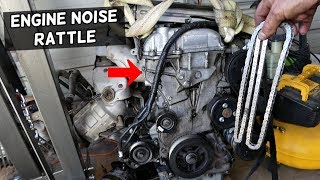
- Rattling or whining noise from the engine, especially during a cold start, that may last for a few seconds.
- Worse than normal fuel economy.
- In some cases, the engine may set misfire codes along with P0008.
- Replacing the camshaft position sensors.
- Replacing the crankshaft position sensor.
- Replacing the VVT solenoids (camshaft actuators).
Most Likely Causes

- Stretched Timing Chains 🔴 High Probability The original timing chains used on the GM High Feature V6 engines were susceptible to premature wear and stretching. This is a widely recognized issue, acknowledged by GM through multiple TSBs and a special coverage program. The issue is exacerbated by oil breakdown over long change intervals.
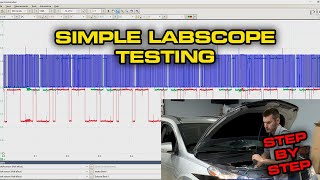
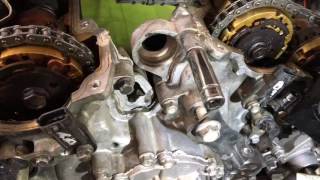
How to confirm: A mechanic can use a scan tool to observe the CMP Angle Variance parameters; a deviation greater than 6 degrees is a strong indicator. An oscilloscope can also be used to graphically compare cam and crank sensor signals to a known-good waveform. 🎬 Watch: How to use a labscope to diagnose timing issues. The definitive method is physical inspection for slack after removing the engine's front cover.
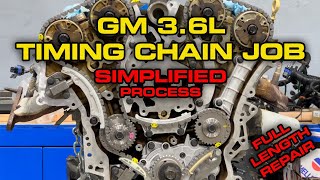
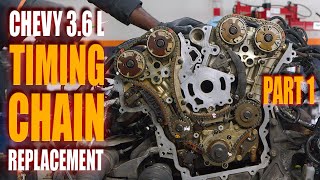
Typical fix: Replace all three timing chains, all tensioners, and all chain guides using an updated kit. It is critical to use the latest parts specified by GM.
Est. part cost: $400-$700 - Low or Dirty Engine Oil 🟡 Medium Probability The timing chain tensioners are hydraulic and rely on clean oil at the proper pressure to function. These engines can consume oil, and the long oil change intervals suggested by the Oil Life Monitor can lead to low levels and degraded oil quality, starving the tensioners and chains of proper lubrication.
How to confirm: Check the oil level on the dipstick and inspect the oil's condition and service history. If the oil is very dark, sludgy, or low, it is a significant contributing factor. This is often the root cause of the chain stretch.
Typical fix: An oil and filter change is required, but if the P0008 code is already set, the damage to the chains is likely permanent. Correcting oil level and quality is preventative for the *new* chains, not a fix for the existing code.
Est. part cost: $50-$100 - Failed Timing Chain Tensioner(s) 🟡 Medium Probability The tensioners can fail or become weak due to wear or being clogged with sludge from old oil, losing their ability to keep the chains properly tensioned. This allows the chain to slap against guides, accelerating wear.
How to confirm: This is confirmed during the physical inspection when checking the timing chains. A loose chain is a clear sign of a failed tensioner or severe chain stretch.
Typical fix: Tensioners are always replaced as part of a complete timing chain service. They are included in the comprehensive kits.
Est. part cost: $150-$250 for a set
Rare But Worth Checking
- Slipped Crankshaft Reluctor Wheel: TSB #PIP3423N (and its successor PIP3423P) mentions that if timing chains and tensioners are found to be okay, the reluctor wheel pressed onto the crankshaft may have moved. This is a rare failure but is a documented possibility for this engine family. Confirming this requires a borescope inspection through the crank sensor hole or engine disassembly. If the wheel has moved, the entire crankshaft must be replaced.
Diagnosis Steps
- Verify the presence of P0008 with an OBD-II scanner. Note any other codes, such as P0009, P0016-P0019.
- Check the engine oil level and condition. If the oil is low, dirty, or the wrong type, this is a critical data point pointing towards the root cause, even if fixing it now won't solve the problem.
- Listen for a rattling noise from the front of the engine (passenger side), especially on a cold start. This is a strong indicator of a loose timing chain.
- Using an advanced scan tool, monitor the 'CMP Desired', 'CMP Actual', and 'Angle Variance' parameters. If the variance for a camshaft on Bank 1 exceeds 6 degrees, it strongly suggests a stretched chain.
- If possible, have a technician perform a cam/crank correlation test with an oscilloscope. This can electronically verify a timing deviation without major engine disassembly.
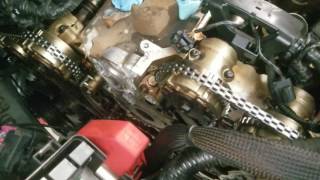
- If the above steps point towards a timing issue, the next step is to get a quote for a timing chain replacement. The physical inspection of the chains is part of the replacement job itself.
Parts You'll Likely Need

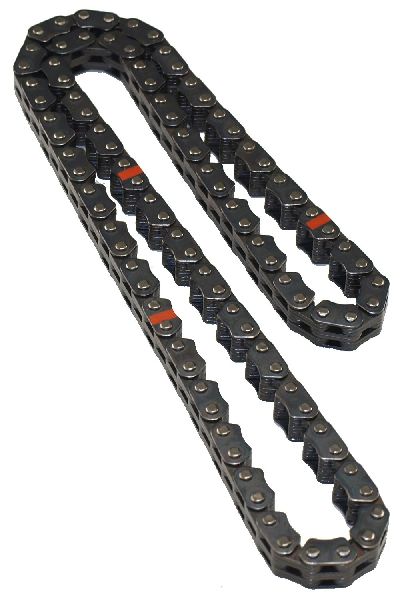
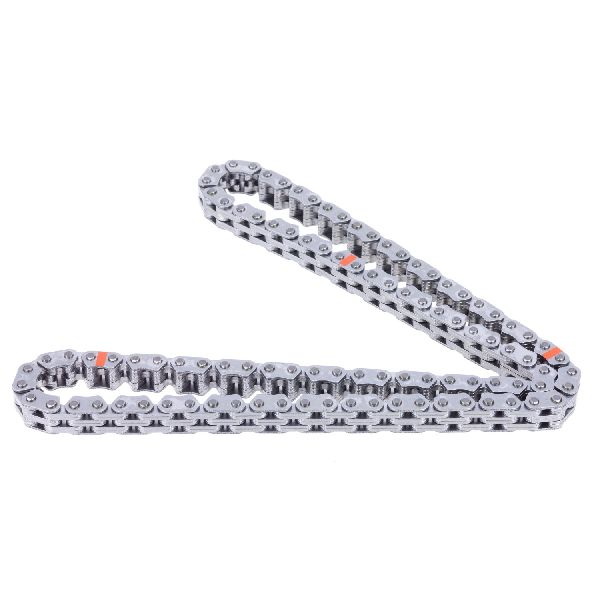
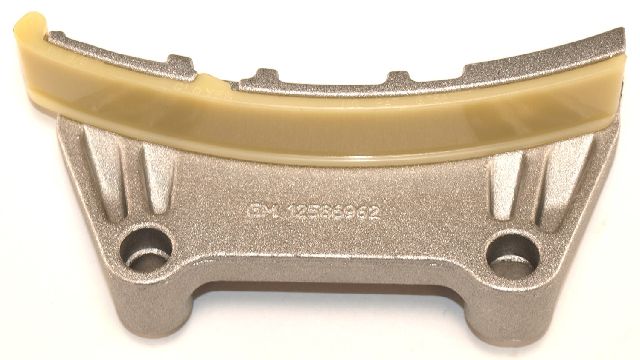
- Engine Timing Chain Kit
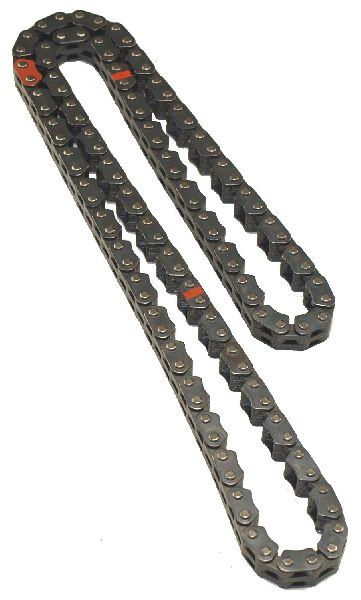
(OEM #ACDelco 12651450 (For 2008-2009 w/LLT), ACDelco 12700436 (For 3.0L/3.6L), or ACDelco 12680750 (Updated Kit). Part number varies by specific engine and year, verify with VIN.)— This is the comprehensive solution, containing the three required chains, tensioners, guides, and often necessary gaskets to fix the root cause of P0008. Using a complete, updated kit from GM/ACDelco is highly recommended.
Trusted brands: ACDelco (OEM), Cloyes, Melling
OEM price range: $500-$700
Aftermarket price range: $350-$550
Related Codes That Often Appear With This One
- P0009 — This is the identical fault ('Engine Position System Performance') but for Bank 2. It's common to see both P0008 and P0009 together as all three timing chains operate as a system and wear at a similar rate.
- P0016, P0017, P0018, P0019 — These are more specific cam/crank correlation codes for the intake and exhaust cams on both banks. They often accompany P0008/P0009 and all point to the same root cause of a stretched timing chain.
Technical Service Bulletins (TSBs) & Recalls
- PIP3423P: Mentions that codes P0008, P0009, P0016-P0019 may be set and instructs technicians to inspect for loose timing chains or tensioners, and if not found, to check for a moved crankshaft reluctor wheel.
- 12-06-01-009F: Announces the availability of comprehensive V6 timing chain kits for repairing stretched chains that cause codes like P0008. It lists the wide range of affected GM vehicles.
- 11340C: This is the Special Coverage Adjustment that extended the warranty to 10 years/120,000 miles for timing chain wear on certain models, including the SRX. It acknowledges that original oil change intervals were a factor.
Platform-Specific Known Issues
- GM issued TSB #12-06-01-009F, which acknowledges the timing chain issue and provides information on updated service kits for the 3.0L (LF1) and 3.6L (LFX) V6 engines.
- A Special Coverage Adjustment program (11340C) was issued for some earlier model year vehicles (including 2007-2009 SRX) which extended the warranty for timing chain wear to 10 years or 120,000 miles. This program explicitly noted that the vehicle's original oil change intervals could contribute to premature wear. This coverage has now expired for all eligible vehicles due to age.
Mechanic-Grade Diagnostic Values

- Crankshaft Reluctor Wheel Position — expected: 25 to 26 mm. Failure: A measurement outside this range indicates the reluctor wheel has slipped on the crankshaft, requiring crankshaft replacement.
- Cam/Crank Correlation on Lab Scope (Known Good) — expected: On Bank 1, the intake camshaft signal crosses high within the crank sensor's sync gap. The exhaust camshaft signal goes high approximately 3 crank teeth after the sync gap.. Failure: If the camshaft signals are shifted to the right (retarded) relative to the crankshaft signal, it indicates a stretched timing chain.
- Camshaft Actuator Solenoid Resistance — expected: Approximately 7.6 ohms.. Failure: A reading of 0 ohms indicates a shorted solenoid, while a very high or infinite reading (OL) indicates an open solenoid.
Scan Tool Commands That Help
- GDS2 (Global Diagnostic System 2): View 'Camshaft Position Angle Variance' Data — This is a primary diagnostic step to electronically confirm the degrees of deviation between desired and actual camshaft position. A variance over 6 degrees is a strong indicator of a stretched chain.
- GDS2 (Global Diagnostic System 2): Actuate VVT (Camshaft Position Actuator) Solenoids — Used to test the functionality of the VVT solenoids independently of the timing chain. This helps rule out a stuck or faulty solenoid before condemning the chains.
- GM Dealer Tools (MDI/GDS2): Engine Control Module (ECM) Reprogramming — In some cases, GM has released software updates that widen the acceptable tolerance for cam/crank variance. This may be attempted as a fix if the deviation is minor and no mechanical symptoms (like noise) are present.
Wiring & Ground Locations
- G105 / G106 — On the engine block. Specific location varies slightly by year and engine, but these are the primary engine grounds.. A poor engine ground can cause erratic sensor readings, including from the camshaft and crankshaft position sensors, potentially leading to false timing codes. Verifying these grounds are clean and tight is a basic electrical diagnostic step.
- ECM Connector X1 — The main engine harness connector at the Engine Control Module.. This connector contains the signal, low reference, and 5-volt reference circuits for the camshaft and crankshaft sensors. For example, on some diagrams, Pin 14 is the Crankshaft Position (CKP) Signal Low circuit. Corrosion or a pushed-out pin here can interrupt these critical signals.
Real Owner Repair Stories
- User comment on Pine Hollow Auto Diagnostics YouTube video (GM vehicle with 3.6L engine (Impala)) — Check Engine Light with codes P0008 and P0017.
❌ Tried (didn't work) N/A - went for software update first.
✅ What actually fixed it An ECM software update from a GM dealer. The service notes for the update specifically mentioned it was a fix for P0008 and P0017. The codes did not return after the flash. - Nestor Auto Repair YouTube video (2004 Cadillac CTS (older model but with same engine family and code)) — Check Engine Light with code P0008.
❌ Tried (didn't work) The mechanic opted not to immediately perform a timing chain replacement.
✅ What actually fixed it Replacement of the two camshaft position sensors on Bank 1. The mechanic noted the old sensors were very dirty with metal shavings and that the fix was successful after a multi-day test drive by the customer. - Kevin Nadeau YouTube video (2007 Cadillac CTS with 3.6L engine) — Check Engine Light with codes P0008 and P0017.
❌ Tried (didn't work) Replacing the Bank 1 Sensor B camshaft position sensor.
✅ What actually fixed it The video creator explicitly states that replacing the sensor did NOT fix the issue, and the underlying problem was the stretched timing chains, which is the subject of his follow-up videos. This serves as a cautionary tale.
When the Usual Fixes Don't Work
- While stretched timing chains are the cause of P0008 in the vast majority of cases for the 2010-2016 SRX, there is anecdotal and video evidence of less common fixes resolving the code. In one documented case, a GM dealer ECM software update, which widened the acceptable timing variance, permanently cleared codes P0008 and P0017 without mechanical repairs. In another instance, a mechanic reported successfully fixing a P0008 code by replacing only the two Bank 1 camshaft position sensors, which were found to be heavily contaminated with metal debris. These scenarios represent rare exceptions and should be considered with caution, as attempting them may delay the necessary timing chain replacement.
OEM Part Supersession History
Various older timing chain kits→ACDelco 12680750 (and other updated kits)— The original timing chains were prone to premature stretching. GM released multiple updated kits over the years with improved chain and tensioner designs to increase durability.
Heads up: It is critical to use a complete, updated kit for the specific engine (LF1 or LFX) and year. TSB 12-06-01-009F notes that components like sprockets or gears should not be replaced unless visibly worn, as they are not the cause of the chain stretch issue.
Model Year Variations Within This Range
- 2010-2011: These years primarily used the 3.0L V6 (LF1) engine. While it also suffers from timing chain issues, parts may differ from the later 3.6L.
- 2012-2016: These years used the 3.6L V6 (LFX) engine. By the 2012 model year, GM had reportedly made some improvements to the timing chain components, making the issue slightly less common, though still a significant problem. The LFX is also direct-injected, making it susceptible to intake valve carbon buildup.
Helpful Videos
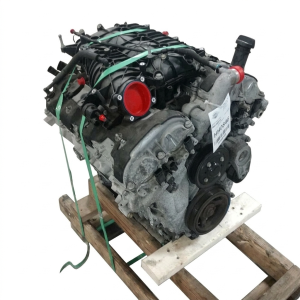
Used OEM Parts in Stock
New Aftermarket Parts Available


The information in this article is provided for general reference and educational purposes only. Vehicle specifications, procedures, and part compatibility can vary by production date, trim level, and region. Always consult your vehicle's factory service manual and verify part numbers before purchasing or performing repairs. Safety-critical components such as airbags, seat belts, and braking systems should be installed by a qualified professional.
- Cadillac SRX:
- 🎬 Helpful Videos
- 🛍️ Shop This Part
- What's Unique About the 2010-2016 Cadillac SRX
- Diagnostic Flowchart
- Symptoms You May Notice
- Most Likely Causes
- Rare But Worth Checking
- Diagnosis Steps
- Parts You'll Likely Need
- Related Codes That Often Appear With This One
- Technical Service Bulletins (TSBs) & Recalls
- Platform-Specific Known Issues
- Mechanic-Grade Diagnostic Values
- Scan Tool Commands That Help
- Wiring & Ground Locations
- Real Owner Repair Stories
- When the Usual Fixes Don't Work
- OEM Part Supersession History
- Model Year Variations Within This Range
- 🎟️ Get 5% Off