

P0008 on 2004-2011 Cadillac CTS: Stretched Timing Chain Causes and Fixes
P0008 on a 2004-2011 Cadillac CTS almost always means the timing chains have stretched, a common issue on the V6 engines. The only reliable fix is to replace the timing chains, tensioners, and guides, a costly repair often ranging from $2,200 to $3,500. GM acknowledged this with a Special Coverage program (#11340C) that extended the warranty to 10 years/120,000 miles for many affected vehicles.
- P0008 on a 2004-2011 CTS almost certainly means you have stretched timing chains.
- Do not waste money on replacing sensors first; this is a known mechanical problem.
- The only correct repair is to replace the timing chains, guides, and tensioners with updated parts.
- This is a very expensive repair, costing several thousand dollars due to the high labor involved.
- Continuing to drive with this code can lead to severe and catastrophic engine damage.
What's Unique About the 2004-2011 Cadillac CTS

The GM High Feature V6 engines (primarily the 3.6L LY7 in 2004-2009 models) used in this generation of Cadillac CTS are widely known for premature timing chain stretching. This issue is so prevalent that GM issued multiple Technical Service Bulletins (TSBs) and a Special Coverage Adjustment (#11340C) that extended the warranty to 10 years or 120,000 miles for many owners. The problem is often attributed to a combination of factors: an early chain design, long oil change intervals degrading oil quality, and a PCV system design where small orifices can clog, leading to sludge and accelerated wear on the chains.
Diagnostic Flowchart

Tap your situation to follow the diagnostic path that matches what you're seeing on this vehicle.
Generation note: This issue affects both the first generation (2004-2007) and second generation (2008-2011) of the Cadillac CTS, as they both used versions of the GM High Feature V6 engine family prone to this problem. The 3.6L LY7 engine in earlier models is most notorious, but the later 3.0L and 3.6L direct-injection engines (LLT, LF1) can also experience it, as confirmed by their inclusion in GM's TSBs.
Symptoms You May Notice
- Check Engine Light is on
- Rattling, whirring, or whining noise from the front of the engine, especially on a cold start
- Rough or unstable idle
- Reduced engine power and poor acceleration
- Worse than normal fuel economy
- Engine may be hard to start or require long crank times
- Replacing only the camshaft position sensors. This rarely fixes the problem, as P0008 indicates a mechanical timing correlation error, not typically a sensor failure.
- Replacing only the VVT solenoids (camshaft actuators). A single failed solenoid will not cause a P0008 code, as the ECM is designed to detect when both cams on one bank are off by an equal amount.
Most Likely Causes

- Stretched Timing Chains 🔴 High Probability The original timing chains on the GM 3.6L V6 engine were susceptible to premature wear and stretching. This is a well-documented factory issue acknowledged by GM through multiple TSBs and a warranty extension.
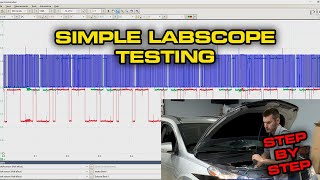
How to confirm: A technician can use an advanced scan tool to read camshaft deviation angles; significant deviation confirms a timing issue. A more definitive method is using a lab scope to compare crankshaft and camshaft sensor patterns against a known-good waveform, which can confirm stretch electronically. 🎬 Watch: How to use a lab scope to confirm timing stretch. The ultimate confirmation is a physical inspection of the chains for slack after removing the engine's front timing cover.
Typical fix: Replace all three timing chains, along with the tensioners and guides, using an updated OEM kit. TSB #12-06-01-009F notes that idler sprockets and actuator gears should not be replaced unless found to be worn.
Est. part cost: $350-$700 - Failed Timing Chain Tensioners 🟡 Medium Probability The hydraulic tensioners rely on clean oil and proper oil pressure to keep the chains tight. If they fail, get clogged with sludge, or lose hydraulic pressure, the chains can become loose and set the code.
How to confirm: This is diagnosed during a physical inspection when checking the timing chains. A compressed or stuck tensioner is a clear sign of failure.
Typical fix: Tensioners are always replaced as part of a complete timing chain service. They are included in all reputable timing chain kits.
Est. part cost: $100-$200 - Low or Degraded Engine Oil / Clogged PCV ⚪ Low Probability The timing chain system is highly dependent on oil quality and pressure. GM's original Oil Life Monitor (OLM) allowed for extended drain intervals which contributed to oil breakdown. Additionally, the PCV orifice on the valve cover is prone to clogging, which increases crankcase pressure and accelerates oil contamination, starving tensioners and wearing chains.
How to confirm: Check the oil level and condition. If the oil is very low, black, or sludgy, this is a likely contributing factor. The PCV orifice can be inspected by removing the PCV tube from the valve cover.
Typical fix: This is a contributing factor, not the root cause once the code is set. The damaged timing components must still be replaced. Post-repair, it is critical to use GM-specified oil, shorten oil change intervals to 3,000-5,000 miles, and ensure the PCV orifice is clean. Some owners drill the PCV orifice slightly larger, a modification said to be adopted by GM in later engine designs.
Est. part cost: $50-$100 for an oil change
Rare But Worth Checking
- Faulty Camshaft or Crankshaft Position Sensor: While a sensor can fail, it is very unlikely to be the sole cause of P0008 on this specific vehicle. Many owners replace these sensors hoping for a cheap fix, only to find the check engine light returns because the underlying mechanical timing issue remains. A true sensor failure would typically set a different code related to the sensor circuit itself.
- Slipped Crankshaft Reluctor Wheel: In some cases, the reluctor wheel on the crankshaft, which the crank sensor reads, can move slightly. This is less common than chain stretch but will cause the same timing correlation codes. This is mentioned as a possibility in GM's diagnostic procedures (PIP3423).
Diagnosis Steps
- Read the fault codes with an OBD-II scanner to confirm P0008 and any other related codes (P0009, P0016-P0019).
- Check the engine oil level and condition. Low or dirty oil is a major contributing factor and indicates a need for stricter maintenance.
- Using an advanced scan tool or lab scope, monitor the camshaft and crankshaft position sensor data. Compare the captured waveform to a known-good pattern. A shift in the cam sensor signals relative to the crank sensor signal indicates a retarded timing condition consistent with chain stretch.
- If scan data is inconclusive, a physical inspection is required. This is labor-intensive and involves removing the engine's front timing cover.
- Inspect the three timing chains for visible slack or looseness. A stretched chain will be obviously loose compared to a new one.
- Inspect the plastic timing chain guides for wear, cracks, or broken pieces. The owner complaint in ODI #11329290 mentions a concern about a "belt that's lose," likely a misunderstanding of a loose timing chain.
- Inspect the hydraulic tensioners to ensure they are extended and holding pressure on the chains. A collapsed or stuck tensioner is a failed part.
- If a stretched chain or failed component is found, proceed with replacing the entire timing system using an updated kit.
Parts You'll Likely Need

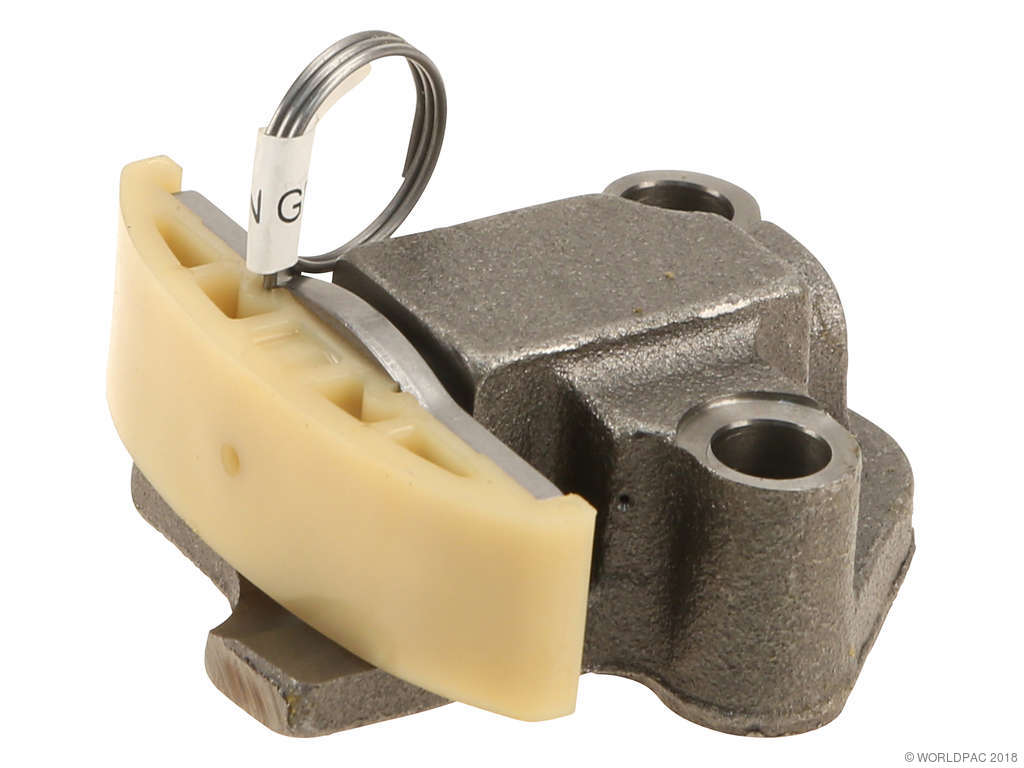
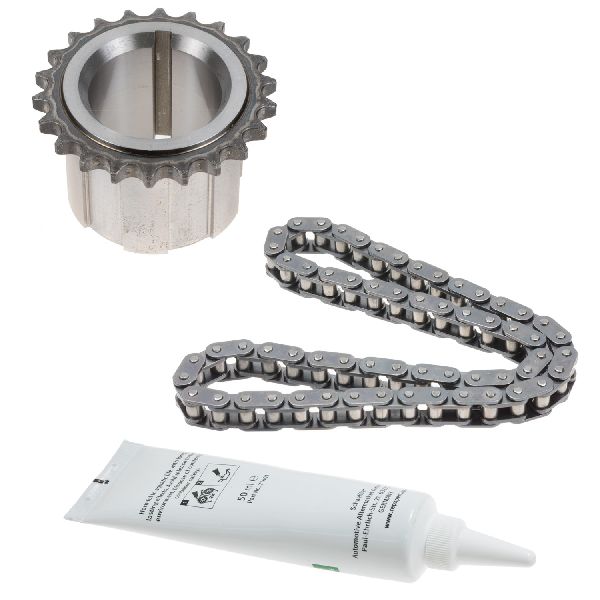
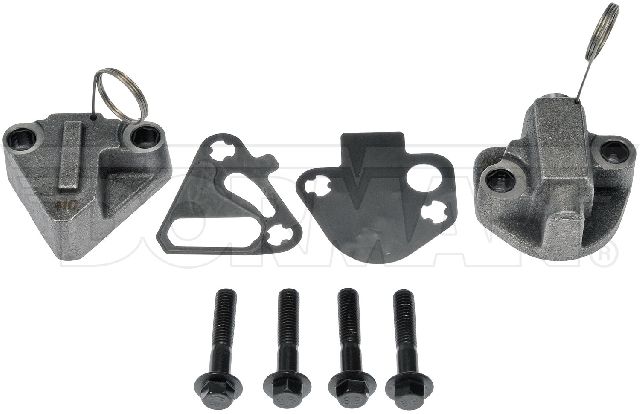
- Engine Timing Chain Kit
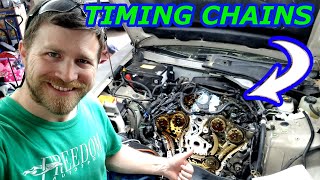
(OEM #12650230 (For 2007 MY), 12650231 (For 2008-2009 LY7), 12651450 (For 2008-2009 LLT))— This is the definitive fix. The kit contains the updated chains, tensioners, and guides needed to correct the stretched chain issue as described in TSB #12-06-01-009F and Special Coverage #11340C. It is critical to use the correct kit for your specific engine (LY7 vs LLT). 🎬 See this video for a breakdown of the parts you'll need.
Trusted brands: ACDelco (GM Original Equipment), Cloyes
OEM price range: $400-$600
Aftermarket price range: $250-$450
Related Codes That Often Appear With This One
- P0009 — P0009 is the same error ('Engine Position System Performance') but for Bank 2 (driver's side). Seeing both P0008 and P0009 strongly indicates a problem with the primary timing chain that connects to the crankshaft, affecting both banks.
- P0016, P0017, P0018, P0019 — These codes indicate a specific correlation fault between the crankshaft and one of the four individual camshafts. They often appear alongside P0008 and are further evidence of a stretched timing chain or a slipped reluctor wheel.
Technical Service Bulletins (TSBs) & Recalls
- 12-06-01-009F: Announcing availability of high feature V6 timing chain kits for repairing stretched timing chains that cause DTCs P0008, P0009, P0016, P0017, P0018, and/or P0019.
- PIP3423P: Provides preliminary information for technicians to inspect for loose timing chains or tensioners when P0008 and other related codes are set.
- 11340C: Special Coverage Adjustment for Timing Chain Wear, extending the warranty to 10 years/120,000 miles for certain 2007-2009 models.
Platform-Specific Known Issues
- Special Coverage Adjustment #11340C: GM issued this special coverage for certain 2007-2009 models, extending the warranty on the timing chains to 10 years or 120,000 miles. It covered the full cost of replacement for eligible vehicles. Many owners who were outside the standard powertrain warranty were able to get the repair done for free under this program.
- TSB #12-06-01-009F: This bulletin announces the availability of updated, comprehensive timing chain kits to address codes P0008, P0009, and P0016-P0019. It lists dozens of affected GM vehicles with the High Feature V6 and provides specific kit part numbers.
- TSB #PIP3423P: This preliminary bulletin instructs technicians to inspect for loose timing chains, tensioners, or a moved crankshaft reluctor wheel when P0008 and other related codes are set.
- Oil Life Monitor (OLM) Reprogramming: As part of the special coverage, dealers would often reprogram the ECM to shorten the oil change intervals calculated by the OLM. This was an attempt to prevent future failures by encouraging more frequent oil changes.
Mechanic-Grade Diagnostic Values

- Camshaft Position (CMP) Sensor Signal Voltage — expected: The ECM supplies a 5V reference to the CMP sensors. The signal wire voltage will toggle as the reluctor wheel passes the sensor.. Failure: A signal circuit shorted to ground will show low or 0 volts. A damaged sensor or harness can result in missing or erratic signal transitions when viewed on a lab scope.
- PCV Orifice Drill-Out Modification — expected: For earlier, more restrictive PCV designs, owners drill the orifices to improve crankcase ventilation. The top hole is drilled to 7/64" and the two smaller bottom holes are drilled to 5/64".. Failure: The original, smaller orifices are prone to clogging with sludge, which is a contributing factor to oil degradation and timing chain wear.
Scan Tool Commands That Help
- GDS2 / Tech2 / High-End Scan Tool: Cam/Crank Correlation Data (Camshaft Retard Offset) — This is the primary electronic diagnostic step. Viewing the live data for cam/crank correlation shows if the ECM is detecting a timing deviation. While specific values aren't published as a universal threshold, experienced technicians recognize that consistent deviation beyond a few degrees at idle indicates chain stretch. This can often confirm the need for a timing chain replacement without initial disassembly.
- Lab Scope / Oscilloscope: Crankshaft vs. Camshaft Sensor Waveform Comparison — This is the most definitive electronic test. By overlaying the waveforms from the crankshaft position sensor and the Bank 1 camshaft sensors, a technician can visually see the timing relationship. A known-good waveform is used as a reference. If the camshaft sensor signals are delayed (shifted to the right) relative to the crankshaft signal, it's direct proof of a stretched timing chain.
Wiring & Ground Locations
- G101 — On the left front strut tower in the engine compartment.. Provides a ground path for multiple components, including the Engine Control Module (ECM). A poor ground here can cause erratic behavior and potentially incorrect sensor readings, though it's less likely to be the root cause of a persistent P0008.
- G102 — On the right front of the engine compartment.. Another key engine compartment ground. Ensuring all major grounds are clean and tight is a fundamental step in diagnosing any electronic engine code.
- G130 — Located on the rear of the right cylinder head (Bank 1).. This ground is physically located on the same cylinder head as the sensors relevant to code P0008. A compromised ground at this specific location could directly impact the signals from the Bank 1 camshaft position sensors.
- G131 — Located on the left rear of the engine (Bank 2).. Relevant if code P0009 (Bank 2) is also present, as it serves the same function for the driver's side of the engine.
Real Owner Repair Stories
- Reddit user in r/Cadillac (2008 Cadillac CTS 3.6L, 100,500 miles) — Check Engine Light with code P0008, significant loss of power.
❌ Tried (didn't work) A local shop suggested replacing the VVT solenoids or crankshaft sensor but was unsure., The owner considered replacing just the sensors, but another user commented they had spent ~$400 on sensors for the same issue on an '07 model and it did "absolutely bupkis, nada, nothing."
✅ What actually fixed it The definitive fix, confirmed by another user's experience with a similar engine, was a full timing chain replacement, which was covered under GM's extended warranty program at the time. - YouTube video by Nestor Auto Repair (2004 Cadillac CTS) — Check Engine Light with code P0008.
❌ Tried (didn't work) The video advises against immediately assuming the timing chain is the cause without checking simpler components first.
✅ What actually fixed it In this specific case, the problem was resolved by replacing the two camshaft position sensors on Bank 1. The creator noted the old sensors were very dirty with metal shavings. The video was published on the premise that this fix worked and the light did not return after a test drive.
OEM Part Supersession History
Various older, individual components→12650230 (2007 LY7), 12650231 (2008-09 LY7), 12651450 (2008-09 LLT)— GM consolidated the required parts into comprehensive kits with updated, more durable timing chain designs to address the widespread stretching issue.
Heads up: It is critical to use the correct kit for the specific model year and engine code (LY7 vs. LLT), as there are differences in components. Using the wrong kit can lead to improper fitment or continued issues.
Model Year Variations Within This Range
- 2004-2007 vs 2008-2011: The first generation (2004-2007) primarily used the 2.8L and 3.6L LY7 port-injected V6 engines. The second generation (2008-2011) introduced the 3.6L LLT direct-injection V6 in 2008 and the 3.0L LF1 V6 in 2010. While all are part of the High Feature V6 family and can suffer from timing chain issues, the part numbers for the timing kits and some related components differ between the LY7 (port-injected) and LLT/LF1 (direct-injected) engines.
- 2007 Models: For 2007 models specifically, GM issued a separate bulletin (07-06-01-013) to help identify early build timing chains, indicating a mid-year change or specific concern for that model year's transition.
Helpful Videos
We Have This Part in Stock




The information in this article is provided for general reference and educational purposes only. Vehicle specifications, procedures, and part compatibility can vary by production date, trim level, and region. Always consult your vehicle's factory service manual and verify part numbers before purchasing or performing repairs. Safety-critical components such as airbags, seat belts, and braking systems should be installed by a qualified professional.
- Cadillac CTS:
- 🎬 Helpful Videos
- 🛍️ Shop This Part
- What's Unique About the 2004-2011 Cadillac CTS
- Diagnostic Flowchart
- Symptoms You May Notice
- Most Likely Causes
- Rare But Worth Checking
- Diagnosis Steps
- Parts You'll Likely Need
- Related Codes That Often Appear With This One
- Technical Service Bulletins (TSBs) & Recalls
- Platform-Specific Known Issues
- Mechanic-Grade Diagnostic Values
- Scan Tool Commands That Help
- Wiring & Ground Locations
- Real Owner Repair Stories
- OEM Part Supersession History
- Model Year Variations Within This Range
- 🎟️ Get 5% Off