

P0008 on 2016-2018 Buick Enclave: Understanding and Fixing Timing Chain Issues
P0008 on a 2016-2018 Buick Enclave almost always indicates the timing chains have stretched. This is a serious and expensive repair, often costing between $2,500 and $4,000, and is not a simple DIY job. Ignoring the code can lead to catastrophic engine failure.
- P0008 on a 2016-2018 Enclave means you likely have a stretched timing chain.
- This is not a DIY-friendly job; it is complex, requires special tools, and is very labor-intensive, often requiring the engine to be removed.
- The repair is expensive, typically costing between $2,700 and $4,500.
- Do not waste money replacing sensors first; the problem is almost certainly mechanical.
- Limit driving the vehicle until it can be repaired to avoid catastrophic engine failure.
What's Unique About the 2016-2018 Buick ENCLAVE
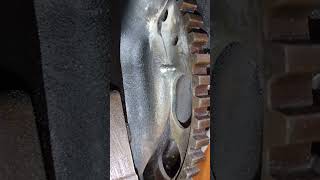
The GM 3.6L V6 engine family (High Feature V6) has a well-documented history of premature timing chain wear. Early versions (like the LLT) had issues with optimistic oil life monitors, which led to extended oil change intervals that accelerated chain wear. The 2018 Enclave uses the LFY V6, which is a minor evolution of the LFX engine, adding stop/start capability. While GM made improvements over the years, including updated chain designs and recalibrated oil life monitors, the fundamental design of the three-chain, four-cam system remains sensitive to oil quality and level 🎬 Watch: Why these GM 3.6L timing chains fail so often, making P0008 a persistent and dreaded code for owners of these vehicles.
Diagnostic Flowchart
Tap your situation to follow the diagnostic path that matches what you're seeing on this vehicle.
Generation note: The 2016-2017 Enclave is part of the first generation, while the redesigned 2018 model begins the second generation. Both use a 3.6L V6 engine (LLT for the first gen, LFY for the second), and unfortunately, both are known to be susceptible to the timing chain issues that trigger a P0008 code.
Symptoms You May Notice
- Check Engine Light illuminated
- Rattling or slapping noise from the engine, especially on a cold start
- Reduced engine power and poor acceleration
- Rough or unstable idle
- Decreased fuel economy
- Slight vibration or a longer-than-usual crank time when starting the engine.
- Replacing only the camshaft or crankshaft position sensors. The P0008 code indicates a correlation problem (a mechanical timing issue), not a failure of the sensors themselves. Replacing sensors is a common but expensive mistake that will not fix the underlying problem.
Most Likely Causes
- Stretched Timing Chains 🔴 High Probability This is the most common cause for P0008 on the GM 3.6L V6 engine due to a combination of chain design, tensioner wear, and sensitivity to oil degradation.
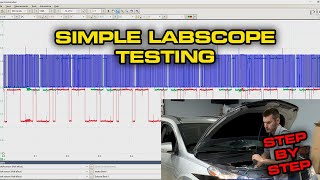
How to confirm: A technician can use an advanced scan tool to view camshaft deviation data. A more definitive method is using a labscope to graph the cam and crank sensor signals and compare them to a known-good pattern, which can confirm a timing issue without disassembly. Physical confirmation requires removing the front timing cover to measure chain deflection.
Typical fix: Replacement of all three timing chains, along with all tensioners, guides, and often the water pump which is driven by the timing chain.
Est. part cost: $500-$1300 - Failed Timing Chain Tensioners 🔴 High Probability The tensioners, which use oil pressure to keep the chains tight, can fail, stick, or weaken, allowing slack in the chains. Their failure accelerates chain wear. They are always replaced as part of any timing chain service.
How to confirm: Usually diagnosed during a physical inspection for timing chain stretch. A rattling noise on startup that quickly disappears is a strong indicator of a tensioner bleeding down oil pressure.
Typical fix: Replace all timing chain tensioners. This is always done during a full timing chain replacement job.
Est. part cost: $762-$783 (as part of a kit) - Low Engine Oil Level or Poor Oil Quality 🟡 Medium Probability The timing chain tensioners and VVT phasers are hydraulic and rely on clean oil at the proper pressure to function. GM's original Oil Life Monitor (OLM) was criticized for allowing excessively long change intervals, which led to oil breakdown and accelerated wear on all timing components.
How to confirm: Check the oil level on the dipstick and review vehicle service records for oil change history. An oil flush may be attempted as a last-ditch effort before major repairs.
Typical fix: Perform an oil and filter change with the correct specification oil (Dexos-approved full synthetic). This is a critical maintenance step but will not fix chains that are already permanently stretched.
Est. part cost: $50-$100
Rare But Worth Checking
- Worn or Broken Timing Chain Guides: The plastic guides can become brittle over time, and pieces can break off, leading to excess chain slack and potentially clogging oil passages. This is usually discovered during a full timing chain inspection.
- Faulty Camshaft Actuator Solenoid (VVT Solenoid): A solenoid that is stuck or clogged with debris can sometimes cause incorrect camshaft phasing. However, this will typically set a more specific code (like P0010-P0014) and is less likely to be the sole cause of P0008, which indicates a bank-wide correlation issue. Testing them by swapping their positions is a valid diagnostic step before committing to a timing chain job.
Diagnosis Steps
- Confirm the code P0008 (and any others) with a quality OBD-II scanner.
- Check the engine oil level and condition. If low or dirty, correct this first, clear the codes, and see if the code returns. This is a cheap first step but rarely the final fix.
- Listen for a distinct rattling or chain-slapping noise from the engine, particularly from the front (passenger side) of the engine bay on startup.
- Using an advanced scan tool, monitor the camshaft position deviation parameters. Persistent deviation values that exceed the manufacturer's threshold strongly suggest a mechanical timing issue.
- For advanced electronic confirmation, use a labscope to capture and compare the waveforms from the crankshaft position sensor and the camshaft position sensors on Bank 1. Compare this to a known-good waveform pattern to definitively identify a timing lag without engine disassembly.
- For definitive physical confirmation, perform a physical inspection. This is a labor-intensive process that involves removing the engine's front cover to check for slack in the chains and the condition of the guides and tensioners.
Parts You'll Likely Need
- Timing Chain Kit
(OEM #ACDelco 12651450 (This is a common kit, but always verify with VIN. Superseded parts are common.))— This is the definitive fix. A complete kit includes all three chains, all tensioners, guides, gaskets, and sometimes the sprockets, ensuring all wear components are replaced.
Trusted brands: ACDelco (OEM), Cloyes (Well-regarded aftermarket)
OEM price range: $800-$1300
Aftermarket price range: $500-$900 - Camshaft Actuator Solenoid (VVT Solenoid)
(OEM #ACDelco 12636175 (or equivalent, check compatibility))— While not usually the root cause, these can get clogged with debris from failing guides or poor oil quality. Many mechanics recommend replacing them during a timing chain job as preventative maintenance since they are accessible at that time.
Trusted brands: ACDelco, Dorman
OEM price range: $40-$70 each (4 required)
Aftermarket price range: $25-$50 each
Related Codes That Often Appear With This One
- P0009 — This is the equivalent timing correlation code for Bank 2 (the front bank). If both P0008 and P0009 are present, it strongly confirms a systemic timing chain issue affecting the primary (crank-to-intermediate) chain, as both banks are out of sync.
- P0016, P0017, P0018, P0019 — These are more specific timing correlation codes for the intake and exhaust camshafts on both banks. For example, P0017 is 'Crankshaft Position - Camshaft Position Correlation Bank 1 Exhaust'. Their presence alongside P0008 helps pinpoint which specific camshaft(s) the ECM sees as being out of time, but the root cause is almost always the same stretched chain(s). TSB #PIP3423P specifically lists these codes as being related to the same timing chain problem.
Technical Service Bulletins (TSBs) & Recalls
- PIP3423P: "This Preliminary Information communication provides information to the technician that Diagnostic Trouble Codes P0016, P0017, P0018, P0019, P0008 or P0009 may be set. Technician will need to inspect for loose timing chains or tensioners."
- PIP5163H: A broader TSB regarding engine conditions like oil consumption or misfires, which can be related to severe timing issues or their consequences, but not a direct P0008 bulletin.
Platform-Specific Known Issues
- GM issued special coverage and extended warranties (like #11340C) for timing chain issues on earlier models of the 3.6L V6, though these have expired and do not apply to the 2016-2018 model years. It's always worth checking with a dealer using your VIN for any unannounced policies, but it is highly unlikely.
- The root cause is often attributed to a combination of chain design, long oil change intervals recommended by the original oil life monitoring system, and the hydraulic tensioners' sensitivity to oil quality.
- While the 2018 model uses the newer LFY engine, it is fundamentally a minor update to the LFX, not the clean-sheet LGX design found in the contemporary Cadillac XT5. This is why the timing chain problem, though improved, was not completely eliminated.
Mechanic-Grade Diagnostic Values
- Scan Tool 'Camshaft Position Variance' PID — expected: < 2-4 degrees at idle. Failure: A consistent deviation greater than 4-6 degrees between 'Desired' and 'Actual' camshaft position angles strongly suggests a mechanical timing issue like a stretched chain.
- Camshaft Position Actuator Solenoid (VVT Solenoid) Coil Resistance — expected: 8 - 13 Ohms (some sources state 6.9 - 7.9 Ohms at 68°F). Failure: A reading of 0 Ω (short), infinite/OL (open), or outside the specified range indicates a faulty solenoid.
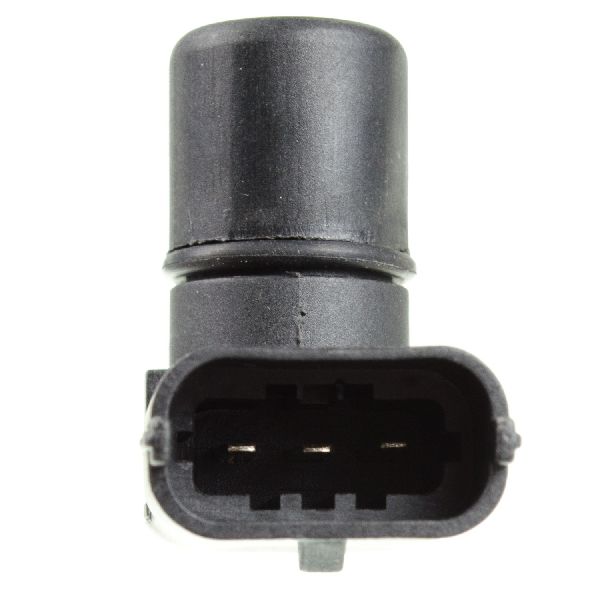
- Camshaft Position Sensor (CMP) 3-wire Connector Voltage (Key On, Engine Off) — expected: Pin 1 (Low Reference): ~0V, Pin 2 (Signal): ~0V or 5V (toggling), Pin 3 (5V Reference): 4.8-5.2V. Failure: Incorrect voltage on the reference or ground circuits points to a wiring or ECM issue, not necessarily a bad sensor.
Scan Tool Commands That Help
- GDS2 / Tech2: Crankshaft Position Variation Relearn — This is critical after replacing timing chains, camshafts, crankshafts, or the ECM. It synchronizes the ECM to the new mechanical tolerances. Failure to perform this relearn can cause codes like P0008 to appear even after a successful mechanical repair.
- GDS2 / Tech2: Camshaft Position Actuator Control — Used to command the VVT solenoids to advance or retard timing while monitoring the actual cam angle on the scan tool. This helps verify if the solenoids and phasers are responding correctly to ECM commands, isolating a hydraulic/mechanical issue from an electrical one.
Wiring & Ground Locations
- G105 / G106 — Located at the front of the engine compartment, often on the frame rail near the radiator support or on/near the cylinder head. G105 is typically a primary engine-to-chassis ground strap.. These are main grounds for the Engine Control Module (ECM). A corroded or loose connection can cause erratic sensor readings from the cam and crank sensors, leading to false timing codes or other hard-to-diagnose electrical issues.
- CMP Sensor Harness Connectors — The connectors for the four camshaft position sensors are located on the front of each cylinder head. On the transverse 3.6L, the Bank 1 (firewall side) sensors can be difficult to access.. A damaged connector or wiring at the sensor itself can interrupt the signal to the ECM, causing timing correlation codes. This should be checked before condemning the sensor or timing components.
Real Owner Repair Stories
- Camaro5 Chevy Camaro Forum user 'secrethero89' (Chevrolet Camaro with 3.6L V6 (LLT engine, similar architecture)) — P0008 code persisted after major parts replacement.
❌ Tried (didn't work) Replaced all 4 camshaft position sensors, Replaced all 4 VVT solenoids, Replaced the complete timing chain kit (Cloyes brand), Replaced VVT sprockets (phasers), Replaced crankshaft position sensor
✅ What actually fixed it The crankshaft reluctor wheel had slipped/rotated on the crankshaft. A mechanic was able to carefully force it back to its original position and apply a tack weld to prevent future movement. The user recommends checking the reluctor wheel position (accessible by removing the oil pan) before starting a timing chain job. - Reddit user on r/MechanicAdvice (2007 Suzuki XL7 with 3.6L VVT engine (GM LY7, predecessor to Enclave's engine)) — Had a P0009 (Bank 2) code, which turned into a P0008 (Bank 1) code 6 days after a timing chain replacement.
❌ Tried (didn't work) Complete timing chain replacement
✅ What actually fixed it The story is unresolved, but the mechanic diagnosed the new P0008 code as a stuck camshaft actuator, highlighting that even after a full timing chain job, related components like VVT actuators can fail and cause similar codes to appear.
"I Checked Everything" — The Actual Cause
- In the context of P0008, the equivalent of a 'smoke test clean' scenario is when a full timing chain replacement does not fix the code. The most documented cause for this is a slipped or shifted crankshaft reluctor wheel. The reluctor wheel is what the crankshaft position sensor reads, and if it moves, the ECM receives incorrect data about the crankshaft's position relative to the cams, perfectly mimicking the symptoms of a stretched chain. This is a known issue on some GM 3.6L engines and is often missed because it requires removing the oil pan to visually inspect, or noticing that the timing marks align but the code persists.
OEM Part Supersession History
Various older timing chain kits→ACDelco 12651450 (itself superseded by kits like 12693218 or 12700436)— The timing chain design was revised multiple times by GM to improve durability and reduce the premature stretching that caused codes like P0008.
Heads up: It is critical to use a complete, updated kit that includes all three chains, guides, and tensioners. Using older design components or mixing new and old parts can lead to a repeat failure. Always verify the latest part number with a VIN.
Model Year Variations Within This Range
- 2016-2017: These first-generation models use a 3.6L V6 from the LLT/LFX family, paired with a 6-speed automatic transmission. The timing chain issue is extremely well-documented for this engine series.
- 2018: The redesigned 2018 model uses the updated 3.6L LFY V6 engine with a 9-speed automatic transmission and adds stop/start capability. While an evolution of the LFX, it is not a complete redesign and can still be susceptible to timing chain wear, though reportedly less common than on earlier LY7/LLT engines.
Helpful Videos


We Have This Part in Stock


The information in this article is provided for general reference and educational purposes only. Vehicle specifications, procedures, and part compatibility can vary by production date, trim level, and region. Always consult your vehicle's factory service manual and verify part numbers before purchasing or performing repairs. Safety-critical components such as airbags, seat belts, and braking systems should be installed by a qualified professional.
- Buick ENCLAVE:
- 🎬 Helpful Videos
- 🛍️ Shop This Part
- What's Unique About the 2016-2018 Buick ENCLAVE
- Diagnostic Flowchart
- Symptoms You May Notice
- Most Likely Causes
- Rare But Worth Checking
- Diagnosis Steps
- Parts You'll Likely Need
- Related Codes That Often Appear With This One
- Technical Service Bulletins (TSBs) & Recalls
- Platform-Specific Known Issues
- Mechanic-Grade Diagnostic Values
- Scan Tool Commands That Help
- Wiring & Ground Locations
- Real Owner Repair Stories
- "I Checked Everything" — The Actual Cause
- OEM Part Supersession History
- Model Year Variations Within This Range
- 🎟️ Get 5% Off