

P0002 on 2017-2019 Alfa Romeo Giulia: Fuel Regulator Circuit Fixes
P0002 on a Giulia indicates a performance issue in the fuel volume regulator's electrical circuit, meaning the signal is erratic or slow, not completely dead. This is often due to a failing regulator on the high-pressure fuel pump (HPFP) or a wiring issue. Before replacing parts, check for applicable software update TSBs. The most common repair is replacing the entire high-pressure fuel pump assembly, which can cost between $250 and $600 for the part.
- P0002 points specifically to an electrical performance problem with the fuel volume regulator circuit, not just low fuel pressure.
- The most common fix is replacing the entire high-pressure fuel pump (HPFP), as the regulator is integrated.
- Always check for software updates via TSBs before replacing expensive hardware.
- Thoroughly inspect the wiring harness for chafing, especially near the intake manifold, as this is a known, cheaper-to-fix failure point.
What's Unique About the 2017-2019 Alfa Romeo GIULIA

On the Giulia's direct-injection engine (both the 2.0L and 2.9L), the fuel volume regulator (also called a quantity control valve or SCV) is integrated into the high-pressure fuel pump (HPFP). Alfa Romeo has issued several Technical Service Bulletins (TSBs) that mention P0002, often alongside other codes, indicating the manufacturer is aware of issues within this system. These bulletins suggest that a software update or specific diagnostic procedure may be required, rather than just immediate part replacement. Furthermore, a known weak point on the Giulia/Stelvio platform is a main engine-to-chassis ground strap that can corrode and fail, causing a host of electrical issues, including circuit performance codes like P0002.
Diagnostic Flowchart

Tap your situation to follow the diagnostic path that matches what you're seeing on this vehicle.
Symptoms You May Notice
- Check Engine Light is on
- Engine stalling or rough idle, sometimes specifically when coming to a stop or after a cold start
- Poor acceleration and reduced engine power, sometimes described as feeling like the car is in 'A' (Advanced Efficiency) mode when it's in 'D' (Dynamic)
- Vehicle enters 'limp mode' with limited acceleration and a 'Service Engine' message
- Black smoke from the exhaust during acceleration
- Decreased fuel economy
- "Start/Stop Unavailable" message may appear alongside the Check Engine Light
- Replacing the in-tank low-pressure fuel pump when the issue is with the engine-mounted high-pressure pump.
- Replacing the fuel rail pressure sensor instead of the fuel volume regulator/HPFP.
- Immediately replacing the HPFP without first checking for applicable software TSBs or inspecting the wiring harness for damage.
- Chasing fuel system electrical faults without first inspecting the main engine-to-chassis ground strap for corrosion or damage.
Most Likely Causes

- Failing Fuel Volume Regulator / High-Pressure Fuel Pump (HPFP) 🔴 High Probability The fuel volume regulator is an integral part of the HPFP. TSBs issued by Alfa Romeo point towards issues with fuel system components, and owner forums for both the Giulia and Stelvio frequently cite HPFP replacement as the ultimate fix for a persistent P0002.
How to confirm: A technician will use a scan tool (like AlfaOBD or wiTECH) to monitor commanded vs. actual fuel rail pressure. If the actual pressure lags, is erratic, or doesn't follow the commanded pressure and the wiring is confirmed to be good, the regulator/HPFP is the likely culprit.
Typical fix: Replace the entire high-pressure fuel pump assembly. 🎬 Watch: Learn how to diagnose and repair fuel volume regulator issues. In some cases, a software update as per a TSB may be required first.
Est. part cost: $250-$600 - Wiring or Connector Issue 🟡 Medium Probability Engine vibrations and heat can cause wiring to fray or connectors to become loose or corroded. One owner on giuliaforums.com reported that a section of the wiring harness near the intake manifold had chafed through, causing an intermittent short that triggered the P0002 code.
How to confirm: Visually inspect the wiring harness and connector going to the high-pressure fuel pump. Pay close attention to areas where the harness may rub against other components. Use a multimeter to test for proper voltage and continuity at the connector with the key on, engine off.
Typical fix: Repair the damaged section of the wiring harness or clean/replace the connector. This can involve soldering, heat-shrinking, or replacing a pigtail.
Est. part cost: $10-$100 - Powertrain Control Module (PCM) Software Issue ⚪ Low Probability Alfa Romeo has released multiple TSBs (#21-045-19, #21-032-20, #18-027-20, #18-030-17) that include P0002, often suggesting a software re-flash can resolve erroneous codes. These updates can adjust the sensitivity and diagnostic parameters within the PCM.
How to confirm: A dealership or qualified shop with access to FCA's wiTECH system can check if the vehicle's PCM software is up-to-date and if any TSBs apply to the specific VIN.
Typical fix: Update the PCM software to the latest version. This should be a primary diagnostic step at the dealer.
Est. part cost: $0-$200
Rare But Worth Checking
- Faulty Powertrain Control Module (PCM): This is very rare, but if a new HPFP and verified wiring do not solve the code, the PCM's internal driver for the fuel volume regulator circuit could be at fault. This is a last-resort diagnosis.
- Low-Pressure Fuel Pump Failure: While P0002 points to the high-pressure side, a failing in-tank low-pressure pump can starve the HPFP, causing erratic performance and potentially triggering this code. The NHTSA has investigated this issue on 2017-2018 models (PE24-000).
- Corroded Main Engine Ground Strap: A corroded or failed main ground strap between the transmission and chassis is a known issue on the Giulia/Stelvio platform. This can cause widespread electrical problems, including intermittent circuit performance codes like P0002, before escalating to a no-start condition.
Diagnosis Steps
- Read the code using an OBD-II scanner and check for any other accompanying codes. Document and freeze-frame data.
- Check for any applicable Technical Service Bulletins (TSBs) for your Giulia's VIN. The fix may be a simple software update, which should be the first step at a dealership.
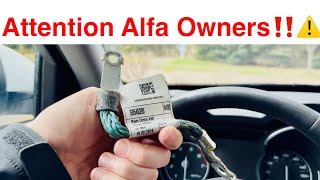
- Inspect the main engine ground strap. This strap, typically connected to the transmission, is exposed under the car 🎬 Watch: See how to inspect and replace the main ground strap. and is a known failure point due to corrosion. A poor ground can cause numerous, hard-to-diagnose electrical faults.
- Perform a thorough visual inspection of the wiring harness and connector at the high-pressure fuel pump. Look for any signs of chafing, melting, or corrosion. Pay special attention to the harness section near the intake manifold.
- Using a professional scan tool (like AlfaOBD or wiTECH), monitor the live data for 'Commanded Fuel Rail Pressure' and 'Actual Fuel Rail Pressure' while the engine is running. Perform a snap-throttle test. Note any significant lag or deviation between the two values.
- If the wiring appears intact, use a multimeter to test the circuit for correct voltage and ground at the fuel volume regulator connector. Check for a consistent power supply and control signal from the PCM.
- If the wiring and connectors are good, and the fuel pressure readings are erratic or don't match what the PCM is commanding, the fuel volume regulator (and by extension, the HPFP) is the most likely culprit.
- Before replacing the HPFP, consider testing the low-pressure fuel pump's output to rule out fuel starvation as a root cause.
- If the HPFP is replaced and the code persists, the final step would be to diagnose a potential fault with the PCM itself.
Parts You'll Likely Need
- High-Pressure Fuel Pump
(OEM #55270232 (Mopar))— The fuel volume regulator that causes code P0002 is integrated into the high-pressure fuel pump on this engine. Replacement of the entire pump assembly is the standard repair when the pump itself is confirmed to be faulty.
Trusted brands: Bosch (OEM Supplier), Mopar
OEM price range: $450-$600
Aftermarket price range: $250-$400
Related Codes That Often Appear With This One
- P0001 — This code indicates an open circuit for the same fuel volume regulator, suggesting a more severe electrical fault like a completely broken wire or disconnected plug.
- P008A — This code for 'Low Pressure Fuel System Pressure - Too Low' can accompany P0002, suggesting the HPFP may be struggling due to being starved of fuel by the low-pressure pump. TSB #18-001-18 was issued for this problem.
- P026E — TSBs #21-045-19 and #21-032-20 list P0002 and P026E-00 (Charge Air Cooler Coolant Pump Performance) together, suggesting a potential shared electrical issue or a software update that addresses both.
- P1066 — TSBs #21-045-19 and #21-032-20 also list P1066-00 (Cylinder 1 Oil Supply Solenoid Valve Stuck) with P0002, pointing to a possible multi-code software fix from the manufacturer.
Technical Service Bulletins (TSBs) & Recalls
- 21-045-19: Notes MIL illumination with DTC P0002-00 - Fuel Volume Regulator "A" Control Circuit Performance.
- 21-032-20: Also cites MIL illumination with DTC P0002-00 - Fuel Volume Regulator "A" Control Circuit Performance.
- 18-027-20: Cites P0002 - Fuel Quantity Regulator 1 Control Circuit Performance among a list of other potential DTCs.
- 18-030-17: Cites P0002 - Fuel Quantity Regulator 1 Control Circuit Performance among a list of other potential DTCs.
Platform-Specific Known Issues
- Multiple TSBs have been issued by Alfa Romeo which include the P0002 code. For example, bulletin #21-045-19 and #21-032-20 note that the Malfunction Indicator Lamp (MIL) may illuminate and set P0002-00. This indicates a known issue that dealers are equipped to diagnose, which may involve a software update.
- A wiring harness chafing point near the intake manifold has been identified by at least one owner as a cause for this code, suggesting a potential vulnerability in the harness routing design.
- A main engine ground strap connected to the transmission is known to corrode and fail, leading to a variety of electrical issues including no-start conditions and potentially this DTC.
Mechanic-Grade Diagnostic Values
- High Pressure Fuel System Pressure (Code Trigger Condition) — expected: Pressure should remain above 2000 kPa (290 psi).. Failure: The PCM may set code P0002 if the pressure drops below 2000 kPa (290 psi) for more than 6.0 seconds.
Scan Tool Commands That Help
- wiTECH / AlfaOBD: Live Data Monitoring: Commanded vs. Actual Fuel Rail Pressure — This is the primary diagnostic step to determine if the high-pressure fuel pump is responding correctly to the PCM's requests. A significant lag or deviation between the two values points towards a fault in the HPFP or its control circuit.
- wiTECH: PCM Flash / Software Update — Used to apply manufacturer software updates as specified in Technical Service Bulletins. This should be done before replacing hardware, as many TSBs for P0002 involve a re-flash.
- wiTECH: Proxi Alignment — This procedure is required after replacing certain control modules to ensure all vehicle systems recognize the new component and communicate correctly.
Wiring & Ground Locations

- Main Engine Ground Strap — Under the car, connecting the transmission to the vehicle's chassis.. This strap is exposed to the elements and is a known failure point due to corrosion. Its failure creates a poor ground for the entire powertrain, forcing starting current through smaller wires and causing widespread, intermittent electrical faults, including circuit performance codes like P0002.
- Fuel Pump Control Module — Under the vehicle, near the rear driver's side wheel, mounted behind a protective plastic cover.. This module controls the in-tank low-pressure fuel pump. While P0002 is a high-pressure side code, a fault with this module could starve the HPFP of fuel, indirectly causing performance issues.
- Remote Jump Start Terminals — Under the hood on the passenger side. The positive (+) terminal is under a red plastic cover, and the negative (-) post is a designated metal stud nearby.. These are the primary, safe locations to check main battery voltage and ensure the electrical system has proper base voltage before diagnosing circuit-specific issues.
Real Owner Repair Stories
- Reddit user on r/AlfaRomeo (2018 Alfa Romeo Stelvio TI Sport (shares powertrain with Giulia)) — Car acted like the battery was low/dying, would not start, then a large cloud of white smoke came from the driver's side wheel well.
❌ Tried (didn't work) Attempting to restart the car multiple times.
✅ What actually fixed it The corroded main ground strap under the car (connected to the transmission) had failed. This overloaded a smaller ground wire, melting sections of the main engine wiring harness. The final repair involved replacing the entire engine wiring harness and the faulty ground strap. - Reddit user on r/AlfaRomeo (Alfa Romeo Stelvio (shares powertrain with Giulia)) — Sudden no-start condition. After an attempt to restart, smoke with a bad smell came from the front wheel arch area.
❌ Tried (didn't work) Multiple start attempts.
✅ What actually fixed it The main ground cable had failed due to corrosion from exposure to road salt and water. Replacing the ground cable resolved the no-start condition and prevented further electrical damage.
"I Checked Everything" — The Actual Cause
- A common diagnostic dead-end for P0002 and other electrical faults on this platform occurs when technicians focus only on the specific component's circuit. The wiring and connectors for the HPFP may test perfectly for continuity, but the code persists intermittently. The actual cause is often a corroded main engine ground strap, which provides the return path for the entire system. When this ground is compromised, the PCM and its sensors receive unstable voltage and ground references, leading to erroneous 'circuit performance' codes without any fault in the circuit itself.
Model Year Variations Within This Range
- 2018-2019: In September 2018, Alfa Romeo updated the Giulia range with more efficient Euro 6D compliant engines. While major architecture remained the same, this could involve different PCM software calibrations or minor component revisions compared to the 2017 models.
Helpful Videos
Used OEM Parts in Stock

New Aftermarket Parts Available




The information in this article is provided for general reference and educational purposes only. Vehicle specifications, procedures, and part compatibility can vary by production date, trim level, and region. Always consult your vehicle's factory service manual and verify part numbers before purchasing or performing repairs. Safety-critical components such as airbags, seat belts, and braking systems should be installed by a qualified professional.
- Alfa Romeo GIULIA:
- 🎬 Helpful Videos
- 🛍️ Shop This Part
- What's Unique About the 2017-2019 Alfa Romeo GIULIA
- Diagnostic Flowchart
- Symptoms You May Notice
- Most Likely Causes
- Rare But Worth Checking
- Diagnosis Steps
- Parts You'll Likely Need
- Related Codes That Often Appear With This One
- Technical Service Bulletins (TSBs) & Recalls
- Platform-Specific Known Issues
- Mechanic-Grade Diagnostic Values
- Scan Tool Commands That Help
- Wiring & Ground Locations
- Real Owner Repair Stories
- "I Checked Everything" — The Actual Cause
- Model Year Variations Within This Range
- 🎟️ Get 5% Off