

P0000 on 2017 Fiat 500: What It Really Means and How to Fix It
On a 2017 Fiat 500, code P0000 is a known software glitch that incorrectly displays instead of the real code, P0326, for a knock sensor circuit problem. The most common fix is replacing the faulty knock sensor, which costs around $40-$80 for the part. This issue is documented in multiple Fiat TSBs.
- Code P0000 on a 2017 Fiat 500 is a ghost code; the real issue is P0326 (Knock Sensor Circuit).
- The most likely cause is a failed knock sensor, followed by wiring issues.
- This is a known issue confirmed by multiple Fiat Technical Service Bulletins.
- The repair involves replacing a sensor on the back of the engine block, which is accessible from underneath the car.
- Platform mates like the Dodge Dart and Jeep Renegade with the same 1.4L engine also suffer from knock sensor failures.
What's Unique About the 2017-2017 Fiat 500

The key issue for this specific vehicle is a software anomaly. Unlike in many other cars where P0000 might mean a communication error or no faults, on the 2017 Fiat 500 it's a specific pointer to a different problem. The manufacturer has issued several TSBs (including #18-083-17, #18-026-17 REV. A, and #18-116-16) acknowledging that the PCM software will show P0000 when the actual fault is P0326, related to the knock sensor. This makes diagnosis straightforward once you are aware of the glitch: ignore the P0000 and immediately investigate the knock sensor circuit. The same P0000-for-P0326 glitch is also noted in TSBs for other FCA vehicles with the 1.4L engine, such as the Jeep Renegade.
Diagnostic Flowchart
Tap your situation to follow the diagnostic path that matches what you're seeing on this vehicle.
Symptoms You May Notice
- Check Engine Light (Malfunction Indicator Lamp) is on
- Audible engine pinging or knocking, especially during acceleration or under load
- Reduced engine power and sluggish acceleration
- Hesitation or stumbling from the engine
- Worse than normal fuel economy
- Rough idle
- Treating P0000 as 'No Fault Found' and ignoring the Check Engine Light.
- Replacing other ignition or fuel system components before diagnosing the knock sensor circuit.
- Replacing the knock sensor without cleaning the mounting surface or torquing it to spec, leading to a repeat failure.
Most Likely Causes

- Faulty Knock Sensor 🔴 High Probability The knock sensor is a sensitive piezoelectric microphone that can fail over time due to constant exposure to engine heat cycles and vibration. Its location on the engine block makes it susceptible to these stresses.
How to confirm: After confirming the P0000/P0326 code, test the sensor's resistance with a multimeter. It should be within the manufacturer's specified range. If the resistance is out of spec or infinite (open circuit), the sensor is bad. Also, ensure the mounting surface on the engine block is clean, as poor contact can cause a false signal.
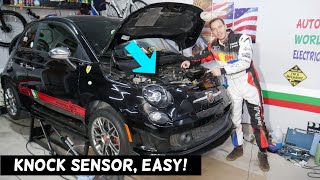
Typical fix: Replace the knock sensor. This involves accessing it on the back of the engine block, disconnecting the electrical connector, and removing a single 13mm mounting bolt. 🎬 Watch: This video shows the exact knock sensor location and replacement. Torque the new sensor to the correct specification (18 ft-lbs) is critical for proper operation.
Est. part cost: $35-$80 - Wiring or Connector Issue 🟡 Medium Probability The knock sensor wiring is located on the engine and can be susceptible to damage from heat, oil, and vibration, leading to corrosion, breaks, or loose connections. Oil soaking the connector is a known failure point.
How to confirm: Visually inspect the wiring harness leading to the knock sensor for any signs of cracking, melting, or oil contamination. Check for a secure connection at both the sensor and the PCM. Check for continuity on the wires between the sensor and the ECU.
Typical fix: Repair or replace the damaged section of the wiring harness. Clean any corrosion or oil from the connector pins with electrical contact cleaner.
Est. part cost: $5-$50 - Powertrain Control Module (PCM) Software Issue ⚪ Low Probability The existence of multiple TSBs indicates that PCM software is a known point of failure, both for displaying the wrong code and for other engine management issues. The TSBs themselves call for a PCM reflash as the ultimate fix if the sensor and wiring are good.
How to confirm: If a new knock sensor and verified wiring do not resolve the code, check with a Fiat dealer or qualified shop for any available PCM software updates. The TSBs (#18-083-17, #18-026-17 REV. A) are the primary confirmation.
Typical fix: Have a dealership or properly equipped independent shop reflash the PCM with the latest software version using a tool like wiTECH.
Est. part cost: $100-$250 (Labor)
Rare But Worth Checking
- Internal Engine Problems: While rare, an actual mechanical issue causing persistent engine knock (like carbon buildup, low octane fuel, or a failed rod bearing) can trigger the knock sensor code because the sensor is doing its job correctly. This would usually be accompanied by significant engine noise.
- Faulty Powertrain Control Module (PCM): In very rare cases, if all other possibilities (sensor, wiring, software) have been exhausted, the PCM itself may have a hardware failure. This is an expensive last resort.
Diagnosis Steps

- Confirm the presence of code P0000 using an OBD-II scanner.
- Acknowledge Fiat TSBs #18-083-17, #18-026-17 REV. A, and #18-116-16, which state P0000 is a substitute for P0326.
- Focus all further diagnosis on the P0326 code (Knock Sensor 1 Circuit Performance).
- Safely raise and support the vehicle to gain access from underneath.
- Locate the knock sensor on the back of the engine block, typically above the starter motor and CV axle.
- Inspect the sensor's wiring and connector for any visible damage, corrosion, or loose connections. Pay close attention to oil contamination.
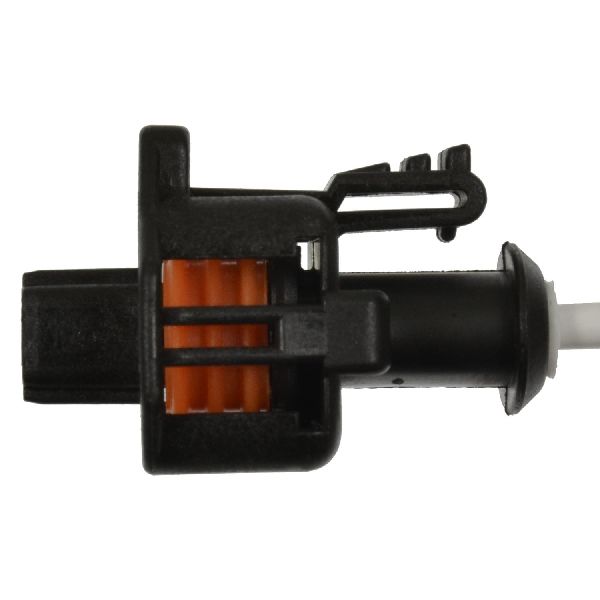
- If wiring appears intact, disconnect the sensor. Push out the yellow lock tab, 🎬 See how to safely disconnect the sensor on Fiat 1.4L engines. then press the black tab to release the connector.
- Test the sensor's internal resistance with a multimeter. Compare the reading to the manufacturer's specification. An out-of-spec reading indicates a failed sensor.
- If the sensor tests good, check the wiring for continuity between the sensor connector and the PCM connector pins (Pin 36 and 51 have been cited for this circuit on similar Fiat engines).
- Before installing a new sensor, thoroughly clean the mounting surface on the engine block to ensure solid contact.
- Install the new knock sensor and torque the mounting bolt to 18 ft-lbs.
- If both the sensor and wiring are confirmed to be good, the issue may be with the PCM software. Check with a dealer for available updates per the TSBs.
Parts You'll Likely Need
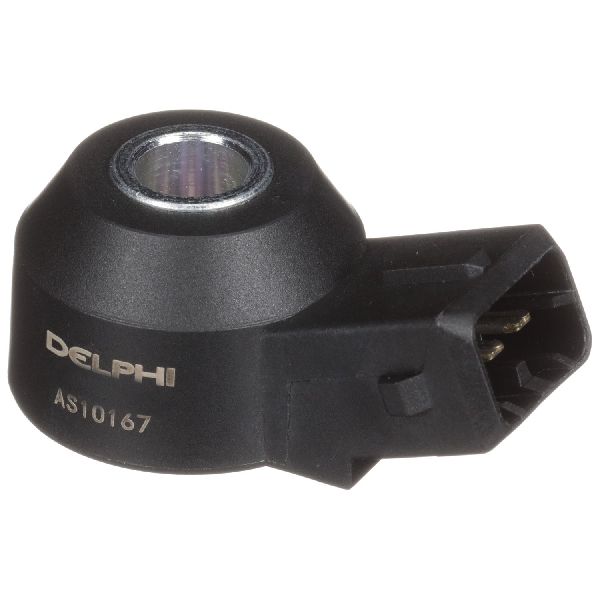
- Ignition Knock (Detonation) Sensor
(OEM #68070745AB (replaces 68642245AA))— This is the most common component to fail, triggering the P0326 code that is masked by P0000.
Trusted brands: Mopar, Bosch, Standard Motor Products (SMP), Duralast, TRQ
OEM price range: $45-$70
Aftermarket price range: $36-$80
Related Codes That Often Appear With This One
- P0326 — This is the actual code that the P0000 is masking, as per Fiat's Technical Service Bulletins.
- P1D7F-00 — Mentioned in TSB #18-083-17 as another DTC that may be set alongside the P0000/P0326 issue, related to ETC Self-Learning Failure.
- P0141-00 — Listed in TSB #18-026-17 REV. A as a potential accompanying code related to an O2 sensor heater.
- P1523-00 — Also listed in TSB #18-026-17 REV. A, related to low oil pressure for the variable valve timing system.
Technical Service Bulletins (TSBs) & Recalls
- 18-083-17: Confirms P0000-00 will be displayed but should be P0326-00 (Knock Sensor 1 Circuit Performance). Also notes P1D7F-00 may be present. Calls for a PCM reflash.
- 18-026-17 REV. A: Re-iterates that P0000-00 is a display error for P0326-00 and lists other potential codes like P0141-00 and P1523-00.
- 18-116-16: An earlier bulletin also stating that P0000-00 is displayed in place of P0326-00.
- 18-118-16: A similar TSB for the 2017 Jeep Renegade with the same 1.4L engine, confirming the P0000 for P0326 issue is present on platform mates.
Platform-Specific Known Issues
- A software glitch in the Powertrain Control Module (PCM) causes the diagnostic system to display code P0000 when the actual fault is P0326 (Knock Sensor 1 Circuit Performance). This is confirmed by manufacturer TSBs #18-083-17, #18-026-17 REV. A, and #18-116-16.
Mechanic-Grade Diagnostic Values
- Knock Sensor Circuit Reference Voltage — expected: 5 Volts. Failure: No voltage or significantly lower voltage at the sensor connector with the key on, engine off.
- Knock Sensor Signal Voltage (Live Data) — expected: ~0.5V - 1.0V at idle. Failure: Voltage is less than 0.3V or greater than 4.5V at idle, or does not produce voltage spikes when the engine block is tapped.
- Knock Sensor Mounting Bolt Torque — expected: 18 ft-lbs. Failure: An improperly torqued sensor (either too loose or too tight) will not correctly detect engine vibrations, leading to a repeat code.
Scan Tool Commands That Help
- Advanced Scan Tool (e.g., wiTECH, Autel, iCarsoft): Live Data > Knock Sensor Voltage/Signal — Use this to perform a 'tap test'. While monitoring the live data stream for the knock sensor, gently tap the engine block near the sensor with a wrench. A functional sensor and circuit will show a spike in voltage on the scan tool display. No reaction indicates a problem with the sensor or wiring.
Wiring & Ground Locations

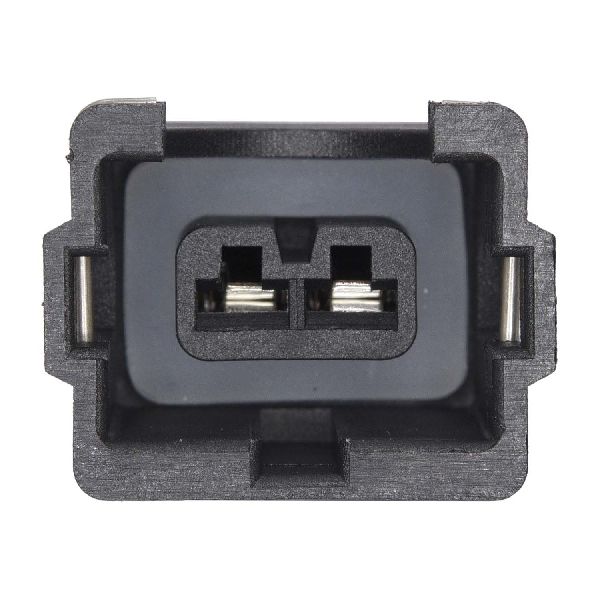
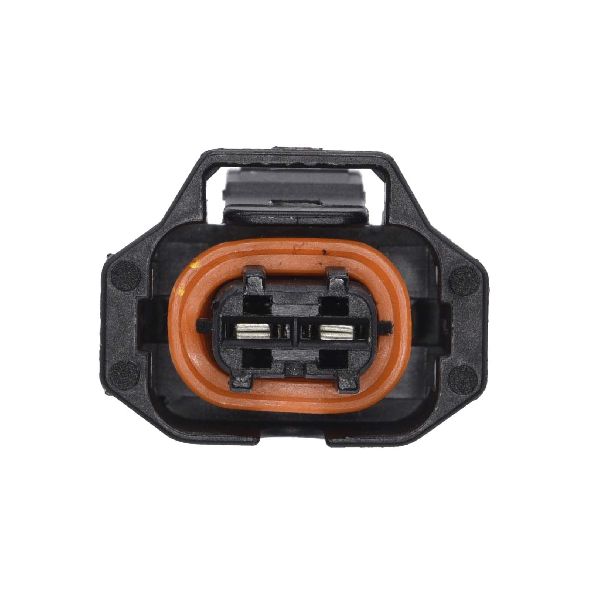
- Knock Sensor Connector — On the back of the engine block, above the starter motor and CV axle. It is a 2-pin connector, often with a yellow locking tab.. This connector is in a high-heat, high-vibration area and is prone to contamination from oil leaks. A poor connection here is a common cause of the P0326 code.
- Main Engine Ground Strap — Runs from the transmission bellhousing area, under the battery tray, to a chassis ground point on the body.. The main ground strap on Fiat 500s is known to corrode internally, sometimes without visible external damage. A poor ground can cause a host of floating voltages and sensor signal issues, including an erratic knock sensor signal that could trigger a P0326 code.
Real Owner Repair Stories
- YouTube video by Kevin's Mobile Repair (2017 Fiat 500 1.4L) — Check Engine Light with a knock sensor code.
✅ What actually fixed it Replaced the knock sensor. The mechanic noted that the connector was difficult to remove with the sensor bolted to the block due to tight clearance. He had to unbolt the sensor first, pull it down slightly, and then he was able to access the connector's release tab. - Reddit user in r/AskAMechanic (2014 Fiat 500L 1.4L (similar platform)) — Initial P0325 knock sensor code.
❌ Tried (didn't work) Replacing the knock sensor (twice, thinking the first replacement was faulty)., Replacing the pigtail connector, which led to numerous other electrical codes and a no-crank condition.
✅ What actually fixed it The story highlights the cascading problems that can occur from a simple knock sensor issue. The final resolution was not posted, but the experience serves as a cautionary tale: a recurring P0326/P0325 after sensor replacement strongly points to a wiring, ground, or PCM issue, and improper wiring repair can make the problem much worse.
OEM Part Supersession History
68642245AA→68070745AB— Not officially stated, but part revisions are typically made to improve durability, material quality, or resistance to heat and vibration.
Helpful Videos
We Have This Part in Stock


The information in this article is provided for general reference and educational purposes only. Vehicle specifications, procedures, and part compatibility can vary by production date, trim level, and region. Always consult your vehicle's factory service manual and verify part numbers before purchasing or performing repairs. Safety-critical components such as airbags, seat belts, and braking systems should be installed by a qualified professional.
- Fiat 500:
- 🎬 Helpful Videos
- 🛍️ Shop This Part
- What's Unique About the 2017-2017 Fiat 500
- Diagnostic Flowchart
- Symptoms You May Notice
- Most Likely Causes
- Rare But Worth Checking
- Diagnosis Steps
- Parts You'll Likely Need
- Related Codes That Often Appear With This One
- Technical Service Bulletins (TSBs) & Recalls
- Platform-Specific Known Issues
- Mechanic-Grade Diagnostic Values
- Scan Tool Commands That Help
- Wiring & Ground Locations
- Real Owner Repair Stories
- OEM Part Supersession History
- 🎟️ Get 5% Off