

C3239 on 2018-2024 Ford F-150: Not a Trouble Code, But a Connector Number
C3239 is not a valid Diagnostic Trouble Code (DTC) for a Ford F-150. It is a Ford part number for an electrical connector, specifically for the Fuel Pump Control Module on 2018-2019 Ford Explorers. This confusion likely arises from Technical Service Bulletins that cover multiple vehicles. The equivalent connector on an F-150 is C4336 or C460.
- C3239 is not a fault code for any Ford vehicle; it is a part number for an electrical connector on a Ford Explorer.
- If you are trying to diagnose an issue with your F-150, do not use 'C3239'. Scan the vehicle with an OBD-II tool to get the correct trouble code.
- The component associated with this connector number is the Fuel Pump Control/Driver Module.
- If you have fuel delivery symptoms on your F-150 (like stalling or no-start), check the actual FPCM connector (C4336 or C460) on the driver's side frame rail for corrosion or damage, as recommended by multiple Ford TSBs.
What's Unique About the 2018-2024 Ford F-150
The confusion stems from Ford TSBs that address similar issues across different vehicle platforms. While these bulletins discuss checking the FPCM/FPDM connector for issues like loose pins or corrosion, they specify different connector numbers for each vehicle. For the 2018-2024 Ford F-150, the relevant connector for the fuel pump module is typically designated as C4336 or C460. The underlying issue—a poor connection at the fuel pump module—can affect the F-150, but it would not be identified by the code 'C3239'. This module is located on the driver's side frame rail, often above or near the spare tire, making it susceptible to moisture and corrosion.
Diagnostic Flowchart
Tap your situation to follow the diagnostic path that matches what you're seeing on this vehicle.
Generation note: The 2018-2024 year range covers the end of the 13th generation (2018-2020) and the beginning of the 14th generation (2021-2024) Ford F-150. While C3239 is not a valid code for either, the related fuel pump control module connectors (C4336/C460) are present on both generations and are a known point of failure, as documented in Ford TSBs.
Symptoms You May Notice
- Crank-no-start condition
- Intermittent stalling, sometimes with no warning
- Engine hesitation or loss of power under acceleration
- Illuminated Malfunction Indicator Lamp (MIL) or Check Engine Light
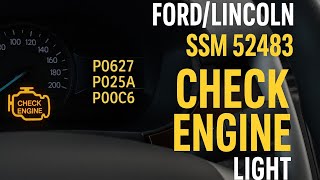
- Associated DTCs may include P0627, P025A, P025B, P00C6, P008A, and/or U0109.
- Mistaking a connector part number (C3239) for a Diagnostic Trouble Code (DTC).
- Replacing the fuel pump when the actual issue is a poor connection at the Fuel Pump Control Module.
Most Likely Causes
Rare But Worth Checking
- A failed Fuel Pump Control Module (FPCM) itself 🎬 Watch: Step-by-step guide to replacing the fuel pump driver module.
- Damage to the wiring harness leading to the FPCM connector
Diagnosis Steps
- Verify that 'C3239' was not read from a service manual or TSB in reference to a part, rather than from an OBD-II scanner.
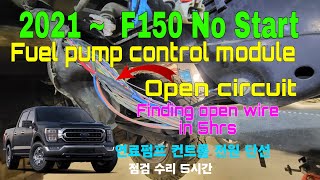
- If you are experiencing symptoms, perform a proper OBD-II scan to retrieve any actual Diagnostic Trouble Codes (DTCs). Codes like P0627 or U0109 point directly to the FPCM circuit. 🎬 Watch: Diagnosing no-start issues and open control circuits on newer F-150s.
- Locate the Fuel Pump Control Module (FPCM) on the driver's side frame rail, typically above the spare tire.
- Disconnect the electrical connector (C4336/C460) from the FPCM. Inspect both the harness side and the module side for signs of corrosion (white or green powder), moisture, or bent/damaged pins.
- Gently tug on each wire going into the back of the connector to ensure no pins have been pushed out or have a loose connection.
- Inspect the FPCM ground connection (G401) on the frame for tightness and corrosion.
- If no visible issues are found, apply a small amount of dielectric grease to the connector seal and reconnect it, ensuring it clicks firmly into place. Clear any codes and test drive the vehicle.
- If the problem persists, the FPCM itself may be faulty or there may be a break in the wiring harness.
Parts You'll Likely Need
- Fuel Pump Control Module Connector Pigtail 🎬 See how to repair a damaged fuel pump connector to fix stalling.
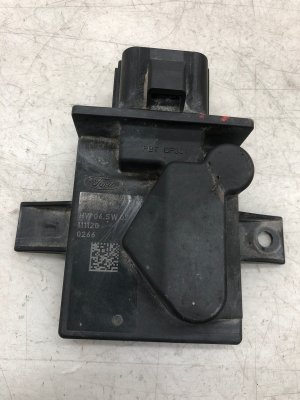
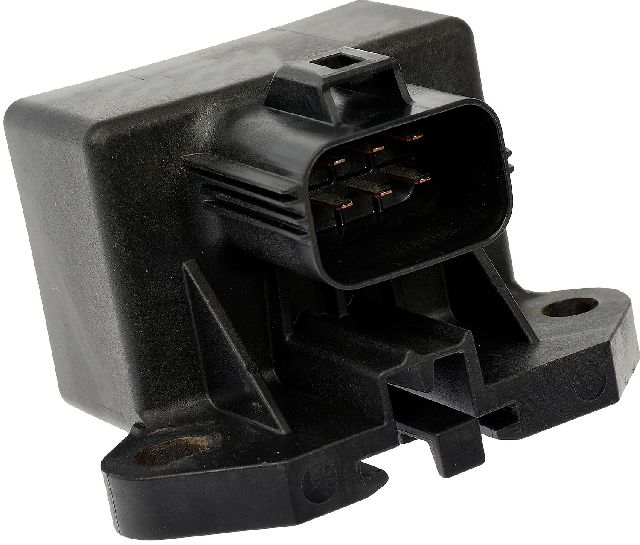
- Fuel Pump Control Module (FPCM)
- Dielectric Grease
Related Codes That Often Appear With This One
- P0627 - Fuel Pump 'A' Control Circuit Open
- U0109 - Lost Communication With Fuel Pump Control Module
- P025A - Fuel Pump Module Control Circuit/Open
- P025B - Fuel Pump Module Control Circuit Range/Performance
- P00C6 - Fuel Rail Pressure Too Low - Engine Cranking
- P008A - Low Pressure Fuel System Pressure - Too Low
Technical Service Bulletins (TSBs) & Recalls
- SSM 52483: Mentions inspecting the FPCM connector, identifying it as C460/C4336 on the F-150 and C3239 on the Explorer. Lists related DTCs P0627, P025A, P025B, P00C6, P008A, U0109.
- SSM 51306: Advises confirming the FPCM connector is fully seated, specifying C4336 for the F-150 and C3239 for the 2018-2019 Explorer.
- SSM 50661: Repeats the advice of SSM 51306, distinguishing between the F-150's C4336 connector and the Explorer's C3239 connector.
- SSM 49618: Links DTCs P025A and U0109 to intermittent FPCM connection issues, again distinguishing between the F-150 (C4336) and Explorer (C3239) connectors.
- SSM 47926 & SSM 47257: Advise confirming the Fuel Pump Driver Module (FPDM) connector is fully seated, identifying C4336 for the F-150 and C3239 for the Explorer.
Platform-Specific Known Issues
- Ford has issued multiple Technical Service Bulletins (e.g., SSM 52483, SSM 51306) advising technicians to inspect the Fuel Pump Control Module (FPCM) connector for being improperly seated, damaged pins, or corrosion. On the F-150, this refers to connector C4336 or C460. This can cause intermittent stalling or no-start conditions.
- The location of the FPCM on the frame rail above the spare tire exposes it to road salt, water, and debris, making corrosion of the connector and module a common point of failure over time, a problem seen across multiple F-150 generations.
Mechanic-Grade Diagnostic Values
- FPCM Power Supply Voltage — expected: 11.5–12.5 V. Failure: Voltage below 11.5V suggests a supply issue from the fuse or relay, not a module fault.
- FPCM Ground Circuit Voltage Drop — expected: < 0.2 V. Failure: A reading higher than 0.2V indicates high resistance in the ground circuit (G401), which can cause intermittent module operation.
- CAN Bus Resistance — expected: < 60 Ω. Failure: An open circuit (infinite resistance) indicates a broken wire or disconnected connector on the CAN bus, causing a U0109 code.
- Fuel Pump Control (FPC) Signal — expected: Approximately 50% Duty Cycle during cranking. Failure: A reading of 0% or 100% indicates a fault in the PCM or the wiring between the PCM and FPCM.
Scan Tool Commands That Help
- FORScan / Ford IDS: FP (MODE) PID Control — This command allows a technician to manually run the fuel pump to build maximum pressure, which is useful for verifying pump operation and checking for leaks without starting the engine.
- FORScan: Monitor PIDs: FLP (Low Side Fuel Pressure), FLP_DSD (Desired Low Side Fuel Pressure) — Use these PIDs to monitor the fuel system's performance in real-time. If the actual pressure (FLP) does not match the desired pressure (FLP_DSD) under load, it points to a problem with the FPCM or the fuel pump itself.
Wiring & Ground Locations
- G401 — On the left rear frame rail, near the FPCM.. This is the primary ground for the Fuel Pump Control Module. Corrosion or a loose connection at this point is a very common cause of intermittent power loss to the module, leading to stalling and no-start conditions with codes like U0109 and P0627.
- C4336 / C460 — Connects to the Fuel Pump Control Module (FPCM), located on the driver's side frame crossmember, above the spare tire.. This is the connector referenced in multiple TSBs. It is highly susceptible to moisture and corrosion, which can cause an open or short in the FPCM power, ground, or communication circuits.
- Frame Rail Harness — Runs along the driver's side frame rail, sometimes protected by a plastic guard.. This harness contains the wiring for the FPCM. It is a known chafe point where vibration can cause wires to rub against the frame, eventually shorting to ground and causing intermittent issues that are difficult to diagnose.
Real Owner Repair Stories
- F150forum.com user (2014 F-150 King Ranch V6 EcoBoost, 112,000 miles) — Intermittent crank-no-start condition with no codes. Would crank but not fire.
❌ Tried (didn't work) Replacing the FPCM with a Dorman part from Amazon (worked for one month)., Replacing the FPCM again with another Dorman part from a local auto shop (worked for a few weeks).
✅ What actually fixed it The user's experience of replacing the FPCM multiple times strongly suggests the root cause was not the module itself, but rather an underlying issue with the wiring, connector, or ground connection that was causing the replacement modules to fail repeatedly. This highlights the importance of diagnosing the entire circuit rather than just replacing the module. - F150forum.com user (2013 F-150 5.0L) — Intermittent no-start. Would start fine one day, then only crank the next. Code P0627 (Fuel Pump 'A' Control Circuit Open) was present.
❌ Tried (didn't work) Initial troubleshooting pointed towards the fuel pump itself.
✅ What actually fixed it The owner replaced the Fuel Pump Driver Module (FPDM), which resolved the no-start condition and the P0627 code. The user noted this should be checked before replacing the more expensive fuel pump and also mentioned the importance of checking the related Fuse 27 relocation TSB.
OEM Part Supersession History
Varies (Original Ford FPDM)→Dorman 590-001 (or similar aftermarket)— Design Improvement
Heads up: Aftermarket modules like the Dorman 590-001 are considered an upgrade. They include rubber standoffs or spacers in the mounting hardware. This creates an air gap between the module's aluminum body and the truck's steel frame, preventing the galvanic corrosion that caused the original part to fail.
Helpful Videos
Used OEM Parts in Stock


New Aftermarket Parts Available


The information in this article is provided for general reference and educational purposes only. Vehicle specifications, procedures, and part compatibility can vary by production date, trim level, and region. Always consult your vehicle's factory service manual and verify part numbers before purchasing or performing repairs. Safety-critical components such as airbags, seat belts, and braking systems should be installed by a qualified professional.
- Ford F-150:
- 🎬 Helpful Videos
- 🛍️ Shop This Part
- What's Unique About the 2018-2024 Ford F-150
- Diagnostic Flowchart
- Symptoms You May Notice
- Most Likely Causes
- Rare But Worth Checking
- Diagnosis Steps
- Parts You'll Likely Need
- Related Codes That Often Appear With This One
- Technical Service Bulletins (TSBs) & Recalls
- Platform-Specific Known Issues
- Mechanic-Grade Diagnostic Values
- Scan Tool Commands That Help
- Wiring & Ground Locations
- Real Owner Repair Stories
- OEM Part Supersession History
- 🎟️ Get 5% Off