

OBD-II Code C3000: Control Module Internal Fault
What C3000 means, why it triggers, and how to fix it
- Code C3000 indicates a critical internal failure in a control module, pointing to the Anti-lock Brake System (ABS) module in over 90% of cases.
- Test your battery with a multimeter to ensure it reads at least 12.4V before replacing any parts, as low voltage during startup is the leading cause of false C3000 codes.
- Send your original ABS module to a specialist for a $150-$350 rebuild instead of buying a new $800+ unit to completely avoid mandatory dealership VIN programming fees.
- Stop driving at highway speeds immediately, as the disabled ABS and traction control systems cause your wheels to lock up and skid during emergency braking.
What Does C3000 Mean?

C3000 is a generic chassis code indicating a vehicle control module detected a critical internal fault during a self-test. In over 90% of cases, C3000 points to an internal failure within the Anti-lock Brake System (ABS) control module. Other possibilities include the Body Control Module (BCM) or other chassis-related computers.
Technical definition: The official SAE/ISO definition for C3000 is 'ISO/SAE Reserved', allowing manufacturers to assign it a unique meaning. The most common assignment is 'Control Module Internal Fault' or 'ABS Control Module Malfunction'. The module usually sets this code about itself. If another module detects the fault, it stores a communication code like U0121 instead.
Can I Drive With C3000?
Yes, But With Caution. Driving is possible, but requires extreme caution. This code disables the Anti-lock Braking System (ABS) and traction/stability control. Without ABS, your wheels lock during hard braking, significantly increasing stopping distances and causing a loss of steering control on wet or slippery surfaces. Drive slowly, maintain a large following distance, and diagnose the vehicle immediately.
Common Causes

- Internal ABS Control Module Failure (Very Common) — Heat and vibration cause microscopic cracks in solder joints or component failure on the module's circuit board. Highly prevalent on Ford, Mazda, and Jaguar models.
- Low or Unstable Battery Voltage (Common) — A weak battery, failing alternator, or corroded terminals cause voltage drops that trigger a false internal fault code during the module's startup self-check.
- Damaged Wiring, Corroded Connectors, or Water Intrusion (Common) — Corrosion, moisture, or physical damage to the module's main electrical connector interrupts power or data signals, forcing the module to incorrectly diagnose an internal failure.
- Faulty Wheel Speed Sensor or Tone Ring (Less Common) — An erratic signal from a failing sensor or damaged tone ring is sometimes misinterpreted by the ABS module as an internal processing fault.
- Faulty Body Control Module (BCM) (Less Common) — On specific vehicles, particularly Mazdas, C3000 points to a failure within the BCM, which manages electrical accessories and communicates with the ABS.
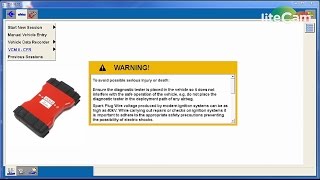
- Software Glitch or Incompatibility (Rare) — Bugs in the module's operating software, or installing a used module without proper VIN programming, 🎬 Watch: Step-by-step guide for Ford ABS module programming. causes the self-check to fail.
Symptoms

- Multiple Dashboard Warning Lights — The ABS, Traction Control, Stability Control, and general Brake warning lights illuminate simultaneously.
- Erratic or Non-Functional Speedometer — The ABS module supplies the speed signal to the instrument cluster. A faulty module causes the speedometer to stop working or bounce erratically.
- Hard or Spongy Brake Pedal — Drivers report a change in brake pedal feel, though the base hydraulic braking system still functions.
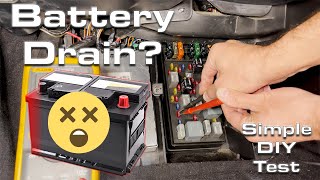
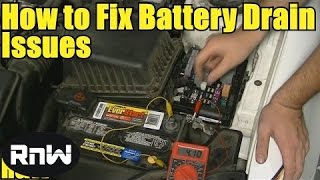
- Parasitic Battery Drain (also visible on scanner) — A failing control module fails to 'sleep' when the car is turned off, causing a steady battery drain that leaves it dead overnight.
Diagnostic Flowchart

Tap your situation to follow the diagnostic path that matches what you're seeing on this code.
Common Fixes & Costs
- Repair/Rebuild ABS Control Module — Parts: $0 (Use existing part), Labor: $150-$350 for rebuild service, plus $150-$300 shop labor to R&R., ~1.5 hr book time (Intermediate)
- Replace Battery — Parts: $150-$250, Labor: $0-$50, ~0.7 hr book time (DIY)
- Clean Grounds and Connectors — Parts: $10, Labor: $0 (DIY) or $100-$150 (Shop), ~1 hr book time (DIY)
- Replace ABS Control Module — Parts: $500-$1500, Labor: $200-$400, ~2.5 hr book time (Professional)
- Repair Damaged Wiring — Parts: $20, Labor: $150-$400, ~2 hr book time (Intermediate)
DIY vs Professional
- Replace Battery — Beginner: True
Tools: Basic socket/wrench set - Clean Grounds and Connectors — Beginner: True
Tools: Socket/wrench set, wire brush, electrical contact cleaner - Repair Damaged Wiring — Beginner: False
Tools: Multimeter, wire strippers, soldering iron or quality crimpers, heat shrink tubing - Repair/Rebuild ABS Module (DIY Solder) — Beginner: False
Tools: Soldering iron, desoldering braid, Torx bits, prying tools, sealant - Replace ABS Control Module — Beginner: False
Tools: Socket/wrench set, Torx bit set, advanced OBD-II scanner with programming capabilities
Used vs. New Parts: Buying Guide
When a used part is worth it: A used ABS module is a budget-friendly option for older vehicles where a new unit is cost-prohibitive. It requires an independent shop with advanced scan tools to reprogram the VIN, as dealers refuse to install used parts.
Donor-vehicle mileage cap: roughly under 100000 miles for the part to have meaningful remaining life.
Donor quality checklist:
- Match the part number exactly. Do not rely on make/model/year alone.
- Source from a reputable seller offering at least a 90-day warranty.
- Avoid parts from flood-damaged cars.
- Inspect connector pins for corrosion or damage before installation.
Decision logic:
- If The original module has no physical damage → Choose a $150-$350 rebuild service. It requires no programming and includes a warranty.
- If A rebuild service is unavailable and the vehicle is newer → Buy a new OEM part. It is the most expensive but reliable option.
- If Budget is strict and you accept premature failure risk → Buy a used part, but factor in $100-$200 for mandatory VIN programming.
Warranty tradeoff: Used parts carry a 30-90 day warranty. A rebuilt module carries a one-year or lifetime warranty. A new OEM part carries a 1-2 year warranty.
Worst-case if a used part fails: $300-$600 if a used part is dead on arrival, covering repeat labor and programming costs.
What Happens If You Wait — Timeline
- 0-1 month: ABS and traction control lights illuminate. Base braking functions normally, but safety systems are offline. (MPG impact: 0%% · Added cost: $0)
- 1-6 months: If the ABS pump runs continuously, the battery dies overnight. Repeated jump-starting strains the alternator. (MPG impact: 0%% · Added cost: $200-$400 (New battery/alternator stress))
- 6-12 months: A constantly running ABS pump burns out its electric motor, requiring replacement of the entire hydraulic assembly instead of just the control module. (MPG impact: 0%% · Added cost: $800-$2,000+)
- Ongoing: Driving without ABS normalizes a severe safety risk. Root causes like water intrusion spread to adjacent wiring harnesses. (MPG impact: 0%% · Added cost: Cost of collision or $300+ in complex wiring repairs.)
Cost of Not Fixing It
- Immediate: Loss of ABS, traction, and stability control. Wheels lock in an emergency stop, increasing stopping distance and causing loss of steering control. (Added cost: Cost of an at-fault collision or insurance invalidation.)
- 1-3 months: A constantly running ABS pump drains the battery and burns out the pump motor. Intermittent brake application accelerates pad and rotor wear. (Added cost: $200-$600 (new battery, premature brake job))
- 6+ months: Root causes like water intrusion spread, destroying nearby electrical systems and connectors. (Added cost: $300-$800 (complex wiring harness repairs))
Diagnosis Steps
- Scan for All Codes
Use an advanced OBD-II scanner to read 'C' (Chassis), 'B' (Body), and 'U' (Network) codes. C3000 is a generic flag; accompanying codes (e.g., wheel sensor or communication codes) pinpoint the exact failure.
Tools: Advanced OBD-II Scanner (Beginner) - Check Battery Health and Connections
Test the battery with a multimeter. A healthy battery reads ~12.6V engine off and 13.7-14.7V running. Readings below 12.4V require charging or replacement. Clean terminal corrosion.
Tools: Multimeter, Wire Brush (Beginner) - Check for Technical Service Bulletins (TSBs)
Search online for TSBs for your specific make and model. Manufacturers frequently release software updates or wiring fixes for known C3000 triggers.
Tools: Internet Access (Intermediate) - Visually Inspect the Module and Wiring
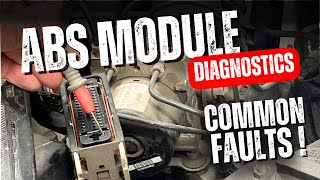
Unplug the ABS module's main electrical connector. Inspect pins and terminals for green/white corrosion, moisture, or bent pins. Examine the wiring harness for chafing or breaks.
Tools: Flashlight, Socket Set (Intermediate) - Test Power and Ground at the Module Connector
Using a wiring diagram, identify power and ground pins. With the key on, verify the module receives full battery voltage (12.0-12.6V) and has a solid ground (near 0 ohms resistance).
Tools: Multimeter, Vehicle-Specific Wiring Diagram (Advanced) - Perform a Parasitic Draw Test
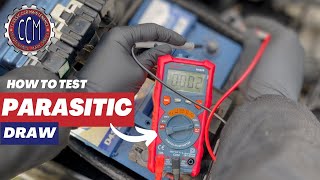
If the battery dies overnight, wait 45 minutes for modules to 'sleep'. Measure current draw in series at the negative terminal. A reading consistently over 100mA (0.10A) confirms an abnormal drain.
Tools: Multimeter with 10A Amp setting (Advanced) - Pro Tip: Test Wheel Speed Sensors
For passive sensors, verify resistance is between 800-2,500 Ω. For active sensors, back-probe the power wire with an oscilloscope to confirm a clean digital square wave while spinning the wheel.
Tools: Multimeter, Oscilloscope, Jack and Jack Stands (Professional)
When This Code Triggers (Freeze-Frame Conditions)
- Event: Self-Test (The fault is detected during the module's power-on self-test (KOEO) or initial low-speed dynamic test.)
- Vehicle Speed: 0 mph or 5-15 mph (The code sets immediately at key-on (0 mph) or during the first few minutes of driving when the ABS module performs a dynamic self-test.)
- Battery Voltage: 9.5V - 12.0V (Often triggers during engine cranking when system voltage momentarily dips. A stable voltage is required for the self-test to pass.)
- Time Since Start: 0 - 2 minutes (The fault is almost always logged at the very beginning of a drive cycle.)
Related Codes
- U3000 — Generic network code set by the main computer when it detects a module communication or voltage problem. Ford uses suffixes like U3000:49 for specific internal failures.
- U0121 — 'Lost Communication With ABS Control Module'. Stored in other modules (ECU, TCM) when the ABS module fails completely and stops broadcasting on the network.
- C1095 — Ford/Jaguar specific code for 'ABS Hydraulic Pump Motor Circuit Failure'. Confirms classic solder joint failure inside the ABS module.
- P1794:13 — Mazda-specific code for 'Capacitor Circuit Malfunction'. Points to the i-ELOOP regenerative braking system, not the ABS module.
- C0020 — 'ABS Pump Motor Control Circuit'. Indicates the module's internal fault prevents it from controlling the hydraulic pump.
Climate & Environmental Factors
- High Humidity / Road Salt: Accelerates corrosion on module connectors and chassis grounds, creating high resistance that triggers a C3000 fault.
- Extreme Heat: Accelerates the breakdown of electronic components and solder joints inside sealed control modules.
- Extreme Cold: Reduces battery cranking power, causing low-voltage events during startup that falsely trigger the code. Causes marginal solder joints to contract and crack.
How to Talk to a Mechanic About This Code
Say this: "I have a C3000 code. Please verify battery health and check for power/ground at the ABS module connector before recommending a replacement. Let me know if other 'U' or 'C' codes are present."
Directs the technician to follow a logical diagnostic process, starting with cheap issues (battery/wiring) before jumping to expensive module replacements.
Avoid saying:
- 'My ABS light is on, can you fix it?'
- 'Just replace the ABS module.'
- 'Do whatever you think is necessary.'
Questions to ask before authorizing the repair:
- Did you confirm the battery is healthy and the alternator is charging correctly?
- Did you test for stable power and clean ground at the module's electrical connector?
- Were there any other diagnostic trouble codes stored in the system?
- Is sending my original module out for a rebuild a possible option instead of replacement?
- If a replacement module is required, does your quoted price include the necessary VIN programming and brake system bleeding?
Where to Take It: Dealer vs Independent vs Chain
- Dealer:
Best for: Vehicles under warranty, Complex programming for very new models, Known issues covered by a Technical Service Bulletin (TSB) that requires a specific software flash.
Downsides: Highest labor rates, Defaults to expensive wholesale replacement instead of module-only repair or rebuild., Refuses to install customer-supplied or used parts. (Typical cost: +50% vs. baseline) - Independent Shop:
Best fit. Offers the best balance of diagnostic expertise and cost-effective repair options.
Best for: Out-of-warranty diagnosis, Flexible repair options (rebuilds/used parts)
Downsides: Shop quality and diagnostic tool capability vary widely., May lack specific programming tools. (Typical cost: +0% vs. baseline) - Chain Shop:
AVOID. High risk of being sold unnecessary parts.
Best for: Simple, unrelated jobs like oil changes or new tires.
Downsides: Lacks advanced diagnostic training for complex electronic faults., High risk of misdiagnosis and unnecessary parts replacement. (Typical cost: -10% vs. baseline)
When to Walk Away From the Repair
If ABS repair exceeds 40-50% of the car's value, pause. An illuminated ABS light reduces trade-in value by $500-$1,000.
- Car worth $4000, fix is $1800: Walk away or find a cheaper fix. Explore a $300 module rebuild service or sell as a mechanic's special.
- Car worth $15000, fix is $2000: Fix it. The repair is 13% of the value and restores a critical safety feature.
- Car worth $2500, fix is $1500: Walk away. The repair is 60% of the value. Sell as-is or trade it in.
What Scan Tool You Need for This Code
Minimum: A scanner that reads Anti-lock Brake System (ABS) codes. Basic engine-only (P-code) readers cannot see C3000.
A standard $20 code reader reports 'No Codes Found' because it only communicates with the engine control module. The C3000 code is stored in the ABS module.
Budget: BlueDriver Pro (~$99) — Connects to a smartphone, reads/clears ABS codes, and provides freeze-frame data.
Mid-range: Foxwell NT530 or Autel AL619 (~$150-300) — Handheld scanners offering full system diagnostics and basic bidirectional controls.
Professional: Autel MaxiCOM MK808 / MP808 (~$450-700) — Offers full bidirectional control to perform an automated ABS pump bleed after replacement.
Rent vs buy: For a one-time diagnosis, auto parts stores offer loaner tools. Verify their specific loaner model reads ABS codes. Buying a budget scanner is a worthwhile investment for regular DIYers.
How to Clear the Code After You Fix It
- Fix the underlying mechanical or electrical issue.
- Reconnect the battery if it was disconnected.
- Use an advanced OBD-II scan tool to clear C-prefix codes from the ABS module.
- Perform a 15-minute drive cycle to trigger the module's self-test and confirm the fix.
Drive cycle (~15 minutes): Start the engine from cold and idle for 1-2 minutes. Drive in mixed city conditions, including a few stops. Accelerate to over 40 mph for at least 2 minutes. The ABS light remains off if the repair was successful.
Readiness monitors affected: None
Watch out for:
- Disconnecting the battery does not clear the code from the ABS module's memory.
- The code returns immediately upon the next self-test if the root cause remains.
- Basic code readers cannot access or clear ABS module codes.
Will This Fail Emissions / State Inspection?
No — by itself this code doesn't fail OBD inspection (but it can keep readiness monitors from setting, which causes a separate fail).
- California: Passes standard smog check. Fails the 'Vehicle Safety Systems Inspection' required for revived salvage vehicles.
- New York: Fails the annual safety inspection due to the illuminated ABS warning light.
- Texas: Passes. Texas rules explicitly state an illuminated ABS lamp is not a cause for rejection.
Most Commonly Affected Vehicles

- Ford Escape (2009-2012) — Extremely prone to internal ABS module failure. The module part number must be matched carefully to the vehicle's build date. Replacement requires programming.
- Mazda 3 (2014-2021) — Often experiences this code due to Body Control Module (BCM) or Telematics Communication Unit (TCU) issues. Check for TSB R084/20a which addresses software issues.
- Ford F-150 (2009-2014) — Frequently sees this code from a failing ABS control module. A common accompanying symptom is an erratic or completely dead speedometer.
- Jaguar X-Type, S-Type, XK8 (2002-2008) — Famous for ABS module failure due to two specific cracked solder joints for the pump motor power supply. Often triggers code C1095 alongside C3000.
- Mazda CX-3, CX-5, 6 (2016-2021) — On models with the i-ELOOP system, C3000 is caused by a failure of the large energy-storing capacitor or the DC-DC converter, not the ABS module itself.
- Volkswagen Passat, Jetta, Golf (2019-2022) — Corrosion on unrelated sensor plugs (like an oil temperature sensor) creates signal noise on the CAN bus, which the system misinterprets as a module fault.
- Subaru Outback, Forester (2020-2023) — Stores C3000 as a historical fault after a low battery voltage event. Clearing the codes after confirming good battery voltage is the required first step.
- Land Rover Range Rover, Discovery (2005-2012) — Suffers from ABS module internal faults, but is also sensitive to issues in the air suspension system, which triggers cross-system fault codes.
Manufacturer-Specific Notes
- Ford / Mazda: C3000 strongly indicates ABS module failure on Fords. On Mazdas with i-ELOOP, focus on the capacitor and DC-DC converter. BCM faults on Mazdas often have software fixes via TSB R084/20a.
- Jaguar / Land Rover: C3000 accompanied by C1095 guarantees cracked solder joints on the ABS module's power pins. Repairable with basic soldering skills for under $20.
- General Motors (GM): Sets C3000 with a two-digit suffix (e.g., C3000 02 for 'Supply Voltage Low'). Reading this suffix with an advanced scan tool dictates the exact diagnostic path.
- Nissan / Chrysler: Typically points to the ABS/ESP module. Verify battery voltage and inspect wiring before replacing the module.
Real Owner Stories
2004 Jaguar XJ8 with C1095 & C3000
ABS and Traction Control warning lights appeared consistently a few seconds after starting to drive. The codes read were C1095 (ABS Hydraulic Pump Motor Circuit Failure) and C3000.
What they tried:
- The owner researched forums and found this is a classic symptom of cracked solder joints on the ABS module's circuit board.
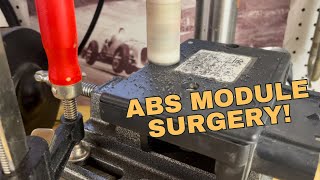
- Using a Dremel tool, they carefully cut an access window into the module's plastic case to expose the two power pins for the pump motor.
- They re-soldered the two cracked joints, sealed the opening with epoxy, and reinstalled the module.
Outcome: The repair was a success. The ABS and traction control lights went out and did not return, fixing the problem for less than $20 in supplies.
Lesson: On early-2000s Jaguars, the C1095/C3000 code combination is almost certainly the known solder joint failure. A DIY repair is a highly effective and very low-cost alternative to a $150+ rebuild service or a $1000+ replacement.
2016 Mazda 3 with 55K miles and parasitic drain
The car battery would be dead overnight, even after being fully charged. The voltage would drop from 12.6V to 11.7V in less than 12 hours.
What they tried:
- The owner took the battery to be tested, and it was confirmed to be good. The alternator was also charging correctly at ~14V while running.
- A parasitic draw test was performed by pulling fuses. The owner discovered a 2.2 amp draw that disappeared when the 'ROOM' fuse was pulled, pointing to an interior module fault.
- Further investigation on forums suggested the Telematics Communication Unit (TCU) or Body Control Module (BCM) was the likely culprit, failing to 'sleep' after the car was turned off.
Outcome: The owner disconnected the TCU module located behind the glove box, which resolved the parasitic drain. The C3000 code, which was likely stored in the BCM due to the network communication issues caused by the faulty TCU, was cleared.
Lesson: If C3000 is accompanied by a dead battery, perform a parasitic draw test. On modern Mazdas, a draw traced to an interior fuse often points to a faulty TCU or BCM, not necessarily the ABS module.
2018 Ford F-150 with intermittent 4A parasitic draw
The truck's battery would die after a few days of sitting. A parasitic draw test revealed a baseline draw of 0.3A (already high) that would spike to 4A for about 8 seconds every minute.
What they tried:
- The owner isolated the draw to the ABS module circuit. They initially suspected the ABS module itself was faulty and was constantly waking up, causing the draw.
- Before replacing the expensive module, they investigated what could be sending a 'wake up' signal to the ABS module.
- Forum research revealed that a short circuit within the electronic parking brake (EPB) switch on the dashboard could cause the ABS module to wake up repeatedly.
Outcome: The owner replaced the electronic parking brake switch. This stopped the periodic 'wake up' signal, and the parasitic draw returned to a normal level (under 50mA), solving the battery drain issue.
Lesson: A module-related parasitic draw isn't always the module's fault. Another component, even a simple switch, can send erroneous signals on the car's network, preventing a major module from entering sleep mode.
How to Prevent This Code From Triggering
- Flush brake fluid every 2-3 years. (Every 2-3 years or 30,000 miles) — Removes moisture that corrodes internal ABS module valves.
- Clean battery terminals and chassis ground connections annually. (Once per year) — Prevents high resistance and voltage drops that trigger false codes.
- Use dielectric grease on electrical connectors. (When servicing any related part (e.g., wheel speed sensors, ABS module)) — Keeps moisture out of weather seals, preventing pin corrosion.
- Use a battery tender for vehicles stored for long periods. (If vehicle sits for more than 2-3 weeks) — Prevents low-voltage conditions that cause electronic module faults upon startup.
- Follow proper jump-starting procedures. (Whenever jump-starting) — Prevents voltage spikes that permanently damage sensitive electronics.
Frequently Asked Questions
Is it safe to drive my car with a C3000 code?
You can drive the vehicle, but it is not safe in an emergency. Your normal brakes will work, but the anti-lock (ABS), traction control, and stability control systems will be disabled. This means your wheels lock up and skid during hard braking, significantly increasing stopping distance.
Can a weak battery really cause this code?
Absolutely. Control modules perform a self-test on startup that requires stable voltage. A weak or dying battery causes a voltage dip during this test, making the module fail and incorrectly report an internal C3000 fault.
What are common misdiagnosis mistakes for a C3000 code?
The biggest mistake is immediately replacing the control module without ruling out simpler causes. Always test the battery, clean the terminals, check main ground connections, and inspect the module's connector for corrosion first. On certain vehicles like VW, even a faulty sensor on a different system triggers this code.
My code has a suffix like C3000-02 or U3000:49. What does that mean?
These suffixes provide a more precise diagnosis. For example, on a GM vehicle, C3000 02 means 'Supply Voltage Low', while a Ford U3000:49 indicates a specific 'Internal Electronic Failure'. These codes require a higher-end scanner to read but are invaluable for diagnostics.
Can I fix a C3000 code myself?
DIY is possible for simpler causes like cleaning battery terminals, replacing a battery, or repairing a wire. On older Jaguars, soldering the module is a common DIY fix. However, replacing a modern module requires professional programming to link it to your car's VIN.
What's the difference between replacing and rebuilding an ABS module?
Replacing means buying a new or used part, which requires expensive programming to work in your car. Rebuilding involves sending your original module to a specialist who repairs the internal fault and sends it back. Rebuilding is often cheaper ($150-$350), requires no programming, and usually comes with a lifetime warranty.
Can a bad wheel speed sensor cause a C3000 code?
Yes, although it is less common. If a wheel speed sensor sends a very erratic signal, the ABS module's processor fails to interpret the data and logs an internal fault code. Usually, a bad sensor sets a specific sensor code (e.g., C1145), but this is a known exception.
Why did C3000 appear right after changing my car battery?
The old battery likely caused low voltage, storing C3000 as a history code that became apparent when systems reset. Alternatively, an improper connection caused a momentary voltage spike, damaging a sensitive module. Clear the codes after a battery replacement and see if they return.
Key Takeaways
- Code C3000 indicates a critical internal failure in a control module, pointing to the Anti-lock Brake System (ABS) module in over 90% of cases.
- Test your battery with a multimeter to ensure it reads at least 12.4V before replacing any parts, as low voltage during startup is the leading cause of false C3000 codes.
- Send your original ABS module to a specialist for a $150-$350 rebuild instead of buying a new $800+ unit to completely avoid mandatory dealership VIN programming fees.
- Stop driving at highway speeds immediately, as the disabled ABS and traction control systems cause your wheels to lock up and skid during emergency braking.
Helpful Videos



The information in this article is provided for general reference and educational purposes only. Vehicle specifications, procedures, and part compatibility can vary by production date, trim level, and region. Always consult your vehicle's factory service manual and verify part numbers before purchasing or performing repairs. Safety-critical components such as airbags, seat belts, and braking systems should be installed by a qualified professional.
- 🎬 Helpful Videos
- What Does C3000 Mean?
- Can I Drive With C3000?
- Common Causes
- Symptoms
- Diagnostic Flowchart
- Common Fixes & Costs
- DIY vs Professional
- Used vs. New Parts: Buying Guide
- What Happens If You Wait — Timeline
- Cost of Not Fixing It
- Diagnosis Steps
- When This Code Triggers (Freeze-Frame Conditions)
- Related Codes
- Climate & Environmental Factors
- How to Talk to a Mechanic About This Code
- Where to Take It: Dealer vs Independent vs Chain
- When to Walk Away From the Repair
- What Scan Tool You Need for This Code
- How to Clear the Code After You Fix It
- Will This Fail Emissions / State Inspection?
- Most Commonly Affected Vehicles
- Manufacturer-Specific Notes
- Real Owner Stories
- 2004 Jaguar XJ8 with C1095 & C3000
- 2016 Mazda 3 with 55K miles and parasitic drain
- 2018 Ford F-150 with intermittent 4A parasitic draw
- How to Prevent This Code From Triggering
- Frequently Asked Questions
- Is it safe to drive my car with a C3000 code?
- Can a weak battery really cause this code?
- What are common misdiagnosis mistakes for a C3000 code?
- My code has a suffix like C3000-02 or U3000:49. What does that mean?
- Can I fix a C3000 code myself?
- What's the difference between replacing and rebuilding an ABS module?
- Can a bad wheel speed sensor cause a C3000 code?
- Why did C3000 appear right after changing my car battery?
- Key Takeaways
- 🎟️ Get 5% Off