

OBD-II Code C2792: Power Steering Motor Circuit Malfunction
What C2792 means, why it triggers, and how to fix it
- Code C2792 indicates a short circuit in the power steering motor, causing an immediate and dangerous loss of steering assist.
- Over 80% of C2792 cases stem from a failed Power Steering Control Module (PSCM) or a chafed wiring harness shorting to power.
- Test the battery first, as voltage dropping below 12.4V frequently triggers this code alongside B1318.
- Do not drive the vehicle, as the required steering effort increases by up to 50 pounds, significantly raising the risk of a low-speed collision.
What Does C2792 Mean?

Code C2792 means the Powertrain Control Module (PCM) detected a short circuit in the electronic power steering system's motor wiring. As a safety measure, the system disables power steering assist, making the steering wheel extremely heavy and difficult to turn.
Technical definition: The SAE definition is "Power Steering Motor Circuit Short to Battery (+)". The Power Steering Control Module (PSCM) detected the power steering motor's electrical circuit has an unwanted direct connection to a power source.
Can I Drive With C2792?

No — Do Not Drive. Driving with code C2792 is a severe safety risk. The sudden loss of power steering assist makes the vehicle extremely difficult to steer, especially at low speeds or during emergency maneuvers. The required steering effort is dangerously high, significantly increasing crash risk. Tow the vehicle to a repair facility.
Common Causes

- Low Battery Voltage or Failing Alternator (Very Common) — The Electronic Power Assisted Steering (EPAS) system requires a stable and strong electrical supply. A weak battery or a failing alternator causes voltage to drop, triggering this and other related codes like B1318. The system typically requires at least 12.4-12.6V with the engine off to function correctly.
- Wiring Harness Short to Power (Common) — The code definition points directly to a short circuit. This happens when the insulation on a wire between the PSCM and the steering motor wears away from chafing, melts, or is chewed by rodents, touching a power source and causing the circuit to malfunction.
- Faulty Power Steering Control Module (PSCM) (Common) — The PSCM is the dedicated computer for the steering system. Internal failure, often from electrical stress, age, or excessive heat soak from the engine bay degrading internal solder joints, is a primary cause of this code when wiring is confirmed good.
- Corroded or Loose Ground Wires (Common) — A bad ground connection for the PSCM or the steering rack creates unpredictable electrical resistance and voltage issues, leading the module to report a fault. This is a critical check before replacing expensive components.
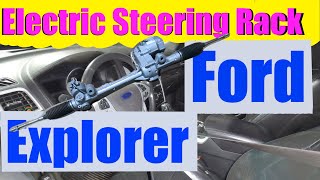
- Failed Electric Steering Motor (Less Common) — The electric motor providing steering assistance fails internally. This motor is typically integrated into the main steering rack assembly and is replaced as a single unit. 🎬 Watch: Step-by-step rundown of the electric steering rack removal
- Corroded Bolts on Steering Gear Motor (Less Common) — On certain Ford models, the bolts attaching the steering gear motor corrode. If they break, the motor detaches from the housing, causing a complete loss of power assist and increasing the risk of a crash.
Symptoms

- Complete Loss of Power Steering — The most immediate and noticeable symptom is the steering wheel becomes very heavy and difficult to turn, similar to a car with the engine off.
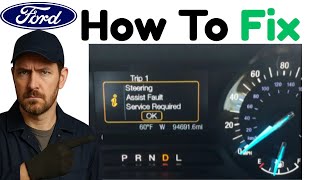
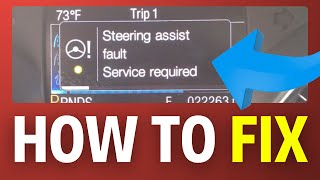
- Steering Assist Fault Warning Light — A message like "Steering Assist Fault Service Required" or a similar warning 🎬 Watch: Common causes and fixes for Ford steering assist faults appears on the instrument cluster.
- Wrench or Service Light On — A general service or wrench-shaped warning light illuminates on the dashboard, indicating a powertrain or chassis fault.
- Intermittent Power Steering Failure — Before failing completely, the power steering works sometimes and fails at other times, especially after restarting the car. This points to a wiring issue or a failing module.
- Whining or Groaning Noise When Turning — A failing electric motor or a struggling PSCM sometimes produces audible groaning or whining sounds when you attempt to turn the wheel.
Diagnostic Flowchart

Tap your situation to follow the diagnostic path that matches what you're seeing on this code.
Common Fixes & Costs
- Replace Battery — Parts: $150-$300, Labor: $50-$100, ~0.5 hr book time (DIY)
- Repair Wiring Harness — Parts: $20-$50, Labor: $200-$700+, ~2.0 hr book time (Professional)
- Replace Electric Power Steering Rack Assembly — Parts: $700-$2500, Labor: $500-$1500, ~4.5 hr book time (Professional)
- Replace Power Steering Control Module (PSCM) — Parts: $950-$1100, Labor: $100-$250, ~1.5 hr book time (Intermediate)
- Replace Steering Gear Motor Bolts — Parts: $20-$50, Labor: $100-$200, ~1.0 hr book time (Intermediate)
Used vs. New Parts: Buying Guide
When a used part is worth it: For an Electric Power Steering Rack, buying a used part is highly risky and generally not recommended. It only makes sense if the vehicle is old, the budget is extremely tight, and you obtain a unit from a low-mileage, accident-free donor vehicle with an identical part number.
Donor-vehicle mileage cap: roughly under 60000 miles for the part to have meaningful remaining life.
Donor quality checklist:
- Part number must be an EXACT match to the original.
- Inspect all electrical connectors for any signs of corrosion, bent pins, or water damage.
- Check the rubber bellows boots for any rips or tears, indicating internal contamination.
- Verify the donor vehicle was not scrapped due to a steering or electrical fault.
Decision logic:
- If The part is for a vehicle under 100K miles and you plan to keep it → Buy a new OEM or high-quality new aftermarket part for maximum reliability and warranty.
- If Budget is a primary concern → A remanufactured unit from a reputable brand is a better choice than used. It has new wear components and a warranty.
- If The vehicle is very old and has low value → A carefully inspected used part is a last-resort option, accepting the high risk of premature failure.
Warranty tradeoff: Used parts typically offer a 30-90 day warranty at best. Remanufactured parts often come with a 1-3 year or limited lifetime warranty. New OEM parts carry the manufacturer's warranty, typically 1-2 years.
Worst-case if a used part fails: $800-$2000 if a used or remanufactured part fails after the warranty period, requiring paying for the labor to replace the rack a second time, plus the cost of another part and alignment.
What Happens If You Wait — Timeline
- 0 seconds: A critical fault is detected in the motor circuit. The PSCM immediately disables all steering assist as a fail-safe. A 'Steering Assist Fault' warning illuminates, and the steering wheel becomes extremely heavy. (MPG impact: 0%% · Added cost: $0)
- 0-10 minutes of driving: The driver struggles with dangerously high steering effort, especially at low speeds. The risk of a low-speed collision during parking or turning maneuvers is extremely high. Physical strain on the driver begins immediately. (MPG impact: 0%% · Added cost: $100-$300 for a tow, or $500-$5,000+ for a minor collision if the driver loses control.)
- Days to Weeks (if unsafely operated): The root cause, a short circuit, persists. The unfused or improperly fused short generates significant heat, melting wire insulation and posing a direct fire risk under the hood or dash. This is a potential vehicle fire hazard. (MPG impact: 0%% · Added cost: Potential for catastrophic vehicle loss due to fire. The cost of an average non-injury car accident exceeds $5,000, while one with injuries easily exceeds $20,000.)
- Long-Term: There is no safe long-term scenario. The vehicle is not roadworthy. The only progression is the increasing probability of an accident or fire. This is a binary safety failure that does not 'wear in' or improve. (MPG impact: 0%% · Added cost: The cost remains the high likelihood of an accident, with potential liability costs for injuries ranging from $40,000 to over $1,700,000 for a fatality, according to NSC data.)
Cost of Not Fixing It
- Immediately: Extreme and dangerous difficulty in steering, especially at low speeds. The risk of an accident increases significantly. (Added cost: Cost of an accident, ranging from minor body damage ($500+) to a total loss of the vehicle or injury.)
- Short-Term (Days to Weeks): Continued operation with a failed EPAS system places unexpected physical strain on the driver. The primary consequence remains the immediate safety hazard. (Added cost: Cost of a tow when the driver is no longer able to manage the heavy steering, typically $100-$300.)
- Long-Term (Months): There is no safe long-term scenario. The vehicle is unsafe to operate. The root cause (a wiring short) poses a direct fire risk. (Added cost: The cost remains the high probability of a crash due to loss of steering control.)
Diagnosis Steps
- Check Battery and Charging System
The EPAS system is highly sensitive to voltage. Use a multimeter to test the battery. It should read at least 12.4V with the engine off and 13.7V to 14.7V with the engine running. A weak battery or failing alternator is a common and simple cause.
Tools: Multimeter (Beginner) - Perform a Full Vehicle Diagnostic Scan
Use an OBD-II scanner capable of reading manufacturer-specific codes. Check for codes in all modules, especially the PSCM and ABS modules. Related codes like B1318 (Low Voltage) or B2277 (Motor Malfunction) provide critical clues.
Tools: Advanced OBD-II Scanner (Beginner) - Inspect All Related Fuses
Check your vehicle's fuse boxes for any fuses related to the Power Steering Control Module or Electric Power Steering. A blown fuse indicates a circuit overload that must be investigated before replacing the fuse. On a 2012 Ford F-150, this is BJB fuse 52 (5A).
Tools: Fuse puller or needle-nose pliers (Beginner) - Visually Inspect Wiring and Grounds
Look at the wiring harness going to the Power Steering Control Module and the electric steering rack. Check for signs of chafing, melting, corrosion, or rodent damage. Ensure the main ground strap for the steering system is clean and tight.
Tools: Flashlight, mechanic's mirror (Intermediate) - Check PSCM Power and Ground Inputs
With the PSCM connector unplugged and ignition ON, use a multimeter to verify power and ground reach the module. Check for battery voltage (greater than 10V) at the power input pin. Check the ground pin for continuity to the chassis ground (less than 1 Ohm). If power or ground is missing, trace that circuit back to its source.
Tools: Multimeter, vehicle-specific wiring diagram (Advanced) - Pro Tip: Test for Short to Voltage at the PSCM
Disconnect the electrical connector from the PSCM. Using a multimeter set to DC volts, probe the specific pins for the power steering motor circuit. If you detect any voltage on these wires with the connector unplugged, there is a short to power in the harness that must be found and repaired.
Tools: Multimeter, vehicle-specific wiring diagram (Advanced) - Pro Tip: Motor Winding Resistance Test
Disconnect the harness from the power steering motor. Using a multimeter set to Ohms, measure the resistance between the motor's power and ground pins. A healthy motor has a very low resistance value, typically close to 0 Ohms. A reading of OL (Open Loop) indicates a failed, open motor circuit.
Tools: Multimeter, vehicle-specific service manual (Advanced) - Monitor Live Data with a Scan Tool
Using an advanced scan tool, monitor PIDs from the PSCM. Watch PSCM Voltage (should match battery voltage), Steering Angle (should change smoothly as you turn the wheel), and Torque Sensor readings (should be near 0 Nm when stationary). Abnormal readings indicate the source of the fault.
Tools: Advanced OBD-II Scanner with live data capability (Advanced) - Diagnose the Power Steering Control Module (PSCM)
If all wiring, fuses, voltages, and the motor check out, the PSCM is the culprit. Diagnosis requires a high-end scan tool to monitor live data from the module and confirm it is unresponsive or has an internal fault. Replacement is the typical solution.
Tools: Professional-grade scan tool (Advanced)
When This Code Triggers (Freeze-Frame Conditions)
- Vehicle Speed: 5-25 mph (Low-speed maneuver, such as turning in a parking lot or making a turn from a stop.)
- PSCM Voltage: 13.5-14.5V (Engine running, alternator charging.)
- Steering Wheel Angle: > 90 degrees (During a significant turning event.)
- System Status: Active/Engaged (The fault triggers when the EPAS motor is commanded to provide assist and the short circuit becomes apparent.)
Related Codes
- B1318 — This code means 'Low Battery Voltage at Module' and frequently appears with C2792. How to tell them apart: If B1318 is present, the diagnosis must start with the battery, alternator, and power/ground wires to the PSCM. If only C2792 is present, the fault is isolated to the motor circuit itself.
- B2277 — 'Power Steering Motor Malfunction' is a more general motor fault. How to tell them apart: C2792 is specific to a 'short to battery' condition. B2277 means an open circuit, a mechanical motor failure, or an internal winding issue. If both codes appear together, it strongly confirms an electrical failure within or leading to the motor.
- B2278 — This code for a 'Steering Shaft Torque Sensor Fault' is extremely common on Ford Escapes. How to tell them apart: A B2278 fault causes a noticeable notchiness, binding, or a 'jerking' feeling in the steering wheel before or during failure. C2792 results in a clean, sudden loss of all assist with no prior tactile warning.
- U3000 — This is a generic 'Control Module' failure code. How to tell them apart: If the PSCM sets U3000 along with C2792, it is a very strong confirmation that the PSCM failed internally. If another module sets a U-code indicating a loss of communication with the PSCM, the problem is in the communication wiring (CAN bus) between the modules.
Climate & Environmental Factors
- High Temperatures: EPAS control modules located in hot engine bays suffer from heat soak, where ambient temperatures exceed the design limits of the electronic components (above 85°C / 185°F). This degrades solder joints and internal components over time, leading to permanent failure, especially on vehicles with large, tightly packed engines like the Ford Flex EcoBoost.
- Humidity and Water Ingress: Moisture is a significant enemy of the EPAS system. Water enters the steering rack through damaged bellows boots or seeps in around the pinion shaft bulkhead boot. This contamination corrodes internal bearings and electronics, causing high friction (DTC C102D) or short circuits within the torque sensor and control module.
- Cold Weather: Cold weather exacerbates underlying electrical issues. A battery's ability to deliver current drops in the cold. An already weak battery drops below the minimum voltage required by the EPAS system on a cold start, triggering a fault. Lubricants within the steering rack also thicken, increasing initial resistance.
- Road Salt and Corrosion: In regions using road salt during winter, corrosion is a major factor. Salt spray accelerates the degradation of wiring harness connectors, ground points, and the steering gear motor bolts, leading to recalls like Ford's 19S26.
How to Talk to a Mechanic About This Code
Say this: "I have a 'Steering Assist Fault' warning and a C2792 code. Before quoting a full steering rack replacement, please perform a complete diagnostic. Specifically, test the battery and charging system, check all related power and ground connections for the PSCM, and inspect the wiring harness between the module and the steering motor for any shorts."
This signals that you understand the common, less-expensive causes of C2792 (like a weak battery or bad wire) and prevents a shop from immediately jumping to the most expensive repair (a full steering rack replacement). It directs their diagnostic labor in a logical, cost-effective order.
Avoid saying:
- 'My power steering is out, fix it.'
- 'The steering is heavy, can you look at it?'
- 'Just do whatever it takes to get it working again.'
Questions to ask before authorizing the repair:
- Did you confirm the battery is healthy (above 12.4V) and the alternator is charging correctly?
- Did you find a specific short or damage in the wiring harness, or is replacing the rack a guess?
- If the steering rack needs to be replaced, does the new part require programming (PMI), and is the cost for that included in the labor quote?
- What is the warranty on the replacement part and the labor for this repair?
Where to Take It: Dealer vs Independent vs Chain
- Dealer:
Recommended, especially if the vehicle is a known problem model (Escape, Explorer, Fusion) to check for free recall or warranty coverage first. They are the most equipped for the mandatory post-repair programming.
Best for: Vehicles potentially covered by a recall (e.g., 14S05, 14S06) or extended warranty program (15N01)., Complex cases requiring guaranteed access to Ford-specific programming tools (FDRS) for module calibration (PMI).
Downsides: Highest labor rates., Defaults to replacing the entire expensive steering rack assembly rather than diagnosing a simpler wiring issue. (Typical cost: +50% vs. baseline) - Independent Shop:
A good option, but you MUST vet the shop first. Ask them directly: 'Do you have the tools to program a new Ford power steering control module?' If they hesitate, go elsewhere.
Best for: Out-of-warranty vehicles where the cause is likely a battery or wiring issue., Cost-conscious owners who have already ruled out warranty coverage.
Downsides: Must verify the shop has advanced diagnostic tools (like a high-end Autel or Snap-on scanner) capable of reading Ford-specific PSCM codes and performing the PMI programming procedure. Not all independent shops have this capability. (Typical cost: +0% vs. baseline) - Chain Shop:
AVOID for diagnosis or repair of the C2792 code itself. Only use them if you are certain the battery is the problem and want them to replace it.
Best for: Only for the very first diagnostic step: testing or replacing the battery.
Downsides: Technicians lack the training or tools for in-depth electrical diagnosis or module programming., High risk of misdiagnosis leading to unnecessary, expensive recommendations. (Typical cost: -10% vs. baseline)
When to Walk Away From the Repair
If the estimated repair cost exceeds 50% of the car's private-party value, and the vehicle is not under warranty, seriously consider selling the car as-is or scrapping it. Because this fault makes the car unsafe to drive, its value as a running vehicle is effectively zero until repaired.
- Car worth $4000, fix is $2200: Walk away. The repair cost is over 50% of the car's value. It's not economically sensible to invest this much into an older vehicle for a single repair.
- Car worth $15000, fix is $2500: Fix it. The repair cost is well below the 50% threshold and restores a critical safety function to a valuable vehicle.
- Car worth $2500, fix is $1800: Walk away. The repair cost is nearly 75% of the car's total value. The money is better put toward a down payment on a more reliable vehicle.
What Scan Tool You Need for This Code
Minimum: A scanner that reads manufacturer-specific Chassis ('C') codes from the Power Steering Control Module (PSCM), not just generic OBD-II engine codes.
A cheap $20 scanner shows 'No Codes Found' because it only checks the main engine computer (PCM) for emissions-related ('P') codes. It cannot communicate with the separate PSCM where the C2792 fault is stored, making it useless for this problem.
Budget: FORScan with OBDLink EX adapter (~$60) — This is the gold standard for Ford DIY diagnostics. It reads all Ford-specific codes (including from the PSCM), monitors live data from the steering sensors, and performs the 'Programmable Module Installation' (PMI) required to calibrate a new steering rack.
Mid-range: Foxwell NT510 Elite (with Ford software) (~$180) — Provides deep, dealer-level diagnostics for Ford, including reading PSCM codes and live data. It has bidirectional control capabilities and performs the necessary PSCM programming and calibration functions after a part replacement.
Professional: Autel MaxiCOM MK808 / MK906BT (~$500-1200) — A professional-grade tool offering comprehensive diagnostics, live data graphing, and full bidirectional control. It easily performs the PSCM module installation and calibration for Ford and many other manufacturers.
Rent vs buy: Rent a basic scanner from an auto parts store for free to check for other codes, but it will likely NOT read the C2792 code. For this specific issue, you must buy a capable scanner like FORScan or a Foxwell/Autel if you intend to complete the diagnosis or repair yourself, as programming functions are required.
How to Clear the Code After You Fix It
- Ensure all repairs, especially wiring and component replacement, are complete.
- Reconnect the battery if it was disconnected.
- Use an advanced OBD-II scan tool to clear the C2792 code from the Power Steering Control Module (PSCM).
- If the steering rack or PSCM was replaced, perform the Programmable Module Installation (PMI) procedure using a manufacturer-specific scan tool to calibrate the new module.
Drive cycle (~20 minutes): Start the engine and let it idle for 2-3 minutes. Drive for 10-15 minutes, including a mix of city (stop-and-go) and highway (steady speed over 40 mph) driving. Perform several turns. Allow the vehicle to cool down completely and repeat if necessary.
Readiness monitors affected: This is a chassis code ('C') and does not directly affect emissions readiness monitors like the Catalyst or O2 sensor monitors., Disconnecting the battery to perform the repair resets all readiness monitors to 'Not Ready', requiring a full drive cycle before an emissions test.
Watch out for:
- Clearing the code without fixing the underlying short circuit causes the code to return immediately.
- Replacing the steering rack or PSCM without performing the PMI programming procedure results in a non-functional system.
- Using a basic code reader that only clears PCM codes fails to clear the code from the PSCM.
Will This Fail Emissions / State Inspection?
No — by itself this code doesn't fail OBD inspection (but it can keep readiness monitors from setting, which causes a separate fail).
- New York: A non-functional power steering system is an automatic failure of the NYS safety inspection. The system's operation is explicitly checked.
- Texas: The state safety inspection includes a check of the power steering system's function. A vehicle with no power assist fails this portion of the inspection.
- California: This code does not directly fail a smog check, as it is not an emissions code. However, if the battery was disconnected during a repair attempt, the OBD readiness monitors read 'Not Ready', preventing the test from being completed until a full drive cycle is performed.
Most Commonly Affected Vehicles
- Ford Escape / Escape Hybrid (2008-2012) — These models are widely known for EPAS failures and were subject to recall 14S05 for a faulty torque sensor causing a loss of assist. The recall involved a software update and replacement of the torque sensor or steering column.
- Ford Fusion (2011-2012) — Included in a major Ford recall (NHTSA Campaign 15V340000) for potential loss of power steering assist due to an intermittent electrical connection in the steering gear. Also covered under extended warranty program 15N01.
- Ford Explorer (2011-2013) — These model years were recalled (14S06) for an intermittent electrical connection in the steering gear leading to a loss of power assist. The fix involved a software update or a complete replacement of the steering gear under an extended coverage program (15N01).
- Mercury Mariner (2008-2011) — As a mechanical twin to the Ford Escape, it was included in the same EPAS-related recalls for faulty torque sensors (Recall 14S05).
- Ford F-150 (2011-2014) — A specific batch of 2014 F-150s was recalled (14S09) for an incorrectly installed EPAS gear motor position sensor magnet. TSB 11-08-18 was also issued for 2011 models for steering effort complaints.
- Lincoln MKZ (2011-2012) — As the platform-mate to the Ford Fusion, it was part of the same recall for intermittent electrical connection failures within the steering gear.
- BMW 3-Series (E90/E92), 1-Series, Z4 (2006-2016) — While the code differs, these models are known for sudden and complete failure of the power steering, presenting identical symptoms. The issue is often a failing hydraulic pump or the electric motor itself. Intermittent stiffness precedes total failure.
- Subaru Impreza / Crosstrek (2014-2019) — These models experience identical symptoms of total power steering loss. This is caused by rodent damage to the wiring harness or internal faults in the EPS control unit, leading to a recall for some 2019 models (WUC-88).
Manufacturer-Specific Notes
- Ford: This code is almost exclusively used by Ford and is tied to their Electronic Power Assisted Steering (EPAS) systems. These systems have been the subject of numerous recalls and Customer Satisfaction Programs, including 14S05 (Escape/Mariner), 14S06 (Explorer), and the 15N01 extended coverage program covering steering gear replacement for up to 10 years or 150,000 miles for certain models.
- Land Rover / Jaguar: Do not confuse this with air suspension issues. While Land Rover and Jaguar use 'C' codes for chassis problems, a fault in their air suspension compressor circuit sets a different code, such as C1A27.
- Subaru: On Subaru models, symptoms identical to C2792 (sudden loss of power steering) do not always throw a specific 'C' code. The issue is related to the EPS control module or its wiring harness, and diagnosis relies more on symptoms and direct testing than a specific trouble code.
- General: Do not confuse with P2792. The code P2792 is a generic powertrain code for "Gate Select Direction Circuit High," related to the transmission shifter, and is completely unrelated to the power steering system.
Real Owner Stories
2007 Ford Escape Hybrid at 200K miles - The Simple Fix
While driving, the wrench light came on, and power steering was completely lost. The failure was sudden and did not correct itself after restarting the car. Scan revealed codes C2792, B1318 (Low Battery Voltage), and B2277 (Motor Malfunction).
What they tried:
- Checked all related fuses in both under-hood and in-cabin fuse boxes; all were intact.
- Visually inspected the Power Steering Control Module (PSCM) and its connectors for burn marks or damage, finding none.
Outcome: The presence of the B1318 code pointed directly to a voltage issue. The owner replaced the 12V battery. A new, fully charged battery resolved the fault, and the power steering function was restored.
Lesson: When multiple power steering codes appear, especially with B1318, always start with the simplest cause: the battery and charging system. The EPAS is extremely sensitive to low voltage, and a weak battery triggers a cascade of faults indicating a more complex failure.
2012 Ford Fusion at 152K miles - The Misdiagnosis & Recall Saga
Power steering failed intermittently at first, fixed by restarting the car. Eventually, it failed completely.
What they tried:
- The owner discovered Ford had an extended warranty program (15N01) for this exact issue, but their vehicle was just outside the 10-year/150,000-mile limit.
- An independent shop diagnosed a failed steering gear and replaced it.
- The owner pursued reimbursement from Ford, arguing the initial recall fix (a software update) was inadequate.
Outcome: By providing detailed documentation, including the diagnostic codes (U3000:49) proving a hardware failure, the owner successfully argued the original safety recall had not truly fixed the defect. Ford issued a full refund for the out-of-pocket repair cost.
Lesson: Don't give up if a known recall or warranty program has expired. If you prove the original fix was insufficient and the failure is due to the same underlying defect, you obtain reimbursement. Detailed records are critical.
2010 Ford Flex EcoBoost - The Unusual Root Cause
Sudden and complete loss of power steering. A Ford dealership diagnosed an 'internal electronics failure' in the EPAS unit and quoted a very expensive replacement.
What they tried:
- The owner, an engineer, decided to perform a post-mortem on the failed steering rack.
- He attached a thermocouple to the electronics housing of the EPAS unit on the replacement rack.
- He found that under normal operation, especially in a tightly packed engine bay like the Flex EcoBoost, the EPAS electronics were reaching over 85°C (185°F).
Outcome: The analysis concluded excessive heat soak from the engine was degrading the electronic components and solder joints inside the PSCM over time, leading to eventual failure. This was a design-related thermal failure, not a typical wiring short.
Lesson: On some vehicles, especially those with large engines and tight engine bays, chronic overheating is the root cause of EPAS failure. The failure isn't a sudden event but the result of long-term thermal stress. This explains why some replacement racks also fail prematurely.
How to Prevent This Code From Triggering
- Maintain a Healthy Battery and Clean Terminals (Every 6 months) — The EPAS system is highly sensitive to voltage. A weak battery or corroded terminals cause voltage drops that trigger faults. Regularly cleaning terminals with a baking soda solution and ensuring the battery is fully charged prevents these electrical glitches.
- Inspect and Protect Wiring Harnesses (Annually) — A short circuit is a primary cause of C2792. Visually inspect the EPAS wiring harness for chafing, especially where it passes near hot or moving parts. Applying dielectric grease to connectors in high-moisture areas prevents corrosion.
- Keep Steering Bellows Boots Intact (During every oil change) — The rubber boots on the steering rack protect the internal electronics from water and debris. A torn boot allows contamination that shorts out the sensitive electronics within the rack assembly, leading to expensive failure.
- Avoid Turning the Wheel When Stationary (Daily habit) — Turning the steering wheel while the vehicle is not moving (dry steering) places the maximum load on the EPAS motor and components. Minimizing dry steering reduces strain and heat buildup in the EPAS motor and electronics, extending its life.
- Don't Ignore Other Suspension Issues (As needed) — Worn components like ball joints or tie rods cause front wheel wander. The EPAS system constantly works to correct this, creating extra heat and stress on the EPAS motor and control module, accelerating failure.
Frequently Asked Questions
Can I just clear the C2792 code to fix the problem?
No. C2792 indicates a hard fault in a critical safety system. Clearing the code does not fix the underlying electrical short or module failure. The power steering will fail again immediately.
Is it safe to drive my car with code C2792?
No, driving is highly dangerous. While the mechanical connection remains, the steering effort required is dangerously high, especially in parking lots or during emergency maneuvers. Tow the vehicle to a repair facility.
How much does it cost to fix code C2792?
Costs range from $200 for a new battery to over $2,500 for a full steering rack replacement. A wiring repair typically costs $200-$700. Replacing a PSCM alone costs $1,050-$1,350.
Could a new battery really fix this power steering problem?
Yes. The EPAS system requires stable voltage to operate. If your battery drops below 12.4V, the system shuts down to protect itself, setting a fault code. Always test the battery first.
My car was recalled for a power steering issue. Does that mean this repair is free?
Check your VIN with a dealership to see if your vehicle qualifies for an active safety recall (like 14S05) or extended warranty program (like 15N01). If it qualifies, the repair is free. If the recall expired or your issue differs, you must pay out of pocket.
I replaced the Power Steering Control Module (PSCM), but the C2792 code came back. What now?
This indicates the module was not the root cause. The problem is almost certainly an intermittent short circuit in the wiring harness between the PSCM and the steering motor. A thorough inspection of this harness for chafing or melting is required.
My power steering failed right after I hit a pothole. Are these related?
Yes, a significant jolt from a pothole causes frayed wires to make final contact with a ground or power source, creating a short circuit. It also disturbs loose or corroded ground connections, triggering the fault. The impact exposes pre-existing weaknesses in the wiring.
What is the difference between C2792 and B2278?
C2792 points to a short circuit in the power steering motor circuit, causing a sudden, total loss of assist. B2278 points to a fault in the steering shaft torque sensor, which measures driver input. A B2278 fault often gives a jerky or notchy feeling before failure.
Key Takeaways
- Code C2792 indicates a short circuit in the power steering motor, causing an immediate and dangerous loss of steering assist.
- Over 80% of C2792 cases stem from a failed Power Steering Control Module (PSCM) or a chafed wiring harness shorting to power.
- Test the battery first, as voltage dropping below 12.4V frequently triggers this code alongside B1318.
- Do not drive the vehicle, as the required steering effort increases by up to 50 pounds, significantly raising the risk of a low-speed collision.
Helpful Videos

The information in this article is provided for general reference and educational purposes only. Vehicle specifications, procedures, and part compatibility can vary by production date, trim level, and region. Always consult your vehicle's factory service manual and verify part numbers before purchasing or performing repairs. Safety-critical components such as airbags, seat belts, and braking systems should be installed by a qualified professional.
- 🎬 Helpful Videos
- What Does C2792 Mean?
- Can I Drive With C2792?
- Common Causes
- Symptoms
- Diagnostic Flowchart
- Common Fixes & Costs
- Used vs. New Parts: Buying Guide
- What Happens If You Wait — Timeline
- Cost of Not Fixing It
- Diagnosis Steps
- When This Code Triggers (Freeze-Frame Conditions)
- Related Codes
- Climate & Environmental Factors
- How to Talk to a Mechanic About This Code
- Where to Take It: Dealer vs Independent vs Chain
- When to Walk Away From the Repair
- What Scan Tool You Need for This Code
- How to Clear the Code After You Fix It
- Will This Fail Emissions / State Inspection?
- Most Commonly Affected Vehicles
- Manufacturer-Specific Notes
- Real Owner Stories
- 2007 Ford Escape Hybrid at 200K miles - The Simple Fix
- 2012 Ford Fusion at 152K miles - The Misdiagnosis & Recall Saga
- 2010 Ford Flex EcoBoost - The Unusual Root Cause
- How to Prevent This Code From Triggering
- Frequently Asked Questions
- Can I just clear the C2792 code to fix the problem?
- Is it safe to drive my car with code C2792?
- How much does it cost to fix code C2792?
- Could a new battery really fix this power steering problem?
- My car was recalled for a power steering issue. Does that mean this repair is free?
- I replaced the Power Steering Control Module (PSCM), but the C2792 code came back. What now?
- My power steering failed right after I hit a pothole. Are these related?
- What is the difference between C2792 and B2278?
- Key Takeaways
- 🎟️ Get 5% Off