

OBD-II Code C2702: The Ultimate Manufacturer-Specific Guide
What C2702 means, why it triggers, and how to fix it on Kia, Hyundai, Land Rover, Toyota, and Honda
- On Kia and Hyundai vehicles, C2702 indicates a Blind Spot Detection failure, often requiring a $150-$350 dealer software recalibration or a $30 replacement sensor bracket.
- On Jaguar and Land Rover models, generic scanners misread the critical P2702 transmission slip code as C2702, which requires immediate attention to prevent a $7,000 transmission failure.
- Before replacing any expensive ADAS sensors on Toyota, Honda, or Subaru vehicles, clean the front emblem and windshield camera, and verify the battery outputs at least 12.5 volts.
- Never authorize a major repair without checking for Technical Service Bulletins (TSBs); Land Rover Service Action Q453 fixes this exact transmission code with a simple software update.
What Does C2702 Mean?

C2702 is a manufacturer-specific code with vastly different meanings depending on the brand. On Kia and Hyundai, it indicates a calibration or sensor failure in the Blind Spot Detection (BSD) system. On Jaguar and Land Rover, generic scanners often misread the powertrain code P2702 as C2702, indicating an internal transmission failure. On Toyota or Honda, it disables collision avoidance systems due to obstructed sensors or low voltage.
Technical definition: C2702 lacks a universal SAE definition. Hyundai and Kia define it as 'Control Module Missing Calibration' (often logged as C270254). Jaguar and Land Rover log the related P2702 as 'Transmission Friction Element 'C' Apply Time Range/Performance', indicating transmission slip.
Can I Drive With C2702?
Yes, But With Caution. You can drive, but proceed with caution. If the code disables a safety system like Blind Spot Detection, your vehicle is mechanically sound but carries a higher lane-change collision risk. If a Jaguar or Land Rover enters 'limp-home' mode, drive only a short distance to a repair shop. Continuing to drive in limp mode turns a $2,500 repair into a $7,000+ catastrophic transmission failure.
Common Causes

- Control Module Software or Calibration Failure (Very Common) — On Kia/Hyundai models, the Blind Spot Detection module loses its calibration data after a battery disconnect or minor impact. On 2013-2015 Land Rover models, a Transmission Control Module (TCM) software bug triggers the related P2702 code.
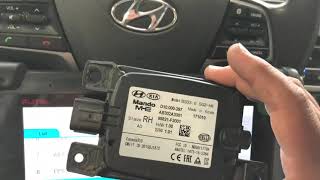
- Bent Sensor Mounting Bracket (Kia/Hyundai) (Very Common) — The metal bracket holding the rear blind spot radar sensor bends easily in a minor rear-end impact. A misalignment of just a few degrees prevents system calibration, triggering the C2702 code.
- Obstructed or Damaged ADAS Sensor (Common) — Snow, ice, dirt, or physical collision damage blocks the rear blind spot radar sensors (Kia/Hyundai) or the front grille radar and windshield cameras (Toyota/Honda/Subaru).
- Incomplete Post-Collision Calibration (Common) — Body shops frequently replace bumpers or windshields but fail to perform the mandatory electronic recalibration of the ADAS sensors, immediately triggering warning codes upon vehicle delivery.
- Worn Transmission Stator Bushing (JLR) (Common) — On 2008-2012 Jaguar/Land Rover models with a 6-speed ZF transmission, a worn internal stator support bushing causes hydraulic pressure loss to the 'E-clutch', triggering the related P2702 code.
- Corroded Wiring Harness or Loose Connector (Less Common) — Corrosion in the BSD sensor connector behind the rear bumper (Kia/Hyundai) or an unplugged forward camera connector after a windshield replacement (Toyota/Honda) breaks module communication.
- Degraded Transmission Fluid (JLR) (Less Common) — Low, old, or contaminated transmission fluid causes hydraulic pressure drops, leading to clutch application time faults like P2702 on Jaguar/Land Rover vehicles.
- Aftermarket Electronics Interference (Rare) — Hard-wired aftermarket trailer brake controllers or poorly grounded dashcams interfere with sensitive CAN bus networks, triggering false Pre-Collision System malfunctions.
- Failed Control Module (Rare) — The Blind Spot Detection module or Transmission Control Module (TCM) suffers an internal hardware failure, requiring complete replacement.
Symptoms

- Illuminated ADAS Warning Lights — Dashboard warning lights display messages like 'Check BSD System', 'FCW System Failed', or 'Pre-Collision System Malfunction'.
- Disabled Blind Spot Detection — The blind spot warning indicators in the side mirrors stop illuminating, and the dashboard toggle switch becomes unresponsive.
- 'Gearbox Fault' and Limp Mode (JLR) — Jaguar/Land Rover vehicles display a 'Gearbox Fault' message and lock the transmission into a single gear to prevent further internal damage.
- Harsh Shifting or Slipping Gears (JLR) — Affected JLR vehicles exhibit harsh shifts, engine RPM flares between gears, or a failure to engage drive from a complete stop.
- Cascading Safety System Failures — A fault in one system disables dependent systems. For example, a Pre-Collision System fault on a Toyota automatically disables Lane Tracing Assist (LTA).
- Intermittent Startup Warnings — Warning messages appear during engine crank but disappear after driving for a few minutes, indicating a weak battery or a temporarily obstructed sensor.
- Stored Diagnostic Trouble Codes (scan-tool only — no driver-felt sign) — The C2702 code logs in the Chassis or Powertrain control module, retrievable only with an advanced OBD-II scanner.
Diagnostic Flowchart
Tap your situation to follow the diagnostic path that matches what you're seeing on this code.
Common Fixes & Costs
- Control Module Software Update/Recalibration — Parts: $0, Labor: $150-$350, ~1.5 hr book time (Professional)
- Replace Damaged Sensor Bracket (Kia/Hyundai) — Parts: $30-$80, Labor: $150-$250, ~1.5 hr book time (Intermediate)
- Replace Blind Spot Radar Sensor Module (Kia/Hyundai) — Parts: $200-$500, Labor: $150-$250, ~1.5 hr book time (Intermediate)
- Transmission Fluid and Filter Service (JLR) — Parts: $100-$200, Labor: $250-$450, ~2.5 hr book time (Professional)
- Transmission Stator Bushing Repair (JLR 6-Speed) — Parts: $50-$250, Labor: $1800-$3000, ~12 hr book time (Professional)
- Transmission Rebuild or Replacement (JLR) — Parts: $3000-$7000, Labor: $2000-$3500, ~15 hr book time (Professional)
DIY vs Professional
- Control Module Software Update/Recalibration — Beginner:
- Replace Damaged Sensor Bracket — Beginner:
- Replace Blind Spot Radar Sensor Module — Beginner:
- Transmission Fluid and Filter Service (JLR) — Beginner:
- Transmission Stator Bushing Repair / Rebuild — Beginner:
Used vs. New Parts: Buying Guide
When a used part is worth it: A used OEM Kia/Hyundai Blind Spot Radar sensor from a reputable seller saves 50% or more compared to a new OEM part.
Donor-vehicle mileage cap: roughly under 60000 miles for the part to have meaningful remaining life.
Donor quality checklist:
- Verify the part number matches exactly.
- Inspect the housing and connector pins for physical damage, cracks, or corrosion.
- Confirm the donor vehicle was not involved in a rear-end collision, which causes internal sensor damage.
Decision logic:
- If The cost of a new OEM sensor is under $300 → Buy new for the warranty and guaranteed compatibility.
- If A new OEM sensor exceeds $500 and a warrantied used part is under $250 → Buy used, but factor in the risk of paying for a second calibration if it fails.
- If The part is a JLR transmission internal component → Always use new OEM or upgraded aftermarket parts. Never install used internal transmission wear items.
Warranty tradeoff: Used sensors carry a 30-90 day warranty, while new OEM parts offer 1-year minimums. The true risk of a used part is the non-refundable $150-$250 labor and calibration cost if it fails.
Worst-case if a used part fails: 300-600
What Happens If You Wait — Timeline
- N/A (ADAS Fault): Kia/Hyundai Blind Spot Detection disables. No mechanical damage occurs. The system remains disabled until repaired. (MPG impact: 0%% · Added cost: $0)
- 0-2 weeks (JLR P2702): Code P2702 sets. Driver notices occasional harsh shifts or a slight engine RPM flare during a shift when warm. (MPG impact: 0-2%% · Added cost: $0)
- 2 weeks - 3 months (JLR P2702): The vehicle enters 'limp mode' intermittently. Slipping clutches generate excessive heat, degrading transmission fluid and stressing internal seals. (MPG impact: 3-8%% · Added cost: $0-$100 in wasted fuel)
- 3-6 months (JLR P2702): Continued slipping burns friction material off clutch plates. Degraded fluid accelerates wear on the valve body and torque converter. (MPG impact: 5-15%% · Added cost: $2000-$4000)
- 6+ months (JLR P2702): Catastrophic failure. Clutch packs wear out completely, leading to a no-drive condition. Metal debris scores the valve body. (MPG impact: N/A (Vehicle may not be drivable)% · Added cost: $7000-$10000)
Cost of Not Fixing It
- Immediate: Kia/Hyundai Blind Spot Detection disables, increasing lane-change collision risk. No mechanical damage occurs. (Added cost: 0)
- 0-1 Month (JLR): Driving a Jaguar/Land Rover with slipping gears overheats transmission fluid and destroys internal seals. (Added cost: 0)
- 1-6 Months (JLR): Continued driving with a slipping JLR transmission burns out clutch packs, escalating a $2,500 repair into a $7,000+ full rebuild. (Added cost: 4000-10000)
Diagnosis Steps

- Check for Technical Service Bulletins (TSBs)
Search for TSBs for your specific year, make, and model. Manufacturers frequently release software updates to fix C2702, saving hours of diagnostic time.
Tools: Smartphone or computer (Beginner) - Scan for All Trouble Codes
Use a high-quality OBD-II scanner to read manufacturer-specific codes from all modules. Look for accompanying codes like C2703 (Kia) or P-codes (Land Rover) for context.
Tools: OBD-II Scanner (Beginner) - Check Battery Voltage and Connections
A weak battery causes random electronic faults. Verify the battery reads at least 12.5 volts with the engine off. Clean and tighten terminals.
Tools: Digital Multimeter, Battery terminal cleaner, Wrench (Beginner) - Inspect and Clean External Sensors
Visually inspect rear bumper corners for impact damage (Kia/Hyundai). Clean the front grille emblem and windshield camera area (Toyota/Honda) to remove dirt or ice.
Tools: Flashlight, Microfiber cloth, Soapy water (Beginner) - PRO TIP: Inspect Sensor Mounting Bracket (Kia/Hyundai)
Remove the rear bumper cover and inspect the metal bracket holding the blind spot radar module. It must be perfectly flat and at a 90-degree angle. Even a slight bend causes calibration failure.
Tools: Trim removal tools, Socket set, Straight edge (Advanced) - Perform Control Module Recalibration/Update
Use a bi-directional scanner to perform a 'BSD Radar Calibration' (Kia/Hyundai) or a TCM software update (JLR). This resolves the majority of non-physical faults.
Tools: Manufacturer-specific diagnostic tool, Battery maintainer (Professional) - Check Transmission Fluid Level & Condition (JLR)
For JLR vehicles with P2702, check the transmission fluid. Low, dark, or burnt-smelling fluid indicates internal wear. This requires the vehicle to be level and fluid at 40-50°C.
Tools: Lift, Scan tool, Fluid pump (Advanced) - PRO TIP: Check CAN Bus Resistance
Disconnect the battery. Measure resistance between OBD-II Pin 6 (CAN-H) and Pin 14 (CAN-L). A healthy network reads ~60 Ω. A reading of 120 Ω indicates an unplugged module or broken wire.
Tools: Digital Multimeter (Advanced) - PRO TIP: Check CAN Bus Voltage
Reconnect the battery and turn the ignition on. Measure DC voltage. CAN High (Pin 6) should be ~2.6V. CAN Low (Pin 14) should be ~2.4V. Erratic voltages indicate a short circuit.
Tools: Digital Multimeter (Advanced) - Check Transmission Solenoid Resistance (JLR 6-Speed)
Drop the transmission pan and mechatronic unit. Measure the resistance of the pressure control solenoids (EDS). Expected value is 5.0-6.0 Ohms. 'OL' indicates a failed solenoid.
Tools: Lift, Socket set, Digital Multimeter, Fluid pump (Professional)
When This Code Triggers (Freeze-Frame Conditions)
- Vehicle Speed: 30-65 mph (Occurs during steady-state driving or lane changes when the BSD system actively monitors traffic. JLR transmission faults log during gear shifts under load.)
- Engine RPM: 1500-2800 RPM (Normal cruising RPM. For JLR transmission faults (P2702), RPMs flare unexpectedly during a shift, indicating clutch slip.)
- Transmission Fluid Temperature: 175-220°F (80-105°C) (JLR transmission faults set at full operating temperature when thinned fluid exacerbates internal hydraulic leaks.)
- System Voltage: 13.2-14.8V (Faults trigger during engine crank if a weak battery drops voltage below 11V, causing modules to initialize improperly.)
Related Codes
- C2703 — Slave sensor calibration missing (passenger side). C2702 is the master (driver side). Diagnostically, C2702 points to the left rear, while C2703 points to the right rear.
- P2702 — Standardized powertrain code for transmission slip. Generic scanners misread this as C2702 on JLR vehicles. The 'P' prefix dictates a transmission repair, not a chassis repair.
- P07DC — Unable to Engage Gear 1 (JLR). Appearing alongside P2702, it indicates severe internal transmission failure.
- P07DD — Unable to Engage Gear 2 (JLR). Pinpoints specific clutch pack failures when accompanying P2702.
Climate & Environmental Factors
- Cold Weather: Extreme cold slows ADAS electronics and thickens JLR transmission fluid, exacerbating apply-time faults.
- Snow, Ice, and Frost: Snow or ice physically blocking bumper radars or windshield cameras disables the system and triggers a 'sensor blocked' message.
- Heavy Rain or Fog: Dense water obscures camera views and scatters radar signals, causing temporary system deactivation.
- Road Salt and Grime: Dried salt coats rear bumper sensors, obstructing radar. Regular car washing prevents this.
- Road Treatments: Liquid de-icing lines confuse Lane Keeping Assist cameras, causing temporary deactivation.
How to Talk to a Mechanic About This Code
Say this: "For Kia/Hyundai: 'I have a C2702 code. Please check for relevant TSBs, inspect the sensor mounting bracket for alignment, and check the calibration status before recommending a sensor replacement.' For Jaguar/Land Rover: 'My vehicle has a Gearbox Fault and a P2702 code. Before quoting a full transmission replacement, please investigate if a TCM software update applies, or if it is the common stator bushing failure.'"
This signals you are an informed consumer and directs the shop to the most cost-effective solutions first, preventing unnecessary sensor or transmission replacements.
Avoid saying:
- 'Just fix whatever's wrong'
- 'My check engine light is on, can you look at it?'
- 'Whatever you recommend'
Questions to ask before authorizing the repair:
- For Kia/Hyundai: Did you find a bent bracket or does it just need recalibration? Is the calibration cost included in the sensor replacement quote?
- For JLR: Is my vehicle eligible for a software update under a Technical Service Bulletin? Can you confirm it is the stator bushing and not something requiring a full replacement?
- What is the warranty on this repair, including both parts and labor?
Where to Take It: Dealer vs Independent vs Chain
- Dealer:
Recommended for in-warranty repairs and manufacturer-specific software updates. Avoid for major out-of-warranty mechanical work.
Best for: Vehicles under warranty, Known software-only fixes requiring proprietary tools (JLR TCM flash, Kia/Hyundai ADAS calibration).
Downsides: Higher labor rates, Defaults to replacing whole assemblies rather than smaller parts or performing simple calibrations. (Typical cost: +50% vs. baseline) - Independent Shop:
Excellent choice if you select a specialist. Find a shop with documented ADAS calibration capabilities or a dedicated transmission specialist.
Best for: Out-of-warranty vehicles where cost is a major factor., Shops specializing in European/Korean autos or transmissions.
Downsides: General mechanics lack expensive ADAS calibration or JLR-specific programming tools., Quality varies widely. (Typical cost: +0% vs. baseline) - Chain Shop:
AVOID. These shops are not equipped for ADAS calibration or internal transmission diagnostics.
Best for: Simple, routine maintenance like oil changes and brake pads.
Downsides: Technicians lack deep training for complex diagnostics., High pressure to upsell unnecessary services. (Typical cost: -10% vs. baseline)
When to Walk Away From the Repair
If the estimated repair cost exceeds 40-50% of the car's private-party value, seriously consider selling or trading in the vehicle.
- Car worth $4000, fix is $2800: Walk away. The JLR stator bushing repair is 70% of the car's value. Sell it 'as-is' to a mechanic.
- Car worth $15000, fix is $750: Fix it. Replacing and calibrating a blind spot sensor is only 5% of the vehicle's value.
- Car worth $25000, fix is $9000: Borderline. Get a second opinion from a transmission specialist to confirm a rebuild isn't a cheaper option before proceeding.
What Scan Tool You Need for This Code

Minimum: A bi-directional diagnostic tool capable of reading manufacturer-specific Chassis ('C') codes and performing ADAS calibrations or transmission adaptation resets.
A generic $20 code reader cannot see the C2702 code on a Kia/Hyundai and cannot perform the mandatory sensor calibration or transmission re-learn procedures.
Budget: BlueDriver Pro (~$100) — Reads enhanced manufacturer codes to confirm C2702. It is NOT bi-directional and cannot perform the final calibration step.
Mid-range: Autel MaxiCOM MK808 / Foxwell NT809 (~$350-480) — Provides bi-directional control to perform service functions like ADAS recalibrations and transmission resets. This is the minimum level required for a DIY fix.
Professional: Autel MaxiSys MS906 Pro / Launch X431 Series (~$1000-2500) — Offers full OEM-level diagnostic and bi-directional capabilities, required for calibrating ADAS systems when combined with calibration frames.
Rent vs buy: Rental scanners from auto parts stores are basic readers that cannot perform calibrations. Buy a mid-range bi-directional tool if you plan to complete the repair yourself.
How to Clear the Code After You Fix It
- Use a bi-directional OBD-II scan tool to clear the C2702 fault code from the specific module.
- For Kia/Hyundai, perform the mandatory 'BSD Radar Calibration' procedure using a manufacturer-specific scan tool.
- For JLR transmission faults, perform a 'Transmission Adaptation Reset' and complete the mandatory re-learn drive cycle.
- Perform a full drive cycle to allow all system readiness monitors to complete.
Drive cycle (~30 minutes): Start the engine cold and idle for 3 minutes. Drive 15 minutes in mixed city/highway conditions (steady 55 mph, followed by stop-and-go). JLR transmission re-learning requires gentle acceleration and deceleration through all gears multiple times.
Readiness monitors affected: Chassis ('C') codes do not directly affect emissions readiness monitors., Disconnecting the battery during repair resets all readiness monitors, requiring a full drive cycle before passing an emissions test.
Watch out for:
- Clearing the code with a generic scanner fails; the warning returns immediately if the sensor remains uncalibrated or misaligned.
- Skipping the mandatory calibration (Kia/Hyundai) or adaptation re-learn (JLR) renders the new part or software useless.
- Attempting a JLR transmission adaptation drive cycle in heavy traffic prevents the TCM from learning shift points properly.
Will This Fail Emissions / State Inspection?
No — by itself this code doesn't fail OBD inspection (but it can keep readiness monitors from setting, which causes a separate fail).
- California: A 'C' code does not fail the OBD-II emissions check, but an illuminated dashboard warning light causes a visual inspection failure.
- New York: Active 'Check BSD System' or 'Gearbox Fault' lights trigger an automatic safety inspection failure.
- Texas: As of 2025, non-commercial vehicles only require emissions testing in 17 counties. Chassis codes do not cause emissions failures.
Most Commonly Affected Vehicles
- Kia Seltos, Forte, Optima (2019-2022) — The 2019-2021 Seltos requires a Blind Spot Collision Warning (BCW) logic software update (TSB SA422).
- Hyundai Sonata, Elantra, Azera (2015-2019) — Prone to the 'Control Module Missing Calibration' fault (C270254) due to bent sensor brackets after minor impacts (TSB 18-BE-005-1).
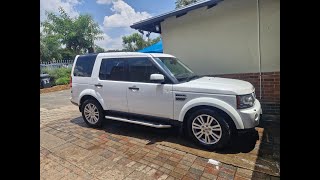
- Land Rover Range Rover / Range Rover Sport (2013-2015) — 8-speed automatic models (specifically 3.0L SCV6) trigger P2702 due to a TCM software bug (TSB LTB00772NAS1 and Service Action Q453).
- Land Rover Range Rover / Range Rover Sport (2008-2012) — 6-speed automatic models trigger P2702 due to a failing internal stator support bushing (TSB LTB00514NAS1).
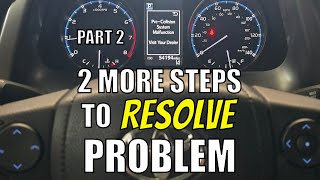
- Toyota RAV4, Camry, Corolla (2018-Present) — Displays 'Pre-Collision System Malfunction' due to dirty front emblems, disconnected cameras after windshield replacement, or aftermarket electronics interference.
- Honda Accord, Civic, CR-V (2018-Present) — Displays 'FCW System Failed' due to poor weather, dirty windshields, low battery voltage, or missing camera recalibration.
- Subaru Outback, Forester, Crosstrek (2015-Present) — EyeSight disables due to low voltage or loose electrical connectors. A battery hard reset often clears the fault.
- Volkswagen Golf GTI / Golf R (Mk7) (2015-2021) — Poorly documented code often misdiagnosed as an O2 sensor. Requires a VCDS scanner for accurate diagnosis.
Manufacturer-Specific Notes
- Kia / Hyundai: C2702 exclusively flags the Blind Spot Detection system. Always inspect the metal sensor bracket for bends before replacing the sensor.
- Jaguar / Land Rover: Generic scanners misread the P2702 transmission code as C2702. 2013-2015 models need a TCM update; 2008-2012 models need a stator bushing rebuild.
- Toyota / Honda: Windshield replacements frequently trigger ADAS faults if the forward camera is left unplugged or uncalibrated. Always check battery voltage first.
- Volkswagen: Poorly documented code often misdiagnosed as an O2 sensor. Requires a VCDS scanner for accurate diagnosis to avoid incorrect repairs.
Real Owner Stories
2019 Kia Forte with 'Check BSD System' light
The 'Check BSD System' warning light appeared permanently without any prior collision.
What they tried:
- Cleaned the rear bumper thoroughly.
- Took the vehicle to the dealership for diagnosis.
Outcome: The dealership found code C2702 and performed a 'BSD Radar Calibration' procedure for $180. The light has not returned.
Lesson: For a Kia/Hyundai with C2702 and no signs of impact, a simple software recalibration at the dealer is the most cost-effective first step.
2011 Land Rover Range Rover with 'Gearbox Fault'
At 115,000 miles, the vehicle displayed a 'Gearbox Fault' message and went into limp mode. A generic scanner showed code P2702.
What they tried:
- An independent shop recommended an $8,000 transmission replacement.
- Sought a second opinion from a transmission specialist.
Outcome: The specialist diagnosed a worn stator support bushing and rebuilt the transmission with an upgraded Sonnax kit for $3,200.
Lesson: Do not accept a transmission replacement quote for P2702 on an older JLR vehicle without consulting a transmission specialist about a stator bushing rebuild.
2020 Subaru Outback with 'EyeSight Disabled' after battery replacement
After replacing a dead battery, the 'Check Engine' light illuminated and the display showed 'EyeSight Disabled'.
What they tried:
- Drove the car for several short trips.
- Disconnected the negative battery terminal for 20 minutes to perform a hard reset.
Outcome: After reconnecting the battery, all warning lights cleared and the EyeSight system resumed normal function.
Lesson: A simple hard reset and a short drive cycle resolves temporary ADAS fault codes caused by voltage drops.
2018 Toyota RAV4 with 'Pre-Collision System Malfunction' after windshield replacement
A 'Pre-Collision System Malfunction' warning appeared immediately after a windshield replacement.
What they tried:
- The glass shop claimed their calibration was successful.
- Removed the plastic cover behind the rearview mirror to inspect the camera module.
Outcome: The main wiring connector for the forward-facing camera was unplugged. Plugging it in resolved the warning.
Lesson: If an ADAS fault appears immediately after a windshield repair, physically inspect the camera connectors before paying for a second calibration.
How to Prevent This Code From Triggering
- Regularly clean ADAS sensors (Monthly or after car washes) — Keeping the front emblem, windshield camera area, and rear bumper corners free of dirt and ice prevents nuisance warnings.
- Apply a ceramic coating to sensor areas (Annually) — A hydrophobic coating helps water, snow, and ice shed easily from sensor surfaces, reducing weather-related blockages.
- Perform transmission fluid service on JLR vehicles (Every 60,000 - 75,000 miles) — Fresh fluid maintains hydraulic pressure and lubricates internal parts, preventing wear that leads to P2702 codes.
- Be mindful of bumper repairs and paint (During any bodywork) — Thick layers of body filler or heavy metallic paints applied over radar sensor areas block the radar signal.
- Practice defensive driving (Always) — Always perform manual shoulder checks before changing lanes, as even perfectly functioning ADAS systems have limitations.
Frequently Asked Questions
Why does the internet show C2702 as a printer code?
C2702 is also a common error code for Konica-Minolta printers. Specify your vehicle's make and model when searching for information to avoid this confusion.
What does 'Control Module Missing Calibration' actually mean?
This Hyundai/Kia definition means the blind spot radar sensor lost its stored position settings. The system cannot function until recalibrated using a diagnostic tool. This forces the sensor to 're-learn' its orientation relative to the car.
Can a bad battery cause a C2702 code or similar warnings?
Yes, modern vehicles are extremely sensitive to voltage drops. A weak battery causes a cascade of seemingly unrelated electronic faults, including ADAS warnings. Always verify your battery outputs at least 12.5V before replacing sensors.
Why did my 'Check BSD System' light come on after a minor rear-end collision?
Blind spot radar sensors sit in the rear corners of the vehicle behind the bumper cover. Even a minor impact bends the metal mounting bracket, throwing off sensor alignment. This triggers a C2702 fault and requires physical repair followed by recalibration.
Is C2702 the same as P2702?
No, but generic scanners often confuse them. 'C' codes relate to Chassis systems, while 'P' codes relate to the Powertrain. On a Land Rover, a generic scanner incorrectly displays a 'C' code when the actual fault is P2702, indicating an internal transmission issue.
Can I fix C2702 myself?
Sometimes. If the cause is a dirty sensor, low battery, or loose connector, you can fix it yourself. However, software updates, sensor recalibrations, or JLR transmission repairs require professional tools and expertise.
How much does it cost to fix C2702?
Costs vary dramatically based on the root cause. A dealer software update costs $150-$350, while a Kia blind spot sensor replacement runs $400-$750. A Land Rover transmission stator bushing repair costs $2,000-$3,500, and a full replacement exceeds $7,000.
My 'Check BSD System' light came on after a car wash. What should I do?
High-pressure water or soap residue temporarily obstructs rear bumper blind spot radar sensors. Clean and dry the rear bumper corners thoroughly. The light clears after driving for 5-10 minutes, but persistent lights require a diagnostic scan.
Key Takeaways
- On Kia and Hyundai vehicles, C2702 indicates a Blind Spot Detection failure, often requiring a $150-$350 dealer software recalibration or a $30 replacement sensor bracket.
- On Jaguar and Land Rover models, generic scanners misread the critical P2702 transmission slip code as C2702, which requires immediate attention to prevent a $7,000 transmission failure.
- Before replacing any expensive ADAS sensors on Toyota, Honda, or Subaru vehicles, clean the front emblem and windshield camera, and verify the battery outputs at least 12.5 volts.
- Never authorize a major repair without checking for Technical Service Bulletins (TSBs); Land Rover Service Action Q453 fixes this exact transmission code with a simple software update.
Helpful Videos

The information in this article is provided for general reference and educational purposes only. Vehicle specifications, procedures, and part compatibility can vary by production date, trim level, and region. Always consult your vehicle's factory service manual and verify part numbers before purchasing or performing repairs. Safety-critical components such as airbags, seat belts, and braking systems should be installed by a qualified professional.
- 🎬 Helpful Videos
- What Does C2702 Mean?
- Can I Drive With C2702?
- Common Causes
- Symptoms
- Diagnostic Flowchart
- Common Fixes & Costs
- DIY vs Professional
- Used vs. New Parts: Buying Guide
- What Happens If You Wait — Timeline
- Cost of Not Fixing It
- Diagnosis Steps
- When This Code Triggers (Freeze-Frame Conditions)
- Related Codes
- Climate & Environmental Factors
- How to Talk to a Mechanic About This Code
- Where to Take It: Dealer vs Independent vs Chain
- When to Walk Away From the Repair
- What Scan Tool You Need for This Code
- How to Clear the Code After You Fix It
- Will This Fail Emissions / State Inspection?
- Most Commonly Affected Vehicles
- Manufacturer-Specific Notes
- Real Owner Stories
- 2019 Kia Forte with 'Check BSD System' light
- 2011 Land Rover Range Rover with 'Gearbox Fault'
- 2020 Subaru Outback with 'EyeSight Disabled' after battery replacement
- 2018 Toyota RAV4 with 'Pre-Collision System Malfunction' after windshield replacement
- How to Prevent This Code From Triggering
- Frequently Asked Questions
- Why does the internet show C2702 as a printer code?
- What does 'Control Module Missing Calibration' actually mean?
- Can a bad battery cause a C2702 code or similar warnings?
- Why did my 'Check BSD System' light come on after a minor rear-end collision?
- Is C2702 the same as P2702?
- Can I fix C2702 myself?
- How much does it cost to fix C2702?
- My 'Check BSD System' light came on after a car wash. What should I do?
- Key Takeaways
- 🎟️ Get 5% Off