

OBD-II Code C2532: Electric Power Steering Control Module Failure
What C2532 means, why it triggers, and how to fix it
- Code C2532 indicates a critical internal failure in the electric power steering control module, disabling steering assist and making the vehicle unsafe to drive.
- On 2012-2017 Subaru models, C2532 is almost always caused by a defective internal relay that freezes in temperatures below 32°F (TSB 04-24-18).
- For 2024 Subaru Impreza and Crosstrek models, a known software bug triggers this code and requires a dealer-installed software update (TSB 04-29-23R).
- Test your battery and charging system before replacing expensive parts; voltage drops below 12.4V frequently trigger false EPS module failure codes.
- Never replace the mechanical steering rack to fix C2532; this code specifically isolates an electronic failure within the control module itself.
What Does C2532 Mean?

C2532 means the electric power steering (EPS) control module detected an internal hardware or software failure. The module failed its self-check, usually due to an inability to send power to the steering motor. Subaru specifically refers to this as 'ECU Failure 2', isolating the fault to the module rather than the mechanical steering rack.
Technical definition: Control Module Peripheral Circuit Failure. This manufacturer-specific code indicates the Electric Power Steering (EPS) control module identified an internal malfunction in the circuitry supporting its main processor.
Can I Drive With C2532?
No — Do Not Drive. Steering becomes extremely heavy and difficult to turn, especially at low speeds. Assist can also fail intermittently without warning, making the vehicle unpredictable and drastically increasing crash risk.
Common Causes

- Internal Failure of the EPS Control Module (Frozen Relay) (Very Common) — Condensation forms inside the module and freezes in cold weather, causing a power relay to stick (TSB 04-24-18). This is a well-documented hardware defect on 2012-2017 Subaru models.
- EPS Control Module Software Glitch (Common) — A software bug in the self-diagnosis program triggers this code on 2024 Subaru models. A dealer software update fixes it without parts replacement (TSB 04-29-23R).
- Weak Battery or Loose Connection (Common) — The EPS system draws significant current. A weak battery (under 12.4V) or loose terminal causes low voltage, triggering this code and mimicking a failed module.
- Water Intrusion into Module (Less Common) — Cracks in the module housing allow water to enter and destroy the internal circuit board. Exposed connectors also corrode, causing signal loss.
- Rodent or Physical Wiring Damage (Rare) — Rodents chew engine bay wires with soy-based insulation, causing short or open circuits in the EPS harness.
- Improper Jump-Start or Voltage Spike (Rare) — Incorrect jump-starts or alternator surges permanently damage sensitive EPS electronics.
- Faulty Ignition Switch Circuit (Rare) — On some GM vehicles, a faulty ignition switch or high voltage in the run/start circuit disrupts power to the EPS module.
- Internal Fault in the Electric Steering Rack (Very Rare) — An electronic failure inside the steering rack assembly (e.g., torque sensor PCB) occasionally triggers this code. However, replacing the rack usually does not clear C2532.
Symptoms

- Power Steering Warning Light is On — The EPS (Electric Power Steering) or 'STEERING' warning light illuminates on the dashboard.
- Sudden Heavy or Stiff Steering — The steering wheel becomes very difficult to turn, especially at low speeds or when parking, because the electric motor provides zero assistance.
- Failure Occurs in Freezing Weather — The failure happens on the first start of the day in temperatures below 32°F. Steering returns to normal after the engine runs for 20 minutes and thaws the module.
- Intermittent Loss of Power Steering — Power steering assist cuts out and returns without warning, making the car unpredictable.
- Tapping the Module Temporarily Restores Steering — Gently tapping on the EPS module housing frees the stuck internal relay and restores power steering function for a short time. 🎬 See how to temporarily restore steering by tapping the module.
Diagnostic Flowchart

Tap your situation to follow the diagnostic path that matches what you're seeing on this code.
Common Fixes & Costs
- Replace the EPS Control Module (New OEM)
— Parts: $550-$700, Labor: $150-$250, ~1.2 hr book time
(Intermediate)
2014-2017 Subaru Forester: OEM 34710SG102 (Alt: Cardone Remanufactured)
2012-2016 Subaru Impreza: OEM 34710FJ252 (Alt: Cardone Remanufactured) - Reprogram the EPS Control Module — Parts: $0, Labor: $150-$200, ~1.0 hr book time (Professional)
- Replace the Battery — Parts: $150-$250, Labor: $0-$50, ~0.5 hr book time (DIY)
- Replace with a Used EPS Module — Parts: $100-$250, Labor: $150-$250, ~1.2 hr book time (Intermediate)
- Repair Damaged Wiring or Connector — Parts: $10-$50, Labor: $150-$300, ~2.0 hr book time (Advanced)
Used vs. New Parts: Buying Guide
When a used part is worth it: A used EPS Control Module makes sense for an older, higher-mileage vehicle where the cost of a new OEM part is prohibitive. It is best for DIYers who can absorb the cost of repeat labor if the part fails.
Donor-vehicle mileage cap: roughly under 100000 miles for the part to have meaningful remaining life.
Donor quality checklist:
- Verify the part number is an updated, superseded version that corrects the original flaw.
- Purchase from a reputable seller offering at least a 30-day warranty.
- Avoid parts from vehicles in rust-belt states.
Decision logic:
- If Vehicle is a 2024+ model with a software-related TSB → Go to dealer for reprogramming; do not replace parts.
- If Vehicle is under 100K miles and you plan to keep it long-term → Buy a new OEM or high-quality remanufactured part for maximum reliability.
- If Vehicle is over 150K miles and budget is the main concern → A used part is a viable gamble, but accept the risk of a shorter lifespan.
Warranty tradeoff: Used parts typically offer a 30-90 day warranty. Remanufactured parts offer 1-year to limited lifetime. New OEM parts carry a 1-year/12,000-mile warranty.
Worst-case if a used part fails: $300-$500 if a used part fails after installation, representing repeat labor and a replacement part.
What Happens If You Wait — Timeline
- First Occurrence: EPS warning light illuminates, and power steering assist is completely lost on a cold start. Restarting the car after it warms up temporarily restores function. (MPG impact: 0%% · Added cost: $0. The primary cost is the immediate high risk of an accident due to loss of vehicle control.)
- 1 week - 2 months: Failure happens on every cold start or intermittently while driving. The driver experiences significant physical strain from manually turning the wheel. (MPG impact: 0%% · Added cost: Crash risk increases with every trip.)
- 2-6 months: The fault becomes a 'hard fault'. Power steering assist is permanently disabled and will not return even when the car is warm. (MPG impact: 0%% · Added cost: No additional mechanical damage occurs, but the vehicle is fundamentally unsafe to operate.)
Cost of Not Fixing It
- Immediate: Sudden, unpredictable loss of power steering, making the vehicle extremely difficult to control. (Added cost: High risk of collision. Cost ranges from a $500 fender bender to a total vehicle loss.)
- 1-6 Months: Increased driver fatigue from the physical effort of steering. (Added cost: The vehicle remains fundamentally unsafe to operate.)
Diagnosis Steps
- Check for Technical Service Bulletins (TSBs)
Subaru has multiple TSBs (04-24-18 and 04-29-23R) identifying the exact cause and solution for this code based on the model year.
Tools: Internet Access, Alldata, or Mitchell1 (Beginner) - Check Battery and Charging System
Test the battery and alternator. A healthy battery reads above 12.4V with the engine off, and the charging system maintains 13.2V - 14.8V when running.
Tools: Digital Multimeter (Beginner) - Attempt Temporary Fixes (Cold Weather)
If freezing, let the engine run for 20 minutes to thaw the module, then restart. Gently tap the module housing. If steering returns, the internal relay is failing.
Tools: None (Beginner) - Scan for Codes with an Advanced Scanner
Use a professional scan tool to read manufacturer-specific Chassis (C) codes from the EPS module. Note any accompanying U-codes or B-codes.
Tools: Professional Scan Tool (Intermediate) - Visually Inspect Wiring and Connectors
Locate the EPS control module and inspect electrical connectors for corrosion, moisture, or chewed wires.
Tools: Flashlight (Beginner) - Test Power and Ground at the Module Connector
Test the main power and ground pins on the EPS module's connector. You must see 12V+ at the power input pin and less than 1.0 ohm of resistance at the ground pin. Loss of either shuts the module down.
Tools: Digital Multimeter, Wiring Diagram (Advanced) - Check for CAN Bus Communication Signals
If U-codes are present, probe the CAN High and CAN Low wires at the EPS module connector. You must see clean, opposing square wave patterns (~2.5V recessive).
Tools: Oscilloscope, Wiring Diagram (Professional)
When This Code Triggers (Freeze-Frame Conditions)
- Vehicle Speed: 0 MPH (Vehicle is stationary. The fault logs during the Power-On Self-Test (POST) at ignition.)
- Ambient/Coolant Temp: < 32°F / 0°C (During a cold start in freezing weather, triggering the 'frozen relay' failure mode.)
- Battery Voltage: 10.5V - 12.0V (System voltage during engine cranking, before the alternator fully takes over.)
Related Codes
- C2531 — Control Module CPU Failure. On 2024 Subarus, both C2531 and C2532 point to the same software glitch and are fixed by the same TSB.
- U0122 — Lost Communication with Vehicle Dynamics Control Module. Appears when a failing EPS module disrupts the entire CAN bus data network.
- B2811 — EPS Abnormal. A general indicator of an EPS system problem triggered by the same root software cause on 2024 Subarus.
- P2532 — Ignition Switch Run/Start Position Circuit High. This is a completely different Powertrain fault related to the ignition system. Do not confuse the two codes.
Climate & Environmental Factors
- Cold Temperatures: In temperatures below 32°F, condensation inside the EPS control module freezes. This ice prevents an internal power relay from making contact, disabling power assist.
- High Humidity: High humidity contributes to the condensation that eventually freezes inside the module during cold snaps.
How to Talk to a Mechanic About This Code
Say this: "I have a C2532 code on my vehicle and the power steering warning light is on. Please check for relevant TSBs—like the 'frozen relay' issue or a software update—before quoting a full module replacement."
This directs the mechanic to perform a proper diagnosis (check TSBs, battery, and fuses) rather than immediately defaulting to the most expensive repair.
Avoid saying:
- 'My steering feels heavy.'
- 'The steering light is on, can you just fix it?'
- 'Just do whatever you think is best.'
Questions to ask before authorizing the repair:
- Did you check the battery and charging system first to rule out a voltage issue?
- Did you find any Technical Service Bulletins (TSBs) for my VIN?
- Did you verify power, ground, and communication signals at the module connector to rule out a wiring problem?
- What is the part number for the replacement module, and is it the latest superseded version?
Where to Take It: Dealer vs Independent vs Chain
- Dealer:
Recommended for newer vehicles needing a software flash or owners prioritizing a manufacturer warranty.
Best for: Vehicles under warranty., Newer models (e.g., 2024+) requiring a software update per a TSB., Complex electrical diagnostics.
Downsides: Significantly higher labor and parts costs., May default to replacing an entire assembly rather than a targeted repair. (Typical cost: +50% vs. baseline) - Independent Shop:
Best fit for out-of-warranty hardware replacements. Choose a shop specializing in your vehicle's brand.
Best for: Out-of-warranty vehicles with the known 'frozen relay' hardware failure., Cost-conscious owners.
Downsides: May lack proprietary tools required for software reprogramming on the newest models. (Typical cost: +0% vs. baseline) - Chain Shop:
AVOID. This code requires diagnostics beyond a simple code read. A chain shop is highly likely to misdiagnose the problem.
Best for: Simple, routine maintenance like oil changes and battery replacement.
Downsides: Technicians lack specialized training for complex electronic diagnostics., High pressure to upsell. (Typical cost: -10% vs. baseline)
When to Walk Away From the Repair
If the estimated repair cost exceeds 50% of the car's private-party value, consider selling it. This is a safety-critical repair, so ignoring it is not an option.
- Car worth $15000, fix is $900: Fix it. The repair cost is low relative to the car's value.
- Car worth $5000, fix is $900: Borderline, but likely worth fixing. Consider a used or remanufactured module to lower costs.
- Car worth $2500, fix is $900: Walk away. The repair cost is over a third of the car's value. Sell the car 'as-is' with full disclosure.
What Scan Tool You Need for This Code

Minimum: A scanner that reads manufacturer-specific Chassis ('C') codes. A basic engine code reader will NOT see C2532.
A standard $20 engine code reader shows 'No Codes Found' because it cannot access the Electric Power Steering (EPS) module.
Budget: Autel AutoLink AL619 / ML629 (~$99) — Reads and clears codes from the Engine, ABS, SRS, and Transmission modules. This is the minimum level required to see C2532.
Mid-range: BlueDriver Pro or Foxwell NT510 Elite (~$100-200) — Provides full-system scanning, including the EPS module, to read and clear C2532. Offers live data streaming to verify power readings.
Professional: Autel MaxiCOM MK808/MK900BT (~$400-900) — Offers full bidirectional control to perform active tests and OEM-level calibrations needed after a module replacement.
How to Clear the Code After You Fix It
- Reconnect battery if disconnected for repair.
- Use a professional scan tool to access the EPS module and clear the fault code.
- Perform Steering Angle Sensor (SAS) calibration if the module was replaced.
- Perform a drive cycle to verify the fix.
Drive cycle (~30 minutes): Cold start, 5 min idle, 15-20 min of mixed city driving, 5 min of steady highway speed (55-60 mph), then cool down.
Readiness monitors affected: Catalyst Monitor, EVAP System Monitor, Oxygen (O2) Sensor Monitor
Before emissions retest: drive at least 100 miles to fully set monitors.
Watch out for:
- Using a basic OBD-II reader that cannot access the chassis module to clear the code.
- Failing to perform the Steering Angle Sensor (SAS) calibration after replacing the module.
Will This Fail Emissions / State Inspection?
No — by itself this code doesn't fail OBD inspection (but it can keep readiness monitors from setting, which causes a separate fail).
- General Note: C2532 is a Chassis code and will not fail the OBD-II emissions scan itself. However, the illuminated 'STEERING' warning light causes a failure of the visual/safety inspection in most states.
- California: The illuminated steering warning light fails the safety inspection. If the battery was disconnected, the vehicle fails the OBD-II test until readiness monitors set.
- New York: An illuminated warning light for a critical safety system like power steering is grounds for immediate failure.
Most Commonly Affected Vehicles
- Subaru Forester (2014-2017) — A known defect causes an internal relay in the EPS module to freeze in cold weather (TSB 04-24-18). The updated OEM part number is 34710SG102.
- Subaru Impreza (2012-2016) — Shares the faulty EPS control module design, making it prone to the cold-weather failure (TSB 04-24-18).
- Subaru Crosstrek (2013-2017) — Affected by the same 'frozen relay' issue in the EPS module as the Impreza and Forester.
- Subaru Impreza / Crosstrek (2024-2024) — A software bug triggers code C2532, resolved by a dealer software update (TSB 04-29-23R).
- Chevrolet Camaro (2016-2017) — Subject to GM Recall N182182760 for intermittent loss of power steering assist due to faults in the steering gear assembly electronics.
- Ford Fusion (2010-2012) — Notorious for sudden EPS failure requiring replacement of the entire steering gear assembly.
- Honda Civic, Accord (2016-2022) — Prone to EPS warnings due to weak batteries or rodent damage to soy-based wiring harnesses.
- Audi A6 (2012-2018) — EPS module failure occurs due to the module housing cracking and allowing water intrusion.
Manufacturer-Specific Notes
- Subaru: On 2012-2017 models, C2532 is almost always caused by an internal EPS module relay freezing in cold weather. On 2024 models, it is a software bug requiring a dealer update.
- Honda: Power steering warnings are frequently linked to a weak battery or rodent damage to soy-based wiring harnesses. Check these before suspecting a major component failure.
- General Motors: On 2016-2017 Camaros, power steering failure traces to an intermittent electrical loss on the torque-sensor PCB within the steering gear assembly, requiring replacement of the entire unit.
Real Owner Stories
2014 Subaru Forester at 73K miles in freezing weather
Owner started the car on a 1°F day. The power steering warning light came on, and the steering wheel became impossible to turn.
Outcome: Steering returned temporarily. The permanent fix required replacing the EPS control module with the updated OEM part (P/N 34710SG102).
Lesson: If C2532 appears on a Subaru during a cold snap, it is the known 'frozen relay' issue (TSB 04-24-18). Warming the car gets you home, but the module requires replacement.
2013 Subaru Impreza with intermittent steering failure
Owner experienced intermittent complete loss of power steering and opted for a DIY repair to save money.
Outcome: Swapping the faulty original module with the used part successfully resolved the issue.
Lesson: For older vehicles out of warranty, a used EPS module turns a $900 dealer repair into a $150 DIY fix. Ensure part number compatibility and buy from a seller with a return policy.
2016 Subaru Crosstrek with total power steering failure
Owner experienced a total loss of power steering. The dealer read code C2532.
Outcome: The root cause was a blown 80-amp main fuse for the EPS system. Replacing the fuse fixed the issue.
Lesson: Always perform basic electrical checks first. Before condemning a $600 module, check the main EPS fuse and verify power/ground at the connector.
How to Prevent This Code From Triggering
- Maintain Battery Health (Annually) — The EPS system requires high current. A fully charged battery prevents low-voltage conditions that trigger false fault codes.
- Apply Dielectric Grease to Connectors (During any related service) — Silicone dielectric grease on connector pins creates a barrier against moisture intrusion and corrosion.
- Inspect for Rodent Intrusion (Seasonally) — Rodents chew soy-based wiring insulation. Rodent-repellent tape prevents shorts in the EPS harness.
- Clear Water Drains (Annually) — Clearing windshield and sunroof drains prevents water from entering the engine bay and compromising electronic modules.
Frequently Asked Questions
Is it safe to drive with code C2532?
No. The power steering fails without warning or becomes extremely heavy. This makes the car difficult to control in emergencies or during low-speed maneuvers, posing a severe crash risk.
Why does my power steering only fail when it's cold outside?
On many Subarus, condensation freezes inside the control module and jams an internal power relay. Once engine heat thaws the module, it temporarily works again until the next freeze.
My mechanic wants to replace the whole steering rack. Is that necessary?
No. Code C2532 specifically points to a failure in the electronic control module, not the mechanical steering rack. Replacing the expensive rack assembly will not fix this code.
Can I just replace the frozen relay inside the module?
No. The EPS control module is a sealed, safety-critical unit. Attempting board-level soldering is extremely risky and should only be done by specialized electronics rebuilders.
I cleared the code but it came back immediately. What does that mean?
An instantly returning code indicates a 'hard fault'. This means the internal module component is completely dead, or the module has lost all power/ground connection.
Can I fix code C2532 myself?
You can easily replace a weak battery yourself. Replacing the control module is an intermediate DIY job requiring careful part matching, but software updates must be done by a dealer.
Will a basic OBD-II scanner from the auto parts store read this code?
No. C2532 is a manufacturer-specific chassis ('C') code. You need an advanced scan tool capable of communicating with the Electric Power Steering (EPS) system to read it.
Key Takeaways
- Code C2532 indicates a critical internal failure in the electric power steering control module, disabling steering assist and making the vehicle unsafe to drive.
- On 2012-2017 Subaru models, C2532 is almost always caused by a defective internal relay that freezes in temperatures below 32°F (TSB 04-24-18).
- For 2024 Subaru Impreza and Crosstrek models, a known software bug triggers this code and requires a dealer-installed software update (TSB 04-29-23R).
- Test your battery and charging system before replacing expensive parts; voltage drops below 12.4V frequently trigger false EPS module failure codes.
- Never replace the mechanical steering rack to fix C2532; this code specifically isolates an electronic failure within the control module itself.
Helpful Videos
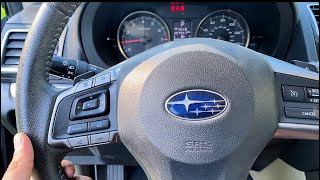


The information in this article is provided for general reference and educational purposes only. Vehicle specifications, procedures, and part compatibility can vary by production date, trim level, and region. Always consult your vehicle's factory service manual and verify part numbers before purchasing or performing repairs. Safety-critical components such as airbags, seat belts, and braking systems should be installed by a qualified professional.
- 🎬 Helpful Videos
- What Does C2532 Mean?
- Can I Drive With C2532?
- Common Causes
- Symptoms
- Diagnostic Flowchart
- Common Fixes & Costs
- Used vs. New Parts: Buying Guide
- What Happens If You Wait — Timeline
- Cost of Not Fixing It
- Diagnosis Steps
- When This Code Triggers (Freeze-Frame Conditions)
- Related Codes
- Climate & Environmental Factors
- How to Talk to a Mechanic About This Code
- Where to Take It: Dealer vs Independent vs Chain
- When to Walk Away From the Repair
- What Scan Tool You Need for This Code
- How to Clear the Code After You Fix It
- Will This Fail Emissions / State Inspection?
- Most Commonly Affected Vehicles
- Manufacturer-Specific Notes
- Real Owner Stories
- 2014 Subaru Forester at 73K miles in freezing weather
- 2013 Subaru Impreza with intermittent steering failure
- 2016 Subaru Crosstrek with total power steering failure
- How to Prevent This Code From Triggering
- Frequently Asked Questions
- Is it safe to drive with code C2532?
- Why does my power steering only fail when it's cold outside?
- My mechanic wants to replace the whole steering rack. Is that necessary?
- Can I just replace the frozen relay inside the module?
- I cleared the code but it came back immediately. What does that mean?
- Can I fix code C2532 myself?
- Will a basic OBD-II scanner from the auto parts store read this code?
- Key Takeaways
- 🎟️ Get 5% Off