

OBD-II Code C2521: Electric Power Steering Motor Malfunction
What C2521 means, why it triggers, and how to fix it
- Code C2521 disables power steering assist, making the steering wheel extremely heavy and dangerous to turn at low speeds.
- Perform a battery load test and inspect the 60A-80A EPS fuse before replacing the steering rack, as low voltage frequently triggers this false alarm.
- Subaru Forester, Impreza, and Crosstrek models from 2012-2018 are highly susceptible to this code due to known wiring harness defects.
- Check Subaru TSB 18-219-22 for pushed-back pins in the PS2 connector, a primary cause of intermittent C2521 faults on affected models.
- Replacing the steering rack costs between $1,200 and $3,000 and requires a mandatory four-wheel alignment and steering angle sensor calibration.
What Does C2521 Mean?

Code C2521 indicates the Power Steering Control Module (PSCM) detected a critical fault in the Electric Power Steering (EPS) motor circuit. The computer disables the motor as a fail-safe, causing a sudden, total loss of power steering assist.
Technical definition: Defined primarily by Subaru as 'Electric Power Steering (EPS) Motor Malfunction' or 'Motor Failure 1 (Motor)'. This indicates an electrical circuit fault within the EPS motor, its internal components (like a power transistor), or the wiring connecting it to the control module.
Can I Drive With C2521?
Yes, But With Caution. You can drive, but steering becomes extremely heavy and difficult to turn, especially at low speeds. This significant safety risk requires immediate repair. Increased steering effort delays reaction times during emergencies or hazard avoidance. The risk peaks during low-speed turns in parking lots or intersections. Unlike engine faults, driving with C2521 won't cause expensive secondary damage, but the immediate safety hazard is severe.
Common Causes

- Weak or Failing Battery / Charging System (Very Common) — The EPS system requires significant, stable electrical power. A weak battery, failing alternator, or poor battery terminal connections cause a voltage drop under load, prompting the EPS module to shut down and set this code as a precaution.
- Damaged Wiring or Poor Connection (Very Common) — Wires leading to the EPS motor or control module become frayed, corroded, or chewed by rodents. A loose or corroded connector pin, especially at the main EPS control module connector (PS2 on Subarus), is a primary cause of this fault.
- Failing Electric Steering Rack Assembly (Common) — The electric motor is integrated into the steering rack. An internal failure of the motor, such as a short circuit, worn components, or a failed power transistor, triggers this code and requires replacing the entire rack assembly.
- Water Ingress and Corrosion (Common) — In regions using road salt, water seeps past seals into the steering rack assembly or its connectors. This corrodes the torque sensor, bearings, or the motor's electronics, causing high friction or electrical failures.
- Blown High-Amperage Fuse or Faulty Relay (Less Common) — The EPS system is protected by a large fuse (often 60-80A) and uses a power relay. A blown fuse or a stuck relay cuts all power to the motor and immediately triggers this code.
- Faulty Power Steering Control Module (PSCM) (Less Common) — The control module fails internally due to electrical surges, moisture, or age, causing it to incorrectly report a motor problem or fail to power the motor correctly.
- Steering Angle Sensor Miscalibration or Failure (Less Common) — If the steering angle sensor is miscalibrated or fails, it sends irrational data. The module shuts down as a safety measure, logging a motor-related fault code as a secondary result.
- EPS Overheat Protection (Rare) — Repeated turning of the steering wheel from lock-to-lock while stationary overheats the EPS motor. The system disables assist to prevent damage. This is temporary and resolves after the system cools down.
Symptoms

- Steering is Heavy or Stiff — The sudden loss of power assist makes the steering wheel extremely difficult to turn, as if the car were turned off.
- Power Steering Warning Light is On — The dashboard illuminates a warning light, typically an icon of a steering wheel next to an exclamation mark.
- Inconsistent or Intermittent Steering Assist — Before a complete failure, the steering works intermittently or cuts out during a turn. This points directly to a wiring or connection issue.
- Buzzing, Whining, or Grinding Noise When Turning — An unusual noise coming from the steering column or front of the car indicates a mechanical problem inside the steering rack motor or high friction from internal corrosion.
- Vehicle Pulls to One Side — In cases of uneven wear or damage within the steering rack, the vehicle pulls to one side because steering assist applies asymmetrically. This also indicates a cracked steering gearbox housing. 🎬 Watch: See common symptoms of an electric power steering failure
Diagnostic Flowchart
Tap your situation to follow the diagnostic path that matches what you're seeing on this code.
Common Fixes & Costs
- Replace Battery and Clear Codes — Parts: $150 - $300, Labor: $50 - $100, ~0.5 hr book time (DIY)
- Repair Damaged Wiring or Connector Terminals — Parts: $10 - $100, Labor: $200 - $600, ~2.5 hr book time (Intermediate)
- Replace Electric Power Steering Rack Assembly
— Parts: $800 - $2,000, Labor: $400 - $1,000, ~3.5 hr book time
(Professional)
2014-2018 Subaru Forester: OEM 34110SG021 (Alt: Cardone (247-0109), Detroit Axle (19106))
2012-2016 Subaru Impreza: OEM 34110FJ151 (Alt: ECCPP (E10261701CP))
2010-2015 Ford Focus: OEM BV6Z-3504-KE (Alt: Cardone (22-3041), Detroit Axle (3920EB)) - Replace Column-Mounted Steering Motor Assembly
— Parts: $700 - $900, Labor: $250 - $450, ~2.5 hr book time
(Professional)
2017 Hyundai Elantra: OEM 56330-F2000QQH (Alt: Various remanufactured column assemblies) - Replace Power Steering Control Module (PSCM)
— Parts: $400 - $900, Labor: $150 - $300, ~1.5 hr book time
(Professional)
2014-2018 Subaru Forester: OEM 34710SG052 (Alt: Used/remanufactured units available.)
Used vs. New Parts: Buying Guide
When a used part is worth it: A used steering rack from a low-mileage, accident-free donor vehicle is a budget-friendly option for an older, high-mileage car where the cost of a new part is prohibitive. It is most viable if you are performing the labor yourself and accept the risk of premature failure.
Donor-vehicle mileage cap: roughly under 60000 miles for the part to have meaningful remaining life.
Donor quality checklist:
- Verify the donor vehicle was not scrapped due to a front-end collision or electrical issues.
- Avoid parts from regions with heavy road salt use to minimize risk of corrosion.
- Match the OEM part number exactly. Different part numbers have different programming or sensor configurations.
- Visually inspect connectors for corrosion and boots for tears before purchasing.
Decision logic:
- If Vehicle is less than 7 years old or has under 100K miles → Buy a new OEM or high-quality remanufactured part. The higher cost is justified by the warranty and reliability.
- If Vehicle is over 10 years old and budget is the primary concern → A used part is a reasonable gamble, but a remanufactured part offers a better balance of cost and security with a warranty.
- If You are paying a shop for labor → Strongly favor a new or remanufactured part. The cost of paying for labor twice if a used part fails quickly negates any initial savings.
Warranty tradeoff: Used parts from a salvage yard typically have a 30-90 day warranty on the part only. Remanufactured parts offer a 1-year to 3-year warranty. New OEM parts installed by a dealer carry a 12-month/12,000-mile warranty covering parts and labor.
Worst-case if a used part fails: $600 - $1500 if a used or cheap remanufactured part fails after installation, representing the cost of repeat labor and alignment.
What Happens If You Wait — Timeline
- Immediate: The EPS warning light illuminates, and power steering assist is completely disabled. The steering becomes very heavy, especially at low speeds. The fault code C2521 is stored. (MPG impact: 0%% · Added cost: $0 in parts, but a high safety risk is immediately present.)
- 0-1 month: The driver experiences significant physical fatigue and difficulty maneuvering in parking lots and tight spaces. The risk of an accident during an emergency maneuver is substantially increased. There is no further damage to the EPS system itself, as it is already in a failed state. (MPG impact: 0%% · Added cost: Potential for accident-related costs ($500 to $15,000+).)
- 1-6 months: Continued driving with heavy manual steering accelerates wear on tires if the driver has difficulty maintaining smooth inputs. It places minor additional strain on mechanical steering components like the steering column's universal joints. The main consequence remains the ongoing safety hazard. (MPG impact: 0-1%% · Added cost: $50 - $400 (potential for uneven tire wear).)
- 6+ months: The failure becomes normalized for the driver, which is highly dangerous. The primary risk of an accident due to inability to react quickly remains constant. The cost of not fixing is not in progressive component damage, but in the sustained high risk of an accident. (MPG impact: 0%% · Added cost: The cost of not fixing is the sustained high risk of an accident.)
Cost of Not Fixing It
- Immediate: Significant safety risk. Steering becomes extremely heavy, increasing the effort to make turns and react in emergencies. Risk of an accident is substantially higher, especially at low speeds or in parking lots. (Added cost: Potential for accident-related costs, from minor bodywork to total loss of vehicle.)
- 1-3 months: Increased driver fatigue and physical strain from manually fighting the steering. Potential for uneven tire wear if the underlying fault also affects steering alignment or feel. (Added cost: $200 - $800 (for a new set of tires if wear is severe).)
- 6+ months: Continued high safety risk. Possible secondary wear on steering column components (universal joints, bearings) due to the excessive manual force being applied through the steering wheel. (Added cost: Negligible direct component cost, but the primary safety risk remains the main consequence.)
Diagnosis Steps

- Perform a Comprehensive Battery and Charging System Test
A weak battery is a primary and often-overlooked cause. Use a multimeter to check voltage: above 12.4V engine off, 13.5-14.5V engine running. Use a digital battery analyzer to perform a load test and check the battery's state of health (SOH). A battery with good voltage but low SOH fails under the high current draw of the EPS.
Tools: Multimeter, Digital Battery Analyzer (Beginner) - Read All Trouble Codes from All Modules
Use a professional-grade OBD-II scanner to confirm C2521 is present. Scan all vehicle modules (ABS, VDC, BCM) for other codes. Communication codes (U-series) or sensor codes must be diagnosed first, as C2521 is often a symptom, not the root cause.
Tools: Professional OBD-II Scan Tool (Beginner) - Inspect High-Amperage EPS Fuse
Locate the main fuse for the Electric Power Steering system in the under-hood fuse box. This is a large, bolted-in fuse (60A-80A). Visually inspect it for a break and use a multimeter to test for continuity.
Tools: Owner's Manual, Socket Set, Multimeter (Beginner) - [PRO TIP] Check for TSB-Specific Connector Faults
For affected Subaru models (Forester, Impreza, Crosstrek), TSB 18-219-22 highlights a known issue. Disconnect the PS2 connector from the power steering control module and check if the three large terminal pins on the harness side are loose or pushed back into the connector housing. A poor pin fit here is a primary cause of C2521.
Tools: Trim Removal Tools, Small Pick or Screwdriver (Intermediate) - Visually Inspect Wiring Harness and Connectors
Thoroughly inspect the wiring going to the steering rack motor and power steering control module. Look for chafing, melting, corrosion, or rodent damage. Disconnect the main connectors and look for green/white corrosion, bent pins, or signs of water intrusion.
Tools: Flashlight, Inspection Mirror (Intermediate) - Check Motor Power and Ground Circuits
With the key on and connector unplugged from the EPS motor, use a multimeter to verify battery voltage is present at the main power pin on the harness side. Switch the multimeter to resistance (Ohms) and check the ground circuit pin to a clean chassis ground. The reading must be less than 1 Ohm.
Tools: Multimeter, Vehicle-Specific Wiring Diagram (Advanced) - [ADVANCED] Analyze Live EPS Data PIDs
Access the Power Steering Control Module's live data stream. Monitor 'EPS Motor Current', 'Steering Angle', and 'Module Voltage'. Normal motor current is near 0A when stationary and increases smoothly as the wheel turns. Module voltage must remain stable and close to battery voltage (above 12.5V). Erratic current readings or a significant voltage drop indicate a problem with the motor or power supply.
Tools: Professional OBD-II Scan Tool (Advanced) - [ADVANCED] Test Motor Winding Continuity and for Shorts
Disconnect the motor connector. Measure the resistance between the motor phase pins (typically 3 pins) at the steering rack. Readings must be very low (under 1.0 Ohm) and consistent between all combinations. Check the resistance from each pin to the steering rack housing (ground). The reading must be infinite (OL). Continuity to ground means the motor has shorted internally.
Tools: Multimeter, Vehicle-Specific Service Manual (Advanced) - [PROFESSIONAL] Analyze Resolver/Position Sensor Signals
Using a 2-channel oscilloscope, back-probe the resolver sensor signal wires at the EPS module. While an assistant slowly turns the steering wheel, you must see two corresponding sine/cosine waves on the scope. If the signals are missing, erratic, or flat-lined, the resolver inside the motor has failed, confirming the need for steering rack replacement.
Tools: Automotive Oscilloscope, Probing Kit, Wiring Diagram (Professional)
When This Code Triggers (Freeze-Frame Conditions)
- Module Voltage: 9.5V - 11.5V (During engine crank or immediately after startup, indicating a weak battery.)
- Vehicle Speed: 0 - 10 mph (During low-speed maneuvers (e.g., parking) when steering effort and motor current draw are highest.)
- Steering Wheel Angle: > 90 degrees (While executing a turn, placing the EPS motor under significant load.)
- EPS Motor Current: Erratic or Exceeds Threshold (The module detects an abnormally high, low, or inconsistent current draw, suggesting an internal motor short or open circuit.)
Related Codes
- C2522 — Means 'Motor Malfunction 2 (Resolver)'. C2521 is a general motor circuit fault, while C2522 specifically pinpoints the internal position sensor, making a steering rack replacement almost certain.
- C2531 / C2532 — Means 'ECU Failure 1' and 'ECU Failure 2'. If you see these codes, the problem is definitively the Power Steering Control Module itself, not the motor. Diagnosis focuses on replacing and programming the module.
- C2551 / C2552 — Defined as 'Power Supply Relay Failure' and 'Motor Relay Abnormal'. These indicate a failure in the relays providing power to the EPS motor. Test or replace the specific EPS power relays before suspecting the motor.
- U0122 / U0415 — Communication codes meaning 'Lost Communication with Vehicle Dynamics Control Module' or 'Invalid Data Received From ABS'. If any U-code is present alongside C2521, diagnose the U-code first. The EPS module shuts down due to missing data; fixing the network issue resolves the steering problem.
Climate & Environmental Factors
- Road Salt / High Humidity: A major contributor to EPS failures. Salty slush thrown onto the undercarriage accelerates corrosion on the steering rack housing, motor casing, electrical connectors, and mounting bolts. This leads to water intrusion, short circuits, or physical failure of the housing.
- Extreme Cold: Cold temperatures increase the load on the vehicle's battery, making low-voltage events more likely during startup. Since the EPS system is highly sensitive to voltage, this triggers fault code C2521 even if the steering components are mechanically sound.
How to Talk to a Mechanic About This Code
Say this: "I have an EPS warning light and a C2521 fault code. Before replacing any major parts, I'd like you to perform a diagnostic that starts with the basics: please load test the battery, check the main 60-80 amp EPS fuse, and inspect the wiring and connectors to the steering rack and control module for any corrosion or damage."
This signals to the shop that you are an informed customer. It directs them to check the most common and cheapest-to-fix causes (battery, fuse, wiring) before assuming the expensive steering rack has failed, which protects you from an unnecessary upsell.
Avoid saying:
- My power steering is out, can you fix it?
- The steering wheel is heavy, just replace whatever is broken.
- I think I need a new steering rack.
Questions to ask before authorizing the repair:
- What was the result of the battery load test and the voltage reading at the EPS module?
- Did you find any issues with the main fuse, wiring, or connectors, especially the one mentioned in Subaru's TSB?
- If the steering rack needs replacement, does the new part require programming or calibration, and is that included in the quote?
- What is the warranty on the parts and labor for this repair?
Where to Take It: Dealer vs Independent vs Chain
- Dealer:
Best for: Vehicles under warranty., Repairs that require vehicle-specific programming and calibration after part replacement., Diagnosing known issues covered by manufacturer TSBs (Technical Service Bulletins).
Downsides: Significantly higher labor rates and part costs., Defaults to replacing an entire assembly rather than performing a more nuanced wiring or connector repair. (Typical cost: +50% vs. baseline) - Independent Shop:
A trusted independent shop is the best place to start for diagnosis. If they confirm the rack has failed and the replacement requires programming, you must go to a dealer or a specialty shop with the right equipment.
Best for: Out-of-warranty vehicles where cost is a major factor., Performing the initial, fundamental diagnosis (battery test, fuse and wiring inspection)., Mechanically straightforward rack replacements on older models that don't require programming.
Downsides: Shop quality and expertise vary widely., Lacks the expensive, manufacturer-specific scan tools required for programming or calibrating a new steering rack. (Typical cost: +0% vs. baseline) - Chain Shop:
AVOID for diagnosis. A chain shop replaces the battery, but they are not the right choice to accurately diagnose the root cause of an EPS system fault.
Best for: Simple tasks like battery replacement or tire alignment (which is needed after a rack replacement).
Downsides: Technicians are generally not equipped or trained for complex electrical diagnosis like C2521., High pressure to sell parts and services leads to misdiagnosis and unnecessary repairs. (Typical cost: -10% vs. baseline)
When to Walk Away From the Repair
If the estimated repair cost for the steering rack replacement exceeds 50% of your car's current private-party market value (e.g., from Kelley Blue Book), it is time to seriously consider selling or trading in the vehicle.
- Car worth $5000, fix is $2500: Borderline. The repair cost is 50% of the car's value. Get a second opinion before proceeding. Consider selling it 'as-is' to a private buyer or a service like CarMax.
- Car worth $15000, fix is $2800: Fix it. The repair cost is well under the threshold and is a worthwhile investment to keep a more valuable car safe and operational.
- Car worth $3000, fix is $2200: Walk away. The repair cost is nearly 75% of the car's value. It is not economically sensible to perform such an expensive repair.
What Scan Tool You Need for This Code
Minimum: A scanner that reads codes from the Power Steering Control Module (PSCM), ABS, and other non-engine modules. It must display live data for module voltage and steering angle.
A basic $20 engine code reader cannot communicate with the EPS module where the C2521 code is stored. It shows 'no codes found,' leading you to believe there is no issue. You need a tool that performs a full-system scan.
Budget: MOTOPOWER MP69033 / ANCEL BD310 (~$50) — These are primarily engine code readers. They are INSUFFICIENT for a C2521 diagnosis as they cannot access the EPS module or its live data. Use for this code is not recommended.
Mid-range: BlueDriver Pro / Foxwell NT510 Elite (~$120) — Excellent choice for DIY diagnosis. These tools read codes from the EPS module, view live data (Module Voltage, Motor Current, Steering Angle), and clear codes. The Foxwell NT510 Elite offers the Steering Angle Sensor (SAS) calibration function needed after some repairs.
Professional: Autel MaxiCOM MK808 / XTOOL D7 (~$500-800) — Professional capability. These scanners provide full bidirectional control, allowing them to perform advanced functions like Steering Angle Sensor calibration and the programming/initialization required for a new steering rack.
Rent vs buy: Many auto parts stores (like AutoZone) offer free use of scanners that read codes from systems beyond the engine. For a one-time diagnosis, this is the most cost-effective option. Buy a midrange scanner if you plan to do your own maintenance and diagnostics regularly.
How to Clear the Code After You Fix It
- Fix the underlying mechanical or electrical fault.
- Reconnect the battery if it was disconnected for the repair.
- Use a professional OBD-II scan tool to access the Power Steering Control Module (PSCM) and clear the C2521 fault code.
- Start the engine and turn the steering wheel completely to the left, then completely to the right, and back to center to recalibrate the steering angle sensor.
- Perform a short test drive to confirm the EPS warning light stays off and steering assist is normal.
Drive cycle (~20 minutes): A specific drive cycle for the EPS system is not required; it performs a self-test at every startup. If the battery was disconnected, a general OBD-II drive cycle is needed to reset emissions readiness monitors: cold start, 5 minutes idling, 10 minutes mixed city driving, and 5 minutes steady highway driving.
Readiness monitors affected: Evaporative System Monitor, Catalyst Monitor, O2 Sensor Monitor, Comprehensive Component Monitor
Before emissions retest: drive at least 50 miles to fully set monitors.
Watch out for:
- Clearing the code with a scanner without fixing the root cause results in the code returning immediately.
- Disconnecting the battery clears the code temporarily but is only effective in cases caused by a one-time voltage glitch.
- Forgetting to recalibrate the steering angle sensor after a repair causes the light to stay on or results in improper steering feel.
Will This Fail Emissions / State Inspection?
No — by itself this code doesn't fail OBD inspection (but it can keep readiness monitors from setting, which causes a separate fail).
- California: An EPS warning light alone will not fail the OBD-II emissions (smog) check, as it is not a 'Check Engine' light. However, if the battery was disconnected to clear the code, the vehicle fails because the OBD-II readiness monitors are 'not ready'.
- New York: NYS inspection includes a safety check of the power steering system. An illuminated EPS light and lack of power assist constitutes a safety failure, and the vehicle will not pass inspection.
- Virginia: Virginia's annual safety inspection explicitly checks the power steering system for proper function. An illuminated warning light or non-operational power steering is a cause for rejection.
- Texas: The Texas safety inspection requires the power steering system to be operational. Any leaks or non-functional assist results in a failure.
Most Commonly Affected Vehicles
- Subaru Forester (2014-2018) — Specifically mentioned in Subaru TSB 18-219-22 for updated C2521 diagnostics. Also subject to a warranty extension (TSB 04-27-21R) for cracked steering gearbox housings.
- Subaru Impreza (2012-2016) — Covered under TSB 18-219-22, indicating a known issue with the EPS motor circuit.
- Subaru Crosstrek (2012-2017) — Listed in TSB 18-219-22 for the C2521 fault code. Shares the same platform and potential issues as the Impreza.
- Subaru Outback (2015-2017) — Subject to the same EPS gearbox warranty extension as the Forester. Owners frequently report C2521 along with heavy steering.
- Subaru Legacy (2015-2017) — Shares the same EPS system platform as the Outback, making it susceptible to the same motor malfunction faults and warranty extension.
- Hyundai Elantra (2017, 2021-2023) — Uses a column-mounted Motor Driven Power Steering (MDPS) system. A recall (Campaign 161) was issued for some 2017 models for a bad MDPS connector. Replacement requires calibration.
- Ford Focus (2010-2015) — Prone to a 'Power steering fault service required' message linked to water ingress damaging the rack-mounted motor or low battery voltage. A recall (14S18) was issued for some 2014 models for incorrectly assembled steering gears.
- Kia Forte (2021-2023) — Shares its platform and column-mounted MDPS power steering system with the Hyundai Elantra, making it susceptible to similar EPS motor and sensor failures.
Manufacturer-Specific Notes
- Subaru: Subaru issued TSB 18-219-22 for the Forester, Impreza, and Crosstrek, updating the diagnostic procedure for C2521 to focus on checking for pushed-back pins in the main harness connector.
- Subaru: Subaru issued TSB 04-27-21R, extending the warranty on the EPS gearbox for many 2012-2018 models to 10 years/unlimited miles. This covers physical cracks in the housing caused by corrosion and road impacts.
- Ford: On 2010-2015 Focus models, a 'Power steering fault' message is commonly caused by a weak battery or water intrusion around the bulkhead boot damaging the torque sensor. Ford also issued recall 14S18 for improperly assembled steering gears.
- Hyundai / Kia: A recall was issued for some 2017 Elantras (Campaign 161) for a faulty MDPS motor connector. Any repair to the motor or column on these vehicles requires a mandatory Steering Angle Sensor (SAS) calibration with a capable scan tool.
Real Owner Stories
2016 Subaru Impreza with intermittent stiff steering
Steering became very stiff, especially after sitting for a while. The car was purchased from an insurance auction and had this issue from the start.
What they tried:
- Checked for a power steering fluid reservoir and pump, but found it was an EPS system.
- Checked for a blown fuse, but couldn't find one for the EPS.
- Swapped a known good battery, which made no difference.
Outcome: Owner traced the wiring from the Power Steering Control Module and found several chewed wires under the engine bay, likely from a rodent. After repairing the damaged wires, the power steering function was restored.
Lesson: Always perform a thorough visual inspection of the wiring harness between the PSCM and the steering rack. Rodent damage is a common and often overlooked cause that is much cheaper to fix than replacing the entire rack.
2015 Subaru Outback with C2521 and uneven steering feel
Owner experienced weird, heavy, and uneven power steering. A mechanic scanned the car and found code C2521 but was unsure of the cause.
What they tried:
- The mechanic was unable to diagnose the specific failure component.
Outcome: A forum response indicated that the control module and motor are integrated into the steering rack and are not serviceable separately. The resolution was a full steering rack replacement, costing around $2,000.
Lesson: On many modern cars, including Subarus, the EPS motor and control module are part of the steering rack assembly. If diagnosis confirms an internal motor or module fault, replacing the entire rack is the only official repair procedure.
2021 Subaru Forester with multiple warning lights after battery died
After the battery went flat and was jump-started, multiple warning lights appeared on the dash, and the car exhibited various electrical oddities. The dealer initially blamed a 'flat battery'.
What they tried:
- Jump-starting the vehicle.
- Dealer replaced the battery under warranty.
Outcome: The owner discovered that parasitic battery drain is a known issue on newer Subarus, related to the Data Communication Module (DCM) continuously searching for a 3G network signal. Even with a new battery, the problem returns if the underlying parasitic draw isn't addressed.
Lesson: If C2521 appears after a dead battery event on a newer Subaru, the root cause is often a parasitic draw issue. A proper parasitic draw test is needed to ensure another component isn't causing the battery to fail prematurely.
How to Prevent This Code From Triggering
- Regularly Wash the Undercarriage (Monthly during winter in salt-belt regions) — Road salt is highly corrosive and a primary cause of EPS failure by damaging electrical connectors and the steering rack housing. A high-pressure wash, especially one with an underbody spray, removes salt buildup.
- Perform Annual Battery Health Checks (Once per year, especially before winter) — The EPS system is very sensitive to voltage. A proactive load test identifies a weakening battery before it starts causing low-voltage fault codes like C2521.
- Apply an Undercarriage Protectant (Once before winter or every 1-2 years) — Wax or lanolin-based undercoatings (like Fluid Film) create a physical barrier that shields the steering rack, connectors, and other components from moisture and corrosive road salt.
- Inspect Visible Wiring and Connectors (During every oil change) — A quick visual check of the EPS wiring harness for signs of chafing, melting, or rodent damage catches problems before they cause a complete failure. Ensure connectors are fully seated and free of obvious corrosion.
- Avoid Turning the Wheel While Stationary (Daily driving habit) — Turning the steering wheel when the vehicle is not moving puts the maximum load on the EPS motor, drawing the highest current and generating the most heat. Minimizing this stress prolongs the motor's life.
Frequently Asked Questions
Is it safe to drive with code C2521?
You can physically steer the car, but it is highly dangerous. The steering becomes extremely heavy, severely limiting your ability to react in an emergency or navigate parking lots. Tow the vehicle to a repair shop immediately.
Can I just clear the C2521 code?
Clearing the code only provides a temporary fix, if any. Because C2521 indicates a hard fault in a critical safety system, the control module detects the fault immediately upon startup and disables assist. You must repair the underlying electrical or mechanical problem.
What is the most common misdiagnosis for C2521?
The most common mistake is immediately replacing the $2,000 steering rack assembly without testing the electrical supply. Always perform a battery load test, check the high-amperage EPS fuse, and inspect all wiring and ground connections first.
My steering went stiff after my battery died. Is it related?
Yes, a low voltage event from a dead or weak battery frequently triggers this fault code. Ensure you have a fully charged, healthy battery verified with a load test, then clear the codes. This often restores power steering function completely.
What's the difference between a C2521 motor fault and a steering angle sensor fault?
C2521 points to the motor or its electrical circuit, while a steering angle sensor (SAS) fault points to the sensor reading the wheel's position. A failing SAS sometimes causes the EPS to shut down, indirectly triggering motor codes. View live SAS data on a scan tool; if the angle reading changes smoothly while turning, the SAS is functioning properly.
Why is replacing the steering rack so expensive?
The steering rack on an EPS system is a complex, integrated assembly containing the high-torque electric motor, multiple sensors, and the mechanical rack itself. Replacement is labor-intensive and requires a mandatory four-wheel alignment and electronic calibration afterward.
Does the Subaru warranty extension for cracked steering racks cover this code?
The warranty extension (TSB 04-27-21R) specifically covers physical cracks in the steering gearbox housing, not direct electrical failures like C2521. However, if a cracked housing allowed water intrusion that caused the electrical failure, a dealer might cover it. Coverage ultimately depends on the dealer's inspection and discretion.
Key Takeaways
- Code C2521 disables power steering assist, making the steering wheel extremely heavy and dangerous to turn at low speeds.
- Perform a battery load test and inspect the 60A-80A EPS fuse before replacing the steering rack, as low voltage frequently triggers this false alarm.
- Subaru Forester, Impreza, and Crosstrek models from 2012-2018 are highly susceptible to this code due to known wiring harness defects.
- Check Subaru TSB 18-219-22 for pushed-back pins in the PS2 connector, a primary cause of intermittent C2521 faults on affected models.
- Replacing the steering rack costs between $1,200 and $3,000 and requires a mandatory four-wheel alignment and steering angle sensor calibration.
Helpful Videos

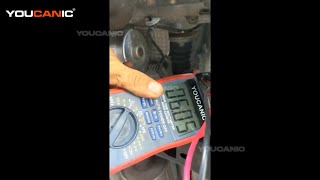

The information in this article is provided for general reference and educational purposes only. Vehicle specifications, procedures, and part compatibility can vary by production date, trim level, and region. Always consult your vehicle's factory service manual and verify part numbers before purchasing or performing repairs. Safety-critical components such as airbags, seat belts, and braking systems should be installed by a qualified professional.
- 🎬 Helpful Videos
- What Does C2521 Mean?
- Can I Drive With C2521?
- Common Causes
- Symptoms
- Diagnostic Flowchart
- Common Fixes & Costs
- Used vs. New Parts: Buying Guide
- What Happens If You Wait — Timeline
- Cost of Not Fixing It
- Diagnosis Steps
- When This Code Triggers (Freeze-Frame Conditions)
- Related Codes
- Climate & Environmental Factors
- How to Talk to a Mechanic About This Code
- Where to Take It: Dealer vs Independent vs Chain
- When to Walk Away From the Repair
- What Scan Tool You Need for This Code
- How to Clear the Code After You Fix It
- Will This Fail Emissions / State Inspection?
- Most Commonly Affected Vehicles
- Manufacturer-Specific Notes
- Real Owner Stories
- 2016 Subaru Impreza with intermittent stiff steering
- 2015 Subaru Outback with C2521 and uneven steering feel
- 2021 Subaru Forester with multiple warning lights after battery died
- How to Prevent This Code From Triggering
- Frequently Asked Questions
- Is it safe to drive with code C2521?
- Can I just clear the C2521 code?
- What is the most common misdiagnosis for C2521?
- My steering went stiff after my battery died. Is it related?
- What's the difference between a C2521 motor fault and a steering angle sensor fault?
- Why is replacing the steering rack so expensive?
- Does the Subaru warranty extension for cracked steering racks cover this code?
- Key Takeaways
- 🎟️ Get 5% Off