

OBD-II Code C2502: Manufacturer-Specific Fault
What C2502 means, why it triggers, and how to fix it
- Code C2502 has two completely different meanings: a software glitch on FCA vehicles (Jeep/Fiat) or an air suspension failure on European brands (Land Rover/Mercedes).
- For 2015-2018 Jeep and Fiat models, stop replacing expensive hardware; this code requires a $150-$250 dealer software update to fix a known Drivetrain Control Module (DTCM) bug.
- On air suspension vehicles, find and fix air leaks immediately to prevent a $200 air spring repair from destroying the compressor and costing over $1,000.
- Scan all vehicle modules with an advanced OBD-II tool, as C2502 is frequently a secondary 'messenger' code triggered by a primary fault in the ABS or transmission.
What Does C2502 Mean?
C2502 is a manufacturer-specific code with different definitions depending on your car's brand. For Jeep, Fiat, and Chrysler vehicles, it is a 'messenger' code from the 4-wheel-drive system indicating another module has a problem or its own software is outdated. For brands like Land Rover, Jaguar, Audi, and Mercedes-Benz, this code range points to a fault in the air suspension system, often related to the compressor, its electrical circuit, or an air leak.
Technical definition: The formal definition of C2502 varies by manufacturer. For Fiat Chrysler Automobiles (FCA), it is C2502-64: 'Signal Plausibility Failure,' indicating the Drivetrain Control Module (DTCM) received an implausible message from the engine, transmission, or brake control module over the CAN bus network. For manufacturers like Land Rover or Toyota, a similar chassis code (e.g., C1751) is defined as 'Compressor Relay Coil Malfunction,' a likely interpretation for C2502 in an air suspension context.
Can I Drive With C2502?
Yes, But With Caution. Driving is possible, but strongly discouraged. For FCA models (Jeep, Fiat), this code often means critical safety systems like ABS and Electronic Stability Control (ESC) are disabled, increasing the risk of losing control in an emergency maneuver. For air suspension vehicles, continuing to drive with a leak or failed component causes a cascade failure, turning a minor air spring leak (a ~$200 repair) into a burned-out compressor and valve block, costing over $1,000 to fix. The ride will be harsh, handling poor, and braking distances increased.
Common Causes
- Outdated Drivetrain Control Module (DTCM) Software (Jeep, Fiat, Chrysler) (Very Common) — On specific 2015-2018 Jeep and Fiat models, the most frequent cause is a software glitch in the 4WD control module. The module's software is too sensitive and sets this code even when no mechanical part has failed. Jeep issued Technical Service Bulletins (TSBs) to fix this with a software update.
- Air Leak in Suspension Springs or Lines (Air Suspension Vehicles) (Common) — Rubber air springs develop cracks from age and dry rot, and plastic air lines become brittle or rub through. This is the primary cause of compressor failure, as the compressor runs non-stop to compensate for the leak.
- Failing Air Suspension Compressor Relay (Air Suspension Vehicles) (Very Common) — The relay is a small, high-current electrical switch that powers the air compressor. A failing compressor drawing too much current burns out the relay quickly, making this a mandatory replacement part during compressor swaps.
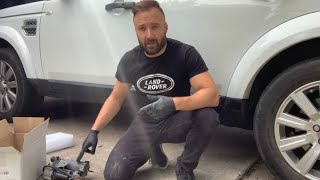
- Failing Air Suspension Compressor (Air Suspension Vehicles) (Common) — The compressor pumps air into the springs. Leaks elsewhere in the system force it to run constantly, causing it to overheat and fail. Internal wear also causes failure over time, typically around 80,000 miles. 🎬 Watch: Step-by-step guide to replacing a failed air suspension compressor.
- Fault in Another Vehicle System (Jeep, Fiat, Chrysler) (Common) — C2502 is often a secondary fault. A primary fault code in the engine, transmission, or ABS module (like a bad wheel speed sensor) causes the DTCM to log C2502 as a symptom.
- Weak or Failing Battery / Bad Terminals (Less Common) — Modern interconnected computer modules are highly sensitive to voltage. A weak battery causes communication errors between modules, triggering plausibility faults like C2502.
- Faulty Ride Height Sensor (Air Suspension Vehicles) (Less Common) — These sensors tell the control module the height of each corner. They fail electrically or their mechanical linkages break, sending incorrect data to the module and causing leveling faults.
- Damaged Wiring Harness or Poor Connection (Less Common) — A chafed or corroded wire in the harness leading to the DTCM, ABS module, or a wheel speed sensor corrupts signals and triggers a plausibility fault. On Mercedes models, broken wires at the shock absorber's solenoid valves are a known issue.
Symptoms
- 'Service 4WD' or 'Suspension Fault' Light — A warning message appears on the dashboard indicating a problem with the 4WD or air suspension system.
- Vehicle Sits Low or Sags (Air Suspension) — The vehicle is noticeably lower than normal on one or all corners, and gets stuck at its lowest height setting ('on the bump stops').
- ABS and/or Traction Control Light On (Jeep/Fiat/Chrysler) — Since the 4WD system works with the brakes, a fault in one disables the others, illuminating their warning lights.
- Compressor Runs Constantly or Not at All (Air Suspension) — You hear the air compressor running continuously to fight a leak, or it fails to turn on at all due to a bad relay or burned-out motor.
- Humming or Growling Noise (Jeep/Fiat/Chrysler) — A humming or chattering noise occurs between 30-45 mph as the 4WD system attempts to engage or disengage, specifically noted in FCA TSB #08-010-22.
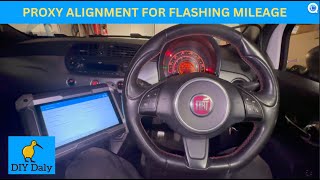
- Flashing Odometer (Jeep/Fiat/Chrysler) — A flashing odometer indicates a communication mismatch between the vehicle's control modules. A 'Proxi alignment' procedure is required after a software update to resolve this. 🎬 Watch: How to perform a Proxi alignment to fix flashing mileage.
Diagnostic Flowchart
Tap your situation to follow the diagnostic path that matches what you're seeing on this code.
Common Fixes & Costs
- Reprogram Drivetrain Control Module (DTCM) — Parts: $0, Labor: $150-$250, ~1.5 hr book time (Professional)
- Replace Air Suspension Compressor Relay — Parts: $10-$50, Labor: $0-$75, ~0.2 hr book time (DIY)
- Replace Leaking Air Spring/Strut — Parts: $150-$600 per corner, Labor: $150-$300 per corner, ~1.5 hr book time (Intermediate)
- Replace Air Suspension Compressor — Parts: $200-$800 (Aftermarket), $800-$2000+ (OEM), Labor: $170-$300, ~1.8 hr book time (Intermediate)
- Replace Air Suspension Valve Block — Parts: $150-$400, Labor: $150-$250, ~1.2 hr book time (Intermediate)
Used vs. New Parts: Buying Guide
When a used part is worth it: For air suspension, a used OEM compressor from a low-mileage, accident-damaged vehicle can be a cost-effective alternative to a new aftermarket part. For the FCA software issue, a used DTCM is not recommended, as the problem is software-based and the used module will likely have the same outdated software.
Donor-vehicle mileage cap: roughly under 60000 miles for the part to have meaningful remaining life.
Donor quality checklist:
- Verify the donor vehicle's mileage and reason for being scrapped (accident vs. component failure).
- Physically inspect electronic modules for corrosion, water damage, or signs of being opened.
- For compressors, ensure all electrical connectors and air line fittings are intact and undamaged.
- Purchase from a reputable seller that offers a warranty or return policy.
Decision logic:
- If The fix is a software update (most FCA cases) → Used parts are irrelevant; see a dealer for the update.
- If The part is an air compressor or air spring and budget is a primary concern → A used OEM part from a low-mileage donor is often higher quality than a cheap new aftermarket part.
- If The part is a wear item like a relay or sensor → Buy new; the cost savings for a used part are negligible and not worth the risk.
Warranty tradeoff: Used parts from salvage yards typically have a 30-90 day warranty. New aftermarket parts (e.g., Arnott) often come with a limited lifetime warranty, but may exclude failures from system leaks. OEM parts purchased from and installed by a dealer usually carry a 1-2 year warranty.
Worst-case if a used part fails: $300-$800 if a used electronic module or compressor is dead on arrival or fails shortly after installation, as you will have to pay for labor a second time.
What Happens If You Wait — Timeline
- 0-4 weeks (Air Suspension): A small leak develops in an air spring. The vehicle sags slightly on one corner after being parked overnight but rises to normal height after starting. The compressor runs slightly more often than usual. (MPG impact: 0%% · Added cost: $0 (Repair cost is for one air spring, ~$300-$600))
- 1-3 months (Air Suspension): The leak worsens. The vehicle sags noticeably whenever parked. The compressor runs for several minutes after every startup and cycles on while driving. The compressor relay is under constant strain. (MPG impact: 0-1%% · Added cost: $500-$1500 (The original air spring still needs replacement, but now the overworked compressor and relay are likely to fail, adding their replacement cost.))
- 3+ months (Air Suspension): Catastrophic failure. The compressor motor burns out completely or the relay fails, and the system can no longer build pressure. The vehicle is stuck 'on the bump stops,' riding harshly and unsafely. Other suspension components are damaged from the harsh ride. (MPG impact: 1-3%% · Added cost: $800-$2000+ (Cost now includes the original leaking part, a new compressor, a new relay, and potentially other stressed components like shocks or mounts.))
- Immediate and Ongoing (FCA Software Issue): The C2502 code sets, and the 'Service 4WD' light appears. Critical safety systems like ABS and Electronic Stability Control (ESC) are disabled. This creates a persistent safety risk until the software is updated. (MPG impact: 0%% · Added cost: $150-$250 (The cost to fix is for the dealer software update. The 'damage' is the unquantifiable cost of increased accident risk until the fix is applied.))
Cost of Not Fixing It
- Immediate: For FCA vehicles, safety systems like ABS and Electronic Stability Control (ESC) may be disabled, increasing the risk of an accident. For air suspension vehicles, the ride will be harsh and handling compromised. (Added cost: N/A)
- 0-3 months: Ignoring an air leak forces the suspension compressor to run constantly, leading to overheating and premature failure. This turns a ~$400 air spring repair into an additional $500-$1500+ repair for the compressor and relay. (Added cost: $500-$1500)
- 3+ months: Continued driving on a sagging or failed air suspension puts excess stress on other components, causing uneven tire wear and potential damage to shocks, axles, and suspension mounts. For FCA vehicles, ignoring the primary fault that triggered the C2502 code could lead to more severe transmission or drivetrain damage. (Added cost: $300-$2000+)
Diagnosis Steps
- Check for Technical Service Bulletins (TSBs)
For Jeep, Fiat, or Chrysler owners, search online for TSBs related to your VIN and code C2502. TSBs #08-010-22 (Compass), #08-027-21, and #08-110-17 (Renegade/500X) recommend a software update.
Tools: Internet Access (Beginner) - Perform a Full System Scan
Use an advanced OBD-II scanner to read manufacturer-specific codes from all modules (DTCM, ABS, TCM, BCM). C2502 is often a secondary code triggered by a primary fault elsewhere.
Tools: Advanced OBD-II Scanner (Beginner) - Inspect the Air Suspension System (If Equipped)
Turn the car on and listen. A constantly running compressor indicates an air leak. Spray soapy water on air lines and bags to reveal leaks by showing bubbles.
Tools: Soapy Water Spray Bottle (Intermediate) - Test the Air Compressor Relay (If Equipped)
Locate the compressor relay in the fuse box. Swap it with an identical relay from a non-critical system (like the horn). If the compressor now runs, the relay is bad.
Tools: Fuse Box Diagram (Intermediate) - Test Battery and Ground Connections
Use a multimeter to test the battery voltage; it must be >12.4 volts at rest. Ensure the main battery and chassis ground connections are clean and tight. Poor voltage causes widespread electronic communication errors.
Tools: Multimeter, Socket Set, Wire Brush (Intermediate) - Isolate the Faulty Component
If a primary code exists (e.g., wheel speed sensor), diagnose that component first. If an air leak is found, replace the leaking part. If the CAN bus resistance or voltage is incorrect, unplug modules one by one until the reading returns to normal to identify the faulty module.
Tools: Advanced OBD-II Scanner, Multimeter (Professional) - Pro Tip: Check CAN Bus Network Resistance
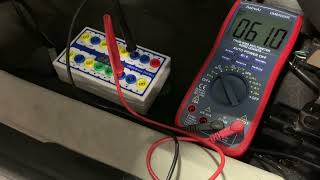
With the battery disconnected, measure resistance between Pin 6 (CAN-H) and Pin 14 (CAN-L) on the OBD-II port. A healthy reading is 60 Ohms. 120 Ohms indicates a failed terminating resistor or broken wire. An open circuit (OL) or short (near 0 Ohms) points to a major wiring problem.
Tools: Multimeter, OBD-II Pinout Diagram (Professional) - Pro Tip: Analyze CAN Bus Voltage/Waveform
With the ignition on, measure DC voltage at the OBD-II port. CAN-H (Pin 6) should be 2.5V-3.0V and CAN-L (Pin 14) 2.5V-2.0V. For definitive diagnosis, use an oscilloscope. A flat line, missing signal, or distorted waveform indicates a wiring short, open, or a faulty module pulling the network down.
Tools: Multimeter, Oscilloscope (Professional)
When This Code Triggers (Freeze-Frame Conditions)
- Vehicle Speed: 30-45 mph (The FCA software-related fault often triggers during steady-state cruising as the 4WD system attempts to disengage the rear axle for fuel economy.)
- System Voltage: <12.0V or >14.8V (Plausibility faults set during engine cranking with a weak battery or if the charging system has a fault, causing voltage spikes or drops that corrupt module communication.)
- Suspension Command: Lifting or Lowering (For air suspension vehicles, the code sets when the system is commanded to change height and a component (compressor, valve, sensor) fails to respond as expected.)
- Ambient Temperature: Sudden Change (On air suspension systems, a sudden drop in temperature causes moisture in the air lines or dryer to freeze, leading to blockages or implausible pressure readings that trigger a fault.)
Related Codes
- U0402 — On FCA vehicles, this code for 'Invalid Data Received From Transmission Control Module' often appears with C2502. If you see both, it strongly suggests the DTCM is correctly flagging bad data it's receiving. The diagnostic focus should shift to the Transmission Control Module (TCM) and its inputs.
- C2210-92 / C2220-54 — These codes are specifically mentioned in Jeep TSBs #08-110-17 and #08-027-21 alongside C2502. They relate to 'ETM Hall Sensor Performance' and 'ETM Calibration Error'. Seeing these codes together is a near-certain confirmation that the issue is the software glitch described in the TSB, not a mechanical failure.
- C1A20-64 — This is a common Land Rover code for 'Pressure Increases Too Slow When Filling Reservoir'. It directly points to either a significant leak in the system or a weak/failing compressor. This is a primary fault that causes symptoms associated with a C2502-type code.
- 5230 / 5220 (Mercedes-Benz) — On Mercedes vehicles, these codes indicate a fault with the front axle damping valve units (solenoids). This is caused by an internal failure in the strut or, more commonly, a simple broken wire at the strut connector, which mimics a larger system failure.
Climate & Environmental Factors
- Cold Weather: Moisture within the air suspension system freezes, potentially blocking valves or damaging the compressor's dryer. Rubber air springs become stiffer and more brittle in extreme cold, making them more susceptible to cracking.
- High Humidity / Salty Environments: Persistent moisture and road salt accelerate corrosion of electrical components, including relay contacts, wiring harness connectors, and chassis grounds. This leads to intermittent electrical faults and communication errors.
- Hot, Dry Climates: High heat and UV exposure accelerate the 'dry rot' process in rubber air springs, leading to the formation of small cracks and eventual air leaks. This is a primary cause of compressor burnout.
- High Altitude: Air suspension compressors work slightly harder at high altitudes due to the lower atmospheric pressure, but this is generally not a primary cause of failure unless the compressor is already weakened by a leak.
How to Talk to a Mechanic About This Code
Say this: "I have a C2502 code and need to schedule a diagnostic. For a Jeep/Fiat: 'My vehicle is setting a C2502-64. Before replacing hardware, please check for TSBs #08-010-22 or #08-110-17 and quote a DTCM software update.' For air suspension: 'I have a suspension fault and a C2502-range code. Please perform a full system diagnosis, including a soapy water leak test and compressor relay check, before recommending parts.'"
This language directs the shop toward the most likely, and often cheapest, solution first. For FCA, it prevents needless module replacement. For air suspension, it requests a proper system diagnosis instead of just replacing the most obvious failed part.
Avoid saying:
- 'My Service 4WD light is on, fix it.'
- 'My car is sagging, just replace the compressor.'
- 'Do whatever you think is best.'
Questions to ask before authorizing the repair:
- For FCA: Did you confirm a TSB applies to my VIN, and is the software out of date? If the odometer is flashing, does your quote include a Proxi Alignment?
- For Air Suspension: If you are recommending a new compressor, can you show me where the air leak is that caused it to fail?
- Can you provide me with the other diagnostic trouble codes you found in the ABS, TCM, and BCM modules?
- What is the warranty on the parts and labor for this repair?
Where to Take It: Dealer vs Independent vs Chain
- Dealer:
Required for the FCA software fix, as they have exclusive access to the wiTECH tools and software updates. For out-of-warranty air suspension, consider independent shops.
Best for: FCA vehicles (Jeep, Fiat) needing the TSB software update., Vehicles still under warranty.
Downsides: Highest labor rates., May be less willing to diagnose complex air suspension issues and prefer to replace entire assemblies. (Typical cost: +50% vs. baseline) - Independent Shop:
Best choice for air suspension repairs on brands like Land Rover or Mercedes, providing better value and expertise than a dealer. Poor choice for the FCA software issue.
Best for: Out-of-warranty air suspension diagnosis and repair (especially a European auto specialist)., General electrical and mechanical diagnostics.
Downsides: Most cannot perform the FCA-specific software update., Quality and expertise vary; a shop not specializing in European cars may struggle with air suspension. (Typical cost: +0% vs. baseline) - Chain Shop:
AVOID. This code requires diagnostic specialization beyond the scope of most chain repair shops.
Best for: Battery testing and replacement, which can be a simple cause of this code.
Downsides: Lack the specialized tools for software updates and the diagnostic expertise for complex chassis and network codes., High pressure to sell parts leads to misdiagnosis (e.g., selling a compressor when only a relay is needed). (Typical cost: -10% vs. baseline)
When to Walk Away From the Repair
If the estimated repair cost exceeds 40-50% of the car's private-party value, consider selling or trading in the vehicle.
- Car worth $8000, fix is $250: Fix it. This is a low-cost, essential software update for an FCA vehicle.
- Car worth $12000, fix is $1800: Fix it. A new compressor and air spring on a Land Rover is a significant but expected repair well below the walk-away threshold.
- Car worth $5000, fix is $3000: Walk away. The repair cost is 60% of the vehicle's value. This is not economical.
What Scan Tool You Need for This Code
Minimum: A scanner that can read manufacturer-specific Chassis ('C') and Network ('U') codes from all vehicle modules (DTCM, ABS, BCM, etc.).
A basic $20 OBD-II reader only shows Powertrain ('P') codes and will not see C2502 at all. You need a tool that accesses the specific computer module logging the fault.
Budget: BlueDriver Pro Scan Tool (~$100) — Reads and clears enhanced codes from modules like ABS, Airbag, and Transmission for many brands, which is essential for diagnosing C2502. It allows you to see the full picture of what codes are present across the vehicle's network.
Mid-range: Foxwell NT510 Elite (~$160) — Provides deep, all-system diagnostics for a specific car brand (e.g., FCA or Land Rover). Crucially, it offers bi-directional control, allowing you to command the air suspension compressor to turn on or test individual solenoids, which is invaluable for diagnosis.
Professional: Autel MaxiCOM MK808S (~$450) — A full-featured professional tablet scanner. It offers strong bi-directional control for all systems, including air suspension adjustments. For FCA vehicles, it supports 'AutoAuth' for accessing secure modules, though it cannot perform the dealer-level Proxi Alignment or software flashes.
Rent vs buy: For a one-time diagnosis, many auto parts stores offer a free loaner tool service. However, these are often basic readers that may not see this code. If you own an FCA vehicle prone to this issue or a European car with air suspension, buying a mid-range scanner like the Foxwell is a wise investment that will pay for itself.
How to Clear the Code After You Fix It
- Use an advanced OBD-II scan tool to clear codes from all modules (DTCM, BCM, ABS, etc.).
- For FCA vehicles, if the odometer is flashing, perform a 'Proxi Alignment' procedure.
- For air suspension vehicles, cycle the suspension through all height settings to confirm operation.
- Perform a complete drive cycle to allow readiness monitors to reset.
Drive cycle (~30 minutes): A general drive cycle involves a cold start, a few minutes of idling, followed by mixed city driving (stop-and-go), and concluding with at least 10-15 minutes of steady highway-speed driving.
Readiness monitors affected: Since C2502 is a Chassis ('C') code, it does not directly affect emissions readiness monitors like the Catalyst or O2 sensor monitors. However, the underlying fault that *causes* C2502 (e.g., a fault in the PCM/TCM) might., No readiness monitors are directly associated with the DTCM or air suspension system.
Before emissions retest: drive at least 50 miles to fully set monitors.
Watch out for:
- Simply disconnecting the battery will not clear this code from all modules and will not perform a required Proxi Alignment on FCA vehicles.
- The code will return immediately if the root cause (e.g., software bug, air leak, faulty sensor) is not fixed.
- Using a basic code reader may not be able to clear manufacturer-specific 'C' codes or access the necessary modules.
Will This Fail Emissions / State Inspection?
No — by itself this code doesn't fail OBD inspection (but it can keep readiness monitors from setting, which causes a separate fail).
- California: A C-code like C2502 will generally not cause a smog check failure, as inspections primarily focus on emissions-related Powertrain (P) codes. However, if the 'Check Engine' light is also on due to a related powertrain fault, the vehicle will fail.
- New York: New York's annual safety inspection includes checking for illuminated ABS and brake warning lights. Since the C2502 code on FCA vehicles often illuminates the ABS light, it causes the vehicle to fail the safety inspection, though not the separate emissions inspection.
- Texas: As of 2025, most non-commercial vehicles in Texas no longer require a safety inspection. Emissions testing is still required in 17 counties. A C-code will not cause a failure on this OBD-II emissions test unless the Check Engine Light is also illuminated.
Most Commonly Affected Vehicles
- Jeep Compass (2017-2018) — Extremely common for C2502-64 due to a documented software issue in the Drivetrain Control Module (DTCM) addressed by TSB #08-010-22.
- Jeep Renegade (2015-2018) — Shares a platform and electronics with the Compass and Fiat 500X, making it prone to the same DTCM software fault. TSBs #08-110-17 and #08-027-21 apply. Some models have an auxiliary battery that also causes electronic issues when it fails.
- Fiat 500X (2015-2018) — Also part of the FCA family with the Renegade, this model is covered under TSB #08-027-21 for the C2502-64 software issue.
- Land Rover LR3 / Discovery 3 (2005-2009) — These vehicles are well-known for air suspension failures. The original Hitachi compressor is prone to wearing out. An AMK-style compressor is a common and more robust upgrade, but requires a software update.
- Land Rover Range Rover Sport (2006-2013) — Like the LR3, this generation is highly susceptible to air suspension compressor and relay failure, making it a likely candidate to display a C2502-type chassis fault. Repair costs range from $500 to $1500 depending on the failed component.
- Mercedes-Benz GL-Class (X164) (2007-2012) — Chassis faults in this range on Mercedes vehicles with Airmatic suspension frequently point to a failed compressor, valve block, or air springs. Specific known issues include flexing plastic ride height sensor arms and broken wires at the shock absorber damping solenoids.
- BMW X5 (E70) (2007-2013) — Vehicles with rear-only air suspension experience faults in the C2500 range related to the compressor, relay, or ride height sensors. A sagging rear end is the most common symptom. The system is simpler than 4-corner systems but just as prone to leaks and compressor failure.
- Audi Q7 (4L) (2007-2015) — This model's adaptive air suspension is prone to issues. Chassis codes in the C2500 range often relate to the compressor, relay, or valve block, leading to suspension fault warnings. A single leaking air spring sometimes prevents the entire front or rear axle from lifting correctly.
Manufacturer-Specific Notes
- Jeep / Fiat / Chrysler: The C2502-64 code is almost always a software issue. Owners and shops waste money replacing expensive hardware like the DTCM or ABS module when the official fix is a software update from a dealer that costs a fraction of the price. Always reference TSBs 08-010-22, 08-110-17, or 08-027-21 before replacing any parts.
- Land Rover / Jaguar: When an air suspension compressor fails, it is almost always because a leak made it run until it burned out. When it burns out, it draws excess current and destroys the compressor relay. You must replace the relay (OEM P/N YWB500220) whenever you replace the compressor, or the new compressor will fail immediately.
- Mercedes-Benz: On the X164 GL-Class and other models of the era, the Airmatic system has several unique failure points. The plastic linkage arms on the ride height sensors become soft and flex, giving inaccurate readings. Also, the wiring to the ADS (Adaptive Damping System) solenoids on the struts themselves is prone to breaking right at the connector.
- Audi / Volkswagen: On platforms like the Audi Q7 and VW Touareg, the air suspension logic tries to level the car by axle. This means a significant leak in just one rear air spring causes the system to be unable to lift either rear corner, confusing diagnosis. The system may not attempt to send air to the good spring if it cannot build pressure on the faulty side.
Real Owner Stories
2015 Jeep Renegade Trailhawk with C2502-64 and U0402
The 'Service 4WD' and Check Engine lights came on intermittently while driving. The car drove normally, and the lights often disappeared after restarting the car. The owner replaced the battery, but the problem persisted.
What they tried:
- Replaced the battery, which did not solve the issue.
Outcome: The owner took the vehicle to a dealership, which performed a TCM/DTCM (Transmission and Drivetrain Control Module) firmware update. This permanently fixed the issue.
Lesson: On 2015-2018 FCA vehicles, intermittent electronic warnings are very often caused by a known software bug. Always have the dealer check for TSBs related to the DTCM before replacing expensive hardware.
2012 Range Rover with 'Air Suspension Fault' message
An 'Air Suspension Fault' message appeared on the dash. A code reader pointed to issues with ride height sensors. The vehicle went up and down, but not correctly (rear first, then front), suggesting the compressor was working but weak.
What they tried:
- Scanned for codes, which misleadingly pointed to sensors.
- Took it to a Land Rover specialist who recommended a new compressor.
Outcome: Forum experts explained that a weak compressor unable to build pressure quickly causes the system to log sensor faults, even if the sensors are good. The root cause is the compressor's inability to supply enough air. The recommended fix was to test the compressor's output pressure directly or rebuild it.
Lesson: Secondary codes are misleading. On air suspension systems, a weak compressor causes a variety of 'sensor' or 'plausibility' faults because the system isn't reacting as fast as the computer expects. Don't replace sensors without verifying the compressor builds adequate pressure.
2016 Jeep Renegade with under 40k miles and multiple random electronic faults
A cascade of problems started with a TPMS light, then a P0441 code, and finally all warning lights (ABS, Service 4WD, Traction Control) illuminated. The dash brightness changed on its own, the radio failed intermittently, and 4WD mode selection was disabled. The battery and charging system tested as good.
What they tried:
- Verified battery and charging system were healthy.
Outcome: The owner posted a full scan log which included C2502-64. The collection of bizarre, seemingly unrelated electronic issues points strongly to a failing Body Control Module (BCM) or a major CAN bus network problem, rather than a specific fault with the 4WD system.
Lesson: When you see a flood of unrelated error codes across multiple systems, the problem is rarely with any single component. The issue is more likely with the central network (CAN bus wiring, grounds) or a core computer like the BCM. A C2502 code in this context is just one symptom of a larger electrical problem.
How to Prevent This Code From Triggering
- Periodically Inspect Air Springs and Lines (Every oil change or 6 months) — Visually check rubber air springs for cracks or signs of dry rot. Listen for hissing sounds. This allows you to catch small leaks before they cause the compressor to overwork and burn out.
- Keep Air Suspension Components Clean (During car washes) — Rinsing dirt, salt, and debris from the air springs and height sensors prevents abrasion of the rubber and corrosion of electrical connectors and sensor linkages, which leads to leaks or incorrect height readings.
- Replace Air Suspension Compressor Relay with Compressor (Every time the compressor is replaced) — A failing compressor draws high current that damages the relay. Installing a new compressor with an old relay causes immediate new-part failure. The relay is an inexpensive part (~$20) that ensures the new compressor gets clean power.
- Maintain Battery Health (Test annually after 3 years) — For all modern vehicles, especially FCA models prone to C2502, stable voltage is critical for module communication. A weak battery causes voltage drops that corrupt data on the CAN bus, triggering plausibility faults.
- Address Warning Lights Promptly (Immediately) — Do not ignore a 'Suspension Fault' light. A small leak destroys a compressor in weeks. A software fault on an FCA vehicle means critical safety systems like ABS and ESC are likely disabled.
Frequently Asked Questions
Can I just clear the C2502 code and keep driving?
You can clear it, but it will almost certainly return. If it is the Jeep/FCA software issue, the fault condition is detected again quickly. If it is an air suspension problem, clearing the code does not fix the underlying leak or failing part, and the compressor will continue to damage itself.
Why does my odometer flash with the C2502 code?
A flashing odometer on many FCA vehicles indicates a 'proxy alignment' issue. This means the car's main computer (BCM) detected a mismatch or communication problem with one of the other modules, like the DTCM. Performing a 'Proxi Alignment' with a capable scan tool after a repair or software update is required to fix this.
Is it better to replace my air suspension with traditional coil springs?
This is a popular but personal choice. Converting to coil springs is often cheaper than a major air suspension repair and is more reliable long-term. However, you will lose the adjustable ride height, load-leveling, and adaptive ride quality that the air system provides.
My mechanic wants to replace the whole 4WD transfer case for my Jeep's C2502 code. Should I let them?
No, not without checking for software updates first. Tell your mechanic to specifically investigate TSB #08-010-22 (for a Compass) or TSBs #08-027-21 / #08-110-17 (for a Renegade/500X). This code is very rarely a sign of a failed transfer case; it is far more likely the software glitch that a dealer must fix.
Can a bad battery really cause this code?
Yes. Control modules need a stable voltage to communicate properly. A weak or old battery causes voltage drops that corrupt the data signals between modules, leading to 'plausibility' or communication errors. Always test the battery and check terminal connections before diving into more complex diagnostics.
What is the most common misdiagnosis for C2502?
For Jeep/FCA vehicles, the most common misdiagnosis is replacing expensive hardware like the DTCM or ABS module when the root cause is software. For air suspension vehicles, a common mistake is replacing a failed compressor without finding and fixing the air leak that caused it to burn out, leading to the new compressor failing prematurely.
The dealer wants to charge me $250 for a software update. Is that normal?
Yes, this is a typical price. While the software itself is free, dealers charge for the labor and use of their proprietary diagnostic tools (like wiTECH for FCA vehicles). The cost usually covers a minimum of one hour of shop time.
What is the CAN bus?
The CAN bus (Controller Area Network) is the primary communication network that allows all the different computers (modules) in your car to talk to each other. A code like C2502-64 happens when one module sends a message on the CAN bus that another module finds illogical or impossible. This indicates a problem with either the sending module, the receiving module's software, or the network wiring itself.
Key Takeaways
- Code C2502 has two completely different meanings: a software glitch on FCA vehicles (Jeep/Fiat) or an air suspension failure on European brands (Land Rover/Mercedes).
- For 2015-2018 Jeep and Fiat models, stop replacing expensive hardware; this code requires a $150-$250 dealer software update to fix a known Drivetrain Control Module (DTCM) bug.
- On air suspension vehicles, find and fix air leaks immediately to prevent a $200 air spring repair from destroying the compressor and costing over $1,000.
- Scan all vehicle modules with an advanced OBD-II tool, as C2502 is frequently a secondary 'messenger' code triggered by a primary fault in the ABS or transmission.
Helpful Videos

The information in this article is provided for general reference and educational purposes only. Vehicle specifications, procedures, and part compatibility can vary by production date, trim level, and region. Always consult your vehicle's factory service manual and verify part numbers before purchasing or performing repairs. Safety-critical components such as airbags, seat belts, and braking systems should be installed by a qualified professional.
- 🎬 Helpful Videos
- What Does C2502 Mean?
- Can I Drive With C2502?
- Common Causes
- Symptoms
- Diagnostic Flowchart
- Common Fixes & Costs
- Used vs. New Parts: Buying Guide
- What Happens If You Wait — Timeline
- Cost of Not Fixing It
- Diagnosis Steps
- When This Code Triggers (Freeze-Frame Conditions)
- Related Codes
- Climate & Environmental Factors
- How to Talk to a Mechanic About This Code
- Where to Take It: Dealer vs Independent vs Chain
- When to Walk Away From the Repair
- What Scan Tool You Need for This Code
- How to Clear the Code After You Fix It
- Will This Fail Emissions / State Inspection?
- Most Commonly Affected Vehicles
- Manufacturer-Specific Notes
- Real Owner Stories
- 2015 Jeep Renegade Trailhawk with C2502-64 and U0402
- 2012 Range Rover with 'Air Suspension Fault' message
- 2016 Jeep Renegade with under 40k miles and multiple random electronic faults
- How to Prevent This Code From Triggering
- Frequently Asked Questions
- Can I just clear the C2502 code and keep driving?
- Why does my odometer flash with the C2502 code?
- Is it better to replace my air suspension with traditional coil springs?
- My mechanic wants to replace the whole 4WD transfer case for my Jeep's C2502 code. Should I let them?
- Can a bad battery really cause this code?
- What is the most common misdiagnosis for C2502?
- The dealer wants to charge me $250 for a software update. Is that normal?
- What is the CAN bus?
- Key Takeaways
- 🎟️ Get 5% Off