

OBD-II Code C2501: A Comprehensive Guide to Chassis Control System Faults
The Ultimate Resource for Diagnosing and Fixing C2501 on Ford, Nissan, Jaguar, and More
- Code C2501 disables critical safety systems like ABS and Electronic Stability Control, significantly increasing your skid risk on wet roads.
- On 2006-2014 Ford vehicles, C2501 almost always indicates a failed ABS module, which you can remove and send to a rebuilder for $150-$400 instead of paying a dealer $1,500+.
- For 2020-2022 Nissan Sentra and Rogue models, a 'PAST' C2501 code means the front camera temporarily overheated; clear the code and cool the cabin rather than replacing the $1,200 camera.
- Never replace a $1,000+ ABS module without first using a multimeter to verify it receives over 12.4 volts and has less than 0.5 ohms of ground resistance.
What Does C2501 Mean?
C2501 is a chassis-related Diagnostic Trouble Code (DTC) indicating the vehicle's primary computer detected a significant fault within the electronic stability or traction control system. When triggered, the ABS, TCS, and ESC deactivate as a fail-safe measure, illuminating corresponding dashboard warning lights.
Technical definition: The definition of C2501 varies by manufacturer. For Ford, it indicates a 'Dynamic Stability Control Valve' or ABS module fault. For Jaguar and Land Rover, it points to a 'Yaw Rate Sensor Circuit Malfunction'. For modern Nissans, it links to a 'Front Camera Unit' fault. For General Motors, it is a generic 'Control Module Communication Bus Off' error. In all cases, it signifies a compromised stability system.
Can I Drive With C2501?
Yes, But With Caution. Yes, but with extreme caution. Your vehicle's standard braking system functions normally, but the Anti-lock Braking System (ABS), Traction Control (TCS), and Electronic Stability Control (ESC) are disabled. This dramatically increases the risk of wheel lock-up and losing steering control during a panic brake on wet, snowy, or loose surfaces. The primary risk is the immediate reduction in your ability to avoid an accident in an emergency.
Common Causes
- Faulty ABS Control Module or Hydraulic Control Unit (HCU) (Very Common) — This is the primary cause on Ford, Lincoln, and Mercury vehicles. Internal electronic components, solder joints on the circuit board, or the integrated pump motor fail over time, disabling the entire ABS and stability system.
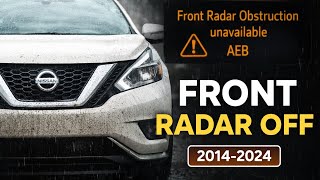
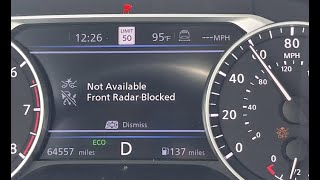
- Faulty ADAS Front Camera Unit (Common) — On 2020-2022 Nissan Sentra and 2021-2022 Nissan Rogue models, the forward-facing camera is integral to the stability system. A temporary overheat condition or hardware failure sets a C2501 code and disables driver-assist features.
- Faulty Yaw Rate Sensor (Common) — This sensor measures the vehicle's rotational angle to detect a slide. It is a frequent failure point on Jaguar and Land Rover models, making it the primary trigger for C2501 in these vehicles.
- Damaged, Corroded, or Shorted Wiring (Common) — Wiring harnesses leading to the ABS module, wheel speed sensors, or camera unit chafe, break, or corrode from moisture and road debris. This interrupts critical communication and triggers a fault.
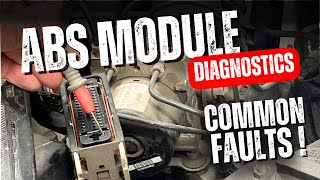
- Low Battery Voltage or Poor Ground Connection (Less Common) — Stability systems are highly sensitive to voltage. An aging battery, a failing alternator, or a corroded main ground connection causes modules to malfunction and store fault codes, even if the components themselves are intact. 🎬 Watch: How to test ABS module power and ground connections
- Faulty Steering Angle Sensor (Less Common) — The stability control system relies on the steering angle sensor to determine the driver's intended direction. If this sensor's signal drops out or becomes erratic, the system shuts down.
Symptoms
- ABS Warning Light On — The amber or yellow 'ABS' light on the instrument cluster illuminates continuously.
- Traction/Stability Control Light On — The light depicting a car with squiggly lines, or a light reading 'ESC,' 'DSC,' or 'VSC,' illuminates.
- Driver-Assist Systems Disabled — On camera-equipped vehicles, Automatic Emergency Braking (AEB), Lane Departure Warning (LDW), and Intelligent Cruise Control become inoperative.
- Warning Message on Information Display — The dashboard displays text like 'Service Stability System,' 'DSC Fault,' or 'Front Camera Unavailable. High Cabin Temperature.'
- Brakes Lock Up Under Hard Braking — Without ABS, the wheels lock and cause the vehicle to skid during a panic stop, removing the driver's ability to steer around an obstacle.
- Brake Pedal Lacks ABS Pulsation — During hard braking, the characteristic pulsing or vibration from the brake pedal is absent.
Common Fixes & Costs
- Repair/Rebuild ABS Control Module — Parts: $150-$400, Labor: $100-$250, ~1.5 hr book time (Intermediate)
- Clear Codes and Educate Customer (Nissan Overheat) — Parts: $0, Labor: $50-$150, ~0.5 hr book time (Beginner)
- Replace Yaw Rate Sensor — Parts: $350-$750, Labor: $130-$200, ~1.8 hr book time (Intermediate)
- Replace ADAS Front Camera — Parts: $800-$1200, Labor: $300-$500, ~2.5 hr book time (Professional)
- Replace ABS Control Module/HCU (New) — Parts: $900-$1600, Labor: $200-$400, ~2 hr book time (Professional)
- Repair Damaged Wiring — Parts: $20-$60, Labor: $200-$500, ~2.5 hr book time (Intermediate)
DIY vs Professional
- Repair/Rebuild ABS Control Module — Beginner:
Tools: Socket set (including E6 Torx for Fords), ratchet, panel clip removal tool. - Replace Yaw Rate Sensor — Beginner:
Tools: Socket set, trim removal tools, flashlight. - Replace ABS Control Module/HCU (New) — Beginner:
Tools: Professional-grade scan tool for VIN programming and automated ABS bleeding, flare nut wrenches, vacuum bleeder. - Replace ADAS Front Camera — Beginner:
Tools: ADAS calibration frame with specific targets, compatible scan tool, large, level workspace.
Used vs. New Parts: Buying Guide
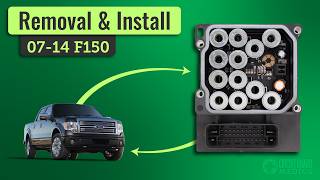
When a used part is worth it: For ABS modules on older vehicles (2009-2014 F-150), a professionally 🎬 Watch: How to remove and install a Ford ABS module rebuilt module is the most cost-effective strategy. For yaw rate sensors, a used part from a low-mileage vehicle is a viable option.
Donor-vehicle mileage cap: roughly under 100000 miles for the part to have meaningful remaining life.
Donor quality checklist:
- For ABS modules, match the part number exactly. Used modules require reprogramming with your vehicle's VIN.
- Never buy a used ADAS camera. It may be linked to a previous owner's account or have hidden damage preventing calibration.
- Purchase from a reputable seller offering a warranty of at least 90 days.
Decision logic:
- If The part is an ADAS camera. → Buy new from the dealer. The liability of a malfunctioning safety system from a used part is too high.
- If The part is a Ford ABS module. → Repairing your original module is the best option. It is cheaper than new and requires no programming.
- If The part is a Yaw Rate Sensor for a Jaguar/Land Rover. → A used part from a verified low-mileage donor is a reasonable choice to save money.
Warranty tradeoff: Used parts have a 30-90 day warranty. Remanufactured/repaired parts come with a 1-year to lifetime warranty. New OEM parts carry a 1-2 year warranty.
Worst-case if a used part fails: $500-$1500 if a used part fails, including the cost of a second replacement part and repeat labor.
What Happens If You Wait — Timeline
- Immediate: Code C2501 is stored. ABS, Traction Control, and Stability Control warning lights illuminate. All associated safety systems are disabled. (MPG impact: 0%% · Added cost: $0. The primary cost is a massive reduction in vehicle safety and increased accident risk.)
- 1-3 months: The vehicle fails state-mandated safety inspections due to the illuminated ABS light. If the root cause is a continuously running ABS pump motor, the battery drains completely. (MPG impact: 0%% · Added cost: $150-$300 for a new battery if the pump motor drains it beyond recovery.)
- 3-12 months: If caused by moisture-contaminated brake fluid, internal corrosion seizes the hydraulic control unit valves. If caused by wiring, continued vibration breaks the wire completely. (MPG impact: 0%% · Added cost: $500-$1500. A problem solvable with a fluid flush or wiring repair now requires a full HCU or module replacement.)
- 12+ months: A continuously running pump motor burns itself out, guaranteeing the need for a full, expensive HCU replacement instead of a simple electronic module repair. (MPG impact: 0%% · Added cost: $1500-$2500+. The cost of delaying a simple fix escalates to full component replacement.)
Cost of Not Fixing It
- Immediate: Significantly increased risk of an accident. Without ABS and stability control, the vehicle is prone to wheel lock-up and skidding during panic braking. (Added cost: Potential for vehicle damage, insurance deductibles, and injury costs from an accident.)
- 1-6 months: A faulty ABS pump motor running continuously drains the battery. A wiring short affects other electronic modules over time. (Added cost: $150-$300 for a new battery, plus diagnostic costs for related issues.)
- 6+ months: Causes an automatic failure of state safety inspections. The safety risk remains constant and high. (Added cost: Towing and repair costs when forced to fix the issue to pass a mandatory inspection.)
Diagnosis Steps
- Full System Scan & TSB Check
Use an OBD-II scanner capable of reading chassis codes to scan all modules. Check for Technical Service Bulletins (TSBs) for your exact year, make, and model. TSBs like Nissan's NTB22-088 provide the exact fix and prevent misdiagnosis.
Tools: OBD-II Scanner (with ABS/Chassis capability), TSB Database Access (Beginner) - Inspect Battery, Terminals, and Grounds
Verify the battery is fully charged (above 12.4V with the engine off). Clean and tighten the battery terminals. Locate the main chassis ground and the specific ground point for the ABS module, ensuring they are secure and rust-free.
Tools: Multimeter, Socket Set, Wire Brush (Beginner) - Test ABS Module Power and Ground Pins
Disconnect the ABS module connector. With the key on, use a multimeter to verify battery voltage (>12.4V) at the designated power input pins. Check for less than 0.5 ohms of resistance between the ground pins and a known good chassis ground.
Tools: Multimeter, Vehicle-Specific Wiring Diagram (Advanced) - [PRO TIP] Analyze Live Sensor Data
Access the live data stream for the chassis module. Monitor the Yaw Rate Sensor, Steering Angle Sensor, and Wheel Speed Sensors. Turn the steering wheel lock-to-lock and drive in a tight circle; data should change smoothly without dropouts.
Tools: Advanced Bi-Directional Scan Tool (Advanced) - Visual Inspection of Wiring and Components
Inspect the wiring harness connected to the ABS module for chafing, melting, or green corrosion. On Nissans, inspect the windshield area around the front camera for damage or aftermarket tint blocking its view.
Tools: Flashlight, Inspection Mirror (Intermediate) - [PRO TIP] Perform CAN Bus Network Test
If communication codes (U0121) are present, measure resistance between CAN High (Pin 6) and CAN Low (Pin 14) at the DLC with the battery disconnected; a healthy network reads ~60 Ω. Significant deviation points to a network wiring problem.
Tools: Multimeter, DLC Breakout Box (Professional) - [PRO TIP] Scope Test Sensor Signals
Backprobe the signal wire of a suspect sensor with an oscilloscope. As the wheel turns, look for a clean square or sine wave. Dropouts or noise indicate a failing sensor or wiring issue a multimeter misses.
Tools: Oscilloscope, Backprobe Pins (Professional) - Check Brake Fluid Level and Condition
Ensure the brake fluid level is between the MIN and MAX marks. Dark, contaminated fluid indicates neglect that seizes the ABS hydraulic unit's internal valves.
Tools: Flashlight (Beginner)
When This Code Triggers (Freeze-Frame Conditions)
- Vehicle Speed: 10-45 mph (The fault is detected during the system's initial self-test shortly after starting to drive or during low-to-medium speed maneuvers.)
- Steering Angle: Variable (For yaw rate or steering angle sensor faults, the code triggers during a turn when the sensor's reading is illogical compared to wheel speed data.)
- Battery Voltage: 13.2-14.5V (The code sets when system voltage is normal; however, a fault logs during a low voltage event (<11V during cranking) and remains as a history code.)
- Time Since Start: 1-5 minutes (Stability system faults are identified during the initial power-up and self-check sequences that occur shortly after starting the vehicle.)
Related Codes
- U0121 — Means 'Lost Communication With ABS Control Module.' If seen with C2501, the problem is in the power, ground, or CAN bus wiring to the module. The module is offline.
- C1288 — Common on Fords, pointing to a 'Pressure Transducer Main/Primary Circuit Failure.' Seeing C1288 alongside C2501 confirms the ABS module itself failed.
- C1F6B-54 / C1F6B-4B — Specific to Nissan for 'CAMERA UNIT MALF'. TSBs NTB22-088 and NTB20-061a reference this code regarding camera overheating or aiming issues.
- C1145 — A generic code for a 'Right Front Wheel Speed Sensor Input Circuit Failure.' If present, diagnose the specific wheel speed sensor first.
Climate & Environmental Factors
- High Humidity: Coastal or tropical climates accelerate corrosion on wiring connectors and printed circuit boards within the ABS controller, leading to short circuits.
- Extreme Cold: Aging electronic components and solder joints contract in cold weather, causing intermittent open circuits. Ice and snow also physically obstruct wheel speed sensors.
- High Heat (Interior): On 2020+ Nissan models, high cabin temperatures from sun exposure cause the front camera unit to temporarily overheat, setting a 'PAST' C2501 code.
- Road Salt (Rust Belt): Road salt severely corrodes wiring harnesses and ground connections for the ABS module, destroying connector pins and causing high resistance.
How to Clear the Code After You Fix It
- Reconnect the battery if disconnected for repair.
- Use a compatible OBD-II scan tool to clear the C2501 code from the ABS/Chassis module.
- Perform any required calibration procedures (e.g., Steering Angle Sensor zero point calibration, ADAS camera calibration).
- Perform the specific drive cycle to confirm the repair.
Drive cycle (~20 minutes): Start the engine and idle for 2 minutes. Drive straight at a speed above 15 mph to initialize the system. Make several left and right turns. Safely bring the vehicle to a complete stop. Turn the ignition off and back on. The warning lights remain off if the repair is successful.
Readiness monitors affected: Not applicable. Chassis codes do not affect emissions monitors.
Watch out for:
- Disconnecting the battery does not reliably clear a C2501 code; a scan tool is required.
- The code returns immediately if the root cause is not fixed.
- Forgetting to perform a necessary calibration after replacing a steering angle sensor or ADAS camera causes the code to return.
Will This Fail Emissions / State Inspection?
No — by itself this code doesn't fail OBD inspection (but it can keep readiness monitors from setting, which causes a separate fail).
- California: C2501 does not fail the standard smog check. However, for salvaged vehicles requiring a 'Brake and Lamp Inspection', an active ABS fault is an automatic failure.
- New York: An illuminated ABS light causes a failure of the annual safety inspection. You cannot get a valid inspection sticker.
- Texas: The ABS warning light is a reason for rejection during the annual safety inspection. The vehicle cannot be legally driven until repaired.
Most Commonly Affected Vehicles
- Ford F-150 (2009-2014) — Extremely common for the ABS module to fail internally across the entire generation.
- Ford Fusion / Mercury Milan (2006-2012) — The Hydraulic Control Unit (HCU) is a well-documented failure point.
- Ford Escape / Mercury Mariner (2008-2012) — Susceptible to both ABS control module failure and steering angle sensor faults.
- Nissan Sentra (2020-2022) — Highly prone to setting C2501 due to front camera overheating (TSB NTB22-088).
- Nissan Rogue (2021-2022) — Shares the same front camera overheating issue as the Sentra.
- Jaguar S-Type / X-Type (2002-2008) — The primary cause of C2501 is the failure of the Yaw Rate Sensor.
- Land Rover LR3 / Range Rover Sport (2005-2009) — Frequently sets this code due to a failed Yaw Rate Sensor shared with Jaguar platforms.
Manufacturer-Specific Notes
- Ford: C2501 is synonymous with internal ABS module failure. Sending the module to a dedicated repair service is the standard, cost-effective industry practice.
- Jaguar / Land Rover: A C2501 code points directly to the Yaw Rate Sensor as the most probable cause. It is a common repair performed by independent shops.
- Nissan: On 2020+ Sentra and 2021+ Rogue models, C2501 relates to the front camera unit. Per TSB NTB22-088, a 'PAST' status code requires clearing the code and cooling the cabin, not replacing the camera.
- General Motors: C2501 indicates a generic communication bus failure rather than a specific component fault. This requires diagnosing the entire vehicle network for consistent voltage and resistance.
Real Owner Stories
2010 Ford Fusion Hybrid with ABS/HCU Failure
While stopping, the brakes became mushy and required extreme force. The ABS and brake warning lights illuminated.
Outcome: The owner sent the original module to a third-party repair service (Module Master) for $250. After reinstalling it, the code cleared permanently, saving over $1,800.
Lesson: For common HCU/ABS module failures on Fords, reject multi-thousand dollar dealer quotes. Third-party repair services fix the original unit for $150-$400 and require no reprogramming.
2021 Nissan Rogue with C2501 "Camera Overheat"
The dashboard repeatedly displayed an "Unavailable: camera temperature high" warning, disabling forward collision features.
Outcome: The dealer followed Nissan TSB NTB22-088. Because the C2501 code was 'PAST' (history), they cleared the code and explained it was a normal fail-safe for a hot cabin. No parts were replaced.
Lesson: Verify if a Nissan C2501 code is 'PAST' or 'CURRENT'. A 'PAST' code is a temporary overheat condition requiring no repair. Replacing the camera is a costly misdiagnosis.
2018 Ford F-150 with Parasitic Battery Drain
The truck's battery died every two days. A parasitic draw test showed a 4A spike every minute on the ABS module circuit.
Outcome: Further diagnosis revealed a short circuit in the Electronic Parking Brake (EPB) switch on the dashboard. The faulty switch constantly woke up the ABS module. Replacing the $40 switch fixed the drain.
Lesson: A parasitic drain on the ABS fuse does not guarantee a bad ABS module. Other networked components can keep the module awake.
How to Prevent This Code From Triggering
- Flush brake fluid every 2-3 years or 30,000 miles (Every 2-3 years) — Brake fluid absorbs moisture over time. This moisture corrodes the sensitive internal valves of the ABS module, causing them to stick. Clean fluid prolongs ABS component life.
- Apply dielectric grease to critical electrical connectors (During any related service) — A non-conductive layer of dielectric grease on the seals of the ABS module and wheel speed sensor connectors seals out moisture, preventing pin corrosion.
- Keep battery terminals and ground connections clean and tight (Annually) — Corroded battery terminals or a loose chassis ground cause voltage drops that glitch sensitive electronics like the ABS module, triggering false codes.
- For Nissan owners, use a sunshade on hot, sunny days (Daily habit in summer) — On 2020+ models, high cabin temperatures cause the front ADAS camera to overheat, setting a C2501 code. A sunshade reduces interior temperature, preventing this system shutdown.
Frequently Asked Questions
What is the most common misdiagnosis for C2501?
The biggest mistake is unnecessarily replacing the expensive front camera on a 2020-2022 Nissan Sentra or Rogue. Technicians unaware of TSB NTB22-088 condemn the camera when the code is in 'PAST' status due to temporary overheating. The correct procedure is to cool the cabin, clear the code, and inform the customer.
What's the difference between a 'PAST' and 'CURRENT' C2501 code?
A 'CURRENT' code indicates the fault is actively happening right now. A 'PAST' or 'HISTORY' code means the fault occurred previously but is not currently detected. For Nissan camera issues, a 'PAST' code points to temporary overheating, while a 'CURRENT' code that won't clear confirms hardware failure.
Is it safe to drive with the ABS and traction control lights on?
Your car will drive and the standard brakes function, but critical safety features are offline. You must leave extra following distance and avoid hard braking, especially on wet roads. Without ABS, your wheels will lock up during a panic stop, causing an uncontrollable skid.
Can a weak battery really cause code C2501?
Yes. Electronic control modules require a stable voltage above 12.0V to operate correctly. During engine cranking, a weak battery's voltage drops significantly, causing modules to glitch and store fault codes even though the components are perfectly fine.
Do I have to go to the dealership to fix this?
Not always. Independent shops easily handle common issues like a Ford ABS module repair or a Jaguar yaw rate sensor replacement. However, repairs requiring new module programming or ADAS camera calibration demand specialized equipment often found only at dealerships.
Key Takeaways
- Code C2501 disables critical safety systems like ABS and Electronic Stability Control, significantly increasing your skid risk on wet roads.
- On 2006-2014 Ford vehicles, C2501 almost always indicates a failed ABS module, which you can remove and send to a rebuilder for $150-$400 instead of paying a dealer $1,500+.
- For 2020-2022 Nissan Sentra and Rogue models, a 'PAST' C2501 code means the front camera temporarily overheated; clear the code and cool the cabin rather than replacing the $1,200 camera.
- Never replace a $1,000+ ABS module without first using a multimeter to verify it receives over 12.4 volts and has less than 0.5 ohms of ground resistance.
Helpful Videos



The information in this article is provided for general reference and educational purposes only. Vehicle specifications, procedures, and part compatibility can vary by production date, trim level, and region. Always consult your vehicle's factory service manual and verify part numbers before purchasing or performing repairs. Safety-critical components such as airbags, seat belts, and braking systems should be installed by a qualified professional.
- 🎬 Helpful Videos
- What Does C2501 Mean?
- Can I Drive With C2501?
- Common Causes
- Symptoms
- Common Fixes & Costs
- DIY vs Professional
- Used vs. New Parts: Buying Guide
- What Happens If You Wait — Timeline
- Cost of Not Fixing It
- Diagnosis Steps
- When This Code Triggers (Freeze-Frame Conditions)
- Related Codes
- Climate & Environmental Factors
- How to Clear the Code After You Fix It
- Will This Fail Emissions / State Inspection?
- Most Commonly Affected Vehicles
- Manufacturer-Specific Notes
- Real Owner Stories
- 2010 Ford Fusion Hybrid with ABS/HCU Failure
- 2021 Nissan Rogue with C2501 "Camera Overheat"
- 2018 Ford F-150 with Parasitic Battery Drain
- How to Prevent This Code From Triggering
- Frequently Asked Questions
- What is the most common misdiagnosis for C2501?
- What's the difference between a 'PAST' and 'CURRENT' C2501 code?
- Is it safe to drive with the ABS and traction control lights on?
- Can a weak battery really cause code C2501?
- Do I have to go to the dealership to fix this?
- Key Takeaways
- 🎟️ Get 5% Off