

OBD-II Code C2417: Electric Parking Brake Motor Circuit Fault (Right-Side)
What C2417 means, why it triggers, and how to fix it
- Code C2417 flags an electrical open or short in the right-side electronic parking brake motor circuit, though your primary hydraulic brakes remain fully functional.
- Over 70% of C2417 codes stem from a damaged, corroded, or loose wiring connector at the right rear wheel rather than a failed motor.
- Test the EPB fuse and probe the motor connector for 12V power before authorizing a $500+ caliper or motor replacement.
- Subaru, Hyundai, and Kia owners must check for active Technical Service Bulletins (TSBs), as many 2015-2022 models have extended warranties covering this exact wiring failure.
What Does C2417 Mean?

Code C2417 signifies the Electronic Parking Brake (EPB) control module detected an open or short circuit within the right-hand (passenger side) parking brake motor's circuit. This prevents the parking brake from applying or releasing correctly on that wheel. The system disables the faulty actuator and illuminates a dashboard warning light.
Technical definition: Motor Short or Open - RH. The Electronic Parking Brake (EPB) ECU sets this Diagnostic Trouble Code (DTC) when it monitors the voltage and current of the motor's power lines and detects a value outside the expected range, indicating a short circuit to ground/power or an open circuit.
Can I Drive With C2417?

Yes, But With Caution. Yes, but with significant caution and for a limited distance. Your primary hydraulic brakes function normally, but the right-side electronic parking brake (EPB) is inoperative. The major risk is the faulty brake failing to fully disengage, causing it to drag, overheat the wheel hub, and risk a fire. Do not rely on the EPB system until repaired.
Common Causes

- Damaged or Loose Wiring Harness/Connector (Very Common) — The wiring harness leading to the right rear caliper is highly susceptible to road debris, moisture, and vibrations. Wires fray, cut, or corrode, and the connector's locking tab frequently breaks, especially on Hyundai, Kia, and Subaru models.
- Failed Electric Parking Brake Motor/Actuator (Common) — The electric motor actuating the parking brake fails internally due to burnout, water intrusion, or stripped internal plastic reduction gears.
- Blown EPB Fuse (Common) — A dedicated fuse protects the EPB motor circuit. A short circuit in the wiring or a seized motor drawing excessive current blows this fuse, cutting off power.
- Improper Reconnection After Service (Common) — If a rear brake service was recently performed, the EPB motor's electrical connector is often not fully seated. A connector that hasn't 'clicked' into place vibrates loose.
- Sticking or Seized Rear Brake Caliper (Less Common) — If the caliper's slide pins seize or the piston sticks due to rust, the EPB motor works much harder. The control module interprets the resulting high current draw as an electrical fault.
- Faulty EPB Control Module (Rare) — Failure of the main EPB control module (ECU) is the least likely cause. Consider this only after exhaustively testing the wiring and motor.
Symptoms

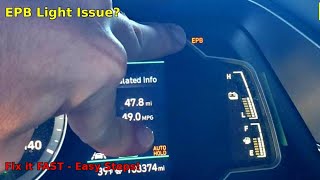
- EPB Warning Light and Malfunction Message — A solid or flashing orange or red warning light (often a "P" inside a circle) and a text warning like "Parking Brake Malfunction Service Now" appear on the instrument cluster.
- Parking Brake Fails to Engage or Disengage — The parking brake fails to apply when the switch is activated, or it gets stuck in the 'on' position, preventing the vehicle from moving.
- Grinding or Whirring Noise from Right Rear Wheel — Unusual grinding, high-pitched whirring, or loud clicking sounds occur when attempting to use the parking brake. If stuck applied, a continuous grinding noise is heard while driving.
- Auto Hold System Disabled — The 'Auto Hold' feature, which relies on the EPB system, disables automatically, and its indicator light illuminates on the dashboard.
- Battery Drain Overnight (also visible on scanner) — An internal short circuit within the motor or wiring causes a parasitic draw that drains the vehicle's battery when parked.
Diagnostic Flowchart

Tap your situation to follow the diagnostic path that matches what you're seeing on this code.
Common Fixes & Costs
- Repair or Secure Wiring Harness/Connector — Parts: $5-$30, Labor: $120-$240, ~1.5 hr book time (DIY)
- Replace EPB Wiring Harness Extension — Parts: $50-$150, Labor: $150-$300, ~1.5 hr book time (Intermediate)
- Replace Right Rear EPB Motor/Actuator — Parts: $150-$450, Labor: $120-$250, ~1.3 hr book time (Intermediate)
- Replace Right Rear Brake Caliper with Integrated Motor — Parts: $250-$800, Labor: $180-$350, ~2 hr book time (Professional)
Used vs. New Parts: Buying Guide
When a used part is worth it: A used EPB motor or caliper assembly is a cost-effective option for older, high-mileage vehicles where the cost of a new OEM part is a significant percentage of the car's value. It is most viable if sourced from a low-mileage vehicle not scrapped due to brake or electrical issues.
Donor-vehicle mileage cap: roughly under 80000 miles for the part to have meaningful remaining life.
Donor quality checklist:
- Visually inspect for corrosion, especially on the aluminum housing and around electrical connectors and bleeder screws.
- Ensure the piston dust boot is not torn or cracked.
- Match the part number exactly; manufacturers often release updated parts to fix original design flaws.
- Avoid parts from vehicles in rust-belt regions due to high exposure to road salt and moisture.
Decision logic:
- If Vehicle is under warranty or has low mileage → Buy new OEM to ensure reliability and longevity.
- If Budget is the primary concern and the vehicle is over 150K miles → A quality used part from a reputable salvage yard is an acceptable risk.
- If The part has a known high failure rate (like on affected Hyundai/Kia/Subaru models) → Favor a new part, as it is likely an updated design that corrects the original flaw.
Warranty tradeoff: Used parts typically come with a 30-90 day functional warranty at best. New aftermarket parts usually offer a 1-3 year warranty. New OEM parts carry the manufacturer's standard parts warranty.
Worst-case if a used part fails: $400-$800 if a used part fails shortly after installation, as you pay for the labor a second time plus the cost of another replacement part.
What Happens If You Wait — Timeline
- 0-2 weeks: Fault code C2417 is set, and the EPB warning light illuminates. The right-side parking brake is inoperative. If the brake is not dragging, there are no other symptoms. (MPG impact: 0%% · Added cost: $0)
- 2 weeks - 3 months (if brake is dragging): If the brake is partially applied, it drags. This causes a noticeable decrease in fuel economy (3-7%), a burning smell after driving, and accelerated wear on the right rear brake pad. The rotor starts to show discoloration from heat. (MPG impact: 3-7%% · Added cost: $50-$200 (in wasted fuel and premature pad wear))
- 3-6 months (if brake is dragging): Constant dragging severely overheats the brake assembly. The brake rotor becomes heavily scored or warped, and the brake pad is completely worn down. The intense heat damages the caliper's rubber seals and boils the grease in the wheel bearing. (MPG impact: 7-15%% · Added cost: $450-$900 (for new caliper, rotor, pads, and potentially a wheel bearing))
- 6+ months (if brake is dragging): Catastrophic failure. The caliper seizes completely, locking the wheel and causing a loss of control. The extreme heat poses a significant fire risk and destroys the wheel hub assembly. The cost of repair escalates dramatically. (MPG impact: 15-25%% · Added cost: $1200-$2500+)
Cost of Not Fixing It
- 0-1 month: Inoperative parking brake on the right side. If the brake is dragging, you experience decreased fuel economy, premature brake pad wear, and a potential burning smell from the wheel. (Added cost: $50-$150 (for wasted fuel and accelerated pad wear))
- 1-6 months: Severe damage to the right rear brake rotor and pad from constant dragging and overheating. The heat damages the caliper seals and wheel bearing grease, requiring caliper and/or wheel bearing replacement. (Added cost: $300-$900 (for replacement of rotor, pads, and potentially the caliper and bearing))
- 6+ months: Catastrophic failure of brake components. The extreme, prolonged heat from a dragging brake poses a significant fire risk. The caliper seizes completely, leading to a locked wheel and loss of vehicle control. (Added cost: $1000-$2500+ (for replacement of all brake components, potential wheel hub, and addressing related damage))
Diagnosis Steps
- Read and Verify the Code
Use an OBD-II scanner capable of reading Chassis (C-prefix) codes to confirm C2417 is active or stored. Clear the codes and operate the EPB to see if C2417 returns immediately.
Tools: OBD-II Scanner (with ABS/Chassis capability) (Beginner) - Visually Inspect and Clean the Wiring Connector
Safely raise the rear of the vehicle. Inspect the right rear EPB motor wiring for cuts or melting. Disconnect the plug, spray with electrical contact cleaner, and reconnect firmly until it clicks. Secure broken locking tabs with a zip tie.
Tools: Jack, Jack Stands, Flashlight, Electrical Contact Cleaner, Zip Ties (Intermediate) - Check the EPB Fuse
Locate the fuse box and identify the right-side EPB motor fuse. If the internal strip is broken, replace it with the exact same amperage. If the new fuse blows immediately, a short circuit is present.
Tools: Fuse Puller or Needle-nose Pliers (Beginner) - Test the Motor Circuit Voltage
Unplug the connector at the motor. Set a multimeter to DC Volts. Have a helper operate the EPB switch. Probe the harness-side terminals. A brief 12V pulse confirms the wiring from the module is good. No voltage points to an upstream wiring issue.
Tools: Multimeter (Intermediate) - Test the EPB Motor Directly
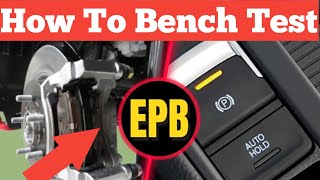
Apply 12V directly to the two pins on the motor using a power probe. The motor must run smoothly in both directions (reverse polarity to switch direction). Measure resistance across the pins; 0.5 to 4.0 ohms is healthy, while 'OL' indicates an internal open circuit.
Tools: 12V Power Probe or Jumper Wires, Multimeter (Advanced) - Perform a Parasitic Draw Test
If the battery dies overnight, set a multimeter to measure Amps in series with the negative battery terminal. If the draw exceeds 50mA after the car sleeps, pull the EPB fuse. A significant drop confirms a short in the EPB circuit.
Tools: Multimeter with Amp setting (Advanced) - Analyze Motor Signature with an Oscilloscope
Connect an oscilloscope to the motor's power and ground wires. A healthy motor shows a clean inrush spike followed by stable running current. A massive spike indicates a short, while no current indicates an open circuit.
Tools: Oscilloscope (Expert)
When This Code Triggers (Freeze-Frame Conditions)
- System State: Self-Test (The fault is most often detected during the Power-On Self-Test (POST) immediately after turning the ignition on.)
- Driver Action: Switch Activated (The code triggers the instant the driver presses or pulls the EPB switch to engage or release the parking brake.)
- Battery Voltage: 11.5V - 14.5V (The fault logs under normal battery voltage conditions; it is an electrical circuit failure, not a low voltage issue.)
- Vehicle Speed: 0 mph (Typically, the fault sets when the vehicle is stationary, as this is when the parking brake is operated.)
Related Codes
- C2416 — This is the identical fault ('Motor Short or Open') but for the left-hand (LH) side. Diagnostic steps are the same, just performed on the driver's side wheel. TSBs for this issue almost always address both C2416 and C2417 together.
- C2007 — This is the Jaguar Land Rover (JLR) equivalent of C2417, often logged as C2007-13, indicating an open circuit in the right-hand EPB motor. Diagnosis is very similar, focusing on wiring connectors in the rear wheel arch area as per JLR TSBs.
- C1360 — This code indicates a fault within the Electronic Stability Program (ESP) and is often a secondary code triggered by C2417. The ESP system relies on the brake system for its functions, so a critical EPB fault disables it. Fix C2417 first, and C1360 typically clears.
- C1652 — This code indicates a CAN bus communication error from the EPB module. It means other modules on the network are not receiving a signal from the EPB system. When seen alongside C2417, it strongly suggests the physical wiring problem prevents both power delivery and data communication.
Climate & Environmental Factors
- Road Salt and Moisture: This is the leading environmental cause. Saltwater is highly corrosive and conductive, accelerating the degradation of wiring insulation and causing severe corrosion on connector pins and inside the motor housing. This is most prevalent in regions with heavy snowfall and road de-icing operations.
- Extreme Cold: Cold temperatures make wiring insulation brittle and more susceptible to cracking from vibrations. Water that has ingressed into the connector or motor housing freezes, potentially breaking seals or damaging internal components.
- High Humidity: In humid climates, moisture accumulates on electrical contacts even without direct water exposure, leading to gradual corrosion and high resistance faults over time.
How to Talk to a Mechanic About This Code
Say this: "I have an electronic parking brake warning light and a C2417 code, which points to the right-side motor circuit. I'd like to book a diagnostic appointment. Based on my research, this is often a wiring or connector issue near the rear wheel. Could you please ensure the technician performs an electrical test—checking for voltage at the connector and testing the motor with a power probe—before recommending a full caliper or motor replacement?"
This language shows you've done your homework and directs the shop to the most common and cheapest failure point first. It establishes you as an informed customer and makes it harder for them to immediately upsell you on an expensive caliper assembly without performing due diligence. It requests specific, non-destructive tests that a competent shop performs standard.
Avoid saying:
- My 'EPB' light is on, can you fix it?
- My parking brake is broken, just replace whatever is needed.
- I think I need a new brake caliper.
Questions to ask before authorizing the repair:
- Did you test for voltage at the motor connector when the EPB switch was activated?
- Did you test the motor directly with a 12V power source to see if it runs?
- Is the failure in the wiring harness, the connector, or the motor itself?
- If it's a wiring issue, is a harness repair or pigtail replacement possible, or does the whole harness need to be replaced?
- What is the warranty on the proposed parts and labor?
Where to Take It: Dealer vs Independent vs Chain
- Dealer:
Best choice for Subaru, Hyundai, and Kia models with known TSBs to ensure the correct, updated parts and procedures are used. Also the only choice for an in-warranty repair.
Best for: Vehicles under warranty or with an extended warranty for this specific part (e.g., affected Subaru models)., Hyundai and Kia models with known Technical Service Bulletins (TSBs) requiring a specific software update plus a harness replacement., Complex diagnoses where a faulty EPB control module is suspected.
Downsides: Highest labor rates., Often replaces an entire assembly (e.g., full caliper with motor) rather than repairing a wire or replacing just the motor. (Typical cost: +50% vs. baseline) - Independent Shop:
Excellent fit, provided you choose a reputable shop with good reviews for electrical and brake work. Verify they have the tools and experience with electronic parking brake systems.
Best for: Out-of-warranty vehicles where cost is a major factor., Diagnosing and repairing common wiring and connector failures., Vehicles not known for specific TSBs on this issue (e.g., Ford, VW).
Downsides: Shop must have a bidirectional scanner capable of reading chassis codes and performing EPB service functions., Technician must be skilled in electrical diagnostics to avoid misdiagnosing a wiring issue as a failed motor. (Typical cost: +0% vs. baseline) - Chain Shop:
Avoid for this code. The risk of misdiagnosis and paying for parts you don't need is high. This repair requires diagnostic skill over simple parts replacement.
Best for: Unlikely to be the best choice for this repair.
Downsides: Technicians often lack the advanced diagnostic tools (scanners with EPB service modes) or specific electrical troubleshooting experience needed., High likelihood of misdiagnosis, leading to unnecessary replacement of expensive parts like the caliper when the fault is a simple wire., Focused on high-volume, simple jobs like standard brake pad replacement, not nuanced electrical faults. (Typical cost: -10% vs. baseline)
When to Walk Away From the Repair
If the estimated repair cost exceeds 40-50% of the car's private-party value, seriously consider selling or trading in the vehicle.
- Car worth $15000, fix is $800: Fix it. This cost is well below the threshold and is a necessary safety repair.
- Car worth $5000, fix is $1100: Borderline. The repair is 22% of the car's value. Get a second opinion to confirm if a cheaper wiring repair is possible before committing to a full caliper replacement.
- Car worth $3000, fix is $1500: Walk away. The repair cost is 50% of the car's value. It is not financially prudent to invest this much unless the rest of the car is in perfect condition. Consider selling 'as-is' to a mechanic or trading it in.
What Scan Tool You Need for This Code
Minimum: A scanner that reads Chassis (C-prefix) codes and performs Electronic Parking Brake (EPB) service functions like 'Service Mode' or 'Maintenance Mode'.
A basic $20 code reader cannot see Chassis codes like C2417. More importantly, if you replace the motor or caliper, you MUST use a scanner's EPB service function to retract the brake piston electronically before starting the job. Failure to do so destroys the new part during installation.
Budget: BlueDriver Pro / Basic Autel or Foxwell models (~$100) — Reads chassis codes to confirm C2417. However, most scanners in this price range DO NOT have the critical EPB service/retraction function. They are for diagnosis only, not for enabling the repair itself.
Mid-range: Foxwell NT510 Elite / Autel MaxiCheck Series (~$160) — The sweet spot for DIY. These scanners read/clear chassis codes and reliably perform the EPB Service Mode function required for replacing pads, the motor, or the caliper. They are bidirectional, allowing you to command the motor to test its function.
Professional: Autel MaxiCOM MK808 / Launch CRP129E (~$450-600) — Offers full OE-level diagnostics. Provides guided, step-by-step procedures for EPB service, calibration, and initialization after the repair is complete. Performs ABS brake bleeding if the caliper is replaced. Essential for a professional or serious DIYer.
Rent vs buy: Most auto parts stores offer free code reading to confirm C2417. However, their rental tools typically DO NOT have the EPB service functions needed for the repair. If you plan to do the repair yourself, you must buy a mid-range scanner with EPB capabilities.
How to Clear the Code After You Fix It
- Use an OBD-II scan tool to clear the C2417 fault code.
- Perform the EPB system initialization/calibration procedure.
- Cycle the EPB switch on and off 3-5 times, listening for motor operation.
- Conduct a road test to verify normal operation and ensure the warning light does not return.
Drive cycle (~15 minutes): After clearing the code, perform the manufacturer's specific calibration, which often involves cycling the EPB switch with the brake pedal depressed. Then, on a safe, flat surface, engage the EPB and confirm the vehicle holds. Disengage and ensure the vehicle rolls freely. If the battery was disconnected, a longer drive cycle (30+ minutes of mixed city/highway driving) is needed to reset emissions monitors.
Readiness monitors affected: None directly, All emissions monitors if the battery was disconnected
Before emissions retest: drive at least 100 miles to fully set monitors.
Watch out for:
- Simply clearing the code with a scanner does not fix the underlying electrical problem, and the code returns immediately.
- Forgetting to perform the EPB calibration/initialization step after the repair causes improper operation.
- Disconnecting the battery to clear the code resets all emissions readiness monitors, leading to a failed smog test if not followed by a proper drive cycle.
Will This Fail Emissions / State Inspection?
No — by itself this code doesn't fail OBD inspection (but it can keep readiness monitors from setting, which causes a separate fail).
- California: This code itself won't fail the biennial smog check, which focuses on emissions codes (P-codes). However, an illuminated brake warning light causes a failure of the mandatory safety inspection required for revived salvage vehicles or when transferring certain titles.
- New York: The NYS annual safety inspection includes a check of the parking brake and service brake systems. An illuminated brake system warning light is a direct cause for inspection failure.
- Texas: As of 2025, annual safety inspections are no longer required for non-commercial vehicle registration. However, emissions testing is still required in 17 counties. Since C2417 is a chassis code and the brake warning light is not the Check Engine Light, it does not cause a failure of the OBD-II emissions test.
Most Commonly Affected Vehicles
- Hyundai Ioniq (Hybrid & Plug-In), Tucson, Creta, Sonata (2017-2022) — Extremely common issue with the rear EPB wiring harness connector. Hyundai issued TSBs 21-BR-004H and 23-BR-001H, which involve a software update to reduce sensitivity and, if needed, replacement of a short extension harness.
- Kia Sportage, Niro (2017-2022) — Shares the same EPB system design and vulnerabilities as its Hyundai counterparts, making it highly prone to identical wiring and connector failures.
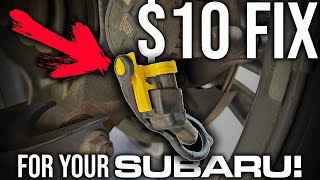
- Subaru Legacy, Outback (2015-2018) — A well-known issue addressed by TSB 06-87-22R where the plastic locking tab on the EPB pigtail connector becomes brittle and breaks. This causes a loose connection and intermittent faults. Subaru extended the warranty for this specific part to 15 years/unlimited mileage.
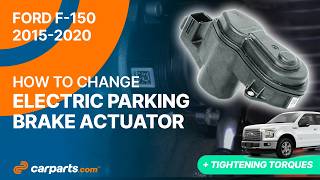
- Ford F-150, Escape, Fusion (2015-2020) — Prone to EPB faults from wiring damage near the rear axle and internal actuator motor failure. Often displays a "Parking Brake Malfunction Service Now" message. For the F-150, water intrusion into taillight assemblies sometimes causes related electrical issues.
- Volkswagen Passat, Tiguan, Golf (2012-2020) — These models experience EPB faults from corroded caliper connectors, failed dashboard switches, and internal motor failures. The caliper-mounted motors are exposed and fail, sometimes locking the brake on.
- Honda CR-V, Pilot, Odyssey, Passport (2020-2024) — Reports of widespread EPB problems, often related to sticking brake calipers and actuator software glitches.
- BMW X5 (F15 chassis) (2014-2018) — The central EPB actuator assembly (which pulls brake cables, unlike caliper-mounted motors) fails due to stripped internal plastic gears, preventing the motor from applying force.
- Jaguar / Land Rover F-Pace, Discovery, Range Rover Sport/Evoque (2016-2020) — Prone to EPB faults. Jaguar issued TSB SSM73690 for the F-Pace for codes C2007/C2008 caused by a loose main connector in the rear wheel arch. Land Rover models often suffer from wiring harness damage near the rear differential.
Manufacturer-Specific Notes
- Hyundai / Kia: For affected Ioniq, Tucson, and related models, the official repair procedure per TSBs 21-BR-004H and 23-BR-001H is a two-step process: first, update the EPB module software to be less sensitive to road vibrations. If the code returns, replace the short extension wiring harness on the affected side.
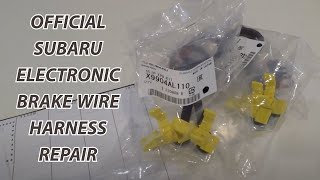
- Subaru: On 2015-2018 Legacy and Outback models, TSB 06-87-22R identifies a brittle pigtail connector locking tab as the primary culprit. The official fix installs a newly designed retaining clip over the connector. Subaru extended the warranty on this specific part (15 years/unlimited miles) due to the high failure rate.
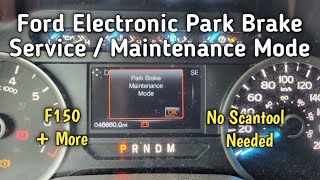
- Ford: Before servicing rear brakes, a specific "Parking Brake Maintenance Mode" must be activated. This is done without a scan tool via a 'key dance': ignition on, press and hold the accelerator pedal and EPB *down* switch, then cycle the ignition off and on within 5 seconds. Failure to do this destroys the actuator if you try to compress the caliper piston.
- Jaguar / Land Rover: These vehicles require a 'Service Mode' activated before brake work via a scan tool or a specific sequence of pedal and switch presses. After repairs, a recalibration procedure is necessary, involving disconnecting the battery for 30 seconds, followed by a series of footbrake and EPB switch applications to reset the module.
Real Owner Stories
2018 Subaru Outback at 75,000 miles
EPB and other warning lights came on intermittently, especially after driving on bumpy roads. No noticeable symptoms otherwise.
Outcome: The repair was covered under Subaru's extended warranty for this specific issue (TSB 06-87-22R). The technician installed the revised retaining clip kit (P/N X9904AL110) to secure the connector. The code was cleared and did not return.
Lesson: For affected Subaru models (2015-2018 Legacy/Outback), always check for TSB 06-87-22R first. This is a very common, well-documented failure, and the repair is often covered by a 15-year/unlimited mileage warranty extension.
2019 Hyundai Ioniq Hybrid at 60,000 miles
EPB and Auto Hold warning lights appeared on the dashboard. The code C2417 was present. The issue was intermittent but became more frequent over time.
Outcome: The dealer first performed the software update as per TSB 21-BR-004H to reduce the system's sensitivity to vibrations. When the code returned, they proceeded with the second step from TSB 23-BR-001H, replacing the rear right wiring harness extension (P/N 59796-G2010). This permanently fixed the problem.
Lesson: On affected Hyundai/Kia models, the zip-tie fix is a good temporary diagnostic step, but the permanent repair involves a specific two-part TSB procedure: software update first, then harness replacement if needed.
2017 Ford F-150 at 110,000 miles
"Park Brake Malfunction Service Now" message appeared. The owner replaced both rear calipers, pads, rotors, and EPB motors, but the code C2417 and warning message immediately returned.
Outcome: The owner repaired the damaged wires in the harness. After clearing the codes, the fault was resolved and did not return.
Lesson: Do not assume the most expensive part (caliper/motor) is the cause. On trucks like the F-150, wiring harness damage is common where it routes over the rear axle/differential. Always perform electrical tests to confirm the fault location before replacing major components.
How to Prevent This Code From Triggering
- Apply Dielectric Grease to EPB Connectors (During any brake service or every 2-3 years) — Dielectric grease is a non-conductive, silicone-based sealant that prevents moisture, road salt, and dirt from entering the connector and corroding the metal pins. This is the single most effective way to prevent common open/short circuit faults.
- Perform Regular Underbody Washes (Monthly, especially in winter (rust belt regions)) — Regularly washing the vehicle's undercarriage removes the buildup of corrosive road salt and brine that attacks wiring insulation and electrical components, reducing the risk of corrosion-related failures.
- Inspect and Secure Wiring Harnesses (During tire rotations or any under-vehicle service) — Visually check that the EPB wiring harness is properly secured and not rubbing against suspension components, the axle, or the frame. Loose or improperly routed harnesses chafe through, causing a short or open circuit.
- Cycle the Electronic Parking Brake Periodically (At least once a month) — Regularly using the EPB helps keep the motor and mechanical parts of the caliper from seizing due to inactivity and corrosion. This is especially important for vehicles in humid climates or that are not driven frequently.
Frequently Asked Questions
I just did a rear brake job and now the EPB light is on. What happened?
This is a very common scenario. The two most likely causes are: 1) You did not put the system into 'Service Mode' before compressing the caliper piston, which damages the motor's internal gearing. 2) The electrical connector on the EPB motor was not fully reconnected until it 'clicked'.
Can a weak car battery cause an EPB fault?
Yes. Electronic parking brake motors require a strong, stable voltage to operate correctly. A weak battery causes voltage drops during motor activation, triggering the C2417 code.
My parking brake is stuck on. How can I move my car?
First, check your owner's manual for an emergency manual release procedure or tool. If unavailable, apply 12V directly to the motor leads to manually retract it. If that fails, unbolt the motor from the caliper and manually wind back the internal spindle.
What is the difference between C2417 and C2416?
They indicate the exact same electrical fault in the EPB motor circuit. C2417 refers to the right-hand (passenger) side, while C2416 refers to the left-hand (driver) side. Diagnostic and repair procedures are identical for both.
The shop wants to replace the whole caliper, but I think it's just a wire. What should I do?
Politely ask the service advisor if the technician tested for voltage at the connector and powered the motor directly. For many vehicles, a wiring or connector issue is far more common than a complete motor failure. A 10-minute electrical diagnosis prevents a costly and unnecessary repair.
Can I just replace the fuse and fix the problem?
If the fuse is blown, replacing it is the required first step. However, fuses blow due to a short circuit in the wiring or a failing motor drawing excessive current. If the new fuse blows immediately, you must locate and fix the underlying electrical short.
Do I need a special tool to replace the rear brake pads with an EPB?
Yes, you need a diagnostic scan tool to command the EPB system into 'Service Mode,' which retracts the piston electronically. Alternatively, some vehicles use a manual dashboard 'key dance' procedure. Forcing the caliper piston back with a C-clamp permanently destroys the EPB motor's internal gearbox.
Key Takeaways
- Code C2417 flags an electrical open or short in the right-side electronic parking brake motor circuit, though your primary hydraulic brakes remain fully functional.
- Over 70% of C2417 codes stem from a damaged, corroded, or loose wiring connector at the right rear wheel rather than a failed motor.
- Test the EPB fuse and probe the motor connector for 12V power before authorizing a $500+ caliper or motor replacement.
- Subaru, Hyundai, and Kia owners must check for active Technical Service Bulletins (TSBs), as many 2015-2022 models have extended warranties covering this exact wiring failure.
Helpful Videos

The information in this article is provided for general reference and educational purposes only. Vehicle specifications, procedures, and part compatibility can vary by production date, trim level, and region. Always consult your vehicle's factory service manual and verify part numbers before purchasing or performing repairs. Safety-critical components such as airbags, seat belts, and braking systems should be installed by a qualified professional.
- 🎬 Helpful Videos
- What Does C2417 Mean?
- Can I Drive With C2417?
- Common Causes
- Symptoms
- Diagnostic Flowchart
- Common Fixes & Costs
- Used vs. New Parts: Buying Guide
- What Happens If You Wait — Timeline
- Cost of Not Fixing It
- Diagnosis Steps
- When This Code Triggers (Freeze-Frame Conditions)
- Related Codes
- Climate & Environmental Factors
- How to Talk to a Mechanic About This Code
- Where to Take It: Dealer vs Independent vs Chain
- When to Walk Away From the Repair
- What Scan Tool You Need for This Code
- How to Clear the Code After You Fix It
- Will This Fail Emissions / State Inspection?
- Most Commonly Affected Vehicles
- Manufacturer-Specific Notes
- Real Owner Stories
- 2018 Subaru Outback at 75,000 miles
- 2019 Hyundai Ioniq Hybrid at 60,000 miles
- 2017 Ford F-150 at 110,000 miles
- How to Prevent This Code From Triggering
- Frequently Asked Questions
- I just did a rear brake job and now the EPB light is on. What happened?
- Can a weak car battery cause an EPB fault?
- My parking brake is stuck on. How can I move my car?
- What is the difference between C2417 and C2416?
- The shop wants to replace the whole caliper, but I think it's just a wire. What should I do?
- Can I just replace the fuse and fix the problem?
- Do I need a special tool to replace the rear brake pads with an EPB?
- Key Takeaways
- 🎟️ Get 5% Off