

OBD-II Code C2416: Electric Parking Brake Motor Circuit Fault (Left Side)
What C2416 means, why it triggers, and how to fix it
- Code C2416 indicates an electrical fault in the driver's side electronic parking brake motor, completely disabling the parking brake system.
- A loose or disconnected electrical connector at the left rear wheel causes over 50% of C2416 codes, especially immediately following a rear brake pad replacement.
- Check manufacturer Technical Service Bulletins (TSBs) before replacing parts; Hyundai, Kia, and Subaru have specific warranty extensions and software updates for this exact code.
- Driving is permitted, but parking on inclines requires wheel chocks to prevent rollaways, and the illuminated warning light guarantees a failed state safety inspection.
- Test the EPB motor's resistance with a multimeter before buying a $300+ replacement caliper; a reading outside 0.5-2.0 Ohms confirms internal motor failure.
What Does C2416 Mean?

Code C2416 means the Electronic Parking Brake (EPB) module detected an open circuit, short circuit, or high resistance in the driver's side (Left Hand) motor wiring. This fault disables the entire electronic parking brake system and Auto Hold function for safety.
Technical definition: The official SAE/OBD-II definition for code C2416 is "Motor Short or Open - LH (EPB)". This indicates the EPB control module detected a short to ground, short to power, open circuit, or high resistance condition in the electrical circuit for the left-hand actuator motor.
Can I Drive With C2416?
Yes, But With Caution. Yes, but with caution. Your electronic parking brake (EPB) is completely disabled. Do not park on inclines without chocking the wheels to prevent rollaways. A non-functional parking brake is a safety hazard and guarantees a failed safety inspection. Driving is permitted for essential trips, but address the fault promptly to restore the safety system.
Common Causes

- Loose or Disconnected Wiring Connector (Very Common) — The connector at the rear driver's side wheel frequently vibrates loose or is left unplugged after a recent brake job, causing an immediate open circuit.
- Damaged Wiring Harness or Poor Pin Tension (Very Common) — Female pins inside the EPB connector lose tension over time, creating high resistance. Hyundai, Kia, and Subaru have issued TSBs for brittle connectors and harness failures.
- Water Intrusion and Corrosion (Common) — Failed weather-pack seals allow water and road salt into the connector, corroding the pins and causing short circuits.
- Failed EPB Actuator/Motor (Common) — The electric motor on the caliper burns out, seizes, or strips its internal gears, requiring replacement.
- Faulty EPB Software (Common) — Overly sensitive software logic misinterprets road vibrations as a circuit fault. A dealer software reflash fixes this on affected Hyundai/Kia models.
- Blown EPB Fuse (Less Common) — A voltage spike or short circuit blows the dedicated left-side motor fuse, cutting power.
- Low Battery Voltage (Rare) — A weak 12V battery provides insufficient voltage during startup self-tests, triggering false EPB codes.
- Faulty EPB Control Module (Rare) — The main EPB computer fails internally. Rule out all wiring and motor issues before replacing this expensive module.
Symptoms

- Illuminated EPB Warning Light — A yellow or red warning light showing "EPB," "PARK," or a parking brake symbol illuminates on the dashboard.
- Parking Brake Cannot Be Applied or Released — The electronic parking brake fails to engage when pulling the switch, or gets stuck in the engaged position and refuses to release.
- Message on Dashboard Information Display — A message such as "Service Electronic Parking Brake" or "Parking Brake Malfunction" appears on the instrument cluster screen.
- Auto Hold Feature is Disabled — The "Auto Hold" function is disabled and its corresponding warning light illuminates.
- Audible Clicking or Grinding from Rear Wheel — A clicking or grinding noise from the driver's side rear wheel indicates the motor is attempting to work but is mechanically jammed or has stripped gears.
Diagnostic Flowchart

Tap your situation to follow the diagnostic path that matches what you're seeing on this code.
Common Fixes & Costs
- Secure or Clean the EPB Motor Connector — Parts: $0-$15, Labor: $0-$120, ~0.5 hr book time (DIY)
- Replace EPB Wiring Harness Extension/Pigtail
— Parts: $50-$150, Labor: $120-$250, ~1.2 hr book time
(Intermediate)
Hyundai Ioniq (2019-2020): OEM 59795-G2010 (Alt: N/A)
Hyundai Ioniq (2020-2022): OEM 59795-G2110 (Alt: N/A)
Subaru Outback/Legacy: OEM TSB 06-87-22R kit (Alt: Standard Motor Products S-1414) - Perform EPB Control Module Software Update — Parts: $0, Labor: $100-$200, ~0.5 hr book time (Professional)
- Replace Blown Fuse — Parts: $1-$10, Labor: $0-$60, ~0.1 hr book time (DIY)
- Replace Left Rear EPB Actuator/Motor Assembly
— Parts: $150-$500, Labor: $150-$450, ~1.5 hr book time
(Professional)
Hyundai Ioniq / Kia Niro: OEM 58230-G2500 (Alt: N/A)
Subaru Outback/Legacy (2015-2018): OEM 26669AL01A (Alt: Dorman 926-477)
Ford F-150 (2018-2020): OEM JL3Z-2B712-C (Alt: Dorman 926-640)
Used vs. New Parts: Buying Guide
When a used part is worth it: For the EPB actuator/motor or a complete caliper assembly, a used OEM part from a low-mileage, non-corroded donor vehicle is a cost-effective alternative to expensive new OEM parts.
Donor-vehicle mileage cap: roughly under 60000 miles for the part to have meaningful remaining life.
Donor quality checklist:
- Verify the donor vehicle was not in a rear-end collision.
- Avoid parts from rust-belt regions; corrosion is a primary failure mode for calipers and connectors.
- Ensure the electrical connector and wiring pigtail on the used part are intact with no brittleness.
- Match the part number exactly.
Decision logic:
- If The fix is a simple wiring pigtail/connector. → Buy new. The cost is low and a new part ensures perfect pin tension and weather seals.
- If The vehicle is older (>10 years) and budget is the primary concern. → A low-mileage used OEM caliper/motor is a better value than a cheap, new aftermarket part of questionable quality.
- If The part is the EPB control module. → Used is an option, but verify it does not require programming to the vehicle's VIN.
Warranty tradeoff: Salvage yard parts typically have a 30-90 day warranty. New aftermarket parts carry a 1-year to limited lifetime warranty. The risk with a used part is paying for installation labor twice if it fails.
Worst-case if a used part fails: $200-$500 if a used part fails shortly after the warranty period, requiring a second replacement.
What Happens If You Wait — Timeline
- 0-1 month: Code C2416 is set, and the EPB/Auto Hold warning lights are on. The parking brake is completely inoperative ('Stuck OFF' failure mode). (MPG impact: 0%% · Added cost: $0 (but vehicle will fail safety inspection))
- 1-3 months (with an intermittent short): If the fault is an intermittent short circuit, the motor runs erratically or continuously, causing a parasitic battery drain. (MPG impact: 0%% · Added cost: $150-$300 (for a new battery and diagnostic time))
- 3-6 months (with a 'Stuck ON' failure): In a rare but severe failure mode, the brake becomes partially or fully engaged and will not release. This creates extreme brake drag and destroys the rear pads and rotor quickly. (MPG impact: 20-50% (vehicle will feel extremely sluggish)% · Added cost: $250-$700 (for new pads, rotor, and potentially a caliper and wheel bearing))
- 6+ months (worst-case electrical failure): A persistent, unaddressed short circuit in the motor or wiring overloads the driver circuit within the EPB control module, permanently damaging it. (MPG impact: 0%% · Added cost: $500-$1500+ (for a new EPB control module plus programming))
Cost of Not Fixing It
- Immediate: No functional parking brake, creating a rollaway risk on any incline. The vehicle automatically fails a safety inspection. (Added cost: 0)
- Short-Term (Days to Weeks): An intermittent short causing the motor to run continuously drains the battery or burns out the EPB motor. (Added cost: $150-$500 (for a new motor or battery))
- Long-Term (Months): A fault causing the brake to partially engage (brake drag) destroys the rear brake pads and rotor, and overheats the wheel bearing. (Added cost: $250-$700 (for new pads, rotor, and wheel bearing))
- Worst-Case Scenario: A short circuit in the wiring or motor permanently damages the EPB control module. (Added cost: $500-$1500+)
Diagnosis Steps
- Check for Technical Service Bulletins (TSBs)
Check for TSBs related to code C2416 for your vehicle. Manufacturers like Hyundai, Kia, and Subaru have issued specific bulletins for this code pointing to known wiring issues, software updates, or repair kits, saving significant diagnostic time.
Tools: Online access to TSB databases or a call to a dealership service department. (Beginner) - Visually Inspect the Wiring and Connector
Safely raise the rear of the vehicle and locate the driver's side rear brake caliper. Inspect the wiring harness and electrical connector plugged into the EPB motor. Look for chafed wires and ensure the connector is securely plugged in. A loose connector is the most common issue after a brake job.
Tools: Jack, jack stands, wheel chocks, flashlight. (Beginner) - Perform a 'Wiggle Test' and Reseat the Connector
Disconnect the electrical connector from the EPB motor. Inspect the pins for green or white corrosion. Clean both ends with electrical contact cleaner and a small brush. Apply dielectric grease to the seal and reconnect firmly until it clicks. Gently wiggle the connector while monitoring the code status with a scan tool to confirm intermittent faults.
Tools: Electrical contact cleaner, small brush or pick, dielectric grease, OBD-II scan tool. (Beginner) - Check the EPB Fuse
Locate the fuse box and find the fuse labeled for the Electronic Parking Brake. Visually inspect the fuse to see if it is blown and replace it if necessary.
Tools: Fuse puller, replacement fuse of the correct amperage. (Beginner) - [PRO TIP] Check for Power and Ground at the Connector
With the connector unplugged and ignition on, use a multimeter to check for voltage and ground at the harness side. One pin should have 12V+ and the other a good ground when a helper operates the EPB switch. No voltage or ground points to a wiring or module issue upstream.
Tools: Multimeter, vehicle-specific wiring diagram. (Intermediate) - [PRO TIP] Test the EPB Motor Resistance
Set your multimeter to measure resistance (Ohms). Measure the resistance between the two pins on the EPB motor itself. A good motor typically reads between 0.5 and 2.0 Ohms. A reading of 'OL' (Open Loop) indicates a burnt winding, while zero Ohms indicates an internal short.
Tools: Multimeter, service manual for resistance specs. (Intermediate) - Test the EPB Motor with a Power Source
If power and ground are confirmed at the harness, test the motor directly. Use a 12V power probe or fused jumper wires to briefly apply power to the motor's terminals. Reversing polarity makes the motor run in the opposite direction. If it fails to operate, replace the motor.
Tools: 12V power probe or fused jumper wires. (Advanced) - [ADVANCED] Analyze Scan Tool Live Data
Using a bi-directional scan tool, access the EPB control module live data. Look for PIDs related to the left motor circuit status and current draw. Commanding the EPB on/off should show a momentary spike in motor current. No current draw confirms an open circuit; excessively high current suggests a seized motor.
Tools: Advanced bi-directional scan tool. (Advanced) - Inspect the EPB Control Module
If the motor works when directly powered and the wiring shows no faults, inspect the EPB control module connections for corrosion. Advanced diagnostics are needed to confirm if the module is sending the command to the motor.
Tools: Advanced bi-directional scan tool, wiring diagram. (Advanced)
When This Code Triggers (Freeze-Frame Conditions)
- System State: Self-Test or Commanded (Code C2416 sets during a system self-test at startup (ignition ON) or when the driver actively commands the EPB on or off using the switch.)
- Battery Voltage: 11.5-14.5V (The fault logs under normal operating voltage. A value below 11V indicates a separate battery issue is causing the EPB module to malfunction.)
- Vehicle Speed: 0 mph (The fault is detected when the vehicle is stationary and the parking brake is applied or released.)
- EPB Switch Status: On or Off (Freeze frame data captures whether the fault occurred during an attempt to apply the brake (switch pulled) or release it (switch pushed).)
Related Codes
- C2417 — This is the identical fault but for the opposite side of the vehicle: "Motor Short or Open - RH (Right Hand)". Diagnosis is identical to C2416.
- C1956 / C1957 — These are Subaru-specific codes for the left and right EPB actuator circuits. They are functionally identical to C2416/C2417 and caused by the known brittle connector tab issue.
- U0415 — Means "Invalid Data Received From Anti-Lock Brake System". The C2416 fault causes the EPB module to send irrational data over the network. Resolving C2416 clears U0415.
- C1261 — A Steering Angle Sensor code. When a critical EPB fault like C2416 occurs, the entire Electronic Stability Control system is disabled as a precaution, logging this generic fault.
Climate & Environmental Factors
- Moisture and Humidity: Water penetrates failed weather-pack seals on the EPB motor connector, causing the electrical pins to corrode and triggering code C2416.
- Cold Climates and Road Salt: Road salt and de-icing brines aggressively attack wiring insulation and connector pins, significantly accelerating electrical failures.
- Vibration and Rough Roads: Constant vibration causes the EPB connector to work itself loose over time. On some Hyundai/Kia models, overly sensitive software misinterprets road vibrations as a circuit fault.
How to Talk to a Mechanic About This Code
Say this: "I have a C2416 code and an EPB warning light on. I'd like to book a diagnostic appointment. Based on my research, the most common causes are the wiring connector at the left rear caliper or a manufacturer TSB. Please start by inspecting the connector and checking for any applicable software updates or wiring TSBs before quoting a new caliper or motor."
This signals you are an informed customer. It directs the technician to the most likely and cheapest-to-fix causes first, preventing them from immediately quoting an expensive and potentially unnecessary part like a new caliper assembly.
Avoid saying:
- 'My parking brake light is on, can you fix it?'
- 'Just replace whatever is broken.'
- 'I think I need a new electric brake motor.'
Questions to ask before authorizing the repair:
- Did you check for power and ground at the motor connector and test the motor's resistance?
- Was the connector loose, corroded, or damaged? Did you try cleaning and securing it first?
- Are there any Technical Service Bulletins (TSBs) for my vehicle related to this code? Is a software update available?
- If the motor needs to be replaced, does your quote include putting the system into service mode and calibrating the new part?
- What is the warranty on the proposed repair, covering both parts and labor?
Where to Take It: Dealer vs Independent vs Chain
- Dealer:
Recommended, especially for Hyundai, Kia, and Subaru models with known TSBs for software updates or warranty extensions. Safest bet if you are not a DIYer.
Best for: Vehicles under warranty (factory, extended, or CPO)., Known software-related issues or TSBs that require proprietary tools (common with Hyundai, Kia, Subaru for this code)., Complex electrical diagnostics where a module failure is suspected.
Downsides: Highest labor rates., May be quicker to replace a whole assembly (caliper with motor) rather than repair a simpler component like a wiring pigtail. (Typical cost: +50% vs. baseline) - Independent Shop:
Good fit, but you MUST verify the shop has a scan tool with EPB service/calibration functions before booking. Best for straightforward wiring or motor replacement.
Best for: Out-of-warranty vehicles where the problem is likely a physical part (wiring, connector, motor)., Cost-conscious owners who have a trusted mechanic.
Downsides: Shop must have a modern, bi-directional scan tool capable of EPB service functions; not all do., May not have access to the latest manufacturer TSBs or be able to perform software updates. (Typical cost: +0% vs. baseline) - Chain Shop:
Not Recommended. The risk of misdiagnosis or causing further damage by not using EPB service mode is high. They are unlikely to be equipped for the software or advanced electrical diagnostics this code requires.
Best for: Simple brake pad and rotor replacement (though this is often what CAUSES the C2416 code if done improperly).
Downsides: Technician skill varies widely., Often lack the advanced scan tools required for EPB service mode and calibration., High pressure to upsell; may replace a caliper when only a connector cleaning was needed. (Typical cost: -10% vs. baseline)
When to Walk Away From the Repair
If the estimated repair cost exceeds 40% of the car's private-party value, sell or trade it in instead of repairing it.
- Car worth $15000, fix is $750: Fix it. This repair cost is well below the threshold.
- Car worth $5000, fix is $1800: Borderline. The repair is ~36% of the car's value. Get a second opinion to ensure the diagnosis is correct before proceeding.
- Car worth $3000, fix is $1800: Walk away. The repair cost is 60% of the vehicle's value and not a sound investment.
What Scan Tool You Need for This Code

Minimum: A scanner that can read and clear codes from the ABS / Brake Control Module. A basic engine-only code reader will NOT see 'C' (Chassis) codes like C2416.
A $20 scanner only reads powertrain codes (P-codes) and fails to communicate with the EPB module. For this job, you need a tool that can at least see the specific brake system fault. For actual repair, you need one with EPB service functions.
Budget: XTOOL A30M / MUCAR BT200 Max (~$99) — These Bluetooth dongle-style scanners perform full system scans to read/clear ABS codes like C2416. Crucially, they also include EPB service functions (retract/engage) needed for brake jobs, making them excellent value.
Mid-range: Foxwell NT530 / Autel MaxiCOM MK808 (~$180-500) — These handheld units provide robust, OE-level diagnostics. They offer reliable bi-directional control to command the EPB motor directly for testing, run the EPB service mode for repairs, and perform calibration after a new part is installed.
Professional: Autel MaxiSys MS906 Pro / Launch X431 (~$1200+) — Professional-grade tools offering full bidirectional control, advanced coding, and access to manufacturer-specific software updates and programming, which may be required for certain TSBs.
How to Clear the Code After You Fix It
- Ensure the physical repair (e.g., reconnecting harness, replacing motor) is complete.
- Use a compatible OBD-II scan tool to connect to the ABS/EPB module.
- Select the function to 'Erase DTCs' or 'Clear Fault Codes'.
- Cycle the ignition off, then on. Operate the EPB switch multiple times to confirm the warning light stays off and the brake functions correctly.
Drive cycle (~5 minutes): A specific drive cycle is not required. After clearing the code, the EPB module confirms the fix upon the next successful self-test or commanded operation. A 5-minute drive involving applying and releasing the parking brake confirms the repair.
Readiness monitors affected: None. C2416 is a chassis (C-code) fault stored in the ABS/EPB module; clearing it does not reset emissions-related readiness monitors.
Watch out for:
- If the root cause (like a broken wire or bad pin tension) remains unfixed, the code returns immediately upon the next self-test.
- Using a basic code reader that only accesses the powertrain module fails to read or clear codes from the EPB/ABS module.
- Installing a new caliper/motor requires a calibration or 'service mode' reset with an advanced scan tool, which is a separate step from clearing the code.
Will This Fail Emissions / State Inspection?
No — by itself this code doesn't fail OBD inspection (but it can keep readiness monitors from setting, which causes a separate fail).
- California: This code does not cause a failure of the OBD-II emissions (smog) check. However, an illuminated brake warning light guarantees a failure of the separate safety inspection.
- New York: The NYS inspection includes a check of all safety-related warning lights. An illuminated EPB or general brake warning light is an automatic failure.
- Texas: As of 2025, most non-commercial vehicles are exempt from safety inspections, but emissions testing remains in 17 counties. C2416 passes emissions, but fails safety inspections for commercial vehicles.
Most Commonly Affected Vehicles
- Hyundai Ioniq (Hybrid and PHEV) (2019-2022) — A widely known issue with the EPB extension wiring harness connection. Hyundai issued TSBs 23-BR-001H (harness replacement) and 21-BR-004H (software update).
- Kia Niro (Hybrid and PHEV) (2019-2022) — Shares the same platform and EPB system as the Hyundai Ioniq, making it susceptible to the identical wiring and software issues.
- Hyundai Tucson (2019-2021) — Prone to the C2416 code due to a loose connector at the caliper, almost always occurring immediately after a rear brake job.
- Hyundai Santa Fe (2014-2020) — Reports of EPB module and actuator failures are common in these model years, leading to this code.
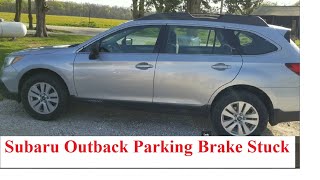
- Subaru Outback & Legacy (2015-2018) — The plastic locking tab on the EPB motor's electrical connector becomes brittle and breaks. Subaru issued TSB 06-87-22R and extended the warranty on this part to 15 years/unlimited miles.
- Volkswagen / Audi Passat, Golf, Tiguan, A4, A6 (2015-2021) — Experience C2416 or equivalent manufacturer codes (like 02432) due to failed EPB motors or water ingress into the motor housing.
- Chevrolet Malibu (2016-2020) — Owners report instances of this code pointing to a failure of the EPB actuator motor itself or the wiring leading to it.
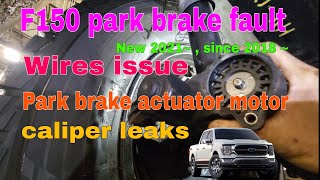
- Ford F-150 (2015-2023) — A major recall (NHTSA 23S35) was issued for 2021-2023 models for a wiring harness that chafes on the rear axle, causing an unexpected park brake application.
Manufacturer-Specific Notes
- Hyundai/Kia: The most common cause is a poor connection at the EPB extension harness. TSB 21-BR-004H involves a software update to reduce vibration sensitivity. If that fails, TSB 23-BR-001H requires replacing the extension wiring harness.
- Subaru: The plastic locking tab on the EPB motor's electrical connector breaks. Under TSB 06-87-22R, Subaru extended the warranty to 15 years/unlimited miles and provides a dealer-installed retaining clip.
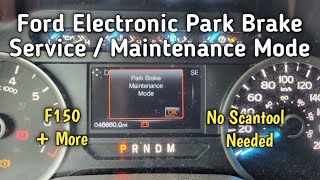
- Ford: The EPB system must be put into "Maintenance Mode" using a scan tool before performing rear brake service. Failure to do this damages the actuator when pistons are compressed. NHTSA recall 23S35 affects 2021-2023 F-150s for wiring harness chafing.
- Volkswagen/Audi: VW/Audi vehicles use a central EPB control module communicating with two separate rear caliper motors. A fault on one side is sometimes caused by a failure in the central module rather than the motor itself.
Real Owner Stories
2019 Hyundai Tucson - The Post-Brake-Job Surprise
Owner performed a DIY rear brake pad and rotor replacement. Immediately after starting the car, the EPB and Auto Hold warning lights came on, with code C2416 stored.
What they tried:
- The owner initially feared they had damaged the expensive caliper/motor assembly when retracting the piston.
Outcome: After watching a diagnostic video, the owner went back to the driver's side rear wheel and found the EPB motor's electrical connector was not fully clicked into place. After securely seating the connector until it clicked, they cleared the code, and the light stayed off.
Lesson: If C2416 appears immediately after a brake job, the absolute first step is to re-inspect the electrical connector. It is extremely common for it to be left loose or not fully seated.
2017 Subaru Outback - The Brittle Connector Tab
At around 80,000 miles, the EPB warning light started coming on intermittently, especially after driving on bumpy roads. The code was C1956 (Subaru's equivalent of C2416).
What they tried:
- Wiggling the connector at the left rear caliper would make the light go away temporarily, confirming a connection issue.
Outcome: The owner discovered Subaru TSB 06-87-22R, which describes the plastic locking tab on the connector becoming brittle and breaking. Subaru extended the warranty on this specific part to 15 years/unlimited miles. The dealer installed a special retaining clip kit for free, resolving the issue.
Lesson: For 2015-2018 Subaru Outback/Legacy/WRX models, this is a known defect with a specific warranty extension. Always check TSBs for your vehicle; the fix might be free.
2020 Hyundai Ioniq PHEV - The Intermittent Software/Harness Fault
Owner experienced intermittent C2416 and EPB warning lights, often triggered by road vibrations.
What they tried:
- Dealer performed the software update designed to make the system less sensitive to vibrations.
- Owner tried a popular DIY forum fix of using a zip-tie to hold the connector tight, which worked for a while but the fault eventually returned.
Outcome: The owner returned to the dealer, who then followed the procedure in the superseding TSB 23-BR-001H. This bulletin recommends replacing the entire EPB extension wiring harness with an improved part. The harness replacement permanently fixed the issue.
Lesson: On affected Hyundai/Kia models, the problem is a known progression. A software update is the first step, but if the code returns, replacing the extension harness is the definitive factory-recommended repair.
How to Prevent This Code From Triggering
- Periodically clean and apply dielectric grease to the EPB motor connectors. (Every 30,000 miles or during every rear brake service.) — Dielectric grease is non-conductive and waterproof. It seals the connector's rubber gaskets from moisture and road salt, preventing pin corrosion.
- Inspect EPB wiring for secure mounting and integrity. (During every tire rotation or oil change.) — Ensuring the wiring harness is properly secured in its clips prevents it from sagging, chafing on suspension components, or getting snagged by road debris.
- Use high-quality, weatherproof splices for any wiring repairs. (As needed for repairs.) — Using heat-shrink butt connectors with an adhesive lining creates a durable, waterproof seal that protects the splice from the elements.
- Operate the electronic parking brake regularly. (At least once a week.) — Regularly cycling the EPB motor helps prevent the internal gears and actuator screw from seizing due to inactivity and accumulated moisture.
- Ensure vehicle battery is in good health. (Annually, before winter.) — A weak or failing battery provides insufficient voltage during startup self-tests, causing the EPB module to log false fault codes.
Frequently Asked Questions
Can I still use my car with a C2416 code?
Yes, but be extremely careful where you park. Your electronic parking brake will not function, so you must use wheel chocks on inclines to prevent rollaways. A non-functional parking brake also guarantees a failed vehicle safety inspection.
I just had my rear brakes replaced and now this light is on. What happened?
This is extremely common. The mechanic likely disconnected the EPB motor connector to replace the brake pads and failed to seat it fully until it clicked. Re-inspect the driver's side rear wheel connector immediately.
What are the most common misdiagnosis mistakes for C2416?
A frequent mistake is replacing the expensive brake caliper assembly without inspecting the wiring connector first. The fault is usually in the cheap connector pigtail or harness extension. Ignoring TSBs is another pitfall; a 15-minute software update often fixes what appears to be a hardware failure.
Could this be a software problem instead of a hardware failure?
Yes. Hyundai and Kia issued TSB 21-BR-004H to update the EPB control module software, making it less sensitive to road vibrations that falsely trigger C2416. Always check for available software updates before replacing hardware.
Can C2416 cause the battery to drain?
Yes, though uncommon. If the fault is a short circuit providing continuous power to the EPB motor, it drains the battery overnight. A Subaru TSB for 2015 models specifically addresses a software flaw causing the left motor to run continuously.
Why is the 'Auto Hold' light on too?
The Auto Hold feature relies entirely on the electronic parking brake system. When the computer detects a critical EPB fault like C2416, it disables Auto Hold as a safety precaution.
Can I fix this myself to save money?
Yes. The most common causes, like a blown fuse or a loose connector, are highly DIY-friendly and cost almost nothing to fix. If the problem requires replacing the motor, you must use a bi-directional scan tool to enter 'Service Mode', making it an advanced DIY job.
What happens if I clear the code?
If there is a hard hardware problem like a broken wire, the code returns immediately during the next system self-test. If the cause was an intermittent connection, the light stays off temporarily but returns when driving over a bump.
Key Takeaways
- Code C2416 indicates an electrical fault in the driver's side electronic parking brake motor, completely disabling the parking brake system.
- A loose or disconnected electrical connector at the left rear wheel causes over 50% of C2416 codes, especially immediately following a rear brake pad replacement.
- Check manufacturer Technical Service Bulletins (TSBs) before replacing parts; Hyundai, Kia, and Subaru have specific warranty extensions and software updates for this exact code.
- Driving is permitted, but parking on inclines requires wheel chocks to prevent rollaways, and the illuminated warning light guarantees a failed state safety inspection.
- Test the EPB motor's resistance with a multimeter before buying a $300+ replacement caliper; a reading outside 0.5-2.0 Ohms confirms internal motor failure.
Helpful Videos


The information in this article is provided for general reference and educational purposes only. Vehicle specifications, procedures, and part compatibility can vary by production date, trim level, and region. Always consult your vehicle's factory service manual and verify part numbers before purchasing or performing repairs. Safety-critical components such as airbags, seat belts, and braking systems should be installed by a qualified professional.
- 🎬 Helpful Videos
- What Does C2416 Mean?
- Can I Drive With C2416?
- Common Causes
- Symptoms
- Diagnostic Flowchart
- Common Fixes & Costs
- Used vs. New Parts: Buying Guide
- What Happens If You Wait — Timeline
- Cost of Not Fixing It
- Diagnosis Steps
- When This Code Triggers (Freeze-Frame Conditions)
- Related Codes
- Climate & Environmental Factors
- How to Talk to a Mechanic About This Code
- Where to Take It: Dealer vs Independent vs Chain
- When to Walk Away From the Repair
- What Scan Tool You Need for This Code
- How to Clear the Code After You Fix It
- Will This Fail Emissions / State Inspection?
- Most Commonly Affected Vehicles
- Manufacturer-Specific Notes
- Real Owner Stories
- 2019 Hyundai Tucson - The Post-Brake-Job Surprise
- 2017 Subaru Outback - The Brittle Connector Tab
- 2020 Hyundai Ioniq PHEV - The Intermittent Software/Harness Fault
- How to Prevent This Code From Triggering
- Frequently Asked Questions
- Can I still use my car with a C2416 code?
- I just had my rear brakes replaced and now this light is on. What happened?
- What are the most common misdiagnosis mistakes for C2416?
- Could this be a software problem instead of a hardware failure?
- Can C2416 cause the battery to drain?
- Why is the 'Auto Hold' light on too?
- Can I fix this myself to save money?
- What happens if I clear the code?
- Key Takeaways
- 🎟️ Get 5% Off