

OBD-II Code C2412: Electric Power Steering Motor Circuit Fault
The Ultimate 2026 Guide to What C2412 Means, Why It Triggers, and How to Fix It
- Code C2412 completely disables your electronic power steering due to a critical electrical fault, making the steering wheel extremely heavy and unsafe for normal driving.
- Always load-test the vehicle's battery first; a weak battery dropping below 8.5V is a primary trigger for this code, especially on modern BMWs.
- Never replace the $500+ EPS motor without first testing the circuit; a faulty EPS control module or a chewed wire often mimics a dead motor.
- Repair costs range from $250 for a new battery to over $2,500 if a dealership replaces the entire steering column assembly.
What Does C2412 Mean?

Code C2412 indicates a critical electrical failure in the electronic power steering (EPS) motor circuit. The control module detects a voltage that is either too high (short to battery) or absent (short to ground or open circuit). As a fail-safe, the computer completely shuts down the power steering system, resulting in a heavy, unassisted steering feel.
Technical definition: The SAE/OBD-II definition for code C2412 is "Motor Circuit Short to Battery or Ground" or "Motor Short or Open". This indicates the Electronic Power Steering (EPS) control unit detected an out-of-range voltage condition in the electrical circuit powering the steering assist motor. On many Hyundai/Kia models, this sets when the EPS module detects a motor terminal voltage greater than 8.5V or less than 0.2V while uncommanded.
Can I Drive With C2412?
Yes, But With Caution. You can technically drive, but it is unsafe for normal operation and requires immediate repair. The electric power assist is completely disabled, making the steering extremely heavy and difficult to turn at low speeds. While driving with C2412 will not damage other expensive components, the high physical effort required increases the risk of an accident during emergency maneuvers.
Common Causes

- Faulty or weak vehicle battery. (Very Common) — The EPS system requires a stable, high-current power supply. A weak or improperly registered battery provides inconsistent voltage, causing the EPS module to shut down and set a fault code. This is heavily documented on modern BMWs.
- Damaged, corroded, or rodent-chewed wiring/connectors. (Very Common) — High-current wires and connectors supplying the EPS motor are susceptible to vibration, moisture, and rodent damage. Frayed wires, loose connectors, or chewed soy-based insulation create a short or open circuit.
- Failed Electric Power Steering (EPS) Motor. (Common) — The electric motor is a high-wear component. Internal failures from worn carbon brushes, shorted windings due to overheating, or carbon dust contamination trigger an electrical fault.
- Faulty Electronic Power Steering (EPS) Control Module. (Common) — The EPS control module (ECU) commands the motor. It fails internally due to faulty transistors or cracked solder joints. Mechanics frequently misdiagnose this as a failed motor.
- Poor ground connection for the EPS module or motor. (Less Common) — The power steering system relies on a solid ground connection for its high-current circuit. A loose or corroded ground strap introduces high resistance and triggers the code.
- Water intrusion into EPS connectors or components. (Uncommon) — Water entering the steering gear box damages electrical connectors, causing corrosion and short circuits. This specific issue triggered Toyota recall 20TB11 for 2019-2020 RAV4s.
Symptoms

- Steering is very heavy and hard to turn — With the electric assist motor disabled, turning the steering wheel requires significant physical effort, feeling like an older car without power steering.
- Power steering warning light is on — The EPS or power steering warning light (a steering wheel icon with an exclamation mark) illuminates on the dashboard.
- Intermittent loss of power steering — The power steering fails intermittently, often when first starting the car or during sharp turns, feeling like a sudden jerk in steering effort.
- Noise when turning the steering wheel — A grinding or scraping noise from the steering column indicates internal motor failure. A clicking noise indicates a worn steering shaft coupler (a separate but common issue).
- Multiple accessory warning lights are on — On BMWs, a failing EPS system due to low voltage triggers a cascade of other warnings, such as 'Chassis Stabilization' or 'Adaptive Headlight Malfunction'.
Common Fixes & Costs

- Replacing the Vehicle Battery and Registering It — Parts: $150-$400, Labor: $100-$250, ~0.5 hr book time (Beginner)
- Repairing Damaged Wiring or Connectors — Parts: $10-$100, Labor: $200-$600, ~1.5 hr book time (Intermediate)
- Replacing the Electric Power Steering Motor
— Parts: $300-$800, Labor: $500-$1200, ~2.5 hr book time
(Professional)
Hyundai Elantra (2011-2016): OEM 56310-3X500 (Alt: Cardone 22-1061)
Kia Optima (2011-2015): OEM 56310-2T500 (Alt: Cardone 22-1059) - Replacing the EPS Control Module
— Parts: $400-$950, Labor: $200-$400, ~1.5 hr book time
(Professional)
Kia Optima (2011-2015): OEM 56330-2T500 (Alt: Cardone 23-1002) - Replacing the Entire Steering Column Assembly
— Parts: $800-$1800, Labor: $1200-$2500, ~4.0 hr book time
(Professional)
Hyundai Elantra (2011-2016): OEM 56300-3X501 (Alt: Cardone 22-1061C)
Used vs. New Parts: Buying Guide
When a used part is worth it: A used OEM steering column or motor from a low-mileage, accident-free donor vehicle is a cost-effective alternative to expensive new OEM parts, ensuring compatibility with vehicle electronics.
Donor-vehicle mileage cap: roughly under 75000 miles for the part to have meaningful remaining life.
Donor quality checklist:
- Verify the donor vehicle was not involved in a front-end collision.
- Match the part number exactly for electronic compatibility.
- Inspect electrical connectors for corrosion or water intrusion.
Decision logic:
- If The failed part is the EPS motor or module on a vehicle under 6 years old → Favor a new OEM part to ensure longevity and warranty coverage.
- If The vehicle is over 8 years old and the budget is tight → A used OEM steering column assembly from a reputable salvage yard is viable.
- If The choice is between a used OEM part and a new, no-name aftermarket part → Choose the used OEM part for better electronic compatibility.
Warranty tradeoff: Used parts carry a 30-90 day warranty. Remanufactured parts offer 1-year to limited lifetime warranties. New OEM parts carry a 1-year/12,000-mile warranty.
Worst-case if a used part fails: $500-$1000 if a used part fails prematurely, primarily due to repeated labor costs.
What Happens If You Wait — Timeline
- Immediate (First Occurrence): Code C2412 sets, the EPS warning light illuminates, and power assist is disabled. Steering becomes extremely heavy. (MPG impact: 0%% · Added cost: $0. The primary cost is the immediate safety risk of an accident.)
- 0-1 month: No further component damage occurs. The driver experiences fatigue. A weak battery may worsen to a no-start condition. (MPG impact: 0%% · Added cost: $0-$250 if a failing battery requires replacement.)
- 1-6 months: Heavy manual steering puts unintended stress on steering shaft U-joints and the clock spring. (MPG impact: 0%% · Added cost: $200-$500 for premature wear on steering U-joints.)
- 6+ months: The vehicle remains unsafe. The main consequence is the prolonged, daily risk of a collision. (MPG impact: 0%% · Added cost: The cost remains the high potential for an accident.)
Cost of Not Fixing It
- Immediate: Significantly increased risk of an accident. Heavy steering makes emergency maneuvers and tight navigation difficult. (Added cost: Potential for collision repair costs, insurance deductibles, and personal injury.)
- 0-6 months: No direct damage to other vehicle components. The primary cost is the ongoing safety risk. (Added cost: Negligible.)
- 6+ months: Premature wear on steering components like the steering shaft U-joints due to increased physical force. (Added cost: $200-$500 for U-joint replacement.)
Diagnosis Steps

- Read Trouble Codes & Check Battery Health
Use an OBD-II scanner to confirm C2412 is active. If code C1102 (Battery Voltage) is present, address the battery first. Use a battery load tester to verify health; a simple voltage check is insufficient.
Tools: OBD-II Scanner, Battery Load Tester (Beginner) - Inspect Fuses and Relays
Inspect the main 80A or 100A EPS fuse in the under-hood fuse box. A blown fuse confirms a dead short circuit but is a symptom, not the root cause.
Tools: Fuse puller, Multimeter (Beginner) - Visually Inspect Wiring and Connectors
Inspect all visible wiring between the EPS control module and the motor. Look for rodent damage, melting, or corrosion at the large two-pin motor connector.
Tools: Flashlight, Inspection mirror (Beginner) - Check for Power and Ground at the EPS Motor Connector
Disconnect the main power connector from the EPS motor. With the ignition on, use a multimeter to check for battery voltage at the power pin. No voltage means the problem is the wiring or EPS module. Voltage present points to a bad motor.
Tools: Multimeter or 12V Test Light, Wiring diagram (Intermediate) - Measure Motor Winding Resistance
With the motor disconnected, measure the resistance between its two main terminals. A healthy motor reads between 0.1 and 2.0 Ohms. Infinity (O.L.) indicates an open circuit; zero indicates a dead short.
Tools: Multimeter (Advanced) - Test the EPS Motor Directly
Use fused jumper wires from a 12V jump pack to briefly apply power directly to the disconnected motor's terminals. If it does not operate or sparks heavily, it failed internally. If it runs, the problem is upstream.
Tools: 12V Power source, Fused jumper wires (Advanced) - Perform a Motor Current Draw Test
If the motor runs directly, use a DC clamp-on ammeter around a power wire. While turning the steering wheel, observe the current. A healthy motor draws 2-5 amps at rest and spikes to 40-70+ amps when turning.
Tools: DC Clamp-on Ammeter (Advanced) - Analyze EPS Motor Waveform with an Oscilloscope
Connect an oscilloscope to the motor control wires. Turning the wheel should produce a Pulse-Width Modulated (PWM) square wave. A flat line confirms a faulty EPS control module or broken CAN bus line.
Tools: Automotive Oscilloscope, Wiring diagram (Professional) - Diagnose the EPS Control Module
If wiring is intact, the motor tests good, and power enters the module but does not exit to the motor, the EPS control module is faulty. Use an advanced scan tool to communicate directly with the module.
Tools: Advanced OBD-II Scan Tool, Multimeter (Professional)
When This Code Triggers (Freeze-Frame Conditions)
- Ignition Voltage: > 11V (The system checks for minimum voltage to enable EPS operation.)
- Engine Status: Running (The fault is detected when the engine is running and the EPS system is active.)
- Motor Command: Not Operated (The code sets when the module detects abnormal voltage while the motor is uncommanded.)
- Vehicle Speed: 0 mph (The fault registers immediately upon startup, before the vehicle moves.)
Related Codes
- C2413 — C2412 indicates a total circuit failure (short/open), while C2413 ('Motor Current Abnormal') points to a performance issue where the motor draws incorrect current while operating.
- C1260 — A 'Steering Angle Sensor Circuit' fault often appears alongside C2412. Diagnose C2412 first; restoring power usually clears the C1260 code.
- C1102 — A 'Battery Voltage Problem' code is a critical clue. If C1102 appears with C2412, the root cause is the battery or charging system. Fix C1102 first.
- C1611 — 'CAN Time Out' indicates a communication failure. The issue is a break in the communication network wiring, preventing the EPS from receiving commands.
Climate & Environmental Factors
- Cold Weather: Cold temperatures reduce a battery's cranking power. A weak battery's voltage drops below the minimum threshold required for operation, triggering a C2412 fault on startup.
- High Humidity / Water Exposure: Moisture accelerates corrosion on exposed connector pins. Driving through deep puddles forces water into the motor or connectors, causing short circuits (common on 2019-2020 Toyota RAV4s).
How to Talk to a Mechanic About This Code
Say this: "I have a C2412 code and the power steering is out. Please start by load testing the battery and checking for power and ground at the EPS motor connector before recommending part replacements."
This prevents the shop from immediately quoting an expensive motor replacement and directs them to perform key diagnostic steps first.
Avoid saying:
- 'My steering is hard, can you fix it?'
- 'The power steering light is on, just replace whatever is broken.'
- 'My scanner says the motor is bad, please replace it.'
Questions to ask before authorizing the repair:
- Was the battery load-tested, and is it healthy?
- Did you find power and ground at the EPS motor's main connector?
- How did you rule out the control module and wiring?
- Does the replacement part require programming or calibration, and is that included in the quote?
Where to Take It: Dealer vs Independent vs Chain
- Dealer:
Best for: Vehicles under warranty or covered by a specific TSB/recall., Complex models (like BMW) requiring battery registration and module programming., When you want a guaranteed fix with OEM parts and cost is not the primary concern.
Downsides: Highest labor rates and part costs., Defaults to replacing the entire steering column assembly instead of smaller components. (Typical cost: +75% vs. baseline) - Independent Shop:
Best fit for most out-of-warranty vehicles. A shop specializing in electrical diagnostics correctly identifies wiring or module faults, saving you from unnecessary motor replacements.
Best for: Out-of-warranty vehicles where cost is a major factor., Diagnosing the root cause via detailed electrical tests.
Downsides: Quality varies. You must find a shop with strong electrical diagnostic skills., May lack manufacturer-specific tools for programming a new EPS module. (Typical cost: +0% vs. baseline) - Chain Shop:
AVOID for diagnosis. The risk of an expensive misdiagnosis is very high.
Best for: Replacing a battery if you've already confirmed it's the root cause.
Downsides: Technicians lack in-depth electrical diagnostic training., High pressure to sell parts leads to misdiagnosis and expensive repairs. (Typical cost: -10% vs. baseline)
When to Walk Away From the Repair
If the estimated repair cost exceeds 50% of the car's current private-party value, consider selling the car as-is or trading it in.
- Car worth $4000, fix is $2200: Walk away. The repair cost is 55% of the vehicle's value.
- Car worth $9000, fix is $1500: Fix it. The repair cost is 17% of the car's value and restores a critical safety function.
- Car worth $3000, fix is $800: Borderline. The cost is 27% of the value. If the car is in excellent condition, fix it. If it needs other major repairs, walk away.
What Scan Tool You Need for This Code
Minimum: A scanner that reads Chassis (C-prefix) codes. Basic $20 readers only show Powertrain (P-prefix) codes and will NOT see C2412.
A standard engine-only code reader shows 'No Codes Found' even when the EPS light is on. You need a tool that accesses the EPS or Chassis control modules.
Budget: BlueDriver Pro or XTool A30M (~$100) — Reads and clears Chassis codes, displays live data from the EPS module, and shows freeze frame data to check voltage issues.
Mid-range: Foxwell NT530/NT710 or Autel MaxiCOM MK808S (~$350) — Includes bidirectional controls to command EPS self-tests and helps with post-repair calibration of the steering angle sensor.
Professional: Autel MaxiSys MS906Pro or Launch X431 Series (~$1000-1600) — Full OEM-level diagnostics, including module programming and coding required when replacing an EPS control module.
Rent vs buy: Rent-a-tool scanners from auto parts stores often miss 'C' codes. Buy at least a budget-level scanner to read the fault. If the fix requires calibration, you need a mid-range tool.
How to Clear the Code After You Fix It
- Reconnect the battery if disconnected during repair.
- Use an OBD-II scan tool to clear the C2412 fault code from the EPS module.
- Start the engine and turn the steering wheel fully left, fully right, and back to center to re-initialize sensors.
- Perform a short test drive to confirm the warning light stays off.
Drive cycle (~10 minutes): A 5-10 minute drive involving low-speed turns and a short period at a steady speed confirms the power assist functions correctly.
Watch out for:
- Disconnecting the battery does not clear the code from the EPS module's memory; a scan tool is required.
- The code returns immediately if the root electrical fault is not repaired.
- Forgetting to calibrate the Steering Angle Sensor causes stability control issues.
Will This Fail Emissions / State Inspection?
No — by itself this code doesn't fail OBD inspection (but it can keep readiness monitors from setting, which causes a separate fail).
- California: This code does not fail the emissions OBD-II test. However, an illuminated power steering warning light fails a safety inspection.
- New York: The annual safety inspection checks steering systems. An illuminated warning light and heavy steering constitute a failure.
- Texas: The annual safety inspection requires fully operational power steering. Code C2412 results in a failed inspection.
Most Commonly Affected Vehicles
- Hyundai Elantra (2011-2016) — Subject of TSB 18-ST-002-1 and TSB 18-ST-001.
- Kia Optima (2011-2015) — Covered by TSB CHA084. Dealerships frequently quote over $2,200 for motor replacements.
- Hyundai Accent (2012-2017) — Commonly reported with C2412 due to motor circuit short or open faults.
- Kia Sorento (2011-2015) — Included in TSB CHA084 for C-MDPS motor and ECU replacement.
- Hyundai i20 (2012-2015) — Frequently suffers from internal motor failure or a faulty module.
- Toyota RAV4 (2019-2020) — Subject to recall 20TB11 / 20TA11 for water entering the steering gear box.
- BMW 3-Series (F30) / 5-Series (F10) (2011-2018) — Extremely sensitive to battery voltage. Rodent damage to the EPS wiring harness is also highly common.
Manufacturer-Specific Notes
- Hyundai / Kia: TSB CHA084 Rev 4 advises replacing the MDPS ECU first, and if the code returns, replacing the motor. This highlights the difficulty in distinguishing a motor fault from a module fault without proper testing.
- BMW: The EPS system is extremely sensitive to battery health. A slightly weak battery triggers power steering faults in cold weather. New batteries must be 'registered' with the vehicle's computer to prevent persistent electrical gremlins.
- Toyota: A formal recall (20TA11 / 20TB11) was issued for 2019-2020 RAV4s due to a missing screw on the steering gear assembly allowing water intrusion. Additionally, a TSB updates EPS ECU software that falsely detected malfunctions.
- Ford / Mazda: C2412 sometimes points to a motor circuit fault when the actual problem is a loss of communication on the CAN bus network. Diagnose network integrity first if U-codes are present.
Real Owner Stories
2012 Hyundai i20 with intermittent failure
Owner experienced intermittent power steering failure, where the steering became very hard when stationary. A grinding noise was present when turning the wheel.
Outcome: The mechanic replaced the EPS motor inside the steering column. The warning light went out, and the steering functioned normally.
Lesson: Intermittent operation combined with a grinding noise points directly to a mechanical or electrical failure within the motor itself.
Hyundai i10 with C2412 - A misdiagnosis story
The power steering warning light was on and the steering was completely hard. The scanner showed code C2412.
Outcome: The mechanic correctly identified the EPS control module as the failed component. Replacing the module fixed the problem.
Lesson: Never replace a part based only on a code definition. Test the components to isolate the true cause and prevent a costly, ineffective motor replacement.
2014 Kia Optima with a weak battery
The owner's car battery kept dying, and the steering was incredibly hard to turn.
Outcome: The underlying issue was a failed power steering motor, quoted at $2,271.02 to replace. The weak battery was likely exacerbated by the failing EPS motor drawing abnormal current.
Lesson: A weak battery can be both a cause and a symptom. Address battery issues first, but be prepared for further diagnosis if codes persist.
BMW with multiple warning lights
A BMW owner's dashboard lit up with 'Drivetrain Malfunction' and 'Restraint System Malfunction'. The car stalled in drive and the brakes locked.
Outcome: The owner replaced and registered the battery, resolving all communication and power steering faults.
Lesson: On electronically complex cars, a power steering fault appearing with many other system warnings is almost always a sign of a weak battery.
How to Prevent This Code From Triggering
- Maintain Battery Health (Every 3-6 months) — A fully charged battery prevents voltage-sensitive EPS faults. Clean terminals and load-test the battery annually after 3 years.
- Apply Dielectric Grease to Connectors (During any related service) — Applying non-conductive dielectric grease to EPS connector seals prevents moisture intrusion and corrosion.
- Avoid Driving Through Deep Puddles (Daily habit) — Submerging the front end forces water into low-mounted steering components, causing short circuits.
- Use Rodent Deterrents (If parking outdoors in a known risk area) — Placing capsaicin-infused tape or electronic deterrents prevents rodents from chewing soy-based wire insulation.
Frequently Asked Questions
Can I just clear the C2412 code to fix the problem?
No. C2412 indicates a hard electrical fault. Clearing the code will not fix the underlying issue, and the power steering will remain disabled upon the next startup.
Is it dangerous to drive with code C2412?
Yes, it is unsafe for normal driving. The steering becomes extremely heavy, making it difficult to react quickly or perform emergency maneuvers. Repair the vehicle immediately to avoid an accident.
A shop quoted me over $2,000 to fix this. Is that normal?
Yes, dealership quotes often exceed $2,000 because they typically replace the entire steering column or rack assembly. An independent shop can often replace just the failed motor or module for half that price.
Can a bad battery really cause my power steering to fail?
Absolutely. The EPS system draws massive electrical current. A weak battery providing unstable voltage forces the EPS control module to shut down as a safety measure.
My scanner says the motor is bad. Should I just replace it?
Not necessarily. Code C2412 indicates a fault in the motor's entire circuit, which includes the control module and wiring. Test the circuit with a multimeter to isolate the true cause before replacing the motor.
Could the flexible steering coupler be the problem?
No. A failed flexible coupler causes a distinct clicking noise and looseness in the steering column, but it does not trigger electrical codes like C2412. It is a separate, common mechanical issue on Hyundai and Kia models.
What is the difference between C2412 and C2413?
C2412 is a total electrical failure, meaning there is a short or a complete break in the circuit. C2413 is a performance failure, meaning the motor operates but draws abnormal current because it is struggling or binding.
Why did my power steering fail after the car sat for a few weeks?
Extended sitting discharges the battery. If the voltage drops below the minimum threshold required by the EPS module (often around 8.5V), the system shuts down and logs a fault upon startup.
Key Takeaways
- Code C2412 completely disables your electronic power steering due to a critical electrical fault, making the steering wheel extremely heavy and unsafe for normal driving.
- Always load-test the vehicle's battery first; a weak battery dropping below 8.5V is a primary trigger for this code, especially on modern BMWs.
- Never replace the $500+ EPS motor without first testing the circuit; a faulty EPS control module or a chewed wire often mimics a dead motor.
- Repair costs range from $250 for a new battery to over $2,500 if a dealership replaces the entire steering column assembly.
Helpful Videos
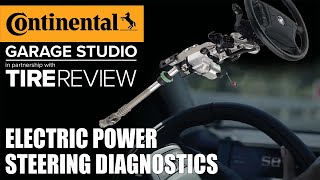

The information in this article is provided for general reference and educational purposes only. Vehicle specifications, procedures, and part compatibility can vary by production date, trim level, and region. Always consult your vehicle's factory service manual and verify part numbers before purchasing or performing repairs. Safety-critical components such as airbags, seat belts, and braking systems should be installed by a qualified professional.
- 🎬 Helpful Videos
- What Does C2412 Mean?
- Can I Drive With C2412?
- Common Causes
- Symptoms
- Common Fixes & Costs
- Used vs. New Parts: Buying Guide
- What Happens If You Wait — Timeline
- Cost of Not Fixing It
- Diagnosis Steps
- When This Code Triggers (Freeze-Frame Conditions)
- Related Codes
- Climate & Environmental Factors
- How to Talk to a Mechanic About This Code
- Where to Take It: Dealer vs Independent vs Chain
- When to Walk Away From the Repair
- What Scan Tool You Need for This Code
- How to Clear the Code After You Fix It
- Will This Fail Emissions / State Inspection?
- Most Commonly Affected Vehicles
- Manufacturer-Specific Notes
- Real Owner Stories
- 2012 Hyundai i20 with intermittent failure
- Hyundai i10 with C2412 - A misdiagnosis story
- 2014 Kia Optima with a weak battery
- BMW with multiple warning lights
- How to Prevent This Code From Triggering
- Frequently Asked Questions
- Can I just clear the C2412 code to fix the problem?
- Is it dangerous to drive with code C2412?
- A shop quoted me over $2,000 to fix this. Is that normal?
- Can a bad battery really cause my power steering to fail?
- My scanner says the motor is bad. Should I just replace it?
- Could the flexible steering coupler be the problem?
- What is the difference between C2412 and C2413?
- Why did my power steering fail after the car sat for a few weeks?
- Key Takeaways
- 🎟️ Get 5% Off