

OBD-II Code C2405: Wheel Speed Sensor Circuit Fault
What C2405 means, why it triggers, and how to fix it
- Code C2405 disables your anti-lock brakes and traction control because the ABS module lost the electrical signal from one wheel speed sensor.
- Over 80% of C2405 faults stem from a broken wiring harness pigtail, a dead wheel speed sensor, or rust buildup pushing the sensor away from the hub.
- You can drive with this code, but your wheels will lock up and skid during emergency braking; increase your following distance by at least 3 seconds.
- Repair costs range from $5 for a DIY wire splice to $300+ for a shop to replace a sealed wheel hub assembly or ABS control module.
What Does C2405 Mean?
Code C2405 indicates the Anti-lock Brake System (ABS) module detected an electrical circuit problem for one of the wheel speed sensors. The computer is not receiving a reliable signal about how fast that wheel is turning, disabling ABS and traction control.
Technical definition: C2405 is a manufacturer-specific Chassis ('C') code that most commonly translates to a 'Wheel Speed Sensor Circuit Fault'. It indicates an electrical issue—such as an open circuit, short to power, or short to ground—in the sensor's wiring or the sensor itself. On some heavy equipment, it refers to other chassis-related solenoids.
Can I Drive With C2405?
Yes, But With Caution. Yes, but your Anti-lock Braking System (ABS), Traction Control, and Stability Control are disabled. Your wheels will lock up and skid during hard braking or on slippery surfaces. Drive with extreme caution and increase following distance. If you experience a hard brake pedal (common in some Kia models), brake assist is compromised; stop driving and tow the vehicle immediately.
Common Causes
- Damaged or Internally Broken Wiring Harness (Very Common) — Wiring exposed to water, salt, and debris often breaks, chafes, or corrodes at the connector. A frequent, hidden issue is copper wire breaking inside the plastic insulation near the sensor connector where the harness flexes, creating an open circuit with no visible damage.
- Failed Wheel Speed Sensor (Common) — The sensor fails internally due to age, heat, or metallic brake dust contamination, resulting in an internal short or open circuit.
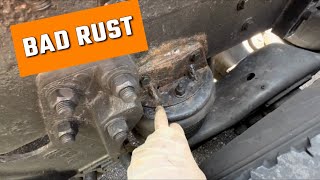
- Incorrect Sensor Air Gap / Rust Jacking (Common) — Rust builds up on the hub surface where the sensor mounts ('rust jacking'), pushing the sensor away from the tone ring. 🎬 Watch: See how rust jacking pushes sensors out of alignment. This increased air gap weakens the signal until the ABS module can no longer read it.
- Failing Wheel Hub/Bearing (Less Common) — Excessive play or wobble from a worn-out wheel bearing creates an inconsistent air gap between the sensor and the tone ring, causing an erratic signal.
- Damaged or Debris-Covered Tone Ring (Less Common) — The toothed or magnetic tone ring on the axle cracks, loses teeth, or gets covered in thick rust and metallic debris, blocking the sensor's reading.
- Faulty ABS Control Module (Rare) — The ABS computer suffers an internal circuit failure, preventing it from processing the sensor signal. This is documented on vehicles like the Kia e-Soul, often accompanied by a hard brake pedal. 🎬 Watch: How to diagnose and repair Kia Soul ABS issues.
- Improper Wheel Alignment / Steering Angle Sensor Calibration (Rare) — If the Steering Angle Sensor (SAS) is not recalibrated after an alignment, the stability control system receives conflicting data between the steering wheel position and wheel speeds, triggering a fault.
Symptoms
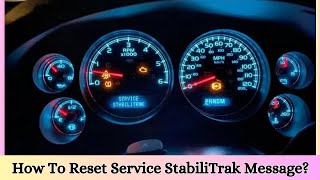
- ABS, Traction, and Stability Control Lights Illuminated — Because these systems rely on the same wheel speed sensors, a single circuit fault illuminates all related dashboard warning lights simultaneously. 🎬 Watch: What the StabiliTrak message means and how to fix it.
- ABS and Traction Control Inoperative — Wheels lock up and skid during hard braking. Wheels spin freely without traction control intervention when accelerating on slippery surfaces.
- Heavy or Unpredictable Steering — With stability control disabled, vehicles with electric power steering default to a heavier steering feel or lack precision.
- Hard Brake Pedal or Loss of Power Brakes (Rare) — On specific electric or hybrid models (e.g., Kia Soul EV), an ABS module fault associated with C2405 causes a loss of power brake assist, resulting in a dangerously firm pedal.
- Erratic Speedometer (Rare) — If the vehicle uses the affected wheel speed sensor for vehicle speed data, the speedometer behaves erratically or drops to zero.
- Erratic Wheel Speed Reading (scan-tool only — no driver-felt sign) — Live scan tool data shows the affected wheel's speed sensor reading 0 MPH or jumping erratically compared to the other three sensors.
Diagnostic Flowchart
Tap your situation to follow the diagnostic path that matches what you're seeing on this code.
Common Fixes & Costs
- Replacing the Wheel Speed Sensor
— Parts: $20-$100, Labor: $100-$200, ~1.2 hr book time
(DIY)
Mercedes-Benz C-Class (W204): OEM A2049057900 (Alt: Bosch, Delphi)
Chevrolet Silverado (2007-2014): OEM 20872161 (Alt: ACDelco, NTK) - Repairing Damaged Wiring or Connector
— Parts: $15-$50, Labor: $125-$250, ~1.5 hr book time
(Intermediate)
Chevrolet / GMC Trucks & SUVs: OEM 10340314 (ACDelco/GM Genuine) (Alt: Dorman) - Cleaning the Tone Ring or Sensor Mounting Surface — Parts: $5, Labor: $50-$100, ~0.8 hr book time (DIY)
- Replacing the Wheel Hub Assembly
— Parts: $150-$500, Labor: $150-$300, ~2.0 hr book time
(Intermediate)
Kia Soul (2020+): OEM 51750-O1000 (Front) (Alt: Timken, Moog) - Repairing or Replacing the ABS Control Module
— Parts: $200-$2500, Labor: $150-$300, ~2.2 hr book time
(Professional)
Kia Soul (2020-2022): OEM 58910-K0200 (Alt: ModuleMaster (Repair Service))
DIY vs Professional
- Replacing the Wheel Speed Sensor — Beginner: Yes
Tools: Jack and jack stands, socket set, torque wrench, wire brush, penetrating oil. - Repairing Damaged Wiring or Connector — Beginner: No (Intermediate skill recommended)
Tools: Wire strippers, crimpers, heat-shrink waterproof butt connectors, multimeter. - Replacing the Wheel Hub Assembly — Beginner: No (Intermediate skill recommended)
Tools: Full socket set, breaker bar, large axle nut socket, high-capacity torque wrench, slide hammer. - Repairing or Replacing the ABS Control Module — Beginner: No
Tools: Professional diagnostic scan tool for programming, flare nut wrenches, brake bleeding equipment.
Used vs. New Parts: Buying Guide
When a used part is worth it: Buying a used wheel speed sensor is never recommended. It is a low-cost wear item exposed to harsh conditions. A used ABS module, however, is a viable cost-saving option if sourced from a guaranteed low-mileage donor.
Donor-vehicle mileage cap: roughly under 20000 miles for the part to have meaningful remaining life.
Donor quality checklist:
- Source only from a low-mileage wrecked vehicle.
- Ensure exact part number matching.
- Avoid parts from Rust Belt regions due to high corrosion risk.
Decision logic:
- If The part is a bolt-on electronic sensor → Buy a new OEM or premium aftermarket part (Bosch, NTK, Delphi). Cheap aftermarket sensors have high failure rates.
- If The sensor is integrated into the wheel hub assembly → Buy a new, reputable brand hub assembly (Timken, Moog, SKF). Used hubs are a major safety gamble.
- If The part needed is the ABS module itself → Buy a used module from a low-mileage donor or use a reputable repair service for your original module. Professional programming is required.
Warranty tradeoff: Used parts offer 30-90 day warranties. Cheap aftermarket parts have high failure rates despite limited warranties. OEM and premium aftermarket parts offer 1-year to lifetime warranties.
Worst-case if a used part fails: $150-$300 for repeat labor plus the cost of a quality replacement part if a cheap sensor or hub fails.
What Happens If You Wait — Timeline
- 0-1 month: Code C2405 sets. ABS, Traction, and Stability Control disable. Vehicle brakes normally but locks up in panic stops. (Added cost: $0)
- 1-6 months (If caused by failing bearing): A bad wheel bearing gets louder, progressing from a hum to a grinding noise. Wheel play increases. (Added cost: $0-$50 (if caught before damaging other parts))
- 6-12 months (If caused by failing bearing): Catastrophic wheel bearing failure. The wheel wobbles severely, damaging the hub, knuckle, and CV axle, or detaches completely. (Added cost: $800-$2,500+ for replacement of hub, knuckle, axle, and brakes.)
- 6+ months (If caused by wiring damage): Moisture travels up the damaged copper wire ('wicking'), corroding the main ABS control module connector pins. (Added cost: $500-$2,500. A $20 pigtail repair becomes a full ABS module replacement.)
Cost of Not Fixing It
- Immediate: Loss of anti-lock brakes, traction control, and stability control, significantly increasing crash risk during emergency braking or on slippery surfaces. (Added cost: Potential for an accident, costing anywhere from an insurance deductible to a total vehicle loss.)
- 1-6 months: If caused by a failing wheel bearing, continued driving leads to complete bearing failure. The wheel will wobble severely and can detach from the vehicle. (Added cost: $500-$2000+ for repairs to the steering knuckle, axle, and brake components following catastrophic bearing failure.)
- 6+ months: Moisture enters damaged wiring and travels up the copper wire (wicking), causing corrosion inside the main ABS control module connector. (Added cost: $500-$2500 for ABS module repair or replacement.)
Diagnosis Steps
- Read the Fault Codes
Use an ABS-capable OBD-II scanner to confirm C2405. Note the specific location provided by the scanner (e.g., 'Front Left Wheel Speed Sensor Circuit') and any other active codes.
Tools: OBD-II Scanner with ABS capability (Beginner) - Check Live Data
View live data for all four wheel speed sensors while driving slowly. The faulty sensor will read 0 MPH or show erratic jumps. This instantly confirms which corner has the fault.
Tools: Advanced OBD-II Scanner (Intermediate) - Visually Inspect the Sensor and Wiring
Raise the vehicle. Locate the sensor and wiring at the affected wheel. Look for cut wires, melted plastic, or heavy corrosion. Gently wiggle and pull the harness near the connector to check for hidden internal wire breaks.
Tools: Jack, Jack Stands, Flashlight (Beginner) - Clean and Inspect the Connector and Mounting Surface
Unplug the sensor. Clean pins with electrical contact cleaner. Remove the sensor and use a wire brush to scrape all rust from the mounting surface on the knuckle to eliminate 'rust jacking'.
Tools: Electrical Contact Cleaner, Wire Brush, Scraper (Beginner) - Inspect the Tone Ring
Inspect the tone ring on the axle or hub for cracks, missing teeth, or heavy rust/metallic debris buildup. Clean debris with a brush and brake cleaner.
Tools: Brake Cleaner, Wire Brush (Intermediate) - Test Sensor Resistance (Passive Sensors Only)
For older 2-wire passive sensors, measure resistance across the disconnected sensor's pins. Good sensors read 800-2000 Ohms. An open circuit (OL) or dead short (0 Ohms) confirms a bad sensor. Do NOT perform this on 3-wire active sensors.
Tools: Multimeter (Intermediate) - Test Harness and Sensor Voltage (Active Sensors)
For modern active sensors, test the unplugged harness connector with the ignition on. One pin must be ground (0V) and another a reference voltage (5V or 12V). Missing voltage means a wiring or module fault. Reconnect, back-probe the signal wire, and spin the wheel; voltage should fluctuate slightly.
Tools: Multimeter, Back-probe pins (Advanced) - Check Sensor Air Gap
Use a non-magnetic feeler gauge to measure the gap between the sensor tip and tone ring. Typical specs are 0.5mm-1.0mm (passive) or 0.3mm-0.8mm (active). Excessive gaps are usually caused by rust jacking.
Tools: Feeler Gauge (non-magnetic) (Advanced) - Professional: Oscilloscope Waveform Analysis
Back-probe the connected sensor's signal wire. Spinning the wheel should produce a clean square wave (active) or sine wave (passive). Dropouts or 'hash' indicate a bad sensor, damaged tone ring, or wiring issue under load. A flat line confirms a dead circuit.
Tools: Oscilloscope, Back-probe pins (Professional)
When This Code Triggers (Freeze-Frame Conditions)
- Vehicle Speed: 15-50 mph (Sets when the vehicle is moving at a steady speed and the ABS module detects an irrational or missing signal from one sensor compared to the others.)
- Wheel Speeds: Mismatch (Data shows one wheel speed at 0 MPH or a value significantly different from the other three wheels.)
- System Voltage: 12.5-14.5V (Occurs under normal charging system voltage, ruling out a low battery as the immediate cause.)
- ABS/Traction Control Status: Active/Monitoring (Sets during normal system monitoring while driving; rarely sets at key-on or engine idle.)
Related Codes
- C0035 - C0050 — These are generic SAE codes for wheel speed sensor circuit faults (e.g., C0035 for Left Front). C2405 is the manufacturer-specific equivalent. The diagnostic process is identical.
- U0121 — Means 'Lost Communication With ABS Control Module'. If present, the scanner cannot talk to the ABS module. Fix U0121 first by checking the module's main power, ground, and CAN bus connections.
- U0415 — Means 'Invalid Data Received From ABS Control Module'. Set by other modules (like the ECU) because the ABS module is sending illogical speed data due to the C2405 fault. Fixing C2405 resolves U0415.
- C107E — Relates to 'Steering Angle Sensor Calibration'. Appears alongside wheel speed codes if an alignment was performed without recalibrating the steering sensor.
Climate & Environmental Factors
- Road Salt and Humidity: Salt and moisture accelerate corrosion of the sensor's wiring harness, connector pins, and mounting surface. This is the leading cause of C2405 in Rust Belt and coastal regions.
- Rust Buildup ('Rust Jacking'): Rust expands between the sensor's mounting flange and the steering knuckle, physically pushing the sensor away from the tone ring. This increases the air gap and weakens the signal.
- Cold Weather: Extreme cold makes wire insulation brittle and prone to cracking where the harness flexes. Water inside a connector freezes, expands, and breaks electrical contacts.
How to Talk to a Mechanic About This Code
Say this: "I have an ABS light on and my scanner shows code C2405 for a wheel speed sensor circuit fault. Please test the wiring harness for internal breaks and inspect the sensor mounting surface for rust buildup before quoting a part replacement."
Directs the shop to check common, low-cost failure points (wiring, corrosion) before defaulting to expensive part replacements. Prevents them from simply reading the code and swapping parts without diagnosis.
Avoid saying:
- 'My ABS light is on, can you fix it?' (Too vague; invites expensive part replacement.)
- 'Just do whatever it takes to fix the light.'
- 'I think I need a new ABS sensor.' (Never suggest a specific part; describe the symptom and ask for diagnosis.)
Questions to ask before authorizing the repair:
- Did you use a multimeter or oscilloscope to test the circuit?
- If recommending a sensor, did you clean the mounting hub of all rust?
- If recommending a wiring repair, what method ensures the splice is waterproof?
- If recommending a wheel hub, can you show me the excessive play or tone ring damage on my old part?
- What is the warranty on parts and labor?
Where to Take It: Dealer vs Independent vs Chain
- Dealer:
Overkill and too expensive for a common sensor or wiring fault. Use only for specific module failures or warranty work.
Best for: Vehicles under warranty., Known manufacturer-specific issues, like Kia ABS module failures., Complex electrical issues where independent diagnosis failed.
Downsides: Significantly higher labor rates and parts costs., Defaults to replacing entire assemblies (e.g., hubs) when a wiring repair is sufficient. (Typical cost: +50% vs. baseline) - Independent Shop:
Best fit. An experienced independent technician diagnoses and fixes sensor, wiring, or hub issues effectively and affordably.
Best for: Out-of-warranty vehicles where cost is a factor., Diagnosing and repairing common faults like bad sensors, wiring, or hubs., Building a long-term relationship with a trusted mechanic.
Downsides: Diagnostic capabilities vary widely. Vet shops based on reviews and ASE certifications., Lacks immediate access to the latest dealer technical service bulletins (TSBs). (Typical cost: +0% vs. baseline) - Chain Shop:
Avoid for initial diagnosis due to high misdiagnosis risk. Acceptable only for swapping a pre-diagnosed sensor.
Best for: Simple, clear-cut part replacements if you already performed the diagnosis.
Downsides: Technicians lack advanced electrical circuit diagnostic skills., High pressure to upsell; frequently recommends replacing expensive hubs or all four sensors without proper diagnosis. (Typical cost: -10% vs. baseline)
When to Walk Away From the Repair
If the repair cost exceeds 50% of the car's private-party value, sell or trade it in.
- Car worth $4000, fix is $350: Fix it. A minor repair cost for a critical safety system.
- Car worth $4000, fix is $2200: Walk away. The cost exceeds half the car's value, pointing to a major ABS module expense.
- Car worth $15000, fix is $800: Fix it. The hub assembly repair is well below the threshold and restores safety.
What Scan Tool You Need for This Code
Minimum: A scanner that reads/clears ABS module codes and displays live sensor data.
A standard $20 engine code reader cannot communicate with the ABS module. You must access Chassis ('C') codes and view live speed readings from all four wheels to diagnose C2405.
Budget: BlueDriver Pro (~$100) — Connects via Bluetooth. Reads/clears ABS codes and graphs live data from all four wheel speed sensors to identify the failing corner.
Mid-range: Foxwell NT630 Plus / Innova 5610 (~$150-350) — Dedicated handheld units offering ABS codes, live data, and bidirectional controls for 'auto bleed' functions required when replacing ABS modules.
Professional: Autel MaxiCOM MK808 / MK808BT (~$450-600) — Professional tablet scanner with OE-level diagnostics, robust live data, advanced bidirectional controls, and ABS module coding/programming capabilities.
Rent vs buy: Borrow an ABS-capable scanner for free from AutoZone's loaner tool program for a one-time fix. Buy a scanner only if you perform regular diagnostics.
How to Clear the Code After You Fix It
- Use an OBD-II scan tool with ABS capabilities to clear the fault code from the ABS module.
- Turn the ignition off and then back on.
- Perform a road test to confirm the fix.
Drive cycle (~10 minutes): Drive the vehicle for 5-10 minutes, exceeding 15-20 MPH. Include straight-line driving and at least one left and one right turn. If the repair was successful, the ABS light remains off.
Readiness monitors affected: None
Watch out for:
- Using a basic OBD-II scanner that cannot access or clear ABS module codes.
- Failing to perform a road test, which the module requires to verify the sensor signal is restored.
- Assuming a returning code means a defective new sensor, when it actually indicates an unfixed wiring issue.
Will This Fail Emissions / State Inspection?
No — by itself this code doesn't fail OBD inspection (but it can keep readiness monitors from setting, which causes a separate fail).
- California: An illuminated ABS light does NOT cause a Smog Check failure. The test only checks emissions-related systems and the Check Engine Light.
- New York: NY DMV regulations state an inoperative ABS system or illuminated ABS warning light is NOT a cause for safety or emissions inspection failure.
- Texas: An illuminated ABS light does NOT cause a vehicle to fail the Texas state safety inspection.
Most Commonly Affected Vehicles
- Mercedes-Benz C-Class (W204) (2008-2015) — Frequently associated with wheel speed sensor faults. C2405 is specifically cited for these models, requiring straightforward sensor replacements.
- Kia Soul / e-Soul (2020-2025) — C2405 appears alongside a dangerously hard brake pedal, indicating a failed ABS control module rather than a simple sensor issue.
- Chevrolet / GMC Silverado, Sierra, Impala, Tahoe (2007-2014) — Notorious for internal wire breaks in the front wheel speed sensor harness pigtail. GM provides a specific repair harness (P/N 10340314) to fix this.
- Hyundai Ioniq, Tucson, Sonata (2017-2022) — Prone to chassis and brake system faults originating from poor wiring connections at the wheel calipers and sensors.
- Jaguar XF, XE, F-Pace (2013-2024) — Known for chassis fault codes related to the Adaptive Dynamics system, caused by wiring corrosion in the wheel well.
- Land Rover Range Rover Velar (2018-2023) — Shares the Adaptive Dynamics system with Jaguar and suffers identical wiring harness corrosion issues.
- Ford F-150, Explorer, Escape (2011-2020) — Experiences this code due to faulty sensors, wiring chafing, or integrated hub assembly failures.
- Bobcat S-Series Skid Steer Loaders (2010-2023) — On Bobcat equipment, C2405 indicates an 'Offset Rod Solenoid Short To Battery', highlighting the manufacturer-specific nature of the code.
Manufacturer-Specific Notes
- Chevrolet / GM: Front wheel speed sensor harnesses break internally with no visible insulation damage. Wiggling the harness while watching live scanner data reveals the fault. Use GM replacement pigtail P/N 10340314.
- Kia / Hyundai: C2405 is directly linked to internal ABS module failure, presenting with a hard brake pedal. Owners should contact a dealer to check for active service campaigns.
- Jaguar / Land Rover: On Adaptive Dynamics suspension vehicles, a failing damper solenoid or its wiring triggers similar circuit faults, accompanied by a noticeably stiff ride.
- General: A weak battery causes spurious communication and circuit faults in the ABS system. If multiple unrelated electrical codes accompany C2405, test the battery and charging system first.
Real Owner Stories
2013 Chevy Silverado, 110K miles - Intermittent ABS/Stabilitrak Lights
ABS and Stabilitrak lights illuminated randomly on smooth roads and bumps. Code indicated a Right Front sensor circuit fault.
What they tried:
- Replaced the RF wheel speed sensor - no change.
- Replaced the wheel hub assembly with a Timken part - worked for a week.
- Shop replaced the Timken with an OE GM hub - worked for a month.
Outcome: Owner discovered a broken wire inside the harness where it enters the wheel well. Spliced in a new $20 pigtail connector, resolving the problem permanently.
Lesson: Do not repeatedly replace expensive sensors and hubs. For intermittent circuit faults on GM trucks, the wiring harness pigtail is the primary failure point.
2012 Mercedes W204 C-Class - ABS Light On
ABS light illuminated. Owner noted ABS sensors were the only non-maintenance repairs required over 7 years.
What they tried:
- Scanned the code, identifying a specific wheel speed sensor.
- Replaced the failed sensor.
Outcome: Replacing the sensor cleared the code and restored ABS function immediately.
Lesson: On vehicles like the Mercedes W204, wheel speed sensors are semi-regular wear items. If the code points to a sensor and wiring is intact, a simple sensor replacement is the correct fix.
2015 Kia Soul EV - Total Brake Failure
While parking, the brake pedal became completely unresponsive and hard, leading to a low-speed collision.
What they tried:
- Towed to a dealer for diagnosis.
- Contacted Kia corporate to investigate.
Outcome: Diagnosed as a failure in the ABS control module, which is critical for brake booster function on this EV. This is a documented failure mode associated with C2405.
Lesson: If C2405 is accompanied by a hard, unresponsive brake pedal (especially on EVs/hybrids), it is a critical safety failure. Tow the vehicle immediately.
GM Truck with Low-Speed ABS Activation - A Misdiagnosis Story
Vehicle experienced false ABS activation under 5 mph, making the pedal shudder before stopping. No ABS light or codes were present.
What they tried:
- Replaced the wheel speed sensor, but the problem persisted.
Outcome: A GM TSB revealed the cause: 'rust jacking' on the hub's sensor mounting surface increased the air gap, causing a weak signal at low speeds. The fix was removing the sensor, cleaning the surface to bare metal, and reinstalling.
Lesson: Circuit issues don't always set codes. Always clean the sensor mounting surface before replacing parts, as rust jacking is a common, free fix.
How to Prevent This Code From Triggering
- Apply Dielectric Grease to Connectors (During any brake or suspension work) — Applying dielectric grease inside the connector body seals out moisture and oxygen, preventing pin corrosion.
- Clean Sensor Mounting Surface During Brake Jobs (Every time brake pads/rotors are replaced) — Unbolting the ABS sensor and wire-brushing rust from the hub prevents 'rust jacking' from creating an excessive air gap.
- Periodic Undercarriage Wash (Monthly, especially in winter (Rust Belt)) — Removes road salt and grime that accelerate corrosion of wiring harnesses and brake components.
- Inspect Wiring Harnesses for Secure Mounting (Annually or during tire rotation) — Ensures sensor wiring is secured in clips and routed away from moving parts, preventing chafing and stretching.
Frequently Asked Questions
I replaced the wheel speed sensor but the C2405 code came back. What did I miss?
If a new sensor doesn't fix the code, the fault is almost certainly in the wiring harness or mounting surface. Check for internal wire breaks near the connector by wiggling the harness while watching live scanner data. Also, ensure you removed all rust from the mounting hub, as 'rust jacking' pushes the sensor too far from the tone ring.
Why did my ABS and Traction Control lights come on after a wheel alignment?
The technician likely damaged the delicate sensor wire or connector while working on the suspension. Alternatively, the alignment changed the vehicle's geometry, requiring a Steering Angle Sensor (SAS) recalibration. The stability system requires matching data from both the wheel speed and steering angle sensors to function.
What is 'rust jacking' and how does it cause a wheel speed sensor code?
'Rust jacking' occurs when rust builds up on the wheel hub directly underneath the wheel speed sensor's mounting flange. This rust physically pushes the sensor further away from the tone ring. The increased air gap weakens the magnetic signal, triggering a circuit fault code like C2405.
Can I just replace the fuse for code C2405?
A blown ABS fuse disables the system but is rarely the root cause for a specific sensor circuit code. Fuses blow due to short circuits drawing excessive current. You must locate and fix the short circuit before replacing the fuse, or it will blow immediately.
Is it safe to drive with the ABS light on?
Your normal hydraulic brakes function, but without anti-lock capabilities, your wheels will lock up and skid during emergency stops. Drive with extreme caution and double your following distance. If you experience a hard brake pedal, stop driving and tow the vehicle immediately.
Why did my traction control light come on with the ABS light?
Traction and stability control systems rely entirely on wheel speed sensors to detect wheel slip. When a sensor signal is lost (triggering C2405), these systems cannot function and automatically disable themselves, illuminating their warning lights.
Can I fix code C2405 myself?
Replacing a bad wheel speed sensor is a straightforward DIY repair for beginners. However, diagnosing the root cause requires basic electrical testing with a multimeter to avoid wasting money on unneeded parts. Replacing a wiring pigtail is an intermediate task, while replacing a hub or ABS module requires professional tools.
Key Takeaways
- Code C2405 disables your anti-lock brakes and traction control because the ABS module lost the electrical signal from one wheel speed sensor.
- Over 80% of C2405 faults stem from a broken wiring harness pigtail, a dead wheel speed sensor, or rust buildup pushing the sensor away from the hub.
- You can drive with this code, but your wheels will lock up and skid during emergency braking; increase your following distance by at least 3 seconds.
- Repair costs range from $5 for a DIY wire splice to $300+ for a shop to replace a sealed wheel hub assembly or ABS control module.
Helpful Videos


The information in this article is provided for general reference and educational purposes only. Vehicle specifications, procedures, and part compatibility can vary by production date, trim level, and region. Always consult your vehicle's factory service manual and verify part numbers before purchasing or performing repairs. Safety-critical components such as airbags, seat belts, and braking systems should be installed by a qualified professional.
- 🎬 Helpful Videos
- What Does C2405 Mean?
- Can I Drive With C2405?
- Common Causes
- Symptoms
- Diagnostic Flowchart
- Common Fixes & Costs
- DIY vs Professional
- Used vs. New Parts: Buying Guide
- What Happens If You Wait — Timeline
- Cost of Not Fixing It
- Diagnosis Steps
- When This Code Triggers (Freeze-Frame Conditions)
- Related Codes
- Climate & Environmental Factors
- How to Talk to a Mechanic About This Code
- Where to Take It: Dealer vs Independent vs Chain
- When to Walk Away From the Repair
- What Scan Tool You Need for This Code
- How to Clear the Code After You Fix It
- Will This Fail Emissions / State Inspection?
- Most Commonly Affected Vehicles
- Manufacturer-Specific Notes
- Real Owner Stories
- 2013 Chevy Silverado, 110K miles - Intermittent ABS/Stabilitrak Lights
- 2012 Mercedes W204 C-Class - ABS Light On
- 2015 Kia Soul EV - Total Brake Failure
- GM Truck with Low-Speed ABS Activation - A Misdiagnosis Story
- How to Prevent This Code From Triggering
- Frequently Asked Questions
- I replaced the wheel speed sensor but the C2405 code came back. What did I miss?
- Why did my ABS and Traction Control lights come on after a wheel alignment?
- What is 'rust jacking' and how does it cause a wheel speed sensor code?
- Can I just replace the fuse for code C2405?
- Is it safe to drive with the ABS light on?
- Why did my traction control light come on with the ABS light?
- Can I fix code C2405 myself?
- Key Takeaways
- 🎟️ Get 5% Off