

OBD-II Code C2370: Hydraulic/Electronic ABS Control Unit Fault
What C2370 means, why it triggers, and how to fix it
- Code C2370 indicates a permanent internal failure of the ABS/ESC control module (HECU), most commonly affecting 2008-2021 Hyundai and Kia vehicles.
- Stop driving and park outside immediately if you smell burning plastic, as this code is linked to a massive recall for engine bay fires caused by internal brake fluid leaks.
- Check your VIN against NHTSA databases before spending any money, as over 3.3 million affected vehicles are eligible for a free dealer repair or fire-mitigation fuse swap.
- Replacing the HECU yourself requires a high-end bidirectional scan tool (costing $180+) to perform mandatory ABS automated bleeding and variant coding.
What Does C2370 Mean?
C2370 is a manufacturer-specific code, predominantly found on Hyundai and Kia vehicles, indicating a critical internal failure within the Hydraulic and Electronic Control Unit (HECU). The module's self-test detected an electrical short or open circuit in the secondary valve circuit. This disables your anti-lock brakes and stability control.
Technical definition: TC Valve Secondary (USV2) Error. The HECU monitors internal solenoid valve drive circuits and triggers this code when it detects unexpected voltage, an open, or a short circuit lasting longer than 40-60 milliseconds during startup or driving self-tests.
Can I Drive With C2370?
Yes, But With Caution. You can drive, but your Anti-lock Braking System (ABS) and Electronic Stability Control (ESC) are disabled. Exercise extreme caution in slippery conditions. Due to a significant fire risk in affected Hyundai and Kia vehicles—which occurs even when parked—park outside and away from structures until the vehicle is inspected.
Common Causes
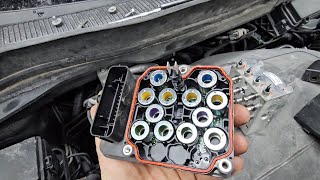
- Internal HECU Failure via Brake Fluid Leak (Very Common) — Brake fluid leaks from the hydraulic portion of the unit into the electronic control board. This contamination shorts sensitive electronic components, causing the failure and creating a severe fire risk.
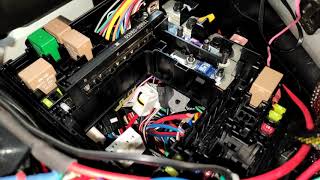
- Blown ABS/ESC System Fuse (Result of Short) (Common) — An internal HECU short circuit blows the main power fuses. Dealers often install lower-amperage fuses during recalls to mitigate fire risks, but this 🎬 Watch: Why Kia owners are urged to get this fuse replacement. does not fix a module that has already failed.
- Corroded Wiring or Faulty Ground (Less Common) — Moisture and debris corrode the wiring harness, electrical connectors, or chassis ground points leading to the HECU. This interrupts power or signal communication, triggering the fault.
- Low System Voltage (Less Common) — A weak battery dropping below 11 volts disrupts the HECU's self-test. The module requires stable voltage to operate correctly.
- Defective Replacement HECU (Rare) — Remanufactured or used modules often fail shortly after installation due to poor rebuild quality or incorrect part matching.
Symptoms
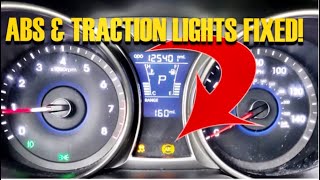
- ABS and ESC Warning Lights On — The Anti-lock Braking System (ABS) and Electronic Stability Control (ESC) warning lights illuminate simultaneously on the dashboard.
- ABS and Stability Control Inoperative — The vehicle's anti-lock braking and traction control systems are disabled. Wheels lock up during hard braking, and the vehicle is less stable in turns.
- Burning Smell or Smoke from Engine Bay — An internal short circuit overheats the module, causing a burning plastic smell or visible smoke, even when the vehicle is parked and turned off. 🎬 See a breakdown of the Kia HECU recall and fire risks.
- Brake System Warning Light On — The main red brake system warning light illuminates, indicating a critical fault in the overall braking system.
Diagnostic Flowchart
Tap your situation to follow the diagnostic path that matches what you're seeing on this code.
Common Fixes & Costs
- Recall Service (Fuse/Software/Module Replacement) — Parts: $0, Labor: $0, ~2.5 hr book time (Professional)
- HECU/ABS Module Replacement (New OEM)
— Parts: $1200-$2800, Labor: $250-$500, ~2.0 hr book time
(Professional)
Hyundai Sonata (2008-2015): OEM 58920-3Q600, 58920-3Q650 (Alt: Cardone 12-4217)
Hyundai Santa Fe (2013-2019): OEM 58920-B8700, 58920-4Z000 (Alt: Cardone (Varies by trim)) - HECU/ABS Module Remanufacturing Service — Parts: $250-$400, Labor: $200-$400, ~2.0 hr book time (Intermediate)
- Used HECU/ABS Module Replacement — Parts: $150-$500, Labor: $250-$500, ~2.0 hr book time (Professional)
- Replace Blown ABS/ESC Fuses — Parts: $5-$20, Labor: $0-$50, ~0.2 hr book time (DIY)
Used vs. New Parts: Buying Guide
When a used part is worth it: When the budget is tight and the vehicle has over 120,000 miles. It saves significant money but carries a high risk of premature failure.
Donor-vehicle mileage cap: roughly under 100000 miles for the part to have meaningful remaining life.
Donor quality checklist:
- Part number MUST be an exact match to the original unit.
- Purchase from a reputable salvage yard offering at least a 90-day warranty.
- Visually inspect for corrosion or brake fluid leaks around the electrical connector.
Decision logic:
- If Vehicle is under an active recall for the HECU → Use the free dealer repair; do not buy any part.
- If Budget allows and vehicle value is high → Buy a new OEM or high-quality remanufactured unit for maximum reliability.
- If Vehicle is older with high mileage and budget is the primary concern → A used part is acceptable, but factor in the risk of non-refundable labor costs.
Warranty tradeoff: Used parts typically have a 30-90 day part-only warranty. Remanufactured units offer 1-year to lifetime warranties. New OEM parts carry a 1-year/12,000-mile warranty.
Worst-case if a used part fails: $400-$600 in non-refundable labor if the used part fails shortly after installation.
What Happens If You Wait — Timeline
- Immediate: Code C2370 is set. The ABS and stability control systems are immediately disabled. (MPG impact: 0%% · Added cost: $0)
- Ongoing: The internal short circuit creates a constant, unpredictable fire risk, even when the vehicle is parked and turned off. (MPG impact: 0%% · Added cost: $0, but risk of total vehicle loss.)
- 1 month+: Driving without ABS/ESC poses a continuous safety hazard. The vehicle automatically fails safety inspections in many states. (MPG impact: 0%% · Added cost: $50 - $200 in failed inspection fees.)
- Catastrophic Failure: The internal short circuit overheats and ignites the HECU, causing an engine compartment fire. (MPG impact: N/A% · Added cost: $5,000 - $25,000+ (Total vehicle loss).)
Cost of Not Fixing It
- Immediate: Loss of ABS and Electronic Stability Control (ESC). Increased risk of wheel lock-up and skidding. (Added cost: $0)
- Ongoing: Unpredictable fire risk, even when the vehicle is parked and turned off. Can lead to total loss of the vehicle and property damage. (Added cost: $5000 - $25000 (Total vehicle loss))
- Long-term: Failure to address the issue leads to a failed state safety inspection in many jurisdictions. (Added cost: $50 - $200 (failed inspection fees))
Diagnosis Steps
- Check for Recalls
Check if your vehicle is under a recall for the HECU. Hyundai and Kia have recalled millions of vehicles for this exact issue. A dealer performs the recall service (fuse replacement, software update, or module replacement) for free.
Tools: Vehicle Identification Number (VIN), Internet Access (Beginner) - Read Fault Codes
Use an OBD-II scanner capable of reading 'C' (Chassis) codes to confirm C2370 is present. Note related internal HECU faults like C2366, C2372, and C2374.
Tools: OBD-II Scanner (with ABS capability) (Beginner) - Inspect ABS/ESC Fuses
Locate the main ABS and ESC fuses in the engine bay fuse box. A blown fuse points directly to a short circuit in the HECU.
Tools: Owner's Manual, Fuse Puller (Beginner) - Check for Brake Fluid Contamination
Disconnect the main HECU harness connector and inspect both sides for oily residue smelling like brake fluid. Fluid presence confirms internal seal failure and condemns the HECU.
Tools: Flashlight, Basic hand tools (Intermediate) - Inspect Wiring, Power, and Ground
Using a multimeter, check for battery voltage (12.6V off, ~14V running) and a solid ground connection (<0.1 ohms) at the HECU connector pins. Lack of power or a bad ground prevents module function.
Tools: Multimeter, Vehicle-Specific Wiring Diagram (Advanced) - Perform a Parasitic Draw Test
With the vehicle off for 30 minutes, connect a multimeter in series with the HECU fuse. A high current draw (over 50-80mA) indicates an internal short circuit.
Tools: Multimeter with Amp clamp or in-line capability (Advanced) - Scope Test the Solenoid Command Signal
Back-probe the command wire for the secondary TC valve (USV2) at the HECU connector. Activate the system via a scan tool. The absence of a square wave pattern confirms an internal driver failure.
Tools: Oscilloscope, Bidirectional Scan Tool, Wiring Diagram (Professional)
When This Code Triggers (Freeze-Frame Conditions)
- Vehicle Speed: > 10 mph (15 kph) (The HECU runs a self-test when vehicle speed exceeds a set threshold.)
- System Voltage: > 11V (The module requires stable voltage to perform its self-tests and operate.)
- Time Since Ignition On: Variable (Self-tests are performed at startup and periodically during a drive cycle to detect faults.)
Related Codes
- C2366 — TC Valve Primary (USV1) Error. An identical internal failure of the primary valve circuit within the same HECU. The diagnostic approach is exactly the same.
- C2374 — ESC Valve 2 (HSV2) Error. Points to a fault in the stability control valve portion of the HECU. Indicates the same widespread internal module failure.
- C1200-C1212 — Generic codes for wheel speed sensor circuits. A failing HECU often misinterprets sensor data, causing false wheel speed codes alongside C2370. Diagnose C2370 first.
Climate & Environmental Factors
- High Humidity: Brake fluid absorbs moisture from the air. In humid climates, this accelerates internal corrosion within the HECU's delicate valve bodies and electronic components.
- Cold Climates with Road Salt: Road salt acts as an electrolyte that dramatically accelerates the corrosion of the external HECU housing, ground points, and electrical connectors.
How to Talk to a Mechanic About This Code
Say this: "I have a C2370 code on my Hyundai/Kia. Please check for open VIN recalls, inspect the ABS fuses, and verify power and ground at the module before quoting a replacement."
This directs the technician to perform a proper diagnosis to confirm the module is faulty before quoting an expensive replacement, and prioritizes the free recall check.
Avoid saying:
- 'Just replace the ABS module.'
- 'I think it's a wheel speed sensor.'
Questions to ask before authorizing the repair:
- Was my vehicle checked for the HECU-related safety recalls?
- Does your estimate include the cost of 'variant coding' and the scan-tool-assisted ABS brake bleed?
- Are you recommending a new, used, or remanufactured HECU, and what is the warranty?
Where to Take It: Dealer vs Independent vs Chain
- Dealer:
Mandatory first stop. Due to widespread recalls for fire risk, you must start at the dealer to see if the repair is free. If not, they ensure the replacement module is programmed correctly.
Best for: Vehicles under an active recall for the HECU/ABS module., Performing the mandatory 'variant coding' after module replacement.
Downsides: Highest labor and part costs, often 1.5-2x more than independent shops. (Typical cost: +50% vs. baseline) - Independent Shop:
Good alternative if not recall-eligible. You MUST verify their tool capability for ABS programming and bleeding before committing to the work.
Best for: Out-of-warranty vehicles where cost is a major factor., Installing customer-supplied remanufactured or used parts.
Downsides: Must confirm they have a high-end bidirectional scan tool capable of performing the ABS bleed and 'variant coding'. (Typical cost: +0% vs. baseline) - Chain Shop:
AVOID. This repair requires specialized diagnostic and programming capabilities beyond the scope of chain repair shops.
Best for: Basic services like oil changes and standard brake pad jobs.
Downsides: Technicians lack the specialized tools and training for module-level diagnostics and programming. (Typical cost: -10% vs. baseline)
When to Walk Away From the Repair
If the estimated repair cost for the ABS module exceeds 40-50% of your car's private-party value, seriously consider selling the vehicle as-is.
- Car worth $4000, fix is $2200: Walk away. The repair cost is over 50% of the car's value. The money is better spent on a down payment for a more reliable vehicle.
- Car worth $10000, fix is $2200: Fix it. The repair cost is well below the 40% threshold and restores a critical safety system.
- Car worth $6000, fix is $700: Fix it. If you opt for an affordable remanufacturing service, the cost is easily justified.
What Scan Tool You Need for This Code
Minimum: A scanner that reads and clears ABS/SRS (Chassis 'C') codes. A basic engine-only code reader shows 'no codes found'.
A basic $20 scanner cannot communicate with the ABS module. You need a tool that accesses the ABS system to confirm C2370 and perform bidirectional controls for the repair.
Budget: BlueDriver Pro (~$100) — Reads and clears ABS codes to confirm C2370 is present. Cannot perform bidirectional controls needed for the repair.
Mid-range: Foxwell NT510 Elite (~$180) — Provides full system diagnostics and offers bidirectional control to perform the automated ABS bleed function required after module replacement.
Professional: Autel MaxiCOM MK808 (~$500) — Offers full bidirectional control, including ABS bleeding and the 'variant coding' function needed to program a new module to the vehicle.
Rent vs buy: Auto parts stores offer free loaner tools to read ABS codes. To perform the repair (ABS bleeding), you must own or borrow a bidirectional scanner like the Foxwell or Autel.
How to Clear the Code After You Fix It
- Use an OBD-II scanner with ABS capability to clear the fault code.
- Perform the ABS pump bleeding procedure using a bidirectional scan tool.
- Perform 'variant coding' if the HECU was replaced.
- Complete a full drive cycle to ensure the code does not return.
Drive cycle (~20 minutes): Start the engine and drive above 20 mph (30 kph) to trigger the HECU self-test. If the repair was successful, the ABS light remains off.
Readiness monitors affected: Chassis codes do not affect emissions monitors, but disconnecting the battery for repair resets all OBD-II readiness monitors.
Before emissions retest: drive at least 50 miles to fully set monitors.
Watch out for:
- Clearing the code with a scanner does not fix the hardware failure; it returns instantly.
- Forgetting to perform mandatory 'variant coding' and ABS bleeding causes continued faults.
- Disconnecting the battery does not clear this permanent hardware fault.
Will This Fail Emissions / State Inspection?
No — by itself this code doesn't fail OBD inspection (but it can keep readiness monitors from setting, which causes a separate fail).
- California: An ABS light does NOT fail the emissions-only Smog Check, but fails the comprehensive Vehicle Safety Systems Inspection (VSSI) for salvaged titles.
- New York: An illuminated ABS warning light is an automatic failure of the annual safety inspection.
- Texas: As of 2025, non-commercial vehicles are exempt from annual safety inspections. Where required, an ABS light is officially not a cause for rejection.
Most Commonly Affected Vehicles
- Hyundai Sonata (2008-2015) — Frequently cited with HECU internal circuit failures and included in massive safety recalls for fire risk.
- Hyundai Santa Fe / Santa Fe Sport (2013-2019) — Part of NHTSA campaign 23V-651 for HECU malfunctions causing electrical shorts and engine compartment fires.
- Hyundai Tucson (2010-2021) — Subject to multiple recalls where the HECU corrodes internally, causing a short and fire risk.
- Hyundai Genesis / Genesis G70 (2009-2021) — Newer G70 models (2019-2021) were recalled under campaign 007G for ABS module short circuits.
- Kia Sportage (2008-2013) — Subject to safety recall 23V-652 where dealers replace the HECU fuse to mitigate fire risk from internal shorts.
- Kia Optima (2011-2015) — Included in large-scale fire risk recalls due to potential electrical shorts within the HECU caused by internal brake fluid leaks.
- Note on Other Manufacturers All (1996-2025) — Overwhelmingly documented as a Hyundai/Kia specific HECU failure. If you have this code on another brand, consult a factory service manual.
Manufacturer-Specific Notes
- Hyundai/Kia: Massive safety recalls (e.g., 23V-651, 23V-652) affect over 3.3 million vehicles due to HECU internal brake fluid leaks causing engine fires.
- Hyundai/Kia: The official recall remedy often involves replacing original 40A fuses with lower-amperage 25A fuses to mitigate fire risk, rather than replacing the expensive module itself.
Real Owner Stories
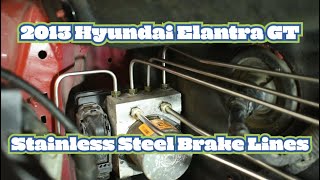
2013 Hyundai Elantra - Recall Fix
Owner received a recall notice for ABS fire risk. ABS/ESC lights were on, and code C2370 was present.
Outcome: The dealer replaced the main ABS fuse with a lower-amperage version to mitigate fire risk for free. However, this 'fuse-only' remedy did not fix the already-failed HECU, and the ABS lights remained on.
Lesson: Always check for recalls first. The free dealer fix is mandatory, but be aware that fuse swaps are fire mitigations, not functionality fixes for dead modules.
2012 Kia Optima - Paid Replacement
ABS and ESC lights came on. A mechanic found code C2370. The vehicle was outside of any active recall period.
Outcome: The shop replaced the HECU with a new OEM part, costing $1,800 for the part and $350 for labor, including programming and brake bleeding. The repair restored ABS/ESC function.
Lesson: If not covered by a recall, the C2370 fix is expensive. Get a firm diagnosis ruling out wiring or fuse issues before committing to a costly replacement.
2014 Kia Sportage - Misdiagnosis with Wheel Speed Sensor
ABS and traction control lights illuminated. The owner used a basic OBD-II scanner which could not read 'C' codes.
Outcome: A professional scan revealed code C2370. The owner chose a remanufacturing service for $400, which fixed the issue after the module was repaired and reinstalled.
Lesson: Do not guess based on warning lights. C2370 specifically indicates an internal module fault, not a wheel speed sensor. A proper ABS scan tool is essential.
How to Prevent This Code From Triggering
- Perform regular brake fluid flushes. (Every 2-3 years or 30,000 miles.) — Brake fluid absorbs moisture over time. Flushing removes contaminated fluid, preventing internal corrosion of the HECU's delicate valves.
- Promptly address safety recalls. (As soon as notified.) — Acting on HECU recalls is the single most effective way to prevent a catastrophic failure and engine fire.
- Keep the engine bay and undercarriage clean. (Periodically, especially after winter.) — Washing away road salt prevents corrosion on the HECU housing, electrical connectors, and ground points.
Frequently Asked Questions
Is it safe to drive with code C2370?
You can drive, but exercise extreme caution as ABS and stability control are disabled. Due to severe fire risks on affected models, park outside and away from buildings. Do not drive if you smell burning plastic.
Will clearing the code fix the problem?
No. C2370 indicates a permanent hardware failure inside the ABS control module. The code returns immediately upon the next driving self-test.
Could a bad wheel speed sensor cause code C2370?
No. Faulty wheel speed sensors trigger specific C1200-range codes, not internal module faults like C2370. A failing HECU sometimes causes false wheel speed codes, but not the reverse.
I replaced the ABS module and the C2370 code came back. What now?
The replacement unit is likely defective, especially if used or remanufactured. Alternatively, you may have missed a corroded ground wire or failed to perform the mandatory 'variant coding' programming step.
Can I fix the HECU/ABS module myself?
Replacing the HECU requires opening the hydraulic brake lines and bleeding the entire system. You must use a bidirectional scan tool to cycle the ABS pump and remove trapped air. Stop DIY and tow to a shop if you lack this tool.
Why is there a fire risk with this code?
Internal seals fail, allowing brake fluid to leak onto the HECU's electronic circuit board. This causes a short circuit that overheats and ignites, even when the vehicle is turned off.
What does 'variant coding' mean for an ABS module replacement?
Variant coding is a mandatory programming step performed with a high-end scan tool after installing a replacement ABS module. It configures the module to your specific vehicle options, like engine type and drivetrain. Without it, the ABS remains disabled.
Key Takeaways
- Code C2370 indicates a permanent internal failure of the ABS/ESC control module (HECU), most commonly affecting 2008-2021 Hyundai and Kia vehicles.
- Stop driving and park outside immediately if you smell burning plastic, as this code is linked to a massive recall for engine bay fires caused by internal brake fluid leaks.
- Check your VIN against NHTSA databases before spending any money, as over 3.3 million affected vehicles are eligible for a free dealer repair or fire-mitigation fuse swap.
- Replacing the HECU yourself requires a high-end bidirectional scan tool (costing $180+) to perform mandatory ABS automated bleeding and variant coding.
Helpful Videos



The information in this article is provided for general reference and educational purposes only. Vehicle specifications, procedures, and part compatibility can vary by production date, trim level, and region. Always consult your vehicle's factory service manual and verify part numbers before purchasing or performing repairs. Safety-critical components such as airbags, seat belts, and braking systems should be installed by a qualified professional.
- 🎬 Helpful Videos
- What Does C2370 Mean?
- Can I Drive With C2370?
- Common Causes
- Symptoms
- Diagnostic Flowchart
- Common Fixes & Costs
- Used vs. New Parts: Buying Guide
- What Happens If You Wait — Timeline
- Cost of Not Fixing It
- Diagnosis Steps
- When This Code Triggers (Freeze-Frame Conditions)
- Related Codes
- Climate & Environmental Factors
- How to Talk to a Mechanic About This Code
- Where to Take It: Dealer vs Independent vs Chain
- When to Walk Away From the Repair
- What Scan Tool You Need for This Code
- How to Clear the Code After You Fix It
- Will This Fail Emissions / State Inspection?
- Most Commonly Affected Vehicles
- Manufacturer-Specific Notes
- Real Owner Stories
- 2013 Hyundai Elantra - Recall Fix
- 2012 Kia Optima - Paid Replacement
- 2014 Kia Sportage - Misdiagnosis with Wheel Speed Sensor
- How to Prevent This Code From Triggering
- Frequently Asked Questions
- Is it safe to drive with code C2370?
- Will clearing the code fix the problem?
- Could a bad wheel speed sensor cause code C2370?
- I replaced the ABS module and the C2370 code came back. What now?
- Can I fix the HECU/ABS module myself?
- Why is there a fire risk with this code?
- What does 'variant coding' mean for an ABS module replacement?
- Key Takeaways
- 🎟️ Get 5% Off