

OBD-II Code C2339: ABS/Stability Control System Fault
What C2339 means, why it triggers, and how to fix it
- Code C2339 indicates your anti-lock brakes (ABS) and electronic stability control (ESC) are offline, increasing the risk of skidding during emergency stops.
- Treat C2339 as a secondary warning flag; you must use an ABS-capable scanner to pull the primary fault code directly from the ABS control module.
- Over 80% of C2339 codes stem from a defective wheel speed sensor, a failing ABS control module, or a low battery dropping below 12.0 volts.
- Never replace the secondary module (like adaptive cruise control) reporting the C2339 code; the root failure always lies within the chassis or ABS system.
- Save $500 to $1,500 by using a mail-in rebuild service for a faulty ABS module instead of purchasing a brand-new OEM replacement.
What Does C2339 Mean?
C2339 is a generic chassis trouble code indicating a general failure within the Anti-Lock Braking System (ABS) or Electronic Stability Control (ESC). This is a secondary flag stored in a peripheral module (like adaptive cruise control or forward collision mitigation) because the primary fault disabled the ABS module. To identify the root cause, a technician must scan the main ABS module for specific trouble codes.
Technical definition: While lacking a universal SAE definition, manufacturers like Mitsubishi define C2339 as 'ASC SYSTEM FAILURE (ASC ECU)'. This means a secondary control unit received a signal that the Active Stability Control (ASC) unit is offline. The secondary unit sets C2339 to log its own deactivation as a direct consequence of the primary ABS/ASC fault.
Can I Drive With C2339?
Yes, But With Caution. You can drive the vehicle, but your anti-lock brakes (ABS) and electronic stability control (ESC) are disabled. Your conventional brakes remain functional, but stopping distances increase significantly on wet or slippery surfaces. The primary danger is losing steering control during a panic stop due to wheel lock-up. Inspect the system immediately to restore these critical safety features.
Common Causes
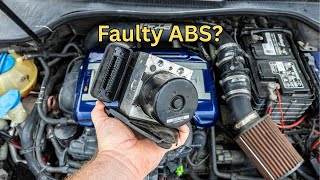
- Faulty ABS Control Module or Hydraulic Pump (Very Common) — The ABS module controls the anti-lock brake system and integrates with the hydraulic pump. Internal electronic failure is the most common cause of chassis system faults, stemming from age, vibration, or moisture intrusion that breaks internal solder joints. 🎬 Watch: Top 8 symptoms of a failing ABS control module.
- Defective Wheel Speed Sensor (Common) — Each wheel has a sensor reporting rotational speed to the ABS module. Harsh road conditions, debris, and salt destroy these sensors or their wiring, causing them to send erratic signals that trigger a system shutdown. 🎬 Learn how to test a wheel speed sensor with a multimeter.
- Faulty Steering Angle Sensor (SAS) (Common) — The SAS reads the steering wheel's position to inform the stability control system of the driver's intended direction. If this sensor fails or loses calibration after an alignment, the system disables stability and traction control as a precaution.
- Low Battery Voltage (Less Common) — Modern ABS and stability control systems require stable voltage. A weak battery providing below 11.8V causes electronic modules to fail their startup self-tests and trigger immediate warning lights.
- Wiring or Electrical Connection Issues (Less Common) — Corroded ground wires, loose battery terminals, or damaged wiring harnesses interrupt power and data signals to the ABS module. Chafed wires leading to wheel speed sensors are frequent culprits.
- Yaw Rate / G-Force Sensor Failure (Less Common) — This sensor measures the vehicle's rotational speed and lateral G-forces to detect skids. If it provides incorrect data, the system disables itself to prevent erroneous brake application.
- Blown ABS Fuse or Relay (Uncommon) — High-amperage fuses and relays protect the ABS module and pump motor. A power surge or shorted pump motor blows the fuse, cutting all power and causing a total loss of communication.
- Low or Contaminated Brake Fluid (Uncommon) — The ABS system requires clean brake fluid. Critically low fluid from a leak, or heavy water contamination, impairs the hydraulic unit's ability to modulate pressure and triggers a fault.
Symptoms
- ABS Warning Light On — An amber ABS light remains illuminated on the dashboard.
- Stability/Traction Control Light On — The traction and stability system warning light (a car with squiggly lines) illuminates, confirming deactivation.
- Safety Systems Disabled — Features relying on stability control, such as adaptive cruise control, forward collision warnings, or trailer sway control, turn off and display unique warning messages.
- Brakes Lock Up Under Hard Braking — Wheels lock up and skid during emergency stops or on slippery surfaces, confirming the anti-lock function is offline.
- Brake Pedal Pulsation is Absent — The rapid brake pedal pulsation normally felt during a hard stop disappears.
- Stiff or Unresponsive Brake Pedal — If the hydraulic unit fails mechanically, the brake pedal feels abnormally hard, spongy, or unresponsive.
Diagnostic Flowchart
Tap your situation to follow the diagnostic path that matches what you're seeing on this code.
Common Fixes & Costs
- Replace a Faulty Wheel Speed Sensor
— Parts: $50-$250, Labor: $100-$200, ~1.5 hr book time
(DIY)
Ford F-150 (2009-2017): OEM FL3Z-2C190-B (Rear), ML3Z-15K857-A (Front Kit) (Alt: Bosch: WS800, Dorman: 970-020, Standard Motor Products (SMP): ALS2589)
Mitsubishi Outlander (2007-2018): OEM 4670A575 (Front Left), 4670A576 (Front Right), 4670A583 (Rear Left), 4670A584 (Rear Right) (Alt: NTK/NGK: AB1918, Walker Products: 240-91040)
Nissan Rogue (2014-2020): OEM 47910-4BA0A (Front), 47900-4BF0A (Rear) (Alt: Genuine: W0133-1991018, Autopart Premium: APABS0678) - Repair or Rebuild the ABS Control Module
— Parts: $150-$500, Labor: $150-$300, ~2 hr book time
(Intermediate)
Ford F-150 (2009-2014): OEM AL3Z-2C219-B, BL3Z-2C219-B (Alt: Repair Service (e.g., XeMODeX FO.1010, Module Repair Pro))
Mitsubishi Outlander: OEM 4670A458, 4670A356 (Alt: Repair Service)
Nissan Rogue: OEM 47660-4BA1B, 47660-6MA0B (Alt: Repair Service) - Replace the ABS Module/Hydraulic Unit Assembly
— Parts: $800-$2,500, Labor: $200-$400, ~2.5 hr book time
(Professional)
Ford F-150 (2009-2014): OEM BL3Z-2C219-B (Alt: Cardone (Remanufactured): 12-2110, Bosch (New))
Mitsubishi Outlander (2007-2018): OEM 4670A458 (Alt: OEM is primary source.)
Nissan Rogue (2014-2020): OEM 47660-6FL0B, 47660-9HS0B (Alt: OEM is primary source.) - Recalibrate or Replace the Steering Angle Sensor
— Parts: $150-$600, Labor: $100-$250, ~1.5 hr book time
(Intermediate)
Ford F-150 (2009-2014): OEM BB5Z-3F818-A, 7L1Z-3F818-A (Alt: Standard Motor Products (SMP): SWS59, Dorman: 601-225)
Mitsubishi Outlander (2007-2018): OEM 8651A086 (Alt: Standard Motor Products (SMP): SWS132)
Nissan Rogue (2014-2020): OEM 47945-4BA0A (Alt: Often included with clock spring assembly.) - Repair ABS Module Ground Connection
— Parts: $1-$10, Labor: $75-$150, ~0.8 hr book time
(DIY)
All: OEM N/A (Alt: N/A)
Used vs. New Parts: Buying Guide
When a used part is worth it: A used ABS module/pump assembly saves hundreds of dollars on older vehicles (10+ years). Purchase from a reputable salvage yard offering a warranty.
Donor-vehicle mileage cap: roughly under 100000 miles for the part to have meaningful remaining life.
Donor quality checklist:
- Match the OEM part number exactly. Slight variations lead to incompatibility.
- Purchase from a seller providing the donor vehicle's VIN to check its history.
- Inspect the part for physical damage, corrosion, or cut wiring harnesses.
- Inquire about the seller's return policy and warranty period (typically 30-90 days).
Decision logic:
- If The fault is internal to the electronic module (e.g., code C1210) → Repair your original module via a mail-in service to avoid VIN programming issues.
- If A new OEM part is extremely expensive (>$1500) or discontinued → Purchase a warrantied used part from a low-mileage donor.
- If The vehicle is newer and the part cost is manageable → Buy a new OEM or high-quality remanufactured part for maximum reliability.
Warranty tradeoff: Used parts typically include a 30-90 day part-only warranty. Mail-in repair services often offer a 1-year or lifetime warranty. New OEM parts carry a 1-2 year warranty.
Worst-case if a used part fails: $300-$600 if a used part is dead on arrival, requiring payment for repeat labor costs plus another part.
What Happens If You Wait — Timeline
- Immediate (0-2 weeks): ABS and Stability Control warning lights illuminate. Safety systems are disabled. Conventional braking works, but with increased risk of skidding in emergencies. (MPG impact: 0%% · Added cost: $0)
- Short-Term (1-3 months): The vehicle fails mandatory state safety inspections. An internal short in a failing ABS module occasionally causes a parasitic battery drain. (MPG impact: 0%% · Added cost: $50-$250 (Inspection re-test fees + potential new battery cost).)
- Medium-Term (3-6 months): The primary consequence remains the sustained high safety risk. If the root cause is contaminated brake fluid, continued neglect permanently damages the ABS hydraulic pump. (MPG impact: 0%% · Added cost: $0 - $1500+ (depending on root cause and resulting damage from neglect).)
- Long-Term (6+ months): The cost is the ever-present risk of an accident where ABS/ESC could have prevented loss of control. For certain Hyundai/Kia models, ignoring a recalled ABS module fault poses a fire risk. (MPG impact: 0%% · Added cost: The cost of the eventual repair, plus the immense potential cost of an at-fault collision ($5,000 - $50,000+).)
Cost of Not Fixing It
- Immediate: Loss of ABS and ESC. Increases the risk of wheel lock-up and skidding during emergency braking, potentially causing an accident. (Added cost: Potential for accident-related costs, insurance premium increases, and personal injury.)
- Short-Term (Weeks to Months): Automatic failure of mandatory state safety inspections. Internal shorting in a failing module occasionally causes parasitic battery drain. (Added cost: $50-$200 in inspection re-test fees and fines.)
- Long-Term (6+ Months): Elevated safety risk and eventual unavoidable repair costs to restore ABS/ESC systems for inspection compliance. (Added cost: The cost of the eventual repair, which is unlikely to decrease over time.)
Diagnosis Steps
- Scan for ABS-Specific Codes (Crucial First Step)
Code C2339 is a generic flag. Use an OBD-II scanner capable of reading Chassis (C-prefix) codes to retrieve the specific DTC (e.g., 'C0034 Right Front Wheel Speed Sensor') directly from the ABS module. This step is mandatory to avoid misdiagnosis.
Tools: Advanced OBD-II Scanner (ABS/Chassis capable) (Intermediate) - Check Battery Voltage and Connections
Verify battery voltage with a multimeter. A healthy battery reads above 12.4V with the engine off and 13.2V-14.8V while running. Consistent voltage below 12.0V causes modules to fail self-tests.
Tools: Wrench, Multimeter, Terminal cleaning brush (Beginner) - Analyze Wheel Speed Sensor Live Data
Use the scanner's live data function to display speed readings from all four wheel sensors simultaneously. Drive slowly (5-10 mph); a sensor reading 0 mph or showing erratic jumps is faulty.
Tools: Advanced OBD-II Scanner (Intermediate) - Inspect ABS Module Ground Connection
A poor ground causes intermittent ABS faults. Locate the main ground for the ABS module (often on the frame rail), remove the bolt, clean the contact surfaces to bare metal, and re-secure tightly.
Tools: Wrench/Socket set, Wire brush, Dielectric grease (Advanced) - Visually Inspect Wiring and Connectors
Examine wiring routed to the ABS module and wheel speed sensors. Look for chafing, melting, or corrosion, paying close attention to exposed harnesses in the wheel wells.
Tools: Flashlight (Intermediate) - Inspect Brake Fluid and Fuses
Check the brake fluid level and condition. Locate the fuse box and test all high-amperage and control fuses labeled 'ABS', 'VSC', 'ASC', or 'StabiliTrak'.
Tools: Flashlight, Fuse puller or needle-nose pliers (Beginner) - Test Wheel Speed Sensor Resistance
For passive 2-wire sensors, disconnect and measure resistance with a multimeter (typically 800-2,500 ohms). A reading of 'OL' or zero indicates internal failure. Active 3-wire sensors require live data or an oscilloscope.
Tools: Multimeter, Vehicle-specific repair manual (for specs) (Advanced) - Check Steering Angle Sensor Live Data
Monitor the 'Steering Angle' PID on your scanner. With wheels straight, it should read 0 degrees. Turn lock-to-lock; the reading must change smoothly without jumping. Erratic values indicate a failed or uncalibrated sensor.
Tools: Advanced OBD-II Scanner (Advanced) - Check ABS Pump and Module Power
If communication code U0121 is present, use a multimeter to verify battery voltage and ground at the ABS module's main connector. Lack of voltage indicates a blown fuse, bad relay, or broken wire.
Tools: Multimeter, Vehicle Wiring Diagram (Advanced)
When This Code Triggers (Freeze-Frame Conditions)
- Vehicle Speed: 15-55 mph (Detected during initial self-tests at low speed (10-15 mph) or steady-state driving when sensor signals are expected to be stable.)
- System Voltage: 11.5V - 14.8V (Logged during startup if battery voltage is low, causing the module to fail its power-on self-test.)
- Steering Angle: Variable (Logged when the vehicle is turning and the steering sensor's reading contradicts data from the wheel speed or yaw rate sensors.)
- Brake Pedal Status: Off / Not Applied (Detected during normal driving when brakes are not used, as the system constantly monitors sensor inputs for plausibility.)
Related Codes
- U0121 — Indicates 'Lost Communication With ABS Control Module'. C2339 logs when a module receives a fault message; U0121 logs when a module receives no message at all, pointing to a total module failure or blown fuse.
- C0030-C0050 — Relates to specific wheel speed sensor circuits (e.g., C0034 for Right Front). Finding one of these codes in the ABS module identifies the root cause of the general C2339 fault.
- C0051 — Indicates a 'Steering Wheel Position Sensor Circuit' fault. This specific issue causes the C2339 code to set in other modules, disabling stability control.
- C1210 — Indicates an 'ABS Control Module Internal Failure'. If you scan the ABS module and find C1210, the module has condemned itself and requires repair or replacement.
Climate & Environmental Factors
- Cold Weather: Sub-freezing temperatures contract electronic components, causing intermittent open circuits in failing modules.
- Humidity and Road Salt: Salt accelerates corrosion on wiring connectors and wheel speed sensor mounting bores, pushing the sensor away from the tone ring.
- Snow and Ice Buildup: Packed snow physically blocks the wheel speed sensor's view of the tone ring, causing a temporary signal loss that resolves after melting.
How to Talk to a Mechanic About This Code
Say this: "I have an ABS and stability control light on, and a scan showed a C2339 code. I understand this is a generic code and the real fault is in the ABS module. I'd like to schedule a diagnostic to pull the specific codes from the ABS computer to find the root cause."
This shows you understand that C2339 is a secondary code and directs the technician to the correct diagnostic path (scanning the ABS module), preventing them from wasting time replacing the wrong component.
Avoid saying:
- 'My ABS light is on, just fix it.'
- 'My car has a C2339 code, please replace the part.'
- 'Just do whatever you think is best.'
Questions to ask before authorizing the repair:
- What specific fault code did you find in the ABS module?
- If it's a wheel speed sensor, did you confirm it with live data or a resistance test?
- If you are recommending an ABS module replacement, is a mail-in repair of my original module a possible alternative to save on cost?
- If the module is replaced, does it require programming and an ABS brake bleed, and is that included in the quote?
- Can you provide a written estimate with a full breakdown of parts and labor costs?
Where to Take It: Dealer vs Independent vs Chain
- Dealer:
A safe but very expensive option. Best for warranty work or if a new module needs to be programmed from scratch and no independent shop has the tool.
Best for: Vehicles under warranty, Complex manufacturer-specific electrical issues, Repairs requiring proprietary software for programming a new ABS module.
Downsides: Highest labor and parts costs, often 1.5-2x an independent shop., Defaults to expensive full-assembly replacement instead of exploring repair options. (Typical cost: +50% vs. baseline) - Independent Shop:
Best fit for most scenarios. A good independent shop provides the best balance of expertise and value for diagnosing and fixing the common causes of a C2339 fault.
Best for: Out-of-warranty vehicles where cost is a factor., Diagnosing and replacing common parts like wheel speed sensors or fixing ground wires., Removing the ABS module to be sent out for a mail-in repair service.
Downsides: Diagnostic capabilities vary; ensure they have a modern scanner that can read ABS codes and live data., May lack the tools to program a brand new module for all vehicle makes. (Typical cost: +0% vs. baseline) - Chain Shop:
Use with caution. Acceptable if you have already diagnosed a bad wheel speed sensor and just need it replaced, but AVOID for initial diagnosis or complex module work.
Best for: Simple, clear-cut repairs like replacing a single, diagnosed wheel speed sensor.
Downsides: Technician skill and diagnostic equipment vary widely., Not recommended for the initial diagnosis of a vague code like C2339., High pressure to upsell leads to unnecessary repairs. (Typical cost: -10% vs. baseline)
When to Walk Away From the Repair
If the estimated repair cost exceeds 40-50% of the car's Kelley Blue Book (KBB) private-party value, you should pause and evaluate your options.
- Car worth $15000, fix is $450: Fix it. A wheel speed sensor or ground wire repair is a minor cost relative to the car's value.
- Car worth $5000, fix is $750: Borderline - consider a mail-in repair. If the diagnosis is a failed ABS module, a $750 repair is a significant chunk of the car's value.
- Car worth $4000, fix is $2500: Walk away. The cost to replace the entire ABS hydraulic unit is too high for the vehicle's value.
What Scan Tool You Need for This Code
Minimum: A scanner that reads and clears Anti-lock Brake System (ABS) / Chassis (C-prefix) codes and displays live data for wheel speed sensors.
A standard $20 engine code reader CANNOT see ABS codes. It shows 'no codes' even when the ABS light is on, leading to wasted money and guesswork.
Budget: Ancel FX2000 / TOPDON AD500 (~$90) — Reads and clears engine, transmission, ABS, and SRS codes. Displays live data streams for all four wheel speed sensors to identify a faulty sensor.
Mid-range: Foxwell NT510 Elite / BlueDriver Pro (~$150) — Offers everything the budget pick does, plus special functions like Steering Angle Sensor (SAS) calibration and basic bidirectional tests.
Professional: Autel MaxiCOM MK808 / Innova 5610 (~$400-600) — Provides full bidirectional control, ESSENTIAL for activating the ABS pump to perform a proper brake bleed after replacing the hydraulic unit.
Rent vs buy: Most auto parts store loaner tools are basic engine code readers and will NOT read ABS codes. Buying a budget ABS-capable scanner is a worthwhile investment.
How to Clear the Code After You Fix It
- Perform the specific repair (e.g., replace wheel speed sensor).
- Reconnect any disconnected components, including the battery.
- Use an OBD-II scanner with ABS/Chassis capabilities to erase fault codes from all relevant modules (ABS, FCM, ACC).
- Perform a system-specific recalibration if required (e.g., Steering Angle Sensor calibration).
- Conduct a verification drive cycle.
Drive cycle (~15 minutes): Start the engine and idle for 1-2 minutes. Drive straight ahead, exceeding 15-20 mph to allow the ABS module to complete its self-test. Perform several turns, both left and right. Drive for at least 10-15 minutes, including steady-speed cruising. Warning lights remain off if the repair was successful.
Readiness monitors affected: This is a chassis code and does not directly affect engine emissions readiness monitors.
Watch out for:
- Simply disconnecting the battery will not clear chassis codes from modern vehicles and causes secondary issues.
- Failing to perform a required recalibration (like the steering angle sensor) causes the light to return immediately.
- Using a basic OBD-II code reader that cannot access or clear codes from the ABS module.
- The code returns immediately if the underlying root cause was not correctly identified and fixed.
Will This Fail Emissions / State Inspection?
No — by itself this code doesn't fail OBD inspection (but it can keep readiness monitors from setting, which causes a separate fail).
- California: An ABS light does NOT fail the emissions (smog) test itself, but it guarantees failure in states requiring a concurrent safety inspection.
- New York: During the annual NYS safety inspection, an inspector fails the vehicle if they determine the overall braking system is unsafe due to the ABS fault.
- Texas: For the annual safety inspection, the service brakes must function correctly. An illuminated ABS light indicates a fault and causes an automatic failure.
Most Commonly Affected Vehicles
- Mitsubishi Outlander, Lancer, Eclipse Cross (2007-2018) — C2339 commonly appears in the ACC or FCM system when the main ASC unit fails. Recall SC-18-004 addresses ASC-ECU software.
- Ford F-150 (2009-2017) — ABS module failures are widespread. A general chassis fault often points to a failed ABS module requiring a $1,200+ replacement or mail-in repair.
- Nissan Rogue, Murano, Altima (2014-2020) — Displays 'Chassis Control System Error'. Wheel speed sensor failures are frequent, averaging $200 per sensor.
- Hyundai / Kia Sorento, Kona, Elantra, Optima (2016-2022) — Manifests as a 'Check Forward Collision-Avoidance Assist' warning. Recalls exist for ABS modules short-circuiting internally.
- Subaru Outback, Forester, Crosstrek (2015-2022) — An ABS/VDC fault disables the EyeSight system. A loose electrical connector at the electronic parking brake module is a common culprit.
- Chevrolet / GMC Silverado, Sierra, Tahoe (2007-2014) — Notorious for intermittent 'Service StabiliTrak' warnings caused by a corroded main ground connection on the frame rail.
- Mazda 3, CX-9 (2007-2016) — A general ESP/TCS fault light often stems from a failed pressure transducer inside the ABS pump assembly.
- Toyota RAV4, Camry, Highlander (2015-2021) — An ABS/VSC fault triggers a 'Pre-Collision System Malfunction' warning, usually rooted in a wheel speed sensor or low battery voltage.
Manufacturer-Specific Notes
- Mitsubishi: Code C2339 is stored in the Adaptive Cruise Control (ACC) or Forward Collision Mitigation (FCM) computer, not the main ABS/ASC computer. The real trouble code must be read from the ASC module.
- General Motors: On 2007-2014 trucks and SUVs, a primary cause for ABS and StabiliTrak faults is a corroded grounding point (G303 or G304) on the frame rail beneath the driver's side door.
- Subaru: On 2015+ models, a loose electrical connector on the electronic parking brake module causes a cascade of warning lights (ABS, EyeSight, Hill Holder). Securing the connector with a zip tie is a common field fix.
- Hyundai/Kia: Certain models face major recalls for ABS modules short-circuiting internally due to moisture ingress, creating a fire risk even when parked. Owners are advised to park outside until repaired.
Real Owner Stories
2017 Subaru Forester with ABS and EyeSight lights on.
While driving in 19°F weather, the ABS, stability control, and EyeSight disabled warning lights came on intermittently. The lights cleared after restarting but returned mid-drive.
Outcome: The dealership found a snapped rear brake sensor wire. Replacing the damaged wire and sensor resolved the issue, and all warning lights disappeared.
Lesson: On Subarus, any sensor fault in the chassis system disables the EyeSight feature as a precaution. An intermittent light in cold weather often points to a wiring or sensor issue, not a catastrophic failure.
2013 Chevy Cruze with 'Service StabiliTrak' message.
The 'Service StabiliTrak' and 'Service Traction Control' messages appeared alongside the check engine light. The car lost power intermittently.
Outcome: The spark plug for cylinder 4 was severely rusted. Replacing the spark plug and ignition coil fixed the engine misfire, and the StabiliTrak warnings disappeared.
Lesson: A 'Service StabiliTrak' message on GM vehicles is often caused by an underlying engine performance issue. Always address engine-specific codes (P-codes) first.
2015 Nissan Rogue with 'Chassis Control System Error' in a snowstorm.
During a heavy snowstorm, the 'Chassis Control System Error' warning appeared, and the vehicle entered limp mode, unable to accelerate above 90 km/h.
Outcome: The dealer found excessive snow and ice buildup blocking a wheel speed sensor. After clearing the snow, the system reset and normal operation was restored.
Lesson: Environmental factors cause temporary faults. Packed snow and ice obstruct wheel speed sensors, triggering a system error that resolves itself once cleared.
How to Prevent This Code From Triggering
- Flush brake fluid every 2-3 years (Every 2-3 years or 30,000 miles) — Brake fluid absorbs moisture over time. This moisture causes internal corrosion in the expensive ABS hydraulic unit and solenoid valves, leading to seizure.
- Clean undercarriage and wheel wells regularly (Seasonally, especially after winter) — Washing away road salt and grime prevents corrosion of wheel speed sensor wiring, connectors, and ground points.
- Maintain a healthy battery and clean terminals (Annually) — ABS modules are sensitive to low voltage. A weak battery causes insufficient power during startup, leading to failed self-tests and fault codes.
- Address brake system issues promptly (As needed) — Ignoring a spongy brake pedal allows air to enter the ABS module, which is difficult and expensive to bleed.
- Avoid driving through deep standing water (Daily habit) — Submerging electrical components forces moisture into connectors and the ABS module, leading to short circuits and corrosion.
Frequently Asked Questions
Is it safe to drive with code C2339?
You can drive, but it is dangerous for extended periods. Normal brakes function, but anti-lock and stability control are disabled. This significantly increases your risk of skidding in an emergency stop.
What is the biggest misdiagnosis mistake with code C2339?
The biggest mistake is replacing the secondary module reporting the code (like cruise control). C2339 is a generic flag indicating the primary ABS module is offline. Always use an advanced scanner to read the specific fault code directly from the ABS module.
Why does the C2339 warning light come on and off intermittently?
Intermittent warnings usually point to a loose ground wire, a failing wheel speed sensor, or temperature-sensitive solder joints inside the ABS module. These components lose connection over bumps or during extreme temperature shifts. Diagnose the specific trigger using a scanner's live data function while driving.
Will a C2339 code fail a vehicle inspection?
Yes. In nearly all jurisdictions, an illuminated ABS or stability control warning light results in an automatic failure of the vehicle's safety inspection.
Why did C2339 appear after changing my battery or hitting a pothole?
A voltage drop during a battery change causes modules to store fault codes, or the steering angle sensor loses calibration. Hitting a pothole causes a jarring impact that damages the delicate wiring of a wheel speed sensor, triggering an immediate fault.
What's the difference between repairing and replacing an ABS module?
Replacing the module involves buying a new or used unit for $800 to $2,500+. Repairing involves sending your original module to a specialized service to fix internal failures for $150 to $500, avoiding expensive reprogramming.
Can I fix code C2339 myself?
Simple fixes like cleaning battery terminals or a ground wire are highly DIY-friendly. Replacing a wheel speed sensor is manageable for intermediate DIYers with basic tools. Stop DIY and go to a shop if the ABS module requires replacement, as this involves complex brake bleeding and VIN programming.
Key Takeaways
- Code C2339 indicates your anti-lock brakes (ABS) and electronic stability control (ESC) are offline, increasing the risk of skidding during emergency stops.
- Treat C2339 as a secondary warning flag; you must use an ABS-capable scanner to pull the primary fault code directly from the ABS control module.
- Over 80% of C2339 codes stem from a defective wheel speed sensor, a failing ABS control module, or a low battery dropping below 12.0 volts.
- Never replace the secondary module (like adaptive cruise control) reporting the C2339 code; the root failure always lies within the chassis or ABS system.
- Save $500 to $1,500 by using a mail-in rebuild service for a faulty ABS module instead of purchasing a brand-new OEM replacement.
Helpful Videos

The information in this article is provided for general reference and educational purposes only. Vehicle specifications, procedures, and part compatibility can vary by production date, trim level, and region. Always consult your vehicle's factory service manual and verify part numbers before purchasing or performing repairs. Safety-critical components such as airbags, seat belts, and braking systems should be installed by a qualified professional.
- 🎬 Helpful Videos
- What Does C2339 Mean?
- Can I Drive With C2339?
- Common Causes
- Symptoms
- Diagnostic Flowchart
- Common Fixes & Costs
- Used vs. New Parts: Buying Guide
- What Happens If You Wait — Timeline
- Cost of Not Fixing It
- Diagnosis Steps
- When This Code Triggers (Freeze-Frame Conditions)
- Related Codes
- Climate & Environmental Factors
- How to Talk to a Mechanic About This Code
- Where to Take It: Dealer vs Independent vs Chain
- When to Walk Away From the Repair
- What Scan Tool You Need for This Code
- How to Clear the Code After You Fix It
- Will This Fail Emissions / State Inspection?
- Most Commonly Affected Vehicles
- Manufacturer-Specific Notes
- Real Owner Stories
- 2017 Subaru Forester with ABS and EyeSight lights on.
- 2013 Chevy Cruze with 'Service StabiliTrak' message.
- 2015 Nissan Rogue with 'Chassis Control System Error' in a snowstorm.
- How to Prevent This Code From Triggering
- Frequently Asked Questions
- Is it safe to drive with code C2339?
- What is the biggest misdiagnosis mistake with code C2339?
- Why does the C2339 warning light come on and off intermittently?
- Will a C2339 code fail a vehicle inspection?
- Why did C2339 appear after changing my battery or hitting a pothole?
- What's the difference between repairing and replacing an ABS module?
- Can I fix code C2339 myself?
- Key Takeaways
- 🎟️ Get 5% Off