

OBD-II Code C2316: Suspension Level Control Circuit Malfunction
What C2316 means, why it triggers, and how to fix it
- Code C2316 indicates a missing or out-of-range signal from a suspension height sensor, preventing the air compressor from leveling the vehicle.
- A leaking rubber air spring is the most common root cause, forcing the compressor to run constantly and often burning it out within 1 to 3 months.
- Never replace a burnt-out air compressor without first performing a soapy water leak test on the air springs, as an unfixed leak will destroy the new compressor in days.
- On Hyundai and Kia models, C2316 refers to a front right inlet valve error in the ABS module, requiring brake system diagnostics rather than suspension work.
- Replacing a height sensor or control module requires a ride height calibration using a bi-directional scan tool to establish the new zero point and clear secondary C0569 codes.
What Does C2316 Mean?
Code C2316 means the suspension control module detects a missing, incorrect, or out-of-range signal from a ride height sensor. These sensors monitor the height of each corner so the air compressor can add or remove air to maintain a level stance.
Technical definition: While not standardized across all manufacturers, C2316 most commonly indicates a 'Suspension Level Control Circuit Malfunction.' The control module receives an implausible signal from a ride height sensor, disabling automatic leveling. On certain Hyundai and Kia vehicles, this code indicates an ABS valve error instead.
Can I Drive With C2316?
Yes, But With Caution. Driving is possible, but incorrect ride height causes poor handling and accelerated tire wear. Do not drive for extended periods. Driving on a sagging suspension forces the air compressor to run constantly, burning it out in days or weeks. This turns a moderate repair (a leaking air spring) into an expensive one, adding $800-$1,700+ for a new compressor.
Common Causes
- Leaking Air Spring (Air Bag) (Very Common) — Age-related cracks or holes in a rubber air spring cause a leak, forcing the compressor to run constantly to maintain height. This overworks the system and guarantees secondary compressor failure if ignored.
- Failed Suspension Height Sensor (Common) — The sensor itself fails from moisture intrusion, internal corrosion, or physical damage, sending an erratic or nonexistent voltage signal to the control module.
- Broken or Disconnected Height Sensor Linkage (Common) — The small plastic or metal arm connecting the sensor to the suspension control arm breaks or pops off its ball joint. The sensor then reports a fixed, incorrect height, confusing the system.
- Worn or Burnt-Out Air Suspension Compressor (Common) — Usually a secondary failure caused by an unrepaired air leak, the compressor motor burns out from running continuously. It also fails due to age or internal corrosion from a saturated air dryer.
- Damaged Wiring or Corroded Connectors (Common) — Exposed wiring to the height sensor or compressor frays, cuts, or corrodes. On many GM trucks, wires chafe directly against the compressor's metal mounting bracket, causing a short.
- Faulty Air Suspension Compressor Relay (Less Common) — The electronic relay that powers the compressor sticks in the 'on' position (burning out the compressor) or fails to activate entirely.
- Saturated Air Compressor Dryer (Less Common) — The air dryer removes moisture from incoming air. When its desiccant saturates, water passes into the compressor and air lines, causing internal corrosion and freezing in cold climates.
- Faulty Suspension Control Module (Uncommon) — The electronic 'brain' of the system fails internally, leading to erratic ride height readings or a complete failure to respond despite healthy mechanical components.
Symptoms
- Vehicle Sagging or Sitting Low — One corner, the entire front or rear, or the whole vehicle sits noticeably lower than normal, especially after parking overnight.
- Compressor Runs Constantly or is Loud — A humming or buzzing noise from the air compressor fails to shut off, or makes loud grinding noises. This is a critical warning sign of an active air leak.
- Suspension Warning Light is On — A 'Service Air Suspension' or 'Check Ride Control' message illuminates on the dashboard.
- Vehicle is Stuck at One Height — The vehicle refuses to raise or lower when commanded via interior switches, remaining locked at an abnormally high or low position.
- Harsh Ride and Braking Instability (also visible on scanner) — The ride feels unusually harsh or bouncy because the vehicle is riding on its bump stops. The front end dips excessively during braking due to deflated front air springs.
Diagnostic Flowchart
Tap your situation to follow the diagnostic path that matches what you're seeing on this code.
Common Fixes & Costs
- Replace Leaking Air Spring(s) — Parts: $150-$800 per spring (aftermarket vs. OEM)., Labor: $200-$400 per corner., ~2.5 hr book time (Intermediate)
- Replace Failed Suspension Height Sensor — Parts: $70-$450., Labor: $100-$200., ~0.8 hr book time (DIY)
- Replace Air Suspension Compressor — Parts: $250-$1,500+ (aftermarket vs. OEM)., Labor: $200-$450., ~2.2 hr book time (Intermediate)
- Replace Air Suspension Compressor Relay — Parts: $15-$50, Labor: $0-$50, ~0.1 hr book time (DIY)
- Repair Damaged Wiring — Parts: $5-$30, Labor: $150-$350, ~1.5 hr book time (Intermediate)
Used vs. New Parts: Buying Guide
When a used part is worth it: Used air suspension components are a budget-conscious option for older, high-mileage vehicles where new parts are cost-prohibitive. They make sense if you verify the donor vehicle had low mileage and was not scrapped due to suspension failure.
Donor-vehicle mileage cap: roughly under 70000 miles for the part to have meaningful remaining life.
Donor quality checklist:
- For air springs, inspect the rubber for cracks, chafing, or dry rot.
- For compressors, ensure electrical connectors are clean. Avoid parts from flood or rust-belt vehicles.
- Verify the part number exactly. Used parts rarely come with a meaningful warranty.
Decision logic:
- If Vehicle is less than 8 years old or under 100k miles → Buy new (OEM or quality aftermarket like Arnott). The risk of premature failure of a used part outweighs the savings.
- If Budget is the primary concern and you accept the risk of a shorter lifespan → A used part from a reputable salvage yard is viable. Expect a 30-90 day warranty at most.
- If The original failure was a burnt-out compressor → Strongly favor a new compressor. A used compressor may have already been overworked from a leak in its donor vehicle.
Warranty tradeoff: Used parts offer a 30-90 day functional warranty. New aftermarket parts come with a 1-year to limited lifetime warranty. New OEM parts carry a 1-2 year warranty.
Worst-case if a used part fails: $300-600 if a used part fails after installation, primarily due to repeated labor costs.
What Happens If You Wait — Timeline
- 0-4 weeks: A slow leak develops in an air spring. The vehicle sags slightly on one corner overnight. The compressor runs for 30-60 seconds after startup to compensate. Code C2316 is intermittent. (MPG impact: 0-1%% · Added cost: $0)
- 1-3 months: The leak worsens. The compressor runs for several minutes after startup and cycles on while driving. The 'Service Air Suspension' light is permanently on. The affected corner sags noticeably within an hour of parking. (MPG impact: 1-3%% · Added cost: $50-100 in accelerated compressor wear.)
- 2-6 months: The air compressor motor burns out from constant overuse. The vehicle sags completely on one side and will not raise. The ride is extremely harsh and bouncy as the suspension rides on the bump stops. (MPG impact: 3-5%% · Added cost: $800 - $1,700 (The original air spring repair plus the now-necessary compressor and relay replacement).)
- 6+ months: Continued driving on the bump stops causes secondary damage. Constant harsh impacts damage the internal shock absorbers, suspension mounting points, and cause severe, uneven tire wear. Vehicle handling is unsafe. (MPG impact: 5-10%% · Added cost: $1,500 - $3,000+ (Includes stage 3 costs plus new tires and potentially new shock absorbers).)
Cost of Not Fixing It
- 0-1 month: A leaking air spring causes the compressor to run excessively, leading to a noisy compressor and a sagging corner overnight. Handling and ride quality are compromised. (Added cost: Negligible, but the primary repair cost is imminent.)
- 1-3 months: The constantly running air compressor motor burns out. What was a single air spring replacement now requires a new compressor and relay. (Added cost: $450 - $1,950)
- 3+ months: Driving on the bump stops damages shock absorbers, suspension mounts, and causes accelerated, uneven tire wear. The vehicle is unsafe to control in an emergency. (Added cost: $200 - $800+ (for new tires and potential shock absorber replacement))
Diagnosis Steps
- Visually Inspect the Suspension
Park on level ground. Identify if one corner sits noticeably lower. Listen closely near the wheel wells for hissing sounds indicating an active air leak.
Tools: None (Beginner) - Inspect the Height Sensor and Linkage
Locate the height sensor at the corner indicated by the scanner. Verify the plastic linkage arm is securely attached to both the sensor and the suspension control arm. Check the wiring connector for green corrosion.
Tools: Flashlight (Beginner) - Perform a Soapy Water Leak Test
With the engine running to engage the compressor, spray a soap and water mixture heavily onto the rubber air springs and air line fittings. Bubbles forming pinpoint the exact location of a leak.
Tools: Spray bottle, soap, water (Beginner) - Check the Compressor Relay
Locate the air suspension relay in the fuse box. Swap it with an identical relay from a non-critical system (like the horn). If the compressor immediately starts working, the original relay is dead.
Tools: Fuse puller (Beginner) - Scan for Module Data and Perform Active Tests
Use a bi-directional scan tool to read live data from the height sensors. The voltage should change smoothly as you manually push down on the vehicle's bumper. Command the compressor and vent solenoids on/off to isolate component failures.
Tools: Bi-directional Scan Tool (Intermediate) - Test the Height Sensor Circuit (Multimeter)
Back-probe the height sensor connector. Verify a steady 5V reference and a solid ground (less than 0.1V). Measure the signal wire voltage while slowly raising/lowering that corner with a jack. Voltage must change smoothly (e.g., 0.5V to 4.5V). A jumpy or stuck voltage confirms a bad sensor.
Tools: Multimeter, back-probe pins, wiring diagram, floor jack (Advanced) - Test the Compressor Directly
If the compressor refuses to run, apply 12V power directly to its main terminals using a fused jumper wire. If it runs, the fault lies in the control circuit (relay, wiring, module). If it remains dead, the compressor motor requires replacement.
Tools: Fused jumper wire, basic hand tools (Advanced) - Analyze the Height Sensor with an Oscilloscope
For intermittent dropouts, connect an oscilloscope to the sensor's signal wire. As the suspension moves, a healthy sensor produces a clean, linear trace. Sharp dropouts or spikes indicate internal contact failure.
Tools: Automotive Oscilloscope, back-probe pins (Advanced) - Check for System Calibration Issues
If parts were recently replaced and the code returns, perform a ride height calibration. Use a bi-directional scan tool to reset the baseline height values in the suspension control module.
Tools: Bi-directional Scan Tool (Intermediate)
When This Code Triggers (Freeze-Frame Conditions)
- Vehicle Speed: 0 mph (at startup) or 25-65 mph (while driving) (The code sets when the system self-tests at startup or when actively trying to make adjustments while driving.)
- System Voltage: 11.5-14.5V (The code typically sets during normal operating voltage when a sensor signal is implausible.)
- Suspension Command: Leveling or Height Change (The fault is detected when the control module commands a height change and the sensor's feedback does not match the expected result.)
- Time Since Ignition On: > 10 seconds (The code sets after an initial self-check period, confirming the fault is persistent and not a momentary startup glitch.)
Related Codes
- C0711 — Indicates a fault with the 'Level Control Pressure Sensor Circuit,' integrated into the compressor assembly. Diagnosis should start at the compressor wiring, whereas C2316 points to a wheel height sensor.
- C0569 — Means 'System Configuration Error'. It appears after a height sensor or control module is replaced, indicating a calibration is needed. If it appears with C2316 before repairs, it points to a failed suspension control module.
- C15A1-00 — Means 'Unable To Obtain Desired Ride Height,' common on Ram trucks alongside C2316. It indicates the system tried to adjust height but failed due to a major air leak or failed compressor. TSB 08-051-16 addresses this.
- P0700 — A generic Transmission Control System Malfunction code. Its appearance with C2316 is coincidental or indicates a broader vehicle electrical issue, such as a failing battery affecting multiple modules.
Climate & Environmental Factors
- Cold Weather: Cold temperatures stiffen rubber air springs, making them prone to cracking. Moisture in the system freezes, blocking air lines and valves, and damaging the compressor. Ram 1500 trucks frequently experience failures below 30°F.
- High Humidity: Humid climates saturate the system's air dryer faster, allowing water into the air lines and springs. This moisture causes internal corrosion of metal components and accelerates rubber degradation.
- Heat: High ambient temperatures accelerate the aging of rubber air springs, causing premature dry rot and cracking. Heat also increases the risk of compressor overheating, especially if it runs frequently due to a leak.
- Dust and Debris: In dusty or off-road environments, dirt and rocks accumulate in the rolling folds of the air springs. This debris chafes against the rubber, creating holes. This is a known issue on Jeep Grand Cherokees with Quadra-Lift.
How to Talk to a Mechanic About This Code
Say this: "I have a C2316 code and a 'Service Suspension' light. The vehicle is sagging on one corner. I'd like to schedule a diagnostic, specifically requesting a leak test of the air suspension system before you recommend replacing any major components like the compressor."
This signals that you understand the most common failure pattern (a leak killing the compressor). It directs the shop to perform the correct root cause analysis instead of just replacing the most expensive, symptomatic part (the compressor), which fails again if the leak isn't fixed.
Avoid saying:
- 'Just fix whatever's wrong'
- 'My suspension warning light is on, can you look at it?'
- 'The car is bouncy, I think I need new shocks.'
Questions to ask before authorizing the repair:
- If you're recommending a new compressor, can you show me where the leak was that caused the original one to fail?
- If you're replacing an air spring, what is the age and condition of the one on the other side? Should they be replaced in pairs?
- Will this repair require a ride height calibration with a scan tool afterward?
- What is the warranty on the new parts and the labor for this specific repair?
Where to Take It: Dealer vs Independent vs Chain
- Dealer:
A safe but expensive option. The best choice for warranty work or specific software-related TSBs.
Best for: Vehicles under warranty, Complex diagnostics on German brands (Mercedes, Audi, BMW), Repairs requiring a specific Technical Service Bulletin (TSB) software update, like on some Ram 1500s.
Downsides: Highest labor rates and OEM part costs., Quick to replace an entire assembly rather than a smaller component. (Typical cost: +50% vs. baseline) - Independent Shop:
Best fit for most situations. A good independent mechanic has seen this common failure many times and offers flexible repair options, including quality aftermarket parts.
Best for: Most out-of-warranty air suspension repairs on common domestic and Japanese vehicles., Vehicle owners who are cost-conscious but want quality repairs.
Downsides: Quality and expertise vary greatly; look for shops that specialize in suspension or specific vehicle makes., May lack access to the very latest manufacturer software updates. (Typical cost: +0% vs. baseline) - Chain Shop:
Use with caution. Acceptable for a straightforward part replacement if the diagnosis is 100% certain. Avoid for initial diagnosis of a C2316 code.
Best for: Simple, clear-cut part replacements where the diagnosis is already certain (e.g., you've diagnosed a bad height sensor yourself).
Downsides: Technician skill and diagnostic equipment are inconsistent., High pressure to upsell services; misdiagnoses a leak as a bad compressor. (Typical cost: -10% vs. baseline)
When to Walk Away From the Repair
Take the vehicle to a suspension specialist or consider alternatives if the estimated repair cost for the air suspension system exceeds 40-50% of your car's private-party market value.
- Car worth $5000, fix is $2500: Walk away or convert. A full air suspension rebuild (leaking springs + new compressor) is not economical. Consider a coil spring conversion kit for ~$800-$1500 as a more reliable, long-term solution.
- Car worth $25000, fix is $950: Fix it. Replacing a single leaking air spring on a newer, high-value vehicle is a routine repair and well below the threshold.
- Car worth $8000, fix is $4000: Walk away. A quote for a full system replacement on a high-end but depreciated vehicle (e.g., an older Mercedes or Range Rover) often exceeds the 50% rule. This is a classic money pit scenario.
What Scan Tool You Need for This Code
Minimum: A code reader that accesses Chassis (C) and ABS codes. The cheapest scanners only read engine (P) codes and will not see C2316.
A basic code reader only tells you the C2316 code exists. For a proper diagnosis, you need a tool that shows live data from the height sensors and performs bi-directional controls to command the compressor and valves on/off.
Budget: BlueDriver Pro or similar Bluetooth scanner (~$100) — Reads and clears chassis codes like C2316. Displays live data from the height sensors, allowing you to see if a sensor's reading is stuck or erratic as the suspension moves.
Mid-range: Foxwell NT510 Elite / Autel AP200 / XTool A30M (~$150) — The sweet spot for DIY. Offers bi-directional control. Allows you to command the compressor on/off to test it, and command individual solenoids to isolate leaks or stuck valves. Some offer the ride height calibration function.
Professional: Autel MaxiCOM MK808 / Foxwell NT809 / Launch X431 (~$450-1200) — Provides full, professional-level diagnostics. Features robust bi-directional controls, advanced data graphing, and the crucial 'Ride Height Calibration' function needed after replacing a sensor or control module to clear C0569 codes.
Rent vs buy: Buy. Free rental scanners at auto parts stores are almost always basic engine code readers and cannot diagnose a C2316 code. You need a capable scanner with chassis and bi-directional functions.
How to Clear the Code After You Fix It
- Use a professional OBD-II scan tool to clear the code from the Suspension Control Module.
- Perform a ride height calibration if a sensor or module was replaced.
- Cycle the ignition and operate the suspension through all height settings to confirm the repair.
Drive cycle (~20 minutes): After clearing the code, start the vehicle and allow the compressor to level the vehicle. Drive for 15-20 minutes with a mix of city and highway speeds. Operate the manual height controls to cycle the system. Park, turn it off, and let it sit for 10-15 minutes to check for sagging indicating a remaining leak.
Readiness monitors affected: Not applicable for emissions readiness monitors.
Watch out for:
- Disconnecting the battery will not clear this code from the suspension module.
- The code returns immediately if the underlying mechanical or electrical fault is not fixed.
- Forgetting to perform a ride height calibration after replacing a sensor causes the code to return or triggers a C0569 configuration error.
Will This Fail Emissions / State Inspection?
No — by itself this code doesn't fail OBD inspection (but it can keep readiness monitors from setting, which causes a separate fail).
- California: This code will not fail the OBD-II emissions test, as it is a chassis (C-code) fault. However, a visible and severe suspension issue fails the safety inspection portion.
- New York: New York's annual inspection includes a safety check of the suspension. Sagging, broken, or loose suspension components are grounds for failure. The underlying symptom fails the safety inspection.
- Texas: In the 17 counties requiring emissions testing, a C-code like C2316 will not cause an emissions failure. However, if subject to a commercial safety inspection, suspension integrity is checked.
Most Commonly Affected Vehicles
- Cadillac Escalade (2007-2020) — Very common failure of the air compressor and rear air shocks. Wiring harness chafing near the compressor is a known issue. TSBs like 15-06-01-002E address related engine issues confused with suspension feel.
- GMC Yukon / Yukon XL (Denali) (2007-2020) — Shares the Escalade's air suspension system and suffers identical, frequent failures of the compressor and air springs. TSB PIP5089A discusses the C0569 code appearing after transfer case repairs.
- Lincoln Navigator (2003-2017) — Prone to air spring leaks, which overworks and destroys the compressor. Many owners opt to convert to traditional coil springs using kits from brands like Strutmasters.
- Ford Expedition (2003-2017) — Equipped with a similar system to the Navigator, experiencing age-related air spring and compressor failures. Conversion to coil springs is a cost-effective long-term repair.
- Chevrolet Tahoe / Suburban (2015-2020) — Models with 'Autoride' or 'Magneride' suspension frequently experience compressor and sensor failures. TSB 15-06-01-002E is relevant.
- Ram 1500 (2013-2021) — The 'Active-Level Four-Corner Air Suspension' is prone to leaks and compressor failure in cold climates. TSB 08-051-16 updates the Air Suspension Control Module (ASCM) software to address cold weather height adjustment failures.
- Mercedes-Benz S-Class, GL-Class, E-Class (2000-2016) — The 'Airmatic' system is notorious for air strut leaks and expensive compressor failures. Letting a leak persist quickly burns out the compressor, adding thousands to the repair bill.
- Audi Q7, A8, Allroad (2005-2015) — Audi's adaptive air suspension frequently suffers from leaking air springs. A single corner dropping overnight is the classic symptom of a leak.
- Land Rover Range Rover, Discovery (2003-2016) — A 'Suspension Fault' message is extremely common. Issues range from height sensor failures to compressor and valve block problems. Ride height sensors report out-of-range values if knocked out of alignment.
- Jeep Grand Cherokee (2011-2021) — Models with 'Quadra-Lift' air suspension are susceptible to air springs failing after off-road use due to debris caught in the rubber folds. Conversion kits are a popular solution.
Manufacturer-Specific Notes
- Hyundai / Kia: On many Hyundai and Kia models, C2316 indicates a 'Front Right Inlet Valve Error' within the ABS hydraulic unit, not a suspension issue. Diagnosis involves testing the ABS module and its internal valves.
- General Motors (GM): The wiring harness for the compressor is prone to chafing and shorting out on the compressor's own mounting bracket. This is a very common cause for compressor-related codes. See TSB #PIT4954C for details.
- Ford / Lincoln: A common failure point is the O-rings sealing the air lines at the top of the air springs. These dry out and cause slow leaks that eventually burn out the compressor. TSB #03-13-2 addresses compressor noise issues.
- Stellantis (Ram / Jeep / Chrysler): On some vehicles, C2316 indicates a 'Terrain Switch' fault due to liquid damage. On Jeep Grand Cherokees, Quadra-Lift air springs fail after off-road use due to debris. TSB 08-051-16 updates software for cold weather performance.
Real Owner Stories
2015 GMC Yukon Denali at 110K miles
Owner heard the compressor running constantly for weeks. Eventually, a 'Service Suspension' light came on and the rear of the truck was sagging.
What they tried:
- A local shop diagnosed a failed air compressor and replaced it for $1,200.
- The new compressor burned out within a week, and the sagging returned.
Outcome: A second shop performed a soapy water test and found a significant leak in the driver's side rear air spring. Replacing the air spring (~$450 part) and a second new compressor finally fixed the issue.
Lesson: A failed compressor is almost always a symptom of an air leak. Never replace the compressor without first performing a thorough leak test on the air springs and lines.
2018 Jeep Grand Cherokee Trailhawk at 55K miles
The 'Service Air Suspension Immediately' warning appeared, and the vehicle was stuck in the lowest 'Entry/Exit' mode. No visible sagging or audible leaks.
What they tried:
- Owner checked online forums and learned about a common fuse issue.
- Inspected the 40A fuse for the air suspension control module/compressor and found it was blown.
Outcome: Replacing the $5 fuse restored full system functionality. The owner noted that if the fuse blows again, it indicates a failing compressor drawing too much current, but it remained a one-time fix.
Lesson: Always check the simple and cheap fixes first. Before taking the vehicle to a dealer for an expensive diagnosis, inspect the relevant fuses.
2013 Ram 1500 Laramie at 85K miles
During a cold snap (below 30°F), the truck's air suspension would not raise from normal ride height and a 'Service Air Suspension' message appeared.
What they tried:
- Owner suspected a leak, but the system worked fine once the ambient temperature rose above 40°F.
- Took the truck to the dealership, referencing the symptoms.
Outcome: The dealer diagnosed a known software problem. They performed TSB 08-051-16, updating the Air Suspension Control Module (ASCM) software to improve cold-weather performance. The update resolved the issue.
Lesson: On certain vehicles, especially Ram 1500s, suspension faults occurring only in cold weather may be software-related. Check for relevant TSBs before replacing hardware.
2008 Range Rover at 120K miles
A 'Suspension Fault' warning appeared intermittently. The vehicle was level and drove normally. The code reader pointed to a height sensor fault.
What they tried:
- Owner prepared to buy a new height sensor (~$150).
- Before ordering, they visually inspected the sensor and its linkage at the corner indicated by the code. 🎬 Watch: How to diagnose a faulty ride height sensor
Outcome: The plastic linkage arm connecting the sensor to the control arm had popped off its ball joint. The owner snapped the linkage back into place. The fault code was cleared and did not return.
Lesson: Always perform a thorough visual inspection before buying parts. A sensor circuit fault code is often caused by a simple mechanical issue like a disconnected linkage.
How to Prevent This Code From Triggering
- Periodically Clean the Air Springs (Every 6 months or after off-road use) — Hosing off the rubber air springs removes dirt, salt, and debris. This prevents abrasive particles from getting trapped in the folds and chafing holes in the rubber.
- Perform Visual Inspections (Every oil change) — Look at the air lines for rubbing, check that height sensor linkages are secure, and inspect the rubber springs for early signs of dry rot. Catching a rubbing air line prevents a future failure.
- Drain Air Tank (if applicable) (Every 2-4 weeks in humid climates) — For systems with a separate air tank, draining condensation prevents moisture from being sent through the system. This reduces internal corrosion and the risk of moisture freezing in cold weather.
- Don't Ignore Minor Sagging (Daily observation) — If a corner is slightly low after being parked, it's the first sign of a small leak. Addressing a small leak by replacing an air spring prevents the eventual burnout of the expensive air compressor.
- Replace Compressor Relay with Compressor (Every time the compressor is replaced) — The relay powering the compressor is a high-wear item. A new compressor is easily damaged by a faulty, sticking relay. It is a cheap ($15-$50) insurance policy to protect a very expensive new compressor.
Frequently Asked Questions
Can I just replace the one bad air spring?
Yes, but it is highly recommended to replace them in pairs (both fronts or both rears). If one has failed due to age, the other is likely not far behind.
What is that humming noise I hear after I turn the car off?
That is the sound of the air suspension compressor trying to level the vehicle. If you hear it running for more than a minute or two, it indicates a leak in the system causing the compressor to overwork.
Is it cheaper to convert to regular shocks and struts?
Yes, conversion kits that replace the air suspension with traditional coil springs are available and often cheaper than replacing a failed compressor and multiple air springs. However, this eliminates the auto-leveling and adjustable ride features.
Why did my new compressor fail after only a few months?
The most common reason for a new compressor to fail quickly is an un-repaired leak in an air spring or air line. The leak forces the new compressor to run constantly until it burns out. Always perform a thorough leak test before and after replacing a compressor.
Can a bad battery cause this code?
A weak or failing battery causes low voltage issues across many electronic modules, potentially triggering a C2316 code or erratic electronic behavior. If you experience other random electrical issues, test the battery.
Do I need to calibrate the suspension after replacing parts?
Yes, calibration is required after replacing a height sensor, control module, or air springs. This procedure uses a scan tool to teach the control module the new 'zero point' or correct ride height. Failure to calibrate results in an uneven ride and triggers a C0569 code.
I replaced my compressor and it still doesn't work. What did I miss?
First, check for an un-repaired leak preventing the system from building pressure. Second, verify the compressor relay and main fuses are functional. A common misdiagnosis is replacing the compressor when the true fault lies in its power supply circuit.
What happens if I don't fix my air suspension?
Ignoring a failing air suspension is unsafe and leads to poor handling, increased braking distances, and uneven tire wear. A small leak eventually destroys the air compressor. This turns a $400 repair into a $2,000+ repair.
Can a bad ride height sensor cause the car to be unstable?
Yes. A faulty sensor sends erratic signals, causing the suspension to make sudden, incorrect adjustments. This makes the vehicle feel unstable at highway speeds and negatively impacts steering and braking balance.
Key Takeaways
- Code C2316 indicates a missing or out-of-range signal from a suspension height sensor, preventing the air compressor from leveling the vehicle.
- A leaking rubber air spring is the most common root cause, forcing the compressor to run constantly and often burning it out within 1 to 3 months.
- Never replace a burnt-out air compressor without first performing a soapy water leak test on the air springs, as an unfixed leak will destroy the new compressor in days.
- On Hyundai and Kia models, C2316 refers to a front right inlet valve error in the ABS module, requiring brake system diagnostics rather than suspension work.
- Replacing a height sensor or control module requires a ride height calibration using a bi-directional scan tool to establish the new zero point and clear secondary C0569 codes.
Helpful Videos
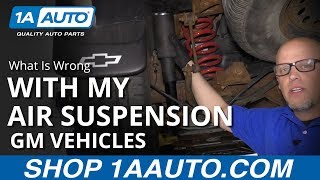
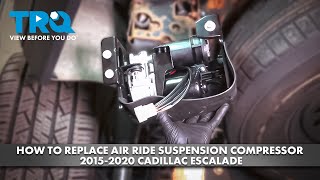
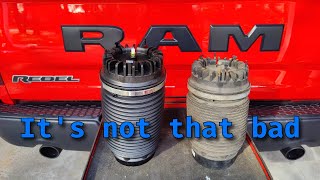
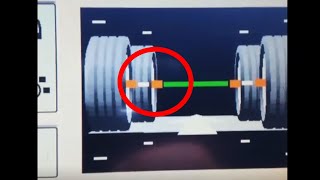

The information in this article is provided for general reference and educational purposes only. Vehicle specifications, procedures, and part compatibility can vary by production date, trim level, and region. Always consult your vehicle's factory service manual and verify part numbers before purchasing or performing repairs. Safety-critical components such as airbags, seat belts, and braking systems should be installed by a qualified professional.
- 🎬 Helpful Videos
- What Does C2316 Mean?
- Can I Drive With C2316?
- Common Causes
- Symptoms
- Diagnostic Flowchart
- Common Fixes & Costs
- Used vs. New Parts: Buying Guide
- What Happens If You Wait — Timeline
- Cost of Not Fixing It
- Diagnosis Steps
- When This Code Triggers (Freeze-Frame Conditions)
- Related Codes
- Climate & Environmental Factors
- How to Talk to a Mechanic About This Code
- Where to Take It: Dealer vs Independent vs Chain
- When to Walk Away From the Repair
- What Scan Tool You Need for This Code
- How to Clear the Code After You Fix It
- Will This Fail Emissions / State Inspection?
- Most Commonly Affected Vehicles
- Manufacturer-Specific Notes
- Real Owner Stories
- 2015 GMC Yukon Denali at 110K miles
- 2018 Jeep Grand Cherokee Trailhawk at 55K miles
- 2013 Ram 1500 Laramie at 85K miles
- 2008 Range Rover at 120K miles
- How to Prevent This Code From Triggering
- Frequently Asked Questions
- Can I just replace the one bad air spring?
- What is that humming noise I hear after I turn the car off?
- Is it cheaper to convert to regular shocks and struts?
- Why did my new compressor fail after only a few months?
- Can a bad battery cause this code?
- Do I need to calibrate the suspension after replacing parts?
- I replaced my compressor and it still doesn't work. What did I miss?
- What happens if I don't fix my air suspension?
- Can a bad ride height sensor cause the car to be unstable?
- Key Takeaways
- 🎟️ Get 5% Off