

OBD-II Code C2240: ABS Control Module Internal Failure / EPB Actuator Fault
The definitive guide to C2240: Brand-specific meanings, root causes, and exact diagnostic steps to fix it right.
What Does C2240 Mean?
Code C2240 is a manufacturer-specific code with two entirely different meanings. For Chrysler, Dodge, Jeep, and Ram, it signifies the Anti-lock Brake System (ABS) control module detected a critical internal failure during its self-diagnostic check, deactivating the ABS and stability systems for safety. For Hyundai and Kia, C2240 points to an 'Unknown Actuator State' within the Electronic Parking Brake (EPB) system, meaning the computer cannot determine the physical position of the parking brake mechanism.
Technical definition: C2240 lacks a universal SAE standard definition. Stellantis (Chrysler/Dodge/Jeep/Ram) defines it as 'ABS Control Module Internal Failure,' indicating a terminal error during the power-on self-test. Hyundai/Kia defines it as 'Unknown Actuator State' within the Electronic Parking Brake (EPB) module.
Can I Drive With C2240?
Yes, But With Caution. Yes, but only for limited distances. Your primary hydraulic brakes function, but your Anti-lock Braking System (ABS), Traction Control (TCS), and Electronic Stability Control (ESC) are disabled. In a panic stop, your wheels will lock and skid, drastically increasing stopping distance on wet or loose surfaces. Ignoring this compromises critical safety systems and exponentially increases accident risk.
Common Causes
- Internal ABS Module Failure (Chrysler/Dodge/Jeep) (Very Common) — Electronic components, microprocessors, or soldered connections on the module's circuit board fail from thermal cycles, vibration, and age. This triggers an unrecoverable internal fault.
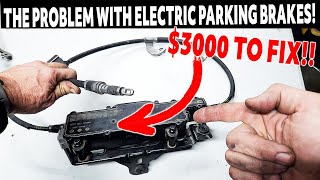
- Faulty EPB Actuator/Module (Hyundai/Kia) (Very Common) — The Electronic Parking Brake actuator assembly fails mechanically or electrically. Located under the vehicle, it is highly susceptible to moisture and corrosion damage. 🎬 Watch: Hyundai EPB module teardown and failure analysis
- Poor Ground Connection to the Control Module (Common) — A corroded, loose, or high-resistance ground connection starves the ABS or EPB module of stable power, causing erratic behavior and false internal fault codes.
- Corroded or Damaged Wiring/Connectors (Common) — Degraded seals on the module's housing allow water to penetrate, corroding connector pins and short-circuiting internal electronics. Road debris also damages the wiring harness, severing power or communication lines.
- Low System Voltage (Less Common) — A weak battery or failing alternator provides insufficient voltage, causing control modules to malfunction and incorrectly report internal faults during startup.
- Faulty ABS Hydraulic Pump/Motor (Rare) — The integrated hydraulic pump seizes or fails electrically. The control module interprets this high-current draw or lack of response as a comprehensive internal failure.
- Software Glitches or Incomplete Updates (Rare) — A software anomaly within the module causes it to set a false C2240. A firmware flash or update from the dealer resolves this, though hardware failure is far more likely.
Symptoms
- ABS Warning Light On — The primary symptom for Chrysler/Dodge/Jeep. The dashboard 'ABS' light illuminates constantly.
- Traction Control / Stability Control (ESC) Light On — The traction and stability systems depend on the ABS, so their warning light (a car with squiggly lines) illuminates simultaneously.
- Electronic Parking Brake (EPB) Warning Light On — The main symptom for Hyundai and Kia. The 'EPB' light or a parking brake symbol with a fault indicator illuminates.
- Brake Warning Light On — A severe ABS fault triggers the main red 'BRAKE' warning light, indicating a serious braking system issue.
- Loss of ABS/Traction Control Function — Wheels lock up and skid during hard braking. Wheels spin excessively when accelerating on slippery surfaces.
- Service Trailer Brake System Message — On trucks with integrated trailer brake controllers, an ABS fault disables the trailer brake system and displays this warning.
- Brake Pedal Feels Different — Drivers notice a slight change in brake pedal feel or travel because the ABS hydraulic valving is inactive.
Diagnostic Flowchart
Tap your situation to follow the diagnostic path that matches what you're seeing on this code.
Common Fixes & Costs
- Repair/Remanufacture Original ABS or EPB Module — Parts: $150-$400, Labor: $150-$300, ~1.5 hr book time (Intermediate)
- Clean or Repair ABS Module Ground Connection — Parts: $5-$20, Labor: $50-$150, ~0.8 hr book time (DIY)
- Replace Blown ABS Fuse — Parts: $2-$10, Labor: $0, ~0.1 hr book time (DIY)
- Repair Damaged Wiring or Connectors — Parts: $20-$150, Labor: $200-$500, ~2.5 hr book time (Advanced)
- Replace Module with a New OEM Unit — Parts: $800-$2500, Labor: $200-$400, ~2.0 hr book time (Professional)
Used vs. New Parts: Buying Guide
When a used part is worth it: Buying a used ABS module from a junkyard is highly discouraged. Most modules are VIN-locked to the donor car and cannot be easily reprogrammed. You also risk buying a part near failure. It only makes sense for pre-2000 vehicles where modules are not VIN-locked.
Donor-vehicle mileage cap: roughly under 50000 miles for the part to have meaningful remaining life.
Donor quality checklist:
- Verify the exact part number matches; small variations render the part incompatible.
- Obtain a warranty of at least 90 days.
- Confirm the seller has a return policy if the part cannot be programmed.
- Be prepared to pay a specialist or dealer for programming, which may fail.
Decision logic:
- If The fault is confirmed to be internal to the module → Remanufacture your original module. This is the most cost-effective and reliable solution as it requires no programming.
- If Your original module is physically destroyed or missing → Buy a new OEM module and have it professionally installed and programmed by a dealer or qualified independent shop.
- If Budget is the absolute only concern and you accept the high risk of failure → A used part may be attempted, but the cost of attempted programming and repeat labor quickly exceeds the cost of a remanufacturing service.
Warranty tradeoff: Used Parts: 30-90 day warranty, covers part only. New OEM: 1-2 year warranty, requires dealer installation. Remanufactured Service: Often a lifetime warranty on the repair work.
Worst-case if a used part fails: $300-$600 if a used part is a dud. This includes the cost of the used part plus non-refundable labor and programming attempt fees.
What Happens If You Wait — Timeline
- Immediate: ABS, Traction Control, and Stability Control warning lights illuminate. The C2240 code is stored as a 'hard fault'. The associated safety systems are immediately disabled. (MPG impact: 0%% · Added cost: $0)
- 0-2 months: Accident risk increases significantly. Stopping distances on slick surfaces or in panic situations are longer as wheels lock up. There is no further mechanical damage to the car. (MPG impact: 0%% · Added cost: $0 (excluding potential accident costs))
- 2-12 months: The vehicle fails its annual state safety inspection in many jurisdictions, preventing legal registration renewal. This forces the owner to make the repair. (MPG impact: 0%% · Added cost: $50-$100 in failed inspection fees, plus the eventual repair cost.)
- 6+ months (at time of sale): The vehicle's resale or trade-in value is significantly reduced. A dealer deducts a minimum of $500-$1000 from a trade-in offer for an active ABS light. (MPG impact: 0%% · Added cost: $500-$1000+ in diminished resale value.)
Cost of Not Fixing It
- Immediate (First Drive): Significantly increased risk of an accident. In a panic stop or on a slippery surface, wheels lock, increasing stopping distance and causing a loss of steering control. (Added cost: $0 (excluding potential accident costs))
- 1-6 months: Failed state safety inspection. If the ABS or Brake warning light is on, many states fail the vehicle, preventing registration renewal. (Added cost: $50-$100 in failed inspection fees, plus the eventual repair cost.)
- 6+ months: The vehicle's resale value is significantly diminished due to the active major safety fault. (Added cost: $500-$1000+ in diminished resale value.)
Diagnosis Steps
- Verify Code with an Advanced Scanner
Use a professional-grade OBD-II scanner capable of reading manufacturer-specific Chassis (C-prefix) codes. Confirm C2240 is present, note if it is in the ABS or EPB module, and check for related codes.
Tools: OBD-II Scanner (with ABS/EPB capability) (Beginner) - Check Battery Voltage and Fuses
Confirm the battery reads 12.6V+ with the engine off and 13.7V-14.7V running. Low voltage triggers false codes. Meticulously check all ABS, ESC, and brake system fuses in the under-hood and interior panels.
Tools: Multimeter, Fuse puller, Owner's manual (Beginner) - Inspect Wiring and Connectors
Perform a detailed visual inspection of the wiring harness leading to the ABS or EPB module. Disconnect the module's main connector (battery disconnected) and inspect for bent, broken, or green/white corroded pins.
Tools: Flashlight, Inspection mirror, Safety glasses (Intermediate) - Test Power and Ground Circuits (Load Test)
Use a multimeter to confirm 12.6V+ on power pins and <0.5 Ohms on ground pins. For a definitive check, connect a sealed-beam headlamp to the pins; a bright bulb confirms the circuit carries sufficient amperage. A dim bulb indicates high resistance.
Tools: Multimeter, Vehicle-specific wiring diagram, Sealed-beam headlamp with test leads (Advanced) - Perform CAN Bus Integrity Test
With the battery disconnected, measure resistance between Pin 6 (CAN High) and Pin 14 (CAN Low) on the OBD-II port. A healthy network reads 60 Ohms. A reading of 120 Ohms indicates a broken wire or an offline module.
Tools: Multimeter (Advanced) - Perform Module Initialization/Self-Test
Use a bidirectional scan tool to actively communicate with the module. Try to clear C2240. If it returns immediately ('hard fault'), it strongly indicates an internal failure. Run any available self-test procedures.
Tools: Bidirectional Scan Tool (Advanced) - Analyze Live Data
Monitor live data PIDs from the ABS/EPB module. Watch 'Module Supply Voltage' and communication statuses. Erratic readings or communication error flags that persist after verifying wiring integrity point to an internal fault.
Tools: Advanced Bidirectional Scan Tool (Advanced) - Confirm Module Failure
If external wiring, connectors, fuses, power sources, ground connections, and the CAN network test perfectly, and C2240 cannot be cleared, the control module has failed internally and requires replacement or remanufacturing.
Tools: Scan tool, Multimeter (Advanced)
When This Code Triggers (Freeze-Frame Conditions)
- Ignition Status: Key On (Code is typically set during the Power-On Self-Test (POST) immediately after the ignition is turned on.)
- System Voltage: 11.5V - 14.5V (The module was receiving normal battery/alternator voltage when the internal fault was detected.)
- Vehicle Speed: 0 mph (The fault is most often logged before the vehicle begins moving, as part of the initial system check.)
- Module State: Self-Test Active (The internal, non-recoverable error was found while the module was performing its own diagnostic routines.)
Related Codes
- C2200 — Another common code for 'ABS Module Internal Failure' on Chrysler/Dodge/Jeep vehicles. C2200 and C2240 are used interchangeably and point to the exact same component failure.
- U0121 — Means 'Lost Communication With ABS Control Module'. C2240 means the module is online but failed internally. U0121 means the module is completely offline, usually due to a blown fuse or severed CAN bus wire.
- C2116 — Indicates 'ABS Pump Motor Supply Low Voltage'. If it appears with C2240, the internal failure is on the circuit board that controls the pump motor, requiring module repair.
- C0020 — Indicates 'ABS Pump Motor Control'. Appearing alongside C2240 confirms the failure is inside the ABS module on the circuit driving the pump.
Climate & Environmental Factors
- Extreme Temperature Cycles: Repeated heating and cooling causes expansion and contraction of the internal circuit board. Over thousands of cycles, this thermal stress causes microscopic cracks in solder joints, leading to internal failure codes.
- High Humidity / Road Salt (Rust Belt): Moisture and road salt accelerate corrosion. For under-vehicle modules like the Hyundai/Kia EPB actuator, water compromises seals, leading to moisture intrusion and circuit board failure. For engine bay ABS modules, it corrodes ground points and connector pins.
How to Talk to a Mechanic About This Code
Say this: "My [Make/Model] has an ABS light and a C2240 code. Before condemning the module, I need an estimate for one hour of diagnostic labor to specifically confirm the module has proper power and ground at the connector, and that the CAN bus network is intact. Can you perform that specific diagnostic?"
This signals you are an informed customer. It directs the mechanic to perform a specific, cost-effective diagnostic routine to rule out common external issues (bad wires, poor ground) before recommending an expensive module replacement.
Avoid saying:
- 'My ABS light is on, can you fix it?'
- 'Just do whatever it takes to fix the light.'
- 'My buddy said I need a new ABS module.'
Questions to ask before authorizing the repair:
- What were the specific voltage and resistance readings at the module's power and ground pins?
- Was the CAN bus resistance checked, and what was the reading? (Should be ~60 Ohms)
- If you are recommending a new module, what is the breakdown of the cost: part vs. labor vs. programming?
- Are you willing to install a remanufactured module that I provide? If so, what is your labor rate for removal and reinstallation only?
Where to Take It: Dealer vs Independent vs Chain
- Dealer:
Use for warranty/recall work. For out-of-warranty, get a quote here but compare it against an independent shop before proceeding.
Best for: Vehicles under warranty., Confirmed recall-related issues (check for recalls on the NHTSA website first)., When a brand-new module requiring proprietary online programming is the only viable fix.
Downsides: Highest labor rates and part markups., Often defaults to expensive module replacement without exploring more nuanced electrical diagnostics or repair options. (Typical cost: +50% vs. baseline) - Independent Shop:
Best fit for most out-of-warranty C2240 repairs. Their willingness to diagnose thoroughly and install a remanufactured part is the key to an affordable repair.
Best for: Out-of-warranty vehicles where cost is a factor., Performing the crucial power/ground/CAN bus diagnostics before module replacement., Installing a cost-effective remanufactured module that you may source yourself.
Downsides: Diagnostic skill varies; choose a shop with strong electrical/diagnostic reviews., May not have expensive tools for programming a new module if that becomes necessary. (Typical cost: +0% vs. baseline) - Chain Shop:
AVOID. The risk of misdiagnosis is very high for a complex code like C2240. They read the code but rarely perform the required electrical verification steps.
Best for: Simple jobs like tire rotation or oil changes.
Downsides: Technicians are often not equipped or trained for complex electrical diagnostics., High pressure to sell parts leads to misdiagnosis and unnecessary replacement of components. (Typical cost: -10% vs. baseline)
When to Walk Away From the Repair
If the estimated repair cost exceeds 40-50% of the car's current private-party market value, you should pause and evaluate your options.
- Car worth $10000, fix is $600: Fix it. This is a 6% repair-to-value ratio. The repair is a small fraction of the car's worth and restores a critical safety feature.
- Car worth $4000, fix is $2200: Walk away. The dealer-quoted repair is 55% of the car's value. Do not authorize this repair. Seek a second opinion from an independent shop about using a remanufactured module, which could bring the cost below $700.
- Car worth $2500, fix is $1500: Walk away. A repair cost of 60% of the vehicle's value is not economical. The money is better put towards a replacement vehicle.
What Scan Tool You Need for This Code
Minimum: A scanner that can read and clear Chassis (C) codes, specifically for the ABS system. Basic engine-only code readers will not work.
A standard $20 OBD-II reader only communicates with the Engine Control Unit (ECU). It cannot see or interact with the ABS module, so it reports 'No Codes Found' even when the ABS light is on.
Budget: BlueDriver Pro / XTool A30M (~$100) — Reads and clears ABS codes, displays live data from wheel speed sensors, and provides freeze frame data. This confirms C2240 is the primary code and rules out simple sensor issues.
Mid-range: Foxwell NT716 / Autel MK808 / XTool D7 (~$250) — Includes bidirectional controls. This allows you to run self-tests on the ABS module and command the ABS pump motor to cycle, confirming if the module is truly dead or just unresponsive.
Professional: Autel MaxiSys MS906BT / Launch X431 Series (~$500-1200) — Full bidirectional control, module initialization, and VIN programming. If you replace the ABS module with a new one, this level of tool is required to perform the programming.
Rent vs buy: Most auto parts stores offer a free code reading service or a loan-a-tool program. Confirm their loaner scanner reads ABS codes. For a one-time diagnosis, this is the most cost-effective option.
How to Clear the Code After You Fix It
- Perform physical repair (reinstall remanufactured module or install and program new module).
- Reconnect the battery if it was disconnected.
- Use a manufacturer-capable scan tool to clear the C2240 code from the ABS/EPB module.
- Perform any required initialization or calibration procedures using the scan tool (e.g., 'ABS Initialization', 'G-Sensor Calibration').
- Perform a short test drive including at least one stop and a few turns to allow the system to verify the repair.
Drive cycle (~10 minutes): After clearing the code, start the vehicle and let it idle for 1 minute. Drive the vehicle for 5-10 minutes, ensuring you exceed 15 mph to allow the ABS system to complete its self-check. The warning lights should remain off.
Watch out for:
- Simply clearing the code without a repair will not work; the code is a 'hard fault' and returns immediately.
- Using a basic engine code reader cannot clear a Chassis 'C' code.
- Forgetting to perform post-replacement calibration/initialization steps with a scan tool leaves warning lights on even with a good module.
Will This Fail Emissions / State Inspection?
No — by itself this code doesn't fail OBD inspection (but it can keep readiness monitors from setting, which causes a separate fail).
- California: An ABS light will NOT fail the state's emissions (smog) inspection. However, if the vehicle requires a 'Brake and Lamp' inspection for registration (e.g., salvage title), it will fail.
- New York: An illuminated ABS warning light is grounds for mandatory failure of the annual safety inspection.
- Texas: An illuminated amber ABS light will NOT cause a failure. However, if the red 'BRAKE' warning light is also on, the vehicle WILL fail the safety inspection.
Most Commonly Affected Vehicles
- Jeep Grand Cherokee (2008-2021) — The WK2 (2011-2021) is notorious for this ABS module failure, accompanied by 'Service ABS System' messages. 2018-2019 models are subject to a safety recall for the ABS module.
- Dodge Durango (2008-2021) — Shares its platform and ABS module with the Grand Cherokee and suffers identical C2240 internal failures. 2018-2019 models are part of a safety recall.
- Ram 1500 / 2500 / 3500 (2013-2018) — Internal ABS module failure is a well-documented issue, especially in 2013-2014 models utilizing Bosch ABS modules.
- Hyundai Santa Fe (2013-2018) — C2240 indicates a failure of the Electronic Parking Brake (EPB) module, located under the rear of the vehicle and prone to moisture damage.
- Kia Sorento (2014-2020) — Shares its platform with the Santa Fe and experiences the identical C2240 code related to a faulty EPB module.
- Dodge Caliber (2007-2012) — Utilizes a Continental-made ABS module known to fail and set internal fault codes like C2240.
- Jeep Wrangler (2007-2018) — The ABS module in the JK generation is a common failure point, storing C2200 or C2240.
- BMW 3-Series (E90) & 5-Series (E60) (2005-2013) — BMW uses codes 5DF0 and 5DF1 for identical DSC/ABS module failures, requiring the same remanufacturing solution.
Manufacturer-Specific Notes
- Chrysler / Dodge / Jeep / Ram: C2240 exclusively points to an internal ABS module failure. Remanufacturing the original module is the most cost-effective fix. Check NHTSA Campaign 24V838000 (FCA Recall 94B) for 2018-2019 Grand Cherokee/Durango models regarding this exact fault.
- Hyundai / Kia: C2240 means 'Unknown Actuator State' and relates entirely to the Electronic Parking Brake (EPB) system, not the ABS. Diagnosis must focus on the EPB actuator assembly under the rear of the vehicle.
- Ford: While C2240 is rare, similar ABS/Traction symptoms are caused by corroded wheel speed sensor rings or broken wires in the EPB pigtail connector at the rear brake caliper.
- BMW: BMW experiences an identical failure mode in their DSC module, logging codes 5DF0 and 5DF1. The symptoms and remanufacturing solution are functionally identical to Chrysler's C2240.
Real Owner Stories
2014 Jeep Grand Cherokee at 110K miles
ABS, FCW (Forward Collision Warning), and Service 4WD lights all came on at once. Cruise control stopped working.
What they tried:
- Checked fuses - all were good.
- Took to a local mechanic who scanned code C2240 and quoted $1,800 for a new ABS module plus programming.
- Owner researched online and found ABS module repair services.
Outcome: Owner removed the ABS module themselves, sent it to a repair service for $250. After reinstallation, all warning lights were gone and all systems functioned normally. Total cost: $250.
Lesson: For a C2240 'internal failure' code on a Chrysler/Jeep product, having the original module repaired is vastly cheaper than dealer replacement and avoids programming fees.
2015 Hyundai Santa Fe at 160,000 km
EPB and Auto Hold warning lights came on, and the car would not move because the electronic parking brake was stuck on. The vehicle had to be towed.
What they tried:
- Towed to the dealership. The dealer diagnosed a failed EPB actuator module and quoted nearly $2,600 AUD for the repair.
Outcome: The owner paid for the expensive dealer repair. Later research showed the same OEM part was available from online retailers for around $225-$360 AUD. The failure was a burnt-out internal motor in the actuator.
Lesson: On Hyundai/Kia vehicles, C2240 points to the EPB, not ABS. The dealer replacement is extremely expensive, but the part can be sourced affordably online.
2010 Chevy Impala with ABS/Stabilitrak lights
ABS and 'Service Stabilitrak' lights flashed on briefly during sharp turns, but then went away.
What they tried:
- Posted on a forum suspecting the old battery was causing low voltage issues.
- The owner eventually had the car diagnosed.
Outcome: The problem was a faulty wheel speed sensor wire. The intermittent connection during turns caused the ABS module to temporarily lose the sensor signal, triggering the warning lights.
Lesson: Pay attention to WHEN the light appears. If it's only during specific maneuvers (like turning or hitting bumps), it strongly suggests an external wiring or sensor issue, not an internal module failure.
2002 Toyota Sienna with intermittent ABS light
Every few months, the ABS and Check Engine lights came on, triggered by a rear wheel speed sensor code. Resetting the code made it go away for a long time.
What they tried:
- Owner was considering selling the car but was concerned about the intermittent issue.
- A forum user pointed out that if the module itself were bad, the code would return immediately after being cleared.
Outcome: The consensus was that the issue was a failing wheel speed sensor or a problem in its wiring, not the expensive ABS computer.
Lesson: A 'hard fault' like C2240 returns immediately upon clearing. If a fault is intermittent and takes weeks to reappear, the cause is a sensor or wire on the edge of failure, not a completely failed module.
How to Prevent This Code From Triggering
- Perform regular brake fluid flushes (Every 2-3 years or per manufacturer recommendation) — Brake fluid absorbs moisture. Old, wet fluid causes internal corrosion of the delicate solenoids and valves within the ABS hydraulic unit, leading to mechanical failure.
- Maintain a healthy battery (Test annually after 3 years of age) — A weak battery provides unstable voltage. Electronic modules are sensitive to voltage drops and spikes, which cause them to malfunction or suffer permanent damage.
- Keep module connectors clean and sealed (Inspect during other under-hood maintenance) — Moisture and road salt lead to corrosion on connector pins. Ensure the connector is fully seated and apply a thin layer of dielectric grease in harsh climates.
- Clear engine bay drains and avoid high-pressure washing (Annually, especially in the fall) — Clogged cowl drains cause water to drip directly onto electronic modules. Avoid directly spraying high-pressure water on electronic components when cleaning the engine bay.
Frequently Asked Questions
What does OBD-II code C2240 mean?
It depends on your car. For most Jeep, Dodge, and Chrysler vehicles, it means the ABS computer has failed internally. For a Hyundai or Kia, it points to a problem with the separate electronic parking brake module.
Is it safe to drive my car with code C2240?
You can drive it, but with extreme caution. Your main hydraulic brakes work, but your ABS and traction control safety systems are offline. Your wheels will lock up and skid in an emergency stop, significantly increasing your risk of an accident.
What are the most common misdiagnosis mistakes for C2240?
The biggest mistake is replacing the module without checking external factors. Always verify the module has solid power (12.6V+) and ground connections (<0.5 Ohms), and inspect the wiring harness first. Condemning the module is the final step after ruling out electrical starvation.
Is it cheaper to repair or replace my ABS module?
Repairing (remanufacturing) your original module is almost always cheaper and better. A repair service costs $150-$400, while a new module from the dealer costs $800-$2500+ plus programming fees. A rebuilt module is plug-and-play, completely avoiding programming costs.
My scanner shows P2240, not C2240. Is it the same thing?
No, they are completely different codes. 'C' codes relate to the Chassis (brakes, steering), while 'P' codes relate to the Powertrain (engine, transmission). Code P2240 refers to an O2 Sensor circuit fault and has nothing to do with your brakes.
Will my brakes stop working completely?
No. A C2240 code related to the ABS module does not disable your primary hydraulic braking system. You can still stop the car, but the anti-lock safety function will not work.
Can I fix a C2240 code myself?
A skilled DIYer can fix this if the cause is a blown fuse, bad wiring, or a poor ground connection. If the module failed internally, removing it is a DIY job, but the electronic repair requires a specialist. Replacing it with a new part requires professional dealer programming.
What is a 'remanufactured' or 'rebuilt' ABS module?
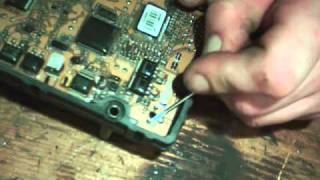
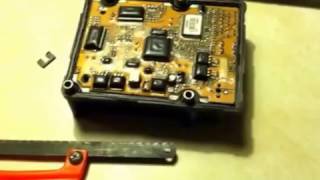
This is a service where you mail your faulty module to a specialized company. They diagnose the internal circuit board, replace failed components with upgraded parts, re-solder weak connections, and fully test it. This is highly cost-effective and requires no expensive dealer reprogramming.
Can a bad wheel speed sensor cause code C2240?
It is highly unlikely. A wheel speed sensor with an internal short circuit theoretically creates electrical feedback that the ABS module misinterprets as an internal fault. However, 99% of the time, a faulty wheel speed sensor sets its own specific code (e.g., C0031-C0038).
My mechanic says the CAN bus is down. Is that related to C2240?
Yes, it is highly related. The CAN bus is the communication network allowing modules to talk, and a 'down' bus usually causes a 'Lost Communication' code like U0121. A CAN bus test checking for 60 Ohms across OBD-II pins 6 and 14 confirms if the fault is inside the module or the network wiring.
Helpful Videos


The information in this article is provided for general reference and educational purposes only. Vehicle specifications, procedures, and part compatibility can vary by production date, trim level, and region. Always consult your vehicle's factory service manual and verify part numbers before purchasing or performing repairs. Safety-critical components such as airbags, seat belts, and braking systems should be installed by a qualified professional.
- 🎬 Helpful Videos
- What Does C2240 Mean?
- Can I Drive With C2240?
- Common Causes
- Symptoms
- Diagnostic Flowchart
- Common Fixes & Costs
- Used vs. New Parts: Buying Guide
- What Happens If You Wait — Timeline
- Cost of Not Fixing It
- Diagnosis Steps
- When This Code Triggers (Freeze-Frame Conditions)
- Related Codes
- Climate & Environmental Factors
- How to Talk to a Mechanic About This Code
- Where to Take It: Dealer vs Independent vs Chain
- When to Walk Away From the Repair
- What Scan Tool You Need for This Code
- How to Clear the Code After You Fix It
- Will This Fail Emissions / State Inspection?
- Most Commonly Affected Vehicles
- Manufacturer-Specific Notes
- Real Owner Stories
- 2014 Jeep Grand Cherokee at 110K miles
- 2015 Hyundai Santa Fe at 160,000 km
- 2010 Chevy Impala with ABS/Stabilitrak lights
- 2002 Toyota Sienna with intermittent ABS light
- How to Prevent This Code From Triggering
- Frequently Asked Questions
- What does OBD-II code C2240 mean?
- Is it safe to drive my car with code C2240?
- What are the most common misdiagnosis mistakes for C2240?
- Is it cheaper to repair or replace my ABS module?
- My scanner shows P2240, not C2240. Is it the same thing?
- Will my brakes stop working completely?
- Can I fix a C2240 code myself?
- What is a 'remanufactured' or 'rebuilt' ABS module?
- Can a bad wheel speed sensor cause code C2240?
- My mechanic says the CAN bus is down. Is that related to C2240?
- 🎟️ Get 5% Off