

C2222 on 2017-2020 Chrysler Pacifica: 'Improper Powerdown' Causes and Fixes
This code indicates a module lost power improperly, often disabling the Electronic Parking Brake (EPB) and Adaptive Cruise Control (ACC). The most common causes are a weak or failing auxiliary battery or a software glitch. A dealer software update or replacing the auxiliary battery are the most frequent fixes.
- C2222 on a Pacifica means the brake module lost power incorrectly, which disables the Electronic Parking Brake (EPB) and Adaptive Cruise Control (ACC) for safety.
- Before replacing any parts, check for Technical Service Bulletins (TSBs). A simple software update from the dealer is a very common fix.
- The most likely physical cause is a weak or failing battery. You must load test BOTH the main and the smaller auxiliary battery.
- A simple temporary fix can sometimes be achieved by cycling the EPB switch on and off after starting the vehicle, which allows the module to relearn its position.
What's Unique About the 2017-2020 Chrysler PACIFICA

The Chrysler Pacifica has a complex electrical system, often with a dual-battery setup to manage the Engine Stop/Start (ESS) feature. This architecture is highly sensitive to battery voltage and software integrity. Unlike simpler vehicles, codes like C2222 are frequently triggered by software anomalies or issues with the dual-battery system, rather than a single failed component. A failing auxiliary battery is a known cause for a cascade of electrical issues, including this code. Chrysler has issued multiple software updates to address these false triggers, making a TSB check a critical first step.
Diagnostic Flowchart

Tap your situation to follow the diagnostic path that matches what you're seeing on this vehicle.
Symptoms You May Notice

- "EPB And ACC Disabled" message in the driver information center (EVIC)
- "Service Electronic Parking Brake" message
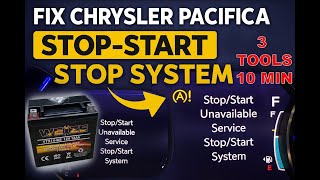
- "Stop/Start Unavailable Service Stop/Start System" message
- Electronic Parking Brake (EPB) light illuminated
- ABS light illuminated
- Check Engine Light (MIL) may be on
- Stop/Start system is disabled or malfunctions 🎬 Watch: Step-by-step troubleshooting for the Stop/Start Unavailable message.
- Replacing the EPB switch on the dash.
- Replacing the EPB motors on the rear calipers.
- Replacing the main battery without testing or replacing the auxiliary battery.
Most Likely Causes

- Weak or Failing Auxiliary Battery Very High Probability The Pacifica's small auxiliary battery, used for the ESS system, has a high failure rate. When it fails, it can cause voltage instability across the entire vehicle, leading to communication errors and improper module shutdowns. A dead auxiliary battery can also drain the main battery.
How to confirm: Perform a load test on the auxiliary battery. 🎬 Watch: A detailed DIY walkthrough for auxiliary battery replacement. It is a small 12V 12Ah battery located next to the main battery. Many owners on forums report that simply replacing this battery solves a host of electrical problems.
Typical fix: Replace the auxiliary battery. This is a common DIY repair. 🎬 See this 10-minute guide to replacing the auxiliary battery. After replacement, both the main and auxiliary batteries should be disconnected for a few minutes to reset all modules, particularly the Intelligent Battery Sensor (IBS).
Est. part cost: $50-$200 - Outdated Module Software 🔴 High Probability Chrysler has released multiple Technical Service Bulletins (TSBs) to address software logic that can falsely trigger this and other related codes due to voltage fluctuations during ESS events.
How to confirm: A dealer or a properly equipped independent shop can check the vehicle's VIN against available TSBs and verify the current software calibration in the PCM and BSM. TSB 18-001-19 REV B is a key bulletin for this issue.
Typical fix: Reprogramming the Powertrain Control Module (PCM) and/or Brake System Module (BSM) with the latest software. This is often performed under warranty or as part of a Rapid Response Transmittal (RRT).
Est. part cost: $0-$200 - Weak or Failing Main Battery 🟡 Medium Probability The Pacifica's dual-battery system is sensitive to low voltage. If the main battery's voltage drops too quickly during shutdown, modules cannot complete their power-down sequence, triggering the code. A failing auxiliary battery often stresses and damages the main battery.
How to confirm: Perform a load test on the main AGM battery. A simple voltage check is not sufficient. It's often recommended to replace both batteries at the same time if they are of similar age.
Typical fix: Replace the main AGM battery.
Est. part cost: $200-$400 - Power Interruption ⚪ Low Probability Any event that abruptly cuts power to the Brake System Module can cause this code. This includes disconnecting the battery too soon after turning off the ignition.
How to confirm: Review recent vehicle history. Was the battery recently disconnected or a fuse pulled? Check for loose battery terminals or corroded ground straps.
Typical fix: Ensure all battery connections and grounds are clean and tight. If the code was set by a known event, it can often be cleared by cycling the EPB on and off to allow the module to relearn its position.
Est. part cost: $0-$20
Rare But Worth Checking
- Faulty Brake System Module (BSM/ABS Module): While less common than software or battery issues, the module itself can fail internally, preventing it from storing memory correctly during shutdown. This should only be considered after all battery and software issues have been ruled out.
- Wiring or Pin Fit Issue: A poor connection at the BSM connector or a loose ground connection could cause an intermittent loss of power, leading to the improper powerdown event.
Diagnosis Steps
- Scan all vehicle modules for DTCs and note any codes that appear alongside C2222, especially those related to battery voltage or the ESS system.
- Check for relevant TSBs using the vehicle's VIN. Specifically look for S2005000005 and 18-001-19 REV B.
- Begin with the most likely culprit: the auxiliary battery. Perform a load test or consider replacing it based on age, as it's a very common failure point.
- If the auxiliary battery is good, perform a proper load test on the main AGM battery.
- Inspect all battery terminals and primary chassis grounds for looseness or corrosion. Clean and tighten as needed.
- If batteries and connections are good, and a software update TSB applies, have the relevant modules reprogrammed by a dealer or qualified shop.
- After performing any repairs (especially battery replacement), disconnect the negative terminals from BOTH the main and auxiliary batteries for 10-15 minutes to force a full system reset, which is critical for the Intelligent Battery Sensor (IBS). Allow the vehicle to sit undisturbed (in a quiescent state) for 2-4 hours after reconnection for the IBS to relearn the battery's state of charge.
- Clear the codes. Cycle the Electronic Parking Brake switch on and then off. This allows the BSM to relearn the caliper end-to-end positions.
- If the code returns, further diagnosis of the BSM wiring and the module itself is required.
Parts You'll Likely Need
- Auxiliary Battery
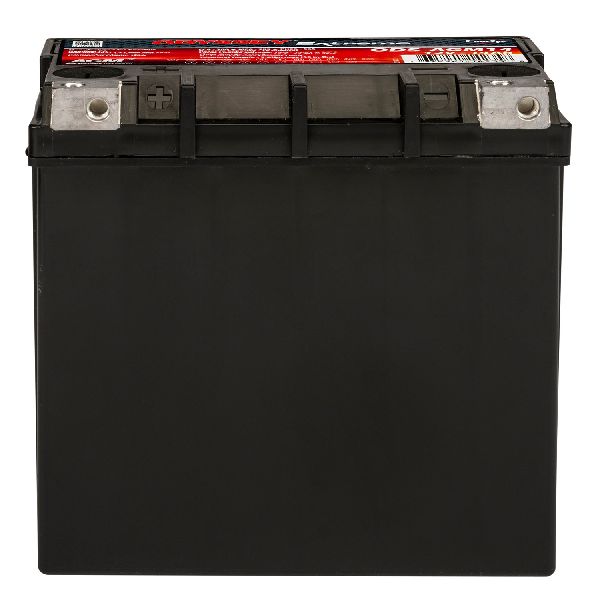
(OEM #56029759AB, BBAUX101AB)— The smaller auxiliary battery for the start/stop system is a frequent failure point and a common cause of various electrical and communication codes.
Trusted brands: Mopar, ACDelco, Deka, Odyssey (ODS-AGM14)
OEM price range: $150-$200
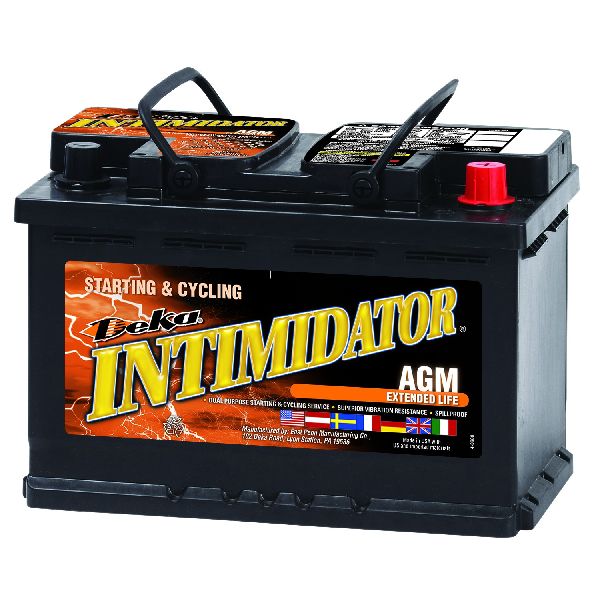
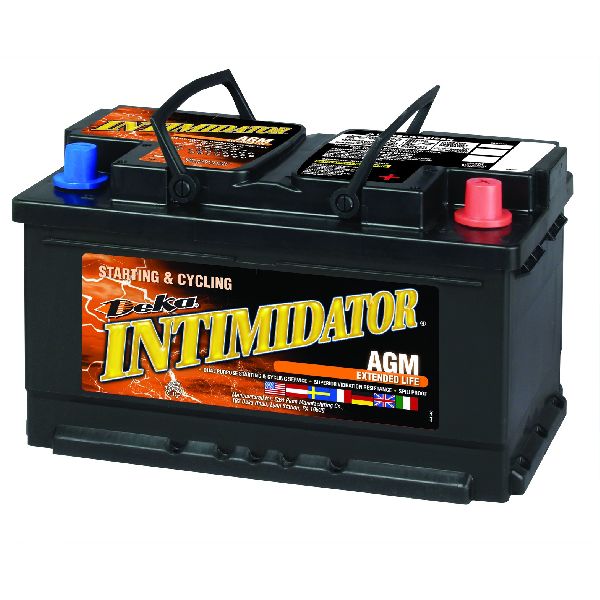
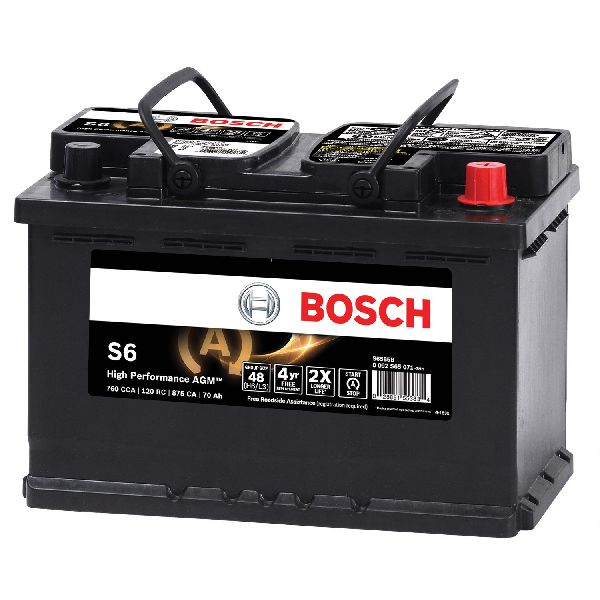
Aftermarket price range: $50-$150 - Main AGM Battery — The main vehicle battery can also be the cause. If it fails a load test, it must be replaced to ensure stable voltage for all modules.
Trusted brands: Mopar, Interstate, DieHard, Bosch
OEM price range: $250-$350
Aftermarket price range: $200-$275
Related Codes That Often Appear With This One
- C10D0-92 — This code for 'Electronic Park Brake Module - Deactivated' is a direct result of C2222, as the system disables the EPB when its position is unknown.
- U0415-00 — 'Implausible Data Received From ABS' is often set in other modules (like the ACC module) because the ABS/BSM module has shut down improperly and is not communicating correctly.
- P00FD — 'Battery -B- State Of Charge Performance' often points to a failing auxiliary battery, which is a common root cause for electrical issues like C2222.
- P06EF — 'Engine Restart Performance' is another code addressed by the same PCM software updates that fix C2222, indicating a link through the vehicle's power management software.
Technical Service Bulletins (TSBs) & Recalls
- S2005000005: Notes that C2222-68 appears with C10D0-92 and U0415-00 when EPB and ACC are disabled due to improper BSM powerdown.
- 18-001-19 REV B: Involves a PCM software update to resolve a list of DTCs including C2222-68, 'Improper Powerdown - Event Information'.
- 18-002-19 REV A: Similar to the above, recommends a software update for a list of codes including C2222-68 on 2017 models.
Platform-Specific Known Issues
- TSB S2005000005 directly links C2222-68 to the 'EPB and ACC Disabled' message, explaining that the Brake System Module (BSM) loses power before it can save the EPB caliper position to memory.
- TSB 18-001-19 REV B, also released as RRT 19-036, lists C2222-68 as a code that can be resolved by a Powertrain Control Module (PCM) software update, confirming a software-related cause. The update also addresses issues like preventing the ESS auxiliary battery from drying out.
- Owner forums are filled with reports of the auxiliary battery failing and causing this exact code, along with other electrical gremlins. Many users confirm that replacing the small aux battery and resetting the system resolves the problem.
Mechanic-Grade Diagnostic Values
- Main or Auxiliary Battery Voltage (Engine Off) — expected: ~12.5V or higher. Failure: A reading below 12.4V indicates a discharged or failing battery. A load test is required for a definitive diagnosis.
- Charging System Voltage (Engine Running) — expected: 13.7V - 14.4V. Failure: Voltage consistently below 13.5V or above 14.8V can indicate a problem with the alternator or the Intelligent Battery Sensor (IBS) control system. TSB 18-001-19 REV B warns not to let voltage exceed 13.5V during a PCM flash.
- Intelligent Battery Sensor (IBS) State of Charge (SOC) Calibration — expected: Requires a 2-4 hour quiescent (sleep) period with vehicle current draw between -500mA and 50mA.. Failure: If the IBS does not get this relearn period after a battery replacement or power loss, it may report an inaccurate SOC, leading to improper charging and voltage-related DTCs.
Hidden / Shadow Codes Worth Checking
- U113E: Lost Communication With Intelligent Battery Sensor (IBS). This code is set by the Body Control Module (BCM) and indicates a fault in the LIN bus wiring to the IBS or the IBS itself. (see via A professional scan tool capable of reading BCM codes, such as Chrysler's WiTech software.)
- B2193: IBS Internal Fault. This code is set by the BCM when the IBS detects an internal software or hardware defect. (see via A professional scan tool capable of reading BCM codes. Cycling the IBS connection (unplugging and replugging) may clear a temporary software fault.)
Scan Tool Commands That Help
- wiTECH (Chrysler Dealer Tool): ABS Initialization — After replacing the ABS/BSM module to configure the new module to the vehicle.
- wiTECH (Chrysler Dealer Tool): Brake Pedal Position Sensor Calibration — If codes related to the brake pedal sensor are present or after work has been performed on the brake pedal assembly.
- wiTECH or equivalent: EPB Service Mode / Retract Calipers — To retract the electronic parking brake calipers for rear brake service. After service, the function must be used again to apply the brakes and relearn the clamping force.
- Any: EPB Engage/Disengage Cycle — After a power loss event that sets C2222, manually cycling the EPB switch on and off allows the BSM to relearn the caliper positions and clear the fault.
Wiring & Ground Locations
- Main Engine/Body Ground — A primary ground strap often runs from the main fuse box area to the chassis.. Corrosion or looseness at this primary ground can cause widespread voltage drops and communication issues between modules.
- Engine Manifold Grounds — Ground wires are typically located on the top or side of the engine, connecting to the intake manifold.. These grounds are essential for the Powertrain Control Module and other engine-related sensors. A poor connection can affect power management.
- G201 / G202 — General location is behind the left side of the dashboard near the kick panel.. These are interior ground points that serve multiple modules. The ABS module is often grounded in this vicinity.
- Intelligent Battery Sensor (IBS) Connector — A small 2-pin connector directly on the negative battery terminal assembly.. This is the LIN bus communication link for the IBS. A poor connection here will set a U113E and prevent the system from knowing the battery's state of charge, leading to voltage issues.
Real Owner Repair Stories
- Reddit user @Apnarr in r/ChryslerPacifica (2020 Chrysler Pacifica) — Start/stop warning message, low auxiliary battery.
❌ Tried (didn't work) Initially just had a start/stop bypass device installed.
✅ What actually fixed it The user learned that when the car is off, the main and auxiliary batteries are connected, and a bad aux battery will drain the main one. The definitive fix is to replace the auxiliary battery. Alternatively, for those who don't use the start/stop feature, one can disconnect the relay under the hood and remove the auxiliary battery entirely to prevent the drain and clear the warning light. - YouTube video by 'Dad's Guide' (2019 Chrysler Pacifica) — "Start/Stop Unavailable" warning light.
❌ Tried (didn't work) Replacing the auxiliary battery and only disconnecting the main battery's negative terminal.
✅ What actually fixed it After replacing the auxiliary battery, the warning light remained. The final fix was to disconnect the negative terminals from BOTH the main and auxiliary batteries simultaneously for a period to force a reset of the Intelligent Battery Sensor (IBS).
"I Checked Everything" — The Actual Cause
- A common scenario is where both the main and auxiliary batteries pass a standard load test, yet the C2222 code persists. The actual cause is often not the batteries themselves, but a desynchronized Intelligent Battery Sensor (IBS). The IBS has lost its calibration for the battery's State of Charge (SOC) due to a previous power event or brief disconnection. The fix is not replacing parts, but performing a specific relearn procedure: disconnecting both batteries for 10-15 minutes, reconnecting, and then allowing the vehicle to sit completely undisturbed for 2-4 hours for the IBS to recalibrate.
OEM Part Supersession History
bbaux101aa, bbaua200ad→BBAUX101AB— Part revision and consolidation.
Heads up: The primary OEM part number for the auxiliary battery is 56029759AB. BBAUX101AB is also widely cited. Ensure the replacement is a Group AUX14 or YTX14-BS size.
Model Year Variations Within This Range
- 2017-2018: These model years seem particularly prone to battery and start/stop system issues. TSB 18-001-19 REV B for 2018 models includes a PCM software update specifically to 'Prevent the ESS Aux battery from drying out on vehicles driven in hot regions and conditions,' indicating an issue with the original power management logic that was later corrected.
Helpful Videos
Used OEM Parts in Stock

New Aftermarket Parts Available


The information in this article is provided for general reference and educational purposes only. Vehicle specifications, procedures, and part compatibility can vary by production date, trim level, and region. Always consult your vehicle's factory service manual and verify part numbers before purchasing or performing repairs. Safety-critical components such as airbags, seat belts, and braking systems should be installed by a qualified professional.
- Chrysler PACIFICA:
- 🎬 Helpful Videos
- 🛍️ Shop This Part
- What's Unique About the 2017-2020 Chrysler PACIFICA
- Diagnostic Flowchart
- Symptoms You May Notice
- Most Likely Causes
- Rare But Worth Checking
- Diagnosis Steps
- Parts You'll Likely Need
- Related Codes That Often Appear With This One
- Technical Service Bulletins (TSBs) & Recalls
- Platform-Specific Known Issues
- Mechanic-Grade Diagnostic Values
- Hidden / Shadow Codes Worth Checking
- Scan Tool Commands That Help
- Wiring & Ground Locations
- Real Owner Repair Stories
- "I Checked Everything" — The Actual Cause
- OEM Part Supersession History
- Model Year Variations Within This Range
- 🎟️ Get 5% Off