

OBD-II Code C2222: Vehicle Configuration Mismatch / Improper Powerdown
What C2222 means, why it triggers, and how to fix it
- Code C2222 indicates the ABS module lost its configuration data or experienced an improper powerdown, disabling critical safety systems like ABS and Electronic Stability Control.
- On Chrysler vehicles (especially 2017-2020 Pacificas), a failing auxiliary battery is the #1 cause, requiring a $150-$300 battery replacement rather than a $1,000+ ABS module.
- Replacing an ABS module with a used part guarantees a C2222 code until a professional programs your vehicle's specific VIN into the new unit using a bidirectional scan tool.
- Driving with C2222 increases emergency stopping distances by up to 20% (an extra 70 feet at 60 mph), requiring significantly more following distance until repaired.
What Does C2222 Mean?

Code C2222 indicates the Anti-lock Brake System (ABS) module lost its memory or contains incorrect configuration data. Because the module cannot verify the vehicle's identity, it shuts down ABS and traction control for safety. On vehicles with Engine Stop/Start (ESS), it often means the module lost power before properly saving its settings during shutdown, a condition known as an 'improper powerdown'.
Technical definition: The official SAE definition for C2222 varies by manufacturer. For Chrysler, Dodge, Jeep, and Ram, it is 'Vehicle Configuration Mismatch' or 'Improper Powerdown'. For Hyundai and Kia, it indicates an 'Actuator Failure' in the 4-Wheel Drive (4WD) system. On Sea-Doo watercraft, it flags an 'Unexpected battery power lost' event.
Can I Drive With C2222?
Yes, But With Caution. Yes, but with significant caution. Your primary hydraulic brakes function normally, but critical safety systems like Anti-lock Brakes (ABS) and Electronic Stability Control (ESC) are disabled. This increases stopping distance by up to 20% (e.g., an extra 70 feet from 60 mph) in emergency braking. The loss of stability control also means the vehicle cannot automatically correct for a skid, requiring extra following distance and slower speeds in wet or icy conditions.
Common Causes

- Weak or Failing Battery (Main or Auxiliary) (Very Common) — On modern vehicles with start/stop systems (like the Chrysler Pacifica), a weak main or auxiliary battery causes a voltage drop during shutdown. This prevents modules from saving their state, triggering an 'Improper Powerdown' fault. This is the leading cause and is frequently misdiagnosed as a failed module.
- Replaced ABS Module Was Not Programmed (Very Common) — A new or used ABS module was installed, but the technician did not use a bidirectional scan tool to perform the 'Vehicle Configuration' or 'VIN Write' procedure. The module does not recognize the car and locks itself out.
- Software Glitch Requiring an Update (Common) — The module's internal software has a bug causing it to set false configuration codes. Manufacturers frequently release Technical Service Bulletins (TSBs) with software updates that a dealer installs to patch these logic errors.
- Desynchronized Intelligent Battery Sensor (IBS) (Less Common) — After a battery replacement or jump-start, the Intelligent Battery Sensor (IBS) loses its calibration. This causes the vehicle to mismanage power distribution, triggering powerdown issues even with brand-new batteries.
- Incorrect ABS Module Installed (Less Common) — A module with the wrong part number for the vehicle's specific make, model, and options was installed. It is electronically incompatible and cannot be programmed.
- CAN Bus or Power/Ground Wiring Fault (Rare) — A corroded ground wire, loose power connection, or a fault on the vehicle's communication network (CAN bus) causes the ABS module to lose power or data unexpectedly, mimicking an improper shutdown.
Symptoms

- ABS Warning Light On — The 'ABS' light on your dashboard illuminates permanently.
- Traction or Stability Control (ESC/ESP) Light On — A light showing a car with squiggly lines illuminates, indicating the stability system is disabled.
- Electronic Parking Brake (EPB) or Cruise Control Disabled — Related features like the electronic parking brake, adaptive cruise control, or start/stop system are disabled as a safety precaution.
- ABS and Traction Control Do Not Work — During a hard stop, wheels lock up and skid. During acceleration on slippery surfaces, wheels spin freely.
- 4WD/AWD System Warning Light On — On specific models like the Hyundai Tucson, this code points to a 4-wheel-drive system fault and illuminates the 4WD warning light instead of the ABS light.
Diagnostic Flowchart
Tap your situation to follow the diagnostic path that matches what you're seeing on this code.
Common Fixes & Costs
- Replace Auxiliary Battery
— Parts: $100-$200, Labor: $50-$125, ~0.8 hr book time
(DIY)
Chrysler Pacifica (2017-2020): OEM Mopar #56029759AB (Alt: Bosch #S6590B, Deka #AUX14) - Reprogram ABS Module with Updated Software — Parts: $0, Labor: $150-$250, ~1.5 hr book time (Professional)
- Re-program a Mismatched ABS Module — Parts: $0, Labor: $150-$300, ~2.0 hr book time (Professional)
- Replace and Program a Failed ABS Control Module
— Parts: $300-$1300, Labor: $200-$400, ~2.5 hr book time
(Professional)
Jeep Grand Cherokee (2005-2010): OEM Mopar #68037915AB (Alt: Dorman #599-725)
Hyundai Tucson (2010-2017, 4WD Actuator): OEM Hyundai #47810-3B520 (Alt: Various aftermarket brands) - Repair Damaged CAN Bus or Power/Ground Wiring — Parts: $10-$50, Labor: $200-$600, ~3.5 hr book time (Advanced)
DIY vs Professional
- Replace Auxiliary Battery — Beginner:
Tools: Basic hand tools (10mm, 13mm sockets/wrenches), gloves, safety glasses. - Reprogram/Re-initialize ABS Module — Beginner:
Tools: Manufacturer-specific diagnostic tool (e.g., Mopar wiTECH) or high-end bidirectional scanner with programming capabilities. - Repairing Damaged Wiring (CAN Bus/Power) — Beginner:
Tools: Digital multimeter, wiring diagrams, pin-out tools, quality wire strippers/crimpers, soldering iron, heat shrink tubing. - Replace ABS Control Module — Beginner:
Tools: Hand tools to access and unbolt the module.
Used vs. New Parts: Buying Guide
When a used part is worth it: A used ABS module is a budget option for older vehicles if you have access to a technician with specialized programming tools. Most dealerships refuse to program customer-supplied used modules.
Donor-vehicle mileage cap: roughly under 100000 miles for the part to have meaningful remaining life.
Donor quality checklist:
- Match the part number EXACTLY. A single digit difference means incompatibility.
- Get the VIN from the donor vehicle to assist with programming.
- Buy from a salvage yard offering at least a 90-day warranty.
- Inspect for corrosion, damaged connectors, or housing cracks.
Decision logic:
- If The original module can be repaired/rebuilt → Choose this option to avoid programming entirely.
- If Vehicle is less than 10 years old and a new part is available → Buy a new OEM part for the warranty and guaranteed compatibility.
- If Budget is tight and you have a confirmed way to program it → Buy used and factor in $150-$300 for programming costs.
Warranty tradeoff: Used parts typically have a 30-90 day part-only warranty. Remanufactured modules offer 1-year to lifetime warranties. New OEM parts carry a 1-2 year warranty.
Worst-case if a used part fails: $300-$800. If the used module is faulty or locked, you lose the part cost and the labor/programming attempt.
What Happens If You Wait — Timeline
- Immediate: ABS and ESC warning lights illuminate. Safety systems are disabled. (MPG impact: 0%% · Added cost: $0)
- 0-3 months: EPB, cruise control, and start/stop functionality are disabled. A weak auxiliary battery strains the main battery. (MPG impact: 0-1%% · Added cost: $0)
- 3-9 months: The main battery fails due to strain. Repeated hard braking causes tire flat spots from wheel lock-ups. (MPG impact: 0-1%% · Added cost: $200-$500)
- 9+ months: Significantly increased accident risk in emergency maneuvers due to lack of ABS/ESC. (MPG impact: 0-1%% · Added cost: Potential accident costs.)
Cost of Not Fixing It
- Immediate: No Anti-lock Brakes (ABS) or Electronic Stability Control (ESC). Increases wheel lock-up and skidding risk in emergencies. (Added cost: Potential accident costs.)
- 0-6 months: Disables Electronic Parking Brake (EPB), Adaptive Cruise Control (ACC), and Hill Start Assist. (Added cost: $0)
- 6+ months: A failing auxiliary battery drains and ruins the main battery. Repeated wheel lock-ups cause tire flat spots. (Added cost: $150-$400)
Diagnosis Steps
- Check for Technical Service Bulletins (TSBs)
Search online for your vehicle's make, model, year, and 'C2222 TSB'. Manufacturers often release bulletins if a software update is the known fix, saving you from unnecessary parts replacement.
Tools: Computer or smartphone with internet access (Beginner) - Test the Entire Battery System
Use a digital multimeter and an electronic load tester to check the health of the main 12V battery. If your vehicle has a smaller auxiliary battery for a start/stop system, load test it immediately, as they have an exceptionally high failure rate.
Tools: Digital multimeter, electronic battery load tester (Beginner) - Scan All Vehicle Modules for Faults
Use an advanced scan tool to read codes from all modules (BCM, PCM, TCM). A fault in another module (like a U-code for lost communication) is often the root cause of the C2222 in the ABS module.
Tools: Advanced bidirectional scan tool (Intermediate) - Verify VIN Inside the ABS Module
Use a bidirectional scan tool to read the VIN stored inside the ABS module. Compare this to the VIN on your dashboard. If they do not match, or if the field is blank, the module requires programming.
Tools: Advanced bidirectional scan tool (Intermediate) - Verify the ABS Module Part Number
Locate the ABS module and cross-reference its part number sticker with the manufacturer's parts catalog to ensure the correct module is installed.
Tools: Flashlight, basic hand tools, parts catalog access (Intermediate) - Inspect Wiring, Grounds, and Connectors
Unplug the main connector from the ABS module and inspect for green corrosion, bent pins, or loose wires. Trace the main power and ground wires to ensure they are clean and tight.
Tools: Flashlight, basic hand tools (Intermediate) - Advanced: Check ABS Module Power and Ground
Using a wiring diagram, identify the main power and ground pins on the ABS connector. With the key on, verify battery voltage (12V+) at the power pins. Check for resistance between the ground pins and the chassis; it should be less than 0.5 Ohms.
Tools: Digital multimeter, vehicle wiring diagram (Advanced) - Pro Tip: Perform a CAN Bus Resistance Check
With the battery disconnected, measure resistance at the OBD-II port (Pin 6 for CAN High, Pin 14 for CAN Low). A healthy CAN bus reads approximately 60 Ohms. 120 Ohms indicates an open circuit; 0 Ohms indicates a short.
Tools: Digital multimeter, vehicle wiring diagram (Advanced) - Attempt Module Re-initialization
Using a high-end scan tool, run the 'ABS Initialization' or 'Vehicle Configuration' procedure. If the module is correct and wiring is intact, this rewrites the configuration data and resolves the code.
Tools: Bidirectional scan tool with programming capabilities (Advanced)
When This Code Triggers (Freeze-Frame Conditions)
- Event Trigger: Key-Off or Key-On (The code sets during the vehicle's power-down or power-up sequence, not during active driving.)
- Module Voltage: < 10.5V (Shows a momentary voltage drop during shutdown, preventing the module from saving its state.)
- Ignition Status: Off / Accessory (The fault logs as the ignition turns off and the module loses power prematurely.)
- Vehicle Speed: 0 mph (The vehicle is stationary during shutdown or startup.)
Related Codes
- C2202 — 'Original VIN Mismatch/Missing'. C2202 confirms a definitive programming error, whereas C2222 indicates either a mismatch or an improper powerdown.
- U0121 — 'Lost Communication With ABS Module'. Diagnose this network fault FIRST. Fixing the cause of U0121 (e.g., a bad ground) usually clears C2222.
- C10D0-92 — 'Electronic Park Brake Module - Deactivated'. This is a direct result of C2222. Do not diagnose C10D0-92; it resolves automatically once C2222 is fixed.
- P1820 — 'Transfer Case Low to High Shift Relay Circuit'. On Hyundai/Kia vehicles, this confirms the C2222 issue is within the 4WD system's control circuit, not the brakes.
Climate & Environmental Factors
- Cold Weather: Low temperatures reduce battery cranking power. This triggers the 'Improper Powerdown' variant of C2222, as a weak battery lacks the voltage to complete module shutdown sequences.
- High Humidity / Road Salt (Rust Belt): Moisture and salt accelerate corrosion on ABS module housings and connectors. Exposed modules (like on Dodge Rams) suffer intermittent power loss, triggering C2222.
How to Talk to a Mechanic About This Code
Say this: "I have an ABS/ESC light on and code C2222. Please load test both the main and auxiliary batteries and check for any TSBs before recommending a module replacement."
This directs the technician to the cheapest and most likely fixes (battery and software) first, preventing them from defaulting to an expensive ABS module quote.
Avoid saying:
- 'My ABS light is on, can you fix it?'
- 'I think I need a new ABS module.'
- 'Just do whatever it takes to get the light off.'
Questions to ask before authorizing the repair:
- What were the results of the load tests on both the main and auxiliary batteries?
- Did you check for any TSBs related to code C2222 for my specific VIN?
- Does your shop have the capability to program a new or used ABS module to my vehicle?
- What is the warranty on the recommended repair, including parts and labor?
Where to Take It: Dealer vs Independent vs Chain
- Dealer:
Recommended if a software flash is required or if the vehicle is under warranty.
Best for: Vehicles under warranty, Cases where a known TSB/software update is the fix, Chrysler Pacifica auxiliary battery issues
Downsides: Highest labor rates, Will refuse to install or program a customer-supplied used ABS module. (Typical cost: +50% vs. baseline) - Independent Shop:
Best overall fit, provided you confirm they have advanced bidirectional scan tools capable of ABS module programming.
Best for: Out-of-warranty vehicles, Battery testing and replacement, Diagnosing wiring or electrical faults
Downsides: May lack the specific manufacturer-level scan tool required for programming. (Typical cost: +0% vs. baseline) - Chain Shop:
Acceptable ONLY for a battery replacement. Avoid for diagnosing the C2222 code itself.
Best for: Battery testing and replacement
Downsides: Technicians lack the advanced diagnostic tools and training to handle module programming., High potential for misdiagnosis. (Typical cost: -10% vs. baseline)
When to Walk Away From the Repair
If the estimated repair cost for the C2222 code exceeds 50% of your car's private-party value, consider selling it as-is.
- Car worth $13000, fix is $450: Fix it. A battery replacement or software update is a minor cost relative to the car's value.
- Car worth $5000, fix is $1500: Borderline. A $1,500 repair for a failed ABS module on a $5,000 car is a significant investment. Get a second opinion and explore used module options.
- Car worth $3500, fix is $2000: Walk away. The repair cost is over half the vehicle's value. It is not economically sensible to proceed.
What Scan Tool You Need for This Code

Minimum: A scanner that reads and clears ABS/SRS codes. A basic engine-only code reader will not see this chassis (C-prefix) code.
A standard $20 OBD-II reader only communicates with the engine control module. It cannot access the ABS module to read or clear C2222.
Budget: Autel AutoLink AL619 (~$80) — Reads and clears codes from the ABS system. It confirms the C2222 code and erases it after a battery replacement, but cannot perform programming functions.
Mid-range: Foxwell NT630 Plus (~$150) — Offers robust ABS diagnostics and bidirectional control to perform an 'Automated Bleed' for the ABS system, often required after module replacement.
Professional: Autel MaxiCOM MK808 / MK808BT (~$500-650) — Provides full bidirectional control. It performs the critical 'ABS Initialization' and 'VIN Write' procedures required to program a new or used ABS module.
Rent vs buy: Auto parts stores scan ABS systems for free. However, fixing this code often requires a bidirectional tool with programming functions, which are not available for rent. Buying a pro-level tool is necessary for DIY module replacement.
How to Clear the Code After You Fix It
- Fix the root cause (replace weak battery, program module, or update software).
- Perform a hard reset by disconnecting the negative battery terminal for 15 minutes to reset the Intelligent Battery Sensor (IBS).
- Use an advanced scan tool to clear the hard fault from the ABS module memory.
- Perform the 'ABS Initialization' procedure with a bidirectional scan tool if a module was replaced.
Drive cycle (~20 minutes): Start the vehicle and idle for 2 minutes. Drive for 15-20 minutes in mixed conditions, including stops, turns, and speeds above 40 mph. This allows the ABS module to confirm sensor communication.
Readiness monitors affected: This is a chassis code (C-code) and does not directly affect emissions readiness monitors.
Watch out for:
- Using a cheap code reader will not clear this fault; it returns instantly.
- Failing to fix the underlying problem causes the code to reappear immediately on the next key cycle.
- Forgetting to perform the IBS reset after a battery change causes the code to persist even with a new battery.
Will This Fail Emissions / State Inspection?
No — by itself this code doesn't fail OBD inspection (but it can keep readiness monitors from setting, which causes a separate fail).
- California: Will NOT fail. Smog checks only fail for an illuminated Check Engine Light. ABS lights are ignored.
- New York: Will NOT fail. An ABS warning light is an advisory, not a cause for rejection in a safety inspection.
- Texas: Will NOT fail. State safety inspections do not fail a vehicle for an illuminated ABS light.
Most Commonly Affected Vehicles

- Chrysler Pacifica (2017-2020) — Extremely prone to C2222-68 ('Improper Powerdown') due to high failure rates of the auxiliary battery for the start/stop system. TSBs S2005000005 and 18-001-19 REV B address this.
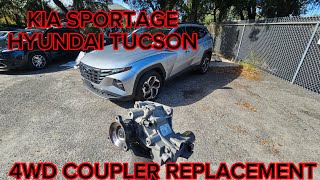
- Hyundai Tucson (2010-2017) — C2222 specifically points to 'Actuator Failure - 4WD', a fault with the four-wheel-drive electronic coupler actuator, completely unrelated to the brake system.
- Jeep Grand Cherokee (2005-2010) — Very common for this code to appear after an incorrect or un-programmed ABS module is installed. Programming a used module requires advanced scan tools.
- Dodge Charger / Magnum (2006-2010) — Internal failure of the ABS module is common. Replacing it without programming triggers this code immediately.
- Chrysler 300 (2006-2010) — Shares the same platform and ABS system as the Dodge Charger/Magnum and is susceptible to the same module configuration faults after replacement.
- Dodge Ram 1500/2500 (2006-2012) — The ABS module is located in a vulnerable spot behind the driver's side wheel, leading to corrosion and failure. Often sets a C2200 (internal failure) code alongside C2222.
- Jeep Wrangler (2007-2018) — Often appears when a used ABS module is installed. DIY programming is possible with tools like the JScan app.
- Kia Sportage (2011-2016) — As a sister vehicle to the Hyundai Tucson, it exhibits C2222 as a code related to the 4WD system's electronic actuator, not the brakes.
Manufacturer-Specific Notes
- Chrysler/Dodge/Jeep/Ram: Almost always relates to 'Vehicle Configuration Mismatch' or 'Improper Powerdown'. The fix is overwhelmingly a software update, auxiliary battery replacement, or ABS module programming. TSBs 18-001-19 REV. B and S2005000005 address Pacifica C2222-68 codes.
- Hyundai/Kia: C2222 means 'Actuator Failure - 4WD'. It points to a failed electronically controlled coupling on the rear differential, completely unrelated to the brakes.
- Ford/Lincoln: C2222 is rarely used. Configuration mismatch issues typically trigger U-series codes (e.g., U2100, U2101).
- Sea-Doo: Indicates 'Last session interrupted' due to an unexpected battery power loss, functionally identical to the automotive 'Improper Powerdown'.
Real Owner Stories
2018 Chrysler Pacifica with 54k miles - The 'Improper Powerdown' Saga
Owner experienced a 'Service Shifter' error, 'Auto Stop Start Error', and disabled parking sensors alongside C2222.
Outcome: The issue was a failing auxiliary battery draining the main battery. Replacing the auxiliary battery resolved all electrical gremlins and the C2222 code.
Lesson: On a Chrysler Pacifica, C2222 accompanied by other electrical faults is almost always caused by the auxiliary battery. Address it promptly before it kills the main battery.
2012 Hyundai Tucson - A 4WD Problem in Disguise
The 4WD warning light illuminated, and a scan revealed code C2222. Standard braking functioned normally.
Outcome: The fix was replacing the 4WD coupling actuator motor and harness per Hyundai's TSB 15-TC-001.
Lesson: Always check manufacturer-specific definitions. For many Hyundai/Kia models, C2222 is an 'Actuator Failure - 4WD' and has nothing to do with ABS.
Jeep Wrangler JK - The DIY ABS Module Swap
The owner installed a used ABS module from a junkyard. Immediately, the ABS/ESC lights illuminated, showing C2222 and C2202 (VIN Mismatch).
Outcome: The owner used a bidirectional scanner to perform a 'VIN Write' and 'ABS Initialization', programming the Jeep's VIN into the used module and clearing the codes.
Lesson: Replacing an ABS module with a used part always triggers a configuration mismatch code. You must reprogram the module with your vehicle's VIN after installation.
How to Prevent This Code From Triggering
- Test main and auxiliary batteries annually (Once per year, especially before winter) — Auxiliary batteries have a 3-5 year lifespan and are a primary cause of C2222. Annual load testing catches a weakening battery before it causes voltage-related faults.
- Clean battery terminals and electrical ground points (Every 2 years or as needed) — Corrosion creates resistance, causing intermittent voltage drops to modules that mimic an 'Improper Powerdown' event.
- Take longer drives periodically (At least one 30+ minute drive weekly) — Frequent short trips prevent the alternator from fully recharging the batteries, shortening their lifespan.
- Keep vehicle software updated (Check with dealer during annual service) — Manufacturers release software updates to fix bugs that cause false codes like C2222.
- Apply dielectric grease to exposed connectors (When performing other under-vehicle maintenance) — For exposed modules (like the Dodge Ram), dielectric grease blocks moisture and road salt, preventing pin corrosion.
Frequently Asked Questions
What is the most common misdiagnosis for C2222?
Replacing the expensive ABS module without testing the battery system is the most common mistake. On vehicles like the Chrysler Pacifica, a weak auxiliary battery is the leading cause of the 'Improper Powerdown' variant. Always load test both batteries first.
Can I use a used ABS module from a junkyard to save money?
Yes, but it requires professional programming. A used module contains the donor vehicle's VIN, immediately triggering C2222 upon installation. It must be reprogrammed with your VIN using a bidirectional scan tool.
Can I fix code C2222 myself?
You can easily test and replace a weak battery, which fixes many powerdown-related C2222 codes. However, fixes requiring software updates or module VIN programming require professional-level scan tools.
Why did this code appear right after a battery change?
The temporary power loss triggered a powerdown fault, or the Intelligent Battery Sensor (IBS) was not reset. Disconnecting the negative terminal for 15 minutes after installation usually resets the IBS and clears the fault.
Is it safe to drive with code C2222?
Normal braking works, but you lack ABS and stability control. This increases emergency stopping distances by up to 20% and increases skid risk. Drive cautiously and maintain extra following distance.
Will clearing the code with a cheap scanner fix it?
No. C2222 is a hard fault related to permanent configuration or persistent power issues. The code returns immediately upon startup until the underlying mismatch or voltage drop is resolved.
What is 'ABS Initialization'?
It is a software procedure that forces a new ABS module to learn the vehicle's specific VIN, tire size, and options. It also calibrates internal sensors like the yaw rate and G-sensor.
How much does it cost to diagnose C2222?
Shops charge a standard one-hour diagnostic fee ranging from $125 to $250. This covers using an advanced scanner, checking TSBs, and pinpointing the root cause.
Key Takeaways
- Code C2222 indicates the ABS module lost its configuration data or experienced an improper powerdown, disabling critical safety systems like ABS and Electronic Stability Control.
- On Chrysler vehicles (especially 2017-2020 Pacificas), a failing auxiliary battery is the #1 cause, requiring a $150-$300 battery replacement rather than a $1,000+ ABS module.
- Replacing an ABS module with a used part guarantees a C2222 code until a professional programs your vehicle's specific VIN into the new unit using a bidirectional scan tool.
- Driving with C2222 increases emergency stopping distances by up to 20% (an extra 70 feet at 60 mph), requiring significantly more following distance until repaired.
Helpful Videos

The information in this article is provided for general reference and educational purposes only. Vehicle specifications, procedures, and part compatibility can vary by production date, trim level, and region. Always consult your vehicle's factory service manual and verify part numbers before purchasing or performing repairs. Safety-critical components such as airbags, seat belts, and braking systems should be installed by a qualified professional.
- 🎬 Helpful Videos
- What Does C2222 Mean?
- Can I Drive With C2222?
- Common Causes
- Symptoms
- Diagnostic Flowchart
- Common Fixes & Costs
- DIY vs Professional
- Used vs. New Parts: Buying Guide
- What Happens If You Wait — Timeline
- Cost of Not Fixing It
- Diagnosis Steps
- When This Code Triggers (Freeze-Frame Conditions)
- Related Codes
- Climate & Environmental Factors
- How to Talk to a Mechanic About This Code
- Where to Take It: Dealer vs Independent vs Chain
- When to Walk Away From the Repair
- What Scan Tool You Need for This Code
- How to Clear the Code After You Fix It
- Will This Fail Emissions / State Inspection?
- Most Commonly Affected Vehicles
- Manufacturer-Specific Notes
- Real Owner Stories
- 2018 Chrysler Pacifica with 54k miles - The 'Improper Powerdown' Saga
- 2012 Hyundai Tucson - A 4WD Problem in Disguise
- Jeep Wrangler JK - The DIY ABS Module Swap
- How to Prevent This Code From Triggering
- Frequently Asked Questions
- What is the most common misdiagnosis for C2222?
- Can I use a used ABS module from a junkyard to save money?
- Can I fix code C2222 myself?
- Why did this code appear right after a battery change?
- Is it safe to drive with code C2222?
- Will clearing the code with a cheap scanner fix it?
- What is 'ABS Initialization'?
- How much does it cost to diagnose C2222?
- Key Takeaways
- 🎟️ Get 5% Off