

OBD-II Code C2208: Chassis Control Module Internal Fault
What C2208 means, why it triggers, and how to fix it
- Code C2208 flags an internal hardware or software failure within a primary chassis module, most often the ABS (Jeep/Chrysler) or 4WD controller (Mitsubishi).
- Expect immediate deactivation of critical safety systems like Anti-lock Brakes or 4WD, accompanied by persistent dashboard warning lights.
- Test the battery, fuses, and wheel speed sensors before replacing a $500+ control module, as low voltage or a $50 faulty sensor frequently triggers this exact code.
- Avoid buying junkyard ABS modules for Jeep, Chrysler, or Dodge vehicles; they are VIN-locked and require dealer-level programming costing $150-$300 to function.
What Does C2208 Mean?

C2208 is a manufacturer-specific code indicating an internal error within a chassis control module. Depending on the vehicle, this is the Four-Wheel Drive (4WD) unit, Anti-lock Brake System (ABS) module, or Airbag controller. The computer ran a self-check and detected a hardware failure, a software glitch, or a severe power/ground circuit interruption.
Technical definition: The SAE/ISO definition for C2208 varies by manufacturer. Mitsubishi defines it as '4WD-ECU Internal Error'. Jeep and Chrysler use it as a generic internal fault code for the ABS or Occupant Restraint Controller. On specific Jeep models, it indicates a 'Hybrid Battery Temperature Sensor Circuit High' plausibility failure.
Can I Drive With C2208?
Yes, But With Caution. You can drive because the primary hydraulic braking system still functions. However, you lose critical safety features like the Anti-lock Braking System (ABS), significantly increasing the risk of wheel lock-up and skidding during emergency stops. This leads to longer stopping distances and loss of steering control. Some vehicles enter a 'limp mode,' limiting speed to 40 mph. Inspect the vehicle immediately and avoid driving in rain or snow.
Common Causes

- Internal Control Module Failure (Very Common) — The electronic control module itself failed. Internal components like capacitors, processors, or solder joints degrade over time or suffer damage from voltage spikes.
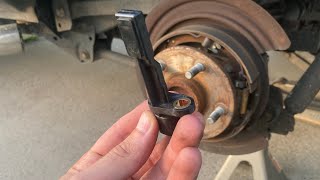
- Faulty Wheel Speed Sensor or Tone Ring (Common) — A failing wheel speed sensor sends erratic data to the ABS module, which the computer misinterprets as an internal module fault. Cracked or rusted tone rings cause identical false readings.
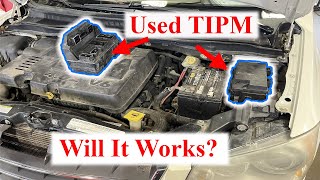
- Corroded Wiring, Connectors, or Grounds (Common) — Loose or corroded connectors at the module or chassis grounding points interrupt signals. Chrysler Town & Country vans frequently suffer from fuse box (TIPM) corrosion, starving the ABS module of voltage.
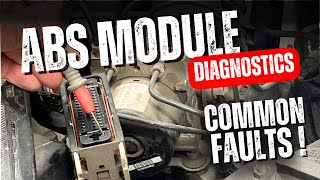
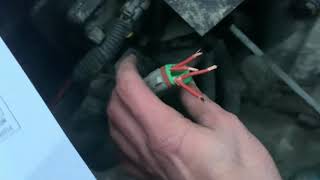
- Low Battery Voltage (Common) — A weak battery causes electronic modules to malfunction and report internal errors during startup. Control modules require a stable voltage above 12.0V to operate correctly. 🎬 Watch: How to perform an ABS ECU power and ground test.
- Short Circuit in External Components (Less Common) — A short to power in a component controlled by the module mimics an internal ECU fault. Mitsubishi service data explicitly lists a shorted electronic control coupling solenoid harness as a primary C2208 trigger.
- Outdated Module Firmware (Less Common) — A firmware bug causes the module to fail its self-test incorrectly. Manufacturers release Technical Service Bulletins (TSBs) with software updates to patch these logic errors.
Symptoms

- Warning Lights on Dashboard — The 'Service 4WD', 'ABS', 'Traction Control', or 'Airbag/SRS' light illuminates permanently.
- Loss of a Safety Function — The system associated with the code disables itself. The 4WD does not engage, anti-lock brakes do not function, or airbags turn off.
- System Stuck in One Mode — On Mitsubishi 4WD vehicles, the system defaults to 2WD mode and refuses to shift into 4WD, accompanied by flashing 4WD/LOCK lights.
- Vehicle Enters 'Limp Mode' — On specific Jeep Wrangler models, a severe ABS module fault forces the vehicle into a reduced power 'limp mode' as a safety precaution.
- Cruise Control Inoperative — Cruise control systems rely on wheel speed data from the ABS module. If the module fails, the cruise control disables automatically.
- Unusual Noises or Behavior — Grinding or humming noises emit from the transfer case, or the vehicle 'bucks' in tight turns if the 4WD system malfunctions.
Diagnostic Flowchart
Tap your situation to follow the diagnostic path that matches what you're seeing on this code.
Common Fixes & Costs
- Replacing a Wheel Speed Sensor — Parts: $40-$150, Labor: $100-$200, ~1.0 hr book time (DIY)
- Repairing Damaged Wiring or Connectors — Parts: $10-$50, Labor: $150-$400, ~1.5 hr book time (Intermediate)
- Rebuilding the Original ABS Control Module — Parts: $200-$400, Labor: $150-$300, ~1.5 hr book time (Intermediate)
- Replacing the ABS Control Module — Parts: $450-$800, Labor: $185-$350, ~2.0 hr book time (Professional)
- Replacing the 4WD Control Module (ECU) — Parts: $300-$1200, Labor: $100-$200, ~1.0 hr book time (DIY)
- Replacing the Airbag Control Module (ORC) — Parts: $400-$700, Labor: $150-$263, ~1.5 hr book time (Professional)
Used vs. New Parts: Buying Guide
When a used part is worth it: A used ABS or 4WD module from a reputable source is cost-effective for older vehicles where new parts are discontinued. It makes sense only if the seller provides a warranty and tested the part.
Donor-vehicle mileage cap: roughly under 100000 miles for the part to have meaningful remaining life.
Donor quality checklist:
- Verify the part number matches exactly.
- Buy from a seller with a clear return policy and warranty (30-90 days minimum).
- Ensure the part was tested on the donor vehicle before removal.
- Avoid parts from vehicles with flood or heavy collision damage.
Decision logic:
- If The part requires VIN programming (common on Chrysler/Jeep/Dodge) → Favor rebuilding your original module or buying new. Many independent shops cannot program a used module.
- If The vehicle is older (>10 years) and the new part costs over $1000 → A tested used part or a rebuilt original module offers the best value.
- If The original module is not available for rebuilding (e.g., physical damage) → A used module is a viable alternative to an expensive new one.
Warranty tradeoff: Used parts typically come with a 30-90 day warranty. Rebuilt modules carry a 1-year to lifetime warranty. New OEM parts have a 1-2 year warranty if installed by a dealer.
Worst-case if a used part fails: $300-$600 if a used part is faulty or cannot be programmed, covering repeat labor and diagnostic fees.
What Happens If You Wait — Timeline
- 0-2 weeks: Warning light (ABS, 4WD, etc.) is on constantly. The associated safety system is disabled. The vehicle's primary braking or drive system still functions normally. (MPG impact: 0%% · Added cost: $0)
- 2 weeks - 6 months: Continued driving without the safety system increases the risk of an accident, especially in adverse weather. No direct mechanical damage occurs, but the safety risk is constant. (MPG impact: 0%% · Added cost: $0 (Risk of accident-related costs is high))
- 6-12 months: An intermittent issue worsens, causing other related codes to appear as communication degrades. Ignoring a 4WD light leads to increased wear on the transfer case if stuck in an incorrect mode. (MPG impact: 0-2%% · Added cost: $200-$500 (Potential for added diagnostic time or minor component wear))
- 12+ months: A complete failure of the module or a significant wiring short damages other modules on the same CAN bus network. The primary cost remains the eventual repair of the initial fault, which is now harder to diagnose. (MPG impact: 0-2%% · Added cost: $500-$1500+ (Increased diagnostic complexity and potential for related component failure))
Cost of Not Fixing It
- Immediate: Loss of ABS, Traction Control, 4WD, or Airbags. Increases accident risk during emergency maneuvers or adverse weather. (Added cost: N/A)
- 0-6 Months: Loss of steering control and longer stopping distances in panic situations. Base hydraulic brakes work, but without anti-lock functions. (Added cost: High potential for accident-related costs.)
- 6+ Months: Masks other developing brake or chassis system problems. Intermittent faults become hard failures, requiring complex diagnostics. (Added cost: $200-$500 in added diagnostic time or related component failure.)
Diagnosis Steps
- Check for Other Trouble Codes
Scan for any other codes before focusing on C2208. Communication (U-codes) or power-related (B-codes/C-codes) point to the root cause. Problems with the CAN bus or low voltage falsely trigger an internal module error. Always diagnose U-codes first.
Tools: ['OBD-II Scan Tool'] - Inspect the Battery and Charging System
Ensure the battery is fully charged and terminals are clean. Use a multimeter to check for at least 12.4 volts with the engine off and 13.7-14.7 volts with the engine running. A weak system causes erroneous codes.
Tools: ['Digital Multimeter'] - Check Fuses and Relays
Consult your owner's manual to locate and inspect all fuses and relays related to the ABS, 4WD, or SRS systems. A blown fuse cuts power to the module, causing it to set a fault code.
Tools: ['Test Light or Multimeter', 'Needle-nose Pliers'] - Test Wheel Speed Sensors (Pro Tip)
For older two-wire passive sensors, check resistance (800-1700 ohms) and look for an AC voltage signal (0.5-1.0V) that increases with wheel speed when spinning the wheel by hand. For active (three-wire) sensors, use an oscilloscope to look for a clean square wave signal. An erratic signal points to a bad sensor, not the module.
Tools: ['Digital Multimeter', 'Oscilloscope (for active sensors)', 'Jack and Jack Stands'] (Advanced) - Visually Inspect Wiring and Connectors
Locate the relevant control module (4WD, ABS, or Airbag) and carefully inspect its connectors and the surrounding wiring harness for damage, corrosion, or moisture. Pay close attention to areas exposed to the elements, like wheel wells.
Tools: ['Flashlight'] - Test for Power and Ground at the Module (Pro Tip)
Using a multimeter and the vehicle's wiring diagram, confirm the control module receives proper battery voltage and has a solid ground connection at its electrical connector. Back-probe the connector while it's connected and the key is on. A voltage drop of more than 0.2 volts indicates a wiring issue that must be fixed before condemning the module.
Tools: ['Digital Multimeter', 'Back-probe Pins'] - Inspect Wheel Speed Sensor Tone Rings
Visually inspect the toothed 'tone rings' that the wheel speed sensors read. These rings, located on the axle or wheel hub, crack, rust, or get covered in metallic debris, causing an incorrect signal that confuses the ABS module.
Tools: ['Flashlight', 'Wire Brush', 'Jack and Jack Stands'] - Test CAN Bus Communication (Advanced)
With the ignition off, use a multimeter to measure the resistance between Pin 6 (CAN-H) and Pin 14 (CAN-L) at the OBD-II port. A healthy CAN bus reads approximately 60 Ω. A reading of 120 Ω suggests one terminating resistor is offline, and near 0 Ω indicates a short between the CAN lines.
Tools: ['Digital Multimeter'] (Advanced) - Check for Technical Service Bulletins (TSBs)
Search for TSBs related to your vehicle's make, model, and the C2208 code. A manufacturer may have identified a known software issue fixed with a simple re-flash instead of a costly module replacement.
Tools: ['Internet Access'] - Clear Codes and Perform a Drive Cycle
After performing inspections or minor fixes, clear the trouble codes with a capable OBD-II scanner and perform the specific drive cycle required for the system to re-test itself. If the code returns immediately, it confirms a hard fault.
Tools: ['OBD-II Scan Tool']
When This Code Triggers (Freeze-Frame Conditions)
- Vehicle Speed: 0-15 mph (Triggers during initial startup self-test or low-speed driving.)
- System Voltage: 10.5-11.8V (Triggers during engine cranking if the battery is weak.)
- Time Since Start: 0-30 seconds (Fault is detected immediately after the ignition is turned on.)
- Brake Pedal Status: Off or On (Logs regardless of brake application, but ABS self-tests run when the pedal is first pressed.)
Related Codes
- C2200 — This code for 'Anti-Lock Brake Module Internal' is very common on Jeep, Chrysler, and Dodge vehicles. It appears for the same root causes as C2208 on those makes, pointing directly to a faulty ABS module.
- U0121 — This code means 'Lost Communication With ABS Control Module'. It frequently appears with C2208 because a failing module or its wiring cannot communicate with the rest of the car's network.
- U0001 — This code for 'High Speed CAN Communication Bus' indicates a general network problem. It causes C2208, as a communication failure is misinterpreted by a module as an internal fault.
- C1219 — On Mitsubishi vehicles, this code for 'Steering Angle Sensor Signal' fault appears alongside other chassis codes. A faulty steering angle sensor causes the ABS/ASC system to set multiple codes.
Climate & Environmental Factors
- High Humidity / Water Exposure: Moisture is a primary cause of failure, especially for Chrysler/Dodge TIPM (fuse box) units and exposed wiring harnesses. Water intrusion leads to corrosion on circuit boards, connector pins, and ground points, causing voltage drops.
- Road Salt (Cold Climates / Salt Belt): In regions where road salt is used, corrosion accelerates significantly. Saltwater creeps into connectors and wiring looms, causing shorts and open circuits that trigger a C2208 code.
How to Talk to a Mechanic About This Code
Say this: "I have a C2208 code and the associated warning light is on. I'd like to schedule a diagnostic appointment. I understand this is caused by wiring, sensors, or low voltage, so please perform a full diagnostic to rule out those cheaper parts before recommending a module replacement."
This signals to the shop that you are an informed customer. It directs them to perform a thorough diagnosis rather than jumping to the most expensive conclusion and sets the expectation that they must justify their findings.
Avoid saying:
- 'My ABS light is on, can you fix it?'
- 'Just do whatever it takes to turn the light off.'
- 'I think I need a new ABS module.'
Questions to ask before authorizing the repair:
- What specific tests did you perform to confirm the module itself failed?
- Did you test for proper power, ground, and communication signals at the module's connector?
- Have you checked for any Technical Service Bulletins (TSBs) related to this code for my vehicle?
- If you are recommending a module replacement, does the new part require programming and is that cost included in the quote?
- What is the warranty on the proposed repair, including both parts and labor?
Where to Take It: Dealer vs Independent vs Chain
- Dealer:
Best for: Vehicles under warranty, Complex diagnostics requiring proprietary tools, Repairs requiring VIN-programming of a new module (common on Chrysler/Jeep)
Downsides: Highest labor and parts costs., Quicker to recommend module replacement over time-consuming wiring diagnostics. (Typical cost: +50% vs. baseline) - Independent Shop:
Best fit. A well-equipped independent shop offers the best balance of expertise and value. They can arrange a module rebuild, saving hundreds over a dealer replacement.
Best for: Out-of-warranty vehicles where cost is a concern., Diagnosing common related failures like wheel speed sensors or wiring issues., Arranging a module rebuild, which is a cost-effective alternative to replacement.
Downsides: Quality and equipment vary greatly. Ensure the shop has modern diagnostic tools and experience with electrical systems., Cannot program a new module for all makes. (Typical cost: +0% vs. baseline) - Chain Shop:
AVOID. This diagnostic work falls outside their scope and carries a high risk of misdiagnosis and unnecessary parts replacement.
Best for: Simple, unrelated maintenance like oil changes or tires.
Downsides: Technicians lack the specialized training for complex electrical diagnostics., Business model encourages upselling parts without a thorough diagnosis. (Typical cost: -10% vs. baseline)
When to Walk Away From the Repair
If the estimated repair cost exceeds 40-50% of the car's private-party value, pause and consider alternatives to repair.
- Car worth $8000, fix is $1400: Fix it. The repair cost is well below the threshold.
- Car worth $4000, fix is $1400: Borderline. The cost is 35% of the car's value. Get a second opinion and explore cost-saving options like a rebuilt module before proceeding.
- Car worth $2500, fix is $1400: Walk away. The repair cost is over 50% of the car's value and is not a sound investment.
What Scan Tool You Need for This Code

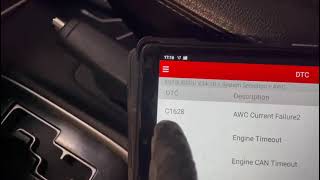
Minimum: A scanner that reads and clears manufacturer-specific Chassis (C) codes from the ABS/SRS/4WD modules. It must support viewing live data for components like wheel speed sensors.
A basic $20 code reader only checks for engine (P) codes and will not see the C2208 fault. You cannot diagnose the problem without seeing live data from the system's sensors.
Budget: BlueDriver Pro / Autel AP200 (~$120) — Connects to your smartphone and reads/clears ABS, SRS, and other chassis codes. Allows you to view live data from wheel speed sensors to determine if a sensor is the cause.
Mid-range: Foxwell NT510/NT530 / JScan or AlfaOBD App with OBDLink MX+ dongle (~$250) — Adds bi-directional controls, allowing you to perform specific tests like cycling the ABS pump. For Jeep/Chrysler/Dodge, JScan and AlfaOBD offer near-dealer level diagnostics and programming capabilities.
Professional: Autel MaxiCOM MK808 / MaxiCheck MX808 (~$450) — Provides all-system diagnostics, extensive live data, and bi-directional controls for active testing. It performs the automated ABS bleed procedure required after replacing many modules.
Rent vs buy: Buy. Free rental tools at auto parts stores are basic code readers that cannot access ABS or other chassis systems. To properly diagnose a C2208 code, you must purchase a capable scanner.
How to Clear the Code After You Fix It
- Use a professional OBD-II scan tool to clear the C-code from the specific module (ABS, 4WD, etc.).
- Disconnecting the battery does not clear chassis codes.
- Perform the manufacturer-specific drive cycle to allow the system to run its self-test and confirm the repair.
Drive cycle (~20 minutes): A generic drive cycle for chassis systems involves: 1. Cold start (sit for 8+ hours). 2. Idle for 2-3 minutes. 3. Drive in mixed city conditions (stop-and-go) for 15 minutes. 4. Achieve and hold a steady highway speed (55 mph) for at least 5 minutes. 5. Come to a complete stop. The warning light remains off if the fix was successful.
Readiness monitors affected: This is a chassis code and does not directly affect emissions readiness monitors like the Catalyst or O2 sensor monitors., However, clearing codes with a scanner resets all monitors, requiring a full drive cycle before an emissions test.
Before emissions retest: drive at least 50 miles to fully set monitors.
Watch out for:
- Using a basic code reader that only reads 'P' (powertrain) codes and cannot access or clear 'C' (chassis) codes.
- Not fixing the root cause; the code returns immediately upon the next self-test.
- Clearing codes and immediately going for an emissions test before the readiness monitors set to 'Ready'.
Will This Fail Emissions / State Inspection?
No — by itself this code doesn't fail OBD inspection (but it can keep readiness monitors from setting, which causes a separate fail).
- California: An illuminated ABS light alone does not cause a smog check failure. The test only concerns the Check Engine Light and emissions-related systems.
- New York: A standard safety inspection in NY includes checking airbag and brake warning lights. An illuminated ABS light is noted, but only the Check Engine Light causes an automatic emissions failure.
- Texas: For the annual safety inspection, an illuminated ABS light is not a cause for rejection. Only the red 'Brake' warning light causes a failure.
Most Commonly Affected Vehicles
- Mitsubishi Outlander, Lancer, Outlander Sport (2012-2022) — Prone to a C2208 code indicating an internal failure of the 4WD-ECU, often linked to a short in the wiring to the electronic control coupling. The system defaults to 2WD.
- Jeep Wrangler (JK/JL), Patriot, Compass (2007-2024) — Commonly experiences ABS module failures, setting codes like C2200 or C2208. The ABS, ESP, and traction control lights appear together. On the Patriot/Compass, wiring corrosion is a frequent culprit.
- Chrysler Town & Country, 200, 300 (2008-2017) — The Town & Country (2008-2016) is notorious for C2200/C2208 codes caused by corrosion in the main fuse box (TIPM), leading to low voltage at the ABS module.
- Dodge Grand Caravan, Charger, Challenger (2008-2020) — Shares the same platform and electrical issues as Chrysler counterparts. The Grand Caravan experiences the same TIPM corrosion issue, and Chargers are known for ABS module internal failures.
- Chevrolet / GMC Silverado, Sierra, Tahoe, Suburban (2007-2014) — A faulty brake light switch is a very common issue that disables cruise control and triggers ABS/traction control lights, which is frequently misdiagnosed as a failed ABS module.
- Nissan Altima, Rogue, Murano, Sentra, Titan (2015-2024) — Prone to chassis system faults with the front radar sensor for the Automatic Emergency Braking (AEB) system. A sensor failure triggers related C-codes and disables multiple safety systems.
- Subaru Outback, Forester, Ascent (2018-2024) — Features advanced chassis systems like EyeSight and Reverse Automatic Braking (RAB). A fault in one sub-system disables others and sets an internal module code if a controller fails its self-check.
- Hyundai / Kia Various (2010-2020) — A corroded or faulty parking brake switch causes electrical feedback that triggers ABS and traction control lights, leading to a misdiagnosis of a failed ABS module.
Manufacturer-Specific Notes
- Mitsubishi: The C2208 code almost always points to the 4WD system. The system disables itself as a failsafe, switching the vehicle to 2WD and flashing the 4WD/LOCK lights. A known cause is a short to power in the harness to the electronic control coupling.
- Jeep / Chrysler / Dodge: On these brands, chassis codes in this range (C2200, C2208) almost always point to the ABS module. A replacement module is not plug-and-play; it must be programmed with the vehicle's VIN to function correctly.
- Chrysler: On models like the Town & Country and Grand Caravan, before replacing the ABS module for a C2200/C2208, inspect the main fuse box (TIPM) and its connectors for corrosion. A poor connection here is a very common cause of low voltage to the module.
- General Motors (Chevrolet/GMC): On many GM trucks and SUVs, a cheap and faulty brake light switch causes the ABS, traction control, and StabiliTrak lights to illuminate and disable cruise control. Always check the brake light switch first.
- Subaru: A settlement for a class-action lawsuit extended the warranty for the EyeSight system on many 2013-2024 models. It covers 75% of the repair cost for certain failures of the camera assembly or rear sonar sensors for up to 4 years/48,000 miles.
Real Owner Stories
2007 Jeep Wrangler JK with ABS/ESP lights
The ABS, ESP, and brake warning lights illuminated simultaneously after driving 200 meters. The lights cleared after turning the vehicle off but reappeared consistently. The scanner showed code C2200, a related internal module fault.
What they tried:
- A mechanic initially suggested replacing the entire ABS module.
- The owner researched forums and found that a faulty wheel speed sensor is a common cause for these exact symptoms.
- Multiple owners confirmed that replacing a wheel speed sensor with an OEM Mopar part resolved the issue.
Outcome: The root cause was a faulty wheel speed sensor. Replacing the sensor, a much cheaper part than the ABS module, fixed the problem permanently.
Lesson: Do not immediately replace the expensive ABS module for a C2200 or C2208 code on a Jeep. A faulty wheel speed sensor is a common and cheaper root cause that produces identical symptoms. Use a scanner that reads ABS data to identify the failing wheel sensor.
2015 Mitsubishi Outlander with 'Service 4WD System' light
The 'Service 4WD System' warning appeared, the 4WD/LOCK lights flashed, and the system stuck in 2WD. The code retrieved was C2208, indicating a 4WD-ECU internal error.
What they tried:
- Initial checks of fuses and visible wiring showed no obvious issues.
- A mechanic followed the Mitsubishi Technical Service Bulletin (TSB) for code C2208.
- The TSB directs technicians to test the wiring harness between the 4WD-ECU and the electronic control coupling solenoid for a short to power.
Outcome: A short circuit was found in the wiring harness near the rear differential, caused by chafing against a chassis component. Repairing the damaged wire and protecting the harness with a conduit resolved the issue without replacing the 4WD-ECU.
Lesson: On a Mitsubishi with C2208, the problem is often in the external wiring, not the module itself. Following the manufacturer's TSB is critical to avoid misdiagnosing a bad ECU.
2012 Chrysler Town & Country with ABS light and C2208
The ABS and Traction Control lights were on. The owner experienced intermittent electrical issues, including flickering lights. Code C2208 pointed to an internal ABS module fault.
What they tried:
- The battery tested healthy.
- Fuses for the ABS system were intact.
- Following advice from owner forums, the Totally Integrated Power Module (TIPM), the main fuse box, was inspected.
Outcome: Significant green and white corrosion was found on the underside connectors of the TIPM. Cleaning the corrosion from the TIPM connectors restored a stable voltage supply to the ABS module. The C2208 code cleared and did not return.
Lesson: For Chrysler/Dodge minivans, always inspect the TIPM for corrosion before condemning the ABS module. Low voltage caused by a bad connection at the TIPM is a well-documented cause of C2200/C2208 codes and saves you from a $1000 unnecessary repair.
How to Prevent This Code From Triggering
- Perform regular brake fluid flushes (Every 2-3 years or as per manufacturer's recommendation) — Brake fluid absorbs moisture over time. This moisture causes internal corrosion of the delicate valves and electronic components within the ABS module, leading to seizure or failure.
- Clean and protect electrical connections (During any related service or every 2-3 years) — Periodically inspect and clean main ground points and module connectors. Applying a thin layer of dielectric grease seals out moisture and prevents corrosion that causes voltage drops.
- Maintain a healthy battery and charging system (Annually) — Control modules are sensitive to low voltage. A weak battery causes voltage spikes or drops during startup that damage electronics or trigger false internal fault codes.
- Regularly wash the vehicle's undercarriage (Seasonally, especially after winter in salt-belt areas) — Washing away road salt, brine, and mud prevents accumulation on wiring harnesses and connectors. This reduces the risk of accelerated corrosion that destroys wiring.
- Install a heat shield for the ABS module (if applicable) (Once) — On some vehicles, the ABS module is located near high-heat components like the exhaust manifold. Thermal stress causes solder joints on the circuit board to crack. Fabricating an aluminum heat shield extends the module's life.
Frequently Asked Questions
Can I fix a C2208 code myself?
If the cause is a simple fix like a blown fuse, a weak battery, or a visibly loose connector, yes. Diagnosing wiring faults or replacing a wheel speed sensor is a DIY job for those with intermediate skills. However, replacing and programming a control module requires professional tools.
Is it safe to drive with a C2208 code?
While the vehicle drives with its base mechanical brakes, it is not recommended. The code indicates that a key safety system (like ABS, 4WD, or airbags) is disabled, increasing risk in an emergency or bad weather.
Will clearing the code make the problem go away?
No. Clearing the code only erases the error message. If the underlying hardware or wiring fault is still present, the warning light and the code return as soon as the module runs its self-test again.
Why did my ABS, Traction Control, and Stability Control lights all come on at once?
These systems are integrated and rely on the same components, primarily the ABS module and wheel speed sensors. When the ABS module fails or a wheel speed sensor stops sending data, the computer shuts down all related systems and illuminates their warning lights.
What is the difference between replacing and rebuilding an ABS module?
Replacing means buying a new or used part to install in the car, which is expensive and requires VIN programming. Rebuilding involves sending your car's original module to a specialized service that repairs the internal electronics. Rebuilding is cheaper and avoids the need for programming.
What are common misdiagnoses for a C2208 code?
A common mistake is replacing an expensive ABS module when the actual cause is a cheaper component. Examples include a bad wheel speed sensor, a corroded ground wire, a faulty brake light switch, or corrosion in the main fuse box.
Can I use an ABS module from a junkyard?
It is risky and often not recommended, especially for Jeep, Chrysler, and Dodge. The ABS module is often 'VIN-locked' to the original vehicle and cannot be reprogrammed by a dealer for a different car. A better alternative is to have your original module rebuilt.
Can a bad wheel speed sensor cause a C2208 code?
While a bad wheel speed sensor typically sets its own specific code, it sends erratic signals that confuse the ABS module, leading it to incorrectly flag an internal fault. Testing the sensors is a key diagnostic step before replacing the module.
Key Takeaways
- Code C2208 flags an internal hardware or software failure within a primary chassis module, most often the ABS (Jeep/Chrysler) or 4WD controller (Mitsubishi).
- Expect immediate deactivation of critical safety systems like Anti-lock Brakes or 4WD, accompanied by persistent dashboard warning lights.
- Test the battery, fuses, and wheel speed sensors before replacing a $500+ control module, as low voltage or a $50 faulty sensor frequently triggers this exact code.
- Avoid buying junkyard ABS modules for Jeep, Chrysler, or Dodge vehicles; they are VIN-locked and require dealer-level programming costing $150-$300 to function.
Helpful Videos

The information in this article is provided for general reference and educational purposes only. Vehicle specifications, procedures, and part compatibility can vary by production date, trim level, and region. Always consult your vehicle's factory service manual and verify part numbers before purchasing or performing repairs. Safety-critical components such as airbags, seat belts, and braking systems should be installed by a qualified professional.
- 🎬 Helpful Videos
- What Does C2208 Mean?
- Can I Drive With C2208?
- Common Causes
- Symptoms
- Diagnostic Flowchart
- Common Fixes & Costs
- Used vs. New Parts: Buying Guide
- What Happens If You Wait — Timeline
- Cost of Not Fixing It
- Diagnosis Steps
- When This Code Triggers (Freeze-Frame Conditions)
- Related Codes
- Climate & Environmental Factors
- How to Talk to a Mechanic About This Code
- Where to Take It: Dealer vs Independent vs Chain
- When to Walk Away From the Repair
- What Scan Tool You Need for This Code
- How to Clear the Code After You Fix It
- Will This Fail Emissions / State Inspection?
- Most Commonly Affected Vehicles
- Manufacturer-Specific Notes
- Real Owner Stories
- 2007 Jeep Wrangler JK with ABS/ESP lights
- 2015 Mitsubishi Outlander with 'Service 4WD System' light
- 2012 Chrysler Town & Country with ABS light and C2208
- How to Prevent This Code From Triggering
- Frequently Asked Questions
- Can I fix a C2208 code myself?
- Is it safe to drive with a C2208 code?
- Will clearing the code make the problem go away?
- Why did my ABS, Traction Control, and Stability Control lights all come on at once?
- What is the difference between replacing and rebuilding an ABS module?
- What are common misdiagnoses for a C2208 code?
- Can I use an ABS module from a junkyard?
- Can a bad wheel speed sensor cause a C2208 code?
- Key Takeaways
- 🎟️ Get 5% Off