

OBD-II Code C2201: ABS, DTCM, or FDCM Module Internal Failure
A comprehensive professional guide to what C2201 means, why it triggers, and how to fix it for good.
- Code C2201 confirms a fatal internal electronic failure within the ABS or Drivetrain Control Module, requiring hardware repair or replacement in 90% of cases.
- Driving with C2201 disables your Anti-lock Brakes (ABS), Traction Control, and Stability Control, increasing emergency stopping distances by up to 30% on wet roads.
- Perform a voltage drop test before condemning the module; a reading above 0.1V (100mV) on the ground circuit indicates a wiring fault, not a failed module.
- Rebuilding your original ABS module costs $250 to $500 total and completely bypasses the $150 to $350 dealer VIN programming fee required for new parts.
What Does C2201 Mean?

Code C2201 signifies a critical control module detected an irrecoverable internal electronic failure. Most commonly, this is the Anti-lock Brake System (ABS) module. On 4WD vehicles, it points to the Drivetrain Control Module (DTCM) or Final Drive Control Module (FDCM). The module failed its self-diagnostic check due to a fault in its microprocessor, memory, or internal circuitry. This is an internal module problem, not an external sensor issue.
Technical definition: The official SAE/ISO definition for C2201 is "Final Drive Control Module (FDCM) / Drivetrain Control Module (DTCM) Internal" or a manufacturer-specific variation indicating an internal controller failure. The module's central processor detected a non-recoverable error within its hardware, software, or internal communication pathways, rendering it inoperative.
Can I Drive With C2201?
Yes, But With Caution. Yes, but for limited distances. Your primary hydraulic brakes function, but critical safety systems—Anti-lock Braking System (ABS), Traction Control (TCS), and Electronic Stability Control (ESC)—are completely disabled. This significantly increases stopping distances on slippery surfaces and elevates skidding risk. Avoid driving in adverse weather like rain or snow.
Common Causes

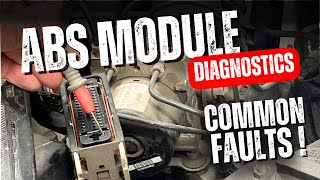
- Internal Electronic Component Failure (Very Common) — Over time, extreme engine bay heat cycles and vibration crack microscopic solder joints or destroy processors 🎬 See this breakdown of common internal ABS module hardware faults. and memory chips on the module's printed circuit board.
- Software/Firmware Corruption (Common) — The module's internal software corrupts or contains factory bugs. A manufacturer software update (re-flash) resolves the internal error without replacing hardware (e.g., Ram TSB 21-005-12).
- Low Battery Voltage or Voltage Spikes (Common) — Sustained low battery voltage, or spikes from improper jump-starting or a failing alternator, corrupt the module's memory or permanently damage sensitive internal electronics.
- Intermittent Power/Ground Loss (Improper Shutdown) (Common) — A loose ground wire or poor power connection forces the module to shut down improperly. This corrupts its memory and falsely triggers an internal failure code, requiring a specific 'sleep cycle' procedure to clear.
- Water Intrusion and Corrosion (Less Common) — Water seeps into the electrical connector or module housing, corroding pins and the circuit board. This causes short circuits the module interprets as an internal failure (e.g., Chrysler recall R61).
- Short in Power/Ground Circuit (Rare) — A direct short-to-ground or short-to-voltage in the main power or ground wire damages the internal power supply circuit, causing a C2201 code and typically blowing a fuse.
Symptoms

- ABS, Traction Control, and ESC Lights On — The ABS, TCS, and ESC dashboard indicators illuminate and remain on. These safety features are completely disabled, increasing the risk of wheel lock-up during hard stops.
- Service 4WD Light On (4x4 Vehicles) — If the code stores in the DTCM or FDCM, a 'Service 4WD' message appears, and the 4WD system disables.
- Brake Warning Light On — The primary red 'BRAKE' warning light illuminates to signify a serious fault within the overall braking system.
- Intermittent, Uncommanded Braking (Rare) — A faulty ABS module momentarily applies the brakes on its own, causing a sensation of hesitation or stumbling during city driving.
Diagnostic Flowchart

Tap your situation to follow the diagnostic path that matches what you're seeing on this code.
Common Fixes & Costs
- Repair/Rebuild the Existing Module — Parts: $150-$500, Labor: $100-$200, ~1.5 hr book time (Intermediate)
- Update Module Software (Flash Reprogram) — Parts: $0, Labor: $125-$250, ~1 hr book time (Professional)
- Clean/Repair Module Connector and Ground — Parts: $5-$20, Labor: $50-$150, ~1 hr book time (DIY)
- Replace with a New OEM Module
— Parts: $800-$1,800, Labor: $150-$350, ~2.5 hr book time
(Professional)
Jeep Wrangler (JK, 2012-2014): OEM 68145835AE (Alt: Cardone (Reman))
Dodge Grand Caravan (2014): OEM 68194483AE (Alt: Cardone) - Replace with a Used Module — Parts: $50-$400, Labor: $150-$350, ~2.5 hr book time (Professional)
Used vs. New Parts: Buying Guide
When a used part is worth it: A used ABS module is a budget-conscious choice for older, high-mileage vehicles where a new OEM part ($1,200+) is a significant portion of the car's value. Requires access to a shop capable of reprogramming it.
Donor-vehicle mileage cap: roughly under 100000 miles for the part to have meaningful remaining life.
Donor quality checklist:
- Match the OEM part number on your original module EXACTLY to the donor part.
- Purchase from a reputable auto recycler offering at least a 90-day warranty.
- Avoid parts from flood-damaged or high-impact collision vehicles.
- Claims of 'pre-programmed' used modules are misleading; programming must be done on the vehicle itself.
Decision logic:
- If The vehicle is less than 10 years old OR you plan to keep it for several more years → Choose a rebuilt original module or a new OEM part. The reliability is worth the extra cost.
- If The primary issue is a known software glitch confirmed by a TSB → Do not replace hardware; pay for a dealer software re-flash.
- If The vehicle is over 10 years old AND the budget is the main concern → A used part is a reasonable risk, but factor in the cost of professional programming ($150-$350).
Warranty tradeoff: A rebuilt original module requires no programming and often comes with a lifetime warranty. A new OEM part has a 1-2 year warranty but is expensive and requires programming. A used part is cheapest but carries a short 30-90 day warranty covering only the part.
Worst-case if a used part fails: $400-$700. The cost of the failed used part plus non-refundable labor and programming fees paid for the initial installation.
What Happens If You Wait — Timeline
- Immediate: Code C2201 sets. ABS, Traction Control, and ESC warning lights illuminate and systems disable. Base hydraulic brakes function normally. (MPG impact: 0%% · Added cost: $0 (Safety risk is the primary impact))
- First emergency or slippery condition: Vehicle exhibits significantly increased stopping distances and high risk of wheel lock-up. The ability to steer while braking hard is lost. (MPG impact: 0%% · Added cost: $500 - $10,000+ (Cost of an at-fault collision, insurance deductible, and premium increases))
- 0-12 months (Next state inspection): Vehicle automatically fails its annual state safety inspection due to the illuminated ABS warning light. The vehicle cannot be legally registered. (MPG impact: 0%% · Added cost: $20 - $70 (Cost of the failed inspection and re-test fee))
Cost of Not Fixing It
- Immediate: Total loss of ABS, Traction Control, and Electronic Stability Control. Increases the chance of skidding and longer stopping distances. (Added cost: N/A (Safety Risk))
- 0-6 months: Failed state safety inspection. Most states automatically fail a vehicle if the ABS warning light is illuminated. (Added cost: $20-$70 (Failed inspection fee and re-test cost))
- 6+ months: Increased risk of an at-fault collision. The lack of electronic safety aids makes the vehicle inherently less safe. (Added cost: $500 - $10,000+ (Insurance deductible, repairs, potential legal/medical fees))
Diagnosis Steps
- Check for Technical Service Bulletins (TSBs)
Search for TSBs for your vehicle's make, model, and year related to C2201. Manufacturers frequently release software updates to fix this code. TSBs 21-005-12 (Ram) and 24-2136 (Ford) are prime examples where a re-flash is the primary fix.
Tools: Internet access, vehicle VIN (Beginner) - Verify Code and Check for Other DTCs
Use a professional-grade OBD-II scanner capable of reading Chassis (C) and Network (U) codes. Confirm C2201 is present and note if it is 'active' or 'stored'. Record codes like U0121 (Lost Communication), which indicate wiring faults.
Tools: Professional OBD-II Scanner (Beginner) - Perform a Comprehensive Battery and Charging System Test
Use a digital multimeter to verify the battery has at least 12.4V (engine off) and the charging system produces a stable 13.2-14.5V (engine running). Low voltage is a primary cause of false module codes.
Tools: Multimeter, Electronic Battery Tester (Beginner) - Execute a Hard Reset and Module Sleep Cycle
Disconnect the negative battery terminal for 30 minutes. After reconnecting, perform the manufacturer-specific 'sleep cycle' (common on Chrysler/Jeep/Dodge): turn ignition on (not starting), close all doors, and let the vehicle sit undisturbed until the instrument cluster lights turn off (up to 10 minutes).
Tools: Wrench set (Intermediate) - Inspect Module Connector and Grounds
With the battery disconnected, unplug the module's main connector and inspect for corrosion, moisture, or backed-out pins. Locate the main ground point for the module (often on the frame rail) and ensure it is clean and tight.
Tools: Flashlight, basic hand tools, wire brush (Intermediate) - Verify Power and Ground Integrity at the Connector
Identify the main power and ground pins on the module's connector using a wiring diagram. With the key on, confirm battery voltage (12.0V+) on the power pins. Perform a voltage drop test on the ground pins: reading must be less than 0.1 volts (100mV). A higher reading indicates a poor ground connection.
Tools: Multimeter, vehicle-specific wiring diagram (Advanced) - Check CAN Bus Network Integrity
If network codes (U-codes) are present, measure the resistance between the CAN High and CAN Low pins; it should be approximately 60 ohms (battery disconnected). Using an oscilloscope, observe the CAN signal with the key on to ensure clean square waves.
Tools: Multimeter, Oscilloscope, wiring diagram (Advanced) - Analyze Live Scan Tool Data
Monitor live data from the ABS module. Module voltage must be stable and match charging system voltage. The absence of data from all wheel speed sensors simultaneously, while the module has good power and ground, strongly suggests an internal module failure.
Tools: Professional OBD-II Scanner (Advanced) - Condemn the Module
If TSBs are checked, power/grounds are perfect (Voltage drop < 100mV), the CAN network is healthy, and the C2201 code is 'active' and cannot be cleared, condemn the control module. The internal fault is confirmed.
Tools: Professional OBD-II Scanner (Professional)
When This Code Triggers (Freeze-Frame Conditions)
- System State: Key-On, Engine-Off (KOEO) (During initial power-up self-test.)
- Vehicle Speed: 0-10 mph (During the initial self-test that occurs when driving begins.)
- Battery Voltage: 11.8V - 12.6V (Stable voltage during the module's power-on sequence. Spikes or drops trigger false codes.)
- System Command: Internal Self-Diagnostic (The code sets when the module fails its internal integrity check, independent of external engine parameters.)
Related Codes
- C2200 — Functionally identical to C2201, meaning 'Anti-lock Brake Module Internal Failure.' Manufacturers use these interchangeably.
- U0121 — 'Lost Communication With Anti-Lock Brake System Module.' Indicates the module is offline. Verify power, ground, and CAN bus connections before replacement.
- C121C — 'Torque Request Signal Denied.' A secondary code set because the stability control system cannot get a response from the failed ABS module.
- C2116 — 'ABS Pump Motor Circuit Low Voltage.' Often accompanies the internal failure code, pointing to a failure in the power supply within the ABS module.
Climate & Environmental Factors
- Humidity and Water Exposure: Heavy rain or driving through deep water leads to moisture intrusion into the ABS module connector. On some Chrysler/Dodge models, water wicks through the ground wire casing directly into the module, causing failure (Recall R61).
- Extreme Cold: Low temperatures reduce battery voltage during startup, triggering transient low-voltage codes, or cause microscopic cracks in old solder joints to contract and open the circuit.
- Extreme Heat: Modules in the engine bay are exposed to high operating temperatures. Thermal cycles degrade electronic components and solder joints, leading to eventual failure.
- Road Salt and De-icing Agents: Salt spray attacks the module's electrical connector pins and main chassis ground points, leading to poor connections that trigger false internal fault codes.
How to Talk to a Mechanic About This Code
Say this: "I have an active C2201 code indicating an internal module failure. Before replacing the module, I need a quote for one hour of diagnostics to perform a voltage drop test on the module's main power and ground wires and check for software update TSBs. If that checks out, please provide separate quotes for replacing the module with a new OEM part versus removing and sending my original module for a rebuild."
This directs the shop to perform crucial, low-cost checks (power, ground, TSBs) before defaulting to the most expensive repair. It proactively asks for the cost-effective rebuild option.
Avoid saying:
- 'My ABS light is on, can you fix it?'
- 'Just do whatever it takes to get the light off.'
- 'A guy online said I need a new ABS module.'
Questions to ask before authorizing the repair:
- What were the specific voltage drop readings, in millivolts, on the power and ground circuits?
- Did you confirm there are no open TSBs for a software re-flash to fix this code?
- Does your quote for a new module include the cost of VIN programming and system initialization?
- If we rebuild my original module, is it plug-and-play with no programming needed upon return?
- What is the warranty on the repair, for both a new part and a rebuilt unit, including labor?
Where to Take It: Dealer vs Independent vs Chain
- Dealer:
Recommended only for software flashes or warranty work. For out-of-warranty hardware replacement, they are the most expensive option.
Best for: Vehicles under warranty., Repairs requiring a manufacturer-specific software update (re-flash) identified by a TSB., Programming a new OEM module.
Downsides: Highest labor rates and parts costs., Unwilling to work with customer-sourced rebuilt modules. (Typical cost: +50% vs. baseline) - Independent Shop:
Best fit, provided it's a reputable shop specializing in diagnostics. They are the ideal partner for facilitating a module rebuild.
Best for: Out-of-warranty vehicles where cost is a major factor., Performing essential electrical diagnostics (voltage drop tests)., Managing the remove/reinstall labor for a module rebuild service.
Downsides: Shop must have strong electronic diagnostic skills., May lack OEM software subscriptions needed for programming a new module. (Typical cost: +0% vs. baseline) - Chain Shop:
AVOID. This is a complex electronic diagnostic issue. The risk of misdiagnosis and being oversold the most expensive repair is extremely high.
Best for: Simple, unrelated services like oil changes or tires.
Downsides: Technicians unlikely to perform required in-depth electrical diagnostics., High pressure to sell parts leads to recommending a new module without proper diagnosis. (Typical cost: -10% vs. baseline)
When to Walk Away From the Repair
If the estimated repair cost exceeds 50% of the car's private-party value, seriously consider selling or trading it in rather than repairing it.
- Car worth $5000, fix is $1800: Borderline. A $1,800 new module repair is questionable. However, a $500 rebuild repair makes this a clear 'Fix It' decision.
- Car worth $15000, fix is $1800: Fix it. The repair cost is well below the 50% threshold and restores a critical safety system.
- Car worth $3000, fix is $1800: Walk away. The repair cost is over 50% of the car's value.
What Scan Tool You Need for This Code
Minimum: A scanner that reads and clears Chassis (C) codes, specifically for the ABS module.
A basic $20 engine code reader cannot communicate with the ABS module and will not see the C2201 code. You need a tool that accesses the ABS system to confirm the code and view live data.
Budget: BlueDriver Pro (~$99) — Reads and clears ABS codes, including C2201. Provides freeze-frame data and live data graphing to check module voltage. Lacks programming functions.
Mid-range: Foxwell NT630 Plus (~$150) — Provides full ABS diagnostics. Offers bi-directional control to perform 'active tests' on the ABS pump and performs an 'ABS bleed' service after hydraulic unit replacement.
Professional: Autel MaxiCOM MK808S (~$450) — Offers full OE-level diagnostics. Key feature is the special functions required for 'VIN Programming' or 'Initialization' when installing a new or used ABS module.
Rent vs buy: Auto parts stores scan codes for free, but their tools may not read ABS codes. Buying a budget pick like BlueDriver is excellent for confirming the code. A pro tool is required if replacing the module yourself.
How to Clear the Code After You Fix It
- Perform the physical repair (e.g., replace or reinstall rebuilt module).
- Reconnect the battery.
- Use a professional-grade OBD-II scanner to access the ABS module and select 'Clear Codes'.
- For Chrysler/Dodge/Jeep vehicles, perform a 'sleep cycle' by turning the ignition on (engine off), closing all doors, and letting the vehicle sit undisturbed for up to 10 minutes until the instrument cluster display turns off completely.
- Perform required initialization procedures with the scan tool (e.g., steering angle sensor calibration).
Drive cycle (~20 minutes): Perform a test drive including several moderate stops from speeds above 25 mph to allow the ABS module to complete self-tests. Drive 5 minutes in the city followed by 10 minutes at a steady speed over 40 mph.
Readiness monitors affected: None
Watch out for:
- Attempting to clear an 'active' C2201 code without fixing the internal module fault; the code returns immediately.
- Failing to perform VIN programming after installing a new or used module, preventing the code from clearing.
Will This Fail Emissions / State Inspection?
No — by itself this code doesn't fail OBD inspection (but it can keep readiness monitors from setting, which causes a separate fail).
- California: C2201 won't affect OBD-II readiness monitors for a smog check, but the illuminated ABS warning light leads to a failure of the overall vehicle safety inspection.
- New York: An illuminated ABS warning light is an automatic failure of the annual safety inspection.
- Texas: In counties requiring annual safety inspections, a lit ABS warning light results in a failure.
Most Commonly Affected Vehicles
- Jeep Wrangler (JK) (2007-2018) — Extremely common issue. The electronic module can often be replaced without removing the hydraulic unit.
- Dodge Grand Caravan (2008-2020) — A very high-failure item. For 2012-2015 models, water intrusion from a bad ground wire eyelet was addressed by recall R61.
- Chrysler Town & Country (2008-2016) — Shares the same failure-prone ABS module and platform as the Dodge Grand Caravan.
- Dodge / Ram 1500/2500/3500 Trucks (2011-2018) — TSB 21-005-12 was issued for 2011-2012 models where a software glitch in the DTCM falsely triggers C2201. A software re-flash is the fix.
- Jeep Grand Cherokee (2011-2015) — The Final Drive Control Module (FDCM) is a known failure point, setting C2201 and disabling the 4WD systems.
- Ford F-Series Super Duty (F-250/F-350) (2020-2024) — On 6.7L engines, P2201 is often set, not C2201. TSB 24-2136 specifies replacing the upstream NOx sensor, not the ABS module.
- Honda CR-V / Accord (2002-2008) — The ABS/VSA modulator is a very common failure point on this generation.
- Fiat 500 (2012-2017) — ABS module failure is a well-documented issue, disabling ABS and traction control.
Manufacturer-Specific Notes

- Chrysler/Dodge/Jeep/Ram: Exceptionally common code. STAR Case S2121000017 notes false C2201 codes set by intermittent power loss clear with 'sleep cycle' procedures. Recall R61 addresses water intrusion on 2012-2015 models.
- Ford: On modern Super Duty trucks (2020-2024), the relevant code is P2201 (NOx Sensor), not C2201. TSB 24-2136 specifies replacing the upstream NOx sensor.
- General Motors (GM): This fault is often stored as C2200 and points to a failure in the Electronic Brake Control Module (EBCM). Diagnosis focuses on power, ground, and module replacement.
- Toyota: Toyota rarely uses C2201. They use C1201 for 'Engine Control System Malfunction,' a secondary code set when a primary fault exists elsewhere (e.g., a bad alternator).
Real Owner Stories
2015 Jeep Wrangler JK with C2200 (ABS Module Internal Failure)
Multiple dashboard lights (ABS, ESP/BAS, Traction Control) appeared simultaneously while driving. No noticeable change in braking feel during normal operation.
What they tried:
- Checked battery connections, which were secure.
- Used a scan tool which returned code C2200, the equivalent of C2201.
- Attempted to clear the code, but it returned immediately upon driving over 10 mph.
Outcome: The owner determined the ABS module had an internal fault. Due to the high cost and backorder status of a new OEM part, they sent their original module to a repair service. After reinstalling the repaired module, all warning lights extinguished.
Lesson: For common failure items like the Jeep JK ABS module, a rebuild service is faster, cheaper than a new part, and avoids VIN reprogramming.
2012 Dodge Grand Caravan with C2201 and intermittent stalling
Vehicle intermittently jittered and stalled when coming to a stop. The ABS and traction control lights were on.
What they tried:
- Cleaned the throttle body, providing temporary improvement.
- Considered a bad torque converter solenoid based on forum advice.
- A shop traced the issue to a bad ground connection (G910A) and intermittent power loss to the control module.
Outcome: The root cause was a poor ground connection causing an improper shutdown, falsely triggering the C2201 code. After cleaning the ground and performing the manufacturer's 'sleep cycle' procedure, the code cleared successfully.
Lesson: On Chrysler/Dodge vehicles, inspect ground connections and attempt the 'sleep cycle' reset procedure before condemning the module. A bad ground mimics a fatal internal module error.
2016 Ram 2500 with P2201 (Not C2201) and Check Engine Light
Check engine light came on. A scan revealed code P2201. The owner initially tried cleaning the sensor.
What they tried:
- Cleaned the NOx sensor multiple times; the code always returned.
- Replaced the sensor with an aftermarket part, but the code returned after 200 miles.
Outcome: The owner purchased the OEM Mopar NOx sensor from a dealer. After installing the correct OEM part and performing the drive cycle, the code resolved.
Lesson: Be extremely careful with code interpretation. On modern diesel trucks, P2201 points to a NOx sensor, a completely different system than the C2201 ABS code.
How to Prevent This Code From Triggering
- Perform regular brake fluid flushes (Every 2-3 years or per manufacturer recommendation) — Brake fluid absorbs moisture over time. This moisture causes internal corrosion within the delicate valves and electronic components of the ABS module.
- Maintain a healthy battery and charging system (Annual testing) — Low voltage or failing alternators cause voltage spikes that corrupt the ABS module's software or damage sensitive internal electronics.
- Clean and protect main electrical grounds (Every 3 years, or when working in the area) — The ABS module relies on a clean connection to the chassis for ground. Corrosion creates high resistance, causing intermittent power loss and triggering false C2201 codes.
- Apply dielectric grease to connectors (When connectors are exposed for service) — A thin layer of dielectric grease on the ABS module's electrical connector weather seal prevents moisture and road salt from corroding the pins.
Frequently Asked Questions
Can I just clear the C2201 code and keep driving?
If the fault is genuine, the code returns immediately on the next key cycle. Clearing the code does not fix the internal hardware or software problem. An 'active' code cannot be cleared until repaired.
Is it better to replace or rebuild my ABS module?
Rebuilding is the superior option for cost and simplicity. A rebuilt original module is plug-and-play, retaining your vehicle's VIN and programming. This avoids a costly trip to the dealer for programming.
Do I need to program a new or used ABS module?
Yes. New modules are blank and must be programmed with your car's VIN and options. Used modules are locked to the donor car's VIN and require dealer-level scan tools to reprogram.
Will a bad wheel speed sensor cause a C2201 code?
No. A bad wheel speed sensor sets its own specific code (e.g., C102A). Code C2201 is exclusively for an internal module failure and is not caused by external sensors.
Can a jump-start or a new battery cause a C2201 code?
Yes. An improper jump-start creates a voltage spike that damages sensitive electronics. Swapping a battery can cause an 'incomplete shutdown' of the module, requiring a hard reset to clear.
What is the difference between C2200 and C2201?
Functionally, there is no difference. Both codes indicate an internal failure of the ABS control module. The diagnostic and repair procedures are identical.
How much does it cost to fix code C2201?
A software re-flash at a dealer is $125-$250. Having your module rebuilt costs $250-$500 total. Replacing the module with a new OEM part ranges from $1,000 to over $2,000 after parts, labor, and programming.
Key Takeaways
- Code C2201 confirms a fatal internal electronic failure within the ABS or Drivetrain Control Module, requiring hardware repair or replacement in 90% of cases.
- Driving with C2201 disables your Anti-lock Brakes (ABS), Traction Control, and Stability Control, increasing emergency stopping distances by up to 30% on wet roads.
- Perform a voltage drop test before condemning the module; a reading above 0.1V (100mV) on the ground circuit indicates a wiring fault, not a failed module.
- Rebuilding your original ABS module costs $250 to $500 total and completely bypasses the $150 to $350 dealer VIN programming fee required for new parts.
Helpful Videos

The information in this article is provided for general reference and educational purposes only. Vehicle specifications, procedures, and part compatibility can vary by production date, trim level, and region. Always consult your vehicle's factory service manual and verify part numbers before purchasing or performing repairs. Safety-critical components such as airbags, seat belts, and braking systems should be installed by a qualified professional.
- 🎬 Helpful Videos
- What Does C2201 Mean?
- Can I Drive With C2201?
- Common Causes
- Symptoms
- Diagnostic Flowchart
- Common Fixes & Costs
- Used vs. New Parts: Buying Guide
- What Happens If You Wait — Timeline
- Cost of Not Fixing It
- Diagnosis Steps
- When This Code Triggers (Freeze-Frame Conditions)
- Related Codes
- Climate & Environmental Factors
- How to Talk to a Mechanic About This Code
- Where to Take It: Dealer vs Independent vs Chain
- When to Walk Away From the Repair
- What Scan Tool You Need for This Code
- How to Clear the Code After You Fix It
- Will This Fail Emissions / State Inspection?
- Most Commonly Affected Vehicles
- Manufacturer-Specific Notes
- Real Owner Stories
- 2015 Jeep Wrangler JK with C2200 (ABS Module Internal Failure)
- 2012 Dodge Grand Caravan with C2201 and intermittent stalling
- 2016 Ram 2500 with P2201 (Not C2201) and Check Engine Light
- How to Prevent This Code From Triggering
- Frequently Asked Questions
- Can I just clear the C2201 code and keep driving?
- Is it better to replace or rebuild my ABS module?
- Do I need to program a new or used ABS module?
- Will a bad wheel speed sensor cause a C2201 code?
- Can a jump-start or a new battery cause a C2201 code?
- What is the difference between C2200 and C2201?
- How much does it cost to fix code C2201?
- Key Takeaways
- 🎟️ Get 5% Off