

OBD-II Code C2200: Anti-Lock Brake Module Internal Failure
What C2200 means, why it triggers, and how to fix it
- Code C2200 confirms the ABS control module detected an internal fault, instantly disabling your ABS and stability control systems.
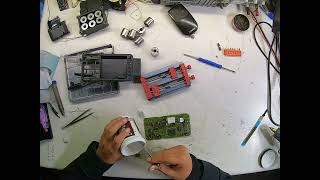
- Rebuilding your original ABS module costs $150 to $350 and avoids expensive dealership VIN programming fees.
- Verify battery voltage exceeds 12.4V and check the module's main ground connection for voltage drops above 0.2V before replacing any parts.
- Check NHTSA Recall 15V-675 (Mopar R61) if driving a Dodge or Ram, as a known water leak through a ground wire directly causes this module failure.
- Installing any new or used replacement ABS module requires a bidirectional scan tool to program your vehicle's VIN, or it will trigger a C2202 code.
What Does C2200 Mean?

Code C2200 means the main computer detected a critical internal error within the Anti-Lock Brake System (ABS) control module. This module is the 'brain' for ABS, traction control, and stability control. When it fails, these safety features shut down because the module cannot trust its own calculations or correctly control brake pressure at each wheel.
Technical definition: The SAE/OBD-II definition for C2200 is "Anti-Lock Brake Module Internal Failure." The ABS module runs an internal self-check and detects a microprocessor, memory, or internal circuit fault preventing correct operation. The module is powered on and actively communicating its failure, unlike a U0121 'Lost Communication' code where the module is offline.
Can I Drive With C2200?
Yes, But With Caution. Yes, but with extreme caution. Standard hydraulic brakes still function, but ABS, traction control, and electronic stability control (ESC) are completely disabled. This significantly increases the risk of wheel lock-up and skidding during hard braking or on slippery surfaces, increasing stopping distances. You lose critical safety features that maintain steering control in emergencies. Limit driving to short, necessary trips to a repair shop. There is no direct risk of further component damage, but compromised safety is the primary concern.
Common Causes

- Internal Circuit Board Failure (Very Common) — The most frequent cause. Microprocessors, memory chips, or solder joints on the module's board fail due to age, manufacturing defects, or years of thermal stress and vibration from the engine bay.
- Water Intrusion and Corrosion (Common) — Moisture entering the ABS module or its electrical connector corrodes pins and shorts circuits. This is highly prevalent on Chrysler, Dodge, and Jeep vehicles due to a known ground wire defect that wicks water directly into the connector.
- Power Supply and Ground Issues (Common) — The module requires stable voltage and a solid ground. A blown fuse, corroded main power wire, or loose chassis ground connection causes voltage drops the module interprets as an internal failure.
- Unstable Vehicle Voltage (Less Common) — A failing alternator or bad battery sends severe voltage spikes or drops to the ABS module, corrupting its software or physically damaging sensitive internal electronics.
- Software Glitches or Corrupted Firmware (Less Common) — A software bug corrupts the module's memory, triggering a false C2200 code. On newer vehicles like the Chrysler Pacifica, a specific dealership software update (TSB) is required to fix this known bug.
- ABS Pump Motor Failure (Rare) — A shorted or failing ABS pump motor draws excessive current, burning out the control module's internal driver circuits and triggering an internal failure code.
Symptoms

- ABS Warning Light On — The most common and immediate sign. The dashboard light with the letters 'ABS' stays illuminated.
- Traction Control (TCS) and/or Stability Control (ESC/ESP) Light On — Since the ABS module controls these systems, their warning lights (often a car with squiggly lines) illuminate alongside the ABS light.
- Brake Warning Light On — A critical fault in the ABS system triggers the main red 'BRAKE' or '(!)' warning light, indicating a serious braking system fault.
- ABS Pump Motor Runs Constantly — A persistent buzzing or humming from the engine bay that doesn't turn off with the key removed. The ABS pump motor runs continuously due to a failed module relay.
- Loss of Speedometer or Other Instrument Cluster Functions — On older Jeep Wranglers, the ABS module acts as a gateway for wheel speed sensor data. When the module fails, the speedometer stops working.
- Changes in Brake Pedal Feel — The brake pedal feels soft, spongy, or requires more effort to press if the internal failure affects the hydraulic unit's valve control.
Diagnostic Flowchart
Tap your situation to follow the diagnostic path that matches what you're seeing on this code.
Common Fixes & Costs
- Repair/Rebuild the Original ABS Module — Parts: $150-$350, Labor: $150-$300, ~1.5 hr book time (Intermediate)
- Perform Software Update (TSB) — Parts: $0, Labor: $150-$250, ~1.0 hr book time (Professional)
- Repair Damaged Wiring or Ground Connection — Parts: $10-$50, Labor: $150-$300, ~2.0 hr book time (Intermediate)
- Replace with a Used ABS Module — Parts: $150-$500, Labor: $150-$300, ~2.0 hr book time (Professional)
- Replace with a New ABS Module — Parts: $800-$2000+, Labor: $150-$300, ~2.0 hr book time (Professional)
Used vs. New Parts: Buying Guide
When a used part is worth it: A used ABS module makes sense for older, high-mileage vehicles where a new module is cost-prohibitive, or for DIYers on a tight budget with tools to reprogram the VIN. It's viable when new parts are discontinued or on long backorder.
Donor-vehicle mileage cap: roughly under 100000 miles for the part to have meaningful remaining life.
Donor quality checklist:
- Verify the exact part number matches your original module.
- Purchase from a reputable supplier that tests parts and offers a warranty (30-90 days).
- Inquire about the donor vehicle's mileage; lower is always better.
- Avoid parts from flood-damaged or rust-belt vehicles, as corrosion is a key failure mode.
Decision logic:
- If The most cost-effective and simple solution is desired → Repair/rebuild your original module. This avoids all programming issues.
- If Vehicle is newer and under warranty, or budget is not the primary concern → Buy a new OEM module from a dealer for maximum reliability and peace of mind.
- If Budget is very tight AND you have access to programming tools (like AlfaOBD/JScan) or a willing shop → A used module is a risky but potentially very cheap option.
Warranty tradeoff: Used parts typically have a 30-90 day warranty. Rebuild services offer warranties from 1 year to lifetime. New OEM parts installed by a dealer carry a 1-2 year parts and labor warranty.
Worst-case if a used part fails: $300-$600 if a used part is bad or fails shortly after the warranty period. This includes repeat labor for installation and purchasing another part.
What Happens If You Wait — Timeline
- Immediate (First 0-100 miles): ABS, Traction Control, and Stability Control warning lights illuminate and stay on. The C2200 code is stored as a 'hard fault'. The vehicle's safety systems are disabled. (MPG impact: 0%% · Added cost: $0)
- 1 week - 2 months: Driving with safety systems disabled significantly increases the risk of losing control during a panic stop or on a slippery surface. If the failure causes the ABS pump to run constantly, the battery drains. (MPG impact: 0%% · Added cost: $0 - $350 (if the constantly running pump drains and ruins the battery))
- 2-6 months: Continued operation with a constantly running ABS pump leads to premature failure of the pump motor itself. This turns a module-only repair into an expensive full assembly replacement. On older Jeeps, the speedometer stops working. (MPG impact: 0%% · Added cost: $200 - $500 (potential additional cost for a pump motor or full hydraulic unit))
- 6+ months: The primary risk remains safety-related. The likelihood of an accident increases over time. Ignoring the fault leads to failing state safety inspections in jurisdictions like New York. The ultimate cost is the increased potential for a collision. (MPG impact: 0%% · Added cost: N/A (Increased risk of accident with catastrophic costs))
Cost of Not Fixing It
- Immediate: Loss of ABS, traction control, and stability control. This results in a significantly increased risk of skidding and loss of control during emergency braking or on slippery surfaces. Studies show ABS-equipped vehicles are up to 35% less likely to be in a collision. (Added cost: N/A (Increased safety risk))
- 0-3 months: If the failure causes the ABS pump to run continuously, it drains and ruins the vehicle's battery. (Added cost: $150-$350 (for a new battery))
- Long-term: Driving without safety features increases the statistical likelihood of an accident, leading to catastrophic costs including vehicle damage, insurance premium hikes, and personal injury. The direct cost of not fixing the module does not cause cascading damage to other components (unless the pump motor burns out the battery).
Diagnosis Steps
- Read and Document All Fault Codes
Use an OBD-II scanner capable of reading Chassis (C) codes. Record C2200 and any other codes present. Attempt to clear the codes and cycle the ignition. If C2200 returns immediately, it confirms a hard internal fault 🎬 Watch: How to replace and initialize a new ABS module.
Tools: OBD-II Scanner (with ABS capability) (Beginner) - Check for Applicable TSBs
Manufacturers issue Technical Service Bulletins (TSBs) for known C2200 bugs. For example, TSB 08-009-21 for the 2017-2019 Chrysler Pacifica requires a software update as the first step. Always check for TSBs before replacing expensive hardware.
Tools: Online TSB Database or Dealership Inquiry (Intermediate) - Inspect ABS Fuses and Relays
Consult the owner's manual to locate the fuse box. Find all fuses and relays related to the 'ABS', 'VSC', or 'EBCM'. Visually inspect them and test for continuity with a multimeter. A blown fuse is an easy and cheap fix.
Tools: Owner's Manual, Fuse Puller, Multimeter (Beginner) - Check Battery Health and System Voltage
Ensure the battery is fully charged. With the engine off, battery voltage must be at least 12.4V. With the engine running, charging voltage must be between 13.7V and 14.7V. A weak battery causes low voltage conditions that trigger false codes. Clean corrosion from battery terminals.
Tools: Multimeter, Battery Terminal Brush (Intermediate) - Inspect the ABS Module Connector and Wiring
Disconnect the battery. Unplug the ABS module's main electrical connector. Inspect for corrosion (green or white powder), moisture, or bent pins. Pay special attention to the ground wire on Chrysler/Dodge/Jeep products known for wicking water per recall NHTSA 15V-675.
Tools: Socket Set, Flashlight, Electrical Contact Cleaner (Intermediate) - PRO TIP: Perform a Voltage Drop Test on Power and Ground
Perform a voltage drop test to confirm the circuit carries a load. With the module plugged in and ignition on, set your multimeter to DC Volts. Place the positive lead on the battery's positive post and the negative lead on the module's main power pin. A reading above 0.5V indicates high resistance. Repeat for the ground side (negative lead on battery's negative post, positive lead on module's ground pin). A reading above 0.2V indicates a poor ground connection requiring repair.
Tools: Multimeter, Vehicle-specific Wiring Diagram, T-pins (Advanced) - PRO TIP: Monitor ABS Pump Motor Live Data
Using a bidirectional scan tool, access the ABS module's live data stream. Look for 'ABS Pump Motor Voltage'. Command the ABS pump motor to activate. The voltage reading must be stable and close to battery voltage (over 12V). A drop to 8V or lower during activation points to a failing pump motor that damaged the module's internal driver circuit.
Tools: Bidirectional OBD-II Scanner (Advanced) - PRO TIP: Check CAN Bus Network Integrity
If communication codes (like U0121) are present, check the CAN bus network. Turn the ignition off and disconnect the battery. Set your multimeter to Ohms. At the OBD-II port, measure resistance between Pin 6 (CAN High) and Pin 14 (CAN Low). A healthy network reads approximately 60 Ohms. A reading of 120 Ohms indicates a terminating resistor is offline. A reading far from 60 or 120 Ohms suggests a wiring short or open circuit.
Tools: Multimeter, OBD-II Port Pinout Diagram (Advanced) - Confirm Module Failure
If all fuses, wiring, power feeds, grounds, and the CAN network test good, and applicable TSBs are performed, a consistently returning C2200 code confirms an internal, non-serviceable failure of the ABS control module. The module requires repair or replacement.
Tools: OBD-II Scanner (with ABS capability) (Advanced)
When This Code Triggers (Freeze-Frame Conditions)
- Vehicle Speed: 0 mph (at startup) or 15-45 mph (The ABS module performs a self-test upon ignition-on and another one once the vehicle starts moving. The code often sets during one of these self-checks.)
- System Voltage: 12.0-14.8V (The code triggers if voltage is stable, indicating a true internal fault, but falsely triggers from a voltage spike or drop caused by a bad battery or alternator.)
- Time Since Ignition Start: 1-10 seconds (The fault is detected quickly after the ignition is turned on as the module runs its initial power-on self-test (POST).)
- Brake Pedal Status: Not Applied (The internal fault is detected during a self-test, which occurs independent of brake application.)
Related Codes
- U0121 — Diagnostic Difference: C2200 means the ABS module is powered on and diagnosed its own internal fault. U0121 means the computer network cannot communicate with the ABS module. If you only have U0121, the problem is a blown ABS fuse, bad ground, or CAN bus wiring issue.
- C2116 — Diagnostic Difference: C2116 points specifically to a problem with the ABS pump motor's voltage supply. If C2116 appears alone, the fault is the pump motor or its wiring. If it appears with C2200, the module's internal failure prevents it from powering the pump motor.
- C2202 — Consequence of Repair: This code is a direct result of a repair. C2202 ('Original VIN Mismatch/Missing') appears *after* installing an unprogrammed ABS module. It confirms the module works but must be electronically programmed with your car's VIN.
- C0035 to C0050 (Wheel Speed Sensor Codes) — Diagnostic Difference: These codes pinpoint a fault in a specific wheel speed sensor circuit. C2200 is an internal module fault and is not caused by a bad wheel speed sensor, though a failing module generates false sensor codes alongside it.
Climate & Environmental Factors
- High Humidity & Rain: Increases water intrusion into the ABS module connector, especially on vehicles with known sealing issues (Mopar R61 recall). This leads to pin corrosion and internal failure.
- Cold Climates & Road Salt: Road salt is highly corrosive and dramatically accelerates the deterioration of wiring, ground connections, and ABS module connector pins if moisture is present.
- Extreme Heat: ABS modules located in the engine bay endure high temperatures. Years of heat cycles degrade internal electronic components and solder joints, causing internal circuit faults.
How to Talk to a Mechanic About This Code
Say this: "I have a C2200 code, which I understand is an internal ABS module failure. Before replacing the module, I'd like you to please verify the module's main power and ground circuits with a voltage drop test and check for any applicable TSBs for this code on my vehicle."
This signals you've done your research and understand common failure points. It directs the technician to perform a proper diagnosis to rule out simple wiring issues before recommending an expensive module replacement, preventing misdiagnosis.
Avoid saying:
- 'My ABS light is on, can you fix it?'
- 'Just replace the ABS module.'
- 'I think it's a bad sensor.'
Questions to ask before authorizing the repair:
- Did you confirm the power and ground connections are good and free of corrosion or voltage drops?
- Were there any Technical Service Bulletins for my VIN related to this code?
- What are my repair options? Can my original module be sent out for repair, and what would a new or used replacement cost?
- Does the quoted price for a replacement module include the necessary VIN programming or initialization procedure?
- What is the warranty on the part and the labor for this repair?
Where to Take It: Dealer vs Independent vs Chain
- Dealer:
Recommended for TSB-related software fixes or warranty work. For out-of-warranty repairs, be prepared for a high quote and ask specifically about module-only replacement or repair options.
Best for: Vehicles under warranty., Repairs requiring a manufacturer-specific software update (TSB), like on Chrysler Pacifica models., When you prefer a new OEM part with a manufacturer warranty.
Downsides: Highest cost for parts and labor, often 1.5-2x more than an independent shop., Defaults to replacing the entire expensive ABS hydraulic assembly rather than exploring a module-only repair. (Typical cost: +75% vs. baseline) - Independent Shop:
Best fit for most out-of-warranty C2200 repairs. A reputable independent shop performs necessary electrical diagnosis and works with you on a cost-effective module rebuild, saving significant money.
Best for: Out-of-warranty vehicles where cost is a factor., Owners who want to use the cost-effective 'repair and rebuild' service for their original module., Personalized service and willingness to discuss various repair options (new, used, rebuilt).
Downsides: Ensure the shop uses modern bidirectional scan tools capable of ABS VIN programming., Lacks access to the latest manufacturer-only TSBs or proprietary software. (Typical cost: +0% vs. baseline) - Chain Shop:
AVOID for C2200 diagnosis. Chain shops lack the advanced electrical testing tools required and default to costly full-part replacements without verifying wiring integrity.
Best for: Simple, routine maintenance like oil changes or brake pad replacement.
Downsides: Technicians lack advanced diagnostic training for complex electronic faults like C2200., Unequipped or unwilling to handle a 'repair and rebuild' process., Misdiagnoses the problem and suggests unnecessary part replacements. (Typical cost: -10% vs. baseline)
When to Walk Away From the Repair
If the total repair cost exceeds 40% of your car's private-party market value (e.g., from Kelley Blue Book), seriously consider selling or trading in the vehicle instead of repairing it.
- Car worth $4000, fix is $2200: Walk away. A $2,200 repair on a $4,000 car represents 55% of its value. This is not a sound financial decision unless the vehicle has significant sentimental value.
- Car worth $15000, fix is $650: Fix it. A $650 repair to restore a critical safety system on a $15,000 vehicle is well worth the investment and is only 4% of the car's value.
- Car worth $3000, fix is $700: Borderline. At 23% of the vehicle's value, the decision depends on the car's overall condition. If it's otherwise reliable, fixing it is reasonable. If other expensive repairs are looming, it is time to sell.
What Scan Tool You Need for This Code

Minimum: A scanner that reads and clears Chassis (C) codes, specifically for the ABS module. Basic engine-only code readers will not work for this code.
A standard $20-$30 engine code reader cannot communicate with the ABS control module. It shows 'No Codes Found' even when the ABS warning light is on. You waste time and money without the ability to see the C2200 code.
Budget: BlueDriver Pro or Autel ML629 (~$80) — Reads and clears ABS codes, displays live data from the ABS module, and provides freeze-frame data. This confirms the C2200 code is present and monitors basic parameters.
Mid-range: Foxwell NT510 Elite or Kingbolen S6 Elite (~$180) — Includes bidirectional controls. Critical for C2200 as it allows you to command the ABS pump motor to run for testing and performs the 'ABS Initialization' procedure required after replacing a module.
Professional: Autel MaxiCOM MK808BT Pro or XTOOL D7 (~$450-600) — Offers full bidirectional control, advanced special functions like VIN writing/programming for replacement modules, and comprehensive live data graphing. Essential for a professional or serious DIYer tackling module replacement.
Rent vs buy: Rent a scanner from stores like O'Reilly Auto Parts for a one-time diagnosis to confirm the code. However, if you need to perform the programming/initialization step after a repair, you must buy a bidirectional tool, as rental scanners lack these advanced functions.
How to Clear the Code After You Fix It
- Reconnect the battery if disconnected.
- Use an OBD-II scanner with ABS capabilities to clear the C2200 fault code.
- Perform the vehicle-specific ABS initialization or calibration procedure if a new or used module was installed. This requires a bidirectional scan tool.
- Perform a test drive that includes at least one hard stop above 20 mph to allow the system to verify the repair.
Drive cycle (~15 minutes): An ABS-specific drive cycle requires specific actions. After clearing the code, start the vehicle and drive above 15-20 mph. The ABS light extinguishes after its self-test. Perform a mix of city driving with several stops, and at least one firm braking event from over 30 mph to confirm the system is operational. Some vehicles require an initialization procedure involving specific turns and stops.
Readiness monitors affected: This is a Chassis (C) code and does not directly affect engine emissions readiness monitors like the Catalyst or O2 sensor monitors.
Watch out for:
- Clearing the code without fixing the root cause results in the code returning immediately.
- Forgetting to perform the mandatory VIN programming or initialization after installing a replacement module leaves the system disabled and sets a C2202 code.
- Using a basic OBD-II code reader that cannot access or clear Chassis 'C' codes.
Will This Fail Emissions / State Inspection?
No — by itself this code doesn't fail OBD inspection (but it can keep readiness monitors from setting, which causes a separate fail).
- California: An ABS light will NOT cause a failure of the emissions-focused smog check. The check engine light is the only automatic failure light.
- New York: An illuminated ABS light is grounds for failure of the annual safety inspection. A 2017 bill explicitly added the ABS warning light to the list of items to be checked.
- Texas: An illuminated ABS light is NOT a cause for rejection in the Texas safety inspection. As of 2025, safety inspections are eliminated for most non-commercial vehicles, though emissions testing remains in 17 counties.
Most Commonly Affected Vehicles

- Jeep Wrangler (JK/JL) (2010-2024) — Extremely common. For JK models (2010-2018), replacement parts are hard to find, making repair services popular. For JL models (2018+), parts face long backorders. Part numbers are specific based on build date.
- Ram 1500, 2500, 3500 (2012-2018) — Prone to C2200 due to module failure, often linked to the TRW EBC-440 module. Water intrusion from a faulty ground wire design on the shock tower is a well-documented cause, addressed by recall R61.
- Dodge Grand Caravan, Charger, Journey (2012-2020) — Shares the vulnerable ABS module design with other FCA products. Water intrusion (especially on Journey) and internal electronic failure are primary causes.
- Chrysler Town & Country, Pacifica (2008-2021) — Failures frequently reported on Town & Country vans. For 2017-2021 Pacifica models, TSB 08-009-21 points to a software update as the first fix for C2200.
- Chevrolet / GMC Silverado, Sierra (2007-2018) — These trucks experience C2200 due to failure of the EBCM (Electronic Brake Control Module). The cause is internal solder joint failure from thermal stress and vibration.
- Ford F-150 (2009-2017) — On the F-150, this code points specifically to an 'ABS pump motor control circuit' fault within the module. Owners report high replacement costs from dealerships, making repair services popular.
- Volkswagen Jetta, Golf, Passat (2008-2015) — Known for ABS module failures causing a C2200 code or a complete loss of communication with the module. The failure is often in the ATE MK26 model ABS.
- Nissan Titan, Armada (2004-2015) — A common issue is a constantly running ABS pump motor, which quickly burns out the module and sets the C2200 code. Caused by a stuck internal relay within the ABS module.
Manufacturer-Specific Notes
- Chrysler/Dodge/Jeep/Ram: A major cause of failure is addressed by safety recall NHTSA 15V-675 (Mopar R61). A ground wire on the right front shock tower allows water to travel into the ABS module's connector. The fix involves sealing the ground eyelets with heat shrink tubing and replacing the module if corroded.
- Chrysler/Dodge/Jeep/Ram: For newer models like the 2017-2021 Pacifica, a software glitch triggers C2200. TSB #08-009-21 involves reprogramming the ABS module and related modules, which is the first step before replacing hardware.
- Chrysler/Dodge/Jeep/Ram: Used or new replacement ABS modules are VIN-locked. They must be programmed to the vehicle using a bidirectional scan tool (AlfaOBD, JScan, or professional tools). Swapping the part without programming results in a C2202 code.
- Ford: On many Ford vehicles, C2200 is defined as an "ABS Pump Motor Control Circuit" fault rather than a generic internal failure, pointing diagnostics directly towards the pump motor and its related driver circuits within the module.
Real Owner Stories
2015 Jeep Wrangler JKU with multiple dash lights
ABS, traction control, and brake lights came on. Eventually, the speedometer stopped working and communication codes appeared (U0121, U1120).
Outcome: After installing the used module, a C2202 (VIN Mismatch) code appeared. The owner used a $30 Bluetooth OBDII connector and the JScan app to perform the 'ABS Initialization' procedure, successfully programming the module and clearing all codes.
Lesson: For FCA vehicles, DIY replacement with a used module is affordable if you use a tool like JScan or AlfaOBD to perform mandatory VIN programming, avoiding a costly dealer trip.
2016 Ford F-150 with C2200 in snowy conditions
While driving on a snowy road, the ABS light came on and brakes felt sluggish. The driver scanned the truck and found code C2200.
Outcome: The owner replaced the faulty ABS pump motor, resolving the voltage drop and clearing the C2200 code.
Lesson: Use a scan tool's live data function. Monitoring voltage to the ABS pump distinguishes between a wiring issue and a failing motor or module, preventing misdiagnosis.
2012 Jeep Wrangler with intermittent C2200
ABS, traction control, and brake lights illuminated simultaneously, but the issue was intermittent.
Outcome: When the code returned years later, cleaning didn't work. The owner cleared the code on a loose surface and accelerated hard to force the ABS/traction system to activate. After cycling the ignition, the lights stayed off.
Lesson: For intermittent C2200 codes, start by cleaning the module's main connector and ground points. A software 'hiccup' or sticky valve is sometimes cleared by forcing the system to cycle.
Ram 1500 with C2200 appearing only on cold mornings
The ABS, brake, and traction control lights only came on during cold mornings (below 60°F).
Outcome: After replacing the fluid, the lights did not return on cold mornings. The owner cleared the stored C2200 code and it stayed off.
Lesson: Old, moisture-contaminated brake fluid causes temperature-related issues. Consider a full brake fluid flush before condemning an expensive module for an intermittent fault.
How to Prevent This Code From Triggering
- Change Brake Fluid Regularly (Every 2-3 years, or per manufacturer's recommendation) — Brake fluid absorbs moisture from the air. This moisture causes internal corrosion of the delicate valves and passages inside the ABS hydraulic unit and control module, leading to failure.
- Keep Battery Terminals and Grounds Clean (Inspect annually) — The ABS module is highly sensitive to voltage fluctuations. Corrosion on battery terminals or chassis ground points creates resistance, leading to voltage drops and spikes that damage the module's electronics.
- Protect Electrical Connectors (When performing other under-hood service) — Apply a thin layer of dielectric grease to the seals of critical connectors like the main ABS module plug. This creates a barrier preventing moisture, salt, and dirt from corroding pins.
- Ensure Wiring is Secure and Protected (Inspect annually) — Vibrations cause wiring harnesses to rub against sharp metal edges, wearing through insulation and causing shorts. Use zip ties to secure loose wiring away from hot or moving parts.
- Maintain a Healthy Battery (Test annually after 3 years of service) — A weak battery provides unstable voltage, triggering false codes in sensitive electronic modules. A fully charged battery ensures the module receives clean power.
- Consider a Heat Shield (for specific models) (One-time installation) — On vehicles where the module is mounted directly above the exhaust manifold, excessive heat causes failure. Fabricating an aluminum heat shield deflects radiant heat and extends the life of internal electronics.
Frequently Asked Questions
Can I just ignore the C2200 code if my brakes feel fine?
No, you must not ignore it. While normal braking functions, you lose anti-lock brakes (ABS), traction control, and stability control. These critical safety systems maintain steering control and prevent skidding during emergency stops or on slippery roads.
What is the most common misdiagnosis for C2200?
The biggest mistake is replacing a wheel speed sensor, as C2200 is an internal module code, not a sensor code. Another common pitfall is installing a replacement ABS module without reprogramming it to the car's VIN, which triggers a C2202 code.
Can I remove the electronic part of the ABS module for repair and still drive the car?
On many vehicles, yes. The electronic control unit unbolts from the hydraulic block without disconnecting brake lines, allowing you to mail the module for repair while driving with conventional brakes. CAUTION: On modern vehicles, removing the ABS module interrupts the CAN network, causing a no-start condition.
Is it better to repair my ABS module or buy a new one?
Repairing your original module is the most cost-effective and efficient option. It costs significantly less than a new dealer module and avoids expensive VIN programming since the module is already matched to your car.
The dealership quoted me over $2,000 to fix this. Is that a realistic price?
Yes, a brand-new module from the manufacturer costs $800 to $2,000+ for the part alone. Adding labor for installation and mandatory VIN programming pushes the total over $2,000. Always ask about using a remanufactured part or rebuilding your original unit to save money.
I replaced the ABS module with one from a junkyard, but now I have a C2202 code. What do I do?
The C2202 code means the VIN in the used module doesn't match your car's VIN. You must use a bidirectional scan tool to perform an 'ABS Initialization' or 'VIN Rewrite' procedure. DIY-friendly tools like AlfaOBD or JScan perform this function on certain makes.
Can a bad battery cause a C2200 code?
A bad battery providing unstable or low voltage (below 12.4V at rest) causes electronic modules to malfunction and set false internal failure codes. Ensure your battery and charging system are healthy before condemning an expensive module.
Key Takeaways
- Code C2200 confirms the ABS control module detected an internal fault, instantly disabling your ABS and stability control systems.
- Rebuilding your original ABS module costs $150 to $350 and avoids expensive dealership VIN programming fees.
- Verify battery voltage exceeds 12.4V and check the module's main ground connection for voltage drops above 0.2V before replacing any parts.
- Check NHTSA Recall 15V-675 (Mopar R61) if driving a Dodge or Ram, as a known water leak through a ground wire directly causes this module failure.
- Installing any new or used replacement ABS module requires a bidirectional scan tool to program your vehicle's VIN, or it will trigger a C2202 code.
Helpful Videos

The information in this article is provided for general reference and educational purposes only. Vehicle specifications, procedures, and part compatibility can vary by production date, trim level, and region. Always consult your vehicle's factory service manual and verify part numbers before purchasing or performing repairs. Safety-critical components such as airbags, seat belts, and braking systems should be installed by a qualified professional.
- 🎬 Helpful Videos
- What Does C2200 Mean?
- Can I Drive With C2200?
- Common Causes
- Symptoms
- Diagnostic Flowchart
- Common Fixes & Costs
- Used vs. New Parts: Buying Guide
- What Happens If You Wait — Timeline
- Cost of Not Fixing It
- Diagnosis Steps
- When This Code Triggers (Freeze-Frame Conditions)
- Related Codes
- Climate & Environmental Factors
- How to Talk to a Mechanic About This Code
- Where to Take It: Dealer vs Independent vs Chain
- When to Walk Away From the Repair
- What Scan Tool You Need for This Code
- How to Clear the Code After You Fix It
- Will This Fail Emissions / State Inspection?
- Most Commonly Affected Vehicles
- Manufacturer-Specific Notes
- Real Owner Stories
- 2015 Jeep Wrangler JKU with multiple dash lights
- 2016 Ford F-150 with C2200 in snowy conditions
- 2012 Jeep Wrangler with intermittent C2200
- Ram 1500 with C2200 appearing only on cold mornings
- How to Prevent This Code From Triggering
- Frequently Asked Questions
- Can I just ignore the C2200 code if my brakes feel fine?
- What is the most common misdiagnosis for C2200?
- Can I remove the electronic part of the ABS module for repair and still drive the car?
- Is it better to repair my ABS module or buy a new one?
- The dealership quoted me over $2,000 to fix this. Is that a realistic price?
- I replaced the ABS module with one from a junkyard, but now I have a C2202 code. What do I do?
- Can a bad battery cause a C2200 code?
- Key Takeaways
- 🎟️ Get 5% Off