

OBD-II Code C2144: Tire Pressure Sensor Internal Fault
The Ultimate Guide to Diagnosing and Fixing a C2144 Transmitter ID Error
- Code C2144 indicates an internal hardware failure within a specific TPMS sensor, most commonly caused by a depleted internal battery after 5 to 10 years of service.
- A TPMS dashboard light that flashes for 60 to 90 seconds at startup before turning solid confirms a system fault rather than simply low tire pressure.
- The code 'ID4' refers to a computer registration slot, not a physical wheel location, requiring a dedicated 315 MHz or 433 MHz TPMS scan tool to pinpoint the dead sensor.
- Replace all four TPMS sensors simultaneously if your vehicle is over 7 years old to save on the $50 to $125 per-wheel labor costs of future individual failures.
What Does C2144 Mean?

C2144 means your car's computer detected a malfunction with one of your Tire Pressure Monitoring System (TPMS) sensors. The system received an internal error signal from the sensor, indicating it no longer reliably reports tire pressure. This differs from a code indicating low tire pressure; it signifies a hardware failure within the sensor itself.
Technical definition: The official SAE/ISO definition for C2144 is "Transmitter ID4 Error." This indicates the Tire Pressure Monitoring System (TPMS) control module received a signal indicating an internal fault from the sensor registered as ID4 three consecutive times. This fault signal is an affirmative message from the sensor that its internal electronics, accelerometer, or pressure-sensing components are compromised, distinct from a 'no signal' or 'low pressure' condition.
Can I Drive With C2144?
Yes, But With Caution. Yes, but your vehicle's Tire Pressure Monitoring System (TPMS) is disabled and cannot warn you of dangerously low tire pressure. A sudden tire failure leads to loss of control. Driving on a severely underinflated tire increases the risk of a blowout, causing wheel, suspension, and body damage costing over $700 to repair. It also reduces fuel economy by up to 3% and causes premature tire wear. Check your tire pressures manually immediately and have the system serviced.
Common Causes

- Dead or Weak TPMS Sensor Battery (Very Common) — TPMS sensors are powered by small, sealed batteries with a finite lifespan of 5 to 10 years. When the battery dies, the sensor's electronics fail, triggering a fault code.
- Physical Damage to the TPMS Sensor (Common) — Located inside the tire, sensors are vulnerable to damage from hitting potholes, curbs, or road debris. They also break during improper tire mounting, dismounting, or repair.
- Internal Sensor Corrosion (Common) — Exposure to road salt, moisture, and chemicals corrodes the sensor's valve stem or seeps into the electronics, causing failure. Manufacturers frequently issue service bulletins for updated sensor designs with better moisture resistance.
- Improper Tire Sealant Use (Uncommon) — Using a non-TPMS-safe aerosol tire sealant (e.g., 'Fix-a-Flat') clogs the sensor's pressure port or damages its sensitive electronic components.
- Faulty TPMS Control Module (Less Common) — The main computer (module) receiving signals from all tire sensors fails occasionally. This usually triggers codes for multiple sensors at once, not just a single C2144.
- Extreme Temperature Fluctuations (Uncommon) — Sudden, extreme temperature drops cause a weak, aging sensor battery to temporarily fail and send a fault signal. The sensor briefly reports a temperature or pressure reading outside its operational range (-40°C to 120°C).
- Aftermarket Wheels or Modifications (Uncommon) — Installing aftermarket wheels incompatible with original TPMS sensors leads to poor seating, damage, or signal transmission issues.
- Radio Frequency (RF) Interference (Rare) — Low-quality aftermarket phone chargers, power inverters, or other electronic devices plugged into accessory ports generate radio interference that blocks or corrupts the TPMS sensor signal.
Symptoms

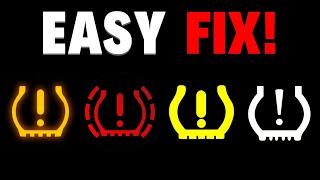
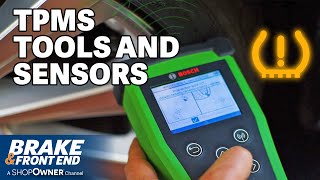
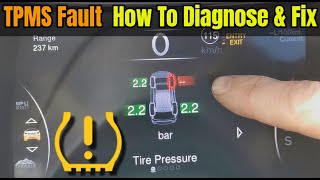
- Flashing TPMS Warning Light — The TPMS light on your dashboard flashes for 60 to 90 seconds upon starting the vehicle, then remains illuminated. This flashing sequence is the universal indicator of a TPMS system fault 🎬 Watch: How to fix a flashing TPMS warning light, not low tire pressure.
- TPMS Light Stays On — After the initial flashing period, the warning light stays on solid as long as the internal fault condition exists.
- 'Service TPMS System' Message — Modern vehicles display a specific text message on the driver information center, such as 'Service Tire Pressure System' or 'TPMS Fault', alongside the warning light.
- No Tire Pressure Reading for One Tire — If your vehicle's information display shows individual tire pressures, the tire with the faulty sensor shows dashes (---), a blank space, or 'N/A' instead of a pressure value.
- Inability to Reset TPMS Light (also visible on scanner) — Correcting tire pressures and attempting a manual reset does not turn off the light. The fault must be repaired before clearing the code.
Diagnostic Flowchart
Tap your situation to follow the diagnostic path that matches what you're seeing on this code.
Common Fixes & Costs
- Replace the Faulty TPMS Sensor — Parts: $30-$185, Labor: $50-$125, ~0.8 hr book time (Professional)
- Replace All TPMS Sensors — Parts: $120-$750, Labor: $100-$220, ~1.5 hr book time (Professional)
- Repair TPMS Module Wiring or Connectors — Parts: $5-$50, Labor: $100-$300, ~2 hr book time (Professional)
- Replace TPMS Control Module — Parts: $200-$500, Labor: $100-$250, ~1.2 hr book time (Professional)
Used vs. New Parts: Buying Guide
When a used part is worth it: It is never recommended to buy a used TPMS sensor. The primary failure mode is battery depletion, and a used sensor has an unknown battery life. The cost of labor to install the sensor makes it risky to install a part that fails shortly after.
Donor-vehicle mileage cap: roughly under 10000 miles for the part to have meaningful remaining life.
Donor quality checklist:
- Avoid sensors from vehicles older than 2-3 years.
- Never buy a sensor physically removed from a wheel; only consider 'new take-off' sensors from wheels immediately upgraded on a brand new vehicle.
- Verify the part number is an exact match for your vehicle's year and model.
Decision logic:
- If The cost of a new OEM sensor is high ($150+) → Consider a reputable new aftermarket sensor from brands like Autel, Schrader, or VDO, which offer similar performance for less cost.
- If The vehicle is older than 10 years → New aftermarket sensors are a cost-effective choice. Avoid used sensors entirely as their remaining lifespan is minimal.
- If Budget is the absolute primary concern → A used sensor is a high-risk gamble. The savings on the part are lost if it fails and requires a second labor charge for replacement.
Warranty tradeoff: Used parts: Almost never have a warranty and are sold 'as-is'. Aftermarket new: Typically come with a 1-2 year warranty. OEM new: Carry a 1-year/12,000-mile parts warranty.
Worst-case if a used part fails: $100-$200. If a used sensor fails, you pay for the labor to dismount/remount/balance the tire again, plus the cost of another sensor.
What Happens If You Wait — Timeline
- Immediate (0-1 week): Code C2144 is set. The TPMS light flashes for ~60 seconds at startup, then stays on. The vehicle's TPMS is disabled and will not provide warnings for low tire pressure. (MPG impact: 0%% · Added cost: $0)
- 1 week - 3 months: Tires naturally lose 1-2 PSI per month. One or more tires become underinflated without the driver's knowledge. This causes increased rolling resistance and uneven tread wear. (MPG impact: 1-3%% · Added cost: $25-$75 in wasted fuel and accelerated tire wear.)
- 3-6 months: Continued driving on a significantly underinflated tire causes excessive flexing and heat buildup in the tire's sidewall, leading to permanent structural damage and drastically increased risk of failure. (MPG impact: Up to 8%% · Added cost: $150-$400 for the cost of replacing one or two tires prematurely due to severe, uneven wear.)
- 6+ months: Catastrophic tire failure (blowout) occurs at highway speeds. This leads to a loss of vehicle control. The blowout destroys the wheel, damages the fender, brake lines, and suspension components. (MPG impact: N/A% · Added cost: $700-$2,500+ to cover emergency towing, a new tire and wheel, and potential body and suspension repairs.)
Cost of Not Fixing It
- Immediate: No warning for low tire pressure. Increased risk of a tire blowout, causing loss of control and an accident. (Added cost: $0)
- 0-3 months: Driving on an undetected underinflated tire leads to premature and uneven tire wear and a reduction in fuel economy of up to 3%. (Added cost: $20-$100 in wasted fuel and accelerated tire wear.)
- 3+ months: Catastrophic tire failure (blowout) at speed. A blowout damages the wheel, fender, suspension components, and brake lines. (Added cost: $700-$2500+ for a new tire, wheel, and potential body/suspension repairs.)
Diagnosis Steps
- Observe the TPMS Light Behavior
Start the vehicle and watch the TPMS warning light. Confirm it flashes for approximately one minute before staying solid, indicating a system fault like C2144.
Tools: None (Beginner) - Check All Tire Pressures Manually
Use a quality tire pressure gauge to check the pressure in all four tires and the spare. Inflate them to the pressure specified on the driver's door jamb placard to rule out simple low pressure.
Tools: Tire pressure gauge (Beginner) - Read Trouble Codes with a Capable Scanner
Connect an OBD-II scanner capable of reading Chassis (C) codes to the port under your dashboard. Confirm C2144 is the active code and note any related codes.
Tools: OBD-II Scanner (with Chassis code capability) (Beginner) - Identify the Faulty Sensor with a TPMS Tool
Code C2144 refers to 'ID4', a registration slot, not a physical wheel. Use a dedicated TPMS activation tool to trigger each sensor at the wheel. The sensor failing to respond or reporting a fault is the culprit.
Tools: TPMS Activation/Scan Tool (Intermediate) - Analyze TPMS Live Data (Advanced)
Using a TPMS scan tool, observe the live data PIDs for each sensor. A sensor triggering C2144 often shows a 'Fault' or 'Low Battery' status, with voltage below 2.5V indicating failure.
Tools: Advanced TPMS Scan Tool (Advanced) - Inspect the Sensor and Valve Stem
Dismount the tire from the identified wheel. Visually inspect the TPMS sensor body for cracks and the valve stem for severe corrosion, indicating moisture intrusion.
Tools: Tire changing equipment (Advanced) - Check TPMS Module Power and Ground (Advanced)
If multiple sensors fail simultaneously, locate the TPMS control module using a wiring diagram. Use a multimeter to verify it receives 9-16V on its power supply pin and has less than 1.0 ohm of resistance on the ground circuit.
Tools: Multimeter, vehicle-specific wiring diagram (Advanced) - Inspect Wiring Harness for Voltage Drop (Advanced)
Perform a voltage drop test on the power and ground wires while the system is active. A reading greater than 0.2 volts indicates excessive resistance in the circuit, causing intermittent module behavior.
Tools: Multimeter, wiring diagram (Advanced) - Test the TPMS Receiver
If a new, correctly programmed sensor still results in a C2144 code, use an advanced diagnostic scanner to monitor the receiver's live data and confirm it receives signals properly.
Tools: Advanced diagnostic scanner, multimeter (Professional)
When This Code Triggers (Freeze-Frame Conditions)
- Vehicle Speed: Above 15 mph (The system requires the vehicle to be in motion for the sensors to transmit regularly.)
- Time Since Ignition On: > 2 minutes (The fault is logged after the initial system self-check and a short period of driving.)
- Sensor Status: Fault (The sensor sends a specific 'fault' or 'error' message, different from a 'low pressure' or 'no signal' state.)
- System Voltage: 11-14V (The fault is logged during normal vehicle operation with stable system voltage; it is not caused by a low car battery.)
Related Codes
- C2141, C2142, C2143 — Identical codes for the other tire pressure sensors (ID1, ID2, ID3). Diagnostically treated exactly the same as C2144, pointing to a different sensor ID slot.
- C2124 - No Signal from Transmitter ID4 — C2124 means the module received no signal, pointing to a completely dead battery. C2144 means the module received a signal containing an 'internal error' message.
- C2171 - Transmitter ID not Registered — Appears if a new sensor was installed but not correctly programmed to the vehicle's computer. Fixed by performing the proper TPMS relearn procedure.
- C2176 - Receiver Error — Indicates a problem with the main TPMS receiver module. If seen alongside C2144, the problem is likely the central module or wiring rather than the individual tire sensor.
Climate & Environmental Factors
- Cold Weather: Cold air drops tire pressure approximately 1 PSI for every 10°F decrease. A sudden cold snap reduces the output of a weak battery, causing the sensor's internal electronics to fail and transmit a fault code.
- High Heat: Sustained high temperatures accelerate the chemical degradation of the sensor's internal battery, shortening its 5 to 10-year lifespan.
- Humidity and Road Salt: Moisture penetrates the sensor's seals over time, leading to corrosion of the valve stem, battery contacts, and circuit board, causing an internal fault.
- Altitude: TPMS systems measure gauge pressure relative to outside air, so altitude does not directly cause a sensor fault. However, associated temperature changes trigger warnings on systems with weak batteries.
How to Talk to a Mechanic About This Code
Say this: "I have a C2144 fault code and a flashing TPMS light. I need a diagnostic to identify which specific sensor has failed. Can you confirm you have a TPMS tool to test each sensor individually before we discuss replacing any parts?"
This signals you understand the code doesn't name a location and the key is to test, not guess. It prevents a shop from replacing the wrong sensor or upselling a full set without proof.
Avoid saying:
- 'My tire light is on, can you fix it?'
- 'Just replace the broken TPMS sensor.' (You don't know which one is broken yet)
- 'Whatever you think is best.'
Questions to ask before authorizing the repair:
- Can you show me the TPMS tool reading that confirms one sensor has failed and the others are healthy?
- What is the total 'out-the-door' price, including the sensor, dismounting/mounting the tire, balancing, and the relearn procedure?
- If my car is over 7 years old, what is the price difference to replace all four sensors at once versus just the one?
- What is the warranty on the new sensor part and the labor?
Where to Take It: Dealer vs Independent vs Chain
- Dealer:
Recommended only if other shops fail. A standard C2144 fix is too common and simple to justify the high dealer cost.
Best for: Vehicles under warranty, Complex cases where multiple sensors have failed or a new sensor won't program, suggesting a module issue, Very new models that may not be in aftermarket tool databases yet
Downsides: Highest cost for parts and labor, often 1.5-2x more than other shops., May only offer expensive OEM sensors. (Typical cost: +75% vs. baseline) - Independent Shop:
Excellent fit. Most independent shops are well-equipped to handle this common repair and offer a choice between OEM and quality aftermarket sensors.
Best for: Out-of-warranty vehicles where cost is a factor., Building a relationship with a trusted mechanic for future work.
Downsides: Quality and tool capability vary; ensure they have a modern TPMS tool before you go. (Typical cost: +0% vs. baseline) - Chain Shop:
Best fit for this code. National tire chains perform this specific repair frequently and efficiently, often bundling the labor for mounting and balancing.
Best for: Convenience and competitive pricing, especially if you're also buying tires., Shops like Discount Tire or Costco often have very competitive prices on TPMS replacement.
Downsides: Technician skill varies. High pressure to upsell is common; they push to replace all four sensors even if only one failed., Be wary of a shop that can't show you the diagnostic tool's results for each sensor. (Typical cost: -15% vs. baseline)
When to Walk Away From the Repair
If the estimated repair cost exceeds 40% of the car's private-party value, pause and consider alternatives.
- Car worth $4000, fix is $600: Fix it. This is a 15% repair-to-value ratio, well below the threshold. The safety benefit is worth the cost.
- Car worth $2500, fix is $600: Borderline. A $600 repair for all four sensors is nearly 25% of the car's value. Consider if the tires are also new. If not, replace the one failed sensor for ~$200.
- Car worth $1500, fix is $600: Walk away. The repair is 40% of the car's value. It's not economically sensible unless the car is otherwise in perfect mechanical condition.
What Scan Tool You Need for This Code

Minimum: A dedicated TPMS activation/diagnostic tool. A basic OBD-II code reader is NOT sufficient.
A standard OBD-II scanner only reads the C2144 code from the car's computer. It cannot communicate with the sensors in the wheels to determine which one is faulty. You need a TPMS-specific tool that uses a low-frequency signal to 'wake up' and test each sensor individually.
Budget: VXDAS EL-50448 (GM-specific) or similar single-brand tools (~$20) — These are 'relearn' tools, not diagnostic tools. They cannot diagnose a C2144 fault or program new sensors. Not recommended for this code.
Mid-range: Autel MaxiTPMS TS508WF or XTOOL TP150 (~$200-350) — The ideal DIY tool. It activates and reads data from all existing sensors to definitively identify the failed one, and programs universal sensors.
Professional: Autel MaxiCOM MK900-TS or Foxwell NT809TS (~$450-900) — Combines a full-featured, bidirectional OBD-II scanner with complete TPMS functions. Overkill for just one TPMS fix, but a great investment for a serious DIYer.
Rent vs buy: Buy, but only if you are a dedicated DIYer. Auto parts stores do NOT rent TPMS-specific diagnostic tools. For a one-time fix, it is more cost-effective to pay a tire shop's ~$50 diagnostic fee than to buy a $200+ tool.
How to Clear the Code After You Fix It
- Replace the faulty TPMS sensor.
- Use a TPMS tool to program the new sensor with the correct vehicle protocol.
- Use the TPMS tool or a capable OBD-II scanner to perform the vehicle's specific relearn procedure to register the new sensor ID with the TPMS module.
- Use the OBD-II scanner to clear the C2144 trouble code.
Drive cycle (~15 minutes): After clearing the code, drive the vehicle for at least 10-15 minutes at speeds above 30-50 mph. This allows the TPMS module to confirm it receives valid signals from all registered sensors.
Readiness monitors affected: TPMS is a body control system and does not directly affect emissions readiness monitors like the Catalyst or O2 sensor monitors.
Watch out for:
- Simply clearing the code with a scanner does not fix the problem; the light returns immediately because the sensor still reports a fault.
- Replacing the sensor without programming it and performing the relearn procedure results in a new code (C2171) and the light remains on.
- Disconnecting the vehicle battery does not clear a C2144 fault, as it is a hard fault stored in the TPMS module.
Will This Fail Emissions / State Inspection?
No — by itself this code doesn't fail OBD inspection (but it can keep readiness monitors from setting, which causes a separate fail).
- California: A TPMS light does not fail the OBD-II portion of the smog check. However, a technician notes it as a safety concern, and it is a legal requirement for the system to be functional.
- New York: An illuminated TPMS warning light is a cause for failure of the annual safety inspection.
- Texas: As of 2025, most non-commercial vehicles are no longer subject to a safety inspection, only an emissions inspection in certain counties. A TPMS light does not cause a failure in these cases.
Most Commonly Affected Vehicles
- Toyota RAV4 (2013-2022) — Frequently cited for TPMS issues. For 2013-2018 models, vehicles with a standard keyed ignition use a different sensor than models with push-to-start.
- Toyota Prius (2007-2015) — As these models age, the original 7-10 year battery life of the TPMS sensors expires, making C214x codes very common.
- Lexus RX Series (RX350, RX450h) (2007-2015) — Shares TPMS technology with Toyota. Many models include the spare tire in the TPMS system, a frequently overlooked cause of a fault light.
- Ford F-150 (2015-2020) — These trucks are susceptible to RF interference from accessories plugged into interior power ports. The relearn procedure initiates via a specific ignition sequence.
- Honda Civic, Fit, Odyssey (2008-2016) — Honda systems are sensitive. After replacing and programming a sensor, if the light blinks, a hard reset via battery disconnect or fuse pull is required.
- Hyundai Elantra, Santa Fe, Veloster (2011-2017) — Widely reported in owner forums for TPMS failures as they age, consistent with standard battery lifespan.
- Subaru Forester, Ascent, Outback (2015-2021) — Subaru issued TSB 05-85-21R introducing a redesigned sensor with improved moisture resistance. New parts install individually without requiring a full set.
- Scion tC, xB (2007-2016) — Uses the same TPMS components and diagnostic logic as Toyota, making them prone to identical age-related sensor battery failures.
Manufacturer-Specific Notes
- Toyota / Lexus / Scion: Many models, especially SUVs and trucks, include the full-size spare tire in the monitoring system. A dead sensor battery in an untouched spare tire is a very common cause for a TPMS fault light.
- Subaru: When a single TPMS sensor fails, the dashboard display stops showing the pressure for ALL tires, showing only dashes or 'N/A'. Subaru issued TSB 05-85-21R for a redesigned sensor with better moisture resistance.
- Ford: Ford vehicles are highly sensitive to radio frequency interference from low-quality aftermarket chargers, which block TPMS signals. Newer models (2024+) are incompatible with many aftermarket TPMS sensors.
- Dodge / Ram / Chrysler (Stellantis): The TPMS receiver uses signal strength to determine sensor location. If one sensor fails, the system gets confused and reports an incorrect location for the fault.
Real Owner Stories
2015 Toyota Camry at 110K miles - Simple Battery Failure
TPMS light started flashing for a minute, then stayed on. Owner checked pressures, and all were normal. Used a basic OBD-II scanner, but it couldn't read TPMS-specific 'C' codes.
Outcome: The shop replaced the single dead sensor and performed the relearn procedure. Total cost was $110 ($60 for the sensor, $50 for labor). The light cleared and did not return.
Lesson: The classic and most common scenario. A flashing TPMS light with normal tire pressures almost always points to a sensor failure. A proper TPMS tool is required to know which sensor to replace.
2018 Ford F-150 at 75K miles - A Misdiagnosis Story
Owner experienced a flashing TPMS light and a 'TPMS Fault' message. Assumed it was a dead sensor battery and went to a big-box tire store.
Outcome: The second shop used a proper TPMS scanner to find the left rear sensor was actually the one reporting an internal fault. They replaced the correct sensor. The owner ended up paying for two installations and one unnecessary sensor.
Lesson: Do not let a shop replace a sensor without first showing you on their TPMS tool that it's the one that failed. The C2144 code is for an ID, not a physical location, and guessing is expensive.
2014 Honda CR-V at 95K miles - Intermittent Pothole-Induced Fault
After hitting a sharp pothole, the TPMS light began flashing. The display for tire pressures went blank. The next day, after hitting another bump, the light went out and the system started working again.
Outcome: A mechanic diagnosed a failing sensor. The impact from the pothole damaged the already-weakened internal components of the 8-year-old sensor, causing it to send an intermittent fault signal. Replacing the sensor permanently resolved the issue.
Lesson: A physical shock like hitting a pothole is often the final blow for an aging sensor. Even if the fault appears intermittent, it's a sign the sensor is compromised and will eventually fail completely.
2017 Toyota RAV4 with multiple codes - A Module Problem
Owner's TPMS light was flashing and the scanner showed both C2142 and C2144 codes, indicating faults from two different sensors simultaneously.
Outcome: After verifying the sensors were good and the wiring had continuity, the TPMS receiver module itself was diagnosed as faulty. Replacing the module and programming it with Toyota's Techstream software cleared the codes.
Lesson: While a single C214x code is almost always a sensor, having multiple sensor fault codes appear simultaneously raises suspicion about the central TPMS module or its wiring. Rule out the common sensors before replacing the expensive module.
How to Prevent This Code From Triggering
- Replace TPMS Service Kits with every tire change. (Every 3-5 years (or whenever tires are dismounted).) — The service kit includes a new valve core, cap, nut, and rubber seals. Replacing these inexpensive parts prevents galvanic corrosion between the aluminum sensor stem and the valve core, a major cause of sensor failure and air leaks.
- Use only TPMS-safe tire sealant in an emergency. (As needed for emergency flat repair.) — Aerosol sealants not labeled 'TPMS-Safe' permanently clog the sensor's delicate pressure port and damage internal electronics. If sealant is used, the tire should be professionally dismounted and the sensor cleaned or replaced immediately.
- Maintain proper tire pressure. (Monthly check.) — Ensuring tires are properly inflated reduces stress on the tire and sensor assembly. It reduces the number of low-pressure transmissions the sensor makes, marginally extending battery life.
- Avoid harsh impacts. (Daily driving habit.) — Driving carefully to avoid potholes and curbing wheels prevents direct physical damage to the sensor, a common cause of premature failure in newer vehicles.
- Limit exposure to extreme temperatures. (When possible.) — Parking in a garage during extreme heat or cold slightly prolongs battery life. High heat accelerates battery degradation, while extreme cold strains a weak battery, causing it to fail.
Frequently Asked Questions
Can I just ignore the C2144 code?
Ignoring it is a safety risk. Your TPMS is disabled and cannot warn you of a dangerous pressure loss, increasing the chance of a tire blowout and loss of vehicle control.
Why did the light come on if my tire pressure is fine?
Code C2144 indicates a problem with the sensor hardware itself, not the pressure in your tire. The sensor has failed internally, most likely due to a dead battery, and sent a fault signal.
Do I have to replace all four TPMS sensors at once?
You only need to replace the failed sensor. However, since the batteries have a similar 5 to 10-year lifespan, mechanics recommend replacing all of them if they are old to save on future labor costs.
Can I replace a TPMS sensor myself?
It is an advanced DIY job requiring specialized equipment to dismount and remount the tire. Afterward, the new sensor must be programmed to the car using a specific TPMS relearn tool. For most people, this is a job for a tire shop.
Does my spare tire have a TPMS sensor?
Many trucks and SUVs with a full-size spare have a sensor in it. A dead battery in the spare is a common and often overlooked cause of a TPMS fault light.
Why did my TPMS light come on during cold weather?
Cold air is denser, causing tire pressure to drop. A sudden cold snap is often the final straw for an old, weak sensor battery, causing it to fail and send the C2144 fault code.
My mechanic replaced the sensor, but the light is still on. What now?
First, confirm the new sensor was correctly programmed to the vehicle. If the C2144 code persists, the issue is likely intermittent RF interference, a wiring problem, or a rare failure of the TPMS receiver module.
How do I know which wheel has the bad sensor?
You cannot know from the code alone, as C2144 refers to the sensor's ID, not its physical location. A technician must use a TPMS diagnostic tool to scan each wheel individually to find the unresponsive sensor.
What's the most common mistake when diagnosing a C2144?
The biggest mistake is guessing which sensor is bad. Replacing a sensor without first verifying its failure with a TPMS tool leads to wasted time and money.
Key Takeaways
- Code C2144 indicates an internal hardware failure within a specific TPMS sensor, most commonly caused by a depleted internal battery after 5 to 10 years of service.
- A TPMS dashboard light that flashes for 60 to 90 seconds at startup before turning solid confirms a system fault rather than simply low tire pressure.
- The code 'ID4' refers to a computer registration slot, not a physical wheel location, requiring a dedicated 315 MHz or 433 MHz TPMS scan tool to pinpoint the dead sensor.
- Replace all four TPMS sensors simultaneously if your vehicle is over 7 years old to save on the $50 to $125 per-wheel labor costs of future individual failures.
Helpful Videos


The information in this article is provided for general reference and educational purposes only. Vehicle specifications, procedures, and part compatibility can vary by production date, trim level, and region. Always consult your vehicle's factory service manual and verify part numbers before purchasing or performing repairs. Safety-critical components such as airbags, seat belts, and braking systems should be installed by a qualified professional.
- 🎬 Helpful Videos
- What Does C2144 Mean?
- Can I Drive With C2144?
- Common Causes
- Symptoms
- Diagnostic Flowchart
- Common Fixes & Costs
- Used vs. New Parts: Buying Guide
- What Happens If You Wait — Timeline
- Cost of Not Fixing It
- Diagnosis Steps
- When This Code Triggers (Freeze-Frame Conditions)
- Related Codes
- Climate & Environmental Factors
- How to Talk to a Mechanic About This Code
- Where to Take It: Dealer vs Independent vs Chain
- When to Walk Away From the Repair
- What Scan Tool You Need for This Code
- How to Clear the Code After You Fix It
- Will This Fail Emissions / State Inspection?
- Most Commonly Affected Vehicles
- Manufacturer-Specific Notes
- Real Owner Stories
- 2015 Toyota Camry at 110K miles - Simple Battery Failure
- 2018 Ford F-150 at 75K miles - A Misdiagnosis Story
- 2014 Honda CR-V at 95K miles - Intermittent Pothole-Induced Fault
- 2017 Toyota RAV4 with multiple codes - A Module Problem
- How to Prevent This Code From Triggering
- Frequently Asked Questions
- Can I just ignore the C2144 code?
- Why did the light come on if my tire pressure is fine?
- Do I have to replace all four TPMS sensors at once?
- Can I replace a TPMS sensor myself?
- Does my spare tire have a TPMS sensor?
- Why did my TPMS light come on during cold weather?
- My mechanic replaced the sensor, but the light is still on. What now?
- How do I know which wheel has the bad sensor?
- What's the most common mistake when diagnosing a C2144?
- Key Takeaways
- 🎟️ Get 5% Off