

C2129 on 2019-2025 Ram 1500: Battery Voltage Fault Causes and Fixes
This code indicates a system voltage problem, either too low or too high. The most common causes are a failing battery, a bad alternator, or loose/corroded ground connections, particularly the main ground stud on the driver's side fender subject to Recall V04. A proper battery load test and inspection of all main power and ground cables is the first step.
- C2129 is a voltage code. The suffix (-00, -16, -17) is critical for diagnosis, telling you if the voltage is too low or too high.
- Before replacing any expensive components like the power steering rack or alternator, perform a professional load test on the battery.
- Carefully inspect, clean, and tighten all main ground connections, especially the main battery-to-chassis ground. This is a known issue on this platform.
- Loss of power steering is a primary symptom of this code and makes the vehicle unsafe to drive.
- If repairs were recently performed on the vehicle, double-check all nearby ground wires as they may have been left loose.
What's Unique About the 2019-2025 Ram 1500

The 5th generation Ram 1500 (DT platform) has a complex electrical system highly sensitive to voltage stability, especially with the Electric Power Steering (EPS) that replaced the older hydraulic system. An unstable voltage can cause the EPS to shut down, leading to a sudden increase in steering effort, a key symptom tied to this code. [Bulletin #S2108000007 Rev., 17] Furthermore, Safety Recall V04 (NHTSA 19V-020) for 2019 models built before October 25, 2018, addressed a loose battery ground fastener on the driver's side front fender, highlighting the platform's sensitivity to proper grounding for stable operation. Models with the eTorque mild-hybrid system add another layer of complexity with a 48V battery pack and Motor Generator Unit (MGU) that can fail, disrupting the 12V charging system and causing widespread electrical issues.
Diagnostic Flowchart
Tap your situation to follow the diagnostic path that matches what you're seeing on this vehicle.
Symptoms You May Notice

- Increase in steering effort or complete loss of power steering. [Bulletin #S2108000007 Rev., 17]
- "Service Electric Power Steering" or "Power Steering Unavailable Service Required" message on the instrument cluster.
- Vehicle will not crank or start. [Bulletin #08-334-25 REV. A]
- Gear shifter spins freely with no gear selection. [Bulletin #08-334-25 REV. A]
- Stop/Start system is inoperative. [Bulletin #S2108000007 Rev.]
- Multiple other warning lights and electrical issues appearing intermittently, sometimes accompanied by infotainment system freezes.
- Check engine light.
- Battery drains while the vehicle is parked.
- Flickering interior or exterior lights.
- Replacing the Electric Power Steering rack without first diagnosing the electrical system. A TSB notes that many returned EPS units test with no faults, and the problem was actually the battery or charging system.
- Replacing the starter motor for a no-crank condition without checking for voltage codes first.
- Replacing the 12V battery without checking for a parasitic drain, which could be caused by a faulty module or a bad alternator diode.
Most Likely Causes

- Failing or Weak Battery 🔴 High Probability Modern trucks have a high electrical demand from numerous control modules. A battery with a bad cell or diminished capacity can cause voltage to drop under load, triggering the code, especially during engine crank or when the EPS system demands high current.
How to confirm: Perform a professional battery load test using a tool like a GR8 or digital battery analyzer. A simple voltage check is insufficient as a battery can show 12V at rest but fail under load.
Typical fix: Replace the vehicle's 12V AGM battery (typically an H7 or H8 size).
Est. part cost: $150-$350 - Loose or Corroded Ground Connections 🔴 High Probability Recall V04 (NHTSA 19V-020) was issued for 2019 models due to a loose ground fastener on the driver's side front fender. TSB S2108000007 also notes that steering effort issues can appear after recent repairs, suggesting grounds were disturbed. Paint overspray on grounding points from the factory can also create high resistance.
How to confirm: Visually inspect and physically check the main battery ground cable connection to the chassis. Specifically locate the ground stud on the driver's side fender, remove the 13mm nut, clean the stud and cable eyelets to bare metal, and re-torque to the specified 20 N·m (14 ft. lbs.).
Typical fix: Clean the metal contact surfaces of the ground wire terminal and the chassis mounting point and securely tighten the fastener to OEM specification.
Est. part cost: $0-$5 - Failing Alternator 🟡 Medium Probability A failing alternator can cause both under-voltage (C2129-16) if it's not charging, or over-voltage (C2129-17) if its internal voltage regulator fails. The latter is a common failure mode.
How to confirm: With the engine running, measure the voltage at the battery terminals. It should be stable and typically between 13.2V and 14.5V. Readings below 13.0V or consistently above 15V indicate a charging system fault.
Typical fix: Replace the alternator. For eTorque models, this is a more complex Motor Generator Unit (MGU).
Est. part cost: $300-$800 for standard, $1000-$1900 for eTorque MGU. - Loose or Corroded Battery Terminals 🟡 Medium Probability Vibration and time can lead to loose connections. Corrosion buildup creates resistance, impeding current flow and causing voltage drops, which can starve modules like the EPS.
How to confirm: Inspect the positive and negative battery terminals for corrosion (white or blue powder) and ensure they are tight and cannot be moved by hand.
Typical fix: Disconnect the terminals, clean them and the battery posts with a wire brush and anti-corrosion spray, and re-secure them tightly.
Est. part cost: $0-$10
Rare But Worth Checking
- Faulty Integrated Trailer Brake Module (ITBM): Service manuals show that a fault within the ITBM can cause it to incorrectly report a voltage issue, setting a C2129 code. This is more likely if the code only appears when a trailer is connected or if other trailer brake warnings are present.
- Faulty Electric Power Steering (EPS) Module/Rack: In some cases, an internal failure of the EPS module itself can trigger this voltage code. Some owners have had to replace the entire steering rack assembly to resolve the issue, though this is often after all external wiring, battery, and charging system issues have been ruled out.
- eTorque 48V Battery Pack Failure: On models equipped with eTorque, the 48V battery pack has its own control modules and internal components. A failure within this pack can disrupt the charging of the 12V system, leading to low voltage codes.
- Faulty Power Distribution Center (PDC): The main fuse box (PDC) contains internal circuit boards and non-serviceable relays. Corrosion from water intrusion or internal board failure can cause intermittent voltage drops to various systems, including the EPS, triggering C2129. This can be difficult to diagnose as individual fuses may test good.
Diagnosis Steps
- Connect a professional scan tool and read all codes from all modules. Note the specific suffix for C2129 (e.g., -16, -17) and any other accompanying codes.
- Perform a comprehensive load test on the 12V battery. A healthy battery is critical for diagnosis. A simple voltage check is not enough.
- Thoroughly inspect the battery terminals and main power/ground cables. Disconnect, clean, and securely retighten the main battery ground connection to the chassis, paying special attention to the fender ground stud from Recall V04.
- If a low voltage code (C2129-00, C2129-16) is present, start the engine and measure the charging system voltage at the battery. It should be above 13.0 volts. If not, diagnose the alternator.
- If a high voltage code (C2129-17) is present, start the engine and measure the charging system voltage. If it exceeds 16.0 volts consistently, the alternator's voltage regulator is likely faulty, requiring alternator replacement.
- If equipped with eTorque, check for any specific DTCs related to the 48V battery pack (BPCM) or the motor-generator unit (MGU).
- Inspect the wiring and connector at the Electric Power Steering (EPS) module for any damage, corrosion, or loose pins.
- If the problem persists and all power/ground/charging components are verified good, further diagnosis of the specific module setting the code (e.g., EPS, ITBM) may be required.
Parts You'll Likely Need
- Battery
(OEM #68292802AB (H7 AGM), 68292801AC (H8 AGM))— A weak or failing battery is the most frequent cause of low-voltage codes and related electrical issues on this platform.
Trusted brands: Mopar, Interstate, Duralast, DieHard
OEM price range: $250-$400
Aftermarket price range: $150-$350 - Alternator
(OEM #68422277AC (220 Amp, for 5.7L without eTorque))— A faulty alternator can cause either low-voltage (undercharging) or high-voltage (failed regulator) conditions that trigger C2129.
Trusted brands: Mopar, Denso, Bosch, TYC
OEM price range: $500-$800
Aftermarket price range: $300-$600 - Motor Generator Unit (eTorque) — On eTorque models, this unit acts as the alternator. Bearing failure or internal electronic faults are known issues that disrupt 12V system charging.
Trusted brands: Mopar
OEM price range: $1200-$1900
Aftermarket price range: N/A
Related Codes That Often Appear With This One
- B210B-00 — This code for 'System Voltage High' is cited in the same TSB as C2129-17, indicating an over-charging condition. [Bulletin #S2108000007 Rev.]
- B2199-16 — This code for 'Battery Voltage-circuit Voltage Below Threshold' is cited alongside C2129-00, pointing to a low voltage condition. [Bulletin #08-334-25 REV. A]
- B21DD-84 — This code for 'System Voltage-signal Below Allowable Range' is also associated with low voltage scenarios and C2129-00. [Bulletin #08-334-25 REV. A]
- U0100-00 — This code for 'Lost Communication With ECM/PCM' often appears with severe voltage drops, as modules shut down from lack of power.
- C212A-84 — This code for 'System Voltage : Signal Below Allowable Range' is often found logged in the EPS module along with C2129-16, indicating a severe low voltage event.
Technical Service Bulletins (TSBs) & Recalls
- 08-334-25 REV. A
- S2108000007 Rev.
Platform-Specific Known Issues
- Recall V04 (NHTSA ID: 19V-020) was issued for 159,740 Ram 1500s from the 2019 model year built between October 31, 2017, and October 25, 2018. It addressed an improperly secured battery ground-circuit fastener on the driver's side front fender that could lead to an intermittent loss of power steering assist.
- TSB S2108000007 Rev. directly links C2129-17 to an 'Increase In Steering Effort After Recent Repairs,' strongly suggesting that disturbed ground wires are a common cause of over-voltage codes being set by the EPS module.
- TSB 08-334-25 REV. A connects low voltage code C2129-00 to symptoms like a no-start and a gear shifter that spins freely, requiring replacement of the shifter assembly in some cases.
- Vehicles with the eTorque system have a secondary 48V battery system that is responsible for charging the main 12V battery. Faults within the 48V battery pack or its control module can lead to a no-charge condition for the 12V system, causing widespread low-voltage codes.
Mechanic-Grade Diagnostic Values
- C2129-16 Set Condition (Low Voltage) — expected: Voltage must remain above 9.0V with engine running.. Failure: The EPS module detects system voltage has dropped below 9.0 volts for 100 milliseconds.
- C2129-17 Set Condition (High Voltage) — expected: Voltage must remain below 16.0V.. Failure: The EPS module detects system voltage has increased above 16.0 Volts for more than 15 seconds.
- EPS Module Power Circuit Test — expected: Test light illuminates brightly.. Failure: Test light does not illuminate or is dim, indicating an open or high resistance in the Fused B+ circuit (A950) at connector C2 or the Ignition Run/Start circuit (F942A) at connector C1.
- EPS Module Ground Circuit Test — expected: Test light connected to B+ illuminates brightly.. Failure: Test light does not illuminate or is dim, indicating an open or high resistance in the ground circuit (Z926) at connector C2.
Scan Tool Commands That Help
- AlfaOBD: Reset ECU — After making configuration changes or to resolve module communication glitches. This performs a hard reset (reboot) of the module without wiping settings. It can sometimes clear persistent, non-mechanical faults.
- AlfaOBD: RF Hub Reset/Replace — If electrical issues are accompanied by key fob or security system problems. This function, which requires the vehicle's 4-digit PIN, reboots the Radio Frequency Hub. One user reported this, along with a short drive, was needed to make remote start work after programming, indicating it helps sync modules.
- wiTECH / Professional Scan Tool: EPS Verification Test — This is a standard procedure to run after a repair or when a DTC is not currently active. It involves cycling the ignition, running the engine, turning the steering wheel lock-to-lock, and re-reading codes to confirm the fault is cleared or to try and make an intermittent fault reappear.
Wiring & Ground Locations

- Power Distribution Center (PDC) — In the engine compartment on the driver's side, in front of the battery.. This is the main fuse box. It's not just a fuse holder; it has an internal Printed Circuit Board (PCB). Corrosion from water intrusion or loose internal connections can cause widespread voltage issues, including C2129, even if individual fuses look fine.
- Body Control Module (BCM) — Located behind the driver's side lower dashboard, near the brake pedal.. The BCM controls many body functions and is a central hub for communication. Water intrusion, often from a leaking windshield or after a windshield replacement/tinting, can damage the BCM or its connectors, causing a cascade of electrical faults and communication codes.
- EPS Module Connectors C1 & C2 — On the electric power steering rack assembly, under the vehicle.. These are the primary power, ground, and communication connectors for the power steering system. A diagnostic step is to test for power and ground directly at these connectors to rule out a wiring issue before condemning the expensive EPS rack.
- Main Battery Positive Terminal Fuses — On the positive battery terminal clamp itself, there is a small block containing several high-amperage fuses.. These fuses protect major circuits. Specifically, a 125A fuse is often present for the Electric Power Steering module. A failure here would cut all power to the EPS rack, causing a loss of assist and likely setting low voltage codes.
Real Owner Repair Stories
- YouTube user 'Project-JK' (2014 Ram 1500 5.7L Hemi) — Multiple intermittent electrical issues over months: wipers not working, headlights and taillights out on one side, loud air intake sound. Multiple ground/short circuit codes stored but no check engine light.
❌ Tried (didn't work) Resetting OBD2 codes., Disconnecting and applying dielectric grease to the fuse box (PDC) connectors.
✅ What actually fixed it The entire Power Distribution Center (fuse box) was replaced. The owner suspected internal corrosion or a bad circuit board within the PDC from off-roading and water exposure, even though no obvious corrosion was visible on the external connectors. - 5thGenRams Forum user (2019 Ram 1500, 120k miles) — After getting windshield tinted, headlights/taillights strobed, multiple warnings (tailgate ajar, park sensors), no turn signals. Later, ABS light and flashing fuel light appeared.
❌ Tried (didn't work) Letting the truck run to charge the battery., Disconnecting the battery for an hour., Dealership replaced the battery ($460), which did not fix the issue., Dealership then suggested replacing a fuel sensor ($575).
✅ What actually fixed it The user suspected water damage to the Body Control Module (BCM) from the tinting process. The final resolution was not posted in the thread, but the strong evidence pointed to a BCM failure due to water ingress, a known issue on this platform when the windshield area is worked on. - RamForum.com user (2021 Ram 1500 5.7 eTorque, 31k miles) — Weird noise at cold start that got progressively worse. Eventually sounded like 'engine was falling out'.
❌ Tried (didn't work) N/A, went straight to dealer.
✅ What actually fixed it The dealership diagnosed a bad Motor Generator Unit (MGU). The part was replaced under warranty to fix the issue. Other users in the same thread reported similar MGU bearing failures leading to charging system issues and dead vehicles.
OEM Part Supersession History
68264815AB (and AC, AD, AE, AF, AG, AH, AI, AJ)→68585103AA— Part has been revised multiple times by the manufacturer, likely to improve reliability or address internal component issues.
Heads up: While many numbers exist, they often lead to a final, current part number. It is critical to use a VIN to get the correct rack, as there are variations for different cab/bed configurations which have different internal calibrations.
Model Year Variations Within This Range
- 2019-2025 (DT Platform): These models use a Power Distribution Center (PDC) for fuses/relays and a separate Body Control Module (BCM) for logic. This is different from pre-2013 trucks which used a combined unit called a TIPM. Diagnosis must distinguish between a power delivery fault (PDC) and a control/logic fault (BCM).
- 2019+ (eTorque models): Models with the eTorque system use a Motor Generator Unit (MGU) instead of a traditional alternator. The MGU is a known failure point, with issues ranging from internal flex cable problems on early models to bearing failures. A failing MGU will cause C2129 by failing to charge the 12V battery.
Helpful Videos
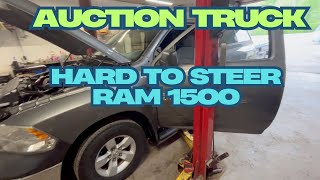
We Have This Part in Stock



The information in this article is provided for general reference and educational purposes only. Vehicle specifications, procedures, and part compatibility can vary by production date, trim level, and region. Always consult your vehicle's factory service manual and verify part numbers before purchasing or performing repairs. Safety-critical components such as airbags, seat belts, and braking systems should be installed by a qualified professional.
- Ram 1500:
- 🎬 Helpful Videos
- 🛍️ Shop This Part
- What's Unique About the 2019-2025 Ram 1500
- Diagnostic Flowchart
- Symptoms You May Notice
- Most Likely Causes
- Rare But Worth Checking
- Diagnosis Steps
- Parts You'll Likely Need
- Related Codes That Often Appear With This One
- Technical Service Bulletins (TSBs) & Recalls
- Platform-Specific Known Issues
- Mechanic-Grade Diagnostic Values
- Scan Tool Commands That Help
- Wiring & Ground Locations
- Real Owner Repair Stories
- OEM Part Supersession History
- Model Year Variations Within This Range
- 🎟️ Get 5% Off