

C2129 on 2021 Jeep Wrangler: Battery Voltage Fault Causes and Fixes
On a 2021 Jeep Wrangler, code C2129 almost always indicates a failing auxiliary battery, part of the dual-battery system for Engine Stop-Start (ESS). This low voltage condition often triggers ABS and ESC warning lights. Replacing the small auxiliary battery (around $100-$150) typically resolves this and a host of other electrical issues.
- Code C2129 on a 2021 Wrangler means a critical module detected low voltage, not that the module itself is bad.
- The most likely cause is a failing auxiliary battery, a known weak point on this vehicle.
- A proper diagnosis requires load testing BOTH batteries independently; a simple voltage check is not enough.
- If replacing parts, start with the auxiliary battery. Consider replacing the main battery at the same time for peace of mind.
- Before buying a replacement Z-Case fuse array, check the part number on the original unit as there are multiple versions.
What's Unique About the 2021-2021 Jeep WRANGLER

The 2021 Wrangler (JL generation) uses a dual-battery system to manage its Engine Stop-Start (ESS) feature. A large primary battery handles starting, while a smaller auxiliary battery powers the vehicle's electronics when the engine is off at a stop. The small auxiliary batteries have a high failure rate and are the most common cause of widespread, confusing electrical codes like C2129. When the auxiliary battery fails, it can no longer support the vehicle's electrical load during an ESS event and can also drain the main battery, causing system-wide voltage instability and triggering faults in sensitive modules like the ABS controller.
Diagnostic Flowchart

Tap your situation to follow the diagnostic path that matches what you're seeing on this vehicle.
Symptoms You May Notice
- ABS and Electronic Stability Control (ESC) warning lights illuminated
- "Service Stop/Start System" or "Stop/Start Unavailable" message
- Check Engine Light may be on
- Slow or hesitant engine cranking
- No-start condition
- Dashboard lights flickering or other strange electrical behavior
- "Service Electric Power Steering" message or loss of power steering assist
- "Aux Switches Unavailable, Battery Charging" message
- Radio/infotainment screen rebooting or going blank
- Replacing the ABS module or other control modules. These modules are almost always reporting the problem (low voltage), not the cause of the problem.
- Replacing only the main battery without testing the auxiliary battery. A bad auxiliary battery can quickly drain and damage a new main battery.
- Replacing the alternator due to fluctuating voltage readings on the dashboard. The smart charging system is designed to vary voltage, and this is normal behavior.
Most Likely Causes

- Failing Auxiliary (ESS) Battery 🔴 High Probability The OEM auxiliary batteries in JL Wranglers are known for having a relatively short service life, often failing within 2-4 years. Their failure causes system-wide voltage drops and is the most cited cause in owner forums.
How to confirm: Perform a load test specifically on the auxiliary battery. A simple voltage reading is insufficient, as a failing battery can show 12V+ at rest but collapse under load. Many auto parts stores can do this, but the battery must be disconnected and tested independently. A common method is to disconnect the main battery's negative terminal cluster and test the dangling aux cable against the main battery's positive post.
Typical fix: Replace the auxiliary battery. It is located under the main Power Distribution Center (fuse box). Access is difficult; the most common DIY method is by removing the passenger side inner fender liner and accessing it from below. 🎬 Watch: The easiest way to replace the auxiliary battery. Some owners remove the PDC from above, but this risks damaging electrical pins.
Est. part cost: $100-$180 - Failing Main Battery 🟡 Medium Probability A failing main battery can put extra strain on the charging system and the auxiliary battery. Crucially, a failing auxiliary battery will constantly draw power from the main battery, causing it to fail prematurely. Many owners and shops recommend replacing both batteries at the same time for this reason.
How to confirm: Perform a load test on the main battery after it has been fully disconnected from the auxiliary battery. Voltage should be ~12.6V at rest and should not drop below ~10V during cranking.
Typical fix: Replace the main battery. This is a more straightforward replacement than the auxiliary battery.
Est. part cost: $200-$400 - Loose or Corroded Battery Terminals/Grounds ⚪ Low Probability
How to confirm: Visually inspect the terminals on both batteries for white or blue/green corrosion. Physically check that all connections are tight, including the main chassis ground straps and the connections at the Power Distribution Center (PDC).
Typical fix: Clean the battery terminals and posts with a wire brush. Disassemble, inspect, and clean all battery cable leads and ground connections. Tighten any loose connections. Replace corroded ground straps if necessary.
Est. part cost: $5-$50 - Faulty Z-Case Fuse Array ⚪ Low Probability This fuse block sits on the positive battery terminal and can develop internal faults or blown fuses, leading to charging or power delivery issues for specific systems, including the auxiliary battery.
How to confirm: Visually inspect the fuse array for any signs of melting or damage. Use a test light or multimeter to check for continuity across the fuses within the array. One forum user diagnosed a no-charge condition for the aux battery to a blown fuse in this array.
Typical fix: Replace the entire fuse array. It is critical to match the part number exactly, as different arrays exist for different vehicle options (e.g., with/without tow package). Part 68368853AA is common, but vehicles with a tow package may use 68368854AA.
Est. part cost: $25-$70
Rare But Worth Checking
- Failing Alternator: While possible, an alternator failure would typically also present with a battery light and a steady drop in voltage while driving, eventually leading to stalling. The intelligent charging system on the JL/JT platform causes voltage to fluctuate normally (e.g., 12.7V to 14.5V), which can be confused for an alternator issue. A charging system voltage below 13V while running warrants investigation. A faulty voltage regulator can also cause a C2129-17 (high voltage) code.
- Parasitic Drain: A module or component that does not 'sleep' correctly can drain the batteries overnight. This is less common than simple battery failure but can be a cause if new batteries do not solve the problem. One user on a forum traced a drain to a shorted-out dash button.
Diagnosis Steps
- Read all stored trouble codes from all vehicle modules to get a complete picture of the electrical faults. Note which modules are reporting low voltage.
- Using a multimeter, check the static voltage of the main battery (with the engine off). It should be around 12.6V. A reading of 12.4V or lower may indicate a problem.
- Start the engine and check the charging voltage at the main battery. It should fluctuate, but generally be between 13.5V and 14.5V. If it's consistently low (e.g., below 13.0V), suspect a charging system issue.
- Turn off the vehicle. Disconnect and isolate BOTH the main and auxiliary batteries. This is critical for accurate testing. Disconnect the negative terminal assembly from the main battery post.
- Perform a professional load test on each battery individually. This is the most important step. A battery can have good static voltage but fail a load test, revealing its inability to supply sufficient amperage.
- If both batteries test good, inspect all battery cable connections, terminals, and primary body/engine ground straps for tightness and corrosion. Pay special attention to the main ground on the fender wall and the connections on the PDC/fuse box.
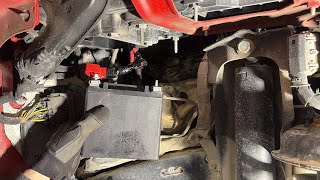
- If all batteries and connections are good, inspect the Z-Case fuse array on the positive terminal for damage or blown fuses using a test light. 🎬 See how to inspect the fuse array and battery.
- If no cause is found, the issue may be an intermittent parasitic draw, which requires more advanced diagnostics like measuring ignition-off draw (IOD).
Parts You'll Likely Need

- Auxiliary Battery
(OEM #68647042AA)— This is the most frequent point of failure on the JL Wrangler's electrical system and the primary cause of code C2129.
Trusted brands: Mopar, ACDelco (Gold AUX14), Deka, DieHard (Platinum AUX14), Super Start (Platinum AUX14)
OEM price range: $120-$180
Aftermarket price range: $100-$150 - Z-Case Fuse Array
(OEM #68368853AA)— A less common but known failure point that can interrupt power to or from the batteries. It is critical to get the correct part number based on vehicle options like the tow package.
Trusted brands: Mopar
OEM price range: $25-$70
Related Codes That Often Appear With This One
- C2100-00 — This code means "Battery Voltage Low" and is often set by the same module for the same underlying reason.
- U3007-00 — This code means "Control Module Input Power 'B' Circuit/Open" and points to the same power supply issue.
- B2199-16 — This code means "Battery Voltage-Circuit Voltage Below Threshold" and is another common companion code triggered by the low voltage event.
- C05A4-00 — This code means "Wheel Speed Sensors Supply Circuit Low," indicating the low voltage is affecting the power feed to the wheel speed sensors.
- C212A-16 — This is a "System Voltage - Circuit Voltage Below Threshold" code often set by the same modules (ABS, Sway Bar) as C2129.
Technical Service Bulletins (TSBs) & Recalls
- 08-106-21 REV. A - This TSB, also released as RRT 21-077, addresses a MIL-on condition with a list of DTCs including C2129-00. The procedure involves testing and possibly replacing the 12V battery on certain 2021 Wranglers (specifically PHEV models). This confirms C2129 is part of a known low-voltage fault pattern recognized by the manufacturer.
- STAR Case S2319000005 - While not a TSB, this internal document for technicians advises that when diagnosing a loss of power steering, battery system checks (load test, charging voltage, clean connections) are especially important when DTC C2129 is present. This directly links the code to power steering issues.
Platform-Specific Known Issues
- The dual-battery system in the 2018+ Wrangler JL is a known weak point. The smaller auxiliary battery often fails prematurely, leading to a cascade of electrical fault codes. Many owners choose to replace both batteries at the same time to prevent a bad auxiliary battery from damaging the new main battery.
- Accessing the auxiliary battery is notoriously difficult. The official service manual method involves removing the Power Distribution Center (PDC), but many owners and videos show a potentially easier method of removing the passenger-side inner fender liner and accessing the battery from underneath.
- Many owners on forums like jlwranglerforums.com discuss bypassing the auxiliary battery completely to avoid repeated failures, though this disables the Engine Stop-Start (ESS) feature.
Mechanic-Grade Diagnostic Values
- Quiescent (Ignition-Off) Current Draw — expected: -500mA to +50mA. Failure: A sustained current draw outside this range after the vehicle has gone to sleep (approx. 5-10 minutes) indicates a parasitic drain that will prevent the IBS from calibrating correctly.
- ABS Module Fused B+ Circuit Voltage — expected: 10.0 to 16.0 volts. Failure: Voltage below 10.0V when testing the circuit at the ABS module connector indicates a power supply issue upstream, not a module fault.
- Intelligent Battery Sensor (IBS) Temperature Reading — expected: A temperature reading that is plausible for the current ambient conditions.. Failure: A wildly inaccurate temperature reading (e.g., -40°F on a warm day) is a strong indicator of a failed IBS module.
Hidden / Shadow Codes Worth Checking
- C2129-16: Battery Voltage - Circuit Voltage Below Threshold. This is the most common variant, specifically indicating the voltage was too low. (see via Most comprehensive OBD-II scanners capable of reading Chassis codes.)
- C2129-17: Battery Voltage - Circuit Voltage Above Threshold. This indicates a high voltage condition, often pointing to a faulty alternator/voltage regulator rather than a battery issue. (see via Most comprehensive OBD-II scanners capable of reading Chassis codes.)
- B2193: Intelligent Battery Sensor Internal Fault. This code is set by the Body Control Module (BCM) and points directly to a failure of the IBS itself. (see via Dealer-level scan tool (Witech) or advanced aftermarket scanner that can read BCM codes.)
- U113E: Lost communication with intelligent battery sensor. This indicates a problem with the LIN bus wiring between the IBS and the BCM, or a completely failed IBS. (see via Dealer-level scan tool (Witech) or advanced aftermarket scanner that can read BCM codes.)
Scan Tool Commands That Help
- Witech or equivalent: IBS Reset / Battery Replacement — After replacing either battery, a reset procedure is recommended. However, Jeep states the IBS will self-relearn over 2-4 hours of quiescent (sleep) time followed by several drive cycles. A manual reset is not strictly required but can expedite the process.
- Manual Procedure: IBS Manual Reboot — As a first step when suspecting an IBS glitch, disconnecting its 2-pin electrical connector for 10-15 minutes can force the module to reboot. This can sometimes clear software-related faults without requiring replacement.
Wiring & Ground Locations
- G905A / G906A — Located on the dash panel/firewall area, near the battery tray in the engine compartment.. These are primary ground points for the dash and body harness, which includes the power feeds for multiple control modules. Corrosion or looseness at these grounds can cause intermittent voltage drops and trigger C2129.
- Intelligent Battery Sensor (IBS) Connector — A small 2-wire electrical connector attached to the main negative battery terminal assembly.. This connector transmits all battery state-of-charge, voltage, current, and temperature data to the BCM via a LIN bus. A loose or corroded connection here will cause inaccurate charging and can lead to low voltage conditions or related IBS codes.
- ABS Module Connector — The main electrical harness connector at the ABS module itself.. This is the point where a technician can perform pin-out testing to verify that proper battery voltage (pins A107, A111) and ground (pins Z907, Z917) are present at the module, confirming the issue is in the supply circuit and not the module itself.
Real Owner Repair Stories
- JLwranglerforums.com user 'Archie PJ' (2018-2020 Jeep Wrangler JL, 15k miles) — Persistent "Aux switches unavailable, battery charging" message on startup. Had to jump-start the vehicle once. Multiple low voltage codes including C2129-16.
❌ Tried (didn't work) A quick battery test at a parts store showed the battery was 'OK'.
✅ What actually fixed it A dealer performed the official Jeep battery test procedure (a multi-hour process) and found the main battery was bad. The main battery was replaced under warranty, which resolved the codes and messages. This highlights that a simple voltage or parts-store test can miss internal battery faults. - JLwranglerforums.com user (Jeep Wrangler JL) — Multiple electrical issues and codes, including C2129, after installing accessories.
❌ Tried (didn't work) Replacing batteries.
✅ What actually fixed it The user discovered a blown 150A fuse within the Z-Case fuse array on the positive terminal. This specific fuse was responsible for the charging circuit to the auxiliary battery. Replacing the Z-Case fuse array restored proper charging and cleared the codes.
OEM Part Supersession History
50286662AA→68647042AA— Standard part evolution and potential design/supplier updates for the auxiliary battery.68368853AA→N/A— This Z-Case fuse array is for models WITHOUT a tow package and has a 60A fuse for the radiator fan.
Heads up: This part is NOT interchangeable with 68368854AA, which is for models WITH a tow package and uses a 100A fuse for the radiator fan. Installing the wrong one will cause issues with fan operation or lead to blown fuses.
Helpful Videos
Used OEM Parts in Stock
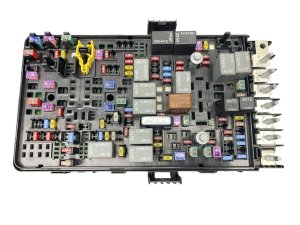


New Aftermarket Parts Available
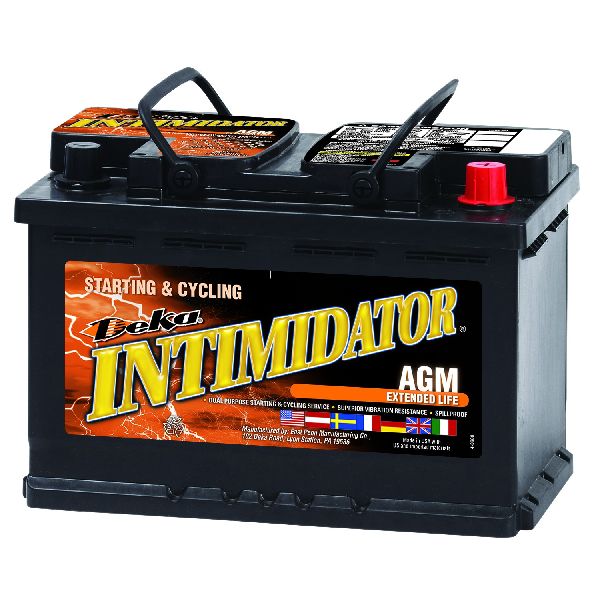
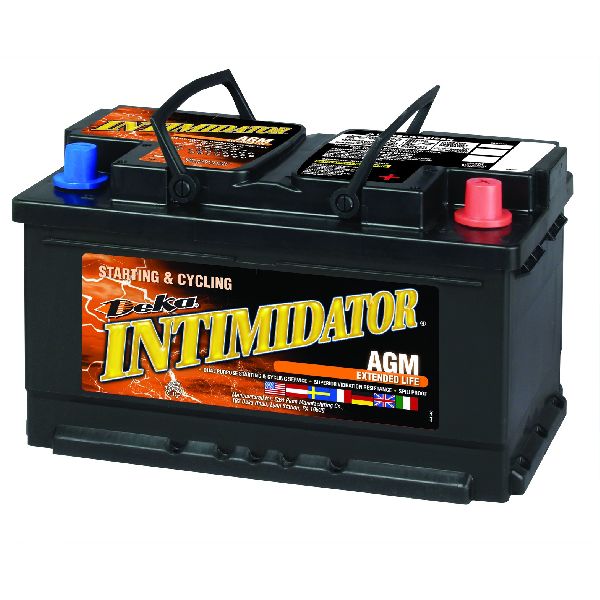

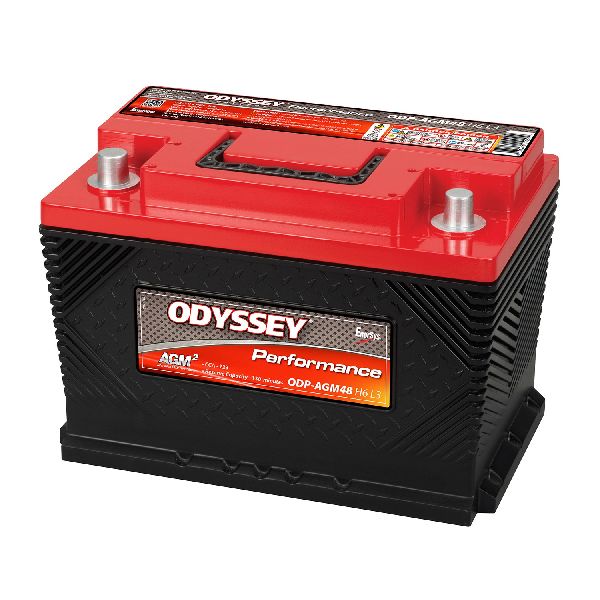

The information in this article is provided for general reference and educational purposes only. Vehicle specifications, procedures, and part compatibility can vary by production date, trim level, and region. Always consult your vehicle's factory service manual and verify part numbers before purchasing or performing repairs. Safety-critical components such as airbags, seat belts, and braking systems should be installed by a qualified professional.
- Jeep WRANGLER:
- 🎬 Helpful Videos
- 🛍️ Shop This Part
- What's Unique About the 2021-2021 Jeep WRANGLER
- Diagnostic Flowchart
- Symptoms You May Notice
- Most Likely Causes
- Rare But Worth Checking
- Diagnosis Steps
- Parts You'll Likely Need
- Related Codes That Often Appear With This One
- Technical Service Bulletins (TSBs) & Recalls
- Platform-Specific Known Issues
- Mechanic-Grade Diagnostic Values
- Hidden / Shadow Codes Worth Checking
- Scan Tool Commands That Help
- Wiring & Ground Locations
- Real Owner Repair Stories
- OEM Part Supersession History
- 🎟️ Get 5% Off