

OBD-II Code C2124: No Signal From Tire Pressure Sensor 4
The Ultimate 2026 Guide: What C2124 means, why it triggers, and how to fix it for good
- Code C2124 triggers when tire pressure sensor 'ID4' stops transmitting, almost always due to a dead internal battery after 5 to 10 years of use.
- A TPMS dashboard light that flashes for 60 to 90 seconds at startup before turning solid confirms a system hardware fault, not just a low tire.
- Driving with C2124 disables your low-pressure warnings, increasing the risk of a high-speed blowout that causes upwards of $1,500 in wheel and suspension damage.
- Fixing this code requires a dedicated TPMS activation tool to pinpoint the dead sensor, followed by an OBD-II relearn procedure to program the new $60-$150 sensor to the vehicle.
- If codes C2121, C2122, C2123, and C2124 appear simultaneously, skip the wheel sensors and test the central TPMS receiver module for power and ground faults.
What Does C2124 Mean?

Code C2124 means your car's main computer lost the signal from the tire pressure sensor registered as 'ID4'. Each tire has a battery-powered sensor reporting pressure via radio frequency. This code triggers when a sensor stops communicating for a specific period, typically 20 minutes of continuous driving above 25 mph (40 km/h).
Technical definition: The official SAE/OBD-II definition is "No Signal from Transmitter ID4". The TPMS control module failed to receive a radio frequency signal from the sensor registered as ID4 for a specified time while the vehicle is in motion. The system flags ID4 as inactive, triggering the fault code and TPMS warning light.
Can I Drive With C2124?
Yes, But With Caution. Yes, but your Tire Pressure Monitoring System (TPMS) is disabled, creating a significant safety risk. You will not be warned if a tire becomes dangerously low. Driving on a significantly underinflated tire reduces fuel economy by 0.2% for every 1 PSI drop and dramatically increases blowout risk. A blowout at speed causes loss of control, with potential repair costs for a new tire, wheel, and suspension damage exceeding $1,500. Manually check all tire pressures with a gauge immediately and schedule a repair.
Common Causes

- Dead or Dying TPMS Sensor Battery (Very Common) — TPMS sensors use non-replaceable internal batteries lasting 5-10 years. Battery failure is the most frequent cause of C2124 on vehicles over five years old, as the sensor loses power and stops transmitting.
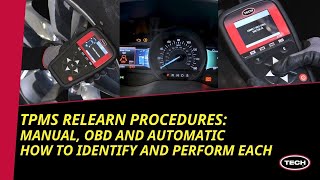
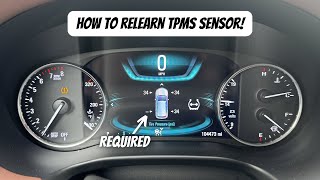
- Procedural Error During Service (Failed Re-learn) (Common) — After replacing a sensor or rotating tires, a 're-learn' procedure is mandatory to teach the vehicle's TPMS module the new sensor ID or position. If skipped or performed incorrectly, 🎬 Watch: How to identify and perform the correct TPMS relearn procedure the module will not recognize the sensor, triggering the code even if the hardware is functional.
- Physical Damage to the TPMS Sensor (Common) — Located inside the tire, the sensor is vulnerable to severe potholes, curb impacts, or road debris. It is frequently broken by a technician's tire machine during a tire change or repair.
- Internal Corrosion (Common) — Exposure to moisture and road salt corrodes the sensor's metallic valve stem or seeps into the electronics housing. This galvanic corrosion damages the circuit board or antenna, preventing signal transmission.
- Incorrect or Incompatible TPMS Sensor Installed (Uncommon) — Replacement sensors must operate on the correct radio frequency (typically 315 MHz or 433 MHz) and use a protocol compatible with the vehicle's TPMS module. Installing the wrong type results in a permanent 'no signal' code.
- Use of Incompatible Tire Sealant (Uncommon) — Emergency aerosol tire sealants coat the sensor, blocking the tiny port used to measure pressure, or contain chemicals that destroy the electronics. If sealant was used, the sensor requires replacement.
- Faulty TPMS Control Module or Receiver (Less Common) — The central module receiving signals from all tires can fail. This is the primary suspect if you simultaneously see codes for all four sensors (C2121, C2122, C2123, and C2124), as four sensor batteries rarely die at the exact same moment.
- Radio Frequency (RF) Interference (Rare) — Strong radio signals from aftermarket electronics (cheap phone chargers, dash cams) or external sources (power lines) occasionally overpower the weak TPMS signal. This issue is intermittent and location-dependent.
- CAN Bus or BCM Communication Error (Rare) — The TPMS module communicates with the main computer via the vehicle's CAN bus network. A wiring issue or network fault prevents TPMS status reporting, logging C2124 alongside communication codes (U-codes).
Symptoms

- Flashing, then Solid TPMS Warning Light — The dashboard light blinks for 60-90 seconds upon starting the vehicle, then remains illuminated. 🎬 Watch: Understanding the difference between a solid and flashing TPMS light A solid light without initial flashing indicates actual low tire pressure, not a system fault.
- No Tire Pressure Reading for One Tire — On vehicles with a multi-tire information display, the reading for the faulty sensor's tire shows dashes ('--') or is blank, while other tires display normally.
- Message on Driver Information Center (DIC) — Modern vehicles display a text message such as 'Service Tire Monitor System' or 'TPMS Fault' on the instrument cluster screen alongside the warning light.
- TPMS Light Will Not Reset (also visible on scanner) — After manually checking and confirming all tires are inflated to the correct pressure, the warning light stays on because the underlying hardware fault remains unresolved.
- Inability to Complete TPMS Re-learn Procedure (scan-tool only — no driver-felt sign) — When attempting a manual or tool-forced TPMS re-learn, the process fails because the module cannot get a response from the dead sensor.
Diagnostic Flowchart
Tap your situation to follow the diagnostic path that matches what you're seeing on this code.
Common Fixes & Costs
- Replace the Single Faulty TPMS Sensor — Parts: $30-$150, Labor: $30-$80, ~1 hr book time (Professional)
- Replace All Four TPMS Sensors as a Set — Parts: $120-$600, Labor: $120-$250, ~2.5 hr book time (Professional)
- Perform TPMS Re-learn Procedure — Parts: $0, Labor: $25-$125, ~0.5 hr book time (Intermediate)
- Replace the TPMS Control Module/Receiver — Parts: $150-$700, Labor: $100-$250, ~1.5 hr book time (Professional)
- Repair Damaged Wiring or Connector for TPMS Module — Parts: $5-$50, Labor: $100-$300, ~2 hr book time (Advanced)
Used vs. New Parts: Buying Guide
When a used part is worth it: It almost never makes sense to buy a used TPMS sensor. The primary failure mode is the depletion of the non-replaceable internal battery, which has a finite lifespan of 5-10 years. A used sensor has an unknown remaining battery life and fails shortly after installation, requiring you to pay for labor a second time.
Donor-vehicle mileage cap: roughly under 10000 miles for the part to have meaningful remaining life.
Donor quality checklist:
- Avoid sensors from vehicles older than 3-4 years.
- Visually inspect for corrosion on the valve stem or sensor body.
- A used part offers no warranty on battery life.
Decision logic:
- If Vehicle is over 5 years old and one sensor has failed → Buy new aftermarket or OEM sensors. Strongly consider replacing all four, as the others likely have similar battery life remaining.
- If Budget is the absolute top priority and you accept the risk → A used sensor from a very low-mileage, late-model wreck might work, but the savings are minimal compared to the risk of premature failure.
- If You want guaranteed compatibility and reliability → Buy a new OEM sensor from a dealer or reputable supplier.
Warranty tradeoff: Used parts: No warranty or a 30-day functional warranty at best, which does not cover battery life. Aftermarket new: Typically a 1-2 year warranty. OEM new: Usually a 1-year/12,000-mile parts warranty.
Worst-case if a used part fails: $100-$175 if a used sensor fails after install — you must pay for the tire dismount/mount, balancing, and a new sensor all over again.
What Happens If You Wait — Timeline
- 0-2 weeks: Code C2124 is set, and the TPMS light flashes then stays on. The safety system is now disabled, but there is no physical damage yet. You will not be warned of pressure loss. (MPG impact: 0%% · Added cost: $0)
- 2 weeks - 4 months: A slow, undetected leak begins in one tire (e.g., from a nail). The tire becomes underinflated by 5-10 PSI. Rolling resistance increases, and the edges of the tire begin to wear unevenly. (MPG impact: 1-2%% · Added cost: $20-$50 in wasted fuel.)
- 4-8 months: The tire is now severely underinflated (>10 PSI low). The tire's internal structure and sidewall are being damaged by excessive heat and flexing. Handling becomes sluggish and braking distances increase. The tire is likely damaged beyond repair. (MPG impact: 2-4%% · Added cost: $150-$400 (for a new tire plus accumulated fuel waste).)
- 8+ months / Worst-Case: The structurally weakened tire suffers a catastrophic blowout at highway speed. This causes a loss of control and an accident. The shredded tire destroys the wheel, fender, brake lines, and suspension components. (MPG impact: N/A% · Added cost: $1,800-$4,000+ (for towing, new tire, new wheel, and body/suspension repairs).)
Cost of Not Fixing It
- Immediate: No warning for a slow leak or underinflated tire, leading to reduced fuel economy and uneven tire wear. This increases the risk of hydroplaning and reduces braking effectiveness. (Added cost: $0 (but increased fuel and tire wear costs))
- 1-6 months: Continued driving on an underinflated tire destroys the tire's internal structure, leading to premature replacement. Handling and stability are compromised. (Added cost: $150-$400 (for a new tire))
- Long-Term / Worst-Case: A sudden tire blowout at speed due to undetected pressure loss. This causes a loss of vehicle control, leading to an accident. Damage includes the tire, wheel, fender, suspension components, and brake lines. (Added cost: $1,500-$5,000+ (for new tire, wheel, bodywork, suspension repair, and potential towing))
Diagnosis Steps

- Verify Tire Pressures Manually
Use a reliable digital tire pressure gauge to check all four tires. Inflate them to the pressure specified on the driver's door jamb placard. This definitively rules out an actual low-pressure condition.
Tools: Tire pressure gauge, Air compressor (Beginner) - Confirm the Fault with an OBD-II Scanner
Connect an OBD-II scanner capable of reading Chassis (C-prefix) codes to confirm C2124 is active. Note any other codes, especially for other sensors (C2121-C2123) or communication modules (U-prefix codes), to differentiate a single sensor failure from a wider system issue.
Tools: OBD-II Scanner (with TPMS/Chassis code capability) (Beginner) - Isolate the Faulty Sensor with a TPMS Tool
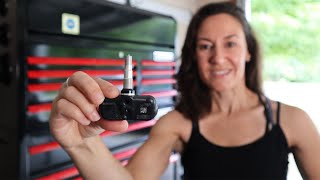
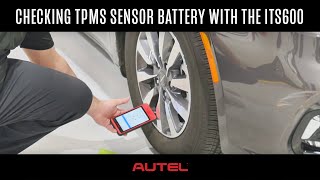
Go to each wheel and use a TPMS activation tool to trigger the sensor. The tool confirms if the sensor is transmitting and displays its ID, pressure, temperature, and battery status. The sensor that does not respond corresponds to code C2124. Remember, 'ID4' is a registration slot, not a physical wheel location.
Tools: TPMS Activation/Diagnostic Tool (Intermediate) - Attempt a System Reset/Re-learn
Consult the owner's manual for the vehicle-specific TPMS reset procedure. This may involve a reset button, an infotainment menu option, or a specific driving pattern. This resolves procedural errors but will not fix a dead sensor.
Tools: Owner's manual (Beginner) - Check for Related Technical Service Bulletins (TSBs)
Search for TSBs related to the TPMS for your specific vehicle year and model. Manufacturers release bulletins for known issues, including updated sensor part numbers or revised diagnostic procedures that prevent misdiagnosis.
Tools: Online TSB database access or dealership inquiry (Intermediate) - Analyze Scan Tool Live Data PIDs
Access the TPMS module's live data stream using an advanced scan tool. Look for PIDs for each registered sensor. A healthy sensor shows specific pressure, temperature, and a battery status of 'OK'. The sensor associated with C2124 shows blank values, 'N/A', or 'LOW' battery.
Tools: Advanced Bi-Directional OBD-II Scanner (Advanced) - Inspect the TPMS Receiver and Wiring Harness
Visually inspect the TPMS receiver module and its wiring connector for physical damage, moisture intrusion, or corrosion (green or white crust). Clean any corrosion with contact cleaner and ensure a secure connection.
Tools: Basic hand tools, Electrical contact cleaner (Intermediate) - Check TPMS Module Power and Ground
If all four sensors fail to respond, locate the receiver module. Disconnect its electrical connector and use a multimeter to check for battery voltage (>12.0V with key on) on the power pin and good continuity to ground (< 0.5 Ohms) on the ground pin. A lack of power or ground indicates a wiring or fuse issue.
Tools: Digital Multimeter, Vehicle-specific wiring diagram (Advanced) - Inspect for RF Signal with an Oscilloscope
For intermittent issues or suspected RF interference, connect an oscilloscope probe to the TPMS receiver's antenna input wire. Triggering a known-good sensor shows a distinct Amplitude-Shift Keying (ASK) waveform. The absence of this pattern for the suspect sensor confirms it is dead. Excessive 'noise' points to RF interference.
Tools: Oscilloscope, TPMS Activation Tool, Wiring diagram (Professional)
When This Code Triggers (Freeze-Frame Conditions)
- Vehicle Speed: 25-65 mph (Continuous driving for an extended period.)
- Time Since Start: > 20 minutes (The system needs sufficient time to confirm a persistent lack of signal.)
- RPM: 1500-2500 (Typical for steady-speed driving where the system is actively monitoring.)
- TPMS Battery Status (Faulty Sensor): N/A or LOW (The scan tool data for the specific sensor ID will often show a low battery warning or no data at all.)
Related Codes
- C2121, C2122, C2123 — Identical to C2124 but correspond to sensors ID1, ID2, and ID3. If all four are present, the primary suspect shifts from individual sensors to a central component like the TPMS receiver module or its power/ground circuit.
- C2179 — This code for 'Transmitter ID not Registered' is a direct consequence of a C2124 fault. The system sets C2124 because it receives no signal, then sets C2179 because the non-communicating sensor's ID is considered unregistered. Fixing C2124 resolves C2179.
- U0121, U0140 — Communication codes indicating a loss of communication with the ABS Control Module (U0121) or Body Control Module (U0140). A fault on the vehicle's data network interrupts the TPMS system and triggers C2124 as a secondary fault. Fix U-prefix codes first.
- C0210 — Fault code for the Rear Speed Sensor circuit. The TPMS system uses vehicle speed data from the ABS module. A fault in a wheel speed sensor interrupts this process and causes a related TPMS code. If C0210 is present, the primary fault is likely the ABS system.
Climate & Environmental Factors
- Cold Weather: Extreme cold reduces the chemical activity within the sensor's lithium battery, lowering its voltage output. For a sensor with an aged battery, a cold snap causes its voltage to drop below the transmission threshold, triggering C2124. This is why failures spike in fall and winter.
- Road Salt & Humidity: Road salt creates a highly corrosive environment. Salt spray and high humidity accelerate galvanic corrosion on sensors with aluminum valve stems. This destroys the valve stem, compromises the seal, or damages the antenna connection, leading to signal failure.
- Altitude: Altitude does not directly cause the C2124 'no signal' fault. Changes in altitude cause significant changes in absolute pressure, which the TPMS system reports, but this does not affect the sensor's ability to transmit a signal.
How to Talk to a Mechanic About This Code
Say this: "I have a flashing TPMS light and a C2124 trouble code. I need a diagnosis to identify which specific tire pressure sensor failed. Please use a TPMS diagnostic tool to test the signal and battery status of all four sensors before recommending parts."
This signals that you understand the code points to a specific fault, not just a generic 'TPMS problem'. It directs the shop to perform a precise diagnosis with the correct tool, preventing them from immediately upselling you on four new sensors when only one may be bad.
Avoid saying:
- 'My TPMS light is on, can you just fix it?'
- 'My tire light is flashing, I probably need new sensors.'
- 'Just do whatever you think is best.'
Questions to ask before authorizing the repair:
- Can you show me the readout from the TPMS tool that confirms which sensor has failed and the battery status of the others?
- Does your quoted price include replacing the TPMS service kit (new valve core, grommet, nut, and cap)?
- Is the replacement sensor an OEM part or a programmable aftermarket one, and what is the warranty on it?
- If you recommend replacing all four sensors, what is the 'all-in' price including parts, labor, and programming?
Where to Take It: Dealer vs Independent vs Chain
- Dealer:
Recommended only if other options fail or for complex electrical diagnosis. For a standard sensor replacement, a dealer is usually the most expensive choice.
Best for: Vehicles under warranty, Complex issues involving multiple fault codes (e.g., TPMS and ABS/BCM communication errors), Vehicles with known manufacturer-specific programming quirks (some Toyota/Lexus models)
Downsides: Highest cost, with labor rates often 1.5-2x higher than independent shops., May default to replacing all four sensors as a policy, even if only one has failed. (Typical cost: +75% vs. baseline) - Independent Shop:
Good fit. A reputable independent shop handles this repair effectively and for a reasonable price, often charging between $100-$200 per sensor, including labor.
Best for: Out-of-warranty vehicles where cost is a major factor., Building a relationship with a local mechanic you trust.
Downsides: Quality and equipment vary widely; ensure they have a modern TPMS diagnostic and programming tool before you go., May have less experience with brand-new models or complex vehicle-specific issues. (Typical cost: +0% vs. baseline) - Chain Shop:
Best fit for this specific code. Tire specialty chains like Discount Tire, Belle Tire, or warehouse clubs like Costco are often the most efficient and affordable option, with prices around $45-$65 per sensor plus installation.
Best for: Cost-effective sensor replacement, especially at tire-specialty chains., Convenience and often no appointment needed for diagnosis.
Downsides: High pressure to upsell; may push for four sensors when only one is needed., Technician skill can be inconsistent; a failed re-learn procedure is a common issue. (Typical cost: -25% vs. baseline)
When to Walk Away From the Repair
If the estimated repair cost for all four sensors exceeds 25-30% of your car's private-party value, and the car has other significant issues, you might reconsider the repair. For a single sensor, it's almost always worth fixing.
- Car worth $4000, fix is $250: Fix it. This is a minor cost relative to the car's value and is a critical safety feature.
- Car worth $12000, fix is $750: Fix it. This is well below the threshold and restores a key safety system.
- Car worth $2500, fix is $750: Borderline. This is 30% of the car's value. If the car needs other major repairs (e.g., transmission, engine work), it may be time to consider selling it as-is. If not, the repair is still justifiable.
What Scan Tool You Need for This Code
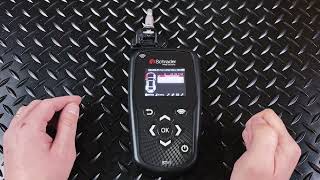
Minimum: A dedicated TPMS activation and diagnostic tool. A basic OBD-II code reader is NOT sufficient.
A standard $20 OBD-II reader can only show you the C2124 code. It cannot trigger the individual sensors to test their battery life and signal output, so you can't identify which wheel has the failed sensor. It also cannot perform the mandatory re-learn procedure after the new sensor is installed.
Budget: XTOOL TP150 or Foxwell T1000 (~$90) — Activates and reads data from all sensors to identify the faulty one. Can program blank XTOOL or Foxwell sensors. This is the minimum tool required for a successful DIY diagnosis.
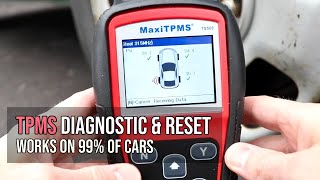
Mid-range: Autel MaxiTPMS TS508WF (~$220) — The industry standard for DIY and small shops. It activates all known sensors, checks battery status, programs Autel MX-sensors, and performs OBD-II re-learn procedures. The Wi-Fi update feature is a significant convenience.
Professional: Foxwell NT809TS or Autel MaxiCOM MK808TS (~$450-600) — These are full-system diagnostic tablets that combine comprehensive TPMS functions with the ability to diagnose engine, transmission, ABS, and airbag systems. They offer bidirectional control and are ideal for serious DIYers or those managing multiple vehicles.
Rent vs buy: Buy. Unlike basic OBD-II readers, auto parts stores like AutoZone do not typically rent out specialized TPMS diagnostic and programming tools. Some online vendors offer rental services, but for a one-time fix, the cost of a professional repair at a tire shop is often comparable to or cheaper than buying a mid-range tool.
How to Clear the Code After You Fix It

- Replace faulty hardware (e.g., TPMS sensor)
- Perform TPMS relearn procedure with a compatible scan/TPMS tool
- Use a scan tool to clear the C2124 code from the TPMS module
Drive cycle (~20 minutes): After repair and clearing the code, a TPMS drive cycle is needed to confirm the fix. Drive the vehicle continuously for about 20 minutes at speeds consistently above 30 mph (50 km/h). This allows the TPMS module to receive signals from all sensors and verify the system is functional. Some vehicles auto-learn new sensors during this drive.
Readiness monitors affected: Not applicable
Watch out for:
- Assuming the light will go off on its own after sensor replacement without a relearn procedure.
- Using a basic OBD-II reader that cannot access or clear Chassis (C-prefix) codes.
- Not driving long enough or fast enough for the system to complete its self-check after the repair.
Will This Fail Emissions / State Inspection?
No — by itself this code doesn't fail OBD inspection (but it can keep readiness monitors from setting, which causes a separate fail).
- California: Will NOT fail a smog check. The TPMS light is ignored during the emissions inspection, which only fails for an illuminated Check Engine Light.
- New York: Will fail the annual safety inspection. While not an emissions failure, New York's safety inspection checks for a functional TPMS. An illuminated TPMS fault light is grounds for failure.
- Texas: Will NOT fail the safety inspection. The Texas vehicle inspection does not list the TPMS warning light as a failure criterion. They check tire condition and tread depth, but not the monitoring system itself.
Most Commonly Affected Vehicles
- Toyota Camry (2007-2012) — Extremely common as original sensor batteries expire. The original part number 42607-06011 has been superseded by 42607-06012. Using a professional scan tool like Techstream is often required to clear the code.
- Toyota RAV4 (2019-2025) — Well-documented in technical service information. The system requires driving for over 20 minutes at speeds above 25 mph to set this code.
- Toyota Prius (2004-2009) — Owners frequently report intermittent C2124 codes as the original sensors begin to fail. The issue is sometimes linked with ABS codes like C0210 if a wheel speed sensor is also failing.
- Scion tC / xB (2008-2010) — Shares TPMS technology with Toyota. A scan tool and a TPMS activation tool are necessary to identify the specific wheel with the failed sensor, as the code only points to 'ID4'.
- Lexus IS, ES, RX (2007-2013) — Uses the same TPMS sensors and control modules as Toyota, exhibiting identical failure patterns and requiring similar diagnostic procedures via Techstream software.
- Honda Accord, Civic, Odyssey (2008-2015) — Commonly affected as sensors reach battery life expectancy. Models from 2008-2012 use a direct TPMS system requiring a tool for relearn, while 2013+ models switched to an indirect system reset via the infotainment menu.
- Chevrolet Cruze, Silverado (2011-2019) — Often presents with a 'Service Tire Monitor System' message. The manual relearn procedure is required after service and steps vary depending on the Driver Information Center (DIC) buttons.
- Hyundai / Kia Sonata, Elantra, Sportage (2011-2018) — A flashing TPMS light indicates a sensor fault. Many models lack a manual reset button; the system automatically relearns the new sensor's ID after driving for 10-20 minutes at a steady speed.
Manufacturer-Specific Notes
- Toyota/Lexus/Scion: C-prefix codes stored in the TPMS module cannot be cleared with a basic OBD-II reader. A professional scan tool (like Toyota's Techstream) or a capable aftermarket scanner is required to clear the code after the repair is complete.
- Subaru: The TPMS receiver module is highly susceptible to corrosion, particularly on models where it is located behind the rear seat or in the trunk area, exposed to moisture. TSB 05-85-21R addresses a design change for TPMS valve assemblies to improve moisture resistance.
- General Motors (Chevrolet/GMC): GM vehicles have a well-defined manual relearn process initiated through the Driver Information Center (DIC). The process involves a specific sequence of activating each sensor, starting with the left front.
- BMW: The TPMS receiver, known as the RDC module, is notoriously prone to failure from water intrusion. It is often located behind a wheel well liner or in the trunk floor, where moisture collects and corrodes the circuit board, causing a simultaneous loss of communication with all sensors.
Real Owner Stories
2016 Toyota Corolla at 100K miles with flashing TPMS light.
The TPMS light came on and was flashing. After getting new tires, the light remained on. The dealership quoted $950 to replace all four sensors.
Outcome: The owner found the dealership quote outrageous. They went to a tire chain like Sam's Club and paid around $186 for all four sensors to be replaced and programmed.
Lesson: Dealerships charge a significant premium for TPMS sensor replacement. Independent tire shops and warehouse clubs perform the same service with compatible aftermarket parts for a fraction of the cost, often saving over $700.
2019 Subaru Forester with C2121, C2122, C2124 after partial sensor replacement.
One TPMS sensor was going bad, so the owner decided to replace them all. A tire shop replaced three sensors but couldn't access the fourth due to a cross-threaded lug nut. The TPMS light stayed on, and a scanner showed 'no data' codes for the newly replaced sensors.
Outcome: The system cannot complete the re-learn procedure unless all four sensors are installed and functional. The light remains on with fault codes until the final sensor is installed and the shop performs the complete re-learn procedure.
Lesson: A TPMS re-learn procedure is an all-or-nothing process. The system needs to hear from every sensor to initialize correctly. Replacing only some sensors results in a persistent fault light until the set is complete.
2008 Honda CR-V with intermittent flashing TPMS light, especially in cold weather.
The TPMS light flashed upon starting the car on cold mornings (below 50°F) and went out after a few miles of driving. Tire pressures were manually checked and confirmed correct.
Outcome: The root cause is the sensor's aging battery, which produces less voltage in cold temperatures, causing it to temporarily stop transmitting. The final fix is to replace the sensor.
Lesson: An intermittent flashing TPMS light that appears only in cold weather is a classic symptom of a dying sensor battery. While you might have months before it fails completely, it is a clear warning of impending failure.
Toyota C-HR with erratic TPMS light after getting four new tires.
Two weeks after a full set of new tires were installed, the TPMS light came on intermittently, usually 15 minutes into a drive, and then went away on its own. Manual pressure checks showed the tires were correctly inflated.
Outcome: The issue is a procedural error. The tire shop failed to properly perform the TPMS re-learn procedure. The system isn't recognizing the sensors correctly, causing intermittent faults. The owner needs to return to the shop to have them re-scan and re-learn the sensor IDs.
Lesson: A TPMS light that appears shortly after a tire service is almost always related to the service. Do not wait for it to 'settle down.' Return to the shop immediately and ask them to check for sensor damage and perform the re-learn procedure again.
How to Prevent This Code From Triggering
- Replace all TPMS sensors proactively with a new set of tires if the vehicle is over 7 years old. (Every 7-10 years or with a new set of tires on an older vehicle.) — Sensor batteries have a finite life of 7-10 years. Replacing them all at once during a tire change saves significant money on future labor, as you avoid paying for dismounting/mounting tires multiple times as each sensor fails one by one.
- Always replace the TPMS 'service kit' when changing tires. (Every time a tire is dismounted from a wheel.) — The service kit contains a new rubber grommet, valve core, nut, and cap. These parts are one-time use and prevent air leaks and corrosion at the valve stem, which lets moisture in and destroys the expensive electronic sensor.
- Maintain steady driving speeds when possible. (Daily habit.) — TPMS sensors transmit more frequently during stop-and-go driving. Maintaining a constant speed, such as on a highway, reduces the number of transmissions and conserves the sensor's internal battery life.
- Use high-quality, corrosion-resistant valve caps. (Always keep caps on.) — The valve cap is the first line of defense against road salt and moisture entering the valve core. This prevents corrosion that seizes the core or damages the valve stem, protecting the entire sensor assembly.
Frequently Asked Questions
Can I just replace the battery in the TPMS sensor?
No. The battery and electronics are permanently sealed inside a rugged housing to protect them from air pressure, moisture, and vibration. When the battery dies, the entire sensor unit must be replaced.
If I replace the sensor, will the light go out by itself?
Rarely. The new sensor has a unique ID that requires programming to the vehicle's computer using a special TPMS tool. After a successful re-learn, clear the fault code from the TPMS module with a scan tool.
A tire shop said they can't tell which sensor is bad. Is that true?
This is incorrect. A competent tire shop uses a TPMS diagnostic tool at each wheel to identify the non-transmitting sensor. Code C2124 refers to the sensor's registered ID ('ID4'), not its physical location, making the tool essential for isolation.
Why did the light come on right after I got new tires?
This is usually due to one of two reasons: 1) The technician accidentally damaged the sensor while mounting or dismounting the tire. 2) The technician forgot to perform the mandatory TPMS re-learn procedure, so the car's computer doesn't recognize the sensors in their new positions.
Can I use emergency tire sealant or Fix-a-Flat?
It is strongly discouraged. While some sealants claim to be 'TPMS safe,' many clog the sensor's pressure port or damage the electronics, leading to a permanent failure that requires sensor replacement. A tire plug kit is a much safer temporary repair.
Why does my TPMS light sometimes come on when it gets cold?
Tire pressure drops by about 1 PSI for every 10°F (5.6°C) drop in ambient temperature. A sudden cold snap causes the pressure in all tires to drop enough to trigger a 'low pressure' warning (solid light), but it will not cause a C2124 fault code (flashing light).
Is it okay to just ignore the flashing light?
Ignoring a flashing TPMS light is a serious safety risk. It means the entire system is inoperative and cannot warn you of a slow leak or a dangerously underinflated tire. This increases your risk of a sudden blowout, poor vehicle handling, and longer braking distances.
Key Takeaways
- Code C2124 triggers when tire pressure sensor 'ID4' stops transmitting, almost always due to a dead internal battery after 5 to 10 years of use.
- A TPMS dashboard light that flashes for 60 to 90 seconds at startup before turning solid confirms a system hardware fault, not just a low tire.
- Driving with C2124 disables your low-pressure warnings, increasing the risk of a high-speed blowout that causes upwards of $1,500 in wheel and suspension damage.
- Fixing this code requires a dedicated TPMS activation tool to pinpoint the dead sensor, followed by an OBD-II relearn procedure to program the new $60-$150 sensor to the vehicle.
- If codes C2121, C2122, C2123, and C2124 appear simultaneously, skip the wheel sensors and test the central TPMS receiver module for power and ground faults.
Helpful Videos


The information in this article is provided for general reference and educational purposes only. Vehicle specifications, procedures, and part compatibility can vary by production date, trim level, and region. Always consult your vehicle's factory service manual and verify part numbers before purchasing or performing repairs. Safety-critical components such as airbags, seat belts, and braking systems should be installed by a qualified professional.
- 🎬 Helpful Videos
- What Does C2124 Mean?
- Can I Drive With C2124?
- Common Causes
- Symptoms
- Diagnostic Flowchart
- Common Fixes & Costs
- Used vs. New Parts: Buying Guide
- What Happens If You Wait — Timeline
- Cost of Not Fixing It
- Diagnosis Steps
- When This Code Triggers (Freeze-Frame Conditions)
- Related Codes
- Climate & Environmental Factors
- How to Talk to a Mechanic About This Code
- Where to Take It: Dealer vs Independent vs Chain
- When to Walk Away From the Repair
- What Scan Tool You Need for This Code
- How to Clear the Code After You Fix It
- Will This Fail Emissions / State Inspection?
- Most Commonly Affected Vehicles
- Manufacturer-Specific Notes
- Real Owner Stories
- 2016 Toyota Corolla at 100K miles with flashing TPMS light.
- 2019 Subaru Forester with C2121, C2122, C2124 after partial sensor replacement.
- 2008 Honda CR-V with intermittent flashing TPMS light, especially in cold weather.
- Toyota C-HR with erratic TPMS light after getting four new tires.
- How to Prevent This Code From Triggering
- Frequently Asked Questions
- Can I just replace the battery in the TPMS sensor?
- If I replace the sensor, will the light go out by itself?
- A tire shop said they can't tell which sensor is bad. Is that true?
- Why did the light come on right after I got new tires?
- Can I use emergency tire sealant or Fix-a-Flat?
- Why does my TPMS light sometimes come on when it gets cold?
- Is it okay to just ignore the flashing light?
- Key Takeaways
- 🎟️ Get 5% Off