

OBD-II Code C2108: ABS Pump Motor Circuit Malfunction
What C2108 means, why it triggers, and how to fix it
- Code C2108 disables your anti-lock brakes and traction control due to an electrical fault in the ABS pump motor circuit.
- Check the 30-60 amp ABS pump fuse and chassis ground connections before replacing the expensive ABS control module.
- Verify the exact code definition for your vehicle, as C2108 indicates an air suspension failure on 2009-2014 Hyundai Genesis models rather than a brake issue.
- Rebuilding your original ABS control module costs between $150 and $600, saving over $1,000 compared to a new dealer replacement and avoiding reprogramming fees.
What Does C2108 Mean?
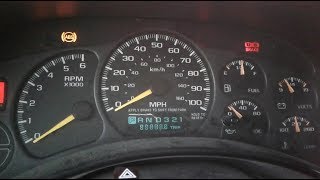
Code C2108 means the vehicle's main computer detected an electrical circuit problem in the Anti-lock Braking System (ABS) pump motor. This motor creates the hydraulic pressure needed to rapidly pulse the brakes and prevent wheel lock-up during a hard stop. When this fault triggers, the ABS, traction control, and stability control are disabled as a safety precaution, illuminating their dashboard warning lights.
Technical definition: The official SAE/ISO definition for C2108 varies by manufacturer, but most commonly indicates an electrical fault—such as low voltage, high resistance, or an open circuit—in the ABS pump motor's power circuit. For example, Chrysler defines it as "ABS Pump Motor Control Circuit Low." On a Mercedes-Benz W211, it indicates voltage supply to the solenoid valve relay is too low (around 6V instead of 11-14V). Critically, on 2009-2014 Hyundai Genesis models, this code points to a fault in the Electronic Control Suspension (ECS) compressor relay circuit, completely unrelated to the ABS.
Can I Drive With C2108?
Yes, But With Caution. You can drive, but your Anti-lock Braking System (ABS), traction control, and stability control are disabled. Your standard hydraulic brakes function, but you must brake carefully in wet or slippery conditions to prevent wheel lock-up. Studies show ABS significantly reduces stopping distances on wet pavement, so collision risk increases. Get the vehicle inspected immediately.
Common Causes
- Faulty ABS Control Module (Very Common) — The electronic module controlling the ABS pump fails internally. This happens when solder joints crack, internal fuses blow, or circuit board components break down from heat and vibration over time. This is a well-documented issue on many GM and Ford vehicles.
- Failed ABS Pump Motor (Common) — The electric motor driving the hydraulic pump seizes, burns out, or develops an internal electrical short. This is a common failure point within the integrated ABS pump and module assembly.
- Blown ABS Pump Fuse (Common) — The ABS pump motor uses a dedicated 30-60 amp fuse. If the motor fails and draws too much current, or if a short circuit exists in the power wire, this fuse blows to protect the system.
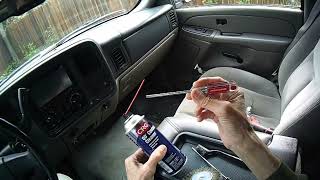
- Poor Ground Connection (Less Common) — The ABS module requires a solid ground connection to the vehicle's chassis or engine block. A corroded, loose, or broken ground strap causes high resistance and triggers pump motor circuit codes. This is a known issue on 2007-2014 GM trucks. 🎬 See how a loose ground triggers ABS lights on Silverados.
- Low System Voltage (Weak Battery/Alternator) (Less Common) — A failing battery, loose terminals, or a weak alternator causes low voltage across the entire vehicle. Sensitive electronic modules interpret this low voltage as a circuit fault and set a code.
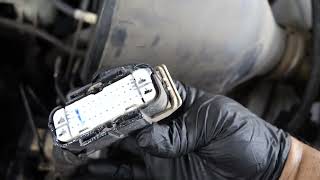
- Damaged Wiring or Connectors (Less Common) — The wiring harness leading to the ABS module becomes corroded, frayed, or damaged from road debris or battery acid. This creates excessive resistance or an open circuit.
- Faulty ABS Pump Relay (Rare) — A relay provides high-current power to the ABS pump. If this relay fails open or closed, it cannot supply correct voltage to the motor.
- Software Glitch (Rare) — The ABS control module's software contains errors that incorrectly trigger fault codes. Manufacturers issue Technical Service Bulletins (TSBs) for these, requiring a software update.
Symptoms
- ABS Light On — The ABS warning light on your dashboard illuminates and stays on.
- Traction Control / Stability Control Light On — Because traction and stability control rely on ABS hardware, their respective warning lights (ESC, VSC, DSC) also turn on.
- ABS Not Working — During a panic stop or on a slippery surface, the wheels lock up and skid. You will not feel the characteristic pulsing in the brake pedal. 🎬 Watch: How to identify and test for ABS pump failure.
- Unusual Noises from ABS Pump — The ABS pump motor runs continuously when not braking, or makes a buzzing, clicking, or grinding noise during the startup self-test.
- Brake Pedal Feel Change — The brake pedal feels unresponsive or spongy, though this is less common than dashboard warning lights.
Diagnostic Flowchart
Tap your situation to follow the diagnostic path that matches what you're seeing on this code.
Common Fixes & Costs
- Replace Blown ABS Fuse — Parts: $1-$15, Labor: $0, ~0.1 hr book time (DIY)
- Clean or Repair Ground Connection — Parts: $5-$20, Labor: $50-$150, ~1 hr book time (DIY)
- Rebuild the ABS Control Module — Parts: $150-$600, Labor: $150-$300, ~2 hr book time (Professional)
- Replace the Entire ABS Pump and Module Assembly — Parts: $800-$2800, Labor: $200-$850, ~3 hr book time (Professional)
- Repair Damaged Wiring or Connector — Parts: $20-$100, Labor: $150-$400, ~2 hr book time (Intermediate)
DIY vs Professional
- Replace Blown ABS Fuse — Beginner:
Tools: Fuse puller (often included in fuse box), owner's manual. - Clean or Repair Ground Connection — Beginner:
Tools: Socket set, wire brush, sandpaper, dielectric grease, flashlight. - Repair Damaged Wiring or Connector — Beginner:
Tools: Multimeter, wire strippers, wire cutters, heat shrink tubing, soldering iron or quality crimp connectors. - Rebuild the ABS Control Module — Beginner:
Tools: Specialized micro-soldering equipment, diagnostic test benches. - Replace the Entire ABS Pump and Module Assembly — Beginner:
Tools: Full socket set, line wrenches, torque wrench, advanced scan tool with brake bleeding function, brake fluid. - Replace Electronic Module Only (without opening brake lines) — Beginner:
Tools: Socket set, Torx drivers, patience.
Used vs. New Parts: Buying Guide
When a used part is worth it: A used ABS module makes sense for older, high-mileage vehicles where a new part exceeds the car's value. It is a viable option if you find a warrantied part from a reputable salvage yard.
Donor-vehicle mileage cap: roughly under 100000 miles for the part to have meaningful remaining life.
Donor quality checklist:
- Match the part number on the module EXACTLY. Different numbers, even from the same model year, are incompatible due to different vehicle options.
- Prefer donors from dry, rust-free regions to minimize the risk of corrosion on the unit.
- Ask about the donor vehicle; avoid parts from flood or fire-damaged cars.
Decision logic:
- If The problem is diagnosed as an internal electronic module fault (very common) → Choose to have your original module rebuilt. This is often the best value, costing $150-$600, and requires no VIN programming.
- If The entire pump and module assembly is seized or physically damaged → A new or remanufactured assembly is the best choice. A used assembly is a gamble, as the pump motor's condition is unknown.
- If Budget is the absolute primary concern on an older vehicle → A used module ($50-$300) is an option, but be aware it requires professional programming to clear the donor VIN and work with your vehicle.
Warranty tradeoff: Used parts typically offer a 30-90 day warranty. Remanufactured/rebuilt units often come with a 1-year to lifetime warranty. New OEM parts carry a 1-2 year warranty.
Worst-case if a used part fails: $300-$800 if a used part fails after installation, requiring repeat labor costs plus the price of another part.
What Happens If You Wait — Timeline
- Immediate: Code C2108 is set. ABS, Traction Control (TCS), and Stability Control (ESC) warning lights illuminate. All three safety systems are disabled. (MPG impact: 0%% · Added cost: $0)
- First emergency stop or slippery condition: Driver experiences wheel lock-up and potential skidding. The ability to steer while braking hard is lost. Studies show ABS reduces fatal multi-vehicle crashes on wet roads by 24%. (MPG impact: 0%% · Added cost: $500 - $15,000+ (Potential cost of an at-fault collision, from insurance deductible to total loss and liability).)
- Ongoing: Continued driving with disabled safety systems normalizes the risk for the driver, but the statistical probability of an accident where ABS would have been the deciding factor increases with every mile driven. (MPG impact: 0%% · Added cost: Risk of collision cost remains high. No physical damage occurs to other components from this specific code.)
- Post-Accident: If an accident occurs, an insurance investigation discovers that the vehicle was operated for an extended period with known, disabled safety systems. This is used to argue driver negligence, potentially affecting the claim's outcome. (MPG impact: 0%% · Added cost: Potentially the full, uncovered cost of vehicle repairs and third-party liability.)
Cost of Not Fixing It
- Immediate: Anti-lock braking (ABS), traction control (TCS), and electronic stability control (ESC) systems are disabled. Increased risk of wheel lock-up and skidding. (Added cost: N/A)
- Ongoing: Significantly increased risk of collision. The ability to steer during a panic stop is lost without ABS, drastically reducing accident avoidance capability. (Added cost: $500 - $15,000+ (Cost of insurance deductible or full cost of an at-fault collision).)
- Post-Accident: Insurance companies sometimes argue negligence and deny claims if they discover you knowingly drove with disabled safety systems. (Added cost: Potentially the full cost of vehicle repairs and liability for the accident.)
Diagnosis Steps
- Scan for All Codes with a Professional Tool
Use an advanced scan tool that communicates with the ABS module to read 'C' (Chassis) codes and confirm C2108. Note any 'U' (Network) codes like U0121, which point to a communication failure rather than a circuit fault.
Tools: Advanced OBD-II Scan Tool (Intermediate) - Check the ABS Fuses
Locate the large 30-60A fuse for the ABS pump motor and 5-10A fuses for the control module. Use a multimeter set to Ohms to test for continuity. A reading of OL means the fuse is blown, often indicating a failing pump motor drawing excessive current.
Tools: Owner's manual, fuse puller, multimeter (Beginner) - Inspect Battery and Charging System
Ensure battery terminals are clean and tight. Test battery voltage with a multimeter; it must be approximately 12.6V with the engine off and 13.5-14.5V running. A module voltage PID below 11.5V triggers faults.
Tools: Multimeter, wire brush, socket set (Beginner) - Visually Inspect the ABS Module, Wiring, and Grounds
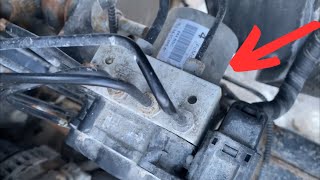
Locate the ABS module in the engine bay. Look for damage, corrosion on connector pins, or frayed wires. Trace the main ground wire to the chassis and ensure it is clean, tight, and rust-free.
Tools: Flashlight, socket set, wire brush (Beginner) - Perform an ABS Pump Actuator Test
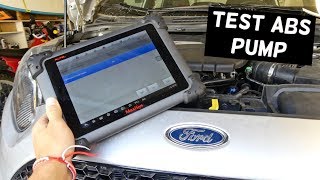
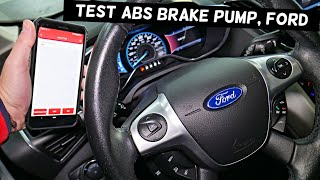
Navigate to the actuator test menu on your advanced scan tool. Command the ABS pump motor on. If it doesn't run, the motor, relay, or power/ground circuit is faulty. If it runs but the code returns, the module has an internal monitoring fault.
Tools: Advanced OBD-II Scan Tool (Intermediate) - Test for Power and Ground at the Module Connector
Disconnect the ABS module connector. Use a multimeter to test for constant battery voltage at the main power pins. Test ground pins against the negative battery terminal; resistance must be under 1.0 ohm. Missing power or ground requires wiring repair.
Tools: Multimeter, vehicle-specific wiring diagram (Advanced) - Perform a Voltage Drop Test
Connect the multimeter red lead to the battery positive and black lead to the ABS power pin. With the key on, the reading must be under 0.5V. Repeat for the ground pin to the battery negative. Higher readings indicate excessive circuit resistance.
Tools: Multimeter with long leads, vehicle-specific wiring diagram (Advanced) - Test the ABS Pump Motor Resistance
Disconnect the motor connector and measure resistance between its two terminals. Specifications vary, but typically read 0.5 to 5 ohms. Infinity (OL) indicates an open circuit, while zero indicates a direct short. Both mean the motor failed.
Tools: Multimeter, vehicle-specific service manual (Advanced) - Measure ABS Pump Motor Current Draw
Use a clamp-on ammeter around the pump's main power wire and activate the pump with a scan tool. A healthy motor has a high inrush current, settling to 8-20A. A continuous draw over 30A or an instantly blown fuse means the motor is seized or shorted.
Tools: Inductive amp clamp/meter, advanced scan tool (Advanced) - Monitor Live Data PIDs
View live data from the ABS module. The 'Module Supply Voltage' PID must remain stable between 12.0-14.5V. Low or erratic voltage confirms a power supply or ground problem.
Tools: Advanced OBD-II Scan Tool (Advanced)
When This Code Triggers (Freeze-Frame Conditions)
- System Status: Fault Present at Self-Test (The code is most often set when the ABS module performs its self-test.)
- Vehicle Speed: 0-15 mph (Fault often triggers either at key-on (0 mph) or during the low-speed dynamic self-test that many vehicles perform on the first drive after starting.)
- Module Voltage: 11.5-14.5V (The code sets if module voltage drops below a specific threshold (e.g., 11.5V) during the pump motor activation test, indicating a power supply or ground issue.)
- ABS Pump Motor Status: Commanded ON (The fault is logged when the module commands the pump motor to run for its self-test and does not detect the expected electrical response.)
Related Codes
- C1095 — Ford code for 'ABS Hydraulic Pump Motor Circuit Failure', describing the exact same problem as C2108. Diagnosis is identical.
- C0020 — Generic code for 'ABS Pump Motor Control'. C2108 is a more specific version of this fault. Diagnostic approach is identical.
- U0121 — Means 'Lost Communication With ABS Control Module'. C2108 means the module is online but detects a circuit fault. U0121 means the module is offline, pointing to complete module failure, power/ground loss, or a CAN bus network problem.
- C0110 — GM code for 'Pump Motor Circuit Malfunction'. Functionally identical to C2108.
Climate & Environmental Factors
- Road Salt / High Humidity (Rust Belt): Road salt acts as an electrolyte, dramatically accelerating corrosion of brake lines, ground connections, connector pins, and the ABS module housing. This causes the high resistance and open circuits that trigger C2108.
- Moisture and Freeze/Thaw Cycles: Water seeps into electrical connectors or cracked wire insulation. Freezing expands the water, pushing connections apart and causing intermittent open circuits. This explains why ABS lights often appear in cold weather and disappear when warm.
- Extreme Heat: High ambient temperatures and engine heat cause thermal stress on electronic components and solder joints inside the ABS control module. Repeated heating and cooling cycles crack these connections, leading to internal circuit faults.
How to Talk to a Mechanic About This Code
Say this: "I have an ABS light on and my scanner shows code C2108. Please check the ABS pump fuse, battery voltage, and the main ground connection for the module before recommending a full replacement. Also, confirm the code definition for my specific vehicle."
This signals to the shop that you are an informed customer. It directs them to perform the cheapest and most common diagnostic steps first, preventing them from immediately quoting an expensive ABS module replacement. Mentioning the vehicle-specific definition protects you from a misdiagnosis on makes like Hyundai.
Avoid saying:
- 'My ABS light is on, can you just fix it?'
- 'I think I need a new ABS module.' (Don't diagnose for them)
- 'Just do whatever it takes to get the light off.'
Questions to ask before authorizing the repair:
- Did you test the main power and ground circuits at the ABS module connector, and what were the voltage readings?
- Were you able to run the ABS pump motor using your scan tool's actuator test?
- If the module failed, what is the cost difference between replacing it with a new OEM part versus sending my original unit out for a rebuild?
- Does the repair estimate include bleeding the brake system and any necessary programming for the new module?
Where to Take It: Dealer vs Independent vs Chain
- Dealer:
Recommended only if the vehicle is under warranty or a known manufacturer campaign (like the Mercedes SBC warranty). Otherwise, it is the most expensive option.
Best for: Vehicles under warranty (especially Mercedes-Benz with the SBC extended warranty), Complex programming for a new module is required, Manufacturer-specific recalls or service campaigns are active
Downsides: Highest labor rates, often 1.5-2x more than independent shops., Will almost always recommend a brand new, expensive OEM part instead of a more affordable rebuild or remanufactured option. (Typical cost: +50% vs. baseline) - Independent Shop:
Best fit for most situations. A reputable independent shop with strong electrical diagnostic skills accurately diagnoses the fault and offers more cost-effective repair options like module rebuilding.
Best for: Out-of-warranty vehicles where cost is a major factor., Diagnosing common electrical faults like bad grounds or wiring., Customers who want the option of using remanufactured parts or rebuilding their original module.
Downsides: Shop quality and diagnostic capability vary; look for ASE certifications and good reviews., May not have the latest, most expensive manufacturer-specific diagnostic tools for programming. (Typical cost: +0% vs. baseline) - Chain Shop:
AVOID for initial diagnosis. This code requires advanced electrical troubleshooting beyond the scope of most chain shops. They are more likely to misdiagnose or recommend an unnecessary and expensive full assembly replacement.
Best for: Simple, clear-cut repairs like replacing a fuse or cleaning a ground connection if you can specifically direct them.
Downsides: Technician skill varies widely., Less likely to have the advanced scan tools needed for bi-directional control or module programming., Business model often encourages replacing parts rather than performing in-depth electrical diagnosis. (Typical cost: -10% vs. baseline)
When to Walk Away From the Repair
If the estimated repair cost exceeds 50% of the car's private-party value, seriously consider selling or trading in the vehicle instead of repairing it.
- Car worth $4000, fix is $2200: Walk away. The repair cost is over 50% of the vehicle's value.
- Car worth $12000, fix is $800: Fix it. This repair is well below the threshold and restores a critical safety feature.
- Car worth $3000, fix is $600: Borderline, but likely worth fixing. This is a common cost for a module rebuild. The repair is only 20% of the car's value and makes it safe to drive.
What Scan Tool You Need for This Code
Minimum: A scanner that reads and clears 'C' (Chassis/ABS) codes. A basic engine-only code reader is not sufficient.
A cheap, engine-only code reader won't see the C2108 code at all. To properly diagnose this, you need a tool that accesses the ABS module, views live data (like module voltage), and ideally performs bi-directional tests to command the ABS pump motor on.
Budget: BlueDriver Pro (~$100) — This Bluetooth scanner pairs with your phone and reads and clears ABS codes for most major makes. It provides live data, allowing you to monitor module voltage. It lacks bi-directional control, so you cannot command the pump on, but it is excellent for initial diagnosis.
Mid-range: Foxwell NT510 Elite / Innova 5610 (~$150) — These handheld scanners offer full-system diagnostics, including ABS. Crucially, they provide bi-directional control (Active Tests), allowing you to command the ABS pump motor to run. This is a critical diagnostic step to determine if the motor is functional.
Professional: Autel MaxiCOM MK808 / MP808 (~$500) — A professional-level tablet scanner that provides full bi-directional control to run the ABS pump motor test and perform the automated ABS brake bleed procedure after a repair. It also offers advanced features like module coding and programming necessary if you replace the ABS module with a new unit.
Rent vs buy: For a one-time diagnosis, some auto parts stores rent out scanners, but they may lack required ABS capabilities. Given the importance of bi-directional control for this code, buying a mid-range scanner like a Foxwell or Innova is a better investment if you plan to do any serious DIY work.
How to Clear the Code After You Fix It
- Perform the necessary physical repair (e.g., replace fuse, repair ground, replace module).
- Reconnect the battery if it was disconnected for the repair.
- Use an advanced OBD-II scan tool to access the ABS controller and clear the C2108 fault code.
- Perform the ABS pump actuator test with the scan tool to confirm the pump now runs on command.
Drive cycle (~10 minutes): Start the vehicle, drive forward, and accelerate above 15 mph to trigger the ABS module's dynamic self-test. If the repair was successful, the ABS light remains off.
Readiness monitors affected: None. ABS codes do not affect emissions readiness monitors.
Watch out for:
- Simply disconnecting the battery will not reliably clear a hard ABS fault; the code returns as soon as the module runs its next self-test.
- Using a basic code reader that only accesses the powertrain module cannot clear a 'C' (chassis) code.
- Forgetting to perform a final scan after the test drive to ensure no codes returned.
Will This Fail Emissions / State Inspection?
No — by itself this code doesn't fail OBD inspection (but it can keep readiness monitors from setting, which causes a separate fail).
- California: An illuminated ABS light will NOT cause a vehicle to fail its smog inspection or a general vehicle safety systems inspection. However, it is a failure point for a more stringent 'Brake and Lamp Inspection' required for salvage vehicles.
- New York: An illuminated ABS warning light is NOT a cause for rejection during the annual safety inspection. It is considered an advisory item.
- Texas: An illuminated amber ABS light is explicitly listed as NOT being a cause for rejection in the Texas state safety inspection. A red 'BRAKE' warning light, however, is an automatic failure.
Most Commonly Affected Vehicles
- Mercedes-Benz E-Class, SL-Class (2003-2006) — These vehicles use a Sensotronic Brake Control (SBC) system. A C2108 code indicates an internal fault or that the unit reached its pre-programmed service life limit based on brake pedal actuations.
- Chrysler / Dodge / Jeep Various (Grand Cherokee, Ram, Durango) (2005-2015) — Many models from this era are known for ABS module failures that trigger pump motor circuit codes. Real-world repair costs for a Dodge Ram ABS module replacement range from $500 for a remanufactured part to over $1,200 for a new OEM unit.
- Ford F-150, Explorer (2004-2012) — The 2004-2008 F-150s are commonly cited for internal ABS module failures. For the 2009-2012 models, wiring problems are also a factor. A full replacement at a dealer exceeds $1,500, making rebuilding a popular option.
- Chevrolet / GMC Silverado, Sierra, Tahoe, Suburban (2007-2014) — Prone to ground wire issues, especially the main engine-to-chassis and PCM grounds located on the engine block or frame rail, which cause a host of intermittent electrical problems including ABS faults.
- Subaru Outback, Legacy (2015-2021) — These vehicles are sensitive to low battery voltage, which triggers various 'C' codes. Always rule out a weak battery before condemning the expensive ABS module.
- Toyota Prius (2010-2015) — While typically associated with codes like C1391 or C1256, these vehicles are known for failures of the brake pump and accumulator assembly. The symptoms are nearly identical to a C2108 fault on other makes.
- Hyundai Genesis (2009-2014) — CRITICAL NOTE: On these specific models, C2108 refers to the Electronic Control Suspension (ECS) compressor relay, not the ABS. Diagnosing this as a brake fault leads to incorrect and expensive repairs.
Manufacturer-Specific Notes
- Hyundai: Uses C2108 to indicate a fault with the 'Compressor Relay' for the Electronic Control Suspension (ECS), not the brakes. Diagnosing this as a brake fault leads to incorrect repairs.
- Mercedes-Benz: On 2003-2006 vehicles with SBC brakes, C-codes often point to the SBC hydraulic unit reaching its pre-set service life. Mercedes issued a 25-year, unlimited mileage extended warranty for this. Check VMI for coverage before paying.
- General Motors (GM): Known for ABS control module failures due to cracked solder joints. Highly susceptible to poor ground connections on 2007-2014 trucks, where a corroded frame rail ground causes intermittent ABS faults.
- Honda: The code P2108 refers to a Throttle Actuator Control (TAC) system fault. It is a Powertrain ('P') code, completely unrelated to the ABS. Verify the code prefix.
Real Owner Stories
2007 Chevy Silverado, ~150K miles - Intermittent ABS Light
Owner reported the ABS and Brake warning lights came on intermittently, especially after hitting bumps. Code C2108 was present along with other communication codes.
Outcome: Found the main EBCM ground wire on the frame rail under the driver's door was corroded and loose. Cleaned the connection point to bare metal, re-attached the ground wire securely, and cleared the codes. The problem was solved for under $10 in materials.
Lesson: On GM trucks from this era, always check the frame ground connection for the ABS module before spending hundreds on a new module. It is a very common and cheap fix for intermittent electrical faults.
2005 Mercedes E320 (W211) - "Brake Service" Message
A white 'Brake Service - Visit Workshop' message appeared on the dash. A scan with a Mercedes-specific tool revealed code C2108 and C249F, indicating the SBC unit reached its service life limit.
Outcome: Took the car to a Mercedes-Benz dealership. The dealer confirmed the codes were covered under the extended warranty. The entire SBC hydraulic unit was replaced with a new part, and the owner only paid for the initial diagnostic fee.
Lesson: If you own a 2003-2006 Mercedes with SBC brakes, do not immediately pay for an expensive repair. Check with a dealer to see if the fault is covered by the 25-year unlimited mileage warranty first.
2010 Hyundai Genesis 4.6 - ABS/ESC Lights On
ABS and ESC warning lights illuminated. A generic scan tool pulled code C2108, leading the owner to believe the ABS pump or module failed.
Outcome: Instead of a brake repair, the owner located the relay for the Electronic Control Suspension (ECS) in the fuse box. They swapped it with an identical relay from a non-critical system and the code disappeared. A new relay cost about $20.
Lesson: A code number is not universal. Always verify the specific definition for your exact make and model. Misinterpreting C2108 on a Hyundai Genesis leads to attempting a very expensive and incorrect brake system repair.
2006 Ford F-150 - ABS light on, fuse blows instantly
The ABS light was on. The owner checked the 40A fuse for the ABS pump and found it was blown. They replaced the fuse, and it blew instantly as soon as the key was turned.
Outcome: This test confirmed the short was not in the vehicle's wiring harness, but within the ABS module/pump assembly itself. The internal pump motor shorted out. The owner opted to replace the entire ABS assembly with a remanufactured unit for around $400 plus their own labor, saving over $1000 compared to a new part from the dealer.
Lesson: If a high-amperage fuse blows immediately upon replacement, it indicates a dead short. You can isolate the fault by disconnecting components. Disconnecting the ABS module and seeing if the fuse holds is a key step to confirm the module itself is the culprit.
How to Prevent This Code From Triggering
- Perform a complete brake fluid flush every 2-3 years. (Every 2-3 years) — Brake fluid absorbs moisture from the air. This water contamination lowers the fluid's boiling point and causes corrosion inside the delicate valves and passages of the ABS hydraulic unit, leading to seizure.
- Periodically clean and inspect main battery and chassis ground connections. (Every 2 years or during battery replacement) — Corrosion on ground points creates high resistance, causing voltage drops that starve electronic modules like the ABS controller, triggering false circuit codes.
- Clean wheel speed sensor mounting areas and connectors. (During any brake job or tire rotation) — While not a direct cause of C2108, keeping the ABS sensors and their wiring clean prevents other ABS faults that stress the system. Applying dielectric grease to connectors seals out moisture.
- Address battery and alternator issues promptly. (As needed) — Operating the vehicle with low system voltage (below 12V) causes unpredictable behavior and triggers fault codes in sensitive electronics like the ABS module long before it causes a no-start condition.
- For vehicles with the ABS module near the exhaust, consider a heat shield. (Once) — On some designs, the ABS module is mounted near the exhaust manifold. Constant high heat breaks down internal solder joints. A simple fabricated aluminum heat shield significantly lowers the module's operating temperature.
Frequently Asked Questions
Can I just replace the fuse and fix the C2108 code?
You can, but a blown ABS pump fuse usually means the pump motor is failing and drawing too much current. The new fuse will likely blow again soon. It is a cheap diagnostic step, but prepare for a larger repair.
What are the most common misdiagnoses for a C2108 code?
The biggest mistake is ignoring manufacturer-specific definitions, like replacing a Hyundai Genesis ABS module when the actual problem is the air suspension relay. Another error is replacing the module when a weak battery or corroded ground wire is the true culprit.
Is it safe to drive with code C2108?
Your normal hydraulic brakes work, but you lack anti-lock brakes (ABS), traction control, and stability control. You must brake cautiously on slippery roads to prevent wheel lock-up and skidding.
What is the difference between replacing and rebuilding the ABS module?
Replacing installs a brand new or used unit, which is expensive and requires dealer programming. Rebuilding sends your original module to a specialist who repairs the internal electronics for $150-$600, requiring no programming upon return.
Why did my traction control and stability control lights also come on?
Traction control and stability control rely on the ABS hardware to function. When the ABS module detects a critical fault like C2108, it disables all three systems as a safety measure.
My mechanic quoted me $2,000 to fix this. Is that a rip-off?
A $1,500 to $2,800 quote for a full ABS pump and module replacement at a dealership is standard. Ask your mechanic about using a remanufactured part or rebuilding your original module to save over $1,000.
What does 'ABS Pump Motor Circuit Low' mean?
This specific definition means the ABS control module detected voltage in the pump motor's power circuit below the expected level. This is caused by a weak battery, high wiring resistance, a poor ground, or an internal module fault.
Key Takeaways
- Code C2108 disables your anti-lock brakes and traction control due to an electrical fault in the ABS pump motor circuit.
- Check the 30-60 amp ABS pump fuse and chassis ground connections before replacing the expensive ABS control module.
- Verify the exact code definition for your vehicle, as C2108 indicates an air suspension failure on 2009-2014 Hyundai Genesis models rather than a brake issue.
- Rebuilding your original ABS control module costs between $150 and $600, saving over $1,000 compared to a new dealer replacement and avoiding reprogramming fees.
Helpful Videos


The information in this article is provided for general reference and educational purposes only. Vehicle specifications, procedures, and part compatibility can vary by production date, trim level, and region. Always consult your vehicle's factory service manual and verify part numbers before purchasing or performing repairs. Safety-critical components such as airbags, seat belts, and braking systems should be installed by a qualified professional.
- 🎬 Helpful Videos
- What Does C2108 Mean?
- Can I Drive With C2108?
- Common Causes
- Symptoms
- Diagnostic Flowchart
- Common Fixes & Costs
- DIY vs Professional
- Used vs. New Parts: Buying Guide
- What Happens If You Wait — Timeline
- Cost of Not Fixing It
- Diagnosis Steps
- When This Code Triggers (Freeze-Frame Conditions)
- Related Codes
- Climate & Environmental Factors
- How to Talk to a Mechanic About This Code
- Where to Take It: Dealer vs Independent vs Chain
- When to Walk Away From the Repair
- What Scan Tool You Need for This Code
- How to Clear the Code After You Fix It
- Will This Fail Emissions / State Inspection?
- Most Commonly Affected Vehicles
- Manufacturer-Specific Notes
- Real Owner Stories
- 2007 Chevy Silverado, ~150K miles - Intermittent ABS Light
- 2005 Mercedes E320 (W211) - "Brake Service" Message
- 2010 Hyundai Genesis 4.6 - ABS/ESC Lights On
- 2006 Ford F-150 - ABS light on, fuse blows instantly
- How to Prevent This Code From Triggering
- Frequently Asked Questions
- Can I just replace the fuse and fix the C2108 code?
- What are the most common misdiagnoses for a C2108 code?
- Is it safe to drive with code C2108?
- What is the difference between replacing and rebuilding the ABS module?
- Why did my traction control and stability control lights also come on?
- My mechanic quoted me $2,000 to fix this. Is that a rip-off?
- What does 'ABS Pump Motor Circuit Low' mean?
- Key Takeaways
- 🎟️ Get 5% Off