

C2100 on 2021 Jeep Wrangler: Battery Voltage Low Causes and Fixes
On a 2021 Jeep Wrangler, code C2100 almost always indicates a problem with the vehicle's dual-battery system. The most common cause is a failing auxiliary battery, which supports the start-stop system, leading to low voltage codes. Replacing the faulty battery (often both main and auxiliary) is the typical fix, as the failure of one can damage the other.
- C2100 means the ABS module has detected low system voltage.
- On a 2021 Wrangler, the first suspect should always be the auxiliary battery, followed by the main battery.
- Symptoms often include an ABS light and problems with the Engine Start-Stop (ESS) system.
- A simple voltage check may not be enough; a load test on both batteries is the best diagnostic step.
- Do not replace the ABS module until you have definitively ruled out all power supply issues.
What's Unique About the 2021-2021 Jeep WRANGLER

The 2021 Jeep Wrangler (JL generation) uses a dual-battery setup to manage its Engine Start-Stop (ESS) system. It has a primary battery for starting and running the vehicle, and a smaller auxiliary battery to power electronics when the engine shuts off at a stop. This system is a frequent source of electrical issues. A failing auxiliary battery is a very common trigger for code C2100, as it can put a drain on the main battery or fail to provide adequate voltage, causing a cascade of low-voltage warnings across various modules. The system also includes an Intelligent Battery Sensor (IBS) on the main battery's negative terminal, which monitors the state of charge. A faulty or uncalibrated IBS can also lead to charging problems and low voltage codes.
Diagnostic Flowchart

Tap your situation to follow the diagnostic path that matches what you're seeing on this vehicle.
Symptoms You May Notice

- ABS warning light is on
- Traction Control or Stability Control (ESC) light is on
- "Service Start/Stop System" message on the dash
- Engine Start-Stop (ESS) feature stops working.
- "Aux Switches Not Available, Battery Charging" message.
- Slow or hesitant engine cranking.
- Multiple seemingly unrelated warning lights (a "Christmas tree" dash).
- No-start condition, where accessories power on but the engine won't turn over.
- Remote start fails to work.
- Key fob not detected warnings intermittently.
- Replacing the ABS module. The module is usually just reporting the low voltage problem, it is rarely the cause of it.
- Replacing only the main battery when the auxiliary battery is the root cause of the drain.
- Replacing batteries without checking the alternator's output, leading to the new batteries being drained by a faulty charging system.
Most Likely Causes

- Failing Auxiliary Battery 🔴 High Probability The auxiliary batteries on JL Wranglers are known to have a shorter service life (2-4 years) and their failure is a very common cause of widespread electrical issues and low voltage codes. Its failure directly impacts the ESS system and can drain the main battery.
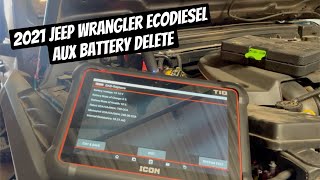
How to confirm: Test the auxiliary battery's voltage with a multimeter; a healthy one should read around 12.6V with the engine off. A load test is the most definitive method. 🎬 Watch: How to test your batteries and explore an auxiliary delete. Often, its failure is indicated by the ESS system becoming unavailable and multiple dash warnings. Accessing it for testing requires removing the main fuse box (PDC) or the passenger-side inner fender liner.
Typical fix: Replace the auxiliary battery. Many owners and shops recommend replacing both the main and auxiliary batteries at the same time, as the failure of one can strain and damage the other.
Est. part cost: $100-$200 - Failing Main Battery 🔴 High Probability A failing main battery cannot hold a sufficient charge, directly causing low system voltage. A bad auxiliary battery can also drain and damage the main battery over time, leading to premature failure.
How to confirm: Perform a load test on the main battery. Most auto parts stores can do this for free. Voltage should be ~12.6V or higher when the engine is off. A reading below 12.4V after resting is a strong indicator of a weak battery.
Typical fix: Replace the main battery. It is highly recommended to replace the auxiliary battery at the same time.
Est. part cost: $200-$400 - Loose or Corroded Battery Terminals/Cables 🟡 Medium Probability
How to confirm: Visually inspect the terminals on both the main and auxiliary batteries for white or bluish crust (corrosion). Check that all cable connections, including the ground points and the Intelligent Battery Sensor (IBS) on the negative post, are clean and tight.
Typical fix: Disconnect the batteries, then clean the terminals and cable ends with a wire brush and battery terminal cleaner. Ensure all connections are securely fastened upon reassembly.
Est. part cost: $5-$15 - Failing Alternator ⚪ Low Probability
How to confirm: With the engine running, use a multimeter to check the voltage at the battery terminals. A healthy alternator should produce between 13.5 and 14.5 volts (it may read higher, up to 14.7V, if the batteries are very discharged). If the voltage is below 13.2V with the engine running, the alternator is likely faulty.
Typical fix: Replace the alternator.
Est. part cost: $300-$600
Rare But Worth Checking
- Parasitic Electrical Draw: An aftermarket accessory or a shorted module can drain the battery when the vehicle is off. This can be diagnosed by measuring the amperage draw from the battery with the vehicle turned off and in a 'sleep' state (typically after 90 minutes). A normal draw should be under 30mA.
- Faulty ABS Module Power or Ground Wire: A specific wire providing power or ground to the ABS module could be damaged or corroded, causing the module to see low voltage even if the rest of the system is fine. This can sometimes happen after pressure washing the engine bay.
- Faulty Intelligent Battery Sensor (IBS): The IBS on the negative terminal can fail or lose calibration, causing the vehicle to misjudge the battery's state of charge and undercharge it. This can lead to persistent low voltage issues even with new batteries. Sometimes resetting the IBS by disconnecting it for 10-15 minutes can resolve software glitches.
Diagnosis Steps
- Read all fault codes from all vehicle modules using a capable OBD-II scanner. Note all codes related to voltage, especially C2100, C212A, and P00FD. 🎬 Watch: A quick overview of diagnosing the C2100-16 low voltage code.
- Visually inspect the main and auxiliary battery terminals for corrosion or looseness. Clean and tighten as needed. Ensure the Intelligent Battery Sensor (IBS) is securely connected to the negative post.
- With the engine off, measure the static voltage of the main battery. It should be at least 12.4V. A reading below this suggests a weak or discharged battery.
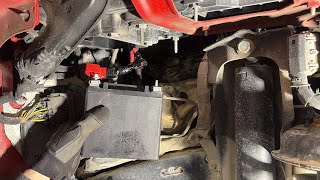
- Perform a load test on both the main and auxiliary batteries. This is the most reliable way to confirm battery health. Accessing the auxiliary battery for testing is complex and typically requires either removing the Power Distribution Center (fuse box) or the passenger-side inner fender liner.
- Start the engine and measure the voltage at the main battery terminals. It should be between 13.5V and 14.5V. If it's lower, the alternator may be faulty.
- If batteries and alternator test good, perform a parasitic draw test to check for any components draining the battery while the vehicle is off. The draw should be below 30mA after the vehicle has been off for 90 minutes.
- If new batteries are installed, ensure the Intelligent Battery Sensor (IBS) is allowed to recalibrate. This can require leaving the vehicle undisturbed for 4-8 hours or performing several drive cycles to allow it to relearn the new battery's state of charge.
- If the code persists, inspect the wiring harness and connector at the ABS module for damage, corrosion, or a poor connection, particularly if the engine bay was recently cleaned.
Parts You'll Likely Need
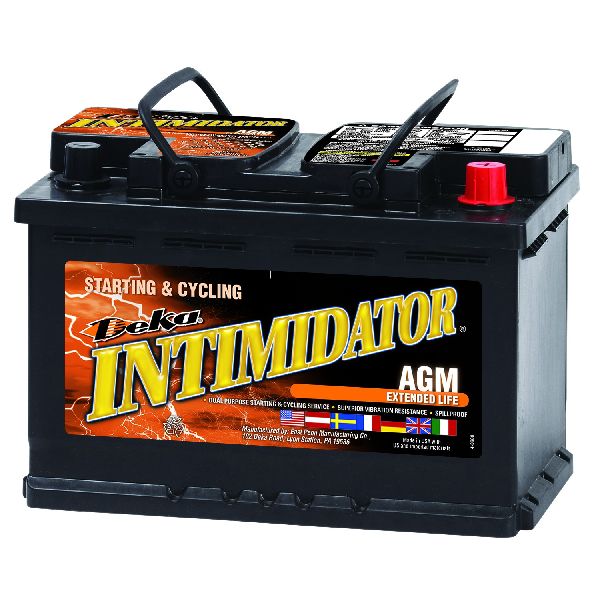
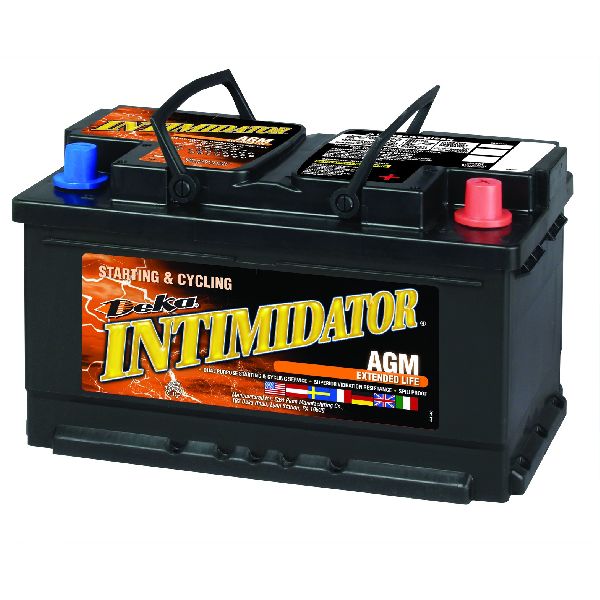
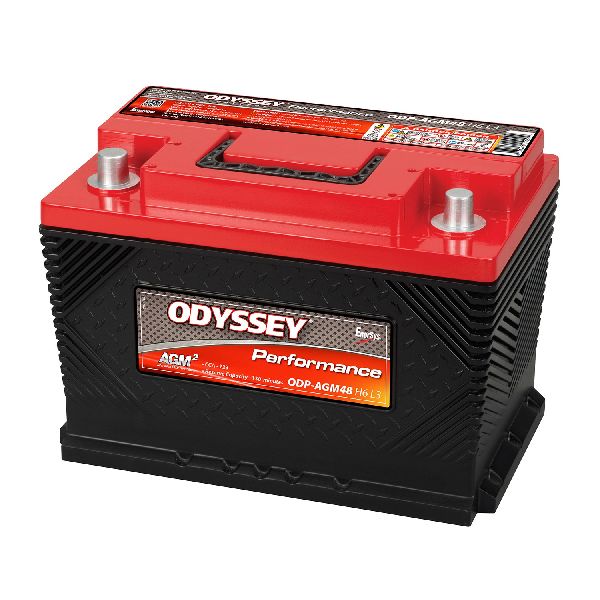
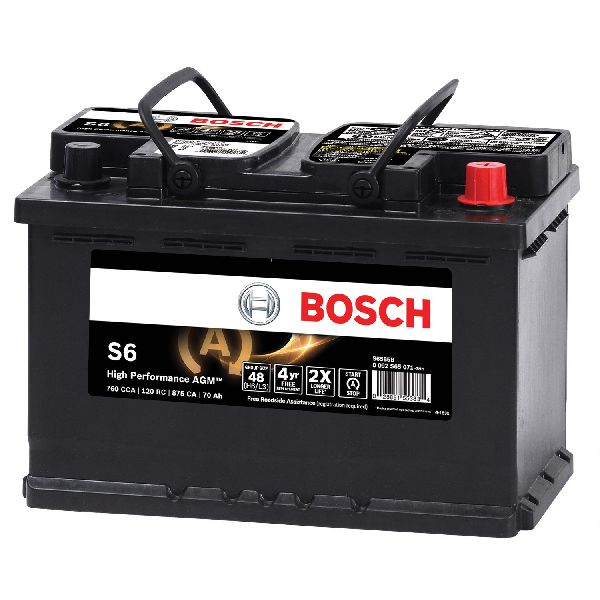
- Auxiliary Battery
(OEM #68647042AA, 56029759AB)— This is the most frequent failure point on JL Wranglers that leads to low voltage codes like C2100. Part numbers can vary, so VIN confirmation is recommended.
Trusted brands: Mopar, ACDelco, Duralast, DieHard
OEM price range: $150-$250
Aftermarket price range: $100-$200
Related Codes That Often Appear With This One
- C2129-00 — Also means 'Battery Voltage' low, often set by a different module for the same root cause. Cited in TSB #0810621A.
- U3007-00 — Control Module Input Power 'B' Circuit/Open. This indicates a power supply issue to a module, consistent with a low voltage event. Cited in TSB #0810621A.
- C05A4-00 — Wheel Speed Sensors Supply Circuit Low. The sensors are powered by the ABS module, which will report this code if its own supply voltage is too low. Cited in TSB #0810621A.
- B210D — Another code for 'Battery Low Voltage', often logged by the Body Control Module (BCM).
- C212A-16 — System Voltage-Circuit Voltage Below Threshold, another code logged by the ABS system indicating low voltage.
- P00FD — Battery 'B' State of Charge Performance. This code specifically points to a problem with the auxiliary battery.
Technical Service Bulletins (TSBs) & Recalls
- 0810621A / 0810621REVA: Notes that C2100 (Battery Voltage Low) may be found with other DTCs like U3007-00, C05A4-00, C2129-00, and U3006-00, indicating a potential widespread low voltage condition. The bulletin involves testing and possibly replacing the 12V battery.
- S1408000384 Rev. C: Discusses the function of the Intelligent Battery Sensor (IBS) and notes that it does not need to be replaced when batteries are changed, but it does require a recalibration period (2-4 hours of vehicle sleep) to adapt to the new battery's state of charge.
Platform-Specific Known Issues
- The dual-battery system for the Engine Start-Stop (ESS) feature is a known weak point. The smaller auxiliary battery often fails prematurely, causing a variety of electrical faults and warning lights.
- A failing auxiliary battery can drain the main battery, leading to a no-start condition even if the main battery is relatively new.
- TSB #0810621REVA lists C2100 as one of several low-voltage DTCs that can appear together, pointing to a systemic electrical issue rather than a single component failure.
- Replacement of the auxiliary battery is more difficult than the main battery, as it is located underneath the Power Distribution Center (fuse box) in the engine bay and requires significant disassembly to access. An alternative method involves removing the passenger side fender liner.
Mechanic-Grade Diagnostic Values
- Parasitic Current Draw (Ignition Off Draw) — expected: Under 35-45mA after all modules go to sleep.. Failure: A sustained draw above 50mA after 60-90 minutes indicates a parasitic drain. Initial draw can be high (over 1A) but should drop in stages. A common intermediate level is ~110-140mA before finally dropping to the sleep state value of ~17-20mA.
- ABS Module Main Power and Ground — expected: The two thickest wires in the ABS module connector should show full battery voltage (B+), and the two corresponding thick ground wires should have near-zero resistance to chassis ground.. Failure: Absence of voltage on the power wires or high resistance on the ground wires points to a wiring fault, not a module or battery failure. This is the root cause if the C2100 code appears instantly on startup but not with the key on, engine off.
Scan Tool Commands That Help
- wiTECH or capable bidirectional scanner (e.g., Launch, Autel): BMS Reset / Battery Monitor Sensor Reset — After replacing the main or auxiliary battery. This function informs the vehicle's modules that a new battery has been installed, resetting the learned state-of-charge data and ensuring proper charging strategy.
- wiTECH: WIN REPLACED — This is used when replacing the Wireless Ignition Node (WIN), but the procedure notes the necessity of a stable power supply from a battery charger during any module programming, reinforcing the importance of correct system voltage.
- JScan or other capable bidirectional scanner: ABS Live Data - Wheel Speed Sensors — While C2100 is a voltage code, it is often accompanied by wheel speed sensor codes like C05A4-00. Viewing live data for all four wheel speed sensors simultaneously while driving can confirm if the sensors are reading correctly. All should match closely.
Wiring & Ground Locations
- ABS Module Connector — The ABS module is located on the driver's side of the engine bay, below the brake master cylinder. The main electrical connector has a locking tab that must be released to pull it off.. This is the point where power and ground are supplied to the module. Technicians test the main power and ground pins here to confirm if the module itself is receiving proper voltage before condemning the module. A poor connection or corroded pin can cause C2100.
- G107 — On the driver's side inner fender, right behind the airbox. It shares a bolt with ground G106.. On some Jeep models (specifically WJ shown in source, but principle applies), G107 is the dedicated ground for the anti-lock brake system. A loose or corroded ground here would cause the ABS module to lose its reference, potentially setting voltage-related codes.
- G201 and G203 — Located under the kick panel in the passenger footwell.. These are major interior ground points. While not directly for the ABS module, many other modules ground here. A fault at these locations can cause network-wide communication issues that can sometimes manifest as voltage codes in sensitive modules like the ABS.
- G104 — Located on the passenger side of the engine, near the catalytic converter, sometimes under a heat shield. On some models, it's a ground strap from the firewall to the engine block.. This is a critical engine and sensor ground. A failure here is known to cause O2 sensor heater circuit codes but demonstrates how a single corroded ground point can cause multiple, seemingly unrelated electrical faults.
Real Owner Repair Stories
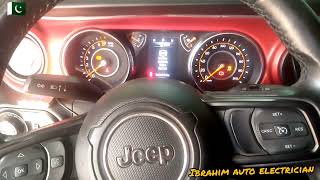
- YouTube channel (Jeep Wrangler (generation not specified, but JL/JT symptoms)) — ABS and Traction Control lights are on at engine start, but not with key-on-engine-off. Fault code C2100-16 (Battery Voltage Low - Circuit) is active.
❌ Tried (didn't work) Initial diagnosis pointed towards batteries or alternator, but the specific behavior (code only appearing when started) suggested a circuit issue.
✅ What actually fixed it The technician found that one of the main power wires in the ABS module connector was not supplying voltage. The fault was traced to a break in the wiring harness. A temporary fused jumper wire from a reliable power source to the correct pin on the ABS connector was run to confirm the diagnosis, which immediately resolved the code and turned off the warning lights. The permanent fix was to open the harness and repair the broken wire.
OEM Part Supersession History
bbaux101aa→BBAUX101AB— Likely a revision for improved reliability or change in supplier for the Mopar auxiliary battery.bbaua200ad→BBAUX101AB— Part consolidation and revision.
Helpful Videos

Used OEM Parts in Stock


New Aftermarket Parts Available


The information in this article is provided for general reference and educational purposes only. Vehicle specifications, procedures, and part compatibility can vary by production date, trim level, and region. Always consult your vehicle's factory service manual and verify part numbers before purchasing or performing repairs. Safety-critical components such as airbags, seat belts, and braking systems should be installed by a qualified professional.
- Jeep WRANGLER:
- 🎬 Helpful Videos
- 🛍️ Shop This Part
- What's Unique About the 2021-2021 Jeep WRANGLER
- Diagnostic Flowchart
- Symptoms You May Notice
- Most Likely Causes
- Rare But Worth Checking
- Diagnosis Steps
- Parts You'll Likely Need
- Related Codes That Often Appear With This One
- Technical Service Bulletins (TSBs) & Recalls
- Platform-Specific Known Issues
- Mechanic-Grade Diagnostic Values
- Scan Tool Commands That Help
- Wiring & Ground Locations
- Real Owner Repair Stories
- OEM Part Supersession History
- 🎟️ Get 5% Off