

OBD-II Code C2100: Battery Voltage Low
The Ultimate 2026 Guide to What C2100 Means, Why It Triggers, and How to Fix It
- Code C2100 triggers when the Anti-Lock Brake System (ABS) module detects power supply voltage dropping below 9.7 volts, disabling your ABS and traction control.
- Test the battery and alternator first; a failing battery or an alternator outputting less than 13.5 volts causes 80% of C2100 codes.
- Perform a voltage drop test on the ABS module's main ground wire before replacing any expensive parts, ensuring resistance is under 0.2 volts.
- Reset the Battery Management System (BMS) after installing a new battery on 2011+ Ford and GM vehicles to prevent the C2100 code from immediately returning.
What Does C2100 Mean?

Code C2100 indicates that a specific control module, most often the Anti-lock Brake System (ABS) module, detects its power supply voltage dropping below a safe operating threshold. This prevents the module from working correctly, forcing it to shut down and trigger dashboard warning lights. The voltage threshold is typically between 7.5 and 9.7 volts, depending on the manufacturer.
Technical definition: The Anti-Lock Brake (ABS) Module detects that the system's power supply voltage is below a specified threshold (typically <9.7V) for a set period of time.
Can I Drive With C2100?
Yes, But With Caution. Yes, but it is strongly discouraged. Driving with this code means your Anti-lock Braking System (ABS) and Traction/Stability Control are disabled. This significantly increases your stopping distance in an emergency and makes the vehicle unstable in slippery conditions. The underlying electrical problem also creates a high risk of the vehicle stalling or failing to start, leaving you stranded.
Common Causes

- Failing or weak vehicle battery (Very Common) — A battery that no longer holds a sufficient charge fails to power safety modules requiring stable voltage. Age, manufacturing defects, or deep discharging causes this voltage drop during operation.
- Faulty charging system (bad alternator) (Common) — The alternator charges the battery and powers electronics while the engine runs. A failed alternator or bad voltage regulator depletes the battery's charge, dropping system voltage and triggering the code.
- Corroded or loose battery terminals (Common) — Corrosion, looseness, or damage at the main battery posts 🎬 See this step-by-step guide on cleaning corroded battery terminals. creates high electrical resistance. This restricts current flow and causes an immediate voltage drop at the modules.
- Poor chassis or engine ground connection (Common) — A loose or rusted main ground strap from the engine or chassis to the negative battery terminal causes a significant voltage drop across the entire electrical system.
- Parasitic electrical drain (Common) — A stuck relay or module failing to sleep drains the battery overnight. 🎬 Learn how to test for parasitic draws like a professional. This creates a low voltage condition upon startup, triggering C2100 even if the battery and alternator are healthy.
- Faulty Totally Integrated Power Module (TIPM) (Less Common) — Chrysler, Dodge, and Jeep TIPMs (the main fuse/relay center) fail internally, causing erratic power delivery to various modules, including the ABS system.
- Moisture intrusion in electrical connectors (Less Common) — Water from high-pressure car washes or deep puddles penetrates key electrical connectors, such as the ABS module or under-hood fuse box. This causes a temporary short and voltage drop.
- Blown main fuse or fusible link (Rare) — The high-amperage fuse or fusible link protecting the ABS circuit corrodes or fails, restricting power to the ABS module.
- Faulty Anti-Lock Brake System (ABS) module (Rare) — The ABS module fails internally, incorrectly reading the system voltage or creating a short circuit that pulls the voltage down. Rule out all other causes before replacing this expensive part.
Symptoms

- ABS, Traction, or Stability Control warning lights are on — The ABS module sets this code and shuts down when it detects low voltage. Because Traction and Stability Control rely on the ABS module, all three warning lights illuminate simultaneously.
- Vehicle is hard to start or won't start — If a weak battery or failing alternator causes the code, you experience slow cranking or a no-start condition because voltage is too low to turn the starter motor.
- Multiple random warning lights on dashboard — Low voltage causes communication errors across vehicle networks, creating a 'Christmas tree' effect where unrelated system lights (airbag, 4WD, power steering) turn on at once.
- Check Engine Light is on — A fault in the ABS system triggers the main Check Engine Light on many vehicles to alert the driver of a critical safety system failure.
- Brake pedal feels hard — On systems using an electric brake booster pump, low voltage disables the pump, resulting in a hard brake pedal and increased stopping effort.
Diagnostic Flowchart
Tap your situation to follow the diagnostic path that matches what you're seeing on this code.
Common Fixes & Costs
- Replace vehicle battery — Parts: $150-$300, Labor: $20-$80, ~0.5 hr book time (DIY)
- Clean or replace battery terminals and cable ends — Parts: $10-$30, Labor: $50-$100, ~0.8 hr book time (DIY)
- Replace alternator — Parts: $250-$600, Labor: $150-$400, ~2.5 hr book time (Intermediate)
- Diagnose and Repair Parasitic Draw — Parts: $10-$100, Labor: $150-$450, ~2.5 hr book time (Professional)
- Repair or Replace TIPM (Chrysler/Dodge/Jeep) — Parts: $350-$600, Labor: $100-$200, ~1.2 hr book time (Professional)
- Replace ABS control module — Parts: $700-$1300, Labor: $150-$250, ~2 hr book time (Professional)
DIY vs Professional
- Replace vehicle battery — Beginner:
- Replace alternator — Beginner:
- Replace ABS control module — Beginner:
- Repair or Replace TIPM — Beginner:
Used vs. New Parts: Buying Guide
When a used part is worth it: A used OEM alternator from a low-mileage donor vehicle is a good value for older cars. It is often higher quality than a cheap, new aftermarket part. A remanufactured alternator from a reputable brand is the best middle-ground.
Donor-vehicle mileage cap: roughly under 80000 miles for the part to have meaningful remaining life.
Donor quality checklist:
- Verify the donor vehicle's mileage is under 80,000 miles.
- Ensure the part number matches exactly.
- Purchase from a salvage yard offering a 30-90 day warranty.
- Visually inspect for casing damage or a bent pulley.
Decision logic:
- If Vehicle is less than 7 years old OR you plan to keep it long-term → Buy a new OEM or high-quality remanufactured alternator for maximum reliability.
- If Vehicle is over 10 years old AND budget is the primary concern → Buy a used OEM or a reputable remanufactured alternator. Avoid the cheapest 'rebuilt' options.
- If The part is for a critical-use vehicle (e.g., work truck, emergency response) → Always buy new to minimize the risk of failure.
Warranty tradeoff: Used parts typically have a 30-90 day warranty. Remanufactured parts offer 1-year to limited lifetime warranties. New OEM parts often have a 1-year warranty.
Worst-case if a used part fails: $300-$700 (cost of repeat labor to install a second part, plus potential towing fees)
What Happens If You Wait — Timeline
- 0-1 month: Code C2100 appears, ABS/Traction lights turn on. The root cause is a weak battery or minor connection issue. The car starts slightly slower in the cold. (MPG impact: 0-1%% · Added cost: $0)
- 1-3 months: A failing alternator consistently undercharges the battery. The battery is repeatedly deep-discharged, shortening its life. The engine stalls at idle. (MPG impact: 2-5%% · Added cost: $150-$300 (cost of a new battery damaged by the failing alternator))
- 3-6 months: The failing alternator produces significant AC ripple voltage. Electrical instability causes the instrument cluster and radio to act erratically. The vehicle is unreliable. (MPG impact: 5-10%% · Added cost: $300-$800 (wasted fuel, battery damage, and towing fees))
- 6+ months: Catastrophic failure. A severe voltage spike from the dying alternator permanently damages the Engine Control Unit (ECU). The vehicle will not start. (MPG impact: N/A (vehicle is inoperable)% · Added cost: $1000-$2500 (cost of alternator, battery, and replacement ECU))
Cost of Not Fixing It
- Immediate: Disabled ABS and Traction/Stability Control create a significant safety risk. High chance of being stranded due to a no-start condition. (Added cost: $100-$250 (for a tow and diagnostic fee if stranded))
- 1-3 months: A failing alternator repeatedly deep-cycles the battery, permanently destroying its internal cells and requiring premature replacement. (Added cost: $150-$300 (for a new battery))
- 3+ months: Continued operation with a faulty alternator produces severe voltage spikes, destroying sensitive electronic modules like the ECU or instrument cluster. (Added cost: $1000-$2500 (for replacement of damaged electronic modules))
Diagnosis Steps

- Check Battery Voltage (Engine Off)
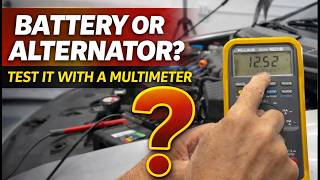
With the engine off, use a multimeter to measure voltage across the battery terminals. A fully charged battery reads 12.6 volts. A reading below 12.2 volts indicates a discharged or failing battery requiring charging and a load test.
Tools: Multimeter (Beginner) - Test the Charging System (Engine Running)
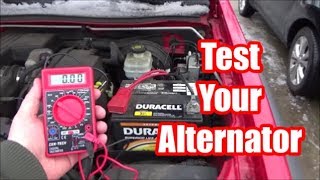
Start the engine and measure battery voltage again. The reading must be between 13.5 and 14.5 volts. If the voltage is below 13.2V or drops as you turn on headlights and the AC, the alternator is faulty.
Tools: Multimeter (Beginner) - Visually Inspect and Clean Terminals
Check battery terminals for white or blue-green corrosion. Ensure clamps are tight and immovable by hand. Clean any corrosion with a wire brush to ensure a perfect electrical connection.
Tools: Safety glasses, gloves, battery terminal wire brush (Beginner) - Load Test the Battery
A static voltage check misses internal battery degradation. Take the vehicle to an auto parts store for a free professional load test. This determines if the battery delivers the necessary amperage under load.
Tools: Professional battery load tester (Beginner) - Inspect Main Ground Connections
Inspect the main negative battery cable connecting to the chassis, and the ground strap from the engine block to the chassis. Ensure these connections are clean, tight, and free of rust.
Tools: Wrench set, wire brush, safety glasses (Intermediate) - Perform a Voltage Drop Test
Set your multimeter to a low DC volts scale. Connect the black lead to the negative battery post and the red lead to the ABS module's main chassis ground. With the ignition on, the reading must be under 0.2 volts. Readings higher than 0.2V indicate a bad connection requiring repair.
Tools: Multimeter, vehicle-specific wiring diagram (Advanced) - Test for Alternator AC Ripple
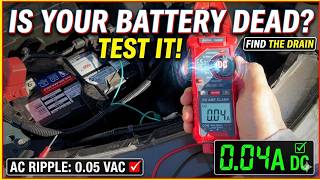
Failing alternator diodes leak AC voltage, crashing modules. With the engine running and headlights on, set the multimeter to AC Volts (V~). Place the red lead on the alternator's B+ terminal and the black lead on the negative battery post. Readings over 0.5V (500mV) AC confirm failing diodes; replace the alternator.
Tools: Multimeter with AC Volts setting (Advanced) - Perform a Parasitic Draw Test
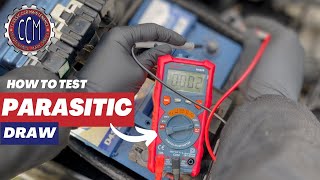
If the battery dies overnight, connect a multimeter in series with the negative battery cable to measure current draw. After modules sleep (up to 30 minutes), normal draw is under 50mA. Readings over 100mA indicate a drain. Pull fuses systematically to isolate the faulty circuit.
Tools: Multimeter with 10A amp function, fuse puller (Advanced) - Inspect Fuses and Relays
Locate the main fuses and relays related to the ABS and Electronic Control Modules in the under-hood fuse box. Visually inspect them for breaks or corrosion.
Tools: Owner's manual, fuse puller (Intermediate) - Analyze Scan Tool Live Data
Connect a professional scan tool and view live data for the ABS module. Compare the 'Module Power Supply' PID to the voltage measured directly at the battery. A discrepancy over 0.5V points to a wiring issue between the battery and the module.
Tools: Professional OBD-II Scan Tool (Advanced)
When This Code Triggers (Freeze-Frame Conditions)
- Module Voltage: 8.0V - 9.7V (The voltage recorded by the ABS module at the moment the fault triggers. It falls below the manufacturer's specified threshold.)
- Vehicle Speed: 0 mph or >10 mph (Sets at key-on during the module's initial self-test (0 mph) or while driving when the alternator fails and voltage drops.)
- Engine RPM: 0 or 650-2500 RPM (Occurs with the engine off (drained battery) or while the engine runs (faulty charging system).)
- Ignition Status: RUN (Detected when the ignition is in the 'RUN' position, as the ABS module actively performs voltage checks.)
Related Codes
- C2101 — Means 'Battery Voltage High'. If C2100 and C2101 appear together, a faulty alternator voltage regulator is causing erratic voltage spikes and drops. Replace the alternator.
- C121C — Means 'Torque Request Signal Denied' on Chrysler/Dodge/Jeep. It appears because the ABS module loses power (C2100) and cannot communicate traction control requests to the PCM. Fixing C2100 resolves C121C.
- C2200 — Means 'Anti-Lock Brake Module Internal Failure'. If voltage at the ABS module connector is normal but C2200 is set, the module itself has failed. If voltage is low, fix the power supply (C2100) first.
- U0121 — Means 'Lost Communication With ABS Control Module'. Low voltage (C2100) forces the ABS module to shut down, causing the communication loss. Fix the low voltage problem first.
Climate & Environmental Factors
- Cold Weather: Low temperatures significantly reduce a battery's chemical efficiency and cranking power. A weak battery that functions in summer drops below the 9.7V threshold during winter startups, triggering C2100.
- High Humidity: High humidity and coastal salt air accelerate corrosion on battery terminals and ground straps. This corrosion increases electrical resistance, causing voltage drops.
- High Altitude: Altitude has minimal direct effect on the electrical system. However, marginal charging systems face extra strain if the engine runs less efficiently at altitude.
How to Talk to a Mechanic About This Code
Say this: "I have an ABS light and a C2100 'Battery Voltage Low' code. I'd like to schedule a diagnostic, starting with a battery load test and a charging system check, including alternator output and AC ripple, before investigating modules or wiring."
This signals you understand the most common causes. It directs the technician to follow a logical, cost-effective diagnostic path and prevents them from immediately suggesting a costly module replacement.
Avoid saying:
- 'My ABS light is on, just fix it.'
- 'I think I need a new ABS module.'
- 'Do whatever you think is best.'
Questions to ask before authorizing the repair:
- What were the results of the battery load test and the charging system test?
- Did you measure for AC ripple from the alternator? What was the reading in millivolts?
- If you are recommending a wiring repair, can you show me the results of the voltage drop test?
- If you are recommending an ABS module, what was the specific voltage reading at the module's power and ground pins?
Where to Take It: Dealer vs Independent vs Chain
- Dealer:
Use for warranty work or if a complex module replacement and programming is confirmed. Get a second opinion from an independent shop before authorizing expensive repairs here.
Best for: Vehicles under warranty or with a known recall (e.g., TIPM issues)., Complex electrical issues requiring proprietary software for diagnosis or programming (e.g., replacing an ABS module).
Downsides: Highest labor rates., Quicker to replace an entire assembly rather than perform a detailed wiring repair. (Typical cost: +50% vs. baseline) - Independent Shop:
Best overall fit. An experienced independent technician is perfectly equipped to diagnose and fix the vast majority of C2100 causes at a fair price.
Best for: Out-of-warranty vehicles where cost is a factor., Diagnosing core electrical issues like batteries, alternators, bad grounds, and parasitic draws.
Downsides: Quality varies greatly; look for ASE certifications and good reviews specifically mentioning electrical work., May lack specific tools to program a new module. (Typical cost: +0% vs. baseline) - Chain Shop:
Good for a free battery test to start. AVOID for the actual diagnosis of a C2100 code, as they are likely to replace the battery without checking the charging system.
Best for: Free or low-cost battery testing and replacement., Simple alternator replacement if the diagnosis is already certain.
Downsides: Technician skill varies dramatically; often unequipped for in-depth electrical diagnostics like parasitic draws., High pressure to upsell services. (Typical cost: -10% vs. baseline)
When to Walk Away From the Repair
If the estimated repair cost exceeds 50% of the car's private-party value, seriously consider selling or trading it in instead of repairing it.
- Car worth $3000, fix is $1800: Walk away. The repair cost is 60% of the car's value. It's not financially sensible to invest this much in an older vehicle.
- Car worth $15000, fix is $900: Fix it. The repair cost is only 6% of the vehicle's value, well below the threshold.
- Car worth $5000, fix is $2500: Borderline. At 50% of the car's value, this is a tough call. Get a second opinion on the repair cost before deciding.
What Scan Tool You Need for This Code

Minimum: A scanner that reads and clears Anti-lock Brake System (ABS) codes and displays live data, specifically 'Control Module Voltage'.
A basic $20 code reader only reads 'P' (Powertrain) codes and cannot see the 'C' (Chassis) code C2100. It will show 'No Codes Found', preventing diagnosis.
Budget: BlueDriver Pro (~$100) — Reads and clears ABS codes for most brands. Displays live data for module voltage, allowing comparison to actual battery voltage.
Mid-range: Foxwell NT630 Plus / Innova 5610 (~$150) — Offers bidirectional control for the ABS system. Activates the ABS pump, a required step for properly bleeding brakes after replacing a failed ABS module.
Professional: Autel MaxiCOM MK808 / MK808BT (~$500) — Provides full bidirectional control, including the ABS 'auto bleed' function. Essential for professional-level replacement of the ABS hydraulic control unit.
Rent vs buy: Auto parts stores like O'Reilly loan tools that read ABS codes for free, great for initial diagnosis. However, if the fix requires replacing the ABS module, you must buy a mid-range scanner with bidirectional control to bleed the system, or take it to a shop.
How to Clear the Code After You Fix It
- Ensure the battery is fully charged or new.
- Reconnect the battery if it was disconnected for the repair.
- Use an OBD-II scan tool to erase the C2100 fault code from the ABS module.
- Perform the ABS initialization drive cycle.
Drive cycle (~15 minutes): Start the vehicle and idle for 2 minutes. Drive in a mix of city and highway conditions, exceeding 20 mph. The ABS module performs a self-test upon the first acceleration past 15 mph. Perform several braking events to confirm normal operation.
Readiness monitors affected: This is a chassis (C-code) and does not directly affect engine emissions readiness monitors., However, disconnecting the battery for repair resets all emissions readiness monitors to 'Not Ready'.
Before emissions retest: drive at least 50 miles to fully set monitors.
Watch out for:
- Clearing the code without fixing the low voltage issue causes the code to return immediately.
- Forgetting to perform a Battery Management System (BMS) reset on applicable vehicles (e.g., Ford, GM) after battery replacement.
- Failing an emissions test because the battery was disconnected, resetting all OBD-II monitors.
Will This Fail Emissions / State Inspection?
Yes — this code typically fails an OBD-II emissions inspection.
- California: An illuminated ABS light alone does not fail a smog check. However, if C2100 triggers the Check Engine Light, it is an automatic failure. Disconnecting the battery for repair also causes a failure until a full drive cycle completes.
- New York: An illuminated ABS warning light is immediate grounds for failing the state safety inspection.
- Texas: For commercial vehicles, an illuminated brake warning light causes a safety inspection failure. If the code triggers the main Check Engine Light in an emissions county, it fails the emissions test.
Most Commonly Affected Vehicles
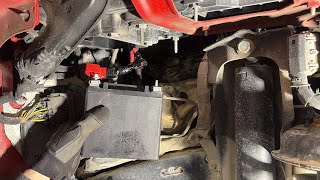
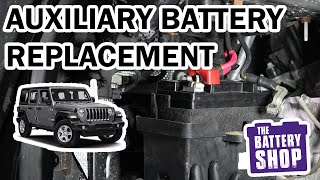
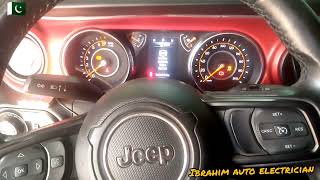
- Jeep Wrangler (JL) (2018-2024) — Extremely common due to failures in the dual-battery system. The small auxiliary battery for the start-stop system fails, draining the main battery and causing C2100. Replace both batteries simultaneously.
- Dodge Grand Caravan (2008-2020) — Often related to a failing battery or a faulty ABS module. The Totally Integrated Power Module (TIPM) is a well-known failure point on these vans causing this code.
- Chrysler Town & Country (2008-2016) — Shares the Dodge Grand Caravan platform, making it prone to the same battery, ABS module, and TIPM-related low voltage problems.
- Dodge / Ram Charger, 300, Ram 1500 (2006-2014) — Sets C2100 when the battery is weak or the alternator fails. The set condition is voltage dropping below 9V while the engine runs.
- Chevrolet / GMC Silverado, Sierra, Equinox (2007-2024) — High electrical demands expose weakening batteries or failing alternators. The code appears intermittently in cold weather or when using high-load accessories.
- Ford F-150, Escape, Edge (2011-2024) — Replacing the battery requires a Battery Management System (BMS) reset. If skipped, the system undercharges the new battery, leading to a C2100 code.
- Subaru Outback, Forester, Impreza (2005-2014) — Subaru vehicles are highly sensitive to low voltage. C2100 is accompanied by a cascade of warning lights, including ABS, VDC, and a flashing cruise control light.
- Mitsubishi Lancer, Outlander (2008-2017) — Set by the All-Wheel Control (AWC) or Active Stability Control (ASC) ECU when voltage drops below 9.0V. It temporarily disables the 4WD system.
Manufacturer-Specific Notes
- Jeep / Chrysler / Dodge: On dual-battery Engine Start-Stop (ESS) models like the Wrangler JL, the smaller auxiliary battery is the primary failure point causing C2100. On older models, check for TIPM recalls (e.g., R09/P54) indicating widespread power distribution failures.
- Ford: Post-2011 Fords use a Battery Management System (BMS). You must reset the BMS after replacing the battery. Skipping this causes the alternator to undercharge the new battery, triggering C2100.
- Hyundai / Kia: Code C2100 on Hyundai/Kia models does NOT refer to low voltage. It relates to a 'Side Impact Pressure Sensor' or 'TPMS Module'. These vehicles use codes like C1102 for low voltage.
- Mitsubishi: The code is set by the All-Wheel Control (AWC) module, which disables the 4WD system as a safety precaution when voltage drops below 9.0V.
- Chevrolet / GM: On older models like the C5 Corvette, C2100 refers to a 'Left Front TPM Sensor Malfunction'. Always verify the code definition for your specific year and model.
Real Owner Stories
2019 Jeep Wrangler (JL) at 45K miles
ABS and Traction Control lights came on intermittently. Code C2100 was active. Vehicle hesitated to start.
What they tried:
- Owner suspected the main battery was failing due to age.
- Replaced the main H7 AGM battery, but the code returned within a day.
Outcome: A forum search revealed the common failure of the smaller auxiliary battery in the JL's dual-battery system. Replacing the auxiliary battery (part # 68490094AA) resolved the issue permanently. The failing aux battery placed a constant drain on the main battery, causing the low voltage condition.
Lesson: On vehicles with dual-battery systems, the auxiliary battery is a primary suspect for C2100 and must be tested or replaced alongside the main battery.
2012 Dodge Grand Caravan at 110K miles
ABS and Traction Control lights illuminated on cold mornings. Code C2100 and U0121 were present.
What they tried:
- A mechanic load-tested the battery, which passed.
- The mechanic recommended replacing the ABS module for $1,100.
- Owner sought a second opinion.
Outcome: The second mechanic performed a voltage drop test. The ground side showed a 0.8V drop (limit is 0.2V). The mechanic located the main chassis ground point under the battery tray, which was heavily corroded. Cleaning the ground point to bare metal fixed the voltage drop, resolving both codes for $150 in labor.
Lesson: Never replace an expensive module for a low voltage code without proving the module receives proper power and ground via a voltage drop test.
2014 Subaru Outback at 95K miles
After sitting for a week, the battery was dead. After a jump start, ABS, VDC, and cruise control lights were on with code C2100.
What they tried:
- Replaced the 4-year-old battery. The lights returned the next day.
- Tested the alternator, which charged correctly at 14.2V.
- Initiated a parasitic draw test.
Outcome: The test showed a 250mA draw (normal is ~30mA). Pulling fuses isolated the draw to the interior lighting circuit. An aftermarket LED dome light bulb prevented the Body Control Module (BCM) from sleeping. Replacing the LED with an incandescent bulb dropped the draw to normal, permanently fixing the C2100 code.
Lesson: A parasitic draw drains healthy batteries and triggers C2100. Aftermarket electronics, even simple LED bulbs, are common culprits.
How to Prevent This Code From Triggering
- Clean battery terminals and cable ends annually (Once per year) — Prevents the buildup of insulating corrosion. A clean, tight connection ensures minimal voltage drop between the battery and the electrical system.
- Apply dielectric grease or terminal protector spray (Once per year) — Creates a moisture-proof barrier on the terminals, preventing the chemical reaction that forms corrosion in humid climates.
- Ensure regular drives of at least 20-30 minutes (At least once a week) — Short trips drain the battery without giving the alternator time to replenish the charge. Longer drives maximize battery lifespan and prevent low voltage conditions.
- Professionally load test the battery before winter (Every 6 months) — Identifies a weakening battery before it fails in cold weather, preventing the C2100 code and no-start situations.
- Inspect and tighten main vehicle ground straps (Every 2 years) — Vibration loosens critical ground connections. A poor ground creates high resistance, causing widespread voltage drops across the vehicle.
Frequently Asked Questions
Can I just clear the C2100 code?
You can clear the code with a scanner, but it returns immediately if the low voltage problem remains. The code is a symptom of a real electrical issue requiring diagnosis and repair.
Why are my ABS and traction lights on but my car starts fine?
A battery can have enough cranking amps to start the engine but fail to maintain a stable voltage above 10 volts while running. Sensitive electronics like the ABS module detect this instability and shut down as a precaution. This triggers the warning lights even if the car seems to run normally.
Is it the battery or the alternator?
Test with a multimeter. If battery voltage is under 12.4V with the engine off but jumps above 13.5V while running, the alternator works and the battery is the issue. If voltage stays low while running, the alternator is failing.
I replaced the battery and the C2100 code came back. What now?
First, verify if your vehicle requires a Battery Management System (BMS) reset. If not, test the alternator's output and check for AC ripple. Finally, check for a bad ground, high resistance in the wiring, or a parasitic draw draining the new battery.
Can a bad ground wire cause a C2100 code?
Yes. A loose, corroded, or broken ground wire is a primary cause of low voltage issues. The electrical system needs a solid return path to the battery; without it, voltage drops and triggers C2100.
My ABS light came on with code C2100 right after I washed my engine. What happened?
High-pressure water forces moisture into critical electrical connectors for the ABS module or under-hood fuse box. This causes a temporary short circuit or poor connection, dropping the voltage. Allow the engine bay to dry completely and clean affected connectors with electrical contact cleaner.
What are common misdiagnosis mistakes for C2100?
The biggest mistake is replacing the $800+ ABS module without performing a full electrical diagnosis. Always verify battery health, test alternator output, and check power/ground cables for voltage drops first. Failing to check for a parasitic draw is another common oversight.
How much does it cost to diagnose a C2100 code?
Most repair shops charge a diagnostic fee equivalent to one hour of labor, typically $100 to $200. This covers initial battery and alternator tests. Complex issues like parasitic draws or intermittent wiring faults require further diagnostic time, potentially costing up to $450.
What is a Battery Management System (BMS) reset and why is it important?
The BMS monitors battery age and state of charge to optimize alternator output. When installing a new battery, you must perform a BMS reset to inform the system. Skipping this causes the system to undercharge the new battery, leading to low voltage and code C2100.
Key Takeaways
- Code C2100 triggers when the Anti-Lock Brake System (ABS) module detects power supply voltage dropping below 9.7 volts, disabling your ABS and traction control.
- Test the battery and alternator first; a failing battery or an alternator outputting less than 13.5 volts causes 80% of C2100 codes.
- Perform a voltage drop test on the ABS module's main ground wire before replacing any expensive parts, ensuring resistance is under 0.2 volts.
- Reset the Battery Management System (BMS) after installing a new battery on 2011+ Ford and GM vehicles to prevent the C2100 code from immediately returning.
Helpful Videos



The information in this article is provided for general reference and educational purposes only. Vehicle specifications, procedures, and part compatibility can vary by production date, trim level, and region. Always consult your vehicle's factory service manual and verify part numbers before purchasing or performing repairs. Safety-critical components such as airbags, seat belts, and braking systems should be installed by a qualified professional.
- 🎬 Helpful Videos
- What Does C2100 Mean?
- Can I Drive With C2100?
- Common Causes
- Symptoms
- Diagnostic Flowchart
- Common Fixes & Costs
- DIY vs Professional
- Used vs. New Parts: Buying Guide
- What Happens If You Wait — Timeline
- Cost of Not Fixing It
- Diagnosis Steps
- When This Code Triggers (Freeze-Frame Conditions)
- Related Codes
- Climate & Environmental Factors
- How to Talk to a Mechanic About This Code
- Where to Take It: Dealer vs Independent vs Chain
- When to Walk Away From the Repair
- What Scan Tool You Need for This Code
- How to Clear the Code After You Fix It
- Will This Fail Emissions / State Inspection?
- Most Commonly Affected Vehicles
- Manufacturer-Specific Notes
- Real Owner Stories
- 2019 Jeep Wrangler (JL) at 45K miles
- 2012 Dodge Grand Caravan at 110K miles
- 2014 Subaru Outback at 95K miles
- How to Prevent This Code From Triggering
- Frequently Asked Questions
- Can I just clear the C2100 code?
- Why are my ABS and traction lights on but my car starts fine?
- Is it the battery or the alternator?
- I replaced the battery and the C2100 code came back. What now?
- Can a bad ground wire cause a C2100 code?
- My ABS light came on with code C2100 right after I washed my engine. What happened?
- What are common misdiagnosis mistakes for C2100?
- How much does it cost to diagnose a C2100 code?
- What is a Battery Management System (BMS) reset and why is it important?
- Key Takeaways
- 🎟️ Get 5% Off