

OBD-II Code C2008: Left Electronic Parking Brake Motor Circuit Fault
What C2008 means, why it triggers, and how to fix it
- Code C2008 indicates an electrical failure in the left electronic parking brake motor circuit, completely disabling the parking brake.
- Over 70% of C2008 faults stem from a broken or corroded wire in the left rear wheel well harness, especially on Ford and Land Rover vehicles.
- Do not drive the vehicle; a stuck-on parking brake generates extreme heat that destroys the $400+ rotor and caliper assembly within miles.
- Perform a voltage drop test on the rear wiring harness before spending $250 to $850 replacing the actuator motor.
What Does C2008 Mean?

Code C2008 indicates the Anti-lock Brake System (ABS) Control Module detects an electrical problem with the left (driver's side) electronic parking brake motor. When you press the parking brake button, the module sends a signal to the motor but receives an incorrect electrical response, preventing the brake from applying or releasing.
Technical definition: The SAE/ISO definition for C2008 is a Chassis code indicating a fault in the 'Left Motor' circuit. Manufacturer-specific sub-codes provide exact details: 'Left Motor: Circuit Open' (C2008-13), 'Left Motor: Circuit Short to Ground' (C2008-11), or 'Left Motor - Actuator Stuck Open' (C2008-72). The ABS Control Module sets this code when its command to the left rear Electronic Parking Brake (EPB) actuator fails to draw the expected electrical current.
Can I Drive With C2008?
No — Do Not Drive. Do not drive. If the parking brake is stuck on, driving causes extreme heat, destroys the pads and rotor, and creates a severe fire risk. If it fails to engage, it creates a serious rollaway hazard. Driving with a dragging brake adds $400 to $800+ to the repair cost.
Common Causes

- Damaged or Corroded Wiring Harness/Connector (Very Common) — The wiring harness in the left rear wheel well is exposed to road salt, water, and debris. This exposure frequently causes broken or corroded wires at the connector, making it the primary cause of C2008.
- Faulty Left Rear Parking Brake Actuator/Motor (Common) — The electric motor that applies the brake fails from internal water intrusion, corrosion, or mechanical wear. It also burns out if forced to overcome poorly adjusted mechanical brake components.
- Loose or Corroded Main Connector Block (Common) — On Jaguar and Land Rover vehicles, a specific multi-pin connector in the left rear wheel arch (e.g., C34A/B) serves as a junction for both rear EPB motors. A single loose pin here triggers a C2008 fault (TSB SSM73690).
- ABS/EPB Control Module Software Glitch (Common) — A software bug in the control module incorrectly triggers the C2008 code, especially on Land Rover models. A dealer software update or system recalibration resolves this (TSBs LTB01248NAS1 and SSM74004).
- Poor Ground Connection for EPB Module (Less Common) — The main ground stud for the EPB system corrodes or loosens, creating unpredictable electrical faults. Land Rover TSB SSM66897 specifically highlights checking this ground stud.
- Poorly Adjusted Mechanical Parking Brake Shoes (Less Common) — Systems using mechanical brake shoes inside the rotor ('drum-in-hat') overwork the electric motor if the shoes are worn or misadjusted, causing excessive current draw and triggering the code.
- Low Battery Voltage (Rare) — A weak battery causes voltage drops during high-draw events like applying the parking brake, triggering spurious electronic faults. This occurs most frequently in freezing temperatures.
- Failed Electronic Parking Brake (EPB) Control Module (Rare) — The main computer for the parking brake system rarely fails. It is only considered the culprit after all wiring, connectors, grounds, and the motor test perfectly.
Symptoms

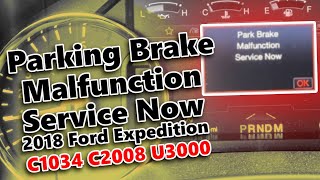
- "Park Brake Fault" or "Service Now" Message — A prominent warning message appears on the instrument cluster display.
- Flashing or Solid Parking Brake Warning Light — The red or yellow 'BRAKE' or parking brake symbol illuminates on the dashboard.
- Parking Brake Cannot Be Applied or Released — The parking brake fails to engage or disengage when the button is pressed, potentially leaving the vehicle immobilized.
- Cruise Control is Disabled — The vehicle disables the cruise control system as a safety precaution when a critical braking fault is detected.
- Grinding or Screeching Noise — A loud grinding sound from the rear wheel indicates a mechanical failure within the actuator or internal brake shoes.
- Auto Hold Feature Disabled — The 'Auto Hold' feature, which holds the brake at a stoplight, deactivates when an EPB fault is present.
Diagnostic Flowchart

Tap your situation to follow the diagnostic path that matches what you're seeing on this code.
Common Fixes & Costs
- Repair Damaged Wiring Harness — Parts: $15-$75, Labor: $150-$350, ~2.0 hr book time (Intermediate)
- Clean and Secure Main Connector Block — Parts: $0-$20, Labor: $100-$200, ~1.0 hr book time (Beginner)
- Replace Electronic Parking Brake Actuator/Motor — Parts: $100-$450, Labor: $150-$400, ~1.5 hr book time (Intermediate)
- Update ABS/EPB Control Module Software — Parts: $0, Labor: $150-$300, ~1.2 hr book time (Professional)
- Replace EPB Control Module — Parts: $500-$900, Labor: $150-$250, ~2.2 hr book time (Professional)
Used vs. New Parts: Buying Guide
When a used part is worth it: A quality remanufactured EPB Actuator/Caliper is a cost-effective repair. Used parts from salvage yards are risky due to unknown history and exposure to the elements.
Donor-vehicle mileage cap: roughly under 100000 miles for the part to have meaningful remaining life.
Donor quality checklist:
- Choose reputable remanufactured brands like Cardone, Raybestos, or Motorcraft.
- Ensure the remanufacturer replaces all seals, boots, and pistons.
- Match the part number exactly; EPB calipers are not interchangeable.
- Avoid salvage parts from rust-belt regions due to internal motor corrosion.
Decision logic:
- If Vehicle is under 5 years old or has low mileage (<60k) → Buy new (OEM or high-quality aftermarket) for maximum reliability.
- If Vehicle is over 8 years old or has high mileage (>120k) and budget is a primary concern → Purchase a reputable remanufactured caliper.
- If The part is just the motor and not the full caliper assembly → Buy new, as the cost difference is minimal and it is the primary failure component.
Warranty tradeoff: Salvage parts have a 30-90 day warranty. Remanufactured parts offer 1-year to limited lifetime warranties. New OEM parts offer the longest warranties.
Worst-case if a used part fails: $300-$600 if a used part fails prematurely, requiring duplicate labor and a new part.
What Happens If You Wait — Timeline
- Immediate: Code C2008 sets, 'Park Brake Fault' appears. The left parking brake is inoperative, creating a rollaway risk if it fails to engage. (MPG impact: 0%% · Added cost: $0)
- 0-10 miles (If brake is stuck ON): Extreme friction generates intense heat. The driver notices sluggish acceleration and a burning smell. The rear brake rotor and pads are destroyed. (MPG impact: 20-50% (due to drag)% · Added cost: $400-$800)
- 10+ miles (If brake is stuck ON): Catastrophic heat buildup warps the rotor, cooks the wheel bearing grease, and boils the brake fluid, causing a loss of hydraulic braking and severe fire risk. (MPG impact: 50%+% · Added cost: $1000-$2500+)
- Weeks to Months (If brake is stuck OFF): The vehicle lacks a functioning parking brake, increasing stress on the transmission parking pawl and posing a continuous rollaway hazard. (MPG impact: 0%% · Added cost: $0)
Cost of Not Fixing It
- Immediate: The vehicle is stuck with the brake engaged or fails to engage, creating a rollaway risk. A dragging brake presents a fire hazard. (Added cost: Negligible)
- Days to Weeks: Driving with a stuck brake rapidly destroys the rear brake pads and rotor due to extreme heat, noticeable by a burning smell and sluggish performance. (Added cost: $400-$800)
- 1-3 Months: Continued driving leads to catastrophic failure. Intense heat damages the caliper, wheel bearing, and hub assembly, and boils the brake fluid, compromising the entire hydraulic brake system. (Added cost: $1000-$2500+)
Diagnosis Steps
- Read Manufacturer-Specific Sub-Codes
Use an advanced OBD-II scanner to read Chassis (C) codes from the ABS module. Identify suffixes like -11 (Short to Ground), -13 (Circuit Open), or -72 (Actuator Stuck) to pinpoint the exact electrical failure.
Tools: Advanced OBD-II Scanner (Beginner) - Check for Technical Service Bulletins (TSBs)
Search for your vehicle's make, model, year, and 'C2008 TSB'. Ford, Jaguar, and Land Rover have specific bulletins detailing exact wire break locations or required software updates for this code.
Tools: Internet Access (Beginner) - Perform a Thorough Visual Inspection
Lift the rear of the vehicle and remove the left rear wheel. Inspect the wiring harness going to the brake caliper for green corrosion, chafing, or loose connectors. On JLR vehicles, check the main connector block in the wheel arch.
Tools: Jack, Jack Stands, Wheel Chocks, Flashlight (Intermediate) - [PRO TIP] Perform a Voltage Drop Test
A wire showing good continuity often fails under load. With the harness connected and the EPB button pressed, measure the voltage difference between the module connector and the actuator connector. A drop over 0.5 volts confirms high resistance in the wire.
Tools: Multimeter with back-probe pins (Advanced) - [PRO TIP] Command Actuator and Monitor Current Draw
Use a bi-directional scan tool to command the left EPB actuator. A healthy motor draws 8 to 15 amps. A 0-amp draw confirms an open circuit (broken wire). A draw over 30 amps indicates a short circuit or a seized motor.
Tools: Bi-directional Scan Tool (Advanced) - Test Actuator Motor Resistance
Disconnect the actuator motor. Measure the resistance between its two pins. A healthy motor reads between 0.1 and 0.6 Ohms. A reading of 'OL' (Over-Limit) confirms a failed motor winding, requiring replacement.
Tools: Multimeter (Advanced) - Test Wiring Circuit for Continuity and Shorts
Unplug the actuator and the main control module. Check for continuity on both wires. A reading of 'OL' means the wire is broken. Check for shorts by testing resistance between each wire and a clean chassis ground; this must read 'OL'.
Tools: Multimeter, Vehicle Wiring Diagram (Intermediate) - Swap Actuators (If Applicable)
If the left and right actuators are identical, swap them. Clear the codes and operate the brake. If code C2007 (right side) appears, the actuator is bad. If C2008 returns, the wiring or control module is the problem.
Tools: Basic Hand Tools (Advanced) - Inspect Mechanical Shoes (If Equipped)
On 'drum-in-hat' systems, remove the caliper and rotor to inspect the internal parking brake shoes. Adjust or replace excessively worn shoes before installing a new motor to prevent immediate failure.
Tools: Brake Tools, Hand Tools (Intermediate)
When This Code Triggers (Freeze-Frame Conditions)
- System Voltage: 11.8V - 14.8V (The code sets if voltage drops too low when the motor activates.)
- EPB Switch Status: Commanded ON or Commanded OFF (The fault logs at the exact moment the switch is pressed to apply or release the brake.)
- Vehicle Speed: 0 mph (The fault typically occurs when attempting to apply or release the brake while parked.)
- Brake Pedal Status: Pressed (Most systems require the service brake pedal to be pressed to release the electronic parking brake.)
Related Codes
- C2007 — Indicates the identical fault for the right (passenger) side parking brake motor. On Jaguar models, a single faulty connector (C34A/B) triggers both C2008 and C2007 simultaneously.
- C1034 — Translates to 'Park Brake Actuator Stuck'. It appears alongside C2008. C2008 pinpoints the electrical circuit fault, while C1034 reports the resulting mechanical condition. Fixing C2008 resolves C1034.
- U3000 — Indicates an internal control module failure. It triggers as a 'ghost code' when the ABS module receives illogical data from the broken parking brake circuit. Fixing C2008 clears this code.
- U0418 — Means 'Invalid Data Received From Brake System Control Module.' It sets because the ABS module cannot send reliable brake status data to the vehicle network due to the C2008 fault.
Climate & Environmental Factors
- Road Salt and Moisture: Salt mixed with water creates a highly corrosive electrolyte solution that destroys the thin copper wires and connectors in the exposed rear wheel wells. This makes C2008 significantly more common in 'Salt Belt' regions.
- Freezing Temperatures: Cold temperatures make wire insulation brittle and prone to cracking, creating entry points for moisture. Freezing weather also reduces battery efficiency, causing low-voltage faults.
How to Talk to a Mechanic About This Code
Say this: "I have a 'Park Brake Fault' warning and a C2008 code, which points to the left rear electronic parking brake. I know this is a common wiring issue on my vehicle. Please start by inspecting the wiring harness and connector in the left rear wheel well before quoting a new caliper or actuator."
Directs the shop to the most likely and cheapest fix first, preventing them from immediately quoting an expensive and unnecessary part replacement.
Avoid saying:
- 'My parking brake is broken, please fix it.'
- 'The light is on, I don't know what's wrong.'
- 'Just do whatever you think is needed.'
Questions to ask before authorizing the repair:
- Did you find a specific break or corrosion in the wiring harness? Can you show me a picture?
- If you are recommending a new actuator, what tests confirmed the wiring and control module are good?
- Are there any TSBs about wiring issues or software updates for my vehicle that should be checked first?
- What is the warranty on the parts and labor for this specific repair?
Where to Take It: Dealer vs Independent vs Chain
- Dealer:
Recommended only if a known TSB points to a software update or if the vehicle is under warranty.
Best for: Vehicles still under warranty., Repairs caused by a software glitch requiring a proprietary update (common on Land Rover/Jaguar)., Complex cases where an independent shop failed to find the issue.
Downsides: Significantly higher labor rates., More inclined to replace a full assembly (caliper with motor) rather than attempting a wiring repair. (Typical cost: +50% vs. baseline) - Independent Shop:
Best fit for most C2008 cases. A good indie starts with the wiring, saving you money.
Best for: Out-of-warranty vehicles where the cause is likely a wiring or connector issue., Cost-conscious repairs requiring flexibility with parts and labor.
Downsides: Quality varies greatly; ensure the shop is comfortable with modern vehicle electronics., May lack the latest manufacturer-specific software for programming. (Typical cost: +0% vs. baseline) - Chain Shop:
AVOID for diagnosing a C2008 code. They are not equipped to find the root cause of an electrical fault.
Best for: Simple brake pad and rotor replacement (if they are competent with EPB service mode).
Downsides: Technicians lack training for in-depth electrical diagnostics., High pressure to sell parts leads to recommending a new caliper immediately., Unlikely to perform a detailed wiring harness repair. (Typical cost: -10% vs. baseline)
When to Walk Away From the Repair
If the estimated repair cost for the C2008 fault exceeds 50% of your car's private-party value, consider alternatives.
- Car worth $5000, fix is $2800: Walk away. The repair cost is over half the car's value.
- Car worth $15000, fix is $1200: Fix it. The repair cost is well below the threshold and restores a critical safety feature.
- Car worth $3000, fix is $700: Borderline. Get a second opinion to ensure the diagnosis is correct before proceeding.
What Scan Tool You Need for This Code
Minimum: A scanner that reads Chassis (C) codes and performs EPB service functions like entering 'Service Mode'.
A basic $20 OBD-II reader only reads Powertrain (P) codes. It cannot see C2008 or perform the necessary post-repair calibration.
Budget: BlueDriver Pro Scan Tool (~$100) — Reads manufacturer-specific chassis codes and provides freeze-frame data. Lacks bi-directional control to command the actuator.
Mid-range: Foxwell NT510 Elite (~$180) — Offers full system diagnostics, reads C-codes, and has the EPB service function to retract and recalibrate the parking brake.
Professional: Autel MaxiCOM MK808S / MK808Z (~$450-550) — Provides full bi-directional control to command the EPB motor, invaluable for diagnosis. Features comprehensive EPB service and calibration functions.
Rent vs buy: Buying a mid-range tool is a mandatory investment, as it is required for both diagnosis and the post-repair calibration.
How to Clear the Code After You Fix It
- Use an OBD-II scan tool with EPB functions to clear the chassis fault codes.
- Perform the EPB calibration/re-learn procedure specific to the vehicle.
- Cycle the EPB on and off 5 to 10 times to confirm correct operation.
Drive cycle (~10 minutes): A manual calibration is necessary after clearing the code. Turn the ignition on (engine off), press the brake pedal, and cycle the EPB switch (holding in both the apply and release positions for 5 seconds each) several times. A short test drive confirms the brake holds and releases correctly.
Readiness monitors affected: Not directly applicable. This is a chassis/safety system fault. However, some vehicles inhibit emissions readiness monitor testing until all major system faults are cleared.
Before emissions retest: drive at least 10 miles to fully set monitors.
Watch out for:
- Clearing the code without performing the EPB calibration causes the code to return immediately.
- Disconnecting the battery clears the code but requires a manual re-calibration procedure.
- If the broken wire is not fixed, the code returns the moment the EPB is operated.
Will This Fail Emissions / State Inspection?
No — by itself this code doesn't fail OBD inspection (but it can keep readiness monitors from setting, which causes a separate fail).
- California: This code does not fail the emissions Smog Check. However, an illuminated brake warning light fails a separate safety inspection or results in a citation.
- New York: An illuminated brake system warning light causes an automatic failure of the annual safety inspection.
- Texas: The annual safety inspection requires a functioning parking brake. A fault code and warning light result in a failed inspection.
Most Commonly Affected Vehicles
- Ford Mustang Mach-E (2021-2022) — A known issue with an open or corroded circuit in the rear harness, addressed by Ford TSB 22-2143 and Customer Satisfaction Program 22P31. The fix is replacing the wiring pigtail (Part No. AU2Z-14S411-DB).
- Land Rover LR2 / Freelander 2 (2008-2014) — Extremely common due to a damaged wiring harness in the rear wheel well, covered by TSB SSM66897.
- Land Rover Range Rover Evoque (2012-2014) — Shares the LR2 platform and suffers from the identical wiring harness failures noted in TSB SSM66897.
- Land Rover Discovery (2017-2018) — Often presents as C2008-72 'Actuator Stuck Open', caused by a software glitch requiring dealer calibration before hardware replacement.
- Jaguar F-PACE, XE, XF (2016-2019) — Frequently caused by a loose pin in the C34A/B connector in the left rear wheel arch, identified in TSB SSM73690.
- Ford Edge (2016-2018) — Prone to corrosion and breaks in the short wiring harness pigtail leading to the caliper.
- Ford Escape (2017) — TSB 17-0005 covers damaged EPB wiring harnesses on vehicles with 17-inch wheels built before Oct 10, 2016.
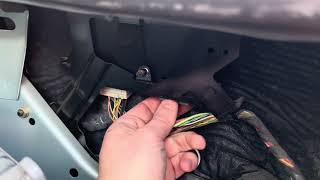
- Ford Expedition (2018) — Failures stem from a corroded wire within the harness where it flexes near the rear suspension. Often appears with C1034 and U3000.
- Hyundai Tucson, Santa Fe (2016-2020) — Diagnosis follows the standard pattern: check wiring and connectors first, as actuator failure is less frequent than on domestic brands.
Manufacturer-Specific Notes
- Ford: Ford issues specific TSBs (e.g., 22-2143, 17-0005) identifying corroded wires near the rear caliper as the primary cause. The official fix is splicing in a new connector pigtail rather than replacing the caliper.
- Land Rover / Jaguar: Notorious for this code due to wiring damage (TSB SSM66897), loose central connectors (TSB SSM73690), or software glitches requiring dealer updates (TSB LTB01248NAS1). Sub-codes (e.g., C2008-11) are critical for diagnosis.
- Toyota: Similar parking brake malfunction warnings are often caused by software issues within the Skid Control ECU. Rule out software calibration before replacing hardware.
- Hyundai / Kia: EPB faults are heavily linked to the Auto Hold function. A faulty Auto Hold switch or related wiring triggers EPB diagnostic trouble codes.
Real Owner Stories
2021 Ford Mustang Mach-E with 'Parking Brake Fault'
Owner of a 2022 GT model received a 'Park brake fault Service now' message at startup.
Outcome: The dealer found codes C2008:13 ('Circuit Open') and C1034:78. They identified an open circuit in the rear EPB harness and replaced the pigtail (Part No. AU2Z-14S411-D8). Total cost was $577.
Lesson: Even on newer vehicles, the wiring pigtail is the primary culprit. Knowing about TSB 22-2143 speeds up diagnosis and prevents unnecessary caliper replacement.
2015 Ford Fusion with persistent C2008 after parts replacement
A mechanic replaced both the left parking brake actuator and the wiring harness pigtail, but the C2008 fault light remained on.
Outcome: The problem was not resolved by replacing the common parts. The actual failure was the Parking Brake Module (PBM) itself.
Lesson: If replacing the actuator and harness fails, the control module is the likely culprit. Always perform a full electrical diagnosis before firing the parts cannon.
2008 Land Rover LR3 with brake stuck on
Owner heard a loud noise when trying to release the parking brake. The display showed 'park brake fault' and the brake completely locked. The manual release cable failed.
Outcome: The dealership found the eBrake module mechanically jammed. They cut the cable to release the brake and replaced the entire module for $1450.
Lesson: While most C2008 faults are electrical, a complete mechanical seizure occurs. If the manual release mechanism fails, professional service is required.
2017 Jaguar F-PACE with C2008-13 'Circuit Open'
Owner experienced a 'Parking Brake Fault' message with code C2008-13.
Outcome: The cause was a loose connection at the C34A connector. Fully seating the connector and securing it with a zip-tie resolved the fault for $0.
Lesson: Always check TSBs. A simple visual inspection and securing a loose connector saves thousands in diagnostic and replacement costs.
How to Prevent This Code From Triggering
- Regularly Wash Undercarriage and Wheel Wells (Monthly, and after every snow/salt event) — Removes corrosive road salt that destroys the exposed EPB wiring harness and connectors.
- Apply Dielectric Grease to Connectors (During any brake service or inspection) — Seals out moisture and oxygen, stopping corrosion on the sensitive pins of the actuator and harness plugs.
- Inspect and Secure Wiring Harnesses (Annually or during tire rotation) — Prevents chafing and broken wires by ensuring the EPB harness is securely clipped and not rubbing against suspension components.
- Cycle the Electronic Parking Brake Periodically (Weekly) — Prevents the internal mechanical parts of the actuator and caliper from seizing due to disuse.
- Maintain a Healthy Battery (Test annually after 3 years) — Ensures stable voltage during motor activation, preventing control module errors and spurious fault codes.
Frequently Asked Questions
Can I just ignore code C2008?
No, do not ignore it. Your electronic parking brake is a critical safety system. A failure causes rollaways when parked or catastrophic heat damage if the brake locks while driving.
What is the most common misdiagnosis for C2008?
The most expensive mistake is replacing the parking brake actuator without testing the wiring. In most cases, the true cause is a broken or corroded wire that costs under $50 in parts to repair.
The mechanic replaced the actuator, but the code is still there. What now?
This confirms a misdiagnosis. If a new actuator fails to fix the problem, the fault is in the wiring harness between the control module and the actuator. Perform a voltage drop test to locate the high resistance.
My cruise control stopped working at the same time as the parking brake fault. Are they related?
Yes, they are related. Modern vehicles disable cruise control when a critical braking fault is detected to prevent unsafe driving conditions. Fixing the C2008 code restores cruise control functionality.
What does the suffix on my C2008 code mean (e.g., -11, -13, -72)?
The suffix pinpoints the exact electrical fault type. For example, C2008-11 means 'Circuit Short to Ground,' C2008-13 means 'Circuit Open,' and C2008-72 means 'Actuator Stuck Open.' This data drastically speeds up diagnosis.
How much will it cost to fix code C2008?
Costs depend entirely on the root cause. A wiring pigtail repair at a shop runs $200 to $500, while replacing the actuator motor costs $250 to $850. A dealership software update typically costs $150 to $300.
Can a weak battery cause a C2008 code?
Yes, low system voltage from a dying battery causes electronic modules to behave erratically and set false codes. If your battery is over 4 years old, test it before beginning complex brake diagnostics.
What is 'EPB Service Mode' and do I need it?
EPB Service Mode fully retracts the parking brake pistons to allow for rear brake pad replacement. You must use a scan tool to enter this mode before servicing the brakes. Failing to do so destroys the caliper and actuator.
Key Takeaways
- Code C2008 indicates an electrical failure in the left electronic parking brake motor circuit, completely disabling the parking brake.
- Over 70% of C2008 faults stem from a broken or corroded wire in the left rear wheel well harness, especially on Ford and Land Rover vehicles.
- Do not drive the vehicle; a stuck-on parking brake generates extreme heat that destroys the $400+ rotor and caliper assembly within miles.
- Perform a voltage drop test on the rear wiring harness before spending $250 to $850 replacing the actuator motor.
Helpful Videos

The information in this article is provided for general reference and educational purposes only. Vehicle specifications, procedures, and part compatibility can vary by production date, trim level, and region. Always consult your vehicle's factory service manual and verify part numbers before purchasing or performing repairs. Safety-critical components such as airbags, seat belts, and braking systems should be installed by a qualified professional.
- 🎬 Helpful Videos
- What Does C2008 Mean?
- Can I Drive With C2008?
- Common Causes
- Symptoms
- Diagnostic Flowchart
- Common Fixes & Costs
- Used vs. New Parts: Buying Guide
- What Happens If You Wait — Timeline
- Cost of Not Fixing It
- Diagnosis Steps
- When This Code Triggers (Freeze-Frame Conditions)
- Related Codes
- Climate & Environmental Factors
- How to Talk to a Mechanic About This Code
- Where to Take It: Dealer vs Independent vs Chain
- When to Walk Away From the Repair
- What Scan Tool You Need for This Code
- How to Clear the Code After You Fix It
- Will This Fail Emissions / State Inspection?
- Most Commonly Affected Vehicles
- Manufacturer-Specific Notes
- Real Owner Stories
- 2021 Ford Mustang Mach-E with 'Parking Brake Fault'
- 2015 Ford Fusion with persistent C2008 after parts replacement
- 2008 Land Rover LR3 with brake stuck on
- 2017 Jaguar F-PACE with C2008-13 'Circuit Open'
- How to Prevent This Code From Triggering
- Frequently Asked Questions
- Can I just ignore code C2008?
- What is the most common misdiagnosis for C2008?
- The mechanic replaced the actuator, but the code is still there. What now?
- My cruise control stopped working at the same time as the parking brake fault. Are they related?
- What does the suffix on my C2008 code mean (e.g., -11, -13, -72)?
- How much will it cost to fix code C2008?
- Can a weak battery cause a C2008 code?
- What is 'EPB Service Mode' and do I need it?
- Key Takeaways
- 🎟️ Get 5% Off