

OBD-II Code C2007: Electric Parking Brake Motor Circuit Fault
What C2007 means, why it triggers, and how to fix it
- Code C2007 indicates an electrical failure in the electric parking brake circuit, most commonly on the right rear wheel.
- Inspect the wiring harness pigtail and connectors first; damaged wires cause over 70% of C2007 faults, not the expensive motor itself.
- On 2016-2019 Jaguar and Land Rover models, check connector C34A/B in the left rear wheel arch for a backed-out pin before replacing any right-side parts.
- Never replace rear brake pads on an EPB-equipped vehicle without using a bidirectional scan tool to engage 'Service Mode,' or you will destroy the $300+ actuator motor.
- Swap the left and right EPB motors to diagnose the fault; if the C2007 code moves to the opposite side (C2008), the motor is definitively bad.
- Do not drive with a stuck-on parking brake; the resulting friction generates extreme heat that destroys brake pads and rotors, adding $300 to $800 in repair costs.
What Does C2007 Mean?

The C2007 code means the ABS module detects an electrical problem with the electric parking brake (EPB) motor circuit, typically on the right rear wheel. This is a break in the wiring (open circuit), a short to ground, or a failed motor. The parking brake will not engage or release when you press the button.
Technical definition: The SAE/OBD-II definition for C2007 is a general electrical failure within the electric parking brake (EPB) actuator circuit. Manufacturers use sub-codes for precise diagnosis, such as 'Right Rear Motor Circuit Open' (Jaguar C2007-13) or 'Actuator Stuck Open' (Land Rover C2007-72). These indicate the control module cannot power or receive signals from the EPB motor.
Can I Drive With C2007?
Yes, But With Caution. You can drive the vehicle, but the parking brake is unreliable. It fails to hold the car on an incline, creating a roll-away hazard, or gets stuck on, stranding you. Driving with a dragging parking brake generates intense heat, destroying brake pads and rotors, which adds $300-$800 to repair costs. Address this safety risk immediately.
Common Causes

- Damaged or Corroded Wiring Harness/Connectors (Very Common) — The wiring running to the EPB motors is exposed to water, road salt, and debris. Wires break inside their protective sheathing due to suspension movement, or connectors corrode, causing an open or short circuit. This is the most frequent cause across all brands.
- Loose Pin in a Main Connector (JLR Specific) (Common) — On Jaguar and Land Rover vehicles, a single pin in pass-through connector C34A/B in the left rear wheel arch backs out. This creates an open circuit for the right-side motor, triggering C2007 even though the physical issue is on the opposite side of the car.
- Faulty Electric Parking Brake (EPB) Actuator/Motor (Common) — The electric motor attached to the brake caliper fails internally. It wears out, seizes from water ingress, or burns out from high electrical resistance.
- Low Battery Voltage (Less Common) — Modern vehicles are highly sensitive to battery voltage. A weak battery causes the EPB module to lack sufficient power to operate the motors, triggering false electrical fault codes.
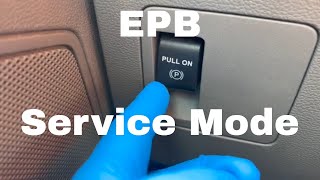
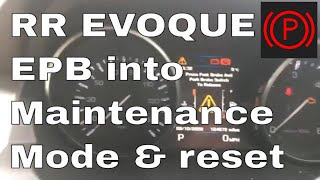
- Software Glitch / Calibration Issue (Less Common) — On certain Land Rover models, an ABS control module software error incorrectly flags a fault, particularly C2007-72 (Actuator Stuck). A recalibration procedure or dealer software update resolves this. 🎬 Watch: How to put Land Rover models into maintenance mode.
- Poor Ground Connection (Less Common) — The EPB control module requires a solid chassis ground. A corroded ground stud creates high resistance, causing intermittent electrical faults.
- Seized Mechanical Brake Components (Uncommon) — Seized parking brake shoes or cables cause the electric motor to over-travel and strip its internal gears, leading to an electrical fault code.
- Faulty Control Module (ABS or EPB) (Rare) — The computer module controlling the EPB system fails. Suspect this only after definitively ruling out all wiring, connectors, software, and motor issues.
Symptoms

- 'Park Brake Fault' or 'Service Park Brake' Message — A clear warning message appears on the dashboard's information display.
- Illuminated Brake Warning Light — A red or yellow warning light, often a flashing 'P' symbol or an exclamation point inside a circle, lights up on the instrument cluster.
- Parking Brake Will Not Apply or Release — The EPB switch does nothing, or you hear a clicking sound from the rear without any brake actuation. The brake remains stuck on or refuses to engage.
- Cruise Control is Disabled — The vehicle's computer disables the cruise control system when it detects any brake system fault.
- Audible Grinding or Whirring Noise — An unusual grinding or high-pitched noise comes from the rear wheel when operating the EPB switch, indicating a struggling or stripped motor.
Diagnostic Flowchart
Tap your situation to follow the diagnostic path that matches what you're seeing on this code.
Common Fixes & Costs
- Reseat, Clean, or Secure Main Connector — Parts: $0-$20, Labor: $0-$150, ~1 hr book time (DIY)
- Repair or Replace Wiring Harness Pigtail
— Parts: $20-$100, Labor: $150-$300, ~1.5 hr book time
(Intermediate)
: OEM - Replace Electric Parking Brake Actuator/Motor
— Parts: $150-$400, Labor: $125-$300, ~1.2 hr book time
(Intermediate)
: OEM - Replace Rear Brake Caliper with Integrated Motor — Parts: $250-$800, Labor: $250-$500, ~2 hr book time (Professional)
- Perform EPB Software Update or Recalibration — Parts: $0, Labor: $150-$300, ~1 hr book time (Professional)
Used vs. New Parts: Buying Guide
When a used part is worth it: For the EPB Actuator/Motor, a used OEM part from a low-mileage vehicle is a cost-effective option for older vehicles. Avoid parts from flood-damaged or high-mileage cars.
Donor-vehicle mileage cap: roughly under 60000 miles for the part to have meaningful remaining life.
Donor quality checklist:
- Verify the donor vehicle's mileage and ensure it was not scrapped due to electrical or brake system failure.
- Inspect the part for corrosion, physical damage, or stripped mounting points.
- Match the OEM part number exactly.
Decision logic:
- If The failure is the wiring pigtail → Always buy new. A used pigtail has been subjected to the same stress and fails soon.
- If Vehicle is < 5 years old or has < 60K miles → Buy a new OEM or high-quality aftermarket motor. The savings on a used part don't justify the risk of premature failure.
- If Vehicle is > 10 years old and budget is the primary concern → A tested, warranted used motor is a reasonable choice.
Warranty tradeoff: Used parts typically come with a 30-90 day warranty covering only the part. New aftermarket parts offer a 1-year to limited lifetime warranty. New OEM parts offer the best warranty at the highest cost.
Worst-case if a used part fails: $300-$600 if a used motor fails after the warranty period, requiring a second replacement part and repeat labor charges.
What Happens If You Wait — Timeline
- 0-4 weeks: Intermittent 'Service Park Brake' light, triggered by bumps or weather. The brake functions most of the time. The fault is a loose connection or early-stage corrosion. (MPG impact: 0%% · Added cost: $0)
- 1-3 months: The warning light is permanently on. The parking brake is completely inoperative ('Stuck OFF'). This is a roll-away hazard, but no physical damage occurs yet. (MPG impact: 0%% · Added cost: $150+ (Towing if it fails to release))
- 1-3 months (Stuck ON variant): The brake fails to release and drags. You feel sluggishness and notice a strong burning smell from the rear. Fuel economy drops significantly. (MPG impact: 15-30%% · Added cost: $300-$800 (Accelerated destruction of rear brake pads and rotors))
- 3+ months (Stuck ON variant): Continuous driving with a dragging brake generates extreme heat, cooking the wheel bearing grease and damaging the caliper and wheel. (MPG impact: 25-50%% · Added cost: $1000-$2500+ (Caliper, hub/bearing, and wheel replacement))
Cost of Not Fixing It
- Immediate: The parking brake is unreliable. The vehicle rolls away if parked on an incline, or the brake refuses to release, leaving you stranded. (Added cost: $150+ (Towing))
- 1-3 months: If the brake is partially stuck on, it causes accelerated wear of the rear brake pads and rotors. You notice a burning smell and poor fuel economy. (Added cost: $300-$800+)
- 6+ months: Continuous driving with a dragging brake generates extreme heat, destroying the brake caliper, wheel bearing, and potentially the wheel itself. (Added cost: $800-$2000+)
Diagnosis Steps

- Read Manufacturer-Specific Fault Codes
Use an advanced OBD-II scanner to read Chassis (C-codes) and their manufacturer-specific suffixes (e.g., C2007-13, C2007-11). The suffix defines the exact electrical fault (open circuit, short to ground) and directs the diagnosis.
Tools: Advanced OBD-II Scanner (Beginner) - Check Battery Voltage and System Health
Test the battery with a multimeter. A resting voltage below 12.4V causes spurious electronic faults on sensitive vehicles. While the engine runs, voltage must be between 13.7V and 14.7V.
Tools: Multimeter or Battery Tester (Beginner) - Inspect Specific Connectors (JLR Vehicles)
For Jaguar and Land Rover vehicles, locate connector C34A/B in the left rear wheel arch. Disconnect it and check meticulously for backed-out pins or corrosion. This is the primary cause for a right-side C2007 fault on these models.
Tools: Trim removal tools, Flashlight (Intermediate) - Perform a Detailed Visual Inspection
Safely raise the vehicle. Visually inspect the entire wiring harness going to the rear brake caliper motor. Look for chafing, melting, road damage, or green/white corrosion on the wires and the 2-pin connector at the caliper.
Tools: Flashlight, Jack and Jack Stands (Intermediate) - Swap Actuators Side-to-Side
Unbolt the actuator from the working side and swap it to the non-working side. Clear the codes and operate the brake. If the fault code moves to the other side (C2007 becomes C2008), the motor is definitively bad. If C2007 returns, the issue is in the wiring.
Tools: Basic hand tools, Scan Tool (Advanced) - Test Wiring Harness for Voltage
Disconnect the connector at the EPB motor. With the ignition on, have an assistant operate the EPB switch. Use a multimeter to check for voltage at the connector. It must read approximately 12V. No voltage points to an upstream wiring problem.
Tools: Multimeter, Assistant (Advanced) - Test Wiring Harness Continuity and for Shorts
Disconnect the harness from the control module and brake motor. Test continuity on each wire end-to-end; resistance must be less than 1.0 ohm. Test each wire for a short to ground; the reading must be infinite (OL).
Tools: Multimeter with long leads, Vehicle Wiring Diagrams (Advanced) - Test the Actuator Motor Resistance
Measure the resistance between the two pins on the disconnected motor. A healthy motor reads between 0.1 and 5.0 ohms. An infinite reading (OL) indicates an open circuit, while 0 ohms indicates a dead short. Both require replacement.
Tools: Multimeter (Advanced) - Analyze Live Data with a Scan Tool
Monitor live data PIDs from the EPB module. A healthy motor shows current draw when activated. Unusually high current (over 15-20A) suggests a seized motor, while zero current draw confirms an open circuit.
Tools: Advanced OBD-II Scanner (Advanced)
When This Code Triggers (Freeze-Frame Conditions)
- System Voltage: 11.5V - 14.5V (During self-test at ignition on or EPB switch operation.)
- EPB Switch Status: Commanded On/Off (The fault logs the moment the driver or system commands a change in the brake's state.)
- Vehicle Speed: 0 mph (The primary circuit test runs when the vehicle is stationary.)
- EPB Motor Current: 0A (if open circuit) or >20A (if short circuit) (The module logs the fault when the measured current draw is outside the expected range during activation.)
Related Codes
- C2008 — This is the identical fault code for the opposite wheel (left rear). Swapping the suspected bad motor to the other side is a key diagnostic test. If the code changes from C2007 to C2008, the motor is bad.
- C1034 — This code means 'Parking Brake Actuator Stuck'. It appears with C2007 because the electrical fault prevents the motor from moving. Fix the C2007 electrical issue first to clear C1034.
- C008A — This is a generic SAE code for 'Right Rear Park Brake Actuator Circuit'. It logs alongside C2007 and points to the exact same electrical issue.
- C0037 / C003A — These are rear wheel speed sensor codes. On Jaguar/Land Rover models, they appear alongside C2007 because the wiring runs through the same shared connector (C34A/B).
Climate & Environmental Factors
- Road Salt and Brine: Saltwater is highly corrosive and conductive. It attacks the copper wiring and pins inside connectors, leading to high resistance, short circuits, and open circuits. EPB wiring harnesses are extremely vulnerable in Snow Belt regions.
- High Humidity / Water Ingress: Constant exposure to moisture leads to water intrusion into connectors that are not perfectly sealed, causing corrosion and electrical faults over time.
- Cold Weather: Cold temperatures make wire insulation brittle and susceptible to cracking from suspension movement. Cracks allow moisture and salt to enter, starting the corrosion process.
How to Talk to a Mechanic About This Code
Say this: "I have a 'Park Brake Fault' light and a C2007 code. I'd like to schedule a diagnostic. Based on my research, the most common causes are wiring, connector, or software issues, not the motor itself. Please start by inspecting the harness pigtail for damage and checking for any relevant TSBs before quoting a caliper or motor replacement."
This directs the technician to diagnose the most likely and cheapest problems first, preventing them from immediately quoting the most expensive repair. Mentioning TSBs shows you are an informed consumer.
Avoid saying:
- My parking brake light is on, can you fix it?
- Just do whatever it takes to fix it.
- I think I need a new parking brake motor.
Questions to ask before authorizing the repair:
- Did you find a specific open or short in the wiring harness? Can you show me the damaged section?
- If you recommend a motor replacement, what were the results of the voltage and resistance tests on the original motor and its wiring?
- Is there a software update or recalibration procedure specified by a TSB for this issue that we should try first?
- What is the warranty on the parts and labor for this specific repair?
Where to Take It: Dealer vs Independent vs Chain
- Dealer:
Recommended if a known software update is the likely cause or if the vehicle is under warranty. Otherwise, an independent shop is more cost-effective.
Best for: Vehicles under warranty, Known software-related issues requiring a manufacturer-specific update, Complex electrical issues where a factory-trained technician has an advantage.
Downsides: Highest labor rates and parts costs., May recommend replacing an entire caliper/motor assembly rather than repairing a simple wiring fault. (Typical cost: +50% vs. baseline) - Independent Shop:
Best fit for most C2007 repairs. An experienced independent technician effectively diagnoses wiring and motor issues at a significant saving compared to a dealer.
Best for: Out-of-warranty vehicles where cost is a major factor., Diagnosing and repairing common wiring or connector failures., Vehicles with well-documented issues like Ford pigtail failures.
Downsides: Shop must have an advanced scan tool with EPB service functions., Quality varies; find a shop with experience in electrical diagnosis. (Typical cost: +0% vs. baseline) - Chain Shop:
AVOID for diagnosis. These shops are not suited for the electrical troubleshooting C2007 requires.
Best for: Simple brake pad and rotor replacement (only if they use an EPB service tool).
Downsides: Not equipped for in-depth electrical diagnosis required for C2007., Technicians lack specific training for complex EPB systems., High pressure to upsell parts leads to misdiagnosis. (Typical cost: -10% vs. baseline)
When to Walk Away From the Repair
If the estimated repair cost for the C2007 fault exceeds 40-50% of your car's private-party value, consider alternatives.
- Car worth $5000, fix is $2200: Walk away. The repair cost is nearly half the car's value. Put this money toward a replacement vehicle.
- Car worth $15000, fix is $900: Fix it. The repair cost is a small fraction of the car's value and addresses a critical safety system.
- Car worth $3000, fix is $1600: Walk away. The repair cost is over 50% of the vehicle's value. It is not an economical repair.
What Scan Tool You Need for This Code
Minimum: A scan tool with manufacturer-specific codes for the ABS/Brake module and the Electronic Parking Brake (EPB) Service/Maintenance Mode function.
A basic $20 code reader cannot read Chassis (C-codes) or command the EPB system. Attempting a repair without an EPB tool damages the actuator, adding hundreds of dollars to the repair cost.
Budget: XTOOL A30M (~$90) — A Bluetooth dongle offering EPB service mode, brake system code reading, and bidirectional control.
Mid-range: Foxwell NT510 Elite (~$180) — A handheld unit providing OE-level diagnostics for one free vehicle make, robust EPB service functions, and bidirectional active tests.
Professional: Autel MaxiCOM MK808 / MK808S-TS (~$450-600) — A professional-grade tablet scanner offering comprehensive diagnostics, extensive EPB service functions, full bidirectional control, and live data graphing.
Rent vs buy: Auto parts stores do NOT rent scanners with the required EPB service function due to liability. Buying a recommended scanner is a necessary investment for DIY brake work on modern cars.
How to Clear the Code After You Fix It
- Use an OBD-II scan tool to clear the C2007 fault code from the ABS/EPB module.
- With the ignition on (engine off), cycle the electric parking brake on and off 5-10 times, listening for motor activation on both sides.
- Perform a system recalibration if required by the manufacturer or if a new component was installed.
Drive cycle (~15 minutes): A specific drive cycle is not required. Confirm the fix by cycling the EPB switch multiple times with the ignition on. A 15-minute drive with several stops and key cycles ensures the code does not return.
Watch out for:
- Disconnecting the battery does not reliably clear this chassis code and causes other electronic issues.
- Forgetting to perform the EPB recalibration procedure after replacing a motor causes the code to return.
- If the code returns immediately, the root electrical problem was not correctly fixed.
Will This Fail Emissions / State Inspection?
No — by itself this code doesn't fail OBD inspection (but it can keep readiness monitors from setting, which causes a separate fail).
- California: This code does not cause a failure of the OBD-II emissions test. However, an illuminated brake warning light fails the separate Vehicle Safety Systems Inspection required for salvaged vehicles.
- New York: An illuminated brake warning light is a direct failure of the annual safety inspection. You cannot pass the overall state inspection with this fault active.
- Texas: A faulty parking brake is a reason for failure during the safety inspection. Driving with a known brake defect remains illegal even as safety inspections phase out for non-commercial vehicles.
Most Commonly Affected Vehicles
- Jaguar XF, XE, F-Pace (2016-2019) — Highly prone to a loose pin in connector C34A/B in the left rear wheel arch causing a C2007 open circuit fault on the right side. Documented in TSB SSM73690.
- Land Rover LR2, Range Rover Evoque (2008-2014) — Commonly suffer from corroded wiring harnesses near the rear calipers. TSB SSM66897 points to this as a primary cause for C2007-11 (short-to-ground) faults.
- Land Rover Discovery, Range Rover Sport (2017-2019) — Code C2007-72 (Actuator Stuck Open) is common and caused by a software error in the ABS module. A recalibration or software update resolves this.
- Ford Edge, Fusion (2015-2018) — The short wiring harness pigtail connecting the main body harness to the caliper motor breaks internally from suspension flex, causing an intermittent open circuit.
- Ford Escape (2017-2017) — Vehicles built on or before Oct 10, 2016 with 17-inch wheels experience this code due to the wheel interfering with the EPB wiring harness. TSB 17-0005 provides a fix.
- Ford Mustang Mach-E (2021-2022) — An open or corroded circuit at the rear brake caliper connector triggers C2007. Ford issued Customer Satisfaction Program 22P31 to replace these connectors.
- Lincoln MKX, MKZ (2014-2018) — Sharing platforms with the Ford Edge/Fusion, these models are susceptible to the same failure of the rear EPB motor wiring harness pigtail.
- Volvo S80, XC70, XC60 (2007-2012) — These models experience failures of the central Parking Brake Module (PBM) or the actuator motors due to age and water ingress.
Manufacturer-Specific Notes
- Jaguar / Land Rover: A fault for the right rear motor (C2007-13) is frequently caused by a loose pin in connector C34A/B located in the LEFT rear wheel arch. Always check this connector first.
- Ford / Lincoln: The short wiring harness pigtail running to the brake caliper motor breaks internally from normal suspension travel. Wiggling the harness while testing continuity reveals the break.
- Land Rover (Newer Models): On 2017+ models, code C2007-72 (Actuator Stuck Open) is often a software glitch. Perform a manual recalibration or software update before condemning the hardware.
- Ford (Mustang Mach-E): The 2-pin connector at the rear caliper is prone to water intrusion. Ford's Customer Satisfaction Program 22P31 replaces these connectors at no charge for eligible vehicles.
Real Owner Stories
2017 Jaguar XF with 55K miles - The 'Free Fix'
Owner reported a 'Park Brake Fault' message and code C2007-13 (Right Motor Circuit Open). The right parking brake would not engage.
What they tried:
- A local shop quoted $950 to replace the entire right rear brake caliper and motor assembly.
- Owner researched online forums and found Jaguar TSB SSM73690.
Outcome: Following the TSB, the owner inspected connector C34A/B in the LEFT rear wheel arch. They found a single pin backed out slightly. Pushing the pin fully back into the connector cleared the code permanently. Total cost: $0.
Lesson: On Jaguar/Land Rover vehicles, always check for TSBs. A fault on one side of the car is often caused by a connector on the opposite side.
2015 Ford Edge with 80K miles - The Misdiagnosis Story
Intermittent 'Service Park Brake' warning light stayed on with code C2007. The owner feared the cost of a new caliper/motor.
What they tried:
- The owner suspected the motor and prepared to replace the caliper assembly.
- A mechanic advised inspecting the wiring harness pigtail connecting the main harness to the caliper motor.
Outcome: The mechanic found the wires inside the pigtail broken from repeated suspension movement, despite the exterior looking fine. Wiggling the harness made the fault come and go. Replacing the pigtail with an aftermarket part solved the problem for $185 total.
Lesson: Don't assume the expensive motor is the cause. On Fords and Lincolns, the cheap wiring pigtail is the most common failure point.
2018 Land Rover Discovery with 48K miles - The Software Glitch
A 'Park Brake Needs Calibration' message appeared with code C2007-72 (Right Motor - Actuator Stuck Open). The brake worked, but the warning remained.
What they tried:
- The owner feared a mechanical failure and booked a dealer appointment.
- While waiting, they found TSB LTB01248NAS1 and a user-level recalibration procedure in TSB SSM74004.
Outcome: The owner performed the manual recalibration: lock the vehicle, wait 10 minutes, unlock, start the engine, foot on brake, press EPB switch down for 2 seconds, then pull up to apply and hold. This cleared the fault instantly.
Lesson: On newer Land Rovers, a software glitch causes 'Actuator Stuck' codes. Always attempt the manual recalibration procedure before authorizing hardware replacement.
2012 Land Rover LR2 with 110K miles - The Wiring Chase
C2007-11 (Left Motor - Circuit short to ground) disabled the parking brake in a heavy road salt region.
What they tried:
- The owner swapped the left and right actuator motors. The C2007-11 code remained, proving the motor was good.
- The ground stud (G4D152-1) was inspected and found clean.
- The wiring harness going to the left rear caliper was unwrapped.
Outcome: A section of wire had chafed insulation from rubbing against a suspension component, shorting the corroded copper to the chassis. Splicing in a new pigtail connector fixed the issue for $50 in parts.
Lesson: A side-to-side motor swap is a definitive diagnostic step. If the code doesn't move with the motor, the problem is 100% in the wiring or module.
How to Prevent This Code From Triggering
- Clean and Lubricate Caliper Slide Pins (Every brake service or 30,000 miles) — Sticking caliper slide pins cause brake pads to drag, making the EPB motor work harder, draw more current, and overheat.
- Apply Dielectric Grease to Connectors (During any brake or suspension work) — Filling the connector boot with non-conductive dielectric grease seals out moisture and road salt, preventing corrosion.
- Periodically Cycle the Parking Brake (Once a month) — Cycling the EPB on and off keeps the motor and mechanical parts from seizing due to inactivity and corrosion buildup.
- Regularly Wash the Vehicle's Undercarriage (Monthly, especially in winter (Salt Belt)) — Washing away road salt and brine reduces the corrosive environment that attacks wiring harnesses and connectors.
Frequently Asked Questions
What does the suffix on a C2007 code mean?
The suffix specifies the exact electrical fault detected. For example, on JLR vehicles, '-11' means 'Circuit short to ground', and '-13' means 'Circuit open'. Always use a scanner that reads these manufacturer-specific codes.
What are common misdiagnosis mistakes for C2007?
The most common mistake is immediately replacing the expensive EPB motor. Technicians must first investigate cheaper causes like a broken pigtail wire, a loose connector pin, or a software glitch requiring recalibration.
Can I just ignore the C2007 code?
No, a faulty parking brake is a serious safety issue. It fails to hold your vehicle on an incline, causing a roll-away, or fails to release, leaving you stranded.
Why did my cruise control stop working at the same time?
The vehicle's main computer disables non-essential features like cruise control as a safety precaution when it detects a braking system fault. Once you fix and clear the C2007 code, cruise control functions normally.
Do I need a special tool to replace rear brake pads with an electric parking brake?
Yes, you must use a diagnostic scan tool to put the EPB system into 'Service Mode' before starting. This electronically retracts the actuator motor. Manually pushing the caliper piston back destroys the internal gearing.
My parking brake is stuck on. How can I move my car?
Most vehicles have an emergency release procedure, such as unbolting the actuator motor from the caliper and manually turning the internal drive screw with a Torx bit. On some Jaguars, applying 12V directly to the motor wires releases it. These methods are for emergency use only.
Can a weak car battery cause a C2007 code?
Yes, modern European vehicles are highly sensitive to system voltage. A weak battery causes the EPB control module to malfunction and set false codes. Ensure your battery is fully charged above 12.4V before beginning complex electrical diagnosis.
Key Takeaways
- Code C2007 indicates an electrical failure in the electric parking brake circuit, most commonly on the right rear wheel.
- Inspect the wiring harness pigtail and connectors first; damaged wires cause over 70% of C2007 faults, not the expensive motor itself.
- On 2016-2019 Jaguar and Land Rover models, check connector C34A/B in the left rear wheel arch for a backed-out pin before replacing any right-side parts.
- Never replace rear brake pads on an EPB-equipped vehicle without using a bidirectional scan tool to engage 'Service Mode,' or you will destroy the $300+ actuator motor.
- Swap the left and right EPB motors to diagnose the fault; if the C2007 code moves to the opposite side (C2008), the motor is definitively bad.
- Do not drive with a stuck-on parking brake; the resulting friction generates extreme heat that destroys brake pads and rotors, adding $300 to $800 in repair costs.
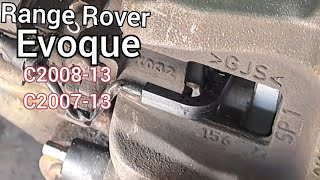
Helpful Videos

The information in this article is provided for general reference and educational purposes only. Vehicle specifications, procedures, and part compatibility can vary by production date, trim level, and region. Always consult your vehicle's factory service manual and verify part numbers before purchasing or performing repairs. Safety-critical components such as airbags, seat belts, and braking systems should be installed by a qualified professional.
- 🎬 Helpful Videos
- What Does C2007 Mean?
- Can I Drive With C2007?
- Common Causes
- Symptoms
- Diagnostic Flowchart
- Common Fixes & Costs
- Used vs. New Parts: Buying Guide
- What Happens If You Wait — Timeline
- Cost of Not Fixing It
- Diagnosis Steps
- When This Code Triggers (Freeze-Frame Conditions)
- Related Codes
- Climate & Environmental Factors
- How to Talk to a Mechanic About This Code
- Where to Take It: Dealer vs Independent vs Chain
- When to Walk Away From the Repair
- What Scan Tool You Need for This Code
- How to Clear the Code After You Fix It
- Will This Fail Emissions / State Inspection?
- Most Commonly Affected Vehicles
- Manufacturer-Specific Notes
- Real Owner Stories
- 2017 Jaguar XF with 55K miles - The 'Free Fix'
- 2015 Ford Edge with 80K miles - The Misdiagnosis Story
- 2018 Land Rover Discovery with 48K miles - The Software Glitch
- 2012 Land Rover LR2 with 110K miles - The Wiring Chase
- How to Prevent This Code From Triggering
- Frequently Asked Questions
- What does the suffix on a C2007 code mean?
- What are common misdiagnosis mistakes for C2007?
- Can I just ignore the C2007 code?
- Why did my cruise control stop working at the same time?
- Do I need a special tool to replace rear brake pads with an electric parking brake?
- My parking brake is stuck on. How can I move my car?
- Can a weak car battery cause a C2007 code?
- Key Takeaways
- 🎟️ Get 5% Off