

OBD-II Code C1999: Module Identity Mismatch
What C1999 means, why it triggers, and how to fix it
- Code C1999 triggers when a newly installed ABS module lacks your vehicle's specific 17-digit VIN in its memory.
- Expect stopping distances to increase by 20-35% during emergencies because ABS and Traction Control are completely disabled.
- Fixing this code requires a 1-to-2 hour Programmable Module Installation (PMI) using a J2534 pass-thru device, costing $150 to $300 at a qualified shop.
- Avoid programming fees entirely by sending your original, broken ABS module to a mail-in rebuild service for $150 to $350.
- Never install a used ABS module without verifying the part number is an identical match; mismatched hardware permanently blocks programming.
What Does C1999 Mean?
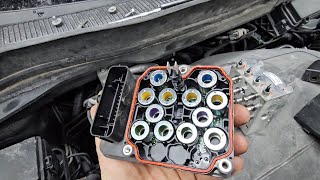
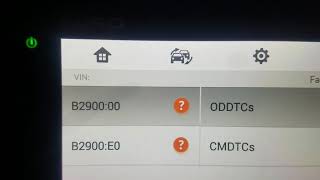
C1999 means the vehicle's main computer does not recognize a control module, almost always the Anti-lock Brake System (ABS) module. This occurs when a new or used module is installed but not programmed with the car's specific Vehicle Identification Number (VIN). The computer sees the module but rejects it as a foreign part, disabling its integration into the safety systems.
Technical definition: C1999 is a manufacturer-specific code (heavily used by Ford, Jaguar, and Land Rover) defined as 'Module Identification Mismatch'. It indicates the configuration data or VIN stored inside the ABS module does not match the data in the Powertrain Control Module (PCM). The module communicates on the network but fails the digital handshake.
Can I Drive With C1999?
Yes, But With Caution. You can drive the vehicle, but critical safety systems—Anti-lock Braking System (ABS), Traction Control, and Stability Control—are disabled. This significantly increases the risk of losing control in a panic stop or on slippery surfaces. Stopping distances increase by 20-35% because wheels lock up and skid, eliminating steering control during emergency maneuvers. Limit driving to reaching a repair shop.
Common Causes
- Unprogrammed replacement ABS module installed (Very Common) — Installing a new or used ABS module without performing a Programmable Module Installation (PMI) is the primary cause. The module must be digitally coded to the vehicle's specific 17-digit VIN.
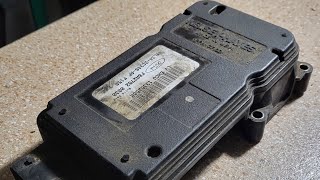
- Incorrect module part number (Common) — Installing a module from a vehicle with different features (e.g., AWD vs. RWD, different traction control options) causes a permanent configuration mismatch. The part number must exactly match the vehicle's build sheet.
- Failed programming attempt (Common) — An unstable OBD-II connection, low battery voltage, or incompatible scan tool software during the PMI process leaves the module in an unconfigured or 'bricked' state.
- Low battery voltage during initialization (Less Common) — A severe voltage drop during a battery replacement or jump-start corrupts the module's memory or interrupts the initial handshake with the PCM.
- Hardware failure (Wiring or Internal) (Less Common) — Corrosion at the connector pins or cracked solder joints inside the ABS module prevent the main computer from reading its identity.
- Faulty Powertrain Control Module (PCM) (Rare) — The main computer itself fails and cannot recognize a known-good, correctly programmed ABS module.
Symptoms
- ABS warning light illuminated — The ABS warning light on the dashboard stays on constantly, indicating the system is offline.
- Traction/Stability Control lights illuminated — Lights for traction control (TCS) or stability control (ESC, VSC) illuminate because these systems rely entirely on the ABS module.
- ABS and Traction Control disabled — Wheels lock up and skid during hard braking, causing a loss of steering control in emergencies.
- Erratic or dead speedometer — On older trucks (like 1999-2003 Ford F-150s), the ABS module provides the vehicle speed signal. A mismatch disables the speedometer. 🎬 Watch this Ford F-150 ABS control module replacement walkthrough.
Diagnostic Flowchart
Tap your situation to follow the diagnostic path that matches what you're seeing on this code.
Common Fixes & Costs
- Reprogramming the ABS Module — Parts: $0, Labor: $150-$300, ~1.5 hr book time (Professional)
- Sending Original Module for Rebuild — Parts: $150-$350 (service cost), Labor: $150-$300 (labor for R&R), ~1.5 hr book time (DIY)
- Replacing and Programming a New ABS Module
— Parts: $500-$1500+, Labor: $150-$300, ~2.0 hr book time
(Professional)
Ford F-150 (1999-2008): OEM ['4L3Z-2C065-BA'] (Alt: Dorman 599-774) - Repairing Damaged Wiring — Parts: $10-$50, Labor: $150-$400, ~2.5 hr book time (Intermediate)
Used vs. New Parts: Buying Guide
When a used part is worth it: A used ABS module is cost-effective for older vehicles, provided you have access to a shop that can reprogram it. The part number must match your original module exactly.
Donor-vehicle mileage cap: roughly under 100000 miles for the part to have meaningful remaining life.
Donor quality checklist:
- Verify the part number on the used module is an identical match.
- Purchase from a reputable seller offering a warranty.
- Avoid modules from flood-damaged or heavy-corrosion vehicles.
Decision logic:
- If You want to avoid programming hassles → Send your original module for a rebuild; it returns ready to install without programming.
- If The vehicle is newer and part cost is high → A new OEM part installed and programmed by a dealer offers the highest reliability.
- If Budget is the primary concern and programming is available → A used, matching-part-number module is viable, but carries the risk of being non-functional.
Warranty tradeoff: Used parts typically have a 30-90 day warranty. Rebuild services offer 1-year to lifetime warranties. New OEM parts carry a 1-2 year warranty.
Worst-case if a used part fails: $250-$500 if a used part fails after installation, covering repeat labor and another programming attempt.
What Happens If You Wait — Timeline
- Immediate: Code C1999 is set. ABS, Traction Control, and Stability Control warning lights illuminate. All associated safety systems are disabled. (MPG impact: 0%% · Added cost: $0)
- First emergency stop or slippery condition: The driver experiences wheel lock-up, skidding, and a significant increase in stopping distance. There is a loss of steering control during the panic brake. (MPG impact: 0%% · Added cost: Potentially thousands in accident-related damages.)
- 0-6 months: The vehicle fails its annual state safety inspection in strict jurisdictions. Repeated wheel lock-up during hard braking causes flat spots on tires. (MPG impact: 0%% · Added cost: $50-$400 (for potential tire damage or a failed inspection))
- 6+ months: No direct cascading mechanical failure occurs. The primary consequence is the significantly elevated safety risk every time the vehicle is driven. (MPG impact: 0%% · Added cost: The cost of an accident is the main financial risk.)
Cost of Not Fixing It
- Immediate: Disabled ABS, Traction Control, and Stability Control systems. This creates a significant safety risk, increasing the chance of losing vehicle control. (Added cost: N/A)
- 0-6 months: Increased tire wear if wheel lock-up occurs during braking. Automatic failure of state safety inspections in strict jurisdictions. (Added cost: $50 - $400)
- 6+ months: The primary cost remains the elevated safety risk. The main financial risk is an at-fault accident that could have been avoided by functional safety systems. (Added cost: Potentially thousands in accident damages or insurance premium increases.)
Diagnosis Steps
- Verify Recent Repairs
Ask if the ABS module was recently replaced. This single question solves 90% of C1999 diagnoses. If it was replaced, it needs programming.
Tools: None (Beginner) - Scan for All Codes
Read codes from the ABS, PCM, and BCM. Look for U-codes (communication faults) which indicate a wiring issue rather than just missing programming.
Tools: Advanced OBD-II Scan Tool (Beginner) - Check Module Identification (VIN Mismatch)
Navigate to the ABS module's data stream. Compare the VIN stored in the ABS module to the vehicle's actual VIN. A mismatch confirms the module needs programming.
Tools: Advanced OBD-II Scan Tool (Intermediate) - Verify Correct Part Number
Before attempting to program, verify the installed ABS module's part number exactly matches the OEM specification for the vehicle's VIN. Programming fails if the hardware is incompatible.
Tools: OEM Parts Catalog (Intermediate) - Attempt Module Reprogramming (PMI)
Use a factory-level scan tool to perform the Programmable Module Installation. This writes the correct VIN and configuration data to the module.
Tools: J2534 Pass-Thru Programmer (Professional) - Inspect Module Wiring and Connectors
If programming fails or the module is unreachable, inspect the ABS connector for corrosion, bent pins, or water intrusion.
Tools: Flashlight (Intermediate) - Check CAN Bus Resistance
With the battery disconnected, measure resistance between Pin 6 and Pin 14 on the OBD-II port. A reading of 120 Ω indicates a broken circuit or a disconnected ABS module (which houses a terminating resistor). Normal is 60 Ω.
Tools: Multimeter (Advanced)
When This Code Triggers (Freeze-Frame Conditions)
- Vehicle Speed: Above 10 mph (The self-test for module communication and configuration runs shortly after the vehicle begins moving.)
- System Voltage: 12.0-14.8V (Code sets during normal operating voltage; low voltage causes other communication codes.)
- Time Since Key-On: 5-30 seconds (The PCM polls other modules on the network shortly after startup to verify their identity.)
Related Codes
- U1900 — A CAN Bus communication fault. If C1999 is also present, the ABS module is powered up but its incorrect VIN causes a network conflict.
- U0121 — Indicates 'Lost Communication With ABS Module'. U0121 points to a dead module or wiring failure, while C1999 points to a configuration issue on a live module.
- C1095 — A Ford code for 'ABS Hydraulic Pump Motor Circuit Failure'. If a new module is installed to fix C1095 but is not programmed, both codes remain present.
- B1342 — A Ford code indicating an internal failure of the ABS module. If the replacement module is not programmed, the B-code is replaced by C1999.
Climate & Environmental Factors
- Moisture and Humidity: Water intrusion seeps past failing seals on the module's housing, causing corrosion on the internal circuit board and triggering communication failures.
- Road Salt (Salt Belt Regions): Corrosive environments drastically accelerate the deterioration of wiring harnesses and electrical connectors, causing high resistance or open circuits.
- Heat Cycles: Extreme temperature changes in the engine bay cause microscopic cracks in the solder joints on the internal circuit board, leading to intermittent failure.
How to Talk to a Mechanic About This Code
Say this: "I have a C1999 code and my ABS light is on. I suspect the ABS module needs to be programmed. Can your shop perform a 'Programmable Module Installation' or VIN-write procedure for this module?"
This signals you understand the specific, technical nature of the fix. It filters out shops that can't perform the work and focuses the conversation on the required electronic procedure, preventing unnecessary diagnostic fees.
Avoid saying:
- 'My ABS light is on, can you look at it?'
- 'My brakes feel funny.'
- 'Just fix whatever is wrong.'
Questions to ask before authorizing the repair:
- What is your fee for the module programming service itself?
- If the programming is successful, will that clear the C1999 code and turn off the ABS light?
- If the programming attempt fails, do I still pay the full amount?
- Have you confirmed the part number on the installed module is correct for my vehicle's VIN and options?
- What is your warranty on the programming service?
Where to Take It: Dealer vs Independent vs Chain
- Dealer:
A safe but expensive bet. They always have the correct tools and software. This is your best option if you're installing a brand new OEM module.
Best for: Vehicles under warranty, Newer vehicles where having a full service history is important, When an independent shop has failed to program the module correctly
Downsides: Highest cost, often 1.5-2x the labor rate of an independent shop., May refuse to program a used or aftermarket part that you provide., May default to recommending a very expensive new module replacement. (Typical cost: +50% vs. baseline) - Independent Shop:
Best fit, with a catch. A qualified diagnostic specialist is the ideal choice, offering dealer-level capability at a lower price. A general mechanic without advanced tools cannot fix this.
Best for: Out-of-warranty vehicles where cost is a major factor., Shops that specialize in your vehicle's brand., Programming a used or customer-supplied part.
Downsides: You MUST verify they have the specific programming capability. Not all independent shops do., Quality and expertise vary widely; check reviews and ask if they have a J2534 pass-thru tool. (Typical cost: +0% vs. baseline) - Chain Shop:
AVOID. These shops are not equipped for this type of electronic repair. They are very likely to waste your time and money.
Best for: Simple, unrelated maintenance like oil changes or tire rotations.
Downsides: Almost never have the expensive, specialized tools required for module programming., High likelihood of misdiagnosis or telling you to go to the dealer after charging a diagnostic fee., Technician skill is geared toward high-volume, simple repairs, not complex electronics. (Typical cost: -10% vs. baseline)
When to Walk Away From the Repair
If the total estimated repair cost exceeds 50% of the car's current private-party value, you should pause and seriously consider alternatives.
- Car worth $3000, fix is $250: Fix it. The repair is a small fraction of the car's value and restores a critical safety feature.
- Car worth $4000, fix is $2500: Walk away. The cost for a new module replacement is over half the car's value. This is a classic case for sending the original module for a $350 rebuild instead, which makes it a 'Fix it' decision.
- Car worth $20000, fix is $1800: Fix it. While expensive, the repair is well below the 50% threshold and necessary for a modern, high-value vehicle.
What Scan Tool You Need for This Code
Minimum: A scanner that can read and clear codes from the Anti-lock Brake System (ABS) module. A basic engine-only code reader will NOT see the C1999 code.
A basic scanner cannot see Chassis (C) codes. Even if it can, it only tells you the code is present. It cannot see the crucial diagnostic data (mismatched VINs) or perform the fix (reprogramming the module).
Budget: FOXWELL NT301, Autel AutoLink AL619 (~$70) — These tools read and clear ABS codes. This confirms C1999 is the active fault but offers no further diagnostic or repair functions. It is a starting point for a DIYer.
Mid-range: Foxwell NT510 Elite, XTOOL D7 (~$250) — These scanners offer bidirectional control and access module information. They read the VIN stored in the ABS module, allowing you to definitively confirm the mismatch against the car's actual VIN. They cannot perform the programming fix.
Professional: Autel MaxiCOM MK808S / MK906BT (~$450-1200) — These professional-grade tools perform the Programmable Module Installation (PMI). They act as a J2534 pass-thru device, writing the new VIN and configuration data to the module, which is the ultimate fix for code C1999.
Rent vs buy: You can rent a basic ABS-capable scanner from auto parts stores to confirm the code for free. However, you cannot rent the professional tool required to program the module. For a one-time fix, pay a shop for the programming.
How to Clear the Code After You Fix It
- Perform the Programmable Module Installation (PMI) or VIN configuration procedure with a compatible scan tool.
- Use the scan tool to clear the C1999 code from the ABS module.
- Perform a brake bleed procedure if the hydraulic unit was replaced.
- Conduct a drive cycle to allow the system to self-test.
Drive cycle (~15 minutes): Start the engine and idle for 2 minutes. Drive in a mix of city and highway conditions, exceeding 20 mph. Perform several normal stops. The ABS light remains off if the programming was successful.
Readiness monitors affected: None. This is a chassis code and does not affect emissions readiness monitors.
Watch out for:
- Clearing the code with a basic scanner without programming the module causes the code to return instantly.
- Disconnecting the battery does not clear this code because the mismatch is stored in non-volatile memory.
Will This Fail Emissions / State Inspection?
No — by itself this code doesn't fail OBD inspection (but it can keep readiness monitors from setting, which causes a separate fail).
- California: An illuminated ABS light is not an automatic failure for the smog inspection. However, a technician may refuse to test the vehicle on a dynamometer for safety reasons.
- New York: An illuminated ABS warning light is grounds for failure of the annual safety inspection.
- Texas: An illuminated ABS light is NOT a cause for rejection during the safety inspection. However, an illuminated red 'Brake' warning light is a failure.
Most Commonly Affected Vehicles
- Ford F-150 (1999-2008) — Extremely common after ABS module replacement. For 1999-2003 models, this causes an erratic speedometer because the ABS system provides the vehicle speed signal.
- Ford Explorer / Ranger (2002-2005) — Prone to this code when a used or unprogrammed ABS module is installed to fix a common C1095 pump motor failure.
- Mercury Mountaineer (2002-2005) — Shares the same ABS system as the Ford Explorer and is equally susceptible to C1999 after module replacement.
- Mazda Tribute (2001-2006) — Shares its platform and electronic modules with the Ford Escape, exhibiting C1999 for module configuration errors.
- Jaguar X-Type (2002-2008) — Commonly experiences this code due to failure of the Bosch ABS module. It is critical to match the part number exactly before programming.
- Land Rover Discovery II (1999-2004) — Replacing the WABCO ABS modulator without programming causes C1999 and triggers the 'Three Amigos' warning lights.
- Chevrolet Silverado / GMC Sierra (1999-2006) — Sets this code after the Electronic Brake Control Module (EBCM) is swapped. Reprogramming is required.
- Chevrolet Corvette (1997-2004) — Occurs if the incorrect EBCM is installed. Modules for cars with Active Handling are different from base models and are not interchangeable.
Manufacturer-Specific Notes
- Ford: C1999 almost exclusively means 'Module Identification Mismatch' and points directly to a VIN programming issue requiring Programmable Module Installation (PMI) via IDS software.
- Jaguar / Land Rover: C1999 confirms the module is powered on but not correctly set up for the vehicle's specific features. Using a used module is highly discouraged unless the part number is an identical match.
- General Motors (Chevrolet/GMC): GM uses proprietary codes for module mismatch. On trucks from this era, corrosion on the wheel speed sensor mounting surface causes false ABS activation, which is often misdiagnosed as a module fault.
- Asian/European Brands: This specific code is rarely used by Toyota, Honda, BMW, or VW, which utilize their own proprietary sets of chassis and network codes for configuration faults.
Real Owner Stories
2009 Ford F-150 with 140k miles
ABS and traction control lights came on suddenly. The ABS pump was found to be stuck on, even with the truck off.
Outcome: The owner removed the ABS module and sent it to a mail-in repair service for $149. The repaired, original module was reinstalled. Since it was the original module, no reprogramming was needed, and the lights stayed off.
Lesson: For common failures, sending your original module for a rebuild is the cheapest option, completely avoiding the need for expensive professional reprogramming.
1999 Chevy Silverado with 52k miles
After sitting for 8 years, the ABS and Brake lights came on, and the ABS pump ran constantly, draining the battery.
Outcome: The immediate problem of the parasitic drain was solved by pulling the fuse, but the warning lights remained. The case highlights the physical difficulty of the repair on older, corroded vehicles.
Lesson: On older vehicles in the rust belt, a simple module swap becomes a major mechanical challenge due to seized fasteners. Be prepared with penetrating oil.
2003 C5 Corvette
The 'Service ABS and Active Handling' message appeared. The dealer diagnosed a failed EBCM and informed the owner the part was discontinued.
Outcome: The service repaired and returned the module within a week. After reinstallation, the error messages were gone. The owner avoided a complex retrofit of a newer-style ABS system.
Lesson: For older or specialty vehicles where new parts are discontinued, a rebuild service is a critical solution that preserves the original vehicle configuration.
1999 C5 Corvette with Active Handling (RPO JL4)
ABS, traction control, and ride control systems were failing. The dealer diagnosed a bad ABS module.
Outcome: Forum members warned that there were two different EBCM units for this model year: one for cars with 'Active Handling' and one for cars without. They are not interchangeable.
Lesson: When sourcing a used module, you must match the part number exactly. Vehicle options require a different module, and installing the wrong one causes a C1999 code.
How to Prevent This Code From Triggering
- Flush brake fluid every 2-3 years (Every 2-3 years or 30,000 miles) — Brake fluid absorbs moisture over time, leading to internal corrosion of the sensitive solenoid valves and electronics within the ABS module.
- Apply dielectric grease to connectors (During any brake or electrical work) — In salt-belt regions, applying dielectric grease to the ABS module's main electrical connector creates a seal that prevents moisture and salt from causing corrosion on the pins.
- Ensure stable battery voltage (Ongoing) — Weak batteries and improper jump-starting send voltage spikes that damage sensitive electronics in the ABS module.
- Keep cowl and chassis drains clear (Annually, especially in the fall) — Clogged drains cause water to overflow and run down the firewall, potentially soaking the ABS module and its wiring.
- Periodically wash the vehicle's undercarriage (Seasonally, especially after winter in salt-belt areas) — Washing away road salt and grime reduces the corrosive environment that attacks the ABS module's housing and wiring harness.
Frequently Asked Questions
Why did this code appear right after I had my brakes fixed?
If the repair involved replacing the ABS control module, the new part was not programmed to your car. The shop skipped the mandatory Programmable Module Installation (PMI). Return and request they finish the programming.
What are the most common misdiagnosis mistakes for a C1999?
The biggest mistake is replacing the ABS module again, assuming the replacement is faulty, when it actually just needs programming. Another error is chasing communication codes (U-codes) before performing the VIN write.
My battery died and now I have a C1999 code. What happened?
A severe voltage drop during cranking or improper jump-starting corrupts the configuration data. Ensure the battery is fully charged, clear the codes, and perform a drive cycle. If the code returns instantly, the module requires reprogramming.
Can I use an ABS module from a car with different features?
No. The ABS module is hard-coded for specific vehicle options like AWD or stability control. Even if you program the VIN, the hardware mismatch prevents it from working and keeps the code active.
Can I fix code C1999 myself?
You cannot perform the final programming yourself without a $500+ J2534 pass-thru tool and software subscription. However, you can remove your original module and mail it to a rebuild service. Reinstalling your original, repaired module requires no programming.
Is it safe to drive with code C1999?
The vehicle will drive and standard brakes will function normally. However, your anti-lock braking (ABS) and traction control systems are completely disabled. This increases the risk of skidding and losing control during emergency braking.
Do I have to go to the dealer to fix this?
No. Many independent repair shops specializing in diagnostics have the necessary J2534 pass-thru tools to configure a new module. Call ahead and specifically ask if they can perform a 'Programmable Module Installation' for your make.
Will buying a used ABS module from the same model car work?
Not without reprogramming. The used module is permanently tied to the donor car's VIN. Installing it immediately triggers the C1999 code until a shop overwrites it with your car's VIN.
Key Takeaways
- Code C1999 triggers when a newly installed ABS module lacks your vehicle's specific 17-digit VIN in its memory.
- Expect stopping distances to increase by 20-35% during emergencies because ABS and Traction Control are completely disabled.
- Fixing this code requires a 1-to-2 hour Programmable Module Installation (PMI) using a J2534 pass-thru device, costing $150 to $300 at a qualified shop.
- Avoid programming fees entirely by sending your original, broken ABS module to a mail-in rebuild service for $150 to $350.
- Never install a used ABS module without verifying the part number is an identical match; mismatched hardware permanently blocks programming.
Helpful Videos


The information in this article is provided for general reference and educational purposes only. Vehicle specifications, procedures, and part compatibility can vary by production date, trim level, and region. Always consult your vehicle's factory service manual and verify part numbers before purchasing or performing repairs. Safety-critical components such as airbags, seat belts, and braking systems should be installed by a qualified professional.
- 🎬 Helpful Videos
- What Does C1999 Mean?
- Can I Drive With C1999?
- Common Causes
- Symptoms
- Diagnostic Flowchart
- Common Fixes & Costs
- Used vs. New Parts: Buying Guide
- What Happens If You Wait — Timeline
- Cost of Not Fixing It
- Diagnosis Steps
- When This Code Triggers (Freeze-Frame Conditions)
- Related Codes
- Climate & Environmental Factors
- How to Talk to a Mechanic About This Code
- Where to Take It: Dealer vs Independent vs Chain
- When to Walk Away From the Repair
- What Scan Tool You Need for This Code
- How to Clear the Code After You Fix It
- Will This Fail Emissions / State Inspection?
- Most Commonly Affected Vehicles
- Manufacturer-Specific Notes
- Real Owner Stories
- 2009 Ford F-150 with 140k miles
- 1999 Chevy Silverado with 52k miles
- 2003 C5 Corvette
- 1999 C5 Corvette with Active Handling (RPO JL4)
- How to Prevent This Code From Triggering
- Frequently Asked Questions
- Why did this code appear right after I had my brakes fixed?
- What are the most common misdiagnosis mistakes for a C1999?
- My battery died and now I have a C1999 code. What happened?
- Can I use an ABS module from a car with different features?
- Can I fix code C1999 myself?
- Is it safe to drive with code C1999?
- Do I have to go to the dealer to fix this?
- Will buying a used ABS module from the same model car work?
- Key Takeaways
- 🎟️ Get 5% Off