

OBD-II Code C1978: Audio Steering Wheel Switch Failure
What C1978 means, why it triggers, and how to fix it
- Code C1978 indicates a short circuit in the steering wheel audio control buttons, locking voltage higher than the expected range.
- A broken clock spring causes 80% of C1978 codes and simultaneously triggers the airbag warning light.
- Pressing 'Volume Up' and getting a station change is the hallmark symptom of incorrect resistance caused by this short.
- Driving with an active airbag light disables the Supplemental Restraint System (SRS), preventing deployment in a crash and failing state safety inspections.
- Before replacing parts on 2014-2019 GM trucks, check the 2A fuse at position F15, which commonly blows and disables all steering controls.
What Does C1978 Mean?
Code C1978 indicates the vehicle's computer detected a short circuit in the steering wheel audio control wiring. A signal wire is connecting directly to a power source, causing the buttons to fail completely or perform incorrect functions.
Technical definition: The SAE definition is 'Audio Steering Wheel Switch Circuit Short To Battery.' The Body Control Module (BCM) detects voltage in the audio switch circuit exceeding the expected range, confirming a direct connection to battery voltage.
Can I Drive With C1978?
Yes, But With Caution. You can drive, but your steering wheel radio controls will not function. If the airbag warning light is also illuminated, the Supplemental Restraint System (SRS) is disabled and the airbags will not deploy in a collision. This severe safety risk requires immediate repair and causes automatic failure during state safety inspections.
Common Causes
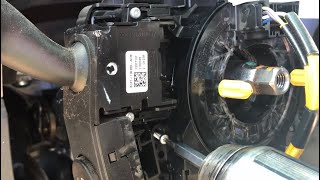
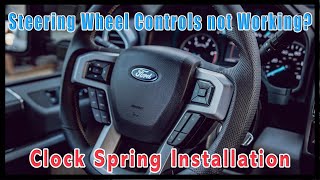
- Faulty Clock Spring (Very Common) — The clock spring is a coiled ribbon cable behind the steering wheel maintaining electrical connections for the airbag, horn, and buttons while the wheel turns. The thin internal wires break or short out from constant rotation, making this the primary cause when multiple functions fail simultaneously.
- Defective Steering Wheel Switch Pack (Common) — The internal contacts of the physical buttons wear out or break. Moisture and dirt cause internal short circuits within the switch assembly, forcing buttons to perform the wrong function.
- Contaminated or Sticking Buttons (Common) — Dirt, body oils, or spilled liquids build up around the buttons, creating an electrical bridge between contacts. This generates incorrect resistance signals that the computer misinterprets.
- Damaged Wiring or Connectors (Less Common) — The wiring harness connecting the switches to the clock spring pinches, frays, or disconnects due to vibrations, previous repairs, or known recall issues where wires chafe against sharp steering column edges.
- Incorrectly Installed Aftermarket Radio (Rare) — Aftermarket stereo installations utilizing steering wheel control interface modules (like an ASWC-1) trigger this code if wired incorrectly, causing a direct short circuit to the battery line.
- Faulty Control Module or Software (Rare) — A software glitch or hardware failure within the Body Control Module (BCM) or Steering Column Control Module (SCCM) misinterprets switch signals. This requires dealer-level module reprogramming or replacement.
Symptoms
- Steering wheel audio buttons do not work — The volume, seek, or mode buttons on the steering wheel fail to respond.
- Buttons perform the wrong function — Pressing the volume up button changes the radio station. This erratic behavior confirms a shorted circuit or incorrect resistance in the switch or clock spring.
- Airbag warning light is on — A fault in the clock spring severs the connection to the driver's airbag, triggering the SRS warning light. This is the most critical related symptom.
- Horn does not work — The horn's electrical circuit passes through the clock spring. Complete clock spring failure disables the horn alongside the audio controls.
- Controls work intermittently — Buttons function only when the steering wheel is in a specific position, confirming a broken wire inside the clock spring ribbon.
- Cruise control buttons do not work — Cruise control buttons wire through the same clock spring. Simultaneous failure of cruise and audio controls isolates the clock spring as the faulty component.
Diagnostic Flowchart
Tap your situation to follow the diagnostic path that matches what you're seeing on this code.
Common Fixes & Costs
- Replace the Clock Spring — Parts: $100-$350, Labor: $100-$200, ~1.2 hr book time (Professional)
- Replace the Steering Wheel Switch Pack — Parts: $40-$320, Labor: $100-$300, ~1 hr book time (Intermediate)
- Clean or Repair Switch Contacts — Parts: $5-$15, Labor: $100-$200, ~1 hr book time (Intermediate)
- Repair Damaged Wiring — Parts: $5-$20, Labor: $100-$300, ~1.8 hr book time (Professional)
- Replace/Reprogram Control Module — Parts: $300-$700, Labor: $100-$200, ~2 hr book time (Professional)
Used vs. New Parts: Buying Guide
When a used part is worth it: A used OEM clock spring or switch pack from a low-mileage vehicle (under 60K miles) scrapped for a rear-end collision is a cost-effective option.
Donor-vehicle mileage cap: roughly under 60000 miles for the part to have meaningful remaining life.
Donor quality checklist:
- Verify the donor vehicle's VIN ensures exact feature matching (e.g., heated wheel, cruise control).
- Inspect the part for physical damage, clean connectors, and straight pins.
- Avoid junkyards that cannot provide the donor vehicle's history or mileage.
Decision logic:
- If Airbag light is on, indicating a safety system fault. → Buy a new OEM part. Cost savings do not justify the risk of a faulty used part failing to deploy the airbag.
- If Vehicle is older (>10 years) and budget is the primary concern. → A used OEM or reputable aftermarket part (e.g., Dorman) is viable, accepting the risk of a shorter lifespan.
- If The part is for a high-value or newer vehicle you plan to keep long-term. → Buy a new OEM part. The higher initial cost guarantees better quality, longer life, and peace of mind.
Warranty tradeoff: Used parts offer a 30-90 day warranty. Aftermarket new parts include a 1-year to limited lifetime warranty. New OEM parts carry a 1-2 year manufacturer warranty.
Worst-case if a used part fails: $200-$400 if a used part fails prematurely, requiring duplicate labor costs.
What Happens If You Wait — Timeline
- 0-1 month: Intermittent failure of audio buttons, triggered by cold weather or turning the wheel. No warning lights illuminate. (Added cost: $0)
- 1-3 months: Audio buttons fail completely or perform the wrong function. Cruise control and horn begin to fail. The C1978 code permanently stores. (Added cost: $0)
- 2-6 months: The airbag warning light illuminates. The break in the clock spring's internal wiring severs the driver's airbag circuit. (Added cost: Incalculable (risk of serious injury or death).)
- 6+ months: Vehicle operates with a critical safety defect. Driving in this condition causes failed state safety inspections, preventing registration renewal. (Added cost: $50-$150)
Cost of Not Fixing It
- Immediate: Loss of convenience features like steering wheel audio and cruise controls. (Added cost: 0)
- Immediate (if airbag light is on): The driver's airbag is disabled and will not deploy in a collision, creating a severe safety risk. (Added cost: Incalculable (risk of serious injury or death))
- At next state inspection: Vehicle fails mandatory safety inspections in states like New York and Virginia if the airbag light is on, preventing registration renewal. (Added cost: $50-$150)
- Long-term: A short in the clock spring or wiring drains the battery or causes cascading electrical faults. (Added cost: $100-$300)
Diagnosis Steps
- Verify the Symptoms
Test every steering wheel button. Note if the problem changes when turning the steering wheel. Confirm if the horn, cruise control, and airbag light are affected to isolate the clock spring versus a single switch pack.
Tools: None (Beginner) - Check Fuses
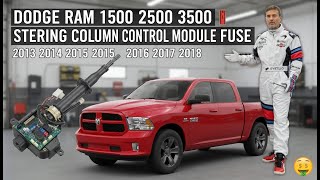
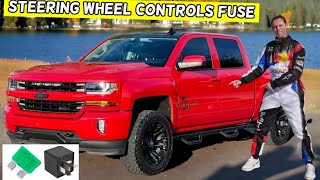
Locate the fuse for the steering wheel controls in the owner's manual. On 2014-2019 Chevy Silverados, check fuse F15 in the passenger-side dash. On 4th Gen Dodge Rams, check fuses F82 and F87 in the engine bay.
Tools: Fuse puller or needle-nose pliers (Beginner) - Scan for All Trouble Codes
Use an OBD-II scanner capable of reading Body (B), Chassis (C), and Network (U) codes. Look for C1978 alongside airbag system codes or Steering Column Control Module communication errors.
Tools: OBD-II Scanner (capable of reading B, C, and U codes) (Beginner) - Monitor Live Data (Advanced)
Access the live data stream for the Body Control Module (BCM) using a bi-directional scan tool. Press each steering wheel button and observe the voltage or resistance values. Incorrect, erratic, or missing data confirms a fault in the switch, clock spring, or wiring.
Tools: Advanced Bi-Directional Scan Tool (Advanced) - Test Switch Resistance Values (Advanced)
Test the resistance of the switch pack using a multimeter. Each button creates a specific resistance value (e.g., Volume Up = ~330 Ohms). Infinite (open) or zero (shorted) readings dictate immediate switch pack replacement.
Tools: Multimeter, Vehicle-specific service manual with resistance chart (Advanced) - Inspect Clock Spring and Wiring (Advanced)
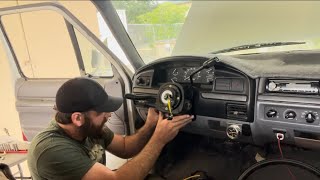
Disconnect the battery and remove the driver's side airbag. Visually inspect the clock spring connectors and switch wiring for damage, chafing, or loose connections. This carries a risk of accidental airbag deployment.
Tools: Socket set, trim removal tools, small hex wrench or pick (Advanced) - LIN Bus Diagnosis (Professional)
For vehicles utilizing a Local Interconnect Network (LIN bus), back-probe the single LIN bus wire at the Steering Column Control Module (SCCM) with an oscilloscope. A flat line at 12V confirms a short to power.
Tools: Oscilloscope, vehicle-specific wiring diagrams (Professional)
When This Code Triggers (Freeze-Frame Conditions)
- System Voltage: 11-14V (Ignition On)
- Vehicle Speed: Any (The fault triggers when stationary or driving.)
- Button Status: Not Pressed (The BCM detects voltage on the switch signal wire when no button is pressed.)
- Module State: Active (The Body Control Module (BCM) is awake and monitoring inputs.)
Related Codes
- B-series Airbag Codes (e.g., B0001) — C1978 paired with an airbag code for 'Driver Squib Circuit Open' guarantees the clock spring is the single point of failure connecting both systems.
- U0256 — Indicates 'Lost Communication With Front Controls Interface Module A'. This points to a completely disconnected harness or a failed Steering Column Control Module (SCCM) rather than a simple short.
- U1009 — Indicates a 'LIN Bus Fault', common on Dodge Ram trucks. This confirms a communication failure on the specific network the steering wheel switches use, pointing to the switch pack or clock spring.
- C1979 — Indicates 'IWE Solenoid Circuit Failure' on Ford trucks. Seeing codes from the same chassis family points to a broader electrical issue within the control module managing these circuits.
Climate & Environmental Factors
- Cold Weather: Low temperatures cause materials to contract, separating hairline cracks in a clock spring's ribbon cable or weak solder joints. As the cabin warms, materials expand and temporarily restore the electrical connection, causing intermittent symptoms.
- High Humidity: Moisture penetrates switch assemblies and connectors, corroding circuit board contacts. This alters resistance values, causing incorrect button functions or direct short circuits.
How to Talk to a Mechanic About This Code
Say this: "I have a C1978 code and my steering wheel audio controls are not working. My airbag light is also on. I suspect it's a faulty clock spring. I'd like to schedule a diagnostic to confirm and get a quote for the replacement."
This signals you've done your research and guides the technician toward the most likely cause. Mentioning the specific code, symptoms, and probable faulty part prevents a broad, expensive, and unnecessary diagnostic search.
Avoid saying:
- My radio buttons are broken.
- My steering wheel is making funny noises.
- Just fix whatever is wrong with it.
Questions to ask before authorizing the repair:
- Based on the diagnostic, is the fault in the clock spring, the switch, or the wiring?
- If the clock spring is replaced, does the repair include clearing all related SRS and BCM codes?
- Will you need to recalibrate the steering angle sensor after the repair, and is that included in the quote?
- What is the warranty on the new part and the labor for this specific repair?
Where to Take It: Dealer vs Independent vs Chain
- Dealer:
Recommended. Replacing a clock spring involves removing the airbag, a safety-critical task. Dealers are best equipped for SRS system repairs and subsequent electronic calibrations.
Best for: Vehicles under warranty., Complex repairs involving safety systems like airbags., Repairs requiring module reprogramming or steering angle sensor calibration.
Downsides: Highest labor rates and part costs., Unwilling to install customer-supplied or aftermarket parts. (Typical cost: +40% vs. baseline) - Independent Shop:
Viable with caution. Choose a reputable independent shop explicitly experienced with SRS and airbag system repairs. Verify they possess the tools to properly diagnose and reset airbag system faults before committing.
Best for: Out-of-warranty vehicles where cost is a major factor., Building a long-term relationship with a trusted mechanic.
Downsides: Quality varies widely; not all independent shops are qualified to work on SRS/airbag systems., Lacks expensive, manufacturer-specific tools for diagnostics or calibration. (Typical cost: +0% vs. baseline) - Chain Shop:
AVOID. This repair involves the airbag system, a significant safety component beyond the scope of most chain repair shops. Entrusting this job to an unqualified shop poses a serious safety risk.
Best for: Simple, routine maintenance like oil changes, tires, and brakes.
Downsides: Technicians are not trained for complex electrical or safety system diagnostics., High pressure to meet sales quotas leads to misdiagnosis and unnecessary upselling. (Typical cost: -10% vs. baseline)
When to Walk Away From the Repair
If the estimated repair cost for the clock spring and related issues exceeds 40% of your car's current private-party value, weigh your options.
- Car worth $3000, fix is $550: Borderline. The repair is necessary for safety and to pass inspection, but it is a significant percentage of the car's value. Consider selling 'as-is' to a DIY-savvy buyer.
- Car worth $15000, fix is $550: Fix it. This is a critical safety repair and the cost is a small fraction of the vehicle's value.
- Car worth $2000, fix is $1200: Walk away. If diagnosis reveals a complex issue requiring module replacement alongside the clock spring, the cost exceeds the car's worth.
What Scan Tool You Need for This Code
Minimum: A scanner capable of reading and clearing Chassis (C-codes) and Supplemental Restraint System (SRS/Airbag) codes. Basic engine-only code readers will not detect C1978.
A standard $20 OBD-II reader only accesses Powertrain (P-codes). It shows 'No Codes' for this issue. You need a tool that communicates with the Body Control Module (BCM) and SRS module.
Budget: BlueDriver Pro or Foxwell NT604 Elite (~$99) — Reads and clears SRS/Airbag, ABS, Engine, and Transmission codes. Confirms the C1978 code and accompanying airbag codes essential for diagnosis.
Mid-range: Autel MaxiCOM MK808S or Foxwell NT530 (~$370) — Bi-directional scanners that view live data from steering wheel switches. Confirms if the switch, clock spring, or module is failing. Performs Steering Angle Sensor (SAS) calibrations required after clock spring replacement.
Professional: Autel MaxiSys Series or Launch X431 Series (~$500-1200) — Provides full dealer-level functionality, module programming, and LIN bus communication diagnostics. Essential for professional shops.
How to Clear the Code After You Fix It
- Perform physical repair (replace clock spring or switch pack).
- Reconnect the battery.
- Use an OBD-II scan tool capable of reading Chassis codes to clear the C1978 fault.
- Turn the ignition on and verify the airbag light performs its self-test and turns off.
- Test all steering wheel button functions, including horn and cruise control.
- Perform a short drive, turning the steering wheel lock-to-lock to confirm the fix is stable.
Drive cycle (~15 minutes): A 15-minute test drive involving multiple full steering wheel turns confirms the repair. Verify the airbag system self-test completes successfully and buttons function correctly in all wheel positions.
Readiness monitors affected: This is a Chassis (C) code and does not affect powertrain emissions readiness monitors.
Watch out for:
- Clearing the code without fixing the hardware fault causes immediate code return.
- Forgetting to clear related airbag (B-prefix) codes leaves the airbag light on.
- Failing to center a new clock spring during installation snaps the internal ribbon on the first full turn.
Will This Fail Emissions / State Inspection?
No — by itself this code doesn't fail OBD inspection (but it can keep readiness monitors from setting, which causes a separate fail).
- California: An active airbag light does NOT cause a failure of the California Smog Check, which focuses strictly on emissions.
- New York: An active airbag warning light triggers an automatic failure of the mandatory annual safety inspection.
- Texas: The airbag light is NOT a cause for failure in the annual safety inspection. Only the check engine light triggers an automatic OBD failure.
- Virginia: An illuminated airbag warning light causes the vehicle to fail its annual safety inspection.
Most Commonly Affected Vehicles
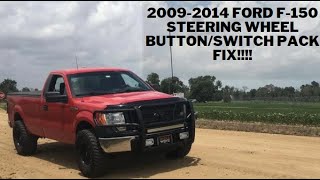
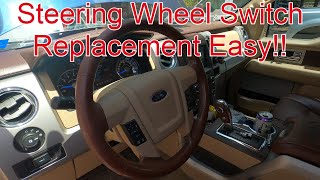
- Ford F-150 (2009-2014) — Widespread failure of steering wheel switch packs causing erratic button behavior. Replacement requires part AL3Z-9C888-CA.
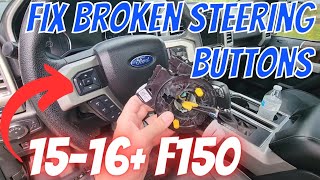
- Ford F-150 (2015-2020) — Prone to clock spring failures. If the heated steering wheel also fails, check fuse #36 in the passenger compartment fuse box.
- Ford Fusion (2013-2017) — Clock spring failure starts with intermittent button function that worsens over time and triggers the airbag light.
- Ford Escape (2008-2012) — Steering wheel switches fail internally due to wear. Replacement requires airbag removal.
- Ford Edge (2011-2014) — Faulty switch packs (part BT4Z-9C888-BB for the left side) or clock springs cause total button failure.
- Ford Fiesta (2013-2018) — Intermittent steering wheel buttons are common. Spraying electronics cleaner into the switch assembly after removing the airbag often resolves the issue.
- Chevrolet / GMC Silverado / Sierra 1500 (2014-2019) — Troubleshooting steering wheel control failure must start by checking the 2A fuse at position F15 in the passenger-side dashboard fuse block.
- Dodge Ram 1500 / 2500 / 3500 (2013-2018) — Check fuses F82 and F87 first. NHTSA Safety Recall R36/15V-459 addresses steering wheel wiring that chafes and shorts out, causing complete control failure.
- Nissan Titan (2016-2021) — Erratic controls trace to a failing clock spring (spiral cable) or worn contacts in the switch packs.
Manufacturer-Specific Notes
- Ford: Steering wheel buttons fail by performing the wrong action (e.g., volume up changes the station). This confirms a failing switch pack or clock spring, not a radio issue.
- Dodge / Ram: On 2012-2014 Ram trucks, investigate NHTSA recall R36 / 15V-459 before replacing parts. Steering wheel wiring chafes on the airbag retainer spring, causing a short. Always check fuses F82 and F87 first.
- Chevrolet / GMC: For 2014-2019 Silverado and Sierra trucks, a blown 2A fuse at position F15 in the passenger-side dashboard fuse block is the most common cause of complete control failure.
- Volkswagen: Simultaneous failure of the airbag light, horn, and steering wheel controls guarantees a bad clock spring. These parts frequently experience national backorders.
Real Owner Stories
2014 Chevy Silverado with ~80k miles
All steering wheel controls (audio, cruise, menu) stopped working after a detailer visit. The horn remained functional.
What they tried:
- Assumed a battery disconnect caused a glitch.
- Checked fuses.
- Considered a broken clock spring.
Outcome: The issue was a single blown 2A fuse (F15) located in the passenger-side dashboard fuse block. Replacing the fuse restored all functions.
Lesson: Check the simplest solution first. For 2014-2019 GM trucks, the F15 fuse is the most common point of failure for steering wheel controls.
2013 Dodge Ram 1500
All steering wheel buttons and the horn suddenly stopped working. The airbag light illuminated.
What they tried:
- Checked fuses F82 and F87.
- Researched online forums for recalls.
- Took the vehicle to a dealer for diagnosis.
Outcome: The dealer confirmed NHTSA Safety Recall R36/15V-459. The steering wheel wiring harness chafed against the airbag retainer spring, causing a short. The free recall service rerouted the wiring and resolved all symptoms.
Lesson: For 4th Gen Dodge Rams with simultaneous failure of all steering wheel functions, investigate recall 15V-459 before purchasing a new clock spring.
2011 Ford F-150 with 120k miles
Audio control buttons worked intermittently in cold weather. Eventually, the airbag light illuminated and the horn failed.
What they tried:
- Replaced the audio switch pack, but the problem persisted.
- Scanned for codes and found C1978 and a B-series airbag code for high resistance.
Outcome: The combination of audio, horn, and airbag faults confirmed a broken clock spring. Replacing the clock spring (OEM part GL3Z-14A664-A) fixed all issues.
Lesson: Replacing just the switch when multiple systems (horn, airbag) fail is a wasted step. If more than one button set fails, the clock spring is the culprit.
2017 Chevy Silverado after aftermarket radio install
Right-side steering wheel audio controls failed after installing an aftermarket Android head unit, even after reinstalling the factory radio.
What they tried:
- Reinstalled the factory radio.
- Checked all related fuses.
- Disconnected the battery to reset the BCM.
- Replaced the right-side switch pack.
Outcome: The aftermarket harness permanently shorted a data line, requiring professional diagnosis of the LIN bus communication and module reprogramming.
Lesson: Incorrectly wiring an aftermarket radio causes permanent damage to vehicle electronics. If controls fail after returning to stock, advanced module diagnosis is required.
How to Prevent This Code From Triggering
- Keep Cabin Clean and Dry (Regularly) — Prevents dirt, dust, and spilled liquids from contaminating switch contacts, avoiding short circuits or incorrect resistance readings.
- Use Electronics-Safe Cleaners (As needed for cleaning) — Avoids harsh household chemicals or excessive moisture that destroy protective coatings and internal switch electronics.
- Avoid Turning the Wheel When Stationary (Daily habit) — Minimizes unnecessary winding of the clock spring's delicate ribbon cable, reducing mechanical wear.
- Use a Windshield Sun Shade (During sunny days) — Protects interior plastics and steering wheel switches from long-term brittleness caused by UV exposure and extreme heat.
- Ensure Professional Installation of Accessories (During modifications) — Prevents accidental damage to the clock spring or wiring when installing aftermarket steering wheels or radios.
Frequently Asked Questions
Can I fix the C1978 code myself?
Replacing the steering wheel switches is possible for an experienced DIYer. However, the repair requires disconnecting the battery and removing the driver's airbag, which is dangerous if handled incorrectly. Replacing the clock spring is more complex and requires a professional to ensure the airbag system remains functional.
Why do my steering wheel buttons do the wrong thing?
The buttons send specific resistance signals to the computer for each function. A short circuit or contamination alters this resistance value. The computer misinterprets the faulty signal, executing the wrong command.
Could the problem just be dirty buttons?
Yes. Dirt, grime, or spilled liquids create a short or alter resistance inside the switch. Cleaning the button assemblies with an electronics-safe contact cleaner often resolves erratic behavior without replacing parts.
What are the common misdiagnosis mistakes for C1978?
A common mistake is replacing the switch pack when the clock spring is the actual cause. If only the audio buttons fail, the switch is the primary suspect. If multiple systems fail simultaneously (audio, cruise, horn, airbag), the clock spring is the culprit.
Is it safe to drive with an airbag light on?
No. An illuminated airbag light means the Supplemental Restraint System (SRS) has disabled the airbags. They will not deploy in a crash, posing a severe safety hazard. This condition also causes automatic failure during annual safety inspections in many jurisdictions.
Will a battery reset permanently fix the problem?
No. A battery reset temporarily clears the code if caused by a software glitch, but C1978 almost always indicates a physical hardware failure. The code will return until the clock spring or switch is repaired.
My cruise control buttons also stopped working. Is that related?
Yes. The wiring for the cruise control, audio, and horn buttons all pass through the same clock spring. When multiple button sets fail simultaneously, the clock spring is the definitive cause.
Can I just replace the broken button or do I need the whole switch assembly?
Individual plastic buttons are not sold separately. They are integrated into a complete switch pack assembly. If a single button breaks, you must replace the entire switch pack for that side of the steering wheel.
Why do my steering wheel buttons only fail when it's cold?
Cold temperatures cause metal and plastic components to contract. This contraction separates hairline cracks in clock spring wires or switch solder joints, creating an open circuit. As the cabin warms, materials expand and temporarily restore the connection.
What is FORScan and can it fix my steering wheel buttons?
FORScan is a diagnostic software tool for Ford vehicles that accesses advanced modules. It can reprogram a corrupted Steering Column Control Module (SCCM) to restore button functionality. However, it cannot fix physical hardware failures like a broken clock spring.
Key Takeaways
- Code C1978 indicates a short circuit in the steering wheel audio control buttons, locking voltage higher than the expected range.
- A broken clock spring causes 80% of C1978 codes and simultaneously triggers the airbag warning light.
- Pressing 'Volume Up' and getting a station change is the hallmark symptom of incorrect resistance caused by this short.
- Driving with an active airbag light disables the Supplemental Restraint System (SRS), preventing deployment in a crash and failing state safety inspections.
- Before replacing parts on 2014-2019 GM trucks, check the 2A fuse at position F15, which commonly blows and disables all steering controls.
Helpful Videos

The information in this article is provided for general reference and educational purposes only. Vehicle specifications, procedures, and part compatibility can vary by production date, trim level, and region. Always consult your vehicle's factory service manual and verify part numbers before purchasing or performing repairs. Safety-critical components such as airbags, seat belts, and braking systems should be installed by a qualified professional.
- 🎬 Helpful Videos
- What Does C1978 Mean?
- Can I Drive With C1978?
- Common Causes
- Symptoms
- Diagnostic Flowchart
- Common Fixes & Costs
- Used vs. New Parts: Buying Guide
- What Happens If You Wait — Timeline
- Cost of Not Fixing It
- Diagnosis Steps
- When This Code Triggers (Freeze-Frame Conditions)
- Related Codes
- Climate & Environmental Factors
- How to Talk to a Mechanic About This Code
- Where to Take It: Dealer vs Independent vs Chain
- When to Walk Away From the Repair
- What Scan Tool You Need for This Code
- How to Clear the Code After You Fix It
- Will This Fail Emissions / State Inspection?
- Most Commonly Affected Vehicles
- Manufacturer-Specific Notes
- Real Owner Stories
- 2014 Chevy Silverado with ~80k miles
- 2013 Dodge Ram 1500
- 2011 Ford F-150 with 120k miles
- 2017 Chevy Silverado after aftermarket radio install
- How to Prevent This Code From Triggering
- Frequently Asked Questions
- Can I fix the C1978 code myself?
- Why do my steering wheel buttons do the wrong thing?
- Could the problem just be dirty buttons?
- What are the common misdiagnosis mistakes for C1978?
- Is it safe to drive with an airbag light on?
- Will a battery reset permanently fix the problem?
- My cruise control buttons also stopped working. Is that related?
- Can I just replace the broken button or do I need the whole switch assembly?
- Why do my steering wheel buttons only fail when it's cold?
- What is FORScan and can it fix my steering wheel buttons?
- Key Takeaways
- 🎟️ Get 5% Off