

Ultimate Guide to OBD-II Code C1942: Steering & Stability System Communication Failure
The Most Comprehensive C1942 Resource: What it means, why it triggers, and exactly how to fix it.
- Code C1942 disables your Electronic Stability Control (ESC) due to a steering angle sensor communication failure, increasing the risk of skidding.
- Test your battery and alternator before replacing any parts; voltage drops below 10V trigger this code on many vehicles, especially 2015-2018 Subarus.
- Perform a 'Zero Point Calibration' with an advanced scan tool after any wheel alignment or battery replacement to clear the code permanently.
- Check manufacturer-specific definitions, as C1942 means 'Power Supply Voltage' on Subarus, 'Tire Pressure' on Mitsubishis, and 'ABS Pump' on Jaguars.
- Inspect the $25 brake light switch on 2007-2016 Hyundai and Kia models before assuming the $300+ steering angle sensor has failed.
What Does C1942 Mean?

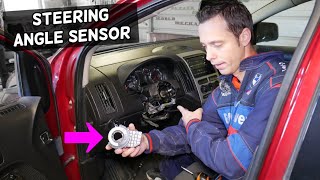
Code C1942 indicates your car's primary computer (ECU) detects an irrational or missing signal from the steering angle sensor (SAS) to the active stabilizer control module. The SAS tells the computer the precise direction and turning rate of the steering wheel. The active stabilizer system (VSC or ESC) uses this data, alongside wheel speed and yaw rate sensors, to maintain vehicle stability and prevent skids. When this code sets, the stability system disables as a failsafe, illuminating a dashboard warning light.
Technical definition: Malfunction in Signal from Steering Sensor to Front Active Stabilizer Control ECU.
Can I Drive With C1942?
Yes, But With Caution. Yes, but drive with extreme caution. Driving with C1942 means your vehicle's stability control (ESC/VSC) and anti-lock brakes (ABS) are disabled. This dramatically increases the risk of losing control in a sudden maneuver or on slippery surfaces. Without ESC, the vehicle will not automatically apply individual brakes to correct a skid, leading to oversteer or understeer. While safe for a short trip to a repair shop, prolonged driving compromises primary safety systems. There is no direct risk of mechanical damage to other components, but the elevated accident risk requires immediate attention.
Common Causes

- Low Battery Voltage or Electrical System Faults (Very Common) — A weak battery, failing alternator, or poor ground connections cause widespread communication errors between modules. On many vehicles, especially Subarus, this is the primary trigger for C1942 before any parts fail, as the stability module shuts down if voltage drops below 10V.
- Faulty Steering Angle Sensor (SAS) (Very Common) — The sensor fails internally due to age or wear, sending incorrect, erratic, or zero data to the ECU. This is the most frequent direct hardware cause of a C1942 code.
- Improper Wheel Alignment or Recent Suspension Work (Common) — If a wheel alignment was performed or steering parts were replaced, the sensor's stored 'center' position no longer matches the true straight-ahead position of the wheels. The system detects this conflict and sets the code until recalibrated via a 'Zero Point Calibration'. 🎬 Watch: How to calibrate your steering sensor after an alignment.
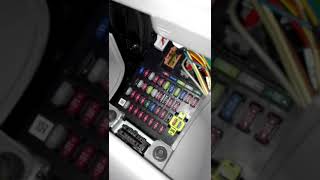
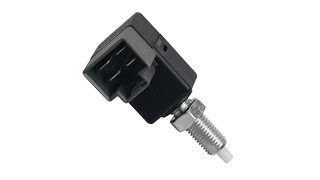
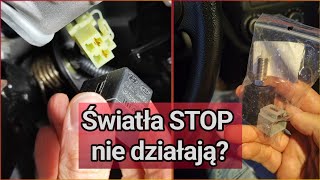
- Faulty Brake Light Switch (Common) — On Hyundai and Kia vehicles, a faulty or improperly adjusted brake light switch triggers an ESC/stability control fault. The stability system requires accurate braking data; a bad switch provides incorrect inputs, causing the system to shut down.
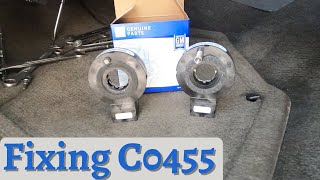
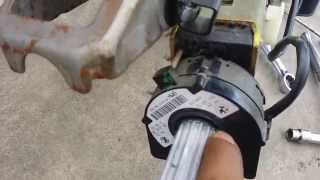
- Failing Clock Spring Assembly (Common) — The clock spring is a rotary electrical connector allowing the steering wheel to turn while maintaining connections for the airbag and horn. The SAS is often integrated here. A failure in the clock spring's internal wiring disrupts the SAS signal, typically triggering an airbag warning light simultaneously.
- Wiring or Connector Issues (Less Common) — Damaged, corroded, or shorted wires in the circuit between the steering angle sensor, the main ECU, and the stability control module interrupt the signal. Water intrusion into connectors near the steering column or firewall is a frequent culprit.
- Failed Active Stabilizer Control Module/ECU (Rare) — The control module that processes the signal fails internally. Suspect this only after exhaustively ruling out the battery, sensor, and wiring.
Symptoms

- Stability Control or Traction Control Warning Light On — The primary symptom. A light showing a car with squiggly lines or letters like 'VSC', 'ESC', or 'StabiliTrak' illuminates and stays on.
- ABS Warning Light On — Because the stability system integrates deeply with anti-lock brakes, the ABS light frequently illuminates alongside the ESC light.
- Stiff or Heavy Steering — In vehicles with electric power steering (EPS), a faulty steering angle sensor causes the steering to feel heavy, as the computer lacks the data needed to provide proper power assistance.
- Other Warning Lights (Airbag, Brake, Hill Assist) — Related system lights illuminate depending on the vehicle. An illuminated airbag light strongly indicates a failed clock spring assembly.
- Inoperable Steering Wheel Controls — Buttons on the steering wheel for cruise control or the radio stop working if the clock spring assembly fails.
Diagnostic Flowchart
Tap your situation to follow the diagnostic path that matches what you're seeing on this code.
Common Fixes & Costs
- Replace Battery — Parts: $150 - $350, Labor: $25 - $75, ~0.5 hr book time (Beginner)
- Recalibrate Steering Angle Sensor — Parts: $0, Labor: $50 - $150, ~0.5 hr book time (DIY)
- Replace Brake Light Switch
— Parts: $15 - $75, Labor: $70 - $150, ~0.5 hr book time
(Beginner)
: OEM 93810-3K000, 93810-3S000 (Alt: Duralast CR4834, Standard Motor Products SLS-514) - Replace Steering Angle Sensor (SAS)
— Parts: $100 - $400, Labor: $150 - $500, ~1.5 hr book time
(Professional)
: OEM 27549AL00A, 27546AL00A (Alt: Dorman 601-075)
: OEM 89245-30070, 89245-48020 (Alt: Beck/Arnley 201-2135)
: OEM 20910871, 19418403 (Alt: ACDelco 13513905, Dorman 601-011) - Repair or Replace Wiring/Connectors — Parts: $10 - $50, Labor: $100 - $400, ~2 hr book time (Intermediate)
DIY vs Professional
- Replace Battery — Beginner:
Tools: Wrench/socket set, battery terminal cleaner. - Replace Brake Light Switch — Beginner:
Tools: Basic hand tools, trim removal tool. - Recalibrate Steering Angle Sensor — Beginner:
Tools: Advanced OBD-II scan tool with calibration functions. - Repair or Replace Wiring/Connectors — Beginner:
Tools: Multimeter, wiring diagrams, wire strippers, crimpers, soldering iron, heat shrink. - Replace Steering Angle Sensor — Beginner:
Tools: Socket set, torque wrench, steering wheel puller, advanced OBD-II scan tool.
Used vs. New Parts: Buying Guide
When a used part is worth it: A used Steering Angle Sensor is a budget-friendly option for older, high-mileage vehicles where a new OEM part is cost-prohibitive. Source only from low-mileage, accident-free donor vehicles.
Donor-vehicle mileage cap: roughly under 60000 miles for the part to have meaningful remaining life.
Donor quality checklist:
- Verify the donor vehicle was not scrapped due to a front-end collision or electrical fire.
- Match the part number exactly; sensors are highly specific to model years and trim levels.
- Inspect electrical connectors for corrosion, bent pins, or melted plastic.
- Avoid parts from flood-damaged vehicles.
Decision logic:
- If The part is integrated with the airbag clock spring → Buy a new part. The risk of a faulty used clock spring causing an airbag failure is unacceptable.
- If Vehicle is less than 10 years old or has under 100k miles → Buy a new OEM or high-quality aftermarket part for reliability and warranty coverage.
- If Vehicle is over 150k miles and budget is the primary concern → Buy a used part from a reputable salvage yard with a 30-day warranty.
Warranty tradeoff: Used salvage parts offer 30-90 day warranties covering only the part. New aftermarket parts offer 1-year to lifetime warranties. New OEM parts carry 1-2 year warranties.
Worst-case if a used part fails: $300-650 if a used part fails, requiring a second replacement part and duplicate labor costs.
What Happens If You Wait — Timeline
- Immediate: Code sets. Stability control (ESC) and ABS warning lights illuminate. Safety systems disable. (MPG impact: 0%% · Added cost: $0 directly, but high risk of accident costs ($500-$1000+ insurance deductible).)
- 1 week - 3 months: Safety systems remain disabled. Steering feel may become heavy. No progressive mechanical damage occurs. (MPG impact: 0%% · Added cost: $0. The primary cost is the ongoing severe safety risk.)
- 3-12 months: The vehicle fails state safety inspections due to illuminated warning lights, forcing a repair. (MPG impact: 0%% · Added cost: $50-$150 in failed inspection fees, plus the mandatory repair cost.)
- 12+ months: Prolonged operation without ESC/ABS. The final cost remains the inevitable repair required to pass inspection. (MPG impact: 0%% · Added cost: The full cost of the required repair ($150 - $900+).)
Cost of Not Fixing It
- Immediate: Electronic Stability Control (ESC) and ABS are disabled. This significantly increases the risk of losing vehicle control in an emergency maneuver or on slippery surfaces. (Added cost: High risk of accident-related costs, including insurance deductibles or total vehicle loss.)
- Short-Term (Weeks to Months): Primary safety systems remain disabled. Electric power steering may feel heavy or inconsistent. No progressive mechanical damage occurs to other components. (Added cost: Negligible mechanical cost, but ongoing severe safety risk.)
- Long-Term (6+ Months): The vehicle automatically fails state safety inspections in jurisdictions that check ABS/ESC warning lights. (Added cost: Cost of failed inspection fees and the eventual mandatory repair.)
Diagnosis Steps

- Inspect the Battery and Charging System
Check the vehicle's charging system first. A weak battery is a primary cause of this code, especially on Subarus. Use a voltmeter to verify the battery holds over 12.4 volts with the engine off and the alternator charges between 13.7 and 14.7 volts with the engine running. Clean any corrosion from the terminals.
Tools: Voltmeter, Battery Terminal Cleaner (Beginner) - Check for Other Trouble Codes
Use an OBD-II scanner to check for other codes. Power supply codes (P-codes), ABS wheel speed sensor codes (C-codes), or module communication codes (U-codes) trigger C1942 as a secondary fault. Resolve these root codes first.
Tools: OBD-II Scanner (Beginner) - Attempt Steering Angle Sensor Recalibration
The sensor often requires recalibration (a 'Zero Point Calibration') after a battery disconnect or alignment. Use an advanced scan tool to perform the calibration procedure. If calibration fails repeatedly, replace the sensor.
Tools: Advanced OBD-II Scanner (Intermediate) - Read Live Data from the Steering Angle Sensor
Use an advanced OBD-II scanner to watch the steering angle sensor live data stream (PID: STEERING_ANGLE). The angle must read 0° when straight and change smoothly as you turn left (negative) and right (positive), reaching roughly -540° to +540° at full lock. Erratic, jumpy, or stuck readings confirm a faulty sensor.
Tools: Advanced OBD-II Scanner (Intermediate) - Visually Inspect Wiring and Connectors
Inspect the wiring harnesses connected to the steering column and the ABS/stability control module. Look for loose connections, corrosion, or frayed wires. Check areas prone to water intrusion, like firewall grommets.
Tools: Flashlight, Trim Removal Tools (Intermediate) - [PRO TIP] Test SAS Signal Voltage with a Multimeter
Back-probe the signal wire at the control module with a multimeter set to DC volts. As you turn the steering wheel, voltage must change smoothly (typically sweeping between 0.5V and 4.5V). A voltage stuck at 0V or 5V indicates a bad sensor or a wiring break.
Tools: Multimeter, Wiring Diagram (Advanced) - [PRO TIP] Check CAN Bus Network Integrity
With the ignition off, check resistance between CAN High (Pin 6) and CAN Low (Pin 14) at the OBD-II port. A healthy network reads 60 Ohms. A reading of 120 Ohms indicates a missing termination resistor or a broken wire. With ignition on, CAN High should be ~2.6V and CAN Low ~2.4V. Readings of 0V or 5V indicate a short.
Tools: Multimeter, OBD-II Pinout Diagram (Advanced) - [PRO TIP] Check SAS Resistance
Disconnect the sensor and use a multimeter set to Ohms to check internal resistance against the service manual specifications (e.g., 2.5kΩ - 7.5kΩ). A reading of infinity (open) or zero (short) confirms a failed sensor.
Tools: Multimeter, Vehicle Service Manual (Advanced) - Test the Active Stabilizer Control Module
If the sensor, wiring, and CAN network test perfectly, the control module itself has failed. Use a professional-grade diagnostic tool to perform module self-tests and verify it processes the SAS signal correctly.
Tools: Professional Diagnostic Scan Tool (Professional)
When This Code Triggers (Freeze-Frame Conditions)
- Battery Voltage: < 11.5V (A drop in system voltage during engine cranking or driving causes the sensitive VDC module to log a fault, especially on Subarus.)
- Steering Angle: Any (Sets when the vehicle drives straight but the sensor reports an angle, or when the reported angle is erratic during a turn.)
- Vehicle Speed: 15-55 mph (Logged during normal driving as the system runs continuous self-checks.)
- Engine State: Running (Sets while the engine runs and the stability control system is active.)
Related Codes
- C1411 — Indicates an internal fault in the Vehicle Dynamics Control Module. When paired with C1942 on a Subaru, it confirms a low voltage event. Test the battery immediately.
- U0126 — Means 'Lost Communication With Steering Angle Sensor Module'. While C1942 indicates an irrational signal, U0126 means the signal is completely dead, pointing directly to a wiring break or unplugged connector.
- Airbag Codes (B-series) — An airbag warning light alongside C1942 strongly suggests a failed clock spring assembly, as it houses the wiring for both the airbag and the steering angle sensor.
- C1921 — Relates to the parking position switch circuit. Appears alongside C1942 during widespread electrical issues, often stemming from low battery voltage.
Climate & Environmental Factors
- Cold Weather: Low temperatures reduce battery cranking power and voltage. This triggers voltage-sensitive stability modules (especially in Subarus), causing a C1942 code even if no parts have failed.
- High Humidity and Road Salt: Moisture and road salt accelerate corrosion on wiring connectors and ground points. This increases electrical resistance, corrupting the SAS signal and triggering communication faults.
How to Talk to a Mechanic About This Code
Say this: "I have a C1942 code and a stability control light on. Please start by testing the battery and charging system, and attempt a steering angle sensor recalibration before quoting me for a new sensor."
This guides the mechanic toward a logical, cost-effective diagnostic process, preventing them from immediately jumping to the most expensive repair (replacing the sensor).
Avoid saying:
- 'My traction light is on, can you fix it?'
- 'Just do whatever it takes to get the light off.'
- 'I think I need a new steering sensor, can you replace it?'
Questions to ask before authorizing the repair:
- What were the results of the battery and charging system test?
- Did you try to perform a steering angle sensor recalibration, and did it succeed or fail?
- If the sensor needs replacement, can you show me the live data proving it failed?
- Does the repair estimate include the cost of the mandatory 'Zero Point Calibration'?
- What is the warranty on both the part and the labor?
Where to Take It: Dealer vs Independent vs Chain
- Dealer:
Recommended only if the vehicle is under warranty or has a complex brand-specific stability system.
Best for: Vehicles under warranty., Complex, brand-specific issues (e.g., BMW, Lexus) requiring specialized tools., Issues related to known Technical Service Bulletins (TSBs).
Downsides: Highest labor rates, often 1.5-2x more than independent shops., Tendency to recommend replacing entire assemblies rather than individual components. (Typical cost: +75% vs. baseline) - Independent Shop:
Best choice. A good independent shop handles battery testing, sensor replacement, and calibration at a fair price.
Best for: Most out-of-warranty vehicles., Diagnosing common causes like a bad battery or performing a calibration., Better value for labor costs.
Downsides: Quality varies; ensure the shop has modern diagnostic tools for Chassis (C) codes., May lack software for very new vehicles. (Typical cost: +0% vs. baseline) - Chain Shop:
Acceptable for battery replacement or alignments, but avoid for diagnosing the C1942 code itself.
Best for: Simple repairs like battery replacement., Performing a wheel alignment (if you verify they perform the SAS calibration).
Downsides: Technicians often lack training for advanced diagnostics beyond reading a code., High pressure to upsell unnecessary parts. (Typical cost: -10% vs. baseline)
When to Walk Away From the Repair
If the repair cost exceeds 50% of the car's private-party value, sell the vehicle. For cars over 10 years old, lower this threshold to 40%.
- Car worth $5000, fix is $900: Fix it. The repair restores a critical safety feature and is well below the threshold.
- Car worth $3000, fix is $1500: Walk away. The repair cost is 50% of the car's value. Sell the car as-is.
- Car worth $15000, fix is $900: Fix it. This is a minor cost compared to the vehicle's value.
What Scan Tool You Need for This Code
Minimum: A scan tool that reads Chassis (C-codes) from the ABS/VSC modules and performs a Steering Angle Sensor (SAS) calibration. Basic engine code readers will not work.
A $20 OBD-II reader only accesses Powertrain (P) codes. C1942 is a Chassis (C) code. You need an advanced tool to view live steering angle data and perform the mandatory calibration.
Budget: CGSULIT SC630 / Foxwell NT630 Plus (~$90) — Reads ABS codes, views live data, and performs SAS calibration on many vehicle makes.
Mid-range: Foxwell NT510 Elite / Launch CRP129E (~$180) — Offers brand-specific diagnostics, robust SAS calibration functions, and reliable live data graphing.
Professional: Autel MaxiCOM MK808 / MK808S (~$450) — Provides full bidirectional control, OE-level diagnostics, and extensive SAS calibration procedures for a vast range of vehicles.
Rent vs buy: Auto parts stores do not rent scanners with SAS calibration capabilities. If this is a one-time fix, pay an independent shop a $100 diagnostic fee. Buy a scanner only if you plan to do regular repairs.
How to Clear the Code After You Fix It
- Fix the underlying mechanical or electrical issue (e.g., replace battery, replace sensor).
- Use an advanced OBD-II scan tool to clear the C1942 code from the ABS/VSC module.
- Perform the mandatory Steering Angle Sensor 'Zero Point Calibration' using a scan tool.
- Test drive the vehicle, including straight-line driving and full-lock turns, to confirm warning lights remain off.
Drive cycle (~15 minutes): Start the engine. Drive in a straight line on a level surface above 15 mph for 10 seconds. Stop, then perform slow, full-lock turns to the left and right. The warning light extinguishes if the repair and calibration succeed.
Readiness monitors affected: This is a Chassis (C) code and does not affect emissions readiness monitors.
Watch out for:
- Clearing the code without fixing the root cause guarantees the light returns immediately.
- Skipping the 'Zero Point Calibration' after replacing the sensor or performing an alignment is the #1 reason the code persists.
- Using a basic $20 code reader fails because it cannot access or clear Chassis (C) codes from the ABS module.
Will This Fail Emissions / State Inspection?
Yes — this code typically fails an OBD-II emissions inspection.
- California: An illuminated ABS or stability control light fails the safety portion of the inspection, even if emissions monitors are ready.
- New York: The state safety inspection explicitly checks ABS functionality. An illuminated warning light results in an automatic failure.
- Texas: The vehicle inspection includes checking for an illuminated ABS light. The vehicle fails if the light is on.
Most Commonly Affected Vehicles

- Subaru Outback, Forester, Legacy (2015-2018) — Triggers alongside C1411 due to low battery voltage. C1942 specifically means 'Power Supply Voltage' on these models, indicating a drop below 10V. Check TSB 06-87-22R regarding a faulty Electronic Parking Brake connector.
- Hyundai / Kia Santa Fe, Sonata, Elantra, Tucson (2007-2016) — Presents as a persistent 'ESC OFF' light. The primary culprit is a faulty brake light switch, not the SAS. Multiple recalls (e.g., NHTSA 13V113000) cover this switch.
- Lexus GS Series (GS350, GS430, GS460), GX 470 (2006-2011) — These models use an Active Power Stabilizer Suspension System (APSSS) prone to direct SAS failure.
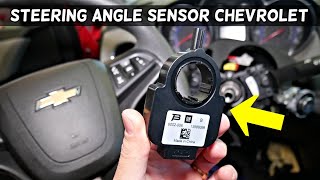
- General Motors (Chevy/GMC/Cadillac) Silverado, Sierra, Tahoe, Suburban, Escalade (2010-2014) — Triggers a 'Service StabiliTrak' message due to a faulty steering angle sensor. Verify the correct part number, as 2010 models used a '2nd Design' sensor mid-year.
- Toyota Land Cruiser (J200), Tacoma (2008-2021) — Occurs in vehicles with Kinetic Dynamic Suspension System (KDSS). On Tacomas, the code appears after a wheel alignment if zero-point calibration is skipped.
- Ford F-Series Trucks, E-Series Vans (2011-2016) — Occurs after water damage to steering column components from a leaking windshield. Also common if the sensor lacks calibration after suspension work.
- BMW 3-Series (E90/E92), 5-Series (E60) (2006-2013) — Appears as a 'Chassis Stabilization Malfunction' on the iDrive screen. Almost always caused by failing to recalibrate the SAS after an alignment or battery replacement.
- Jaguar / Mazda X-Type, Mazda 3, Mazda 6 (2004-2013) — C1942 defines as 'ABS Hydraulic Pump Motor Circuit Failure' rather than a steering angle sensor issue. Always verify the manufacturer-specific definition.
Manufacturer-Specific Notes
- Subaru: C1942 specifically defines as 'Power Supply Voltage'. It triggers when the VDC module detects voltage below 10V. Always test the battery and alternator before replacing sensors.
- Hyundai / Kia: A faulty, $25 plastic brake light switch is the most common cause of stability control faults on these makes, not the steering angle sensor. Always replace this switch first.
- Mitsubishi: C1942 defines as 'Tire Inflation Pressure Warning 4,' relating to the TPMS system, not the steering system. Verify definitions to avoid misdiagnosis.
- Jaguar / Mazda: C1942 points to an 'ABS Hydraulic Pump Motor Circuit Failure'. Use a scanner with manufacturer-specific definitions to avoid chasing a steering issue when the ABS pump is failing.
Real Owner Stories
2016 Subaru Outback at 50K miles - The Easy Fix
The owner drove infrequently, leading to repeated dead batteries. After installing a new battery, it drained quickly, and multiple warning lights appeared, including C1942.
What they tried:
- Replacing the battery, but the new one also drained.
- Using a jump starter to get the car running.
- Taking it to the dealer, who initially could not replicate the drain.
Outcome: The root cause was a parasitic drain from the Data Communication Module (DCM), a known issue. The dealer updated the charging system software and replaced the DCM. Replacing the battery and ensuring proper charging resolved the C1942 code.
Lesson: On modern Subarus, C1942 is a direct result of low voltage. Before suspecting expensive sensors, confirm your battery is healthy and check for parasitic drains covered by technical service bulletins (TSBs).
2011 Hyundai Elantra at 100K miles - The Misdiagnosis Story
The ESC warning light illuminated permanently. The owner assumed a complex stability system fault and prepared for an expensive steering angle sensor replacement.
What they tried:
- The owner prepared to pay a shop for advanced diagnostics on the ABS module and SAS.
Outcome: The actual cause was a faulty brake light switch, a common failure subject to a major safety recall (NHTSA 13V113000). Replacing the $25 switch located on the brake pedal arm resolved the ESC light and the C1942 code.
Lesson: For a Hyundai/Kia with an ESC light, always replace the brake light switch first. It is a cheap, common point of failure and a simple DIY fix.
2008 Lexus GS430 - The 'Correct' Diagnosis
The power steering became heavy, and stability control warning lights appeared. Code C1942 pointed to a steering sensor issue.
What they tried:
- The owner used an advanced scan tool to read live data from the steering angle sensor.
- Live data showed erratic readings when the steering wheel turned, confirming a dead sensor.
Outcome: The steering angle sensor failed internally. The owner replaced the sensor and performed a 'Zero Point Calibration' to sync it with the ECU, fully restoring function and clearing the codes.
Lesson: When heavy steering accompanies C1942, a direct SAS failure is highly likely. Confirm this by reading live sensor data with a scanner before purchasing an expensive part.
How to Prevent This Code From Triggering
- Perform regular battery health checks (Every 6 months) — Low system voltage triggers C1942 codes. Testing your battery with a multimeter (>12.4V engine off) prevents voltage drops that cause sensitive modules to log faults.
- Request 'Zero Point Calibration' after every wheel alignment (During any alignment service) — Alignments change the steering's center point. Failing to recalibrate the sensor triggers the C1942 code. Insisting on this step prevents post-service warning lights.
- Apply dielectric grease to key electrical connectors (When servicing nearby components) — Applying dielectric grease to connector seals prevents moisture intrusion and corrosion, stopping the communication faults that trigger C1942.
- Avoid frequent short trips without supplemental charging (Daily habit) — Short drives prevent the alternator from fully recharging the battery. This leads to a chronically undercharged battery, a primary cause of voltage-related codes. Use a battery maintainer if driving infrequently.
Frequently Asked Questions
Can I drive my car with code C1942?
Yes, but with extreme caution. Your electronic stability control is disabled, meaning the car will not automatically correct a skid. Drive carefully in bad weather and schedule a diagnosis immediately.
What are the most common misdiagnosis mistakes for C1942?
The top mistake is replacing the steering angle sensor without testing the battery, as low voltage triggers this code on many cars. Another is ignoring the $25 brake light switch on Hyundai/Kia models. Finally, failing to perform a 'Zero Point Calibration' after an alignment causes the code to persist.
My airbag light is also on. Is that related to C1942?
Yes. The steering angle sensor and the airbag clock spring share the same steering column housing. A failure in the clock spring's internal wiring disrupts both circuits simultaneously.
Will a wheel alignment fix the C1942 code?
No, an alignment alone does not fix the code and often causes it if the sensor isn't recalibrated afterward. The shop must perform a 'Zero Point Calibration' with a scan tool to sync the sensor with the new wheel position.
Can I reset the steering angle sensor myself without a scanner?
On some older vehicles, disconnecting the battery for 15 minutes, restarting the car, and turning the wheel lock-to-lock resets the sensor. However, most modern vehicles require an advanced OBD-II scan tool to perform the mandatory calibration.
How much does it cost to fix code C1942?
Costs range from $0 for a DIY battery reset to $900 for a professional sensor replacement. Common fixes include a $150 battery replacement, a $100 shop calibration, or a $50 brake light switch repair.
Is the steering angle sensor the same as the clock spring?
No, they are separate components housed together in the steering column. The clock spring maintains electrical connections for the airbag and steering wheel buttons while turning. They are sometimes sold as a single expensive assembly.
What is a 'Zero Point Calibration'?
It is a software procedure that teaches the vehicle's computer the exact 'straight-ahead' position of the steering wheel. It is mandatory after a wheel alignment, battery replacement, or steering component repair.
The code C1942 appeared right after I replaced my battery. What should I do?
Start the car and turn the steering wheel fully to the left, then fully to the right to attempt a manual reset. If the warning light remains on, use an advanced scan tool to perform a formal Zero Point Calibration.
Key Takeaways
- Code C1942 disables your Electronic Stability Control (ESC) due to a steering angle sensor communication failure, increasing the risk of skidding.
- Test your battery and alternator before replacing any parts; voltage drops below 10V trigger this code on many vehicles, especially 2015-2018 Subarus.
- Perform a 'Zero Point Calibration' with an advanced scan tool after any wheel alignment or battery replacement to clear the code permanently.
- Check manufacturer-specific definitions, as C1942 means 'Power Supply Voltage' on Subarus, 'Tire Pressure' on Mitsubishis, and 'ABS Pump' on Jaguars.
- Inspect the $25 brake light switch on 2007-2016 Hyundai and Kia models before assuming the $300+ steering angle sensor has failed.
Helpful Videos


The information in this article is provided for general reference and educational purposes only. Vehicle specifications, procedures, and part compatibility can vary by production date, trim level, and region. Always consult your vehicle's factory service manual and verify part numbers before purchasing or performing repairs. Safety-critical components such as airbags, seat belts, and braking systems should be installed by a qualified professional.
- 🎬 Helpful Videos
- What Does C1942 Mean?
- Can I Drive With C1942?
- Common Causes
- Symptoms
- Diagnostic Flowchart
- Common Fixes & Costs
- DIY vs Professional
- Used vs. New Parts: Buying Guide
- What Happens If You Wait — Timeline
- Cost of Not Fixing It
- Diagnosis Steps
- When This Code Triggers (Freeze-Frame Conditions)
- Related Codes
- Climate & Environmental Factors
- How to Talk to a Mechanic About This Code
- Where to Take It: Dealer vs Independent vs Chain
- When to Walk Away From the Repair
- What Scan Tool You Need for This Code
- How to Clear the Code After You Fix It
- Will This Fail Emissions / State Inspection?
- Most Commonly Affected Vehicles
- Manufacturer-Specific Notes
- Real Owner Stories
- 2016 Subaru Outback at 50K miles - The Easy Fix
- 2011 Hyundai Elantra at 100K miles - The Misdiagnosis Story
- 2008 Lexus GS430 - The 'Correct' Diagnosis
- How to Prevent This Code From Triggering
- Frequently Asked Questions
- Can I drive my car with code C1942?
- What are the most common misdiagnosis mistakes for C1942?
- My airbag light is also on. Is that related to C1942?
- Will a wheel alignment fix the C1942 code?
- Can I reset the steering angle sensor myself without a scanner?
- How much does it cost to fix code C1942?
- Is the steering angle sensor the same as the clock spring?
- What is a 'Zero Point Calibration'?
- The code C1942 appeared right after I replaced my battery. What should I do?
- Key Takeaways
- 🎟️ Get 5% Off