

OBD-II Code C1850: All-Wheel Drive (AWD) System Relay Failure
What C1850 means, why it triggers, and how to fix it
- Code C1850 indicates an electrical fault that completely disables your All-Wheel Drive (AWD) system, forcing the vehicle into two-wheel drive.
- Replacing a moisture-damaged AWD relay fixes this code in over 70% of cases, costing just $15-$30 in parts for affected Honda and Acura models.
- Driving with an active C1850 code causes no mechanical damage, but the lack of AWD reduces traction significantly on snow, ice, or heavy rain.
- Always test the 30-amp AWD fuse and swap the AWD relay with an identical non-critical relay before paying $150+ for professional electrical diagnostics.
- If your scanner also shows code C1858-73 on a Honda or Acura, skip the relay and replace the rear differential solenoid assembly.
What Does C1850 Mean?

Code C1850 indicates the All-Wheel Drive (AWD) or transmission control module detected a failure in the AWD fail-safe relay. This relay acts as an electronic switch controlling power to the AWD system. The code triggers when the relay sticks 'on' or 'off', preventing the AWD from engaging or disengaging.
Technical definition: The SAE/ISO definition for C1850 is 'Fail-Safe Relay Circuit Malfunction'. Common variations include 'Fail Safe Relay Stuck On' (C1850-12) or 'Fail Safe Relay Stuck Off' (C1850-14), indicating the module detects the relay is not in the commanded state.
Can I Drive With C1850?
Yes, But With Caution. You can drive, but the AWD system is disabled, defaulting to two-wheel drive. This reduces traction on slippery surfaces. Continued driving causes no mechanical damage, but the lack of AWD poses a safety risk in poor weather.
Common Causes

- Faulty All-Wheel Drive (AWD) Relay (Very Common) — This is the most frequent cause. The relay is a small electronic switch that fails over time due to moisture and temperature changes. It sticks open or closed, triggering the code.
- Blown Fuse (Common) — A blown fuse cuts power to the AWD control module or relay, instantly triggering this fault code.
- Corroded Wiring or Poor Ground Connection (Common) — Wiring, connectors, or chassis grounds leading to the AWD relay, control module, or rear differential become damaged or corroded, causing a loss of signal or power.
- Low Battery Voltage or Failing Alternator (Common) — A weak battery, corroded terminals, or a failing alternator causes unpredictable AWD module behavior, triggering C1850 as a secondary symptom of the electrical drop.
- Faulty Rear Differential Control Solenoid (Uncommon) — The issue is sometimes a solenoid in the rear differential that the relay controls. This part fails, leading to identical symptoms and this code, particularly on Honda and Acura models.
- Failed AWD Control Module (Less Common) — The control module itself fails internally. This is a complex and expensive failure where the module's internal circuits are compromised.
Symptoms

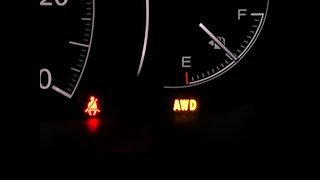
- All-Wheel Drive (AWD) Warning Light On — A warning light indicating a problem with the AWD system illuminates on the dashboard. This is often the only symptom.
- AWD System is Inoperative — The vehicle operates strictly in two-wheel drive. You experience a lack of power to all four wheels during slippery conditions.
- Intermittent Warning Light in Cold Weather — The AWD light only appears during cold weather, a classic symptom of a moisture-affected relay freezing (Honda TSB 15-012).
- Traction Control Light On — Because the AWD and traction control systems work together, a fault in one often triggers a warning for the other.
Diagnostic Flowchart

Tap your situation to follow the diagnostic path that matches what you're seeing on this code.
Common Fixes & Costs

- Replace the AWD Relay — Parts: $10-$30, Labor: $50-$150, ~0.6 hr book time (DIY)
- Replace Blown Fuse(s) — Parts: $1-$5, Labor: $0-$50, ~0.1 hr book time (DIY)
- Repair Damaged Wiring or Connectors — Parts: $5-$50, Labor: $100-$400, ~2 hr book time (Intermediate)
- Replace Rear Differential Solenoid — Parts: $180-$250, Labor: $300-$450, ~3 hr book time (Professional)
- Replace the AWD Control Module — Parts: $400-$800, Labor: $150-$300, ~1.5 hr book time (Professional)
Used vs. New Parts: Buying Guide
When a used part is worth it: Buying a used AWD relay never makes sense; a new OEM-equivalent part costs $10-$30. For expensive parts like an AWD Control Module, a used part from a low-mileage donor vehicle is a cost-effective option for older cars.
Donor-vehicle mileage cap: roughly under 60000 miles for the part to have meaningful remaining life.
Donor quality checklist:
- Verify the exact part number matches; modules are specific to year, model, and trim.
- Purchase from a reputable seller offering at least a 30-day warranty.
- Avoid parts from flood-damaged or rust-belt vehicles; electronics are highly susceptible to moisture damage.
Decision logic:
- If The faulty part is the AWD Relay → Always buy new; the cost savings for a used part are negligible and not worth the risk.
- If The faulty part is the AWD Control Module and the vehicle is over 10 years old → A tested, used module is a reasonable choice to save money, but factor in potential programming costs.
- If The vehicle is less than 8 years old or the part requires programming → Buy a new or remanufactured module to ensure compatibility and secure a longer warranty.
Warranty tradeoff: Used parts typically have a 30-90 day functional warranty. New aftermarket parts offer 1-year to limited lifetime warranties. New OEM parts carry a 1-year/12,000-mile warranty.
Worst-case if a used part fails: $300-$600 if a used control module fails after installation, accounting for repeat labor and a replacement part.
What Happens If You Wait — Timeline
- 0-1 Month: Code C1850 sets and the AWD warning light illuminates. The AWD system disables, forcing 2WD operation. The fault is often intermittent at first, especially in cold weather. (MPG impact: 0%% · Added cost: $0)
- 1-6 Months: The issue becomes permanent. The primary consequence is the safety risk of having no AWD in adverse weather. Ignoring the light causes 'warning light fatigue,' making you miss new warnings. (MPG impact: 0%% · Added cost: $0-$50 in wasted diagnostic time if the intermittent nature is not properly communicated to a mechanic.)
- 6-12 Months: If the root cause is moisture or corrosion, it spreads from a single connector pin to the entire wiring harness, turning a simple fix into a complex one. (MPG impact: 0%% · Added cost: $100-$500 for repairing a corroded wiring harness section instead of just replacing a relay.)
- 12+ Months: An unaddressed wiring short or prolonged moisture intrusion damages the AWD control module itself. A short in the relay control circuit damages the driver inside the module. (MPG impact: 0%% · Added cost: $800-$1500 to replace and program a failed AWD control module.)
Cost of Not Fixing It
- Immediate: The AWD system disables, defaulting to two-wheel drive. This results in a significant loss of traction and stability on snow, ice, or heavy rain. (Added cost: $0)
- 0-6 Months: No direct mechanical damage occurs. The primary cost is the loss of AWD and the associated safety risk. Ignoring the warning light prevents you from seeing alerts for new, more serious issues. (Added cost: $0)
- 6+ Months: Continued operation with an electrical fault masks other developing drivetrain issues. The root cause (e.g., a wiring short or water intrusion) worsens, leading to a more complex diagnosis. (Added cost: $100-$500 in increased diagnostic time if the original fault location is obscured by further corrosion.)
Diagnosis Steps
- Verify the Code with an OBD-II Scanner
Plug a compatible OBD-II scanner into the diagnostic port to confirm C1850 is active. Note any other codes. For example, C1858-73 on a Honda points to the differential solenoid, not the relay.
Tools: OBD-II Scanner (Beginner) - Check the Fuses
Locate the fuse box using your owner's manual. On a 2012-2016 Honda CR-V, check fuse #6 (interior) and fuse #35 (under-hood). Visually inspect them and replace any that are blown.
Tools: Owner's Manual, Fuse Puller or Pliers (Beginner) - Swap the AWD Relay
The easiest test is swapping the AWD relay with an identical relay from a non-critical system (like the horn) in the same fuse box. If the AWD problem resolves and the horn stops working, the relay is bad.
Tools: Pliers (Beginner) - Inspect the AWD Relay Socket
The AWD relay is often located in a rear interior panel (common in Honda CR-Vs) or a main fuse box. Inspect the socket for signs of corrosion, moisture, or melted plastic.
Tools: Owner's Manual, Trim Removal Tools, Flashlight (Intermediate) - Advanced: Test the Relay Socket for Power and Ground
Using a multimeter set to DC Volts, check for battery voltage (12V) at the relay socket's power supply terminal with the key on. Check for a solid ground connection on the control side. No voltage or a bad ground indicates an upstream wiring or fuse issue.
Tools: Multimeter (Advanced) - Inspect Wiring to the AWD Control Module and Differential
If the relay and fuses are good, visually inspect the wiring harness going to the AWD control module and the rear differential. Look for chafed, broken, or corroded wires. On Ford Escapes, check the wiring near the Rear Drive Unit (RDU).
Tools: Flashlight, Jack and Jack Stands (Advanced) - Advanced: Test the Relay's Internal Resistance
Set a multimeter to Ohms (Ω). Place the probes on the relay coil terminals (pins 85 and 86). A healthy coil shows resistance between 50 and 200 Ohms. A reading of 'OL' means the coil is broken; a near-zero reading means it is shorted.
Tools: Multimeter (Advanced)
When This Code Triggers (Freeze-Frame Conditions)
- Vehicle Speed: 20-55 mph (The fault registers during steady-state driving, rarely at a standstill.)
- Engine RPM: 1500-2500 RPM (Corresponds with normal cruising or light acceleration when the AWD system is actively monitored.)
- Ambient Temperature: < 40°F (5°C) (On Honda models, the fault triggers specifically in cold weather when moisture freezes inside the relay (TSB 15-012).)
- System Voltage: 11.5-14.5V (Triggers if system voltage drops, though the freeze frame usually shows normal operating range at the exact moment of the fault.)
Related Codes
- C1858-73 — This Honda/Acura code for 'differential fluid pressure deviation high' points directly to a faulty Electric Differential Pressure Solenoid (EDPS). If you have C1858-73 alongside C1850, the solenoid is the prime suspect, not the relay.
- P0607 — This code means 'Control Module Performance' and indicates a critical internal error. If P0607 appears with C1850, it strongly suggests the AWD module itself has failed, rather than an external relay.
- P07B9 — On Jaguars, this 'Transmission Park Position Sensor Circuit Low' code stores alongside C1850, pointing to an internal TCM fault affecting both circuits.
- C0035 — A wheel speed sensor code (like C0035) sometimes appears with C1850. The AWD module relies on wheel speed data; a faulty sensor causes the AWD system to set a fault. Diagnose the wheel speed sensor first.
Climate & Environmental Factors
- Cold Weather: Low temperatures freeze moisture trapped inside the AWD relay, causing the internal contacts to stick. This is the primary issue identified in Honda TSB 15-012 for the CR-V.
- Humidity / Moisture: High humidity or driving through deep water introduces moisture into electrical connectors. This leads to corrosion on pins, increasing electrical resistance and triggering the C1850 code.
- Road Salt: In regions using road salt, undercarriage components are highly susceptible to corrosion. This degrades wiring harnesses and ground connections for the AWD module and rear differential.
How to Talk to a Mechanic About This Code
Say this: "I have an AWD warning light and a C1850 code. I'd like to schedule a diagnostic. Based on my research, the most common cause is a faulty AWD relay, especially in cold weather. Can you please start by checking the fuses, testing the relay, and confirming power and ground at the relay socket before recommending more expensive parts like a control module?"
This signals you are an informed customer. It guides the technician to follow a logical, cost-effective diagnostic path, starting with the most common and cheapest-to-fix items. It helps prevent them from immediately quoting a high-priced control module without proper circuit testing.
Avoid saying:
- 'My AWD light is on, can you just fix it?'
- 'I think I need a new AWD computer.'
- 'Just do whatever it takes to get the light off.'
Questions to ask before authorizing the repair:
- Did you test the original AWD relay, and did it fail? If so, how?
- If the relay was good, did you find proper 12-volt power and ground at the relay socket?
- If you are recommending a wiring repair or a new module, can you show me the voltage drop, corrosion, or other data that confirms this diagnosis?
- What is the warranty on this specific repair, including both parts and labor?
Where to Take It: Dealer vs Independent vs Chain
- Dealer:
Best for: Vehicles under warranty., Complex cases where a new AWD module requires manufacturer-specific programming., When an independent shop has already failed to diagnose the issue correctly.
Downsides: Highest labor rates, often 1.5-2x more than independent shops., Defaults to replacing an entire assembly rather than repairing a wire or connector. (Typical cost: +50% vs. baseline) - Independent Shop:
Best fit. A reputable independent shop with strong electrical diagnostic skills efficiently checks the common failures (relay, wiring) without the high cost of a dealer.
Best for: Out-of-warranty vehicles where cost is a factor., Diagnosing the most common C1850 causes (relay, fuse, wiring)., Vehicles with well-documented issues (like the Honda CR-V relay failure).
Downsides: Diagnostic skill with complex electrical systems varies greatly; choose a shop with good reviews for electrical work and ASE-certified technicians. (Typical cost: +0% vs. baseline) - Chain Shop:
Use with caution. Acceptable if you've done the diagnosis and just need a simple, accessible part like a fuse or relay replaced. AVOID for initial diagnosis of an unknown electrical problem.
Best for: Simple parts replacement if you have already diagnosed the issue yourself (e.g., you are certain it's the relay).
Downsides: Technician skill varies dramatically; they lack the in-depth electrical diagnostic training for anything beyond a simple part swap., High pressure to upsell services; not equipped for complex wiring or module diagnostics. (Typical cost: -10% vs. baseline)
When to Walk Away From the Repair
If the estimated repair cost exceeds 50% of the car's private-party value, strongly consider selling or trading in the vehicle instead of repairing it.
- Car worth $8000, fix is $250: Fix it. This is a low-cost repair that restores a key safety and performance feature, well below the threshold.
- Car worth $4000, fix is $1600: Borderline. The repair cost is 40% of the car's value. Get a second opinion and consider the car's overall condition and other potential needs before proceeding.
- Car worth $2500, fix is $1500: Walk away. The repair cost is 60% of the vehicle's value. It is not financially sensible to invest this much into an older, lower-value car.
What Scan Tool You Need for This Code
Minimum: A scanner that reads Chassis (C-prefix) trouble codes. Basic $20 readers only handle Powertrain (P-prefix) codes and will not see C1850.
To properly diagnose C1850, you need a scanner that accesses the AWD or transmission control module to view live data. This allows you to see if the computer is commanding the relay on or off, which is critical for diagnosis.
Budget: BlueDriver Pro (~$119) — Connects to a smartphone app via Bluetooth. It reads and clears Chassis codes like C1850, views live data from the AWD system, and generates repair reports based on the specific code.
Mid-range: Foxwell NT510 Elite (~$180) — Offers manufacturer-specific diagnostics for a chosen brand. It provides bidirectional control, allowing you to command the AWD relay on and off to test its function directly.
Professional: Autel MaxiCOM MK808BT (~$550) — A professional-level tablet scanner with full bidirectional control for all vehicle systems. It performs active tests on the relay, solenoids, and module, reading detailed manufacturer-specific data essential for diagnosing complex wiring failures.
Rent vs buy: Many AutoZone locations offer a loaner tool program. While their most basic readers won't work, they may have advanced scanners available that read chassis codes. Buy a scanner only if you plan to perform your own diagnostics regularly.
How to Clear the Code After You Fix It
- Use a compatible OBD-II scan tool to erase the Diagnostic Trouble Codes (DTCs).
- Perform a complete drive cycle to allow the system's self-tests to run.
- Rescan the vehicle to confirm the C1850 code does not return.
Drive cycle (~20 minutes): 1) Cold start the engine and idle for 2-3 minutes. 2) Drive at a steady speed between 40-55 mph for 5-10 minutes. 3) Coast down without braking from 55 mph to 20 mph several times. 4) Turn the engine off and let it sit for 10 minutes. The fault clears from 'active' status after one or two key cycles without the fault reoccurring.
Readiness monitors affected: Catalyst Monitor, Evaporative System (EVAP) Monitor, O2 Sensor Monitor
Before emissions retest: drive at least 50 miles to fully set monitors.
Watch out for:
- Clearing the code does not fix the issue; the code returns immediately upon the next drive cycle if the faulty part remains.
- Disconnecting the battery resets all readiness monitors, guaranteeing an emissions test failure until a full drive cycle is completed.
- On some Hondas, the code only stores when the warning light is actively on, making intermittent faults impossible to scan if the light turns off.
Will This Fail Emissions / State Inspection?
Yes — this code typically fails an OBD-II emissions inspection.
- California: An active C1850 code or illuminated malfunction indicator results in an automatic smog check failure. After repair, you must complete a drive cycle to set all readiness monitors before a retest.
- New York: The NYS DMV inspection includes an OBD-II scan. This trouble code causes the vehicle to fail the emissions portion of the inspection.
- Texas: In the 17 counties requiring emissions testing, an active C1850 code and illuminated warning light fails the OBD-II portion of the annual state inspection.
Most Commonly Affected Vehicles
- Honda CR-V (2012-2018) — TSB 15-012 specifically targets 2012-2014 models for cold-weather relay failures, but the issue remains common through the 2018 model year.
- Acura RDX (2013-2018) — These vehicles share a similar AWD system architecture with the CR-V and experience the same relay-related failures.
- Ford Escape / Kuga (2013-2019) — Owners report C1850 often relates to wiring issues near the Rear Drive Unit (RDU) or failure of the AWD control module itself.
- Hyundai Santa Fe / Tucson (2013-2020) — The code triggers due to faults in the AWD coupling or the control module.
- Kia Sorento / Sportage (2015-2021) — Sharing platforms with Hyundai, these vehicles experience similar C1850 faults related to the AWD electrical components.
- Lincoln Nautilus / MKX (2018-2020) — The code often points to a loss of power to the AWD module, sometimes due to an internal fuse in an auxiliary relay box.
- Jaguar XE / F-Pace (2017-2019) — Triggered by low battery voltage or a failure within the Transmission Control Module (TCM), often accompanied by a 'Transmission Fault' message.
Manufacturer-Specific Notes
- Honda: Honda issued TSB 15-012 for 2012-2014 CR-Vs, acknowledging the AWD relay fails due to moisture in cold weather. The fix is a simple relay replacement.
- Honda: The AWD warning light is often intermittent. The light must be ON at the time of diagnosis for a standard scanner to read the C1850 code.
- Acura: TSB 15-016 for DTC C1858-73 (often seen with C1850) applies to the 2013-14 RDX and points to a faulty EDPS solenoid in the rear differential.
- Lincoln: The AWD module's power is supplied through an auxiliary junction box containing a non-serviceable fuse. If the module is offline, this entire box requires replacement.
- Jaguar: A 'Transmission Fault' message accompanies this code. The root cause is often a blown fuse for the OBD-II port itself or an internal TCM failure.
Real Owner Stories
2014 Honda CR-V with intermittent AWD light in winter
AWD warning light came on during a highway drive in 30°F (-1°C) weather. The light turned off after restarting the car but came back intermittently in the cold. The owner found Honda TSB 15-012.
What they tried:
- Located the AWD relay in the rear cargo area panel.
- Purchased a pair of new relays (part number 39794-SDA-A05) online for $12.
- Replaced the original relay.
Outcome: Replacing the relay resolved the issue. The AWD light did not return in subsequent winter driving.
Lesson: For 2012-2014 Honda CR-Vs, an intermittent AWD light in cold weather is a classic symptom of a failing AWD relay. This is an inexpensive part and the best place to start your diagnosis.
2013 Honda CR-V with C1850 and misdiagnosis
The AWD light came on. The owner replaced the AWD relay, but the light returned the next day. The code could not be read by a standard scanner unless the light was actively on.
What they tried:
- Replaced the AWD relay. The code returned.
- Took the car to a shop. The technician waited with the ignition on for the light to appear before scanning.
- The shop found code C1858-73 alongside C1850, pointing to the rear differential solenoid.
Outcome: The shop replaced the EDPS solenoid assembly, o-rings, and differential fluid. The total cost was $560, fixing the problem permanently.
Lesson: Do not assume the relay is the only cause. If replacing the relay fails, check for code C1858-73. On Hondas, the warning light must be on for scanners to read the code.
Ford Escape with C1850 and wiring issues
Owner of a Ford Escape experienced an AWD warning light and code C1850 in a region that uses heavy winter road salt.
What they tried:
- Initial checks of fuses and the AWD relay showed no problems.
- A visual inspection of the undercarriage revealed corrosion on the wiring harness going to the Rear Drive Unit (RDU).
- A mechanic performed a voltage drop test confirming high resistance.
Outcome: The corroded section of the wiring harness and connector pigtail were replaced. The repair cost $350, mostly for labor. The code cleared and did not return.
Lesson: On vehicles like the Ford Escape, or any car in the rust belt, C1850 is often caused by corroded wiring near the rear differential. If the relay and fuses are good, inspect the underbody wiring.
How to Prevent This Code From Triggering
- Change Rear Differential Fluid (Every 15,000-30,000 miles) — Clean fluid is essential for the mechanical and hydraulic function of the AWD clutch packs and solenoids. Using correct fluid prevents premature wear leading to electrical faults.
- Inspect and Clean Battery Terminals and Ground Connections (Annually or every oil change) — Corroded battery terminals or poor chassis grounds cause unstable voltage. Control modules are sensitive to this and set erroneous codes like C1850.
- Apply Dielectric Grease to Key Connectors (When components are serviced or if driving in wet/salty climates) — Applying dielectric grease to connector seals blocks moisture and prevents corrosion that leads to high resistance and electrical faults.
- Regularly Inspect Undercarriage Wiring (Annually, especially in rust-belt regions) — Visually checking for chafed, cracked, or loose wiring harnesses catches potential problems before they cause a short or open circuit.
Frequently Asked Questions
Can I fix a C1850 code myself?
If the cause is a blown fuse or a bad AWD relay, it is a simple and inexpensive DIY repair. However, if the problem involves wiring, control modules, or internal differential components, professional diagnosis is required.
Will clearing the code make the AWD system work again?
Clearing the code turns the warning light off temporarily, but it returns as soon as the control module detects the fault again. It does not fix the underlying problem, and your AWD remains disabled.
Is it safe to drive with the C1850 code?
Yes, it is safe to drive, but the vehicle operates strictly in two-wheel drive. You must exercise extra caution in slippery conditions since you lack the added traction of all-wheel drive.
Why did my AWD light come on in the cold?
The AWD relay is prone to failing from moisture intrusion, and cold temperatures freeze this moisture, causing the relay contacts to stick. Honda released TSB 15-012 specifically addressing this exact cold-weather failure.
My mechanic can't find the code, but the light was on. What should I do?
On some vehicles, particularly Hondas, the code is only stored while the AWD warning light is actively illuminated. If the light turns off, the code disappears from basic scanners. Drive the vehicle until the light returns and scan it immediately without turning off the ignition.
I replaced the AWD relay but the C1850 code came back. What's next?
If a new relay doesn't fix the issue, the problem lies elsewhere in the circuit. Use a multimeter to test for power and ground at the relay socket, and inspect the wiring harness for damage. Also, check for related codes like C1858-73 that point to the differential solenoid.
Could a weak battery cause the C1850 code?
Yes. A failing battery or alternator causes low or unstable voltage, confusing various control modules. The AWD module interprets this voltage drop as a relay failure and sets a C1850 code.
What does C1850 mean on a Ford Escape?
On a Ford Escape, C1850 typically points to an electrical issue with the AWD system, often caused by a corroded wiring harness near the Rear Drive Unit (RDU) or a fault within the AWD control module.
Key Takeaways
- Code C1850 indicates an electrical fault that completely disables your All-Wheel Drive (AWD) system, forcing the vehicle into two-wheel drive.
- Replacing a moisture-damaged AWD relay fixes this code in over 70% of cases, costing just $15-$30 in parts for affected Honda and Acura models.
- Driving with an active C1850 code causes no mechanical damage, but the lack of AWD reduces traction significantly on snow, ice, or heavy rain.
- Always test the 30-amp AWD fuse and swap the AWD relay with an identical non-critical relay before paying $150+ for professional electrical diagnostics.
- If your scanner also shows code C1858-73 on a Honda or Acura, skip the relay and replace the rear differential solenoid assembly.
Helpful Videos

The information in this article is provided for general reference and educational purposes only. Vehicle specifications, procedures, and part compatibility can vary by production date, trim level, and region. Always consult your vehicle's factory service manual and verify part numbers before purchasing or performing repairs. Safety-critical components such as airbags, seat belts, and braking systems should be installed by a qualified professional.
- 🎬 Helpful Videos
- What Does C1850 Mean?
- Can I Drive With C1850?
- Common Causes
- Symptoms
- Diagnostic Flowchart
- Common Fixes & Costs
- Used vs. New Parts: Buying Guide
- What Happens If You Wait — Timeline
- Cost of Not Fixing It
- Diagnosis Steps
- When This Code Triggers (Freeze-Frame Conditions)
- Related Codes
- Climate & Environmental Factors
- How to Talk to a Mechanic About This Code
- Where to Take It: Dealer vs Independent vs Chain
- When to Walk Away From the Repair
- What Scan Tool You Need for This Code
- How to Clear the Code After You Fix It
- Will This Fail Emissions / State Inspection?
- Most Commonly Affected Vehicles
- Manufacturer-Specific Notes
- Real Owner Stories
- 2014 Honda CR-V with intermittent AWD light in winter
- 2013 Honda CR-V with C1850 and misdiagnosis
- Ford Escape with C1850 and wiring issues
- How to Prevent This Code From Triggering
- Frequently Asked Questions
- Can I fix a C1850 code myself?
- Will clearing the code make the AWD system work again?
- Is it safe to drive with the C1850 code?
- Why did my AWD light come on in the cold?
- My mechanic can't find the code, but the light was on. What should I do?
- I replaced the AWD relay but the C1850 code came back. What's next?
- Could a weak battery cause the C1850 code?
- What does C1850 mean on a Ford Escape?
- Key Takeaways
- 🎟️ Get 5% Off