

OBD-II Code C1846: Lateral Acceleration Sensor Circuit Failure
What C1846 means, why it triggers, and how to fix it
- Code C1846 disables your vehicle's Electronic Stability Control (ESC) due to a lateral acceleration sensor circuit failure, increasing rollover risk by up to 88%.
- Liquid spills in the center console are the leading preventable cause of this code, as the sensor sits directly beneath the cup holders in most vehicles.
- You can physically drive the vehicle, but you must reduce speed in wet or icy conditions because the system cannot automatically correct skids.
- Diagnosis requires an advanced OBD-II scanner capable of reading Chassis (C) codes and live data; basic $20 engine code readers cannot see or clear this fault.
- Replacing the sensor costs between $350 and $900 and mandates a 'Zero Point Calibration' with a professional scan tool to sync the new part with the ECU.
What Does C1846 Mean?
Code C1846 indicates the Electronic Brake Control Module (EBCM) detects an electrical circuit failure in the lateral acceleration sensor. This sensor measures side-to-side G-forces, providing critical data the stability control system uses to detect and correct sliding or loss of control.
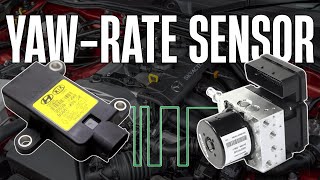
Technical definition: The SAE defines C1846 as "Lateral Acceleration Sensor Circuit Failure." The control module detects an open circuit, short circuit, or missing signal from the sensor. Modern vehicles combine this with the yaw rate and longitudinal acceleration sensors into a single 'Multi-Axis' or 'Inertia' sensor unit.
Can I Drive With C1846?
Yes, But With Caution. Yes, but your vehicle's Electronic Stability Control (ESC) and Traction Control systems are disabled. NHTSA data shows ESC reduces fatal single-vehicle crashes by 56% and fatal rollovers by up to 88%. Without it, your vehicle is highly susceptible to skidding in sharp turns or on slippery roads. Drive with extreme caution and avoid aggressive maneuvers until repaired.
Common Causes
- Liquid Spills in Center Console (Very Common) — Because the sensor sits directly under the center console in most vehicles, spilled drinks seep down and short the sensor's internal circuit board or connector. This is the leading preventable cause of C1846.
- Failed Lateral Acceleration / Yaw Rate Sensor (Common) — The sensitive micro-electromechanical systems (MEMS) inside the sensor wear out over time or break from severe physical shocks, such as hitting a deep pothole at high speed.
- Damaged or Corroded Wiring/Connectors (Common) — Wiring harnesses routed under carpets or along the frame suffer from moisture intrusion, road salt corrosion, or physical damage, creating open or short circuits.
- Loose or Corroded Ground Connection (Common) — The sensor requires a solid chassis ground. Corroded main ground straps, especially on GM trucks, interrupt the circuit and trigger intermittent faults.
- Low Battery Voltage (Less Common) — Stability control modules require a steady 12V supply. A weak battery or failing alternator drops system voltage, causing communication dropouts that mimic a sensor failure.
- Faulty Electronic Brake Control Module (EBCM) (Rare) — The EBCM itself develops internal circuit board faults, preventing it from processing the incoming sensor signal.
Symptoms
- Traction Control or Stability Control Light On — The ESC light (a car with squiggly lines) illuminates permanently, indicating the system is disabled. A "Service Stabilitrak" or "Service AdvanceTrac" message appears on the dash.
- ABS Light On — Because the stability system relies on the Anti-lock Braking System (ABS) pump to correct skids, a fault in the lateral sensor often triggers the ABS warning light as well.
- Stability System Activates Incorrectly — The stability control engages unexpectedly during normal turns, or the ABS pulses at low speeds, because the EBCM receives erratic data about the car's movement.
- Rough Shifting or Reduced Engine Power — On GM vehicles, a Stabilitrak fault forces the vehicle into a 'limp mode,' resulting in a loss of engine power and harsh transmission shifts to protect the drivetrain.
Diagnostic Flowchart
Tap your situation to follow the diagnostic path that matches what you're seeing on this code.
Common Fixes & Costs
- Replacing the Lateral Acceleration / Yaw Rate Sensor
— Parts: $200-$600, Labor: $150-$300, ~1.5 hr book time
(Professional)
GM Trucks/SUVs (2007-2014): OEM 20889693, 15900233 (Alt: {"brand": "Dorman", "part_number": "599-200", "estimated_price": "$150-$250"}, {"brand": "ACDelco", "part_number": "15900233", "estimated_price": "$200-$350"})
Ford Focus (2008-2013): OEM 8A5Z-5L217-A (Alt: {"brand": "Standard Motor Products", "part_number": "YAW101", "estimated_price": "$250-$400"})
BMW 3-Series E90 (2006-2011): OEM 34526764018 (Alt: {"brand": "Bosch", "part_number": "0265005285", "estimated_price": "$300-$500"}) - Repairing Damaged Wiring or Connectors — Parts: $10-$50, Labor: $100-$300, ~1.5 hr book time (Intermediate)
- Cleaning or Repairing Ground Connection — Parts: $0-$10, Labor: $50-$150, ~0.8 hr book time (DIY)
- EBCM/BCM Software Reflash — Parts: $0, Labor: $100-$250, ~1 hr book time (Professional)
- Replacing the Electronic Brake Control Module (EBCM) — Parts: $500-$1500, Labor: $150-$300, ~2.0 hr book time (Professional)
Used vs. New Parts: Buying Guide
When a used part is worth it: For vehicles over 10 years old where a new OEM sensor exceeds $500, a used sensor from a reputable recycler is a cost-effective option.
Donor-vehicle mileage cap: roughly under 80000 miles for the part to have meaningful remaining life.
Donor quality checklist:
- Verify the exact OEM part number matches perfectly.
- Ensure the donor vehicle has no flood damage or heavy side-impact damage.
- Inspect the connector pins for green corrosion before purchasing.
Decision logic:
- If Vehicle is less than 10 years old OR the new part is under $300 → Buy a new OEM or high-quality aftermarket part. The reliability outweighs the savings.
- If Vehicle is over 10 years old AND budget is tight → A used OEM part is acceptable, but carries a higher risk of premature failure.
- If The fault is intermittent → Buy new. Chasing an intermittent problem with a questionable used part wastes labor hours.
Warranty tradeoff: Used parts offer a 30-90 day replacement warranty. New aftermarket parts offer 1-year to lifetime warranties. New OEM parts carry a 1-2 year warranty.
Worst-case if a used part fails: $300 if a used part fails, requiring you to pay for diagnosis and calibration labor a second time.
What Happens If You Wait — Timeline
- Immediate: Code C1846 is stored. The ABS and ESC warning lights illuminate. Stability and traction control systems are immediately disabled. (MPG impact: 0%% · Added cost: $0)
- 0-3 months: Driving continues without ESC, significantly increasing the risk of a loss-of-control accident. GM vehicles may enter 'limp mode' with harsh transmission shifts. (MPG impact: 0-5%% · Added cost: $0 - $250)
- 3-12 months: Intermittent faults in the sensor circuit cause incorrect ABS activation, braking the vehicle unexpectedly at low speeds. (MPG impact: 0%% · Added cost: $0 - $500)
- 12+ months: The vehicle fails state safety inspections. Worsening electrical shorts damage the expensive EBCM module. (MPG impact: 0%% · Added cost: $500 - $1500)
Cost of Not Fixing It
- Immediate: Electronic Stability Control (ESC) and Traction Control are disabled. This significantly increases the risk of losing control in an emergency maneuver or on slippery surfaces. (Added cost: N/A)
- 0-6 months: On GM vehicles, this fault forces the transmission into a limp-home mode with harsh shifting, causing secondary stress on drivetrain components. (Added cost: $0 - $250)
- 6+ months: The vehicle fails state safety inspections. Intermittent electrical faults cause erratic ABS activation, prematurely wearing brake components. (Added cost: $500 - $1000)
Diagnosis Steps
- Read All Module Codes
Use an OBD-II scanner capable of reading Chassis (C) and Network (U) codes. Confirm C1846 is active. Look for paired codes like C0196 (Yaw Rate) or C0287 (Longitudinal), which confirm the entire multi-axis sensor unit is offline.
Tools: Advanced OBD-II Scanner (Beginner) - Monitor Live Data (PID Analysis)
Access the live data for the Lateral Acceleration Sensor. Parked on level ground, it must read a stable 0.0 g. Rock the vehicle side-to-side; the value should change smoothly. A reading stuck at maximum Gs, erratic jumping, or a dead 0.0 g during movement indicates a failed sensor or broken wire.
Tools: Advanced OBD-II Scanner with Live Data (Advanced) - Visually Inspect the Sensor and Wiring
Locate the sensor under the center console or front seat. Inspect for sticky residue from spilled drinks, corroded connector pins, or frayed wires. Check the carpet for dampness.
Tools: Flashlight, Trim Removal Tools (Intermediate) - Check for Power and Ground at the Connector
Unplug the sensor. Using a multimeter, verify the harness provides the correct reference voltage (typically 5V or 12V) from the EBCM and a solid ground (less than 0.1V resistance to chassis). Missing voltage or ground points to a wiring harness or EBCM failure, not the sensor.
Tools: Multimeter, Vehicle-specific Wiring Diagram (Intermediate) - Perform a 'Wiggle Test'
While monitoring the live sensor data on your scanner, vigorously wiggle the wiring harness between the sensor and the EBCM. If the live data drops out or spikes, you have located an intermittent break or short in the wiring.
Tools: Advanced OBD-II Scanner with Live Data (Advanced) - Test the Signal Wire
Check for continuity on the signal wire between the sensor connector and the EBCM connector. Test for a short by checking continuity between the signal wire and ground, and the signal wire and power. Any continuity here requires harness repair.
Tools: Multimeter, Vehicle-specific Wiring Diagram (Advanced) - Attempt Sensor Recalibration
If the wiring is intact but the code persists, use the scanner to perform a "Zero Point Calibration." If the calibration fails repeatedly, the sensor is internally damaged and requires replacement.
Tools: Advanced OBD-II Scanner (Advanced) - Analyze the Signal with an Oscilloscope
Connect an oscilloscope to the sensor's signal wire. A healthy 5V sensor produces a clean analog voltage change (0.5V to 4.5V) as the vehicle rocks. A flat line or excessive electrical noise confirms a dead sensor.
Tools: Oscilloscope, Wiring Diagram (Professional)
When This Code Triggers (Freeze-Frame Conditions)
- Vehicle Speed: 25-55 mph (The fault logs during normal driving when the EBCM expects a lateral G-force reading but receives none.)
- System Voltage: 11.5V - 14.8V (Check this parameter first; voltage drops below 11.5V trigger false sensor circuit codes.)
- Steering Angle: Varies (The fault triggers during a turn when the steering angle indicates a curve, but the lateral sensor reports 0.0g.)
Related Codes
- C0196 — Indicates a Yaw Rate Circuit Malfunction. Because the yaw rate and lateral acceleration sensors share the same housing, seeing C1846 and C0196 together confirms the entire multi-axis sensor unit has failed or lost power.
- C0287 — Points to a Longitudinal Acceleration Sensor Circuit fault. Seeing C1846, C0196, and C0287 simultaneously is definitive proof that the combination sensor assembly is faulty or disconnected.
- C0121 — Indicates a Steering Angle Sensor Circuit Malfunction. The EBCM compares steering angle with lateral acceleration. If the steering sensor fails, the system flags C1846 as a secondary plausibility code.
- U0121 — Means "Lost Communication With Anti-Lock Brake System Module." If U0121 is present, the EBCM is offline. The problem is module power, ground, or the CAN bus, not the individual lateral sensor.
Climate & Environmental Factors
- High Humidity / Water Ingress: Direct water intrusion from liquid spills or floor leaks corrodes the sensor's connector pins and internal circuit board, leading to short circuits. This is the primary environmental cause of C1846.
- Road Salt / Corrosion: In the 'Salt Belt', salt spray accelerates the corrosion of wiring, connectors, and chassis ground points exposed under the vehicle, destroying circuit integrity.
- Extreme Cold: Extreme cold makes wiring harnesses brittle and susceptible to cracking. It also lowers battery voltage, which triggers false communication codes across the chassis network.
How to Talk to a Mechanic About This Code
Say this: "I have an ABS and stability control light on, and my scanner shows code C1846. Please start by checking the sensor's live data, power, and ground at the connector before quoting a new sensor."
This directs the technician to perform a logical diagnosis instead of immediately quoting an expensive part. It shows you understand that a wiring or ground issue is just as likely as a failed sensor.
Avoid saying:
- 'My traction control light is on, can you fix it?'
- 'Just replace the C1846 sensor.'
- 'Do whatever you think is best.'
Questions to ask before authorizing the repair:
- What did the live data for the lateral acceleration sensor show when the car was stationary?
- Did you find good power and ground at the sensor's connector?
- Does the estimate include the mandatory 'Zero Point Calibration' required after installation?
Where to Take It: Dealer vs Independent vs Chain
- Dealer:
A safe but expensive choice. Best if you suspect a software issue, but an independent shop is usually more cost-effective.
Best for: Vehicles under warranty., Complex electrical issues on German makes (BMW, Mercedes)., When a known software reflash is the required fix.
Downsides: Highest labor rates, often 1.5-2x more than independent shops., Defaults to replacing entire module assemblies rather than repairing wiring. (Typical cost: +50% vs. baseline) - Independent Shop:
Best fit for most situations. A good independent shop handles wiring checks, sensor replacement, and calibration effectively.
Best for: Out-of-warranty vehicles where cost is a factor., Diagnosing known issues on common domestic or Japanese models.
Downsides: Ensure they have a scan tool capable of reading ABS codes and performing calibrations. (Typical cost: +0% vs. baseline) - Chain Shop:
AVOID. This repair requires diagnostic capabilities beyond what chain shops are equipped for, leading to misdiagnosis.
Best for: Simple, routine maintenance like oil changes or tires.
Downsides: Technicians lack experience with complex electronic diagnostics., Unlikely to have the advanced scan tools needed for Zero Point Calibration. (Typical cost: -10% vs. baseline)
When to Walk Away From the Repair
If the estimated repair cost for the C1846 fault exceeds 40% of your car's private-party market value, seriously consider selling or trading in the vehicle.
- Car worth $3500, fix is $1100: Borderline. The repair is 31% of the car's value. If the rest of the car is in good shape, fix it. Otherwise, walk away.
- Car worth $15000, fix is $850: Fix it. The repair cost is a small fraction of the vehicle's value and restores a critical safety system.
- Car worth $2500, fix is $1200: Walk away. The repair cost is nearly 50% of the car's value. It is not economically sensible to invest this much into an aging vehicle.
What Scan Tool You Need for This Code
Minimum: A scanner that reads Anti-Lock Brake System (ABS) codes, displays live data, and performs Zero Point Calibrations.
A basic $20 engine code reader cannot see Chassis (C) codes like C1846. Furthermore, it cannot perform the mandatory 'Zero Point Calibration' after replacing the sensor.
Budget: BlueDriver Pro (~$100) — Reads ABS/Chassis codes and displays live sensor data on your smartphone. Excellent for initial diagnosis, but cannot perform calibrations.
Mid-range: Foxwell NT630 Plus / Launch CRP123X (~$150-250) — Offers full ABS diagnostics, live data, and performs the 'Zero Point Calibration' required to complete the sensor replacement job.
Professional: Autel MaxiCOM MK808 (~$400-600) — Provides full bidirectional control, allowing you to command modules, test components directly, and perform all necessary calibrations.
Rent vs buy: Auto parts stores only rent basic engine code readers. You must buy a scanner with ABS and calibration capabilities to complete this repair yourself.
How to Clear the Code After You Fix It
- Perform the Zero Point Calibration with an advanced scan tool.
- Clear the Chassis (C) fault codes from the EBCM.
- Perform a complete drive cycle to verify the repair.
Drive cycle (~20 minutes): Start the engine and idle for 2 minutes. Drive at a steady speed between 45-65 mph for 10-15 minutes. Safely perform several left and right turns. Coast down without hard braking. The ESC/ABS light remains off if successful.
Readiness monitors affected: None directly, but clearing chassis codes resets the entire module network.
Before emissions retest: drive at least 50 miles to fully set monitors.
Watch out for:
- Skipping the Zero Point Calibration causes the code to return immediately upon driving.
- Disconnecting the battery does not clear permanent chassis codes on modern vehicles.
Will This Fail Emissions / State Inspection?
Yes — this code typically fails an OBD-II emissions inspection.
- California: An illuminated Check Engine Light triggers an automatic smog check failure. An ABS/ESC light alone passes emissions but fails a safety inspection.
- New York: State law specifies that an illuminated ABS or ESC warning light is automatic grounds for failing the annual safety inspection.
- Texas: An illuminated ABS light is not an automatic failure for standard passenger vehicles, provided the base braking system stops the car safely.
Most Commonly Affected Vehicles
- General Motors (GM) Yukon, Tahoe, Silverado, Escalade (2007-2014) — Failures of the multi-axis sensor are extremely common, causing "Service Stabilitrak" messages. Often, the root cause is a loose chassis ground or unrelated engine misfires causing RPM fluctuations.
- Ford Focus (2008-2013) — Prone to wiring harness chafing and sensor failure. Diagnostic trouble is sometimes confused by other failing sensors on the CAN network.
- Ford Explorer (2006-2010) — The yaw rate sensor is a frequent failure item. Replacement requires interior trim removal and module recalibration.
- BMW 3-Series (E90/E92), 5-Series (E60) (2004-2013) — The DSC sensor, located under the driver's seat, fails frequently. Vehicles with 'Active Steering' use a redundant sensor. Replacement requires calibration via BMW diagnostic software.
- Toyota Sequoia, Tundra (2008-2017) — The yaw rate sensor is a known failure point. Replacement requires a Zero Point Calibration, which can be performed manually by shorting OBD-II pins 4 and 12.
- Subaru Outback, WRX/STI (2008-2014) — The Yaw Rate & G Sensor for the VDC system sits under the center console. Replacement requires a 'VDC sensor midpoint setting mode' via scan tool.
- Chrysler/Jeep Grand Cherokee, Town & Country (2008-2016) — These vehicles experience high failure rates in the sensor cluster, often requiring complete module replacement.
- Hyundai Santa Fe, Elantra (2007-2012) — Failures of the yaw rate sensor cause the ESC light to illuminate permanently. Dealer replacement and calibration typically exceeds $600.
Manufacturer-Specific Notes
- General Motors: The "Service Stabilitrak" message is triggered by C1846, but GM programmed the system to disable itself if the engine misfires or RPM fluctuates. Always fix engine codes (P0300) before replacing chassis sensors.
- Ford: Ford sometimes stores this exact fault under code C1281 (Lateral Accelerometer Circuit Failure). The diagnostic and repair process remains identical.
- Toyota/Lexus: A 'Zero Point Calibration' is mandatory after sensor replacement or wheel alignments. On many models, you trigger this calibration without a scanner by jumping pins 4 and 12 in the OBD-II port.
- BMW: The combined sensor is called the DSC sensor. Replacement requires calibration of both the DSC sensor and the steering angle sensor using BMW-specific software to clear the dashboard trifecta lights.
Real Owner Stories
2011 GMC Yukon Denali at 130K miles - The Easy Fix
The "Service Stabilitrak" light illuminated intermittently in cold weather. No other symptoms were present.
What they tried:
- Researched forums suggesting ground connection issues.
- Removed the main engine-to-chassis ground strap.
- Cleaned the contact points to bare metal with a wire brush and re-tightened.
Outcome: The lights never returned. Total cost was under $5 for a wire brush. Always clean main chassis grounds before replacing expensive sensors on GM trucks.
Lesson: Always check and clean the main chassis and engine ground points before assuming an expensive sensor has failed.
2013 Chevy Cruze at 85K miles - The Misdiagnosis
The "Service StabiliTrak" light stayed on permanently. A parts store scanned codes C1846, C0196, and C0287.
What they tried:
- The owner replaced the multi-axis sensor under the center console.
- The light remained on. A mechanic attempted calibration, which failed.
- The mechanic inspected the wiring and found a corroded connector (X411) under the rear of the vehicle.
Outcome: Repairing the corroded wiring fixed the issue. The original sensor was reinstalled and calibrated successfully. The owner wasted $200 on an unnecessary sensor.
Lesson: The presence of all three sensor codes strongly points to a wiring harness failure. Inspect known problem connectors before replacing the sensor.
2015 Nissan Pathfinder at 8.5K miles - The Liquid Spill
The owner spilled coffee in the center console. Immediately, a chassis control system error appeared on the dash.
What they tried:
- Disassembled the center console to clean and dry the area.
- Discovered liquid drained directly onto the yaw rate/lateral acceleration sensor.
Outcome: The sensor was permanently shorted by the acidic liquid. The dealership replaced and calibrated the sensor for $800. Warranty denied the claim due to external damage.
Lesson: The yaw sensor is extremely vulnerable to liquid spills. Use spill-proof cups to avoid expensive, non-warranty repairs.
How to Prevent This Code From Triggering
- Install a center console spill guard or liner. (Once) — Custom-fit silicone liners catch small spills, preventing liquids from seeping through cracks and destroying the yaw sensor located below.
- Periodically clean major chassis ground points. (Every 3 years) — Corrosion on main ground points creates electrical resistance, causing intermittent faults in sensitive modules like the EBCM.
- Maintain a healthy battery and charging system. (Ongoing) — A weak battery causes low voltage conditions that lead to communication errors between the EBCM and sensors, falsely triggering a C1846 code.
Frequently Asked Questions
What is a 'Zero Point Calibration' and why is it needed?
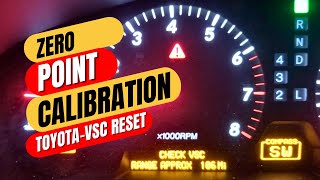
Zero Point Calibration is a scan tool procedure that teaches the vehicle's computer the sensor's neutral position on a level surface. It is mandatory after replacing the sensor or getting a wheel alignment. Without it, the stability control system makes incorrect braking decisions.
What is the difference between stability control and traction control?
Traction control prevents wheel spin during acceleration on slippery surfaces. Stability control (ESC) prevents skids and loss of control during motion, such as sharp turns or evasive maneuvers. A C1846 code disables both systems.
Can a bad battery cause a C1846 code?
Yes. Stability control systems require stable voltage. A weak battery causes communication glitches between control modules, triggering false C1846 codes and illuminating the ESC light.
I spilled a drink in my center console, could that cause this code?
Absolutely. The lateral acceleration sensor is usually located directly under the center console cup holders. Spilled liquids seep down, shorting the sensor and triggering a permanent circuit failure.
Can a bad wheel alignment cause a C1846 code?
A bad alignment won't directly cause a C1846 circuit failure code. However, it causes the steering angle sensor to conflict with the yaw sensor, triggering plausibility codes that disable stability control. A Zero Point Calibration is mandatory after an alignment to prevent this.
Where is the C1846 sensor located?
It sits near the vehicle's center of gravity. Look under the center console, beneath the driver or passenger seat, or bolted to the floor pan.
Can I replace the lateral acceleration sensor myself?
Physically replacing the sensor is a simple DIY job requiring basic hand tools. However, you must own a professional-grade scan tool to perform the mandatory 'Zero Point Calibration' afterward, or the system remains disabled.
How much does it cost to fix code C1846?
Wiring or ground repairs cost $100-$300. Replacing the sensor costs between $350 and $900, factoring in the part ($200-$600) and the labor/calibration ($150-$300).
Key Takeaways
- Code C1846 disables your vehicle's Electronic Stability Control (ESC) due to a lateral acceleration sensor circuit failure, increasing rollover risk by up to 88%.
- Liquid spills in the center console are the leading preventable cause of this code, as the sensor sits directly beneath the cup holders in most vehicles.
- You can physically drive the vehicle, but you must reduce speed in wet or icy conditions because the system cannot automatically correct skids.
- Diagnosis requires an advanced OBD-II scanner capable of reading Chassis (C) codes and live data; basic $20 engine code readers cannot see or clear this fault.
- Replacing the sensor costs between $350 and $900 and mandates a 'Zero Point Calibration' with a professional scan tool to sync the new part with the ECU.
Helpful Videos


The information in this article is provided for general reference and educational purposes only. Vehicle specifications, procedures, and part compatibility can vary by production date, trim level, and region. Always consult your vehicle's factory service manual and verify part numbers before purchasing or performing repairs. Safety-critical components such as airbags, seat belts, and braking systems should be installed by a qualified professional.
- 🎬 Helpful Videos
- What Does C1846 Mean?
- Can I Drive With C1846?
- Common Causes
- Symptoms
- Diagnostic Flowchart
- Common Fixes & Costs
- Used vs. New Parts: Buying Guide
- What Happens If You Wait — Timeline
- Cost of Not Fixing It
- Diagnosis Steps
- When This Code Triggers (Freeze-Frame Conditions)
- Related Codes
- Climate & Environmental Factors
- How to Talk to a Mechanic About This Code
- Where to Take It: Dealer vs Independent vs Chain
- When to Walk Away From the Repair
- What Scan Tool You Need for This Code
- How to Clear the Code After You Fix It
- Will This Fail Emissions / State Inspection?
- Most Commonly Affected Vehicles
- Manufacturer-Specific Notes
- Real Owner Stories
- 2011 GMC Yukon Denali at 130K miles - The Easy Fix
- 2013 Chevy Cruze at 85K miles - The Misdiagnosis
- 2015 Nissan Pathfinder at 8.5K miles - The Liquid Spill
- How to Prevent This Code From Triggering
- Frequently Asked Questions
- What is a 'Zero Point Calibration' and why is it needed?
- What is the difference between stability control and traction control?
- Can a bad battery cause a C1846 code?
- I spilled a drink in my center console, could that cause this code?
- Can a bad wheel alignment cause a C1846 code?
- Where is the C1846 sensor located?
- Can I replace the lateral acceleration sensor myself?
- How much does it cost to fix code C1846?
- Key Takeaways
- 🎟️ Get 5% Off