

OBD-II Code C1769: Air Suspension Relay Circuit Failure and Beyond
The Ultimate Guide to Diagnosing and Fixing C1769 on All Major Brands
- Code C1769 indicates an air suspension relay circuit failure on Ford, Lincoln, and Mercury vehicles, disabling the compressor and causing the vehicle to sag.
- Replacing the $25 air suspension relay is the most common fix, but a failing compressor drawing over 25 amps will immediately burn out the new relay.
- Test the compressor's amperage draw before buying parts; a healthy unit draws 12-20 amps, while a failing unit pulling 25+ amps requires complete replacement.
- Limit driving to under 10 miles; riding on deflated air springs destroys the rubber bags ($200-$600 per corner) and accelerates wear on shocks and control arms.
- Verify your manufacturer's definition before diagnosing; C1769 flags TPMS configuration on Nissan, adaptive cruise control on Mitsubishi, and parking brake faults on Jaguar.
What Does C1769 Mean?
Code C1769 means the vehicle's main computer detected an electrical fault in the air suspension relay circuit. This heavy-duty switch turns the air compressor on and off. When this circuit fails, the computer cannot activate the compressor to inflate the air springs, disabling the vehicle's ability to support its weight and absorb impacts.
Technical definition: The SAE definition for C1769 varies by manufacturer. On Ford, Lincoln, and Mercury vehicles, it means 'Air Suspension Relay Circuit Failure' or 'Compressor Relay Short to Ground/Open'. This indicates an electrical fault controlling the compressor relay. On Nissan, it flags TPMS configuration; on Mitsubishi, it indicates Adaptive Cruise Control alignment issues.
Can I Drive With C1769?
yes_but_its_a_costly_gamble. Yes, but it is a costly gamble. Driving forces the vehicle to ride on its rubber bump stops, creating a bone-jarring ride that destroys the air springs ($200-$600+ per corner). It puts extreme stress on suspension components and causes uneven tire wear. If a leak caused the failure, the compressor runs continuously, leading to premature burnout and adding $700-$1,500+ to the repair bill. Limit driving to under 10 miles and repair promptly.
Common Causes
- Failing Air Suspension Compressor (Common) — As the compressor motor ages, it works harder and draws excessive electrical current (25+ amps). This overload burns out the relay and blows fuses, triggering C1769 as a symptom of compressor failure.
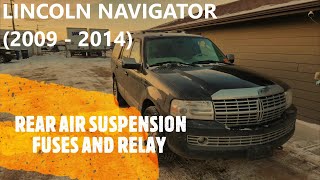
- Failed Air Suspension Relay (Very Common) — This electro-mechanical switch handles high current and wears out from repeated use. It is the most frequent direct cause of a C1769 code. 🎬 Watch: How to locate the air suspension fuse and relay.
- Blown Air Suspension Fuse (Common) — A blown high-amperage fuse interrupts power to the relay and compressor circuit. Fuses blow due to underlying issues, usually a failing compressor drawing too much current.
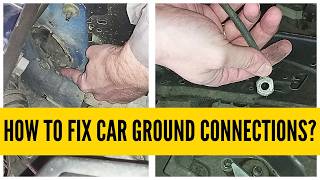
- Poor Ground Connection (Common) — The compressor and relay circuit require a solid chassis ground. Corrosion or a loose connection creates high resistance, preventing compressor operation and triggering a circuit fault.
- Damaged Wiring or Connectors (Common) — Corroded, broken, or shorted wires leading to the relay or compressor cause circuit failure. This frequently happens to under-vehicle components exposed to moisture and road salt.
- Leaking Air Springs or Lines (Less Common) — A severe leak forces the compressor to run continuously. This constant operation overheats the compressor, which overloads and burns out the control relay, causing the C1769 code.
- Faulty Air Suspension Control Module (ASCM) (Rare) — The control module commands the relay. Internal failure is possible but rare; only consider this after proving all other circuit components function correctly.
Symptoms
- Air Suspension Warning Light On — The 'Check Air Suspension' or similar dashboard warning light illuminates immediately.
- Harsh or Bumpy Ride — Without air in the springs, the vehicle lacks shock absorption, resulting in a stiff, jarring ride.
- Abnormal Compressor Noise — Before complete failure, the compressor runs excessively long or makes grinding sounds, indicating it struggles to build pressure.
- Vehicle Sagging or Sitting Low (also visible on scanner) — The vehicle (usually the rear) sits on the bump stops and fails to raise when started because the compressor cannot fill the air springs.
- Compressor Does Not Turn On (also visible on scanner) — The familiar humming sound of the air compressor running for 1-2 minutes after startup or adding weight is absent.
Diagnostic Flowchart
Tap your situation to follow the diagnostic path that matches what you're seeing on this code.
Common Fixes & Costs
- Replace Air Suspension Relay
— Parts: $15-$55, Labor: $0-$50 (DIY), ~0.2 hr book time
(DIY)
Ford Expedition / Lincoln Navigator (1997-2006): OEM F3LB-2C013-AA, F3LB-2C013-BA (Alt: Standard Motor Products RY-319, Ultima RLYU0203)
Lincoln Town Car (1998-2011): OEM F3LB-2C013-AA (Alt: Dorman 601-210 (Relay with module)) - Replace Air Suspension Compressor Assembly
— Parts: $200-$700 (Aftermarket), $700-$1,200+ (OEM), Labor: $200-$400, ~2.1 hr book time
(Professional)
Ford Expedition / Lincoln Navigator (2007-2013): OEM 7L1Z-5319-AE (Alt: Arnott P-2937, Dorman 949-203)
Ford Expedition / Lincoln Navigator (1998-2002): OEM 1L1Z-5319-AA (Alt: Arnott P-2932, Dorman 949-201) - Replace Blown Fuse(s) — Parts: $1-$5, Labor: $0 (DIY), ~0.1 hr book time (DIY)
- Clean or Repair Ground Connection — Parts: $1-$10, Labor: $50-$150, ~0.8 hr book time (DIY)
- Replace Leaking Air Spring/Air Bag
— Parts: $150-$400 per corner (Aftermarket), Labor: $150-$300 per corner, ~1.2 hr book time
(Professional)
Lincoln Town Car (1990-2011): OEM 3U2Z5580BA, 6W1Z5560AA (Alt: Arnott A-2105, Suncore 40F-15-R) - Repair Damaged Wiring or Connector — Parts: $10-$50, Labor: $120-$350, ~1.5 hr book time (Intermediate)
DIY vs Professional
- Replace Air Suspension Relay / Fuse — Beginner:
Tools: Owner's Manual, Fuse puller - Clean or Repair Ground Connection — Beginner:
Tools: Socket set, wire brush, sandpaper, dielectric grease - Repair Damaged Wiring or Connector — Beginner:
Tools: Multimeter, wire strippers, heat shrink tubing, soldering iron - Replace Air Suspension Compressor Assembly — Beginner:
Tools: Jack and jack stands, socket set, line wrenches, scan tool - Replace Leaking Air Spring/Air Bag — Beginner:
Tools: Jack and jack stands, socket set, line wrenches, soapy water
Used vs. New Parts: Buying Guide
When a used part is worth it: A used air compressor is a budget-conscious option for an older, high-mileage vehicle, especially if you plan to sell it soon. The best-case scenario is a part from a low-mileage vehicle that was in an accident.
Donor-vehicle mileage cap: roughly under 75000 miles for the part to have meaningful remaining life.
Donor quality checklist:
- Verify the donor vehicle's mileage and reason for being scrapped.
- Visually inspect for corrosion, damage to the dryer, and intact electrical connectors.
- Ensure the part number is an exact match for your vehicle model and year.
Decision logic:
- If The part is an inexpensive relay or fuse → Always buy new; the cost savings are negligible and not worth the risk.
- If Vehicle is newer or you plan to keep it long-term → Buy a new OEM or high-quality aftermarket (e.g., Arnott) compressor for better longevity and warranty.
- If Vehicle is over 150K miles and budget is the primary concern → A tested, used compressor from a reputable salvage yard is a viable short-term solution.
Warranty tradeoff: Used parts typically offer a 30-90 day warranty. New aftermarket parts often come with a one-year to limited lifetime warranty. New OEM parts carry a 1-2 year warranty.
Worst-case if a used part fails: $300-$600 if a used compressor fails after installation, requiring repeat labor costs plus the price of another replacement part.
What Happens If You Wait — Timeline
- 0-1 week: Code sets, 'Check Air Suspension' light on. Vehicle sags and rides harshly on bump stops. Compressor does not run. (MPG impact: 0%% · Added cost: $0)
- 1 week - 1 month: Driving on the bump stops causes the folded rubber air springs to develop cracks and weak spots. The harsh ride accelerates wear on shocks and bushings. (MPG impact: 0-1%% · Added cost: $300-$800 (Cost to replace air springs that may have been fine initially))
- 1-3 months: Air springs are ruined. If the initial cause was a leak, the overworked compressor motor burns out completely. Severe vibrations cause noticeable wear on ball joints and control arm bushings. (MPG impact: 1-3%% · Added cost: $1,000-$1,500 (Cost now includes a new compressor on top of air springs))
- 3+ months: The entire air suspension system is compromised. The initial $50 relay fix cascades into needing a new compressor, new air springs, and potentially new shocks, ball joints, or control arm bushings. (MPG impact: 2-5%% · Added cost: $1,500-$3,000+)
Cost of Not Fixing It
- Immediate (0-100 miles): Extremely harsh, bouncy ride. Vehicle rides on suspension bump stops. Increased stress on all suspension and steering components. (Added cost: Negligible)
- 1 week - 2 months (100-2,000 miles): Damage to the rubber air springs/bags from being compressed and folded while driving. This turns a simple electrical fix into an expensive parts replacement. (Added cost: $300-$800+)
- 2+ months (2,000+ miles): Accelerated wear and failure of shocks/struts, ball joints, and control arm bushings due to excessive vibration and harsh impacts. The compressor burns out completely. (Added cost: $1000-$2500+)
Diagnosis Steps
- Swap the Relay (The Easiest Test)
Locate the air suspension relay (often under-hood or in the trunk). Swap it with an identical non-essential relay (like the horn). If the horn stops working and the compressor kicks on, replace the relay.
Tools: Owner's Manual (Beginner) - Check the Fuses
Locate the high-amperage fuse for the air suspension compressor (e.g., 30A or 40A). Visually inspect and replace if blown. A blown fuse confirms an overcurrent event, likely from a failing compressor.
Tools: Owner's Manual, Fuse Puller (Beginner) - Test the Relay Socket
With the relay removed and key on, use a multimeter to test the socket slots. Verify constant 12V+ at the high-power terminal (pin 30) and a command signal (5-12V) at the control terminal (pin 85/86). Missing command signals point to the control module or sensors.
Tools: Multimeter (Intermediate) - Inspect Ground Connection
Locate the main ground wire for the compressor on the vehicle's frame. Remove the bolt, clean the contact point and terminal to bare metal with a wire brush, and re-secure tightly. Bad grounds mimic failed relays.
Tools: Socket Set, Wire Brush (Intermediate) - Check Compressor Current Draw
If the compressor runs, clamp a multimeter around its main power wire. A healthy compressor draws 12-20 amps. A failing unit draws 25-30+ amps, which burns out relays and blows fuses. High draw means replace the compressor.
Tools: Multimeter with Amp Clamp (Advanced) - Test the Compressor Directly
If the relay and wiring pass, bypass the circuit. Use fused jumper wires to apply 12V directly from the battery to the compressor's power and ground terminals. If it fails to run, replace the compressor assembly.
Tools: Fused Jumper Wires, Basic Hand Tools (Advanced) - Check for Air Leaks
If the electrical system functions, a leak likely overworked the compressor. Spray soapy water on the air springs and lines while the system is pressurized. Bubbles or hissing indicate leaks requiring immediate repair.
Tools: Spray Bottle with Soapy Water (Beginner) - Test Height Sensor Voltage
Using a scan tool or multimeter, monitor height sensor voltage (typically 0.5V to 4.5V). Voltage must change smoothly as the suspension moves. Stuck or erratic voltage prevents the module from commanding the compressor.
Tools: Scan Tool with Live Data, Multimeter, Back-probe Pins (Advanced)
When This Code Triggers (Freeze-Frame Conditions)
- Vehicle Speed: 0-5 mph (At startup or immediately after stopping. The code sets when the module commands the compressor on to adjust height and detects the circuit fault.)
- RPM: 600-800 (Engine at idle. The system performs a height check immediately after the engine is started.)
- System Voltage: 12.5-14.5V (Normal operating voltage; the fault is a circuit failure, not a voltage issue.)
- Suspension Relay Command: ON (The ECU sets C1769 when it sends the 'ON' command but the feedback from the circuit indicates an open or short.)
Related Codes
- C1770 — Indicates a fault with the air suspension vent solenoid. C1769 stops the compressor from running entirely, while C1770 allows the compressor to run but prevents the vehicle from lowering, getting stuck in the 'up' position.
- C1830 — Points to a fault in the damper control circuit, controlling ride stiffness. C1769 affects the vehicle's ability to lift, while C1830 affects ride quality. If both are present, suspect a faulty control module.
- C1725 — Means 'Air Suspension Front Pneumatic Failure'. C1725 is a consequence of C1769. The system sets C1725 when it commands a lift but sees no height change because C1769 prevented the compressor from running. Fix C1769 first.
- C1727 — Indicates 'Air Suspension Height Sensor Circuit Malfunction'. A bad height sensor prevents the control module from activating the compressor. If the relay circuit is good but receives no command, diagnose C1727 first.
Climate & Environmental Factors
- Cold Weather: Low temperatures cause the air inside the springs to contract, lowering ride height and increasing compressor runtime. Rubber air springs become stiff and brittle, making them prone to cracking. Moisture inside the system freezes, causing blockages in air lines.
- Road Salt / Coastal Air: Salt and moisture dramatically accelerate rust on undercarriage components. This destroys the air compressor housing, electrical connectors, ground points, and metal air lines, leading to electrical faults and leaks.
- High Humidity: Humid environments introduce excess moisture into the system during the air compression cycle. This overwhelms the air dryer, leading to internal corrosion and increasing the risk of freezing blockages in cold climates.
How to Talk to a Mechanic About This Code
Say this: "I have a C1769 code on my vehicle, and the air suspension is not working. I'd like to schedule a diagnostic appointment. Please make sure the technician checks the compressor's amp draw and the main ground connection before recommending a new compressor, as I understand a bad relay is often a symptom of a larger issue."
This signals to the shop that you are an informed customer. It directs them to perform a thorough diagnosis to find the root cause, rather than just replacing the cheapest part (the relay) which fails again, or immediately upselling you to the most expensive part (the compressor).
Avoid saying:
- 'My air suspension is broken, just fix it.'
- 'My car is sagging, can you look at it?'
- 'I read online it's the relay, just change that.'
Questions to ask before authorizing the repair:
- What was the measured amp draw of the compressor, and what is the normal range for my vehicle?
- Did you inspect the ground wire and its connection point to the frame for corrosion?
- If the compressor is the problem, what is the warranty on the new part and the labor?
- Can you show me the old part that has failed?
Where to Take It: Dealer vs Independent vs Chain
- Dealer:
A safe but expensive option. Best if you suspect a control module issue or are under warranty. Otherwise, an independent shop is more cost-effective.
Best for: Vehicles still under factory or extended warranty., Complex electrical issues where manufacturer-specific diagnostic tools are required., Recalls and Technical Service Bulletins (TSBs).
Downsides: Highest labor rates and mandatory use of more expensive OEM parts., More likely to replace an entire assembly rather than a smaller component. (Typical cost: +50% vs. baseline) - Independent Shop:
Best fit for most owners. An experienced independent shop diagnoses and repairs a C1769 fault efficiently and cost-effectively, often with better-than-OEM aftermarket parts.
Best for: Out-of-warranty vehicles where cost is a factor., Common failures like C1769 on Ford/Lincoln models, which they see frequently., Flexibility to use high-quality aftermarket parts (like Arnott) or OEM parts.
Downsides: Quality and expertise vary greatly; look for ASE certification and good reviews., May lack the very latest diagnostic software for brand-new models. (Typical cost: +0% vs. baseline) - Chain Shop:
Avoid for this code. The diagnostic process for C1769 requires more than basic code reading and leads to incorrect and expensive repairs at a shop not specialized in diagnostics.
Best for: Simple, routine maintenance like oil changes, tires, and brakes.
Downsides: Technician skill varies dramatically; lacks the experience for nuanced electrical diagnostics., Incentivized to upsell services, leading to misdiagnosis of a C1769 (e.g., selling a whole compressor when only a ground wire is loose). (Typical cost: -10% vs. baseline)
When to Walk Away From the Repair
If the total estimated repair cost for the air suspension system exceeds 40-50% of your car's current private-party value, it is time to seriously consider alternatives.
- Car worth $3500, fix is $1800: Walk away. The repair cost is over 50% of the car's value. This is a prime candidate for a coil spring conversion kit (~$500-$800) or selling 'as-is'.
- Car worth $15000, fix is $1200: Fix it. The repair cost is less than 10% of the vehicle's value, making it a worthwhile investment to maintain its function and value.
- Car worth $6000, fix is $2500: Borderline. At ~42% of the car's value, get a second opinion. If the rest of the car is in excellent condition, it is worth fixing. If it has other pending issues, sell or trade in.
What Scan Tool You Need for This Code
Minimum: A tool that reads and clears manufacturer-specific codes (C-codes for chassis) from the Air Suspension Control Module (ASCM).
A basic $20 OBD-II reader only accesses the engine control unit (ECU) and will not see 'C' codes. For a C1769, you need a scanner that communicates with the specific suspension module to read the code, view live data, and clear it after the repair.
Budget: BlueDriver Pro / ANCEL FD700 (~$100) — Reads and clears specific Ford/GM chassis codes like C1769. Displays live data from the suspension module, such as height sensor voltage and compressor status, which is crucial for diagnosis.
Mid-range: Foxwell NT510 Elite / NT710 (with Ford software) (~$180) — Offers full system diagnostics plus bi-directional control. This allows you to actively command the compressor relay ON or OFF directly from the scanner, which is the best way to test the relay, wiring, and compressor independently of the control module.
Professional: Autel MaxiCOM MK808 / Launch Creader Series (~$450-800) — Provides full, OEM-level bidirectional control and special functions. Performs system calibrations, reads detailed manufacturer-specific data PIDs, and runs automated system tests, making it a powerful tool for diagnosing complex or intermittent issues.
Rent vs buy: Most auto parts store loaner tools are basic code readers and will NOT work for this code. If you are a DIYer, buying a budget or midrange scanner is a good investment. For a one-time, complex repair, paying a professional shop's diagnostic fee is more economical than buying a pro-level tool.
How to Clear the Code After You Fix It
- Perform the physical repair (e.g., replace relay, fix wiring).
- Reconnect the battery if it was disconnected.
- Use an OBD-II scan tool to access the ASCM (Air Suspension Control Module) and clear the C1769 trouble code.
- Start the vehicle and allow the compressor to run and the vehicle to reach its normal ride height.
Drive cycle (~15 minutes): After clearing the code, start the engine and let it idle for 2 minutes to allow the system to initialize and level. Drive the vehicle for 10-15 minutes in mixed conditions to confirm the system operates correctly and the warning light does not return.
Readiness monitors affected: None
Watch out for:
- Disconnecting the battery does not clear the code from the suspension module's memory.
- If the 'Check Air Suspension' light returns immediately, the root cause (like a failing compressor or bad ground) was not fixed.
- Forgetting to turn the air suspension service switch back ON (if equipped) after the repair.
Will This Fail Emissions / State Inspection?
No — by itself this code doesn't fail OBD inspection (but it can keep readiness monitors from setting, which causes a separate fail).
- California: This code will NOT cause an emissions/smog check failure. California's test fails for an illuminated Check Engine Light and OBD readiness monitors, neither of which are affected by a C-code. However, a separate safety inspection could still be failed.
- New York: NYS requires an annual safety inspection that checks suspension components. A vehicle that is sagging or not maintaining ride height due to a C1769 fault fails the safety inspection, preventing registration renewal.
- Texas: As of 2025, most personal vehicles are exempt from safety inspections. However, commercial vehicles still require them. A C1769 fault causes a commercial vehicle to fail the safety inspection portion, which checks suspension.
Most Commonly Affected Vehicles
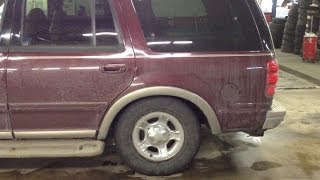
- Ford Expedition (1997-2013) — Extremely common failure. On 2003+ models, check for corrosion on the compressor near the front passenger side. For 2007+ models, the compressor is behind the right front wheel.
- Lincoln Navigator (1998-2013) — Shares the same air suspension system as the Ford Expedition. Diagnosis and repair procedures are identical.
- Lincoln Town Car (1998-2011) — The relay and its connector reside in a module in the trunk, where moisture causes corrosion. For 2003-2011 models, check fuse #114 (30A) in the under-hood power distribution box.
- Ford Crown Victoria (1992-2011) — Police and civilian models with air suspension experience this fault due to a failed relay or an overworked, aging compressor.
- Mercury Grand Marquis (1992-2011) — Mechanically identical to the Town Car and Crown Victoria, sharing the same common failure points including the trunk-mounted relay module.
- Cadillac Escalade (2002-2014) — These SUVs use an 'Autoride' system. The compressor assembly is replaced as a complete unit, with replacement often costing $730-$970.
- Chevrolet Suburban / Tahoe (2000-2014) — Sharing the GM platform with the Escalade, these vehicles experience compressor burnout and relay failure. The compressor, dryer, and vent solenoid are integrated into one unit.
- Ram 1500 (2013-2019) — Equipped with 'Active-Level Four-Corner Air Suspension', these trucks suffer from relay and compressor failures triggering circuit-related codes.
Manufacturer-Specific Notes
- Ford / Lincoln / Mercury: This is the most common context for C1769, relating to the air suspension relay circuit. A failing compressor draws too much power, burning out the relay, requiring both parts to be replaced.
- Nissan / Infiniti: C1769 means 'Configuration Setting'. It appears after a Body Control Module (BCM) replacement when the Tire Pressure Monitoring System (TPMS) is not correctly configured. It is unrelated to air suspension.
- Mitsubishi: C1769 is 'Alignment Right Compensation' and relates to the Adaptive Cruise Control (ACC) system, indicating a problem with the radar's calibration or alignment.
- Jaguar: C1769 translates to 'Parking Brake Apply Switch Short to Ground', pointing to a fault in the electronic parking brake switch circuit.
Real Owner Stories
2004 Lincoln Town Car at 135K miles - The Classic Misdiagnosis
The 'Check Air Suspension' light came on and the rear of the car was sagging. The compressor was not kicking on.
What they tried:
- Following online forums, the owner replaced the air suspension relay located in the trunk. The compressor immediately started working and the car leveled out.
- Two days later, the light was back on and the car was sagging again. The new relay had failed.
Outcome: A mechanic tested the compressor and found it was drawing over 30 amps (normal is 12-20A). The old, failing compressor was burning out the relays. Replacing the compressor assembly and the relay a second time provided a permanent fix. Total cost was ~$450 for an aftermarket compressor and relay, plus labor.
Lesson: If a new relay fixes the problem but fails quickly, the compressor is almost certainly the root cause. Test the compressor's amp draw before assuming the fix is complete.
2005 Ford Expedition at 180K miles - The Easy Fix
Vehicle was sitting low on the rear axle after being parked overnight. No sound from the compressor when the vehicle was started.
What they tried:
- Checked the owner's manual and located the 30A fuse for the air suspension in the under-hood fuse box. The fuse was blown.
- Swapped the air suspension relay with the identical horn relay. The horn stopped working and the compressor turned on.
- Replaced the original relay with a new one for $25.
Outcome: Replacing the relay and the fuse was all that was needed. The owner noted the old relay's terminals were slightly corroded. The system has worked correctly for over a year since the 15-minute fix.
Lesson: Always start with the simplest and cheapest parts. A relay swap is a free and definitive test that saves you from a costly misdiagnosis.
2007 Lincoln Navigator at 110K miles - The Unusual Root Cause
C1769 code was present, and the compressor would not activate. The owner had already replaced the relay and checked the fuse, with no success.
What they tried:
- Jumpered the compressor directly from the battery, and it ran fine, ruling out a failed compressor.
- Used a multimeter at the relay socket and found 12V power, but no 'command' signal from the control module to turn the relay on.
- Inspected the wiring harness near the compressor, located behind the passenger front wheel well.
Outcome: A visual inspection revealed a wire in the harness had been chafed through by road debris, breaking the command circuit between the control module and the relay. Splicing the wire restored the command signal. The compressor began to operate normally, and the code was cleared.
Lesson: If the relay and compressor are good, suspect a break in the chain of command. Check for power *and* the command signal at the relay socket. Inspect wiring in areas exposed to the elements.
How to Prevent This Code From Triggering
- Periodically wash the undercarriage (Monthly, especially in winter or coastal areas) — Removes corrosive road salt and grime that destroys the compressor housing, electrical connectors, and ground points, preventing electrical faults and leaks.
- Listen to the compressor's runtime (Weekly) — A healthy compressor runs for about a minute at startup and shuts off. Running for several minutes or cycling frequently is an early warning of an air leak that overworks the system.
- Visually inspect air springs (Every oil change) — Look for tiny cracks, chafing, or weathering in the rubber. Small cracks become leaks, which overwork the compressor and relay, leading to a C1769 failure.
- Cycle the suspension (Monthly) — For vehicles that sit for long periods, operating the suspension keeps seals lubricated and prevents moisture from settling in one spot, which causes internal corrosion or freezing.
Frequently Asked Questions
Where is the air suspension relay located?
It resides in the under-hood fuse box or the trunk (common on Lincoln Town Cars). Consult your owner's manual for the exact location.
What is a common misdiagnosis for code C1769?
Replacing the relay without testing the compressor's amp draw is the most common mistake. A failing compressor pulls excessive current and immediately burns out the new relay. Always test the compressor and check the main ground wire.
Why did the C1769 code return after replacing the relay?
A rapidly failing new relay indicates the air compressor is drawing too much electricity (over 25 amps). You must replace the compressor assembly to permanently resolve the overcurrent issue.
The relay and fuse are good, but the compressor won't run. What's next?
Clean the compressor's ground wire connection to bare metal. Next, use a multimeter to verify the control module sends a command signal (5-12V) to the relay socket. If the signal is missing, suspect a faulty height sensor or control module.
What noises does a bad air suspension compressor make?
A failing compressor makes a loud, continuous humming noise as it struggles to overcome an air leak. It also produces grinding or whining sounds, indicating internal mechanical failure.
Can I replace my air suspension with regular shocks and springs?
Yes, aftermarket coil spring conversion kits permanently replace complex air suspension components. This is a highly recommended, cost-effective long-term solution for older vehicles.
Will a bad relay drain my car battery?
It is rare but possible. If the relay's internal contacts weld shut, the compressor runs continuously with the engine off, draining the battery. However, C1769 usually indicates an open circuit, which does not cause a drain.
How do you reset the air suspension warning light?
Clear the code using an OBD-II scanner capable of reading chassis (C) codes. On some models, fixing the fault and driving allows the system to self-test and turn off the light automatically.
Key Takeaways
- Code C1769 indicates an air suspension relay circuit failure on Ford, Lincoln, and Mercury vehicles, disabling the compressor and causing the vehicle to sag.
- Replacing the $25 air suspension relay is the most common fix, but a failing compressor drawing over 25 amps will immediately burn out the new relay.
- Test the compressor's amperage draw before buying parts; a healthy unit draws 12-20 amps, while a failing unit pulling 25+ amps requires complete replacement.
- Limit driving to under 10 miles; riding on deflated air springs destroys the rubber bags ($200-$600 per corner) and accelerates wear on shocks and control arms.
- Verify your manufacturer's definition before diagnosing; C1769 flags TPMS configuration on Nissan, adaptive cruise control on Mitsubishi, and parking brake faults on Jaguar.
Helpful Videos

The information in this article is provided for general reference and educational purposes only. Vehicle specifications, procedures, and part compatibility can vary by production date, trim level, and region. Always consult your vehicle's factory service manual and verify part numbers before purchasing or performing repairs. Safety-critical components such as airbags, seat belts, and braking systems should be installed by a qualified professional.
- 🎬 Helpful Videos
- What Does C1769 Mean?
- Can I Drive With C1769?
- Common Causes
- Symptoms
- Diagnostic Flowchart
- Common Fixes & Costs
- DIY vs Professional
- Used vs. New Parts: Buying Guide
- What Happens If You Wait — Timeline
- Cost of Not Fixing It
- Diagnosis Steps
- When This Code Triggers (Freeze-Frame Conditions)
- Related Codes
- Climate & Environmental Factors
- How to Talk to a Mechanic About This Code
- Where to Take It: Dealer vs Independent vs Chain
- When to Walk Away From the Repair
- What Scan Tool You Need for This Code
- How to Clear the Code After You Fix It
- Will This Fail Emissions / State Inspection?
- Most Commonly Affected Vehicles
- Manufacturer-Specific Notes
- Real Owner Stories
- 2004 Lincoln Town Car at 135K miles - The Classic Misdiagnosis
- 2005 Ford Expedition at 180K miles - The Easy Fix
- 2007 Lincoln Navigator at 110K miles - The Unusual Root Cause
- How to Prevent This Code From Triggering
- Frequently Asked Questions
- Where is the air suspension relay located?
- What is a common misdiagnosis for code C1769?
- Why did the C1769 code return after replacing the relay?
- The relay and fuse are good, but the compressor won't run. What's next?
- What noises does a bad air suspension compressor make?
- Can I replace my air suspension with regular shocks and springs?
- Will a bad relay drain my car battery?
- How do you reset the air suspension warning light?
- Key Takeaways
- 🎟️ Get 5% Off