

OBD-II Code C1753: Forward Radar or Sensor Blocked
What C1753 means, why it triggers, and how to fix it
- Code C1753 indicates a blocked or misaligned forward-facing radar sensor, instantly disabling your adaptive cruise control and automatic emergency braking.
- Clean the front grille and bumper area thoroughly; physical obstructions like snow, ice, or thick mud cause over 50% of these faults.
- If the code appears after a minor bumper impact or a wheel alignment, the sensor requires a professional ADAS recalibration costing $250 to $700.
- Test your 12V battery before replacing expensive sensors, as voltage drops during startup frequently trigger false C1753 and related ADAS codes.
- Do not ignore this code; driving with C1753 active means your vehicle will not automatically brake to prevent a rear-end collision.
What Does C1753 Mean?

Trouble code C1753 indicates the Advanced Driver-Assistance Systems (ADAS) module detects a problem with the forward-facing radar sensor. The computer reports the sensor's view is blocked, its signal is degraded, it has an internal fault, or it is out of alignment with the vehicle's thrust angle.
Technical definition: The SAE/ISO definition for C1753 is "ACC/FCM Radar Blockage Detected." This means the Adaptive Cruise Control (ACC) or Forward Collision Mitigation (FCM) module determined the forward-facing radar sensor's performance is degraded due to physical obstruction, misalignment, environmental factors, or internal failure.
Can I Drive With C1753?
Yes, But With Caution. Yes, you can still drive the vehicle, but critical safety systems like Adaptive Cruise Control (ACC) and Automatic Emergency Braking (AEB) are disabled. This significantly increases the risk of a rear-end collision. Ignoring the issue poses no direct mechanical risk, but it compromises your safety until repaired.
Common Causes

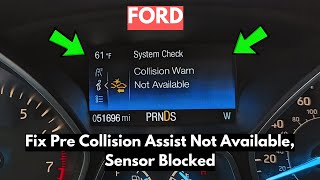
- Obstructed Radar Sensor (Very Common) — The most frequent cause is physical blockage from snow, ice, mud, heavy bug splatter, or road grime. 🎬 Watch: How to fix Ford sensor blocked warnings caused by grime. Poorly placed front license plates, aftermarket grilles, or bumper stickers also obstruct the radar waves.
- Environmental Conditions (Very Common) — Severe weather like heavy rain, dense fog, or snow interferes with radar waves, causing the system to shut down as a precaution. Direct sunlight at low angles also overheats the sensor, triggering a temporary fault that clears when conditions improve.
- Misaligned Sensor or Damaged Bracket (Common) — A minor front-end collision, hitting a curb, or significant vibrations knocks the radar sensor out of its precise alignment. The mounting bracket is designed as a failure point and bends easily. An alignment offset of just a few degrees triggers this fault. 🎬 See how radar alignment and ADAS calibration work in the shop.
- Weak or Failing 12V Battery (Less Common) — A battery with low voltage causes electronic modules to fail their self-tests during startup. The ADAS control unit is highly sensitive to voltage drops and sets a C1753 code if it lacks correct power, even if the sensor is perfectly fine.
- Faulty Radar Sensor (Less Common) — The radar sensor fails internally over time due to moisture intrusion, manufacturing defects, or circuit board failure. This requires a complete replacement and recalibration.
- Wiring or Connector Issues (Less Common) — Frayed wires, corroded connector pins, or a loose connection between the radar sensor and the vehicle's wiring harness interrupts the signal. Water intrusion into harness connectors is a known issue on many trucks and SUVs.
- CAN Bus Communication Failure (Rare) — The radar module communicates with the ECM and ABS module over the Controller Area Network (CAN) bus. A shorted wire or failing module on this network prevents the radar from receiving necessary data, triggering a fault.
Symptoms

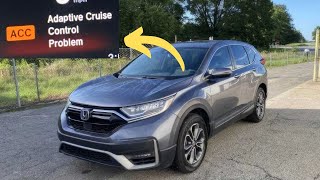
- Adaptive Cruise Control (ACC) Unavailable — You cannot set adaptive cruise control. A message like "ACC Unavailable" or "Radar Blocked" appears on the instrument cluster. 🎬 Watch: Troubleshooting adaptive cruise control problems in Honda vehicles.
- Automatic Emergency Braking Disabled — The automatic emergency braking and forward collision alert systems turn off. A warning light depicting a car with an exclamation point illuminates on the dash.
- Specific ADAS Warning Light — A dedicated warning light, often an orange icon of a car with radar waves, or a text message like "Front Sensor Blocked" displays.
- Multiple System Warning Lights — When the root cause is a communication or voltage issue, ABS, traction control, or check engine lights illuminate simultaneously.
Diagnostic Flowchart
Tap your situation to follow the diagnostic path that matches what you're seeing on this code.
Common Fixes & Costs
- Cleaning the Radar Sensor — Parts: $0, Labor: $0, ~0.1 hr book time (DIY)
- Radar Sensor Recalibration — Parts: $0, Labor: $250-$700, ~1.5 hr book time (Professional)
- Replacing a Damaged Radar Sensor Bracket
— Parts: $50-$250, Labor: $150-$300, ~2.5 hr book time
(Intermediate)
Mitsubishi Outlander (2022-2024): OEM 8639A329
Honda CR-V (2017-2022): OEM 36805-TLA-A00
Ford F-150 (2021-2025): OEM ML3Z-14D189-E (Right), ML3Z-14D189-F (Left) - Replacing a Weak or Faulty Battery
— Parts: $150-$400, Labor: $50-$100, ~0.8 hr book time
(DIY)
General: OEM - Replacing the Forward Radar Sensor
— Parts: $500-$1,800, Labor: $300-$800, ~3 hr book time
(Professional)
Mitsubishi Outlander: OEM 8638A114, 8638A554
Honda CR-V: OEM 8S303-3A0-A05, 8S303-3D4-A34
Ford F-150: OEM FL3T-9G768-AG, ML3T-9G768-AL
DIY vs Professional
- Cleaning the Radar Sensor — Beginner:
Tools: Soft cloth, mild soap, water. - Radar Sensor Recalibration — Beginner:
Tools: Specialized ADAS calibration rig with targets, wheel alignment machine, and OEM-level diagnostic software. - Replacing a Damaged Radar Sensor Bracket — Beginner:
Tools: Socket/wrench set, trim removal tools, screwdriver set. - Replacing a Weak or Faulty Battery — Beginner:
Tools: Socket/wrench set, terminal cleaner brush. - Replacing the Forward Radar Sensor — Beginner:
Tools: Socket/wrench set, trim removal tools, torque wrench, and mandatory ADAS calibration equipment.
Used vs. New Parts: Buying Guide
When a used part is worth it: A used OEM radar sensor from a reputable recycler is cost-effective for older vehicles where a new sensor is prohibitively expensive. Ensure the donor vehicle sustained rear-end damage, leaving the front sensor intact.
Donor-vehicle mileage cap: roughly under 60000 miles for the part to have meaningful remaining life.
Donor quality checklist:
- Verify the donor vehicle's VIN to avoid sensors from flood or fire-damaged cars.
- Inspect the sensor for physical damage, cracks, or corrosion on the connector pins.
- Ensure the part number matches exactly. ADAS components are highly specific to trim levels.
- Purchase from a seller offering a warranty and return policy.
Decision logic:
- If The vehicle is still under factory warranty → Use a new OEM part installed by the dealer to ensure warranty coverage.
- If The cost of a new OEM sensor is more than 25% of the vehicle's value → A warrantied used OEM sensor is a reasonable alternative to keep repair costs down.
- If The issue is a bent bracket and the sensor is undamaged → Buy a new OEM bracket. Never try to straighten a bent ADAS bracket.
Warranty tradeoff: Used sensors come with a 30-90 day warranty on the part only. New OEM parts installed by a dealer carry a 12-month/12,000-mile warranty on parts and labor. Aftermarket sensors are not recommended.
Worst-case if a used part fails: $300-800 if a used sensor is faulty. This represents the non-refundable cost of the initial installation and calibration attempt.
What Happens If You Wait — Timeline
- Immediate: Code C1753 is set. Adaptive Cruise Control and Automatic Emergency Braking are disabled. (MPG impact: 0%% · Added cost: $0 (Immediate safety risk is the primary cost))
- 1-4 weeks: The driver becomes accustomed to the warnings and forgets the safety systems are inactive, leading to a higher risk of an at-fault rear-end collision. (MPG impact: 0%% · Added cost: $0 (Risk of accident cost, e.g., $500-$2000 insurance deductible))
- 2-6 months: If the root cause is a water leak into the sensor connector, corrosion forms, leading to intermittent and harder-to-diagnose electrical issues. (MPG impact: 0%% · Added cost: $300-$800 (Corrosion requires wiring harness repair or replacement))
- At time of resale or trade-in: An active C1753 fault and disabled safety systems are flagged during pre-purchase inspections, significantly lowering the vehicle's value. (MPG impact: 0%% · Added cost: $500-$2,500 (Value reduced by the full estimated cost of repair))
Cost of Not Fixing It
- Immediate: Loss of Adaptive Cruise Control (ACC) and Automatic Emergency Braking (AEB). This creates a significant increase in the risk of a rear-end collision. (Added cost: N/A (Safety risk))
- Long-Term: No direct mechanical damage results from ignoring C1753. The primary cost is the sustained loss of critical safety features, potentially leading to an avoidable accident. (Added cost: Potential cost of an at-fault collision, including insurance deductible and increased premiums ($500 - $15,000+).)
- Resale: An active C1753 code significantly lowers the vehicle's resale or trade-in value. Buyers deduct the full estimated cost of repair from their offers. (Added cost: Reduced resale value by $500 - $2,500 depending on the required fix.)
Diagnosis Steps
- Visually Inspect and Clean the Radar Sensor Area
Locate the radar sensor in the front grille or lower bumper. Check for dirt, snow, ice, aftermarket license plate frames, or bumper stickers. Gently clean the surface with a soft cloth and mild soap. Also, clean the windshield area in front of the rearview mirror for systems using sensor fusion.
Tools: Soft cloth, water, mild soap (Beginner) - Restart the Vehicle
After cleaning the sensor and waiting for severe weather to pass, turn the car off completely, wait two minutes, and restart it. This power cycle resets the system and clears temporary environmental faults.
Tools: None (Beginner) - Read Fault Codes with an Advanced Scanner
Use an OBD-II scanner capable of reading Chassis (C) and Network (U) codes to confirm C1753. Look for related codes like U0415 (ABS data) or low voltage codes, which point to the root cause.
Tools: Advanced OBD-II Scanner (Beginner) - Inspect Sensor Mounting and Wiring
Examine the radar sensor's mounting bracket for damage, cracks, or looseness. A slightly bent bracket causes misalignment. Follow the wiring harness from the sensor, looking for visible damage, corrosion, or loose connections.
Tools: Flashlight, basic hand tools (Intermediate) - Check Sensor Live Data
Using an advanced scan tool, access the live data stream for the ADAS module. Look for 'Blockage State' or 'Alignment Status.' If the sensor is clean but data shows 'Blocked,' it indicates an internal sensor fault. Horizontal and vertical alignment values should be close to 0.0 degrees.
Tools: Advanced Bi-Directional Scan Tool (Advanced) - Verify Sensor Power and Ground
Identify the power and ground wires at the radar sensor connector using a wiring diagram. With the key on, verify the sensor receives battery voltage (~12V). Check the ground wire; a good ground reads less than 0.1V.
Tools: Multimeter, Vehicle-Specific Wiring Diagram (Advanced) - Check CAN Bus Integrity
If U-codes are present, disconnect the battery and measure resistance between CAN High and CAN Low pins at the OBD-II port (pins 6 and 14). A healthy network reads 60 ohms. 120 ohms indicates a break; 0 ohms indicates a short.
Tools: Multimeter (Advanced) - Perform Professional Diagnosis and Calibration
If the code persists, the sensor is misaligned or faulty. A professional shop with ADAS equipment must check the sensor's alignment and perform a recalibration using specialized targets and software.
Tools: Professional ADAS calibration tools (Professional)
When This Code Triggers (Freeze-Frame Conditions)
- Vehicle Speed: 20-70 mph (The fault is most often detected during steady-state driving when the ACC/FCW system is active.)
- System Status: ACC/FCW Enabled (The code sets when the driver turns on adaptive cruise control or the forward collision system arms.)
- Weather/Environmental: N/A (The fault commonly occurs during heavy rain, snow, fog, or when driving into direct, low-angle sunlight.)
- Time Since Start: > 2 minutes (The fault appears after the vehicle's initial self-tests complete and the ADAS module begins actively scanning the road.)
Related Codes
- C1A67 — Common on Jaguar and Land Rover vehicles for "Forward Looking Sensor Blocked." It is functionally identical to C1753.
- B142E — On Ford vehicles, this indicates "Forward Looking Sensor Horizontal Alignment." It triggers the same warning messages and requires dynamic recalibration to fix.
- U0415 — Indicates "Invalid Data Received From Anti-Lock Brake System (ABS) Module." The radar needs wheel speed data from the ABS. Fix the ABS issue first; if C1753 remains, the radar has a separate fault.
- C1754 — Indicates "Radar calibration not completed." This appears immediately after a sensor replacement, bracket replacement, or wheel alignment if the mandatory calibration was skipped or failed.
Climate & Environmental Factors
- Cold Weather / Snow and Ice: Snow and ice physically block the sensor. Extreme cold causes condensation to freeze on the sensor surface, disrupting the radar signal and causing a temporary fault.
- Heavy Rain / High Humidity: Water absorbs and scatters radar waves. Heavy rain, road spray, or dense fog degrades the signal enough to set a fault code. Long-term high humidity leads to corrosion in connector pins.
- Dirt, Mud, and Debris: A thick layer of dried mud, road grime, or bug splatter blocks the radar signal just as effectively as snow or ice, especially on trucks used off-road.
How to Talk to a Mechanic About This Code
Say this: "I have a C1753 code and the forward collision warning is off. I've already cleaned the sensor. I'd like to book a diagnostic to determine if it's a bad alignment that needs calibration, a bent bracket, or a faulty sensor."
This signals you've done basic homework and guides the technician toward a logical diagnostic process. It prevents them from immediately quoting the most expensive repair without proper diagnosis.
Avoid saying:
- 'My cruise control isn't working, can you fix it?'
- 'There's a warning light on, I think it's the radar.'
- 'Just do whatever it takes to fix it.'
Questions to ask before authorizing the repair:
- What is your diagnostic fee to determine the root cause?
- If it only needs calibration, what is the total cost for that service?
- If the sensor or bracket is bad, will you provide me with the part numbers and a breakdown of parts and labor costs before proceeding?
- Do you have the ADAS calibration equipment in-house, or do you sublet that service?
- What is the warranty on the repair and the calibration?
Where to Take It: Dealer vs Independent vs Chain
- Dealer:
A strong, albeit expensive, choice. They are guaranteed to have the correct ADAS calibration equipment and training for your specific vehicle.
Best for: Vehicles still under warranty, Complex, brand-specific ADAS issues, When you want guaranteed OEM parts and procedures.
Downsides: Highest labor rates, typically 1.5-2x more than independent shops., Quicker to replace entire assemblies rather than diagnose component-level faults. (Typical cost: +50% vs. baseline) - Independent Shop:
Excellent choice, IF they are properly equipped. Before booking, ask: 'Do you have an ADAS calibration system in-house?' If they sublet it, go to a specialist yourself.
Best for: Out-of-warranty vehicles where cost is a factor., Shops that you have a trusted relationship with.
Downsides: Not all independent shops have invested in the expensive equipment required for ADAS calibration., Quality varies greatly; you must verify they are equipped for ADAS work. (Typical cost: +0% vs. baseline) - Chain Shop:
AVOID for this code. They cannot perform the necessary calibration and are not equipped to handle the primary failures associated with C1753.
Best for: Simple services like tires, brakes, and oil changes.
Downsides: Almost never have ADAS calibration equipment., Technicians lack the specialized training for complex electronic diagnostics. (Typical cost: -10% vs. baseline)
When to Walk Away From the Repair
If the estimated repair cost for the ADAS system exceeds 40-50% of the car's private-party value, and the vehicle is otherwise in poor condition, critically evaluate the repair.
- Car worth $5000, fix is $2200: Walk away. The repair cost is nearly half the car's value for a single, non-mechanical system.
- Car worth $25000, fix is $1800: Fix it. The repair cost is less than 10% of the vehicle's value, and restoring critical safety features is essential.
- Car worth $8000, fix is $700: Fix it. This is likely a calibration or bracket issue, and the cost is a reasonable percentage of the vehicle's value.
What Scan Tool You Need for This Code

Minimum: A scanner that reads Chassis (C) codes and views the live data stream from the ADAS/cruise control module.
A basic $20 code reader only shows engine codes (P-codes) and won't see the C1753 code. You must be able to see if the module reports 'Blocked' in its live data.
Budget: BlueDriver Pro (~$100) — Reads Chassis codes like C1753 and views live data from the ADAS module on compatible vehicles. This checks if the sensor reports a 'Blocked' status in software.
Mid-range: Foxwell NT510 Elite (~$180) — Offers OE-level diagnostics. It reads C-codes, views detailed live data including sensor alignment angles, and determines if the root cause is alignment vs. a faulty sensor.
Professional: Autel MaxiCOM MK900-BT / Launch X431 Series (~$500-1500) — Offers full bidirectional control and ADAS functions. It initiates the ADAS calibration procedure when paired with the appropriate targets and frame.
Rent vs buy: Renting a basic scanner from an auto parts store is insufficient as they cannot read advanced chassis data. Buying a mid-range tool like the Foxwell NT510 Elite is a good investment, otherwise, pay for a professional diagnosis.
How to Clear the Code After You Fix It
- For simple blockage, clean the sensor and restart the vehicle. The code clears itself.
- For mechanical repairs or alignment, clear the code with an advanced OBD-II scan tool after the mandatory calibration is complete.
- Disconnecting the battery clears the code temporarily, but it returns on the next drive if the root cause is not fixed.
Drive cycle (~20 minutes): A verification cycle involves driving for 15-20 minutes on a straight road with clear lane markings at speeds above 40 mph to allow the system to track vehicles and confirm alignment.
Readiness monitors affected: This is a chassis (C) code and does not affect emissions readiness monitors.
Watch out for:
- Clearing the code with a scanner without fixing the underlying misalignment results in the code returning immediately.
- Assuming a temporary weather-related fault cleared without restarting the car. The system requires a power cycle to reset.
- Skipping radar calibration after a wheel alignment, bumper removal, or minor front-end impact.
Will This Fail Emissions / State Inspection?
No — by itself this code doesn't fail OBD inspection (but it can keep readiness monitors from setting, which causes a separate fail).
- California: A C1753 code does not cause a failure of the California Smog Check. The inspection focuses on emissions, and ADAS systems are safety equipment.
- New York: New York's annual inspection includes a safety inspection. While C1753 won't fail the emissions portion, a lit warning light for a safety system fails the safety inspection at the inspector's discretion.
- Texas: In counties requiring a safety inspection, an ADAS warning light is not an automatic failure item, but a non-functional safety system is grounds for failure depending on the inspector's judgment.
Most Commonly Affected Vehicles
- Mitsubishi Outlander, Outlander Sport (2014-2024) — These models frequently log C1753 for radar blockage. On 2022-2024 models, the mounting bracket is fragile and bends without visible bumper damage, requiring a $900 repair and recalibration.
- Honda CR-V, Accord, Civic, Pilot (2018-2023) — Honda Sensing systems are highly sensitive to sensor obstruction or misalignment. A weak 12V battery is a known cause for multiple ADAS warnings to appear simultaneously.
- Ford F-150, Explorer, Edge (2017-2022) — Often linked to code B142E (horizontal alignment), requiring recalibration or sensor replacement. Water intrusion in harness connectors is a known issue causing electrical faults.
- Chevrolet Silverado, Colorado (2017-2022) — ADAS faults on these trucks trace back to poor electrical grounds under the hood, causing communication issues with the sensor module.
- Hyundai Santa Fe, Palisade, Sonata (2019-2023) — Ice buildup is a frequent complaint in northern climates, triggering the fault until the sensor is manually cleared.
- Volkswagen Atlas, Tiguan, Golf (2018-2023) — VW models display a "Front Assist not available" message. Obstruction from debris is common, but misalignment requiring calibration occurs frequently after minor bumps.
- Kia Sorento, Telluride, Forte (2019-2023) — Kia's Drive Wise system sets this fault primarily due to physical obstruction and alignment issues.
- Subaru Outback, Forester, Ascent (2017-2023) — Subaru's EyeSight uses stereo cameras behind the windshield. It has identical blockage symptoms from a dirty windshield but sets EyeSight-specific codes rather than C1753.
- Nissan Rogue, Altima, Murano (2019-2023) — Nissan has TSB NTB19-033a for a "Front Sensor Blocked" warning associated with codes C1A16 or C2582, presenting identical symptoms to C1753.
Manufacturer-Specific Notes
- Lexus / Toyota: On models with Active Height Control Suspension (e.g., Lexus LX570), C1753 is defined as "Accumulator Solenoid Valve Malfunction," an air suspension issue completely unrelated to the radar.
- Infiniti: On older models like the QX56, C1753 indicates a fault with a Tire Pressure Receiver in the TPMS, unrelated to the forward radar.
- Honda: Early 2000s Honda models use C1753 to indicate a problem with a transmission lock-up solenoid, affecting shifting rather than radar.
- Mitsubishi: TSB-13-17-002 for the 2014 Outlander revises the diagnostic procedure for code C1753. No specific recall exists for this code.
- Subaru: Subaru's EyeSight relies on windshield cameras instead of a grille radar. A common misdiagnosis is searching for a non-existent radar sensor when the windshield is dirty.
Real Owner Stories
2023 Mitsubishi Outlander with 30K miles
The Forward Collision Mitigation (FCM) warning light came on permanently, disabling adaptive cruise control. There was no accident or visible damage to the front bumper.
Outcome: The dealer diagnosed a bent radar sensor mounting bracket. They quoted $900 for a new bracket and recalibration, denying warranty coverage because external force caused the bend.
Lesson: The radar mounting bracket on some models bends without obvious external damage. A C1753 code appearing without impact is often a misaligned sensor from a bent bracket, which manufacturers rarely cover under warranty.
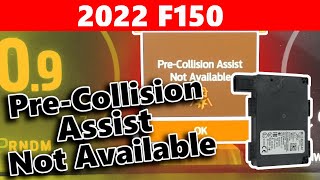
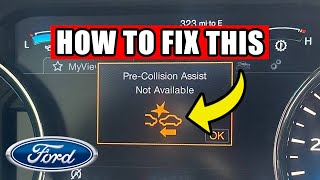
2022 Ford F-150 with 'Pre-Collision Assist Not Available' message
The adaptive cruise control would not engage. No recent accidents or damage occurred.
Outcome: The inability to recalibrate pointed to an internal failure of the cruise control module. Replacing the module and performing the calibration resolved the issue.
Lesson: If a recalibration attempt fails repeatedly, it signals an internal sensor fault rather than a simple alignment issue, justifying the replacement of the expensive sensor.
Various Hyundai, Kia, and Nissan models in winter weather
The 'Forward radar sensor blocked' warning appeared during driving in snow or slushy conditions.
Outcome: After cleaning the sensor and restarting the vehicle, the code and warning message cleared immediately.
Lesson: The easiest fix for C1753 is physical cleaning. Before scheduling service during winter, thoroughly wash the flat panel in the grille where the radar is located.
2024 Ford Expedition with low mileage
The 'Pre-Collision Assist Not Available' warning appeared on a nearly new vehicle. A scan showed code B142E for sensor alignment.
Outcome: Ford corporate sided with the dealer, stating a broken bracket is evidence of impact. The owner paid out-of-pocket on a new vehicle with no visible collision signs.
Lesson: Manufacturers frequently deny warranty claims for ADAS alignment issues by attributing them to 'outside influence,' even when no cosmetic damage is visible.
How to Prevent This Code From Triggering
- Regularly clean the sensor area (Weekly or as needed) — Prevents the gradual buildup of road grime and bug splatter that eventually blocks the radar signal. Use a soft microfiber cloth to avoid scratching the sensor cover.
- Apply a plastic-safe hydrophobic coating (Every 3-6 months) — Hydrophobic coatings designed for plastics help water, snow, and ice slide off, reducing temporary blockages. Do not use standard glass treatments like Rain-X, which damage the plastic lens.
- Be mindful of front license plates and accessories (During installation) — Ensures license plate frames, aftermarket grilles, or light bars do not physically obstruct the radar sensor's field of view.
- Request an 'ADAS check' with every wheel alignment (Annually or with new tires) — Ensures the radar's aim is corrected to match the new wheel angles, preventing alignment-induced faults.
- Test battery health annually (Annually (especially for batteries over 3 years old)) — A weak battery causes voltage drops during startup, leading to false ADAS error codes. Catching a failing battery prevents difficult-to-diagnose electronic issues.
Frequently Asked Questions
Can I just ignore the C1753 code if I don't use cruise control?
You can, but it is highly dangerous. The same sensor controls your automatic emergency braking and forward collision warning systems. Driving with these features disabled significantly increases your risk of a rear-end collision.
Why did the C1753 light come on in bad weather even though my sensor is clean?
Heavy rain, snow, or dense fog blocks or diffuses radar waves, causing the system to temporarily shut down as a safety precaution. The warning clears on its own once weather conditions improve and you restart the vehicle.
What are common misdiagnosis mistakes with C1753?
A common mistake is replacing the $800+ radar sensor when the issue is just a bad alignment or bent bracket. Always perform a calibration check after any minor front-end impact or wheel alignment. Also, test the 12V battery, as low voltage sets false codes.
I just had my windshield replaced and now I have this code. Are they related?
Yes. Many systems use a camera mounted on the windshield that works in conjunction with the radar sensor. If the camera was not recalibrated after the windshield replacement, it causes a data mismatch and triggers this fault.
My mechanic cleared the code after a wheel alignment, but it came back. Why?
Clearing the code doesn't fix the underlying misalignment. A wheel alignment changes the vehicle's thrust angle, requiring the forward radar to be electronically recalibrated to match. Without recalibration, the system detects the misalignment on the next drive and sets the code again.
The dealer quoted me over $1,500 to fix this. Is that a normal price?
Yes. The radar sensor itself costs $800 to $1,800. The labor to install it and perform the mandatory ADAS calibration adds several hundred dollars, making total costs of $1,200 to $2,500 common.
Can I replace and calibrate the radar sensor myself?
Replacing the sensor is possible for an advanced DIYer, but calibration is not. Calibration requires specialized, expensive equipment including alignment targets and specific diagnostic software. This job requires a professional shop with dedicated ADAS service equipment.
Will a car wash fix a C1753 code?
If the code is caused by dirt, mud, or road grime blocking the sensor, a thorough car wash that cleans the front grille solves the problem. You must restart the car after the wash to clear the code.
Key Takeaways
- Code C1753 indicates a blocked or misaligned forward-facing radar sensor, instantly disabling your adaptive cruise control and automatic emergency braking.
- Clean the front grille and bumper area thoroughly; physical obstructions like snow, ice, or thick mud cause over 50% of these faults.
- If the code appears after a minor bumper impact or a wheel alignment, the sensor requires a professional ADAS recalibration costing $250 to $700.
- Test your 12V battery before replacing expensive sensors, as voltage drops during startup frequently trigger false C1753 and related ADAS codes.
- Do not ignore this code; driving with C1753 active means your vehicle will not automatically brake to prevent a rear-end collision.
Helpful Videos

The information in this article is provided for general reference and educational purposes only. Vehicle specifications, procedures, and part compatibility can vary by production date, trim level, and region. Always consult your vehicle's factory service manual and verify part numbers before purchasing or performing repairs. Safety-critical components such as airbags, seat belts, and braking systems should be installed by a qualified professional.
- 🎬 Helpful Videos
- What Does C1753 Mean?
- Can I Drive With C1753?
- Common Causes
- Symptoms
- Diagnostic Flowchart
- Common Fixes & Costs
- DIY vs Professional
- Used vs. New Parts: Buying Guide
- What Happens If You Wait — Timeline
- Cost of Not Fixing It
- Diagnosis Steps
- When This Code Triggers (Freeze-Frame Conditions)
- Related Codes
- Climate & Environmental Factors
- How to Talk to a Mechanic About This Code
- Where to Take It: Dealer vs Independent vs Chain
- When to Walk Away From the Repair
- What Scan Tool You Need for This Code
- How to Clear the Code After You Fix It
- Will This Fail Emissions / State Inspection?
- Most Commonly Affected Vehicles
- Manufacturer-Specific Notes
- Real Owner Stories
- 2023 Mitsubishi Outlander with 30K miles
- 2022 Ford F-150 with 'Pre-Collision Assist Not Available' message
- Various Hyundai, Kia, and Nissan models in winter weather
- 2024 Ford Expedition with low mileage
- How to Prevent This Code From Triggering
- Frequently Asked Questions
- Can I just ignore the C1753 code if I don't use cruise control?
- Why did the C1753 light come on in bad weather even though my sensor is clean?
- What are common misdiagnosis mistakes with C1753?
- I just had my windshield replaced and now I have this code. Are they related?
- My mechanic cleared the code after a wheel alignment, but it came back. Why?
- The dealer quoted me over $1,500 to fix this. Is that a normal price?
- Can I replace and calibrate the radar sensor myself?
- Will a car wash fix a C1753 code?
- Key Takeaways
- 🎟️ Get 5% Off